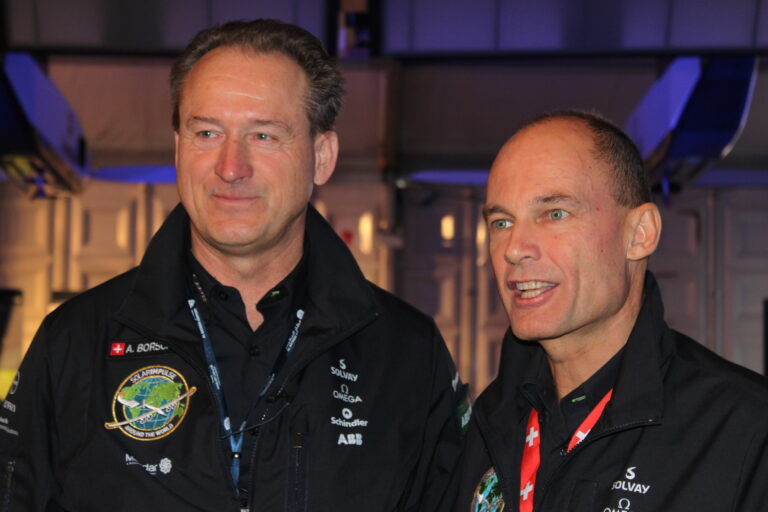
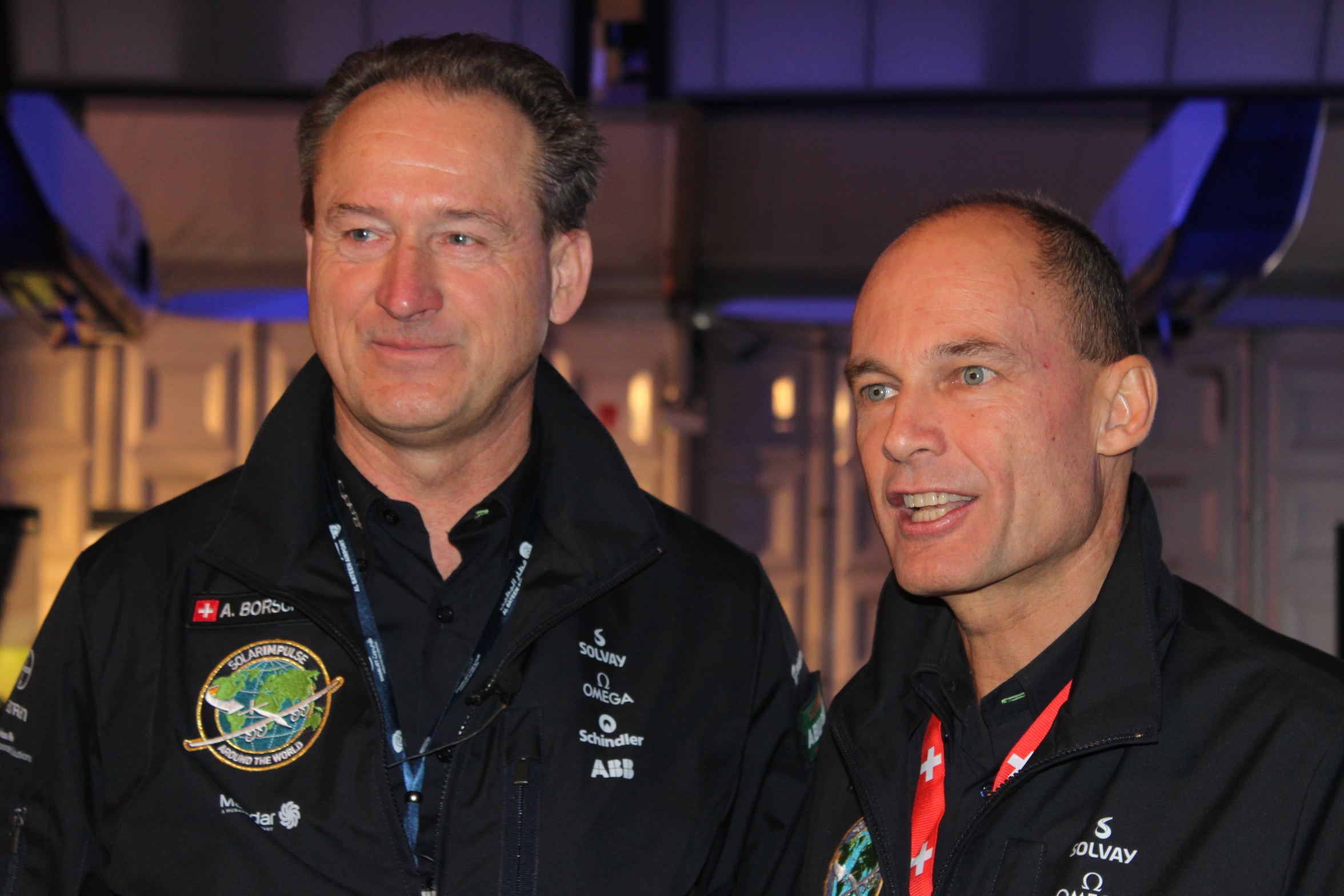
The experimental flying lab better known as Solar Impulse 2 was launched today in Abu Dhabi. The groundbreaking airplane will circumnavigate the world flying both day and night without using a single drop of fossil fuel. Said co-pilot Betrand Piccard, “You can achieve miracles with renewable energy and clean technologies.”
Environmental “rights” and wrongs when you are injured at home or work

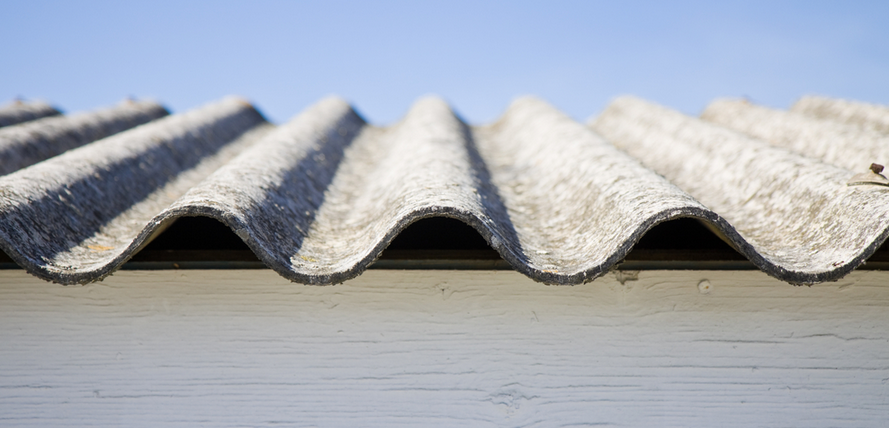
Asbestos poisoning, exposure to chemicals or dangerous situations at work which put you at risk, or worse in the hospital and out of work.
In the United States laws are pretty defined on how people can approach the law and their rights. In the Middle East our basic rights to be protected from environmental hazards and toxins are poor in the best case scenarios in countries like Turkey and Israel. As each of our country grows towards better environmental awareness, know your basic rights and how to protect yourself if exposure or accidents happen. The infographic below might help.
Architecture For Humanity Shuts Down
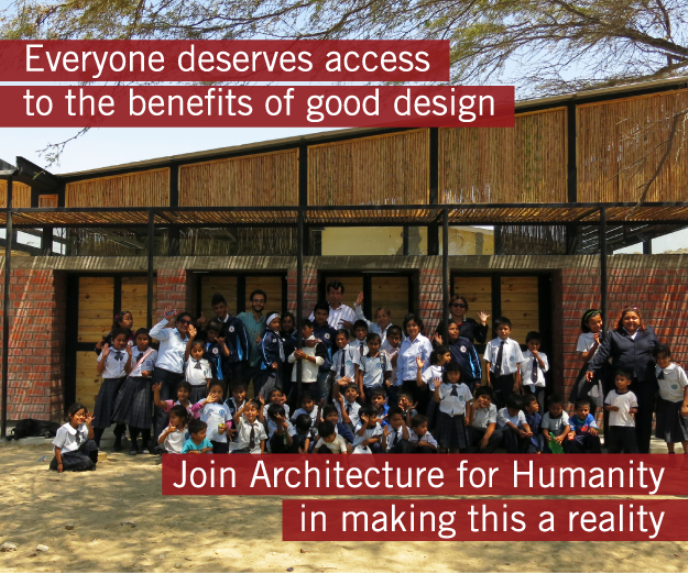
I woke up to find an email from Cameron Sinclair thanking me for “designing like you give a damn.” Sinclair is the executive director of the Jolie-Pitt Foundation and, yeah, celebrities and politicians email me all the time. I’m also popular with Nigerians who need help cashing checks. I need to figure out how to block spam, but ’til then – I am happy/sad that I got this note from Sinclair. He was reporting the shut-down of Architecture for Humanity, probably the best thing to emerge from an architect’s imagination.
Solar retreat in the Liwa Desert: futuristic functionality or lipstick-on-a-pig?
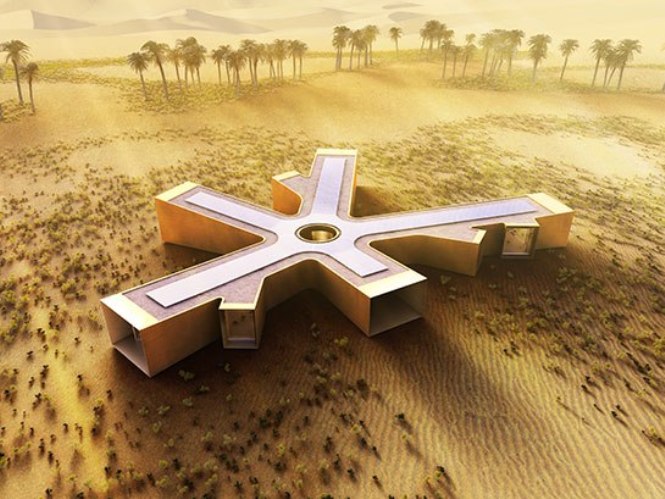
An unnamed client hired London-based Baharash Architecture to design a luxury home that could fully function off the energy grid. That’s a tall order for any residence in Abu Dhabi, now consider the challenges for one sited in the punishing clime of the hyper-arid Liwa Desert where summer temperatures top 100°F.
The star-shaped structure is modestly sized at about 6,000 square feet and will feature a living room, kitchen, two bedrooms, and central “great room”. Floor-to-ceiling glass walls permit panoramic views of the surrounding desert scenery. These fixed-glass “windows” will be electrochromic; mechanically tinted for shade and privacy with a press of a button that activates ionic motion within layers of glass, quickly changing the glass panels from clear to opaque.
Baharash Bagherian, founder of the design firm that bears his name, said in a statement, “We are seeing a new generation of Emiratis who are looking to lead a more sustainable lifestyle, in line with UAE’s vision to become one of the most sustainable countries in the world.”

The project press release did not define other sustainability features planned for the estimated $2 million vacation home. Simple technology for solar energy production can readily supply the building with all its daytime electricity needs, but there is no information about nighttime power consumption. Similarly, there is scant info on planned efficiencies for building systems and appliances. Will the structure be insulated to reduce heat gain and loss?
Eco-friendly construction is becoming prioritized in the UAE, specifically as relates to energy consumption, and the nation is a regional leader in renewable energy generation and municipal recycling. But in the Middle East, water is a greater priority. Many modern MENA municipalities still run on a pumped water procedure, where homes feed off personal water storage tanks which are periodically replenished from a city supply. Said differently, there isn’t always water when you turn on a tap. How will potable water be conveyed to this structure? And – on the flip side – how will sewage and waste be removed?
There’s an outside chance that green specifications are lost in translation; that press coverage of purportedly “green” buildings is selective, overlooking system technology and focusing on structural form instead. But by glossing over the fuller environmental impacts of a new building (how will it be accessed? does it need new roads? will it encourage more development in an otherwise pristine and ancient natural setting?), projects like these resemble little more than “lipstick on a pig”.
Photography courtesy of Baharash Architecture
10 ways to let your death be ever-green
Chaucer said, “Time and tide wait for no man.” He should’ve added “death”. Just like the American postal system, neither rain, nor snow, nor sleet nor hail shall keep death from its appointed rounds. Christians whose numbers come up during inclement weather are put on ice in a mortuary until the roads reopen – but other religions don’t permit such patience.
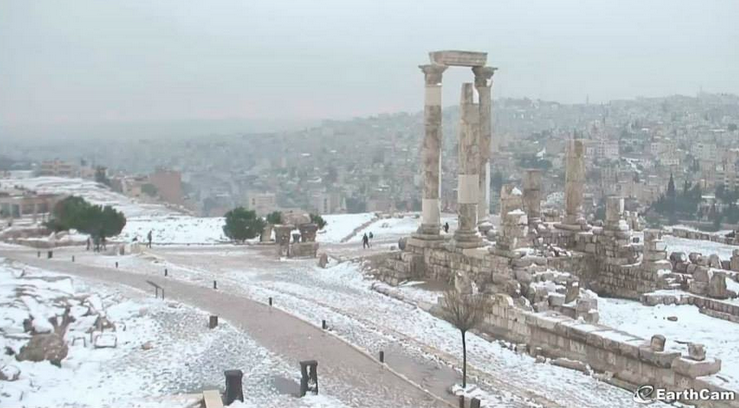
Jewish and Muslim customs require the body to be buried within 24 hours, a very sensible custom born in the hot Middle East climate where decomposition began quickly. So when an elderly neighbor of a neighbor passed away last week, we got to talking about the added misery of dealing with traditional burial requirements in the midst of a powerful storm in Amman, Jordan where I live.
Let’s not get too – well – grave, but with world population passing seven billion and an estimated 150,000 people dying daily, we ought to take a closer look at how we celebrate life’s end. Maybe explore new options that respect and celebrate the deceased as well as the planet they leave behind.
Talking about death is uncomfortable. Doubly so when modern funeral practices increasingly jeopardize the environment. Did you know most Middle Eastern funerals are inherently “green”? Ancient nomadic people with limited resources developed the simplest methods of dealing with their dead. Over centuries, traditions evolved – varying by region – but all following basic rituals that are some of the most earth-friendly practices around. So while the Western funeral industry scrambles to become less polluting, they could instead take a few pages from the burial playbook of Muslims and Jews.
Both faiths prescribe that, within hours of death, the body is carefully bathed and wrapped in a modest cloth shroud. Well-wishers pay their respects and bury the deceased in a grave, without a casket.
Cremation and embalming are forbidden – wisely, as both are proven pollutants to our air and water. In the parched Middle East, water-guzzling cemeteries carpeted with grass (kept artificially lush with toxic pesticides and weed killers) are a rare exception, and Islam tends to skip extravagant headstones.
But what if you live outside of this region? How can you buck Western trends (and in some cases, mandatory burial regulations) and stay close to planet-friendly practices? You may already be living a green lifestyle, so why not check out a more sustainable deathstyle too? Welcome to the world of green burials, where an entirely new industry competes for your funeral budget.
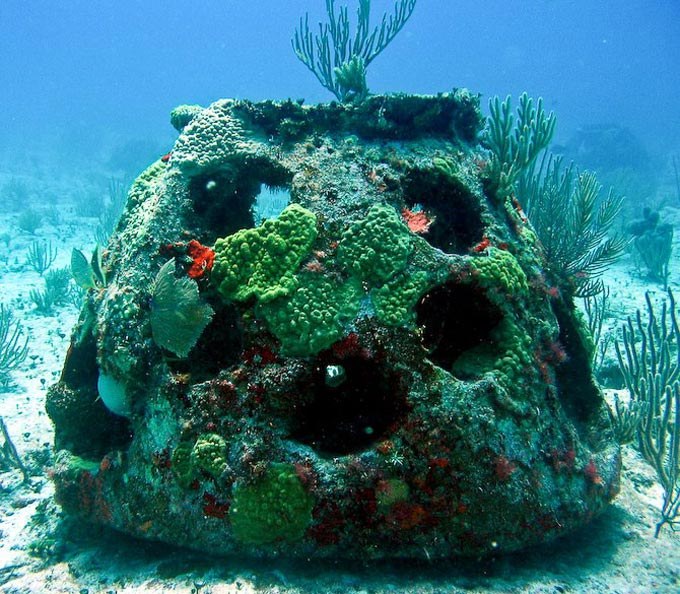
1. Turn your loved one into a coral reef. Cremation is forbidden in both Islam and Orthodox Judaism. But for those who embrace it, they can offset the serious pollutants it dumps in the air by using the ashes to form artificial reefs. Eternal Reefs create “grief balls” (lead image above) mix your loved one’s remains with concrete to make new habitat for marine life. Perfect for “crabby” people.

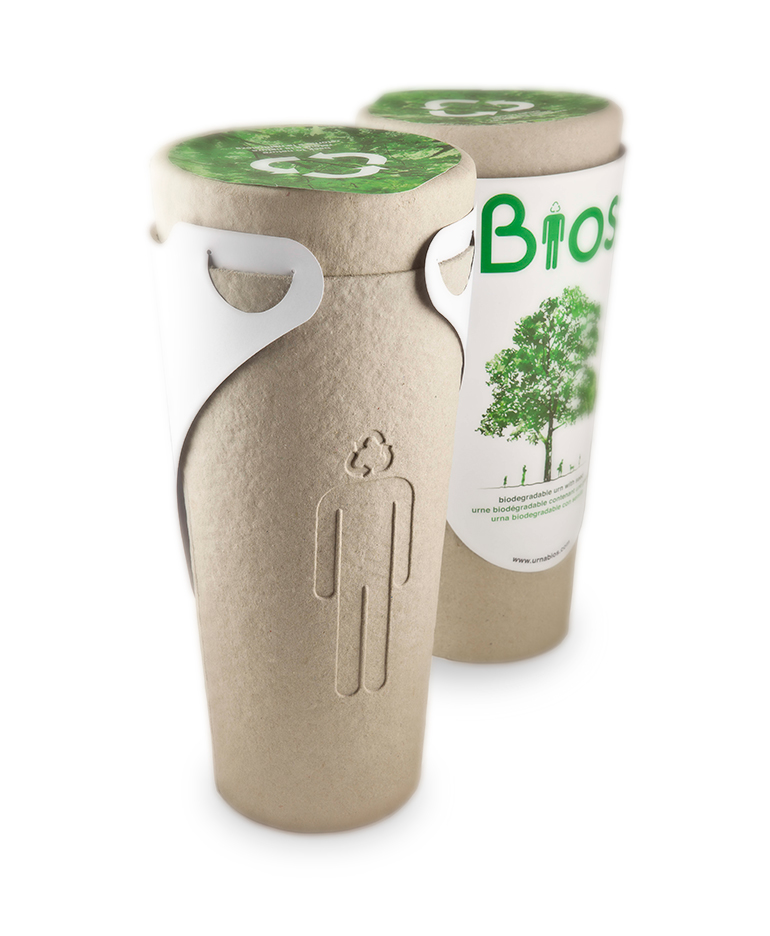
2. Turn your father into a tree. Green-up cremation by burying the remains in a special flower-pot that converts ashes into a tree – just bury the fully biodegradable Bios Urna (pre-planted with soil, seeds, and human remains). The decomposing urn acts as fertilizer, literally allowing the loved one to live on in nature. That mighty oak was once a nut called Abu Ahmed!
3. Prefer a grave marker? Memorialize the deceased with a Poetree Burial Planter. Pop ashes in a biodegradable cork pot, planted with a boxwood sapling and ringed with the deceased’s inscription in ceramic. It’s a low-maintenance memorial and gentle reminder of the cycle of life.
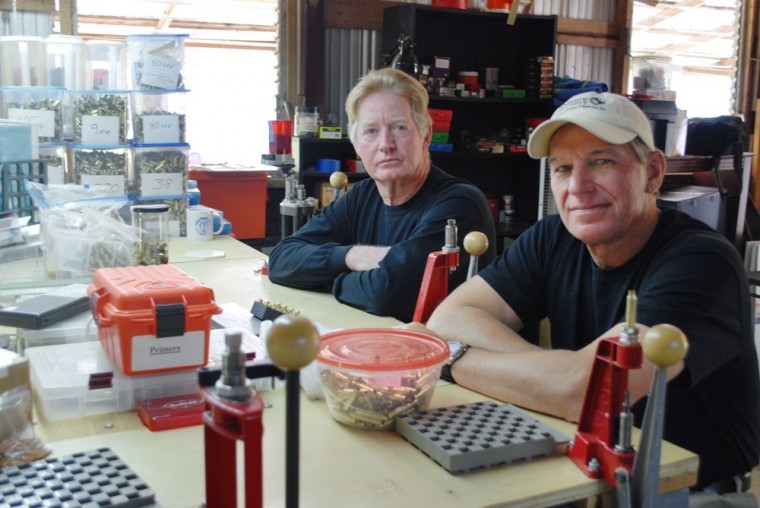
4. Fire away. Take your dearly departed to one last Arab wedding, where they can go out with a bang. A company called Holy Smoke turns the deceased’s ashes into live ammunition for pistols, rifles or shotguns. Aimed at gun enthusiasts, they offer discounts to active and retired military, law enforcement and firefighters. What a blast!
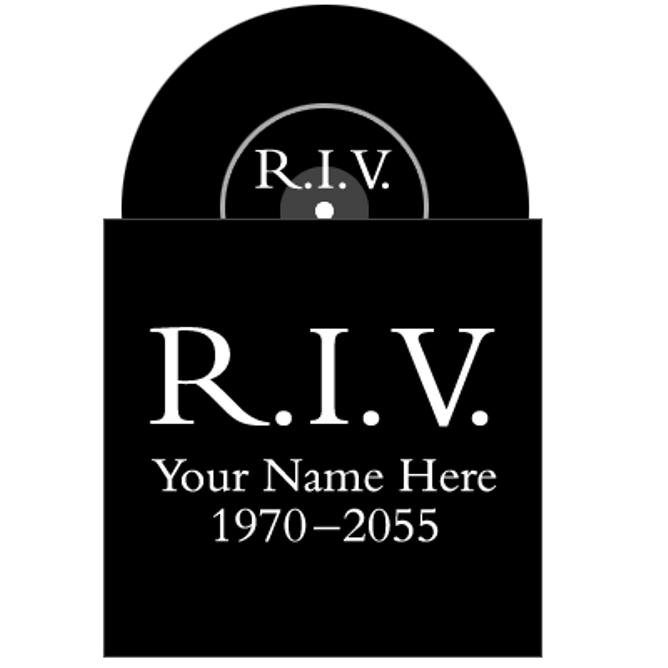
5. Spin yourself into a record. How about becoming an album of klezmer tunes – for eternity? A company called Vinyly (website is down) will press your remains into a vinyl disc containing your fave tunes, jacketed in bespoke cover art (the deceased’s portrait!). Make multiple records from body parts: making more to share with the music lovers in your life (or death?)!
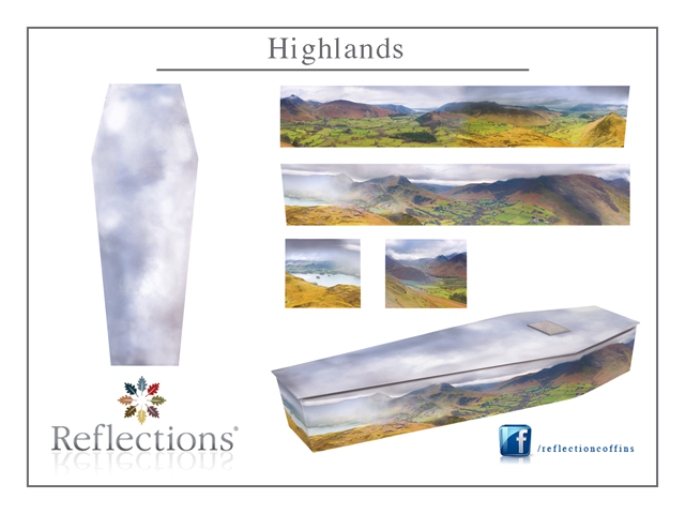
6. Designer coffin from sustainable wood. Sticking with burial? Fancy pictures of your last Petra visit on your casket lid? Skip high-end coffins made from exotic wood or never-degrading metal & pick one made from sustainably sourced wood. Reflections Coffins are 80% waste wood & 20% FSC-certified wood. Personalize your box with their (I’m not kidding) “design a coffin” web app.
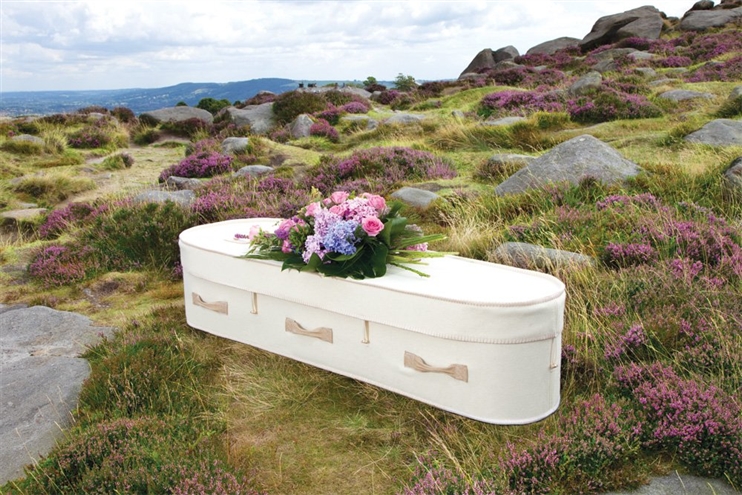
7. A woollen coffin to rest in fleece. The coffin market is making biodegradable coffins to die for. Bamboo and cardboard, linen and banana leaf are now common casket materials. Wool is also rising in popularity – Hainsworth, a leading British textile mill, reported a 700% rise in demand for its woollen coffins in 2011 to 2012. A brilliant way to “rest in fleece”.
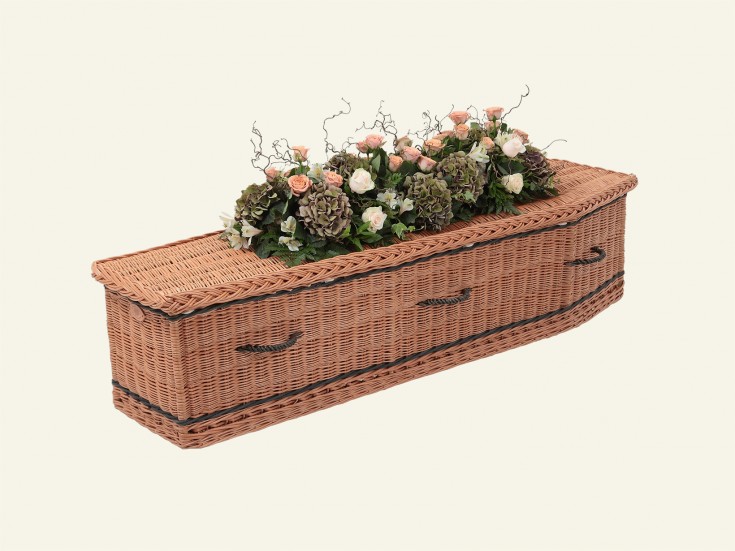
8. Woven willow coffins are a popular green alternative, made from a highly renewable and carbon neutral crop that’s harvested annually with minimal machine and chemical processing. Willow also degrades rapidly in soil, and can be jazzed up in bright colors, making any funeral feel like a roadside picnic.
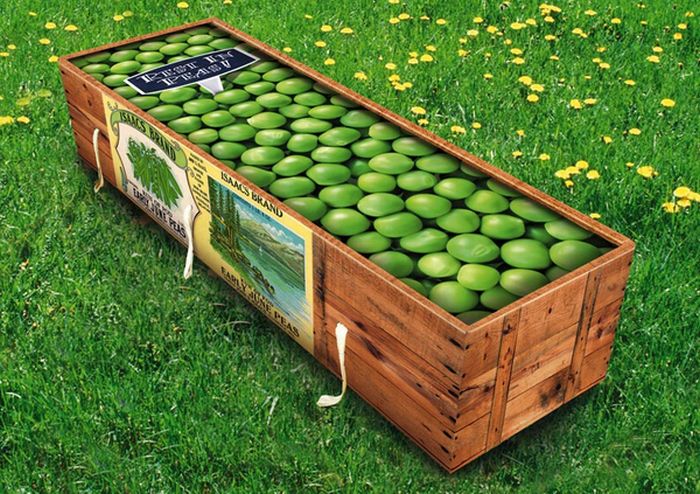
9. Personalized images. Tragedy links to comedy when you send your loved one off in a flat-pack coffin printed with personalized images. Celebrate their life or go for big laughs (how about a box of veg that reads “Rest in Peas”?). Creative Coffins are made from non-toxic carton-board and natural glues. Guaranteed the funeral guests will howl, “Stop, you’re killing me!”
10. Turn them into a diamond. Arab royals love their bling! Why not turn that special person into a gem for eternity? LifeGem diamonds and gemstones are created from the carbon in cremated ashes or a lock of hair. Reset your loved one into “cremation jewelry” – rings, earrings and pendants commemorate their original sparkle. (Hey, did anyone see where I left mom?)
I mean no disrespect by this story, but have you ever noticed, the first three letters of “funeral” are FUN?

Frozen Middle East needs some “global warming”
A winter storm is banging around much of the Middle East. Precip’s teamed up with gale force winds, causing first-world headaches like clogged transport, school closures, power outages and the promise of steep heating bills. But mostly people are rocking a few days respite from the usual grind, and – judging from the flood of snowy selfies on social media – having fun. But society is bifurcated; it’s no winter wonderland if you’re poor or displaced. Check out these ways to help others survive the cold snap. By no means exhaustive, but maybe enough info to get you in a giving mood. It’s so cool to help someone get warm.
Portraits of the world’s oldest trees
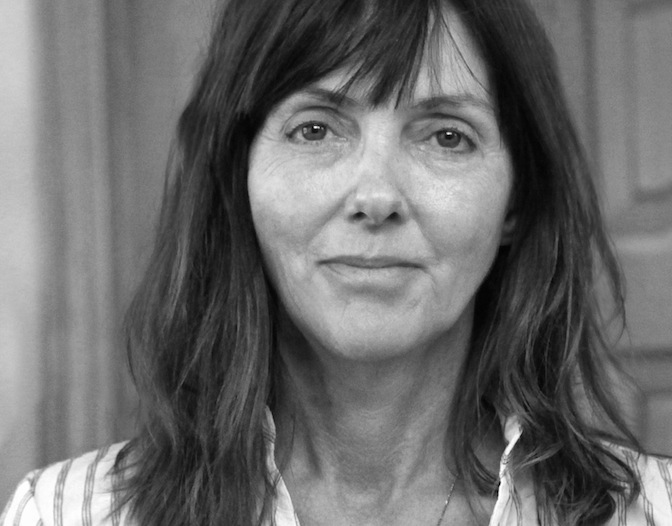
Photographer Beth Moon spent 14 years traveling to almost every continent taking pictures of the world’s oldest trees. Sixty of the resulting photos – printed with luminous results using a labor-intensive platinum/palladium process – form her book Ancient Trees: Portraits of Time (Abbeville Press). It’s a stunning record of nature’s majesty.
“Standing as the earth’s largest and oldest living monuments, I believe these symbolic trees will take on a greater significance, especially at a time when our focus is directed at finding better ways to live with the environment, celebrating the wonders of nature that have survived throughout the centuries. I cannot imagine a better way to commemorate the lives of the world’s most dramatic trees, many which are in danger of destruction, than by exhibiting their portraits,” she said in her artist’s statement.
Moon adventured to the Middle East where she spent two weeks camping on Yemen’s Socotra Island. Located in the Arabian Sea off the horn of Africa, the island is home to 50,000 natives, and over 700 plants and animals found nowhere else on earth. Socotra has been geographically isolated from mainland Africa for the past 7 million years.
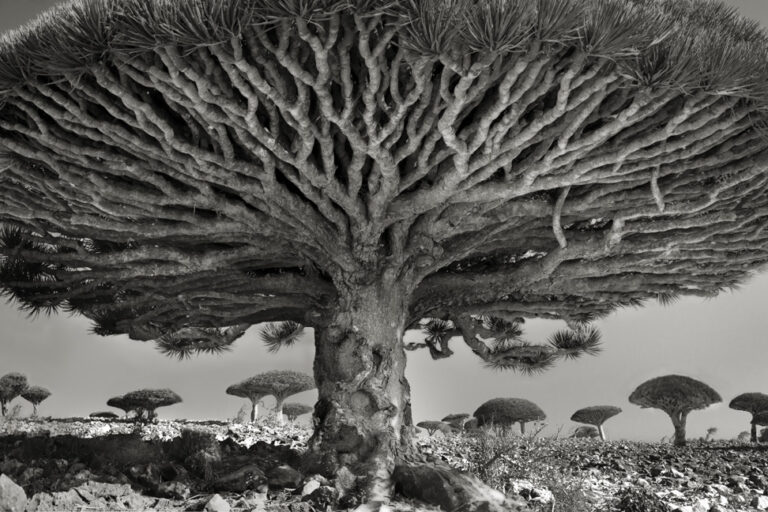
Socotra is also where the ethereal “Dragon’s Blood Trees” grow (lead image). Named for its scarlet colored resin with alleged medicinal qualities. These trees, with their astonishing umbrella-like canopies, can live up to 500 years.
They are now classified as endangered as once-vast forests have been decimated by over-grazing and climate change (cloud cover is insufficient to protect young saplings).
“The place was just amazing. Desert-like, dry and blazing hot, with the beautiful white sands of the Arabian Sea and the Indian Ocean to the north. One night I slept under the trees of the Frankincense Forest, another in the Haggler Mountains under the Dragon’s Blood Trees.
“It was perfect, a dream come true,” Moon told the Daily Mail.
Incense that burned in ancient Egyptian and Greek temples was once harvested from this island; nine species of the frankincense tree (image above) are unique to Socotra.
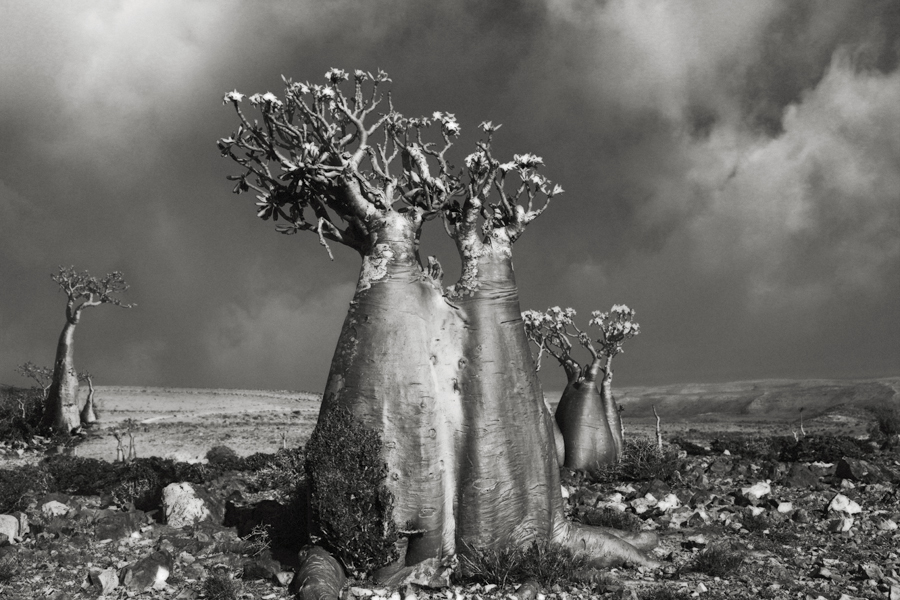
Bottle trees, also called “Desert Rose” also sprout from the island’s alien-like landscape (image above). Bulbous and leathery, with roots that auger into rocky soil, they store water much like cacti.
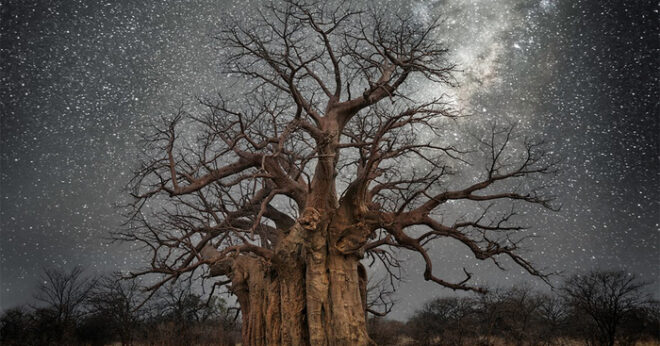
Moon explored the baobabs of Madagascar, sometimes called “upside-down trees” because of their disproportionately slim branches atop massive trunk structures. This massive example pictured above is one of South Africa’s five biggest baobab, one of which is at least 1,275 years old.
Moon taps three criteria for selecting her subjects: age, immense size or notable history. She researches locations using historical and botanical books, tree registers, newspaper articles and information gleaned from friends and travelers.
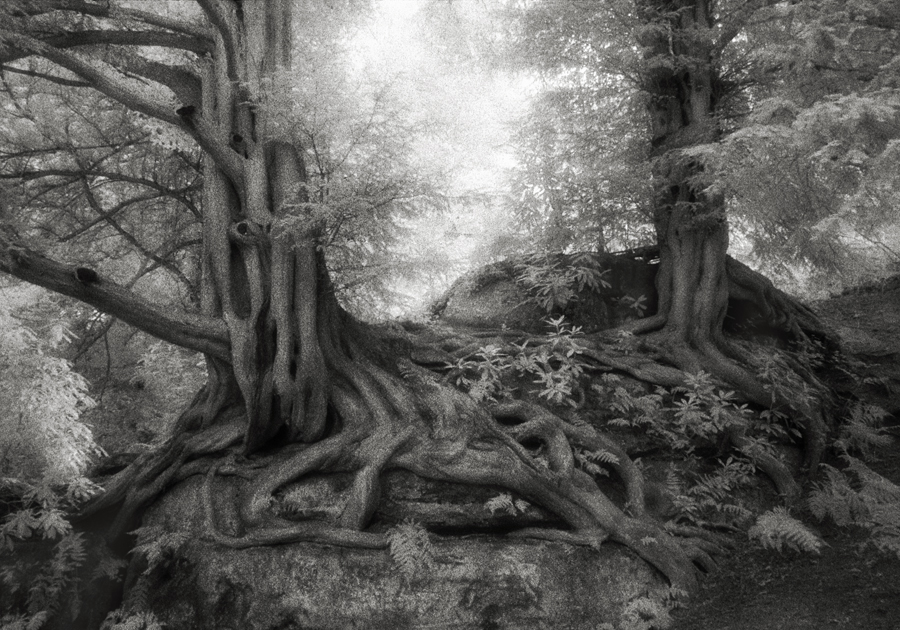
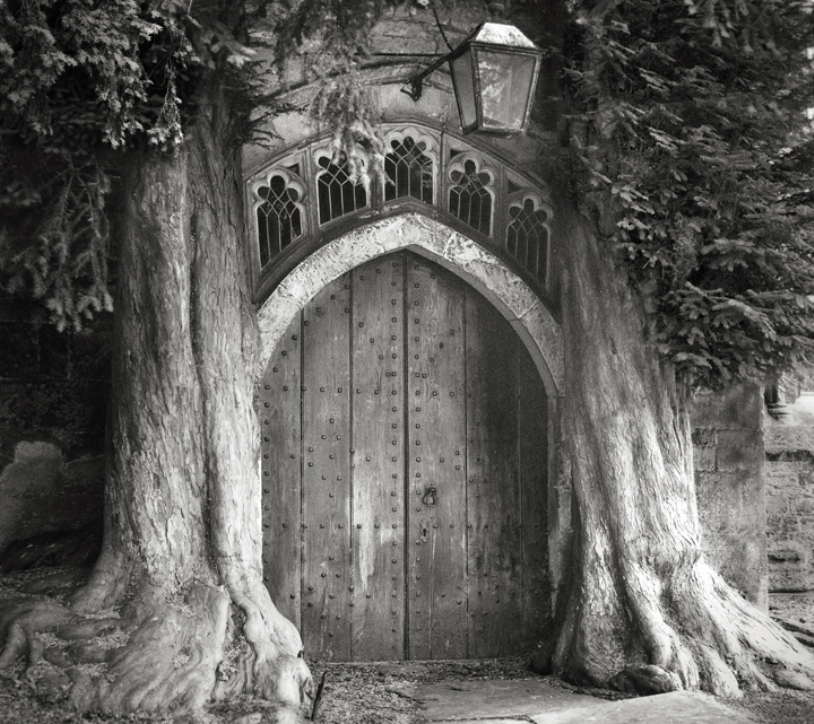
England offered a forest of tangled yew trees (above), century-old roots gripping rocky perches. Britain’s churchyards provided some of her oldest subjects. A pair of yews named “The Sentinals” frame St. Edwards church in the Cotswolds (below), said to have inspired J.R.R. Tolkien’s imagining of hobbit houses.
In Wales, this ancient chestnut tree (below) found on the grounds of Croft Castle date between 400 and 500 years old.
“Many of the trees I have photographed have survived because they are out of reach of civilization; on mountainsides, private estates, or on protected land. Certain species exist only in a few isolated areas of the world”, she says on her website.
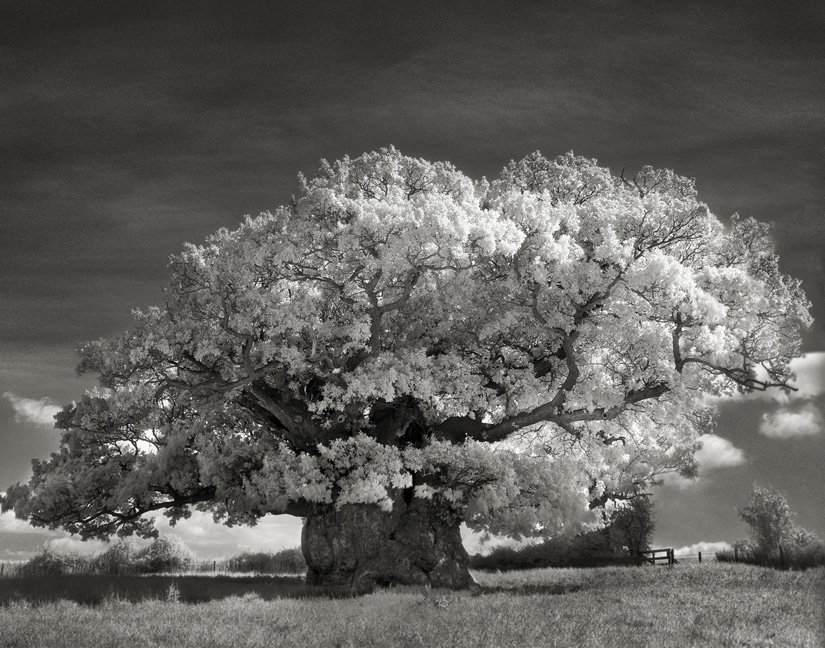
With an estimated age exceeding 1,000 years, The Bowthorpe Oak in Lincolnshire (below) could be England’s oldest oak tree. It’s featured in the Guinness Book of Records and starred in a TV documentary about its impressive size and longevity.
Images of nature, particularly when rendered in black and white, offer powerful opportunities for momentary escape. These scenes are akin to visual poetry – open to interpretation by each viewer, revealing new information with each examination.
Trees not your thing? Try gazing into the faces of Kevin Horan’s barnyard beauties. Or for a darker experience, pour over Nick Brandt’s ghostly images of Tanzania’s Lake Natron.

Nature photography can convey important an environmental message, but can also be a salve for stressed existence.

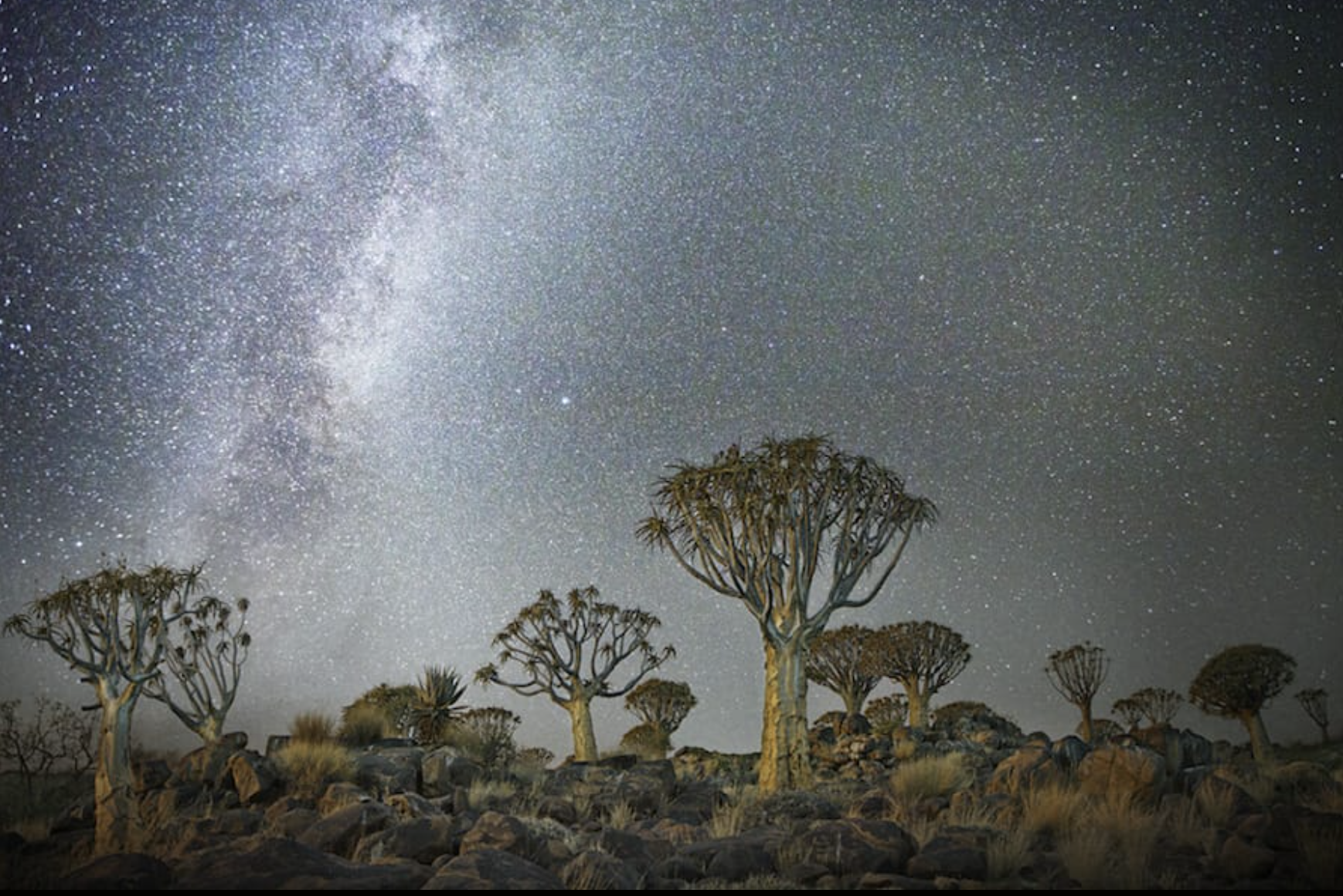
Moon had previously published another series called – pictures of creepy-yet-elegant meat-eating plants. She is working on a new trees series, this time captured in starlight, called Diamond Nights – a couple of photos are above. You can follow her on Facebook, and check out her work on her website.
Storms forecasted – stop energy leaks
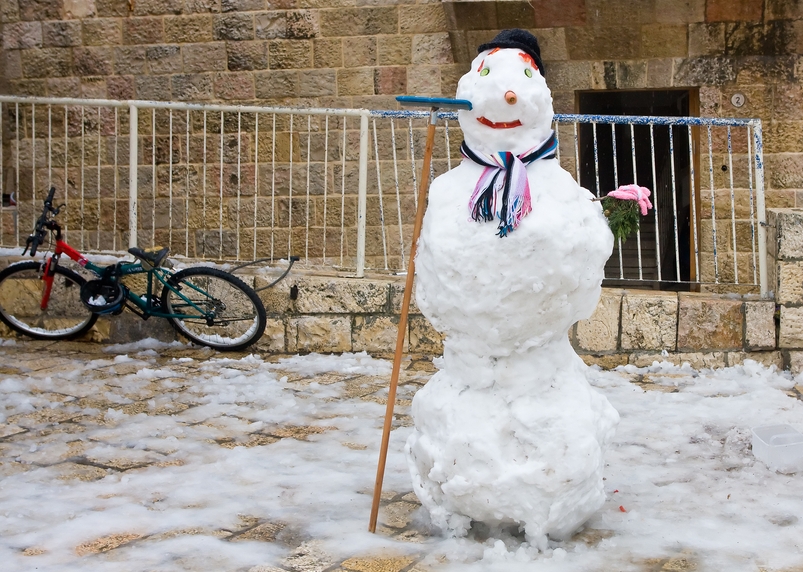
The Levante is gearing up for a massive winter storm. Laurie over in Amman, Jordan is battening down the hatch and (lucky duck!) is preparing for a snow day (see the above image from last year); while me over in Israel, I am just wondering how to seal those pesky leaks blowing cold air through my poorly insulated 100-year-old home with zero insulation at modern standards.
Turns out there are some tips to stopping energy leaks in your home. The infographic below sums it up. Stay warm Middle East, and be eco-cool!
Dubai urges private firms to join Car-Free Day
Dubai Municipality has invited businesses and individuals to take part in its annual Car-Free Day on February 4 to lower city-wide vehicle emissions while commemorating the United Arab Emirates’s (UAE) National Environment Day. Last year, 7,000 employees from 65 government and private organizations participated. The bait they’ll use to incite more action this year? A chance to win another world record as the biggest planetary initiative to create environmental awareness with the largest number of participants. #Only in Dubai.
Desolenator offers water independence: just add sun!
Assuming you stayed relatively sane on New Year’s Eve, you probably going to woke up the next day feeling optimistic, ready to start the new year with a clean slate. Maybe resolve to lace up the sneakers, or lay off the carbs. Or take it bigger and tackle a problem beyond yourself by investing in some game-changing eco-tech.
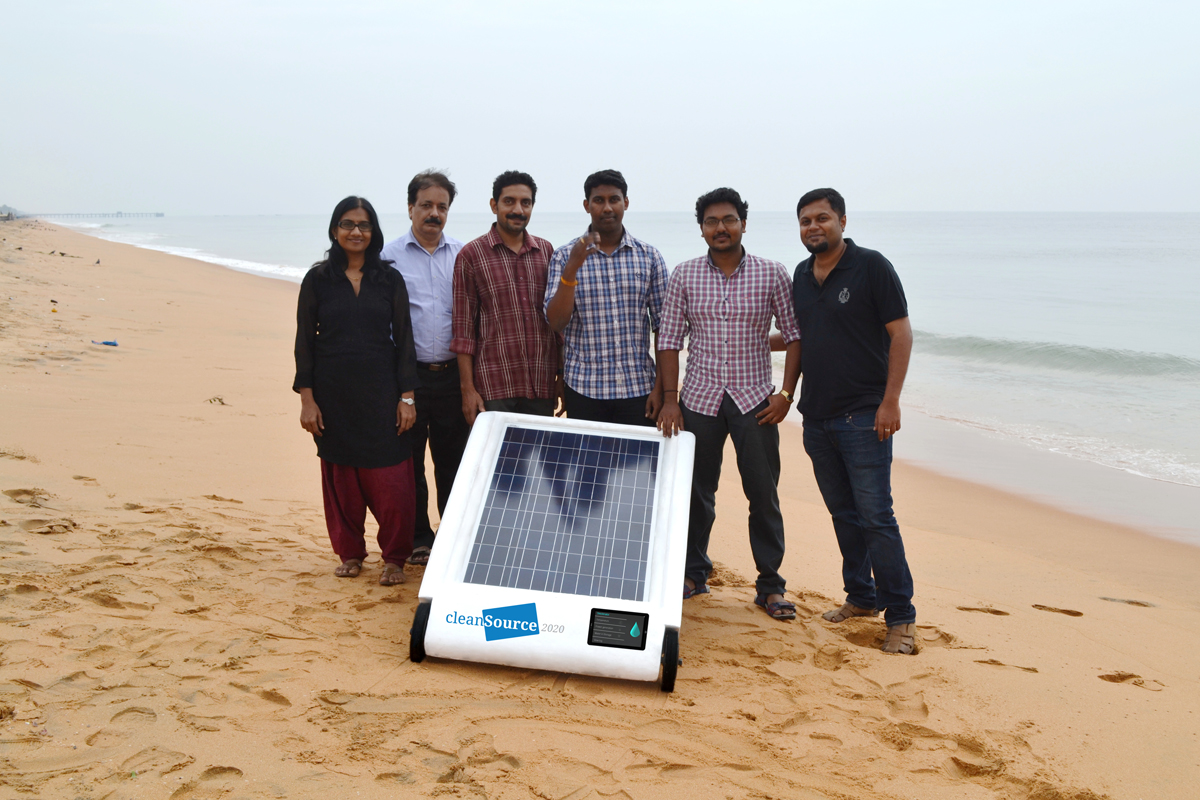
Consider the Desolenator, which creates safe drinking water from sunshine. Invest a few bucks and help thirsty people toast in 2015 with a glass of clean water.
Turkey’s Cappadocia reveals “new” 5,000-year-old city
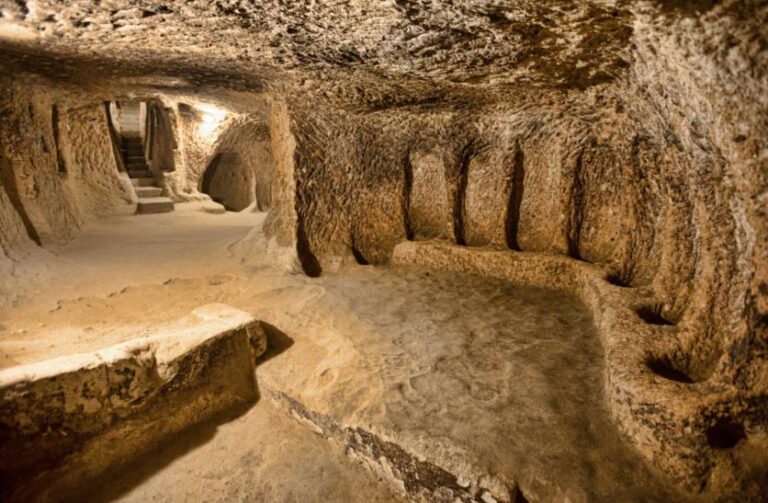
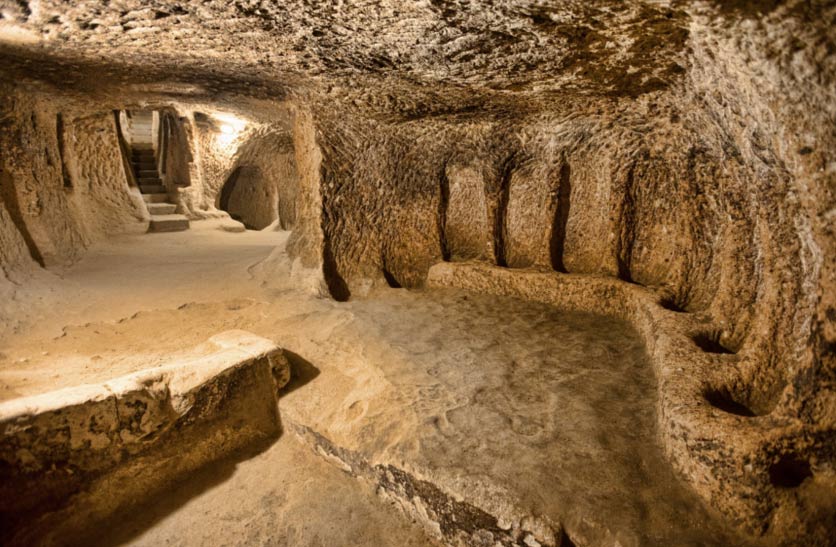
A team of archaeologists discovered an ancient underground city in Cappadocia, Turkey, with tunnels and escape routes spanning over 3.5 miles. Estimated to be 5,000 years old, the massive metropolis was found in the areas around and beneath Nevşehir fortress during an urban development project carried out by Turkey’s Housing Development Administration (TOKİ). Hurriyet Daily News called it the “biggest archeological find of 2014”.
SolView’s targeting solar energy rooftop potential on a massive scale
Solar energy panels are an important investment for planet earth, but also for residential homeowners that want to cash in on attractive feed-in tariffs. Homeowners that invest in solar energy can feed the power they generate back to the energy grid and in time make money after their initial investment in panels is paid off.
Most homeowners in the United States won’t know their solar energy-producing potential unless they hire a contractor to come and survey the roof, or run a DIY solar energy potential calculator found online. And not all homes are suited for solar panels.
Maybe your roof faces north, is blocked by tree cover or has too many complicated angles to justify solar panels? In these scenarios an investment wouldn’t pay off to the planet or your pocketbook. But how would you know?
An Israeli company called SolView has a solution to the problem.
Typically what happens today is that large solar energy integrators will send out canvassers hoping to attract homeowners to buy into solar energy opportunities.
According to industry estimates a company can spend $4000 for each new customer acquisition –– money that can be saved if they used automated rooftop scanning technology, according to SolView founder and CEO Ofer Sadka.
RELATED: White reflective roof paint can cool buildings by 20%
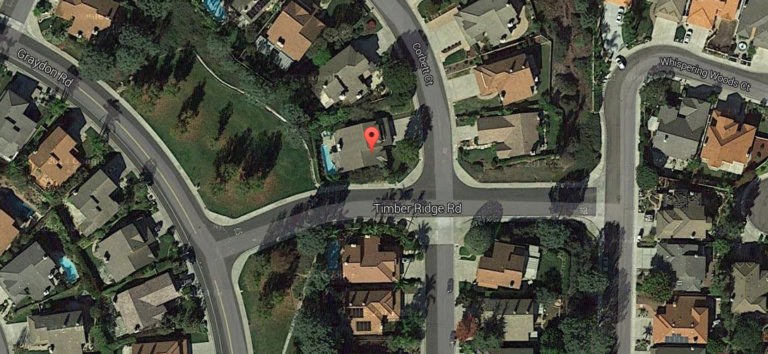
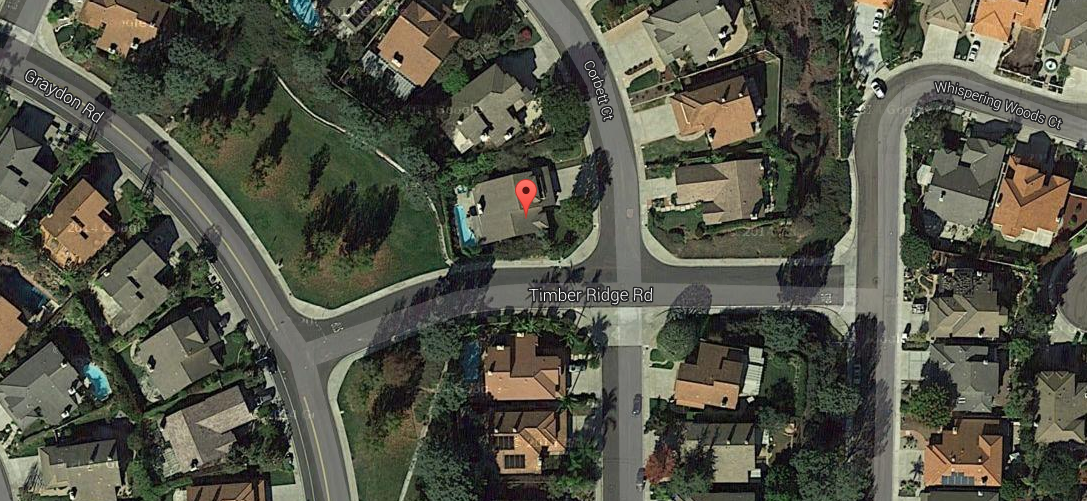
With 15 years in image processing and software development experience behind him Sadka’s company SolView makes use of publicly available images like from Google Earth and applies a special algorithm developed to identify regions, cities, towns, neighbourhoods and even zooms in on individual homes that would benefit from solar energy panels.
Of course one could put solar panels anywhere, but whether or not the investment is worth the installation is what SolView is helping companies understand.
I scanned my parent’s house in Ontario, Canada and saw that solar panels would never work for them. They have way too many trees shielding the roof.
SolView, in business since 2013, has raised about one million dollars from VCs like Capital Nature to grow the business in the United States, and it currently has business with a few publicly traded solar energy companies there. Solview is raising $2.5 million series A round for growth and expansion.
Knowing on which homes the sun shines brighter
“The key issue of SolView is our ability to automatically identify the solar potential of rooftops,” Sadka tells Green Prophet. “Some companies are able to do a manual process and provide somewhat of a similar output. Our key benefits are of automaton which means we can do it on a massive scale.
“Instead of targeting a specific prospect, we can scan or ‘canvas’ entire areas. Based on that initial canvasing a company can change their marketing processes to target the right prospects and then not rely on specific market campaigns to pan out.”
SolView’s business is in the US residential market and they work on a B2B model with installation companies.
Until now companies had to work with human canvassers who would walk up and down the street and knock on doors, even on the doors of homes with roofs that are non-viable for solar panels. An appointment would be scheduled, and then the process which is slow and cumbersome starts.
“We can know before the first canvasser knocks on the door whether the home is viable for solar panels. We can ‘see’ physical constraints such as a roof divided into different facets, or if it’s facing the south, which is good in the northern hemisphere. Are there excessive amounts of shading or a roof that is built with too many planes?” Sadka says.

For now it’s hard to know a golden number of what roofs work best for optimizing investment. That is up to the company selling the panels, Sadka explains.

He says there is a booming solar energy market in the US for residential use. He is also getting requests from the UK, Brazil, India and China.
“All the big companies are looking for sales and a much much shorter and cheaper customer acquisition process.”
The payment process? For now per rooftop. The company has since scanned hundreds and thousands and millions of rooftops for every customer. SolView sells by regions and which areas should be targeted by sales personnel.
If this means faster sales of solar panels, and higher customer acquisition at a lower price then I’d like to speak on behalf of the planet, if you don’t mind, and say that this is an excellent idea.
More on Solview here
Legalize pot, sez leader of Lebanon’s Druze Walid Jumblatt

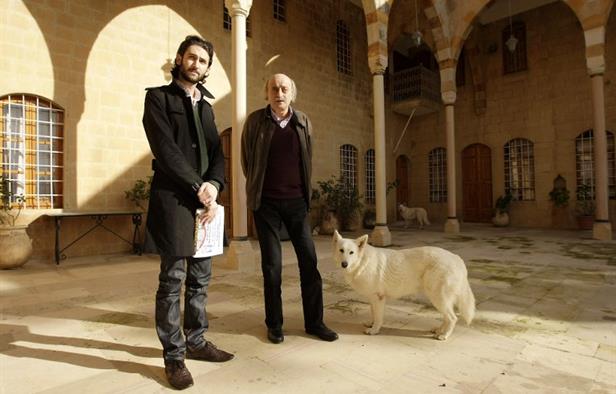
Last May, Lebanese lawmaker Walid Jumblatt called for marijuana to be legalized in Lebanon. While he never touched the weed himself, he said, “I support growing cannabis for medical use and to improve the living conditions of farmers in north Lebanon and the Bekaa Valley,” according to the Daily Star.
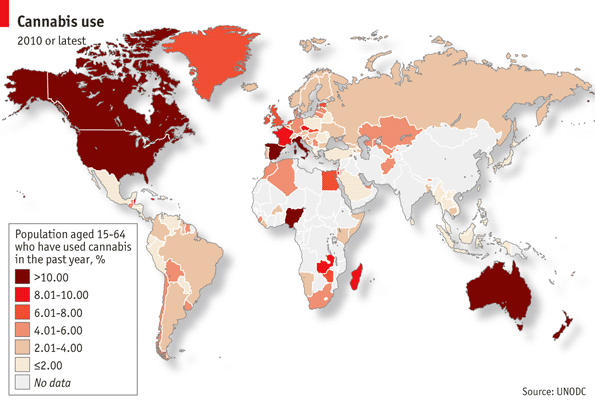
Now he’s back in the news seeking legal acceptance for the cultivation, sale and consumption of pot. (Read down in the article if you are curious about the tolerance levels for marijuana in the Middle East.)
“It is time to allow for the cultivation of marijuana, and to drop the right to issue arrest warrants against people who work in this field,” the veteran Druze leader recently Tweeted.
According to the French news agency AFP, Lebanon had generated hundreds of millions of dollars from marijuana cultivation during the country’s civil war (between 1975 and 1990) before the government began to put a lid on the pot industry.
AFP now reports that, in recent years, Lebanon’s cannabis growers say business has boomed in large part to the Syrian war which has deflected government attention from drug crimes. Demand for the drug in Syria has jumped more than 50 percent since 2012, a year after its civil war began, and porous national borders enable Lebanese producers to meet growing demand. Good news for “farmers”.
So what’s the word on weed across the rest of the Middle East?

The Middle East’s appetite for Marijuana is negligible compared to North America or Australia, but the drug has a string following and – along with hashish – is broadly acceptable given a centuries-old link with communal cultural ritual within some faiths.
The deal on marijuana in the Middle East
Marijuana is technically illegal in Egypt, but use is widespread and widely accepted and convictions for personal use is rare.
Israel allows usage of medicinal cannabis, and recreational use – while illegal – is relatively decriminalized, with little or no penalty for convicted first time violators.
Marijuana cultivation, sale and use is not legal in Jordan, but enforcement for personal users is relatively lax.
Lebanon outlaws pot possession, however, large amounts are grown within the country and recreational use, so long as it is discrete, is rarely an issue.
Saudi Arabia cracks down on use and possession for personal use of any recreational drug. If caught, you face up to six months jail time. Dealing and smuggling drugs usually result in harsher prison time or even execution. Foreigners who use drugs face deportation.
Syria similarly bans recreational drugs and, under Bashar al Assad, many cannabis offenses, from simple use to trafficking, are punishable by life in prison. Despite the risks, there are reports that people living in areas controlled by Kurdish separatists increasingly cultivate marijuana as one of the few means to create income in this Syria’s debilitated economy.
Tunisia outlaws weed altogether. Don’t grow, sell, buy or smoke unless you want a stint in prison.
Turkey‘s laws prohibit possessing and using pot. Get caught and face 1–2 years in prison; or opt for a rehabilitation program and/or lengthy probation. for up to three years. Supplying and selling the drug is punishable by 5–10 years in jail, and growing and trafficking get you a minimum term of 10 years. Thinking of a Turkey toke? Suggest you re-watch the old movie Midnight Express.
United Arab Emirates laws belie it’s modernist reputation: even the smallest amounts of the drug can lead to a mandatory four-year prison sentence.
Got some real-life perspective to add to this survey? Drop us some comments and let’s begin a dialogue. What’s the real word on marijuana in the region?
Image of Walid Jumblatt and son (AFP Photo/Joseph Eid)
More than one way to skin a pomegranate
A hidden pleasure in ex-pat life in Amman, Jordan is the relative ease in which I can sidestep a steroidal Christmas (and Hanukkah and Kwanzaa – the trifecta of Big Business holidays that muscled into my former New York City life every December).
Here there are no TV reruns of Mid-Century classics like Frosty the Snowman or The Christmas Story (sorry, Ralphie); no aggressive toy commercials or maniacal sales pitches on radio. You can get a hit of holiday Muzak in Amman city malls and a few restaurants light up plastic trees. But around here it’s basically business as usual. Until you hit the fruit and vegetable souks, where seasonal cuisine can knock you right back into Christmas (or Hanukkah, or Kwanzaa) Past.
Let’s digress a bit. My Italian-American father was a Marco Polo in the food markets, bringing home odd vegetables that he’d find in the ethnic neighborhoods he traveled through to work. He terrorized my Irish ma with artichokes, manioc, and dandelions – freakish foods to a woman more comfortable around a turnip and some spuds. Nick scoured the stalls for new fruits too, we may have been the first kids in New Jersey to try a pomegranate, which we called Chinese apples. (Don’t ask – I told you this was New Jersey.)
Along with exotic (to NJ) tangerines, pomegranates became symbolic of our Christmas feasts. The ruby-red orb was a perfect match to holiday decorations, but how to access its cache of juice-rich seeds without turning the kitchen into a crime scene? To us kids, peeling a pomegranate was a precursor to the Rubik’s Cube. How to solve this natural riddle without being chased from the house by an angry mother? Yet our Christmas pom tradition endured despite acres of stained tablecloths.
Last year, Green Prophet brought news of an excellent technique to remove seeds in 10 seconds, neatly with a bang-a-spoon technique. It was life-changing. Until I whacked my hand once too often with feverish spoon-wielding, prompting me to look into another method scoffed at by the man in the video: subaquatic seed removal.
YouTube offers several versions, this one will do the trick. It’s clean, quick, and a gentler approach than beat-the-bulb approach. Use the leftover water for your houseplants, or pet’s water bowl – especially if you also live in water-parched Jordan.
.[youtube]http://youtu.be/8s1LiSYqLl8[/youtube]
Yes, Virginia – there is a Santa Claus. And this Christmas, rejoice that there is also more than one way to peel a pomegranate. Look, ma, no stains!
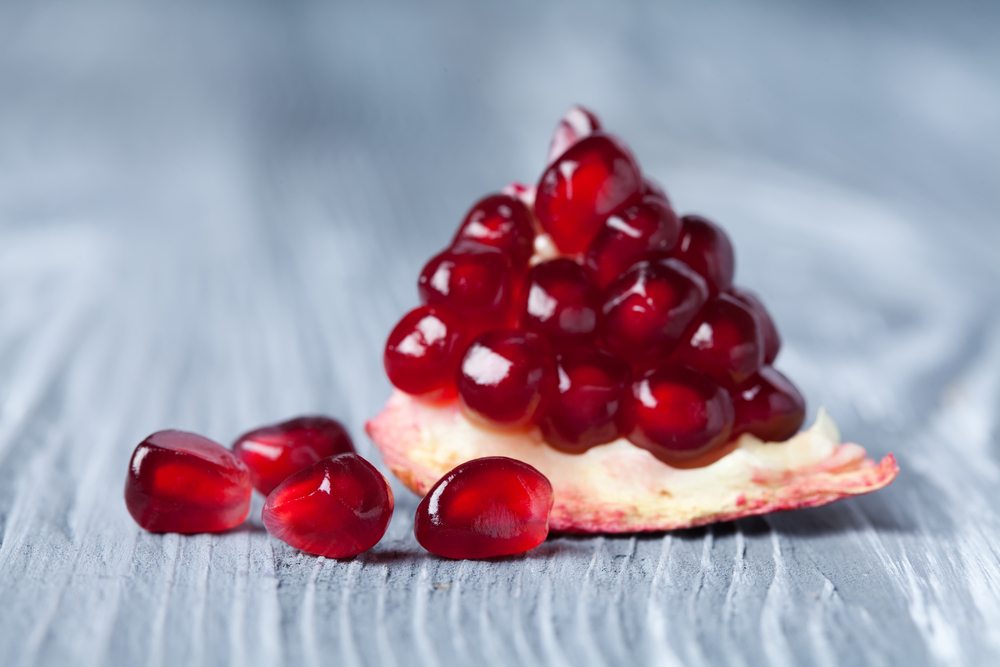
Image of cut pomegranate from Shutterstock
Lebanon’s Sidon garbage mountain to become city park
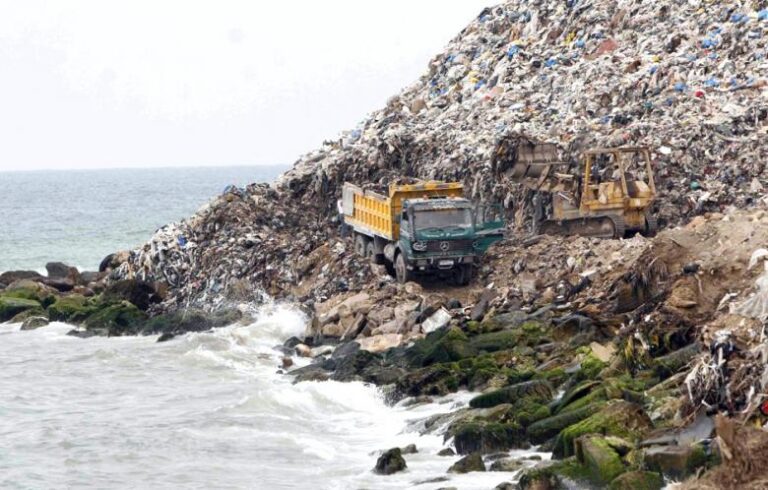
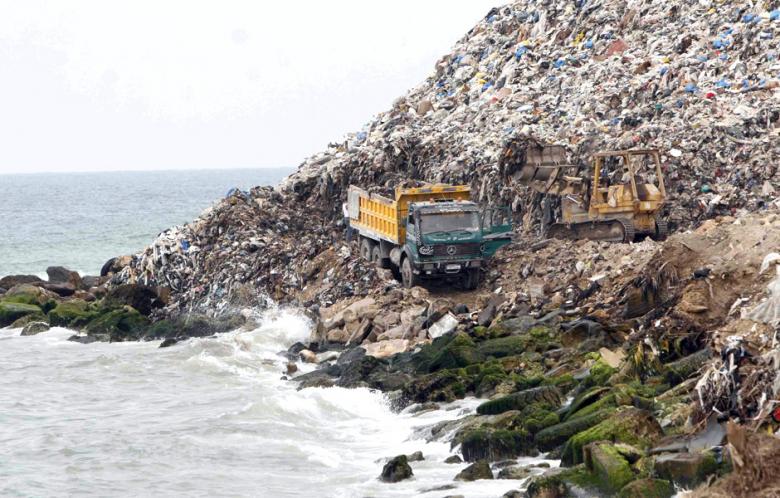
Taking a cue from its neighbor city Tel Aviv Lebanon’s regional “landmark”, Sidon’s notorious garbage mountain, will now become a city park. Sidon’s stench was once so bad that locals used to say that “you smell it before you can see it.” This hideous site, the result of garbage trucks dumping straight into the sea not only detracted considerably from the beauty of one of the country’s most historical cities, but has been causing serious marine pollution as well.
This ungreen reality is now in the process of being greatly improved, due to an industrious clean up project by the city municipality and overseen by the United Nations Development Programme (UNDP).
These efforts are now transforming the former Sidon dump also known as the Saida dump from a foul smelling garbage mountain into a green park: “It’s gone from a 58-metre (190-foot) trash mountain to an eight-metre green mound. We’ve cleaned up the sewage, and the trash mountain is gone,” said Sidon’s mayor Mohamed al-Saudi.

The garbage mound came into being during the 15 year Lebanese Civil War (1975 to 1990) when a place was needed to take large amounts of rubble caused by the bombing and shelling. At one point, a large part of the mound’s total size was made up of rubble from destroyed buildings.
Mayor al-Saudi, who came into office in Sidon with a pledge to rid the city of the dump, says he is proud of this project, which will join the former garbage dump to a large 33,000 sq. meter public park that will contain 100 year old olive trees and an amphitheatre.
The dump itself was moved further south.

Edgard Shabab, assistant resident representative and manager of the Energy and Environment Program of UNDP, told Your Middle East that in eight years time “the former mountain of shame will be part of a 100,000 sq. meter green park and something that Sidon will be very proud of. ”
Not everyone is impressed by the project, however, as the costs involved have exceeded more than $25 million USD which critics say could have been put to better use. The project has also caused damage to a long stretch of beachfront, according to Mohamed Sarji, president of the Lebanese Union of Professional Divers.
Despite the objections, the outcome of this project will be far better than the former smelly garbage mountain. Projects like this one will eventually make the entire region a much better place to live in, and help preserve the environment in Lebanon for future generations.
More on garbage dumps:
Garbage Strucks Dump Straight into the Sea in Lebanon as Hezbollah Takes Hold
A New Face for Israel’s Garbage Park
Cairo Sustainably Manages Garbage with Unionized Pigs and Ragpickers
Image of Sidon City from Shutterstock