
Home Blog Page 196

Recipes with lemons and limes to get your dirt out!

Tafline Laylin, nature, travel, photography, art, eco art, Earth Day, citrus, fruit, basket
The earth’s bounty is endless, even though our species is so intent on altering and destroying it. These organic lemons, limes and oranges provide much needed vitamin C. And they are perfect, no?

Lemon juice, white vinegar and essential oils – that’s all you need in order to avoid the negative health and environmental effects of cleaning

Did you ever notice how many cleaning products you use when you clean your house? Did you read the labels and the safety recommendations of any of them? Are you aware of how many chemicals are present in each product? Probably not. As we are mainly concerned about getting rid of the harmful bacteria and germs to prevent our children and us from catching a disease, the label only matters when it promises to kill 99.9% of the microbes.

Cleans the house, kills the fish

Ironically, while cleaning, you can be exposing yourself and your family to a number of toxic and harmful substances hidden behind the floral scent. The exposure to toxic cleaning products can have some immediate adverse effects but can also contribute to the development of other chronic diseases. Many ingredients found in common household cleaning products, like chlorine, ammonia, lye, sodium hydroxide, and propylene glycol n-propyl ether may cause lung irritation, eye and skin burn, increase the risk of asthma, and boost allergies. Other substances, like butyl cellosolve, petroleum distillates, nitrosamines and 1,4-dioxane may act as carcinogens, neurotoxins or hormone disruptors, causing the malfunction of the nerve and endocrine systems.

Besides the adverse effects of cleaning products on human health, there are also negative outcomes for the environment; after we use them, the substances find their way into the sewage and can reach rivers, the sea, and water reservoirs, affecting the balance of ecosystems. For example, phosphates – a common ingredient in laundry detergents- act as fertilizers in the waterways, producing algae overgrowth, which can deplete the water’s oxygen supply, causing the death of fish and other organisms.

The Environmental Working Group, an American non-profit organization focused on environmental health, did extensive research about the ingredients of 2,500 different cleaning products, ranking them into five categories from A to F: A being the safest. The results are quite alarming, as roughly 60% to 70% of the products were ranked as D and F, the most dangerous categories.

The research found that the most acutely hazardous cleaning products are corrosive drain cleaners, oven cleaners, and acidic toilet bowl cleaners, as they contain very aggressive substances to be more effective. However, in the rest of the categories, at least 50% of the products are still ranked in the lowest two places. In The Environmental Working Group’s website, you can find detailed information about brands, products and their specific threats to health.

There’s another way

At this point, you might be worried about what to do about this harmful stuff when you are supposed to keep your house clean. Well, you have some options. The first one is to pay more attention to the labels of your current products and try to find the ones that represent less hazard to health, avoiding those which are listed as poison or that include any of the hazard symbols in their labels. If you have to use any of the hazardous products, make sure to wear the appropriate protecting items, such as gloves and masks while cleaning and keep the areas well ventilated.

Try to use as less cleaning substances as possible. Dilute dangerous substances such as bleach by adding them to water (and never the other way around). Never mix different cleaning product. For example, Never mix bleach with acidic substances such as acidic toilet bowl cleaners. This action could release extremely dangerous chlorine gas. Chlorine is used as a chemical weapon in Syria these days, so you don’t want to produce it by mistake at home.

If you have a bigger budget, you can also visit the organic section of the supermarket or go to a specialized naturist shop where you will find a variety of safer options for cleaning based in bio-degradable and plant-based substances. But beware, some companies take advantage of the “eco-friendly” trend and they just green-wash their labels to make them look safe when they are not. Look for specific claims in their labels such as “no solvents,” “no phosphates,” or “plant-based,” instead of vague and ambiguous tags such as “natural” or “organic.”

However, if you want to be 100 percent sure that you are reducing your exposure to the minimum or if your budget is tight but you still want to keep healthy, we have excellent news for you. You can clean almost everything with ingredients that can be found in your kitchen. Hot water, vinegar, lemon juice, and baking soda can make everything look new while not compromising your health. Here there’s a list of DIY recipes that you can prepare and use for each area of your house:

All-Purpose cleaner– Mix equal parts white vinegar and water. If you care about the fresh smell, you can add a few drops of the essential oil of your preference (you can purchase it in any nature shop). Mint or lavender oil are good options for it.

Tile Grout Cleaner– Mix 1 part water and three parts baking soda mixed into a paste. Apply to grouty area and then scrub with a scrub brush or toothbrush and remove with a warm cloth.

Glass Cleaner- For most of the cases, plain water and a mop will do the job. You can also add 50 milliliters of white vinegar or one tablespoon of lemon juice for the hard-to-remove spots.

Cookware– Mix equal parts lemon juice with sea salt and scrub. Baking soda paste is also a good option.

Toilet Cleaner-Mix white vinegar with some essential oil for freshness. Scrub as usual with toilet bowl cleaner.

Air Freshener– You can put Essential oils mixed with water into a spray container, or buy an essential oil diffuser which will automatically do it for you.

This story was created by *ZAVIT – Israel’s Science and Environment News Agency
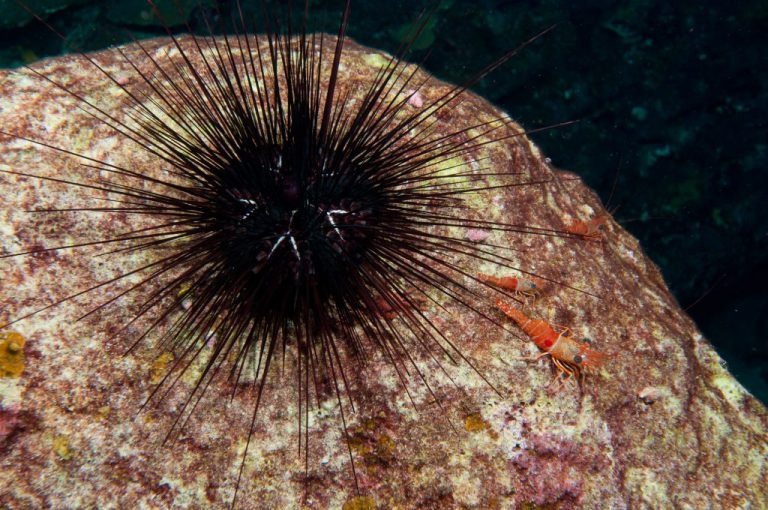
Urchins are real sea monsters invading the Mediterranean Sea

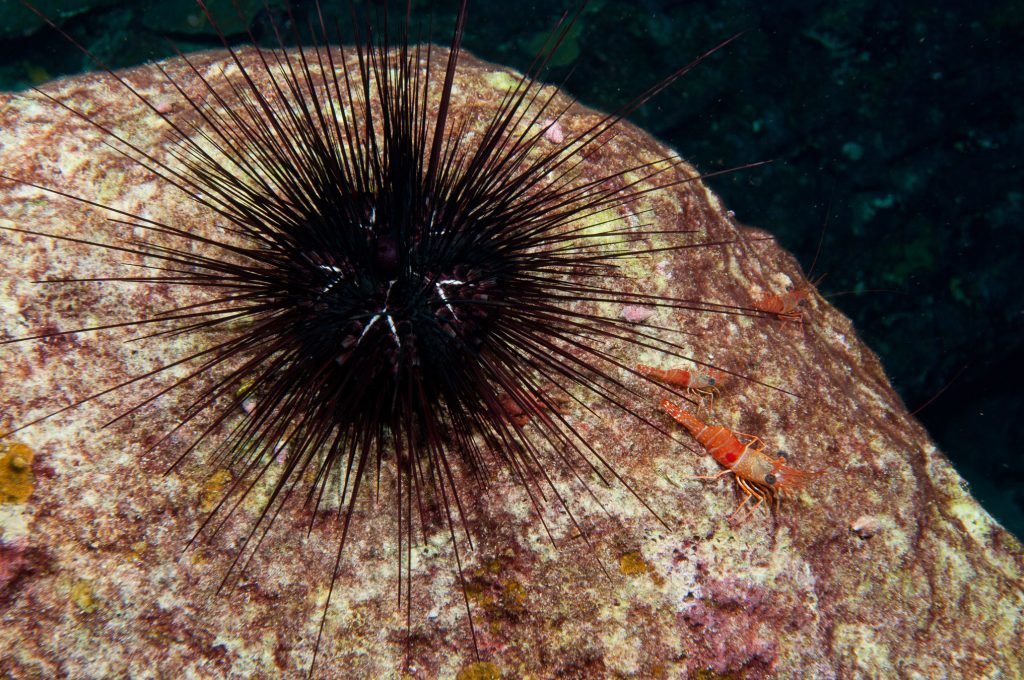
Diadema antillarum, similar to Diadema setosum

The Black Long-Spine Sea Urchin – a familiar creature from the Indian and Southern Pacific Oceans –is appearing the Mediterranean, with some serious implications for people and the ecosystem.

Those who dive, snorkel or even just paddle in the coastal waters of the Red Sea, the Indian Ocean or the Southern Pacific Ocean, are well familiar with the sight of the Black Long-Spine Sea Urchin. The species is now on the verge of colonizing the Mediterranean according to a comparative genetic research led by an Israeli scientist.

The sea urchin species (taxonomically known as Diadema setosum) is one of the most widespread species of sea urchins. Most people know better to avoid them; the urchins’ sting, while not lethal to humans, is painful and the toxins in its spines could cause inflammation or swelling.

Dr. Omri Bronstein is a researcher at the Geological-Paleontological Department in the Natural History Museum of Vienna and an expert on Echinoderm, the super-class of marine organisms that include sea cucumbers, starfishes, sea lilies, and sea urchins. Dr Bronstein expects the black sea urchin to become established in the Mediterranean in the near future. “These urchins, widespread in tropical waters are an invasive species in the Mediterranean where they are increasing in numbers,” he says. “The first specimen was discovered in 2006 near the coast of Turkey. This individual sample is now stored in the collections at the Steinhardt Museum of Natural History in Tel Aviv University, and since then, the species was observed multiple times around the Mediterranean basin.”

Bronstein is confident that even though a documented sighting of the urchin is yet to be made around the coast of Israel it is only a matter of time before this happens, and it is more than a gut feeling. In a recent research, published last November in the journal Marine Ecology Progress Series, Dr. Bronstein and his colleagues studied the expected dispersal of the species around the Mediterranean Basin. “We collected all available information about the global distribution of the species and created a model predicting its spreading like an invasive species in the Mediterranean. We discovered that it is highly likely that the species will become prevalent near the shores of Israel and indeed around the Eastern Mediterranean.”

Dr. Bronstein warns that in this event “it will be very problematic. We now know that the urchin species is a permanent resident in the Mediterranean at least since 2006. Indeed it disperses very slowly, but such is the nature of biological invasions; there is an interval between the initial invasion and the establishment of the species in the new location.” But this implies that the window of opportunity to respond to the looming invasion is narrowing: “once the population of urchins will reach a critical mass, the actual outbreak will happen quite rapidly. It is possible that one summer we will find our beaches filled with these urchins. Unless something is done, we could face a problem similar to that of the Nomad Jellyfish, the infamous creature that changed our sea-bathing habits considerably.”

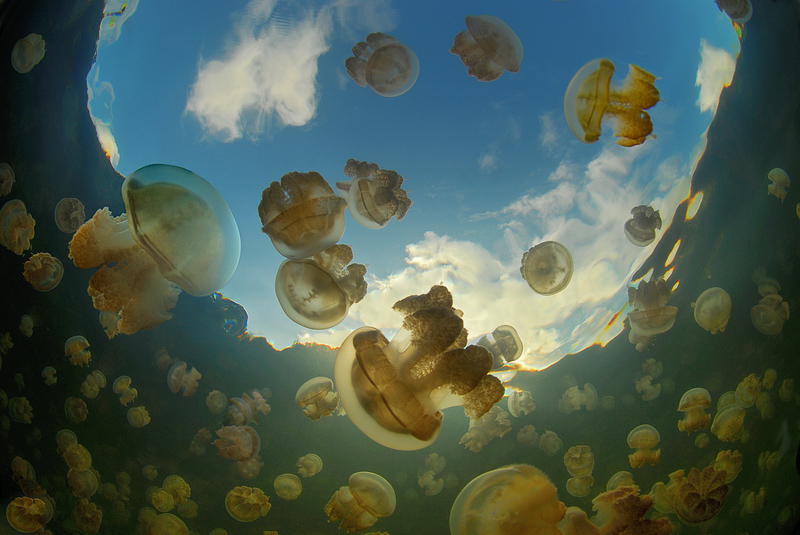
As many people know, the Nomad Jellyfish (Rhopilema nomadica) is also an indigenous species of the tropical Indian and Pacific oceans, migrated to the Levantine Basin through the Suez Canal in the 1970s. The serious economic and environmental impact the jellyfish inflicted led to its classification among the 100 worst invasive species in the European Union.

While it seems one species cannot destabilize an entire ecosystem, Dr. Bronstein stresses that it could dramatically disrupt a delicate balance and harmfully alter its environment. He gives an example from the shores of East Africa where intensive fishing activity removed virtually all of the species’ natural predators leading to a population outbreak: “they became so widespread that in some places there are scores of urchins per square meter – it’s like a blanket of black spines stretching for kilometers – it is impossible to put one’s foot in the sand.” In sites where sea urchin populations exploded and the economy depends on coastal tourism and recreation, workers from nearby villages are recruited to physically remove the urchins from the shallow waters each morning; something that needs to be repeated every day. “This is an example of how bad things could get. If no natural enemies exist in the Mediterranean things could go very wrong.”

There are local sea urchins species in the Eastern Mediterranean, the most common is the purple sea urchin (Paracentrotus lividus), a species very different from its black relative: it is smaller, with shorter blunted spines, and it finds cover in rocky habitats away from those engaged in leisure activities. Also unlike the black sea urchin, the purple urchin seems to be slowly disappearing. It is assumed that rising sea temperature – expected to further increase with climate change – is the possible explanation. While the purple urchin prefers temperatures of up to 30C, the black sea urchin thrives in warming sea water. “The black urchin habitats are in the Indian Ocean, the Red Sea and the Persian Gulf where temperatures are higher than the Mediterranean” explains Dr. Bronstein. “As the Mediterranean Sea temperature increase, it will only boost the species’ capacity to establish itself. Additionally, since it is adapted to very shallow waters – it is abundant in waters 20 centimeters deep – it would be a problem for any beachgoer.”

So how did the black urchin migrate to the Med? Dr. Bronstein explains that “if we consider the possibility that the species migrated via the Suez Canal – like many other invasive species into the Mediterranean – you can expect to find them along the coasts of Egypt and Israel. But although an extensive monitoring program is in place – led by the Israel Nature and Parks Authority – this species is yet to be documented in the region. We currently assume that it was actively transferred by human activity and not by an independent migration northward through the canal. One possibility is that larvae – the juvenile form of the species – were transported in ship ballast water which was released in a Mediterranean port. An alternative explanation is that the species, grown in aquaria around the world, might have been – intentionally or accidentally – released to the open sea.

What could be done? Dr. Bronstein would like raising public awareness to urge policymakers to act before the black urchins colonize the eastern Mediterranean. An investment in monitoring, and reaching an understanding where the urchins come from, will assist in developing policy measures to address the issue: “if decision makers would understand that the likely economic damages far exceed any investment in early prevention or elimination, it might help at least to mitigate future negative outcomes” he concludes.

Thanks to Zavit!

Israeli tech to tackle bacteria resistant to antibiotics

bacterial in petri dish

The first person ever to be treated with an antibiotic was a policeman from Oxford, England in 1941. While tending his garden during his day off, the man scratched himself on a rose thorn, which soon led to an infection. Two months later he found himself on the verge of dying in the Radcliffe Infirmary. A team of doctors had managed to synthesize a small amount of penicillin, which was discovered some 12 years before by Alexander Fleming but had never been used on a human (and no one even knew if it would work). The treatment allowed the policeman to live a couple more days, but he died shortly after the doctors ran out of medicine.

Nowadays, there are no such shortages, and many lives have been saved due to antibiotics. However, massive industrial utilization and misuse of the drug, have imposed such a considerable selection pressure on bacteria which that many of them have become resistant to antibiotics. “Antibiotic resistance is one of the most complicated problems we are facing today,” says Prof. Nadav Davidovitz from the Ben Gurion University, who was part of the special multidisciplinary effort addressing the problem.

Are antibiotics really killing the bacteria?

Bacteria are single-celled organisms that can be found all over the inside and outside of our bodies. Many bacteria are not harmful. In fact, some are actually beneficial to the body, including most of the bacteria that live inside our intestines.

Antibiotics are drugs that fight infections caused by bacteria in both humans and animals, either by killing off the bacteria or by making it more difficult for them to grow and multiply. Antibiotic resistance occurs when bacteria, by natural selection, become immune to the drugs designed to kill them; in short, the germs are not killed and continue to grow. Therefore, antibiotic resistance does not mean the body becomes resistant to antibiotics, but the bacteria become resistant to the antibiotics.

Infections caused by antibiotic-resistant germs are difficult and sometimes impossible, to treat. In most cases, infections require extended hospital stays, additional follow-up doctor visits, and costly and toxic alternatives. “Some patients can no longer be treated with antibiotics because certain bacteria are completely resistant,” says Dr. Gili Regev-Yochay, Director of Infectious Disease Epidemiology Unit from Sheba Medical Center.

Despite significant advances in science, there has been a steady increase in mortality from infectious diseases due to the emergence of bacteria that are resistant to a wide variety of antibiotics. It is estimated that by 2050, global mortality associated with antibiotic resistance will reach about 10 million people per year. The World Health Organization has recently included antimicrobial resistance in its list of the ten biggest threats to global health in 2019, emphasizing the need for an international effort to tackle the problem.

Antibiotics are used in livestock to treat and prevent diseases. In the second half of the 20th century, they have also been used to increase the growth rate in farm animals. Although data collection is highly insufficient so far, it is estimated that global antibiotics use in food production ranges between 63,000 tons to over 240,000 tons. In the US, farm animals consume twice as many antibiotics as humans do every year.

Experts come together in “hackathon” to discuss solutions

In this context, a 36-hour hackathon (a multidisciplinary debate) was carried out at the Center for Digital Innovation (CDI) in Beersheba, in southern Israel, with the aim to boost entrepreneurship and answer one central question: How do we stop the rise of antibiotic resistance?

“We believe that solving complicated problems requires people from various disciplines from different sectors of society and that is what we hope to achieve through this hackathon,” says Shahar Cahanovitz from the Heschel Sustainability Center.

The hackathon consisted of nine teams, each one covering a specific aspect of the issue of antibiotic-resistant bacteria – resistant bacteria and ventilation systems, monitoring control and antibiotics, reducing antibiotics in the animal industry, medical education, vaccines to prevent infection, contaminated sewage treatment, media and press, reducing the duration of treatment and intervention in the food chain system.

At the end of the debating marathon, 15 judges chose three groups that had come up with the most promising and worthwhile ideas. The jury consisted of experts from different fields ranging from professors and researchers to entrepreneurs and doctors.

“The fact that a potential solution to a problem of this magnitude may arise from an outright multidisciplinary field of professionals is simply fascinating. We sat down for two days straight, without distractions and managed to produce something that otherwise would have taken months” says Dr. Uri Lerner, a Mimshak graduate (an Environmental Science and Policy Fellowships Program) working in Maccabi Healthcare.

Toilet bowl cleaner with an active antibiotics breaker

The team for reducing antibiotics in the animal industry came off as the winner of the hackathon. The main question the group asked itself was: How much antibiotics do animals actually receive? In search of the answer to this question, the team concluded that monitoring must be the first step. By having accurate data on how much medicine livestock are receiving, measures may be taken to either adjust or reduce the drug dosages. The outstanding feature of the approach lies in an innovative system named ‘E-prescriptions for veterinarians,’ in which the animal’s drugs would be electronically prescribed. In practice, this process would be directed by the Ministry of Health and greatly simplify the monitoring efforts.

Save the turtles – from people!

costa rica sea turtles dangerous people

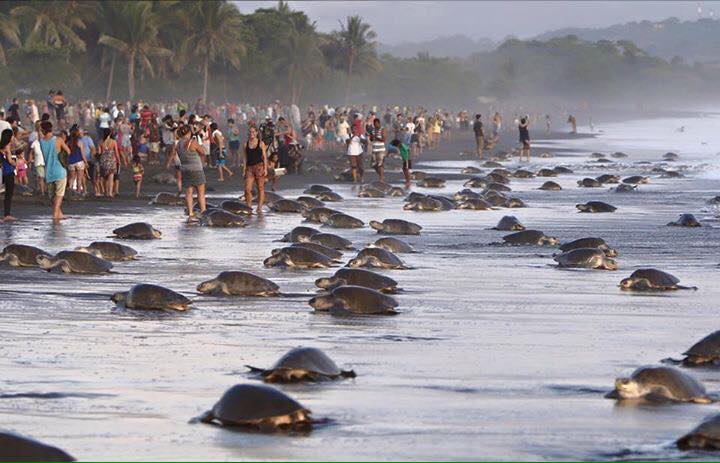
There is a vast number of captive turtles kept as pets in homes, and it is up to their owners to give these wild animals their freedom back. At the Gazelle Valley Park in Jerusalem, an unusual animal welfare initiative aims to protect the local turtle population.

Turtles aren’t domestic animals and should live in their natural habitat. But over the past decades, massive development has taken place over what were previously open areas where turtles once thrived. This urbanization also includes paving roads that endanger the animals. For this reason, it is necessary to protect them from confinement and preserve their environment.

World Turtle Day is celebrated May and is sponsored by the American Tortoise Rescue, a nonprofit organization established in 1990 for the protection of turtles. This day was created to help people celebrate turtles and tortoises and protect their disappearing habitats.

200 turtles returned in 5 days

Gazelle Valley Park, an urban nature park in the heart of Jerusalem, is taking advantage of the World Turtle Day by campaigning for people to give up their pet turtles and bring them to the park. This park is the largest urban nature site in the country and is the consequence of planning in collaboration with the general public. The valley encompasses an area of about 25 hectares, where, over the years, a herd of 30 deer has lived.

A similar initiative was launched last spring by the Jerusalem Municipality, the Israel Nature and Parks Authority and the Gazelle Valley Park. “We contacted the Israel Nature and Parks Authority, and we told them about the fact that people have turtles at home. We worked together in a campaign to ask people to bring the turtles to Gazelle Valley. We were amazed to see that in 5 days, we had over 200 turtles returned,” says Yael Hammerman, Director of Gazelle Valley Park.

The turtles are divided into three different groups: unhealthy turtles that are taken to the Israeli Wildlife Hospital for rehabilitation, turtles in good health (either due to short captivity time or good care), and turtles that need to stay in Gazelle Valley Park in order to to be evaluated to determine if they should return to nature.

Turtles in danger

There are two tortoise species in Israel: the Greek tortoise (Testudo graeca), which can be found throughout the country, and the Negev tortoise (Testudo werneri), which inhabits mostly desert areas.

According to the International Union for Conservation of Nature (IUCN), of all the recognized species of turtles and tortoises, 51.9% are Threatened, this includes species that are Critically Endangered, Endangered and Vulnerable. This means that more than half of the world’s turtles are in trouble.

Turtles from Asia have the highest percentages of endangered species, due to much higher levels of exploitation. They are collected and traded in the East Asian meat consumption trade, and their shells and bone are also used for traditional Chinese medicines. Live animals of all sizes, especially of rare and/or attractive species, have been poached and illegally marketed to the high-end international pet trade, primarily in China, but also to other Asian countries (e.g., Thailand, Malaysia, Japan, and Indonesia) as well as to Europe and the United States.

One of the biggest threats to turtles is keeping them as pets, which is happening worldwide; Israel is no exception. Having a pet turtle is both a problem for the turtle, which is deprived of its natural habitat and for the turtle owner, who might get sick from the diseases that turtles carry (e.g., salmonella). On the other hand, many pet owners are unaware of the nutritional needs of these animals. “Turtles get sick in people’s homes because they receive insufficient or inappropriate food,” says Yael Hammerman.

Another problem turtles face in captivity is when females want to lay their eggs. In the absence of a male, a female turtle will lay them regardless, but they will not be viable. In addition, when turtles do not have a suitable substrate to deposit their eggs, they will lay one or two eggs at a time over a few weeks rather than the entire batch at once; they may even not lay any eggs at all. The unlaid eggs will become increasingly calcified the longer they are held, making them more prone to breaking inside the turtle, which is a condition called egg-yolk peritonitis and can be fatal if not treated.

Free the turtles, responsively

If pet owners decide they can no longer care for their turtles, they sometimes free them on their own accord, which is illegal. These domesticated turtles may not survive on their own and may infect wild turtles with diseases they contracted during captivity. Released turtles that are not native to the area can out-compete local species for food and habitat, thus threatening the original biodiversity.

“If you see a turtle walking outside, enjoy by watching it but don’t pick it up! We want to see more and more turtles in the wild and not in houses. Let’s respect nature by helping it to be how it is supposed to be,” says Hammerman.

Kevin Packer, ZAVIT* – Science and Environment News Agency

Make Artjuna Cafe your first stop in Goa, India

goa cafe best

Planning on living on a bowl of rice a day in India, or under the age of 25 and hostel jumping in dorms with bed bugs? This article is not for you. Mature-ish, aging hipsters read on: Artjuna is your first stop in India

With the world at our fingertips, working remotely from anywhere, and more time for leisure as many of us skip the high-stress jobs, why not go to India? Home to yoga, ancient mystics, and the kindest people on the planet, India is one of those places that can change your soul and course of life. I was always dreaming of India but hadn’t managed to get there before I had kids. With 2 small ones, I wondered, how do I jump in? Known as “India Light” Goa on the coast is a perfect first stop to exploring India. Come in the fall when the weather is drier and less hot and make sure that you start everything off at Artjuna Cafe in Anjuna, Goa. This is what I did with my family of four and parents.

Moshe Inbar and his life partner Anastasia run the dynamic cafe-cum-community center cum-DJ hub. Even if you don’t love trance music and late night dance parties which the town is famous for, you will meet a wonderful community of kind souls from around the world who can help you navigate your first steps in India. Where should we go and when? How can we rent a house? Where should we eat, is it safe? Where can the kids go to school? I asked all these questions to Moshe before arriving to Goa and throughout our 6 weeks in Anjuna and Vagator he was the best ambassador to the region, connecting locals from Goa and Mumbai to a rich and varied international crowd. He gave his his best advice with all his heart and I feel with left Goa with a new friend.

Moshe’s cafe on one of the main streets provides healthy and clean sustenance in mornings and afternoons. Walk in and you will enter a quiet little kingdom with treehouses for kids to explore.  I appreciated the high level yoga classes run by his Iyengar teacher friend Ian Teger.

This is how it started before we travelled to India:

After hearing Moshe’s name a few times from my friends in Israel, I was on a quest to meet him. We connected by WhatsApp and he was answering any questions I had. I found a place on AirBnB, asked him if it sounded reasonable and after yes, booked. The first things we did after arriving to Goa, via Mumbai, was drop our bags, rent a car through our host, get a SIM card and then we visited Moshe.

We put his café in Waze and found it immediately. A kind guard helped us into a parking spot across the road from the café and there we would find our new home in India for 6 weeks at Artjuna Café.

Artjuna functions as the cultural center of India, a drop off point for newcomers, aging hippies, DJ’s, locals, Indians from Mumbai, yoga enthusiasts and people who value good, healthy food, health drinks and coffee. Back in the days when I was a backpacker I would sail from hostel to hostel asking the guy in town a week before me about what’s going on, what I should do. Today, 20 years later, I like my privacy, have an aversion to bed bugs most hostels aren’t for me anymore. This time around we would rent a small house with a bedroom and bathroom for everyone in the family.

Now we have the Internet beyond the Lonely Travel guides and travelling becomes less about being the lone wolf and finding new frontiers, and more about building community, the community you always wanted and how to have authentic experiences with people you meet along the way. In India, Artjuna is the place to start building those foundations.

Spiritual singing with Marina Kalyani Pieri and Paco Rodriguez

At its core, Artjuna’s beating heart and brains is Moshe, and his less-public partner Anastasia who runs the boutique selling her own designs in clothes and jewelry, with a collection of things hand made by others. A couple for a couple of decades with two young girls, they both started in the trance scene in Goa years ago. Some fifteen years on with lots of lessons learned, they run the most successful café in the region, for many reasons. Great food, reliable information and advice you would give to your best friend, yoga, community events, and a great clothing shop if you want to avoid the overheated markets.

I’ll take two!

Food

There is really something extremely yummy for everyone. My daily meal after an hour and a half of yoga every morning was often a Greek salad with bread, or a granola bowl with fresh fruit. Moshe is from Israel so he really knows how to serve up fresh and healthy Mediterranean food. While it’s not hard to find fresh fruit and veggies in Goa, it is a labor making sure that you can eat them, that they’ve been cleaned appropriately. His staff is local. Try the ABC juice.

Vibe

Moshe and Anastasia

Alcohol is not served at Artjuna and there is a no drugs policy. There is an annual art show where you can buy art made by Goans and travellers from all over the world. A woman in a yoga class (from Italy) gave me her pants. The people there are amazing.

Yoga

What kept me coming back daily to Artjuna was the yoga sessions, though about half of the cafe seemed to be just in it for the friendship. Like an Indian version of entering a Cheers set. Many are throwbacks from the 90s rave scene, but there is a great mix of ages, younger and older too.

Ian Teger, while leading a yoga retreat in Jaffa

I enjoyed Iyengar yoga sessions with in-house yoga teacher and good friend to Moshe, Ian Teger. He teaches multiple levels at once, from the just-past-beginner to the master class level student. The very beginners can start studying with Ian’s protégés (one has a great clothing shop too nearby – see Ondi) in a beginner class after the first of the morning.

The classes are challenging, restorative and a lot of fun. Ian takes the less serious route that most Iyengar teachers embrace. The class is full of jokes, sometimes in Yiddish. Ian is originally from the UK and was a close student of BKS Iyengar, a yoga guru who brought yoga to the western world.

While many people struggle to book week-long or longer detox of yoga sessions before they travel to India, I think the best way to get the most for your money and social life is to find a local place to stay (we stayed with a local Goa family) and spend most of your time at Artjuna with Moshe and his crew.

For those with kids, try the Holistic Yellow School, where hippy kids get educated. Drop-ins allowed, even for weeks at a time. Meet you there next winter?

::Reach out to Artjuna and Moshe via Facebook

Highschool kids develop algae superfood to feed Africa’s hungry

Algae as superfood? Countries like Japan have already known for years about the possibilities of using algae as a nutritious food product, as any sushi fancier will attest to. Growing algae to feed the world’s hungry may soon become a viable reality as some forms of algae like spirulina, actually a form of cyanobacteria  and up to now much more expensive to produce as a food source.

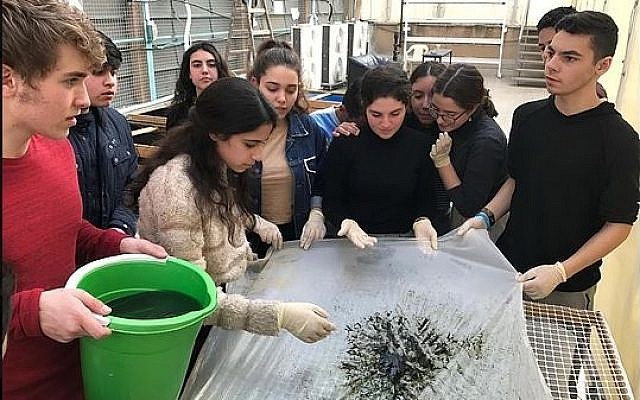
This cost factor may now be reduced significantly due to a project being conducted by high school students at Israel’s Gymnasia Herzliya in Tel Aviv. The school program actually began back in 2013 when the high school students began experimenting with growing the algae in plastic bottles in what they referred to as the Algeed Superfood Project.

Spirulina has been found to contain as much as 70% protein and as such can be a tremendous help to feeding countries such as those in Africa whose large populations suffer from high levels of malnutrition. Since its original inception, the Tel Aviv high school project has expanded to actual involvement with African countries like Rwanda and the Democratic Republic of the Congo.

“The idea is to find a low cost nutrition solution to feed the world’s hungry,” says Ben Berger, the project head. Congolese Agricultural representatives recently visited the high school, whose students took on the project six years ago to find a way to reduce significantly the cost of producing the highly nutritious algae at a lower cost than had been done up to now when spirulina was mostly sold in health foods stores at a much higher cost.  Spirulina in its natural state, usually looks like the photo below:

Dr. Zeev Degani, the school principal, is very happy that the project is taking place at his school which has expanded it to the point where some of the students have actually visited African locations to see the progress being made to produce the algae there. The Gymnasia Herzliya students have developed a way to grow the algae in plastic drink bottles, an item that is plentiful all over Africa and usually discarded in trash dumps. The program was aired recently on Israel’s Channel 13 news program.

Beginning originally on South Africa, the project is also being tried in Rwanda, Ethiopia, Kenya and the Democratic Republic of Congo, where more than 1.5 million children suffer from various forms of malnutrition. “Instead of being dependent on aid programs, which usually end after a period of time, why not focus on something that will enable countries to provide their own nutrition solutions?” said a representative of the Lwiro Research Center of Natural Sciences in the Dem. Republic of the Congo.

More about algae as a food and fuel source:

Adding spirulina to felafel could yield the next superfood

Algae returns as fuel for our future

Israeli Teens Bottle Algae in “Algeed” Superfood Project for a Hungry Africa

Something for everyone: Family friendly theme parks in Spain

0

Villa Minima, LAD, Mediterranean Sea, minimalist villa, green villa, minimalist villa, rocky turkey, turkey, caterpillar home, parallelepiped,

With the stunning Spanish sunshine and a rich culture to explore, Spain is a fantastic destination for a family holiday. Yet its theme parks can lift your holiday from good to great.

So, when you’re browsing for spacious villas in Spain that are large enough for the whole family, find the nearest family-friendly theme park to you with this list.

PortAventura, Mainland Spain

PortAventura is one of the most famous theme parks in Spain, bringing in approximately five million visitors a year. Within walking distance from Salou on the Spanish Mainland and only around an hour’s drive from Barcelona, PortAventura is a popular day out for the whole family. Nearly 300 acres in size, the huge park is split up into six themed areas. Enjoy the laid-back atmosphere in Mediterrania, where you can ride on a steam train, or set sail through the park to the Imperial China world.

In China, the atmosphere is more upbeat with iconic roller coasters such as the Dragon Khan with its 8 loops and speeds of up to 110 km/h. Scaling 76 metres tall, Shambhala is also here and is the tallest roller coaster in the whole of the park.

Next to PortAventura are two other great theme parks, Ferrari Land and PortAventura Caribe Aquatic Park. With water rapids, slides, an indoor splash pool and a large wave pool, the Aquatic Park is perfect for cooling off on sunny afternoons. Ferrari Land was inspired by the Italian car and offers not only rides and roller coasters but unique F1 racing experiences in their immersive 4D cinema.

Siam Park, Tenerife

With waterslides, rides and rapids, visit the popular Siam Park in the Costa Adeje resort in Tenerife. The park was voted last year as the best water park in Europe in TripAdvisor’s Traveler Choice Awards and it doesn’t disappoint. Its main attraction is the plummeting Tower of Power. With a knee-trembling 28m drop, the Tower of Power is not for the faint-hearted.

The whole family can experience the epic Vulcano – with four-person rafts taking you through dark tunnels. Or pair up and ride The Gigante as you navigate through the twists and turns backwards.

Unleash your competitive side and race down the Naga Racer slides or relax on the Lazy River and enjoy the Thai inspired setting. With a wave pool and slides suitable for all ages, the whole family can feel the excitement together.

Oasys MiniHollywood, Almeria

For a theme park with a twist, visit Oasys MiniHollywood. Set in the vast Tabernas desert, venture to Almeria in southeast Spain to discover this attraction. Enjoy an action-packed afternoon in the wild west on this classic movie set, which was the location for many spaghetti western films in the 60s and 70s. Visit the interactive prop museums, stroll around the cactus gardens and get involved in the western shows. With Can Can dance shows in the saloon, a themed pool area and a small zoo, there’s a lot to explore here.

Terra Mitcha, Benidorm

A theme park with a historical twist, take the family to Terra Mitcha in Benidorm to enjoy a world where five ancient civilisations meet. The park has five distinct areas: Egypt, Rome, Greece, Iberia and The Islands with themed roller coasters, rides and slides to discover. In ancient Greece, immerse yourself in the avant-garde world with a 5D cinema that’s set in an authentic Parthenon. Or, if you’re feeling brave, ride the Magnus Colossus roller coaster.

In Egypt, ride in a Pharaoh’s sarcophagus through the twists and turns before you plummet 20 metres in this epic water rapid ride. Enjoy the bubbling hot tubs and fountains in the Nile River and, for something downbeat, sail from the shores of Egypt to Iberia to take in the seafaring landscape.

Scientists remake 5,000 year-old brew from Pharaoh’s yeast

0

A 5,000 year old brew is resurrected using yeast pulled from ancient Egyptian pottery. Researchers say: “Now know what Philistine and Egyptian beers tasted like.”

What kind of beer did Pharaoh drink? In ancient times, beer was an important ingredient in people’s daily diet.  Great powers were attributed to beer in the ancient world, particularly for religious worship and healing properties.

Israeli researchers examined the colonies of yeast that formed and settled in ancient pottery from Egypt. Ultimately, they were able to use resurrect this yeast to create a high-quality beer approximately 5,000 years old.

Many cooks were invited into the scientific “beer kitchen” to isolate the yeast specimens from the ancient debris and to create a beer with it. First the scientists reached out to vintners at Kadma Winery. This winery still produces wine in clay vessels, proving that yeast may be safely removed from pottery, even if it had lain dormant in the sun for years.

The yeast was then photographed by Dr. Tziona Ben-Gedalya at the Judaea Region Research and Development Center.  Following her initial examination, the team reached out to archaeologists Dr. Yitzhak Paz from the Israel Antiquities Authority (IAI), Professor Aren Maeir at Bar Ilan University and Professors Yuval Gadot and Oded Lipschits from Tel Aviv University.

These archaeologists gave them shards of pottery that had been used as beer and mead (honey wine) jugs back in ancient times—and miraculously, still had yeast specimens stuck inside.   These jars date back to the reign of Egyptian Pharaoh Narmer (roughly 3000 BCE), to Aramean King Hazael (800 BCE) and to Prophet Nehemiah (400 BCE) who, according to the bible, governed Judea under Persian rule.

The researchers, with the help of HUJI student Tzemach Aouizerat, cleaned and sequenced the full genome of each yeast specimen and turned them over to Dr. Amir Szitenberg at the Dead Sea-Arava Science Center for analysis.  Szitenberg found that these 5,000-year yeast cultures are similar to those used in traditional African brews, such as the Ethiopian honey wine tej, and to modern beer yeast.

Get a tej recipe here! 

Now it was time to recreate the ancient brew.  Local Israeli beer expert Itai Gutman helped the scientists make the beer and the brew was sampled by Ariel University’s Dr. Elyashiv Drori, as well as by certified tasters from the International Beer Judge Certification Program (BJCP), under the direction of brewer and Biratenu owner Shmuel Nakai.  The testers gave the beer a thumbs up, deeming it high-quality and safe for consumption.

Dr. Ronen Hazan, Hebrew University-Hadassah School of Dental Medicine: “The greatest wonder here is that the yeast colonies survived within the vessel for thousands of years—just waiting to be excavated and grown. This ancient yeast allowed us to create beer that lets us know what ancient Philistine and Egyptian beer tasted like. By the way, the beer isn’t bad.

“Aside from the gimmick of drinking beer from the time of King Pharaoh, this research is extremely important to the field of experimental archaeology—a field that seeks to reconstruct the past.  Our research offers new tools to examine ancient methods, and enables us to taste the flavors of the past.”

Dr. Yitzchak Paz, Israel Antiquities Authority: “We are talking about a real breakthrough here. This is the first time we succeeded in producing ancient alcohol from ancient yeast. In other words, from the original substances from which alcohol was produced. This has never been done before.”

Prof. Yuval Gadot, Tel Aviv University’s Department of Archaeology and Ancient Near Eastern Cultures: “We dug at Ramat Rachel, the largest Persian site in the Judaean kingdom, and found a large concentration of jugs with the letters J, H, D – Yahud – written on them. In a royal site like Ramat Rachel it makes sense that alcohol would be consumed at the home of the Persian governor.”

Prof. Aren Maeir, Bar-Ilan University’s Department of Land of Israel Studies and Archaeology: “These findings paint a portrait that supports the biblical image of drunken Philistines.”


Tons of trash left at picnic sites by Israelis after Passover

0

Israel’s recent Passover holiday period, which also included opening season visits to beaches and various picnic sites, is still being dealt with by national park and forestry employees long after holiday goers returned home. Whether it be national forests, rivers and beaches, or city public parks, the amount of trash and food waste left behind is staggering, to say the least.

Employees of the Israel Nature and Parks Authority , in charge of watching over forest lands and national parks, estimate that as of Sunday, April 28, more than 700 tons of trash is still “onsite” and not yet been picked up from locations where holiday goers visited during the 8-day holiday.

The following video (in Hebrew) from the Channel 12 news site gives some indication of the amount of trash left behind, including picnic grills, folding chairs, and mountains of throwaway plastic dishes and utensils.

According to Channel 12 News reporter Guy Veron, literally tons of waste items of all types are still being picked up from these sites in an ongoing operation that is expected to take several days to complete. Environmentalists dealing with the problem of picnic trash left in these locations, including the country’s beach fronts, point out that much of the problem is simply a lack of education in environmental issues the country faces, along with a sheer disregard for protecting Israel’s fragile environment.

Although trash bins and dumpster containers are often available to put the trash in, many holiday goers simply do not use them; often leaving their trash on the ground or on beach areas where they spent their holiday time.

Spokesperson for the environmental organization Zalul say that litter by beachfront visitors is a constant problem; especially on weekends and holidays. As much of the beach litter includes throwaway plastic bags, bottles, straws and dishes, some of it gets washed out to sea, resulting in a danger to marine life.

“The Mediterranean Sea contains so much “micro-plastic” waste that literally all fish and other marine animals, including birds, have these waste particles inside their stomachs, resulting in eventual death for many of them,” a Zalul spokesperson once told me.

It is a shame that environmental awareness is not taught more in the schools. Parents pass their lack of environmental knowledge and concern on to their children, who continue their parent’s bad habits in respect of concern for the country’s natural resources. Protecting the environment should be considered an important school subject, since the country’s future depends on it.

More about trash accumulation and recycling:

Israel’s Beach Season Opens With Litterbugs

Drinking Beer in Cans and Other Middle East Recycling Problems

Jordan Talks Plastic Waste: Action Wanted!

Photo of Kinneret lake shoreline : Gil Eliau/Haaretz

Golan wolves make local farmers howl with rage

Wolves are largely a protected species in Israel and are not creatures that one would expect to find in this part of the world. However, a sub-species of the northern grey wolf, originating in India is actually thriving on the Golan Heights, causing local farmers and cattle herders to literally be at war with these furry cousins of domestic dogs.

In fact, the wolves have so much lost their fear of humans that they are often seen coming into Golan Heights towns and settlements to raid garbage bins in search of food. They are also something to be feared due to the risk of spreading rabies and other diseases as well as the danger of their snatching domestic animals and even small children from campsites as part of their food search.

Golan Heights wolves are larger than a smaller cousin Canis Lupis Arab, that lives in Israel’s southern desert region and stand around 26 inches (65 cm) high and weighing around 45 pounds (20.5 kg) fully grown. Golan wolves weigh around 70 pounds (32 kg) when fully grown. Despite being larger, Golan wolves are often found living happily in minefields that are still considered as unsafe for humans to enter into.

Although the wolves are a protected species, the Israeli government has been paying a bounty of NS 2,000 or $500 for each one that strays out of its protected “conflict” area. Farmers complain that they lose at least 200 cattle and sheep annually to these predators, whose light weight prevents them from exploding still lethal mines. Wolves are the largest predators in their Golan habitat; and normally prey on animals such as gazelles, wild pigs and small mammals like rabbits and hyrax (a small rodent-like animal that is actually related to elephants). But hoofed livestock are often on their dinner menus as well; especially when wild game is scarce.

Besides occasionally shooting them, other measures such as illegal poisoning are used to control the wolf population. Nature authority staff members are trying to find ways to keep the wolves under control without having to resort to killing them. Being highly intelligent and having lost much of their fear of man, their only real enemy, the conflict between man and wolf appears to be an ongoing problem, with a viable solution still to be found.

Read more on endangered wolves and other animal species:

CNN: The sixth mass global extinction has arrived

Only Two Countries in the Middle East Protect Wolves

Kuwaiti Kills Wolf then Shows off

Photo of Arab wolf on the prowl: Times on Israel/Wikipedia commons

Impact of Industrial Robots in the Food and Agriculture Sector

0
Flux developed Eddy, a robot developed out of Israeli military tech. The idea is to feed the world, using hydroponics.

According to the United Nations, Food security is one of the primary human rights. We all cannot live without food and thus, agriculture is the most important sector in the world. A failing agricultural system results in hunger and famine with the possibility of death. This means that we have to strive to protect and develop this field if we want to survive.

Technology has become a key pillar in ensuring increased productivity and sustainable food security. With automation recently changing how we carry out agriculture, industrial robots have had a great impact on the field. Some of the impacts include:

1.    Increased Productivity.

Robots by design, programmed to process commands and tasks way faster than the human mind can. This allows them to complete tasks that would take farmers and workers days, in a few hours if not minutes. This allows Food processing companies to process more products thus delivering adequate products to be available in the market.

When robots are utilized in the harvesting, planting or even milking of dairy animals, they are able to complete these tasks much faster compared to the human workers. This ensures more productivity on the farm and the factories.

2.    Reduced employee Injuries.

Whether you are working at the factory, farm or even the ranch, accidental injuries are almost unavoidable due to some of the working conditions. However, automation has allowed for robots to be deployed in some of the risky and dangerous working areas thus freeing the workers to be retrained in other important tasks in the industry.

The introduction of Cobots has eliminated the risk of injuries caused by traditional robots and thus allowing workers to enjoy a safe and enjoyable working environment with some of the Cobots working as assistants during difficult tasks.

3.    More room for Innovations and Ideas.

With the robots taking over some of the most mundane and repetitive tasks, the workers are relieved of these tasks and get the chance to learn and practice more demanding tasks in the industry. This environment allows them to come up with new ideas and innovations that will increase the industries’ efficiency and productivity.

The collaboration between these Industrial robots and farmers has allowed them to come up with modern ways of farming that have increased their total output and thus resulted in increased food production.

4.    Consistency in Production.

Having been programmed to conduct tasks with the highest degree of accuracy, Industrial robots are able to deliver products of the same quality irrespective of the time they have been running. Unlike human workers whose quality of work depends on the state of their bodies, robots are able to work 24/7 without tiring while maintaining the same quality.

This allows the farmers to be consistent in the amount and quality of goods they produce and also allows the industries to meet deadlines set by the management and also satisfy the demand in the market during the busy seasons.

5.    Reduced Production Costs.

Despite the industrial robots for sale being quite expensive, they have a very fast payback period. By working for 24 hours each day of the year, the robots are bound to pay back your money in less than three months and thus ensuring the farmers and industries gain profits.

The robots are also quite easy to maintain and thus do not require regular repair costs besides electrical charging. By reducing the time it takes workers to complete tasks and minimizing the number of waste materials from production, the industries are able to produce more products with less raw materials.

Conclusion.

The impact Industrial robots have had on the Food and Agriculture sector goes beyond the above stated. More jobs have been created; production time reduced, better services delivery established to customers among many other benefits. This implies that if more farmers and food processing industries adopt the Industrial robots, the problem of security will be a thing of the past!

4 Sustainable Ways to Promote Your Business

pimp your ride

Companies are always on the lookout for new ways to promote products and services. While a majority of marketing is happening online these days, traditional methods of marketing, including promo materials and branded gifts, are still an important part of any successful modern marketing plan. The downside of creating promo materials and branded gifts is that they, unfortunately, end up in the trash and create a lot of waste. For this reason, we’re sharing four sustainable ways to promote your business, and have also included some eco-friendly gift ideas that employees and clients would actually use and love.

Tote Bags

"reusable bag design"

We all know the feeling: you’re standing in the checkout aisle when the cashier asks if you would like a plastic bag. Your heart drops at the question, knowing that you forgot your reusable bags at home again. Although it might not seem like a big deal at the time, doing your part by using recyclable bags makes a big difference. Over four trillion plastic bags are used worldwide annually and only one percent of plastic bags are returned for recycling, according to earthday.org. Gifting your clients and employees with branded tote bags to keep at their desks or in their cars will encourage them to ditch the single-use plastic bags for good.

Car Decals

While walking, biking and taking public transportation are by far the most sustainable methods of getting around, if driving a car or truck is an imperative part of running your business, be sure to make the most of it. Maximize your vehicle’s potential by using it as an effective advertising tool to help build brand eco-awareness. Create custom car decals that include your logo and contact information that will catch the attention of anyone that sees your vehicle on the street. Ultimately, having a car decal that successfully promotes your business could mean that you can eliminate other methods of marketing that may be more harmful to the environment, such as mailing out paper flyers.

As a side note – car decals can be useful if you damage your car’s paint and don’t care to lay out a lot of money on repairs. Decals, like the old Sticky Stains design project to cover stains with humorous illustrations can patch up the problem and make your ride a little more “you”. I did this one after getting side-swiped. A few hundred dollars in decals saved me a fortune in a paint job.

Reusable Metal Straw with Case

There’s a good reason why plastic straws have been the subject of public scrutiny in recent years. Approximately 80 percent of all litter in the world’s oceans is made up of plastic, the United Nations reports. Since plastic straws are frequently found in coastline cleanups and are one of the most common and typically unnecessary types of single-use plastics, swapping plastic straws for metal ones is a no-brainer. Promoting your business on a reusable metal straw and case shows that your company is eco-conscious and forward-thinking, as it’s clear that you’re participating in the global mission of creating a more sustainable future. The problem is that metal straws really haven’t taken off. No one carries them in their purse, or are we wrong? And are straws just aiming to put a bandaid on a bleeding wound? Let us know what you think.

Customized Stickers or Magnets

If you work in a coworking space or in an office building with multiple tenants, little gifts are always a much-appreciated token of goodwill when introducing yourself to your new neighbors. Custom stickers and magnets are affordable options for promoting your business. Custom stickers or magnets that contain your company logo and a list of best practices regarding recycling and composting is a practical way to promote your business. At the same time, it gently reminds others about the importance of sorting things before throwing them away.

How To Design A Green Office Building A Better Environment

Sharifi House, nextoffice, tehran, Iran, Iranian architecture, transformer house, rotating house, rotating rooms, daylighting, energy efficiency, modular design, iranian architects

Green office buildings improve the environment and employee health. For these reasons, more business owners like yourself are learning how to design a green office building. However, a lot of design details goes into the planning process of a successful building project. In order to decrease energy consumption and reap all of the benefits of a green office building, you must consider numerous factors. Fortunately, these factors can be easily implemented into your design. In this post, you will learn how to design a green office building for a better working environment.

Determine The Building’s Size And Shape

To begin learning how to design a green office building, you need to carefully consider the best sizes and shapes. Many business owners trying to build their own office buildings assume bigger is better. When it comes to green office buildings, this is not the case. Smaller is more efficient for your purposes. More complex shapes may also be more efficient. For example, Israel is home to the country’s first LEED platinum building, which has its own unique shape. Sketch, or have your architect sketch, various non-traditional building shapes that limit artificial usage. Once you have established the best size and shape for your building, you can move onto the next step in the designing process.

Introduce Green Materials

Continue the designing process by determining which materials are green and which are less efficient. Business owners who have successfully designed green office buildings use refurbished, recycled, and reclaimed materials. Some also use sustainable materials. At first glance, these products do not sound very safe to build with. However, the highest quality recycled, refurbished, reclaimed, and sustainable materials are reliable. Use environmentally friendly materials to design a green office building.

Rely On Natural Lighting

Another component to consider when learning how to design a green office building is natural light. The greenest office buildings rely on natural light and use little-to-no artificial light. To maximize natural lighting, include as many windows as you can in your office building. When the sun is shining, lights will be unnecessary. Put Ethernet-powered LED connected lighting in for employees working after dark. Such lighting can even be controlled from smartphones, which increases the chances of employees remembering to turn off the lights before leaving. Furthermore, you can automate facilities so that no electricity is wasted when there is nobody around. Using windows and automation, rely mostly on natural light to design a green office building successfully.

Limit Indoor Pollutants

The most efficient green office buildings limit indoor pollutants. In the middle east, there is more than enough air quality and pollution issues to handle outdoors. When designing for indoors, this is one factor that improves your employees’ health conditions. In non-green office buildings, employees breathe in low quality air that is filled with tons of harmful pollutants. To weaken pollutants that consume the air you and your employees breathe in, establish quality ventilation to filter the air. As a result, your employees’ cognitive performance will improve. Higher quality indoor air boosts employees’ decision-making skills, which enhances your company’s performance. Determine ways to lower indoor pollutants when designing a green office building.

Implement A Dual Plumbing System

Additionally, implement a dual plumbing system to design a green office building. Most office buildings overuse water daily. If every employee in a high occupancy building washes their hands on a daily basis, water usage skyrockets. To maximize water efficiency, use a dual plumbing system. This type of system recycles greywater for toilet use and, therefore, wastes less of the water you and your employees use. Even the largest office buildings can lower their water usage on a daily basis. Office buildings also use low-water use toilets and faucets to further enhance their water-saving processes. Utilize all of the above to design a water efficient green office building.

Whether you want to learn how to design a green office building for the well-being of the environment or your employees, you need to understand the best ways to design one. Firstly, create a smaller building design and consider non-traditional shapes that are more efficient. Opt for green materials such as refurbished and recycled products. Primarily rely on natural light and use Ethernet-powered LED connected lighting when artificial light is necessary. Develop a filtering system to reduce pollutants in the air. Finally, implement a dual plumbing system to make your building more water efficient. Now, you know how ot design a green office building.

The benefits and setbacks of a newly built house

glass house design, hipster
When you start from scratch you can build your dreams fresh and not deal with the old toxic paint and plumbing from owners of the past.

In today’s market, home buyers have different options for buying a new home, like a reclaim or a resale. There are a number of possibilities from which they can choose what type of house do they need for them and their family.

Also, there are a number of benefits for the “new homeowners” that will let them save a great amount of money rather than buying an old house and then spending their money on renovation.

Home Warranties

In a newly built home the warranties are started from the closing date of the home. Usually, appliances have a 1-year warranty from builders and manufacturers of these appliances often extend warranties for their separate appliances included to it.

The thought of having a new home where everything is warranted for at least 20 years for appliances such as roofing or structural systems is definitely appealing for the most home buyers. If you have a warranty that covers your appliances, you are protected against defects in the home after purchase.

Customization

When you decide to buy a new home, you can always have the choice to customize your flooring, paint colors, appliances and other design elements and create a look for your home that depicts your eco-lifestyle.

Most home builders let the buyers take part in the process of designing their property, that will help them in creating a living space that is tailored to the taste of the home buyer.

Why energy efficient homes are more ecological

Newly built houses tend to use energy more efficiently in two ways, first of all, they have a tighter-sealed building envelope which lets you prevent your air conditioning i.e. cool in the summer, warm in the winter. This is a huge cost saving for the buyer who is buying a newly built home. But buying an older home might make more sense if you want land for the kids to play and avoid spending your free time looking for parks in the city when nature can be your babysitter and kids best friend.

Green appliances lower energy bills

The more mechanics of energy-efficient for the house also help lower the bills for new home buyers says an expert. Newly built houses often have green appliances and systems like refrigerators, air conditioning units, water heater, furnaces, efficiency stoves or washing machines that many old houses may not have in them.

Current homeowners can always get their property or buy higher-efficiency appliances, but in doing so requires a potentially important expense.

Green homes need fewer repairs

When buying a new house buyer will not have to spend much on repairs. There will be fewer repairs. While opting for a resale house there can be few things like appliances or carpets etc. to update the house that can incur a great amount of money to replace or repair.

Financing for sustainable homes

New house buyers are able to take the benefit of mortgage financing perks that may be available through their builder. New home buyers have their own preferences regarding lenders that may offer benefits such as closing costs or paying points and buy down certain prices for you. Re-sale home seller is basically not going to do it for the buyer.

You may also be drawn to the newly built home for some not so obvious reasons:

Building a Community Together: A fresh community is one of the benefits for the newly built homes. When families shift to a subclass at the same time, mostly long-lasting friendship bonds are formed immediately. No one is the new child on the block and most home builders organize parties for the blocks newly developed to help the owners meet each other and get in touch.

Amenities: Mostly, old societies do not offer amenities. Buying a newly built home in today’s societies may bring many interesting amenities such as tennis, lakes, swimming pools, walking trails, clubhouses, courts and community areas that let the new homeowner get lasting bonds from their neighbors.

New Open Floor Plans: Mostly, new home communities lack the open floor plans that are great for entertainment. Open floor plans include kitchens that are open for the rooms and entertainment becomes a breeze in these amazing open plans.

More Advanced Wiring: A few years back, builders lacked the concept of the electronic age that is today’s consumer. When you buy a newly built house it is possible to adjust advanced technology for TV, internet and mobile phones. Wiring can be done to meet the needs of the individual homeowner.

Newly built homes can offer fewer hassles, increased customization, and higher efficiency and you will not have to spend extra money on the repair or rebuild.

It’s time to decide: Find your ideal home and start building your future. Do not forget that your choice will be crucial for the welfare of your family, so take into account this information so that the purchase of your property is everything you expected.

Water. Homes in the United States and Canada are being sold without a promise that you will have access to clean water. As droughts rise in areas like California and Texas, homeowners are getting stuck with homes that no longer access water. A home with a healthy well is better than relying on infrastructure and conditions that are up to third parties.

Farmer’s everywhere: download the UN guide on fighting soil erosion

0

UAE builds solar powered retreat

Wind, rain and industrial farming techniques accelerates soil erosion and can be mitigated before the world faces calamitous losses in terms of agricultural yields and critical ecosystem functions.

“The negative impacts of soil erosion are ever more evident and the need to work jointly ever more urgent,” FAO Deputy Director-General, Climate and Natural Resources, Maria Helena Semedo, said today while opening a three-day symposium focusing on enhancing how the world measures and manages soil erosion as well as its economic costs.

“We have solutions,” she said. “Preventing soil erosion through education, advocacy and concrete actions in the field are the best way to maintain healthy soils and help achieve the Sustainable Development Goals.”

Today the equivalent of one soccer pitch of soil is eroded every five seconds, and the planet is on a path that could lead to the degradation of more than 90 percent of all the Earth’s soils by 2050, Semedo said. Erosion, triggered by intensive agriculture, tillage, mono-cropping, overgrazing, urban sprawl, deforestation and industrial and mining activities, all contribute to accelerating soil erosion, which can  result in crop yield losses of up to 50 percent, she added.

As organic carbon particles are the most vulnerable to being washed or blown away, erosion also reduces soil’s potential to help mitigate and adapt to climate change, triggering a “vicious cycle” in which extreme weather events and soil erosion reinforce each other, Semedo said.

The Global Symposium on Soil Erosion is co-organized by FAO, the Global Soil Partnership, the Intergovernmental Technical Panel on Soils, the UN Convention to Combat Desertification and a joint programme run by FAO with the International Atomic Energy Association to develop uses for nuclear techniques for food and agriculture.

Amid 20 sessions and more than 100 presentations, speakers include scientists, academic experts, farmers, government officials and even an astronaut describing soil erosion from space.

The greatest challenge

FAO launched Soil erosion: the greatest challenge for sustainable soil management, at the symposium.

The 100-page book, with Dan Pennock, professor at Canada’s University of Saskatchewan as its lead author, takes stock of the current state of knowledge regarding soil erosion. More research has been published on the topic in the past three years than in the entire 20th century.

While knowledge of how soil erosion occurs and how to control it is  firmly established, more research is needed on how to measure soil loss rates and budget for measures to reduce them – remain under debate. Indeed, there is disagreement over whether erosion turns soil into a source or sink for carbon emissions, as well as rival formulas to assess the relationship between the size of raindrop splashes and the likelihood that they detach soil particles and remove them from the landscape.

Still, evidence is clear that soil erosion rates on conventionally ploughed agricultural land or intensively grazed pasturelands are notably greater than erosion under native vegetation – and much higher than soil formation rates – implying that we are depleting a non-renewable resource.

Vegetation cover – including shrubs, trees, resistant grasses, cover crops and stubble -can reduce wind erosion by more than 80 percent and also enhance water absorption capacity,  mitigating soil compaction and impeding the creation of rills and gulleys that impede agricultural work. Reduced or no-till practices are also effective, especially in drier regions.

For many farmers, erosion-control measures take a long time to bear fruit. Indeed, terracing, a capital-intensive and highly effective approach practiced for thousands of years, today is prone to failure due to poor management and design as well as abandonment, which is widespread in almost all regions where they are found, making natural solutions a logical tool for soil governance.

At the same time, many of erosion’s impacts occur far from the source, as demonstrated by agrochemical runoff that can pollute and eutrophize water sources downstream, which further raises the importance of considering soil erosion control as an issue warranting tangible public support.

Among the planned outcomes of the symposium are the identification of “global hotspots” warranting priority actions in soil management, a data base on the best erosion control practices, and more consensus on how to carry out cost-benefit analyses of prospective interventions to prevent, remediate and mitigate soil erosion.