Kansas City is attempting to revive protections against conversion therapy with a new ordinance carefully designed to withstand recent First Amendment challenges. Rather than banning conversion therapy by name, the proposal targets harmful therapeutic practices linked to increased risks of depression and self-harm, creating what supporters hope could become a legal model for other U.S. cities.
Choosing a sustainable senior living community means looking beyond appearances to care quality, nutrition, safety, social connection, and long-term well-being.
NuCicer has developed Nuchi, a new class of chickpea with 50% more protein and 25% less fat than conventional varieties. Co-founder Kathryn Cook explains how wild chickpea genetics, AI-guided breeding, and centuries-old biodiversity could transform the future of sustainable protein.
Canada's forests generate billions of dollars in economic value each year, yet vast amounts of irregular timber are downgraded to wood chips or biomass. A collaboration between researchers at Carleton University and Aalto University is challenging that model, demonstrating how "ugly wood" can be transformed into high-value architecture while reducing waste and storing more carbon in buildings.
Corporate training videos often require repeated filming, travel, and production resources every time policies or personnel change. AI-powered face swap tools offer a more sustainable approach by extending the life of digital training content, reducing unnecessary reshoots, and helping organizations communicate more efficiently—provided they are used transparently with clear consent and ethical governance.
Kansas City is attempting to revive protections against conversion therapy with a new ordinance carefully designed to withstand recent First Amendment challenges. Rather than banning conversion therapy by name, the proposal targets harmful therapeutic practices linked to increased risks of depression and self-harm, creating what supporters hope could become a legal model for other U.S. cities.
Choosing a sustainable senior living community means looking beyond appearances to care quality, nutrition, safety, social connection, and long-term well-being.
NuCicer has developed Nuchi, a new class of chickpea with 50% more protein and 25% less fat than conventional varieties. Co-founder Kathryn Cook explains how wild chickpea genetics, AI-guided breeding, and centuries-old biodiversity could transform the future of sustainable protein.
Canada's forests generate billions of dollars in economic value each year, yet vast amounts of irregular timber are downgraded to wood chips or biomass. A collaboration between researchers at Carleton University and Aalto University is challenging that model, demonstrating how "ugly wood" can be transformed into high-value architecture while reducing waste and storing more carbon in buildings.
Corporate training videos often require repeated filming, travel, and production resources every time policies or personnel change. AI-powered face swap tools offer a more sustainable approach by extending the life of digital training content, reducing unnecessary reshoots, and helping organizations communicate more efficiently—provided they are used transparently with clear consent and ethical governance.
Kansas City is attempting to revive protections against conversion therapy with a new ordinance carefully designed to withstand recent First Amendment challenges. Rather than banning conversion therapy by name, the proposal targets harmful therapeutic practices linked to increased risks of depression and self-harm, creating what supporters hope could become a legal model for other U.S. cities.
Choosing a sustainable senior living community means looking beyond appearances to care quality, nutrition, safety, social connection, and long-term well-being.
NuCicer has developed Nuchi, a new class of chickpea with 50% more protein and 25% less fat than conventional varieties. Co-founder Kathryn Cook explains how wild chickpea genetics, AI-guided breeding, and centuries-old biodiversity could transform the future of sustainable protein.
Canada's forests generate billions of dollars in economic value each year, yet vast amounts of irregular timber are downgraded to wood chips or biomass. A collaboration between researchers at Carleton University and Aalto University is challenging that model, demonstrating how "ugly wood" can be transformed into high-value architecture while reducing waste and storing more carbon in buildings.
Corporate training videos often require repeated filming, travel, and production resources every time policies or personnel change. AI-powered face swap tools offer a more sustainable approach by extending the life of digital training content, reducing unnecessary reshoots, and helping organizations communicate more efficiently—provided they are used transparently with clear consent and ethical governance.
Kansas City is attempting to revive protections against conversion therapy with a new ordinance carefully designed to withstand recent First Amendment challenges. Rather than banning conversion therapy by name, the proposal targets harmful therapeutic practices linked to increased risks of depression and self-harm, creating what supporters hope could become a legal model for other U.S. cities.
Choosing a sustainable senior living community means looking beyond appearances to care quality, nutrition, safety, social connection, and long-term well-being.
NuCicer has developed Nuchi, a new class of chickpea with 50% more protein and 25% less fat than conventional varieties. Co-founder Kathryn Cook explains how wild chickpea genetics, AI-guided breeding, and centuries-old biodiversity could transform the future of sustainable protein.
Canada's forests generate billions of dollars in economic value each year, yet vast amounts of irregular timber are downgraded to wood chips or biomass. A collaboration between researchers at Carleton University and Aalto University is challenging that model, demonstrating how "ugly wood" can be transformed into high-value architecture while reducing waste and storing more carbon in buildings.
Corporate training videos often require repeated filming, travel, and production resources every time policies or personnel change. AI-powered face swap tools offer a more sustainable approach by extending the life of digital training content, reducing unnecessary reshoots, and helping organizations communicate more efficiently—provided they are used transparently with clear consent and ethical governance.
Kansas City is attempting to revive protections against conversion therapy with a new ordinance carefully designed to withstand recent First Amendment challenges. Rather than banning conversion therapy by name, the proposal targets harmful therapeutic practices linked to increased risks of depression and self-harm, creating what supporters hope could become a legal model for other U.S. cities.
Choosing a sustainable senior living community means looking beyond appearances to care quality, nutrition, safety, social connection, and long-term well-being.
NuCicer has developed Nuchi, a new class of chickpea with 50% more protein and 25% less fat than conventional varieties. Co-founder Kathryn Cook explains how wild chickpea genetics, AI-guided breeding, and centuries-old biodiversity could transform the future of sustainable protein.
Canada's forests generate billions of dollars in economic value each year, yet vast amounts of irregular timber are downgraded to wood chips or biomass. A collaboration between researchers at Carleton University and Aalto University is challenging that model, demonstrating how "ugly wood" can be transformed into high-value architecture while reducing waste and storing more carbon in buildings.
Corporate training videos often require repeated filming, travel, and production resources every time policies or personnel change. AI-powered face swap tools offer a more sustainable approach by extending the life of digital training content, reducing unnecessary reshoots, and helping organizations communicate more efficiently—provided they are used transparently with clear consent and ethical governance.
Kansas City is attempting to revive protections against conversion therapy with a new ordinance carefully designed to withstand recent First Amendment challenges. Rather than banning conversion therapy by name, the proposal targets harmful therapeutic practices linked to increased risks of depression and self-harm, creating what supporters hope could become a legal model for other U.S. cities.
Choosing a sustainable senior living community means looking beyond appearances to care quality, nutrition, safety, social connection, and long-term well-being.
NuCicer has developed Nuchi, a new class of chickpea with 50% more protein and 25% less fat than conventional varieties. Co-founder Kathryn Cook explains how wild chickpea genetics, AI-guided breeding, and centuries-old biodiversity could transform the future of sustainable protein.
Canada's forests generate billions of dollars in economic value each year, yet vast amounts of irregular timber are downgraded to wood chips or biomass. A collaboration between researchers at Carleton University and Aalto University is challenging that model, demonstrating how "ugly wood" can be transformed into high-value architecture while reducing waste and storing more carbon in buildings.
Corporate training videos often require repeated filming, travel, and production resources every time policies or personnel change. AI-powered face swap tools offer a more sustainable approach by extending the life of digital training content, reducing unnecessary reshoots, and helping organizations communicate more efficiently—provided they are used transparently with clear consent and ethical governance.
Kansas City is attempting to revive protections against conversion therapy with a new ordinance carefully designed to withstand recent First Amendment challenges. Rather than banning conversion therapy by name, the proposal targets harmful therapeutic practices linked to increased risks of depression and self-harm, creating what supporters hope could become a legal model for other U.S. cities.
Choosing a sustainable senior living community means looking beyond appearances to care quality, nutrition, safety, social connection, and long-term well-being.
NuCicer has developed Nuchi, a new class of chickpea with 50% more protein and 25% less fat than conventional varieties. Co-founder Kathryn Cook explains how wild chickpea genetics, AI-guided breeding, and centuries-old biodiversity could transform the future of sustainable protein.
Canada's forests generate billions of dollars in economic value each year, yet vast amounts of irregular timber are downgraded to wood chips or biomass. A collaboration between researchers at Carleton University and Aalto University is challenging that model, demonstrating how "ugly wood" can be transformed into high-value architecture while reducing waste and storing more carbon in buildings.
Corporate training videos often require repeated filming, travel, and production resources every time policies or personnel change. AI-powered face swap tools offer a more sustainable approach by extending the life of digital training content, reducing unnecessary reshoots, and helping organizations communicate more efficiently—provided they are used transparently with clear consent and ethical governance.
Kansas City is attempting to revive protections against conversion therapy with a new ordinance carefully designed to withstand recent First Amendment challenges. Rather than banning conversion therapy by name, the proposal targets harmful therapeutic practices linked to increased risks of depression and self-harm, creating what supporters hope could become a legal model for other U.S. cities.
Choosing a sustainable senior living community means looking beyond appearances to care quality, nutrition, safety, social connection, and long-term well-being.
NuCicer has developed Nuchi, a new class of chickpea with 50% more protein and 25% less fat than conventional varieties. Co-founder Kathryn Cook explains how wild chickpea genetics, AI-guided breeding, and centuries-old biodiversity could transform the future of sustainable protein.
Canada's forests generate billions of dollars in economic value each year, yet vast amounts of irregular timber are downgraded to wood chips or biomass. A collaboration between researchers at Carleton University and Aalto University is challenging that model, demonstrating how "ugly wood" can be transformed into high-value architecture while reducing waste and storing more carbon in buildings.
Corporate training videos often require repeated filming, travel, and production resources every time policies or personnel change. AI-powered face swap tools offer a more sustainable approach by extending the life of digital training content, reducing unnecessary reshoots, and helping organizations communicate more efficiently—provided they are used transparently with clear consent and ethical governance.
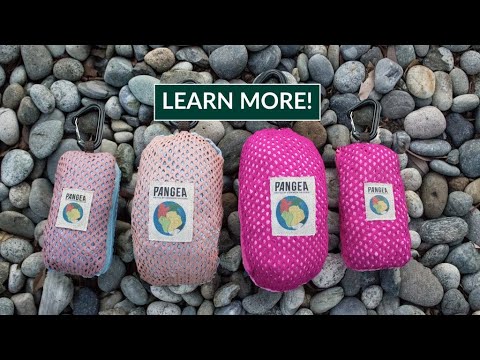
Can a website dedicated to crowdfunding new green businesses make a measurable impact on our planet? Park your cynicism and take another look at Kickstarter where simple environmental innovations seek investors for affordable green products that help us make easy positive change. Meet the Pangea bamboo towel.
Is Pangea the “ultimate adventure towel”? My biggest adventures these days is the schlep up 5 flights to my office, but I digress. The towel is absorbent enough to dry your entire body yet small enough to fit in your pocket.
Made from bamboo and naturally antibacterial, the towels are super lightweight and biodegradable. And affordable – backing this eco-product starts with a $9 USD commitment.
The company was founded by four outdoor adventure buddies fed up with finding trash in every exotic zip code they visited. First-name-only Marcos, Wiliam, Juan, and Dean (an American, Aussie, Columbian, and Argentine) met one another just last year and – sharing a passion for the unbeaten path – they teamed-up to explore the world.
Polution and waste they found in every new destination incited them to start a self-billed “new ecological movement”. They formed a community of volunteers from the travelers they encountered, people who also care deeply about the environment, to clean up sites and responsibly recycle the garbage. (While resident in Jordan, I had a large plastic bag entangle my foot while floating in the Dead Sea, collected a backpack-full of beer cans while hiking sand dunes in Wadi Rum, and scraped up handfuls of cigarette butts from the ancient mosaic floors spattered throughout Um Qais – but I never had the smarts to start a business to continue cleanup.)
This year the superfit foursome seek to expand that movement globally, organizing worldwide cleanups. To fund the effort, they are hawking environmentally-friendly towels for wallet-friendly prices. The products are useful, and the money raised supports continued clean up operations.
For every $10 USD they raise, they will fund collection and proper disposal of 1 pound of trash. Consider that every year 14 billions pounds of trash is dumped directly into our oceans. That’s one overloaded dump truck of garbage every second of every day offloading into the sea.
Buying a couple cool towel products won’t stop expanding global production of plastics or epidemic illegal dumping, nor will it strengthen worldwide environmental legislation and enforcement of violations. But what’s not to love about replacing a few old cotton or microfiber towels while putting some money into localized cleanup events?
This project is affiliated with the Seattle-base nonprofit Pangea Giving, founded in 2002 following the terror attacks of September 11, 2001.
From its founding, Pangea has been a community of philanthropic individuals whose members pool their resources to support people struggling to improve their lives in other parts of the world. Originally called World Venture Partners, the name changed in 2005 to Pangea Giving, consisting of 78 individuals and 24 Circle of Friends. Since 2003, it has partnered with 45 grassroots organizations in 13 developing countries and awarded grants of over 1.5 million.
Whether you’re looking for a novel gift or harboring ambitions of being an angel investor (writ small) – do check out Kickstarter. Enter a search on that site for “environmental” and you’ll get an array of interesting intiatives that may attract your support.
Green Prophet has featured several such projects in the past. See links below, and tell us in comments about others you may have unearthed.
Miriam Aborkeek is a Bedouin woman who did not want her family’s natural wisdom to be lost. She makes beauty products the old Bedouin way.
The harsh desert climate created all kinds of models for the survival of humans and their livestock – just look to the Nabateans and how they dealt with very low rainfall in the Levant. In the summer when a temperature reaches 122 degrees (50 degree C) finding water resources and preserving food is of particular importance for Bedouins. Searching for grazing and water, Bedouins – nomadic people – move from one place to another with their sheep and goats far from major towns and roads. Dealing with scorching heat, desert nomads applied inherited skills and innovated the new ones.
Making whole animal cheese
Milk and dairy products are essential part of the Bedouin diet, and to prepare cheese Bedouins put milk into messah, a part of the stomach of a young lamb that has to be dried with salt. The cheese is called laban or labne and it’s still eaten widely today in the area. Messah is like rennet for the Bedouin.
“After it gets completely dried up a small part of it is taken and wrapped in clean sheep wool or a piece of textile. It is then put into a bowl of milk using the fingers for a few minutes, and then the milk will begin to coagulated,” said Professor Fawzi Abudanah to Green Prophet.
Prof. Fawzi Abudanah
Abudanah is a professor of Archaeology at Al Hussein Bin Talal University in Maan (in southern Jordan) and as a child he experienced firsthand some of the Bedouin lifestyle. His family still kept and fed animals in the traditional way.
Keeping meat with cheese
The large textile bag in which jameed (hardened laban or labneh cheese) was kept is used for preservation of meat when cooked pieces are placed inside the bag. Due to a high concentration of salt in jameed (a hard dried laban made of ewe’s or goat’s milk) the meat can be protected from rotting for a few days.
Traditional water cooler using an animal hyde
For water cooling, Bedouins use either goat or sheep skin called qirbah, which is first cleaned and then tanned.
“Leather tanning is common among the Bedouins in southern Jordan,” the professor continued, adding that they get the necessary material for this process from the oak trees at Al Hisheh forest, northeast of Petra.
Hygiene is a serious problem for anyone who spent even two days camping, not to mention people who are outdoors for years. Running water, boilers, different kinds of soaps, refrigerators and freezers, skin creams and perfumes of well – known brands don’t exist in the wilderness.
Natural SunIn and hair rinse for weary nomads and travellers
To wash hair, Bedouins make use of a shrub called adhuo or the shnan in Arabic – latin name Anabasis Syriaca as an ash-based soap and the hair goes blond if the washing continues.
However, the shrub should be prepared first: “Shnan should be burned and its ash is then collected and soaked in a pail of water. The liquid is then used for hair washing,” Abudanah underlined, noting that to purify drinking water nomads use flour or alum.
When Bedouins collect water from depressions, ponds and springs a small amount of flour or alum are added to the water in a large basin, after a while the sand and impurities will sink on the bottom.
Barnooq is another shrub used as a color fixative when wool of sheep has to be dyed for the production of a rug by weaving.
Scorpion immunity for babies! Ancient vaccines in action
In order to boost the immunity of a new born babies, the father collects scorpions, burns and crushes them, and then mixes their charred remains with olive oil. After that the mixture of the olive oil and crushed scorpions are applied on the baby’s body, as Bedouins traditionally believe that it would protect a child against scorpion venom.
The practice is known in other cultures and among indigenous communities where tribesmen give small dose of poison to children in order to improve their immunity and the poison may develop antibodies against stings.
Closing herd wounds with stinging ants
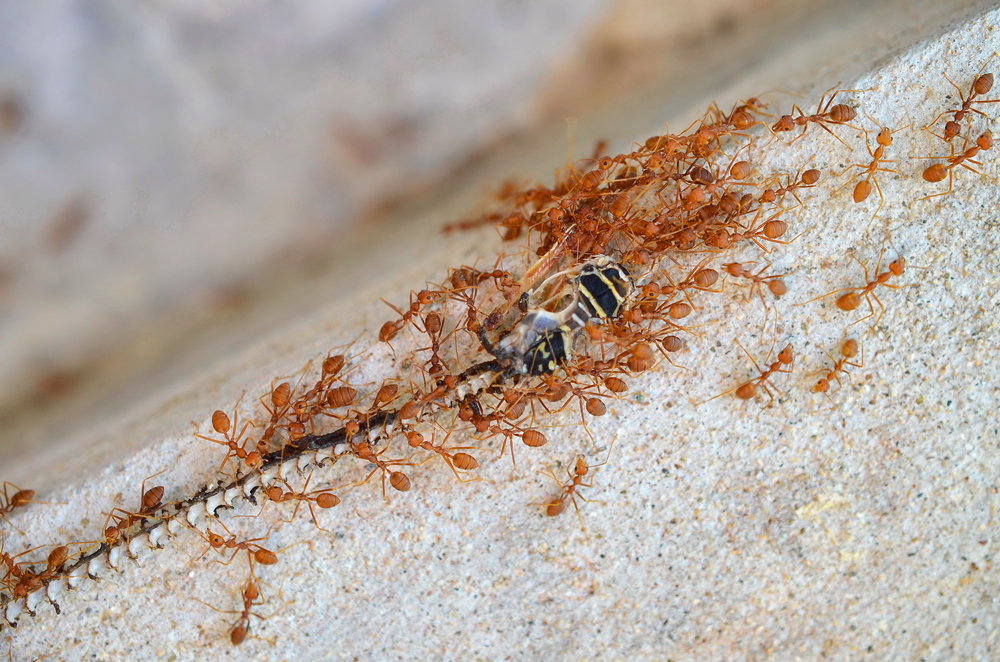
When their animals, sheep, camels and goats have to be operated, a Bedouin treats possible cuts and wounds with desert ants (fire ants?) that are placed on the wound where the stitches would go. Ants stick to the skin and the herder removes their heads, while their body remains closing the wound until they dissolve naturally.
Slow cooking in the ground
Regarding specialty food dishes, they are prepared in so-called Zarb, and that underground cooking isn’t typical for Bedouins from the Wadi Rumm, for instance, but it has been practiced in places as far as New Zealand and the Balkans. It is an old method when food is put on coal and covered for two-three hours. Usually, chicken, goat or sheep meat are cut into equal pieces, marinated, and prepared with vegetables.
For Professor Abudanah, these hacks are part of his heritage and culture, however, some of these old school tricks are not anymore in use due to modernization, tools and new materials.
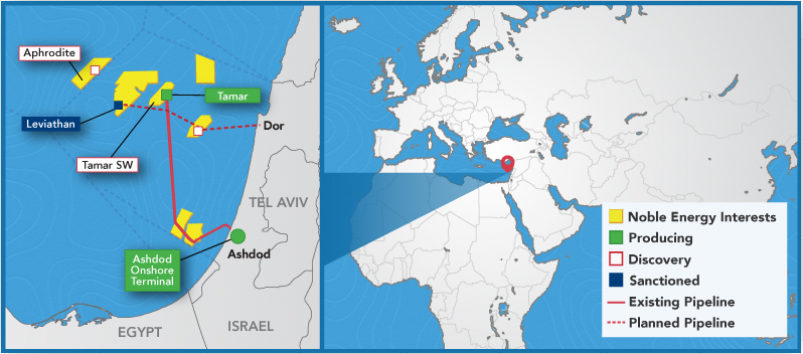
Last Tuesday, the consortium behind the Leviathan gas production facility declared “an historic turning point in the history of the Israeli economy” when – a decade after its discovery – the enormous offshore natural gas field started production. A joint press release from operating partners Noble Energy, Ratio, and Delek Drilling said that production is expected to lead to an immediate reduction in domestic electricity prices and the start of exports, “For the first time in its history, Israel is poised to become a significant natural gas exporter”. But rather than applauding potential low energy costs and increased national energy security, residents living near the gas platform abandoned their homes for a day of peaceful protest in Tel Aviv.
“We don’t want to play Russian roulette with our children’s health,” said Shlomit Valensi, a Homeland Guards member who lives in Dor, a beachfront community adjoining a nature reserve about 15 miles (24 kilometers) south of Haifa. More than 250 cars headed to Tel Aviv for a demonstration outside a government compound, according to the grassroots Israeli Homeland Guards who organized the protest. Greenpeace Israel and at least three other Israeli environmentalist groups supported the event. An estimated 1,000 demonstrators wore masks, others carried signs linking gas production to cancer, demanding that the facility close.
The Mediterranean oil field was discovered 130 kilometers (81 miles) west of the port city Haifa in 2010. It is estimated to hold 535 billion cubic meters (18.9 trillion cubic feet) of natural gas, along with 34.1 million barrels of condensate. Its production facility was constructed 6 miles (9.6 kilometers) offshore. We are afraid to breathe the air,” said Rachel Toaff-Rosenstein, a veterinarian from Zichron Yaakov. “This is something that’s going to change the rest of our lives.”
Opponents assert that the production process will release pollutants as toxic as those released by coal, particularly in the current start-up stage. This was verified by Leviathan documents submitted to the Environment Ministry which indicate pollution may be in higher concentration during the initial phase when flaring can’t be used. The worst-case scenario is that during the two separate days of starting up four wells, the emission level will be similar to that expected in an entire year of normal operations.
Despite protester concerns, the ministry said in a statement released Tuesday, “The effect on the air quality in the coastal area will be negligible,” adding, “According to experts, there is no danger to the public”.
“The only environmental impact this platform will have on the shore is a positive one when the natural gas we supply displaces coal in Hadera and Ashkelon and Israel’s citizens benefit from improved air quality and better health,” said Bini Zomer, Noble Energy’s vice president for regional affairs.
Despite government statements that production was safe, Environment Minister Zeev Elkin delayed the start of operations by a week, saying strict pollution-monitoring conditions hadn’t been met. Monitoring equipment was installed on the platform to alert any risk of high pollution, but the Homeland Guards say they need to see how scrupulously it will be used before halting opposition.
Israel seeks energy independence and cleaner domestic sources, twin aspirations that support environmental and economic benefits. The nation also aims to achieve a broader regional influence, transitioning from an energy importer to a net exporter, with recently announced contracts with neighboring Jordan and Egypt. It is anticipated that the European market may also be a viable partner. Is commerce subjugating exploration of renewable energy alternatives and protection of environmental rights?
The Israeli Homeland Guards back development of the country’s gas industry but want to ensure public health isn’t compromised. They cite world-renowned experts whose models show the platform’s proximity to shore is valid reason for concern.
Fossil fuel companies have long clashed with regulators over pollution. In 2015, Noble (a member of the Leviathan consortium) settled with the U.S. Environment Protection Agency, the Department of Justice and the state of Colorado over violations relating to emissions from its operations.
The former head of Israel’s National Cancer Registry said in an opinion commissioned by the movement that the start-up stage may expose the public to a dangerous amount of carcinogens, including benzene, a byproduct of gas production.
Israel’s environment minister has promised to monitor air quality closely, promising to shut down the platform if there is “an increase in air pollution that is endangering the population.”
While natural gas is set to replace coal as the main fuel for power generation in Israel, it is still far from being a clean source of energy despite being less polluting than coal.
Cast your vote in our comment section: go gas – or – go green?
Israel’s largest energy project, headed by Noble Energy, started production on Tuesday. It is a natural gas well only 10 kilometers or 7 miles from shore, near the coast of Haifa. This is the first step in a multi-billion dollar natural gas export deal with countries like Egypt and Jordan that will start in the next weeks.
But due to Israel’s unusual security constraints –- or threats by Al Qaeda and the Hezbollah –– it had to build its gas rig much closer to shore than deemed environmentally safe by some country’s standards. The recommended distance is about 40 km or 30 miles.
When the issue of safety was taken to court no one could refute in professional terms why it is unsafe so the judge let it go ahead despite coastal mayors concerns about cancer risks. This article links to a court ruling in Colorado where Noble Energy had to pay fines for polluting emissions.
Texas-based Noble Energy and Israel’s Delek Drilling and Ratio Oil announced that operations had commenced this morning, and a significant amount of natural gas will be released to the sea. People in the city of Haifa are concerned and some have evacuated for fears over the damage from exposure.
Polluting the Mediterranean?
Natural gas is a cleaner fuel but it is by no means renewable or environmentally sound. It burns cleaner but it produces greenhouses gases and pollution.
The gas off the Israeli coast began flowing from the offshore rig called Leviathan (means giant sea creature or whale in Hebrew) early this morning. The timing of when to start has been delayed time and time again but the operators needed to start the rig to meet their 2019 timeline. This is now the last day of the year.
This new operation now doubles the amount of Israeli-produced natural gas, according to Reuters. Some $3.6 billion USD went into developing the Leviathan natural gas rig and operations and gas exports are soon to commence.
“Israel is now an energy powerhouse, able to supply all its energy needs and gaining energy independence,” said Delek Drilling Chief Executive Officer Yossi Abu.
A subsea pipeline will transport the natural gas to Israel and to the consumers, also looking forward to paying less for electricity, currently generated by a mix of fossil fuels, coal and a small percentage of solar energy, about 2%. But paying less might just be a carrot dangling in the sky. Since Israel became more water independent with the installation of desalination plants the consumers in effect ended up paying more for water.
Daniel Esty, a Yale lecturer talks about how to green your business
Is there a better time to turn over a new leaf and start new business ventures than the new year? We don’t think so! Indeed, the start of a new year affords ambitious entrepreneurs the opportunity to try out new things both inside and outside of the office. As such, if you care about the environment, but haven’t found the right time to roll out changes in your business model, then take this opportunity to launch some eco-friendly initiatives now. Here are five ideas to help you get started:
Digitize
One of the simplest ways that businesses can reduce their carbon footprint is by reducing their paper usage. After all, it’s never been easier to use digital alternatives to physical paper. Rather than reviewing and saving files with paper copies, consider using online systems to store and review important documents. Not only is this better for the environment, but it’s safe and convenient as well! (Banking online will also cut down on the amount of paper in your office.)
Encourage Remote Employment
The average American commute is about 27 minutes. This means that millions of workers have to rely on cars or public transport to reach their office on a daily basis. And, as one one might imagine, this contributes to a lot of pollution. Companies that allow and encourage team members to work from home regularly, though, can eliminate at least some of the pollution that traffic causes.
Make Sustainable Purchases
Paper plates, straws, and other disposable items represent a threat to the environment. Thankfully, eco-friendly businesses can do their bit by replacing these purchases with more sustainable alternatives. What’s more, this principle applies to all sorts of different products. Rather than buying cheap barricades that aren’t recyclable and that will need replacing in a few months, businesses can choose instead to invest in durable concert barricades, for instance, that will stand the test of time.
Go Meatless
Meat production contributes to global warming in a significant way. Fortunately, there are tasty and responsible alternatives to meat that companies can offer their team members at lunch. In addition to classic vegetarian options, some food companies are also now developing imitation meat in the form of cheeseburgers and fried chicken.
Partner with a Movement
It’s important for businesses to take steps to minimize their impact on the planet. However, it’s just as crucial for them to use their resources to spread a powerful message about the environment. By teaming up with an environmental charity or eco-friendly organization, businesses can boost their reputation, consumer reach, and environmental awareness all in one fell swoop. Don’t wait another moment –– get on the phone with a charity ASAP.
(Example of a pellet stove from Canada, and the chips and pellets they burn).
Pellet stoves take condensed biological matter –– wood or biomass pellets –– to create a source of heat for residential and industrial spaces. They burn slower, for more time and can lower the heating bills. Environmentalists see pellet stoves as a “green” solution.
A group of disadvantaged youths in Israel are taking this concept but are applying it to ordinary wood stoves. They are creating compressed logs of olive tree waste to supply biofuel from olive waste. They are not the first group of Israelis to recycle olive waste, but the social aspect of the project makes it much more than the usual environmental solution.
Here’s Olivebar’s story:
A group of youngsters — many of whom were homeless until they were gathered together by a man named Yossi Sadeh, first in Beit Shemesh, then at the Sde Bar farm, a kibbutz-like framework that’s turned their lives around — are changing the face of energy production.
Their work is to help create Olivebar’s rolls to heat homes in wood-burning stoves which general manager Eli Karniel describes as “ecologically perfect.”
The rolls are made from the waste produced after olives are pressed at Israeli olive presses, known in Hebrew as gefet. The material is rich in oil and superb for heating, but if left behind at the presses to seep into the soil, will destroy ground water and render the soil infertile.
The simple act of collecting it is the product’s first ecological benefit.
But the huge piles of gefet trucked to the factory aren’t enough. While two Tel Aviv entrepreneurs patented the idea of using the material for the stoves, it was entrepreneur Avi Lerber who recognized the potential, bought the patent, and after experimenting with more than 100 substances, found the right one to allow the material to solidify.
From there, he developed a method to make the resulting product into convenient rolls, which have many advantages over wood for heating purposes.
2.5 Times the Energy of Wood
Chief among them is the energy component, with a cube of the Olivebar rolls producing almost 2.5 times energy as a cube of wood. No mice or worms come with the rolls, which are aesthetically wrapped in paper that is recyclable and can be used to light the oven. The smoke released has no negative impact on neighbors or the environment, and the ash left in the stove can be used for fertilizing gardens and plants.
Using the rolls will also fit into recent moves both here and abroad to avoid cutting down trees for energy use. “It’s a totally green product, all natural, without any glues or chemicals,” Karniel says.
“Whereas once it was more economical to buy heating oil, today people are looking for all kinds of alternatives,” Karniel explains. “People went over to wood, but now governments don’t want people to cut down forests, so they’re turning to natural alternatives like ours.”
Once the material is mixed, it’s pressed into rolls at the factory, then taken out to the warm climate of the area around Herodion, southeast of Jerusalem, where it’s easily dried before being packed for shipping.
Karniel is particularly proud of the project’s Biblical roots, with the idea of heating with olive waste mentioned in the Talmud. “We’re going forward to our sources, instead of backwards,” he notes. “It’s a great feeling; you can really feel these ancient writings come alive.”
Arabs and Bedouin were also known to make use of the olive waste for heating.
Heat for the whole family
The product is also most effective in one or two-story homes that can best make use of wood-burning stoves
The piles of drying rolls look a bit odd on the semi-desert landscape, but the boys of Sde Bar love working there, aware that the stuff is at the cutting edge of an energy revolution, Karniel explains. “They’re proud to work in the factory because it helps support their activities, and they definitely compete for the chance to work there,” says Karniel
“It’s also important to note that the olive tree, which is one of the seven species of the Land of Israel, is what’s leading this progress, even in the field of ecology,” he says. “It definitely spurs us on, and we see a great deal of importance in the fact that, thanks to us, we are contributing to our environment both here and around the world.”
It was a finding revealed sometime back and then analyzed recently. An old vaccine shows new tricks.
Holidays are a time for family. Festive gatherings with parents, grandparents, aunts and uncles create memories that last a lifetime. But when a loved one has Alzheimer’s disease (AD), holidays often become painful reminders of loss and deterioration. Currently, Alzheimer’s affects one-in-ten adults over the age of 65—a number that is expected to triple by 2030. The need to find a cure is great.
Now there may be a glimmer of hope. A research team headed by Hervé Bercovier, Charles Greenblatt and Benjamin Klein at the Hebrew University of Jerusalem (HU)’s Department of Microbiology and Molecular Genetics has discovered that the Bacillus Calmette-Guérin (BCG) vaccine, originally developed for tuberculosis and commonly used to treat bladder cancer, may also be an effective treatment to prevent Alzheimer’s. They published their findings in PLOS ONE.
“There’s data reaching back to the 1960’s that shows that countries treating bladder cancer patients with the BCG vaccine had a lower prevalence of Alzheimer’s disease but it hadn’t been properly analyzed,” shared lead author Bercovier.
Until now. Bercovier and his team followed 1,371 bladder cancer patients receiving treatment at HU’s Hadassah Medical Center. The average patient age was 68. During follow-up visits, 65 cancer patients had developed Alzheimer’s. Those who had not received BCG as part of their treatment had a significantly higher risk of developing Alzheimer’s than did BCG-treated patients: 8.9% (44 patients) as opposed to 2.4% (21). Further, when compared with the general (healthy) population, people who had never been treated with BCG had a 4-fold higher risk for developing Alzheimer’s than did those who were treated with BCG.
It’s important to note that the researchers have not developed a vaccine that prevents Alzheimer’s. However, shared Bercovier “our study is an important step towards understanding the ways in which our immune system is a major player in the pathogenesis of Alzheimer’s and how the BCG vaccine, which modulates the immune system, may serve as an effective preventative treatment to this crippling condition.”
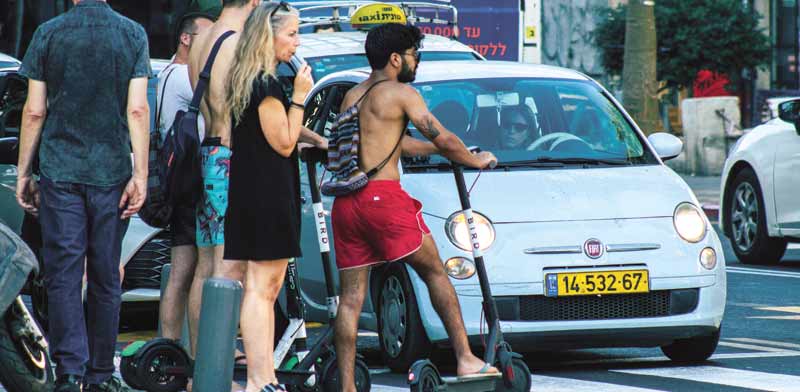
One of Israel’s most well known publicists was killed while riding an ebike (Motti Morel) in Tel Aviv. The city puts stricter regulations on licensing, helmets, recycling and speed. But who will really enforce this? Grandmothers are walking around dazed with blood streaming down their faces. Kids afraid of walking on the sidewalk. Another joke TA?
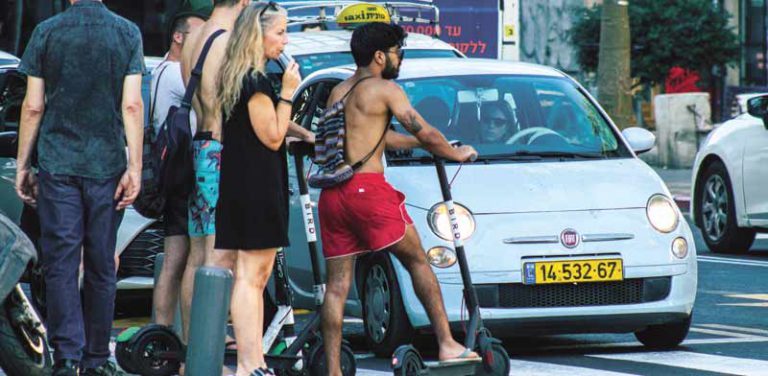
Just today I saw a french tourist couple doubling on a Wind scooter, in shorts screaming through a busy intersection. Money flew out of her pocket and she went running into a busy street on Hayarkon, stopping traffic as she dove for her wind-strewn money. Tel Aviv and Jaffa is a living hell for pedestrians and pedal-bike riders who use bike lanes. Ask anyone here. And so many of the users are not from here, but are tourists or long-term travellers. As an effort to prevent hit and runs and death by scooter Tel Aviv becomes the first city in the world to require all shared electric scooters to be licensed and helmetted.
It looks like a dream to coast along the sea, wind in your hair. You know how many people ruin their holidays riding these things?Doubling on scooters. More common than you’d believe.
The Tel Aviv-Yafo Municipality has issued new regulations for shared electric scooter companies in order to keep pedestrians and riders safe. The new regulations include equipping electric scooters with helmets, installing license plates, recycling used batteries, lowering the speed of the scooters in certain areas, and preventing the usage of scooters in restricted areas.
The regulations enforced by the Tel Aviv-Yafo Municipality are unprecedented and are meant to set an example for other municipalities around the world who are dealing with similar circumstances.
In August 2019, the municipality embarked on a pilot to regulate companies that were renting out electric scooters in the city. These companies had been subjected to a number of conditions and restrictions in order to obtain a permit to operate in the city, which included ensuring availability throughout the city, limiting the maximum number of scooters per company to 2,500 units, allowing parking only in designated areas which have to be marked in the companies’ apps, preventing usage by minors, implementing and activating a service call center, and banning the scooters’ alarms during the nighttime.
Looking ahead to 2020, the municipality has decided to continue with this pilot, adding additional terms and restrictions with the purpose of increasing road safety and maintaining public order in the future.
Meital Lehavi, Deputy Mayor of Tel Aviv-Yafo for Transportation: “Our main goal is to keep sidewalks as a safe space for walking, as the city’s sidewalks are designed primarily for pedestrians. Tel Aviv is a very walkable city and we encourage people to take advantage of the city’s small size, flat topography and over 300 days of sunshine a year.”
Climate change is not new, however, recently it has been getting even more intense. The abrupt changes in the weather, melting of the poles, the forests that are set on fire, and so many things are an indicator that our planet will die if we do not strive to save it. This is why there have been a lot of inventions that have been presented to the public that can reduce climate change and gradually fix it.
Digital Reading
Now that we are living in the digital age, it is time that we stop cutting down trees to make paper out of them. There are many schools and offices now that have stopped printing paper, all their work is through electronic devices now. There are even many inventions like eBooks, where readers can curl up and read their favorite book from a device rather than a book filled with paper that came from a dead tree.
Smart Houses
The three-dimensional printing technology has transformed our knowledge about construction. A lot of people haven’t heard of 3d printing homes machinery and that these machines form and print actual houses, as long as it has the correct design and structure. This means that we will no longer need or use wood, bricks, and sand, and that we will get rid of air and noise pollution. It doesn’t take a lot of time to print these houses, it uses less material, and the material it uses is very durable.
A 3D printed villa rendering in Dubai
Solar Roof Tiles
Remember when you saw blue screens on a building and wondered what they were? These are known as solar roof tiles; they generate electricity, which means you won’t be relying only on power consumption. This is a good thing for our planet because it means we won’t be relying on the burning of coal and fossil fuels to create this kind of electricity, especially that they produce a ridiculous amount of CO2 into the atmosphere that contributes to the deterioration of the environment.
Living Wall
Solar tiles have been around for some time now, but now people have been considering the living wall. This wall, also known as the roof garden, is filled with different kinds of plants that produce O2 into the atmosphere. It is also responsible for absorbing CO2, heat, and rainwater while providing insulation and preserving electricity. It might not be popular now, but we might spot roof gardens in the near future.
In the past, people have had many concerns about the advancements of technologies, since they believed that technology will end the human race at some point. This is ironic since, in this day and age, technology is one of the main tools that can help us save our planet from our own destruction. Now, there are many inventions like solar roof tiles, printed houses, living walls, and devices that we can read from instead of killing trees. If you would like to participate in saving our planet, you can consider any of these options and adopt it into your personal life.
More than 2 years worth of pollution is expected to be released in 8 hours
Last week I visited friends in the sleepy northern coastal town of Atlit. People are friendly. Peaceful roads wind around leafy streets. Trains run close to the beach, and you hear the warning clang and the rumble as you go about your daily business. The beach is clean and quiet at this time of year. You can see a shadowy silhouette in the watery distance though; the Leviathan gas rig. You don’t pay it too much mind, it seems far enough away. The whole place has the charm of a small town in the 1960s. And the air – the air is fresh and sweet.
But we don’t know how the fresh the air is going to be in Atlit, or indeed in any of the northern coastal towns, once the Leviathan gas platform starts production tomorrow, Monday the 22nd. The rig lies only 10 kilometers – some six miles – offshore. The original plan was to situate it 125 km. offshore, but the government cites concerns over security with the rig at that distance from land.
Environmentalists have been warning that the rig’s proximity to the coast might subject whole communities, not to say marine and animal life, to irreparable damage from waves of toxic pollution when operations start.
Little has been reported about the possibility, but what little information is out there, is dire enough. From Haifa to Hertzliya, residents are talking about evacuating their homes in the event that the anticipated air pollution drifts through their home towns.
Eco-organizations such as Home Guardians and Zalul cite other concerns. It’s expected that during the initial stages of gas production, huge quantities of toxic emissions will be pumped directly into the atmosphere in not one, but two 8-hour waves over Israel’s northern coast. The estimated volume of airborne substances emitted over those hours could equal a more “acceptable” rate of pollution spread over 60 months.
“If it really does happen, I’ll pack the kids up and take a train to my parent’s house near Tel Aviv,” my friend told me confidently. She couldn’t imagine the panic and hysteria at the train station as hundreds of families try to escape at the same time, in the event of a catastrophe.
The Leviathan gas field is the largest discovered worldwide to date. It’s estimated to contain up to 605 billion cu.m. of gas, enough to supply homes for 65 years. Exports of gas from the Leviathan and Tamar gas reservoirs will begin in January 2020 to Egypt and Jordan. The deal is valued at $15 billion.
“A short time ago, I signed an approval for the export of natural gas from Israel to Egypt,” said Energy Minister Yuval Steinitz. “In doing so, Israel becomes – for the first time in its history – an energy exporter and an important partner in the regional energy market.
“The export of gas to Egypt, from the Leviathan and Tamar reservoirs, is the most significant economic cooperation between Israel and Egypt since the peace agreement was signed between the countries. This is a historic milestone for the State of Israel. The natural gas revolution makes us an energy superpower and will enable not only huge revenues for the country, but also a dramatic reduction in air pollution.”
Steinitz was referring to becoming independent of energy from coal, itself a heavily polluting industry.
The Environmental Protection Ministry has said that the company can emit up to 49 metric tonnes (54 US tons) of volatile organic compounds, excluding methane but including toxins such as nitrogen oxides and sulfur dioxide during the commissioning period, including 153 kilograms (337 pounds) of carcinogenic benzene.
What is holding back the flow of this information to the public? Newspapers have reported on the the Leviathan gas field, its potential for good and for harm too, but the public has received no warning about the potential deadly waves of toxins. Only residents, messaging each other on WhatsApp groups, gather up scraps of information and pass them around.
“Supposedly releasing a massive ton of Benzene from 6 a.m. tomorrow,” posts a man in a WhatsApp message. “Region highly at risk between Haifa and Hertzliya. I live in Haifa and my wife is pregnant. Taking no risks and coming to Tel Aviv tonight for the next few days.”
Is the lack of warning a government move to prevent panic? Or is the consideration not to delay the start of operations because of the big money involved? And what security concerns can top the potential dangers of exposing large populations to toxic gases over 16 hours? The scenario is as dire and dystopian as any science fiction movie. And it might happen this week.
Green Prophet will continue to report as events unfold. Let’s hope for the best.
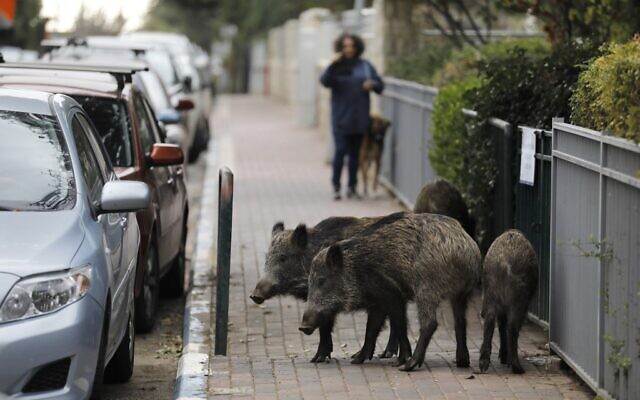
Wild boars strolling down the street in Haifa as woman looks on with her (scared) dog
There’s always something going on in Haifa. Environmental awareness is encouraged with projects like the plastic bottle Christmas tree, yet the city’s air is considered the most polluted in the country. Haifa is famous for its lovely views of the bay, yet the peace of some neighborhoods is now disrupted by… wild pigs.
Boars, like foxes, jackals, deer, and other animals come under legal protection in Israel, although boars roaming the adjacent Carmel mountain forest have been legally culled for decades. Recently Haifa’s mayor, Einat Kalisch-Rotem, banned shooting them out of humanitarian concerns.
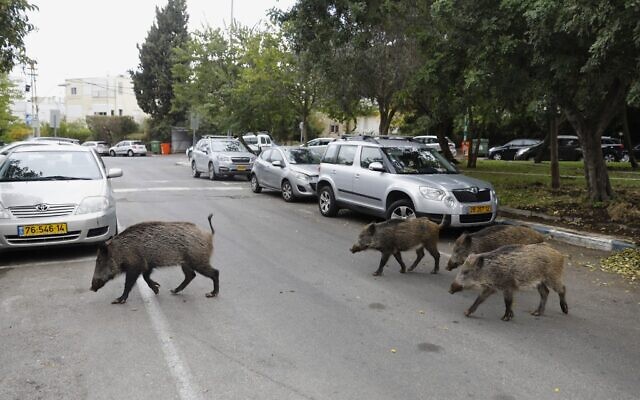
“They’re part of nature,” she says in defense of the ban. But the tusked creatures, who once were seen in the city only after nightfall, invade Haifa’s streets and gardens in broad daylight now.
Residents are worried that aggressive protective mother boars might turn on children who come close to boar piglets. The animals nonchalantly roam the roads in groups, block traffic, dig up public gardens and overturn waste bins in search of food. People walking dogs worry that dog/boar fights might ensue. “It feels like we’re living in the jungle,” one woman laments.
The presence of humans bothers the wild ones not at all. The French news agency AFP followed a herd around Haifa with never even a grunt from the boars in their direction.
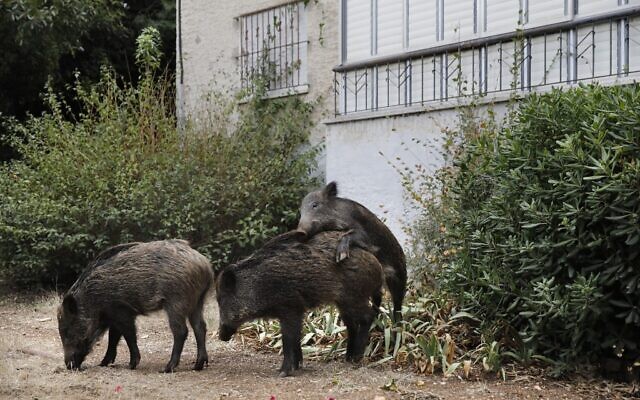
Wild boars horsing around in Haifa.
Harried Haifa residents and animal rights activists are in fierce debate, as some favor killing the beasts and others propose tactics like laying food in the Carmel mountain to tempt them back to their forest home. Some activists say that city construction has destroyed the boars’ natural habitat and that’s the reason for the uninvited animal guests. In that case, why isn’t Haifa overrun with jackals and foxes? Not that I’m wishing that on the city.
In any case, residents say that the city has done nothing to control the boar invasion. I myself, coming across boars in the street or hearing one snuffle behind me as I sat resting on a sidewalk bench, would scream and jump six feet in the air.
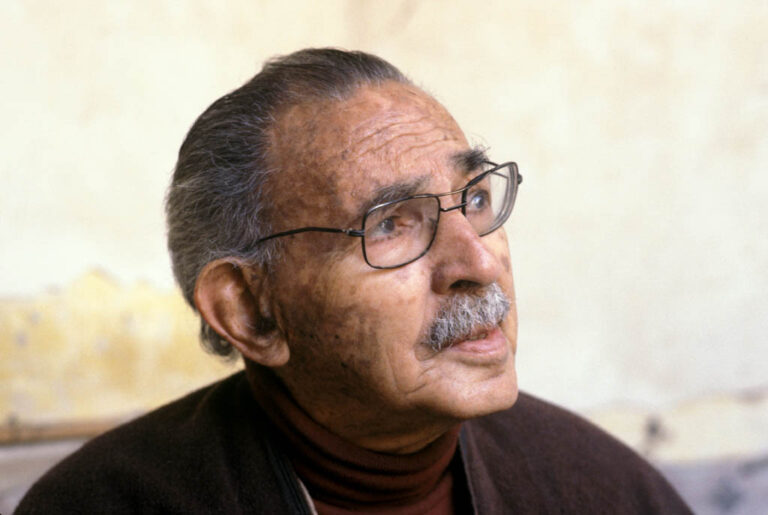
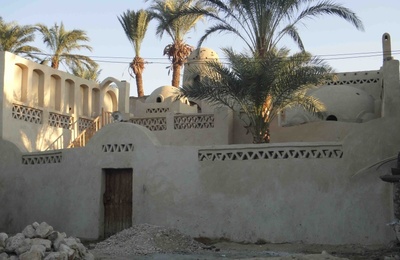
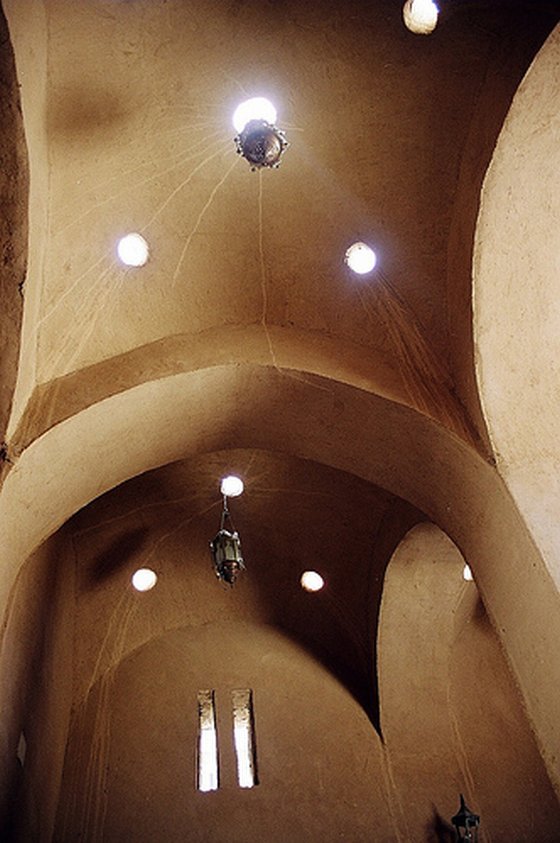
Hassan Fathy, 1900 to 1989, was an Egyptian architect and a pioneer of sustainable architecture. His philosophy emphasized building with local materials and traditional techniques. He revived the lost skill of building homes and streets out of clay bricks, and out of that native material, built houses, mosques, and even an entire village.
Hassan Fathy’s off-grid living and architecture inspired generations of architects in the Middle East and beyond.
Fathy had unconventional, almost romantic, views on the power of architecture to improve even the most humble home. His Westernized contemporaries dismissed his ideas as irrelevant – throwbacks to the past in a world eager to pursue modernity. Almost unknown in Western culture, his vision, so ahead of its time, is beginning to intrigue architects again.
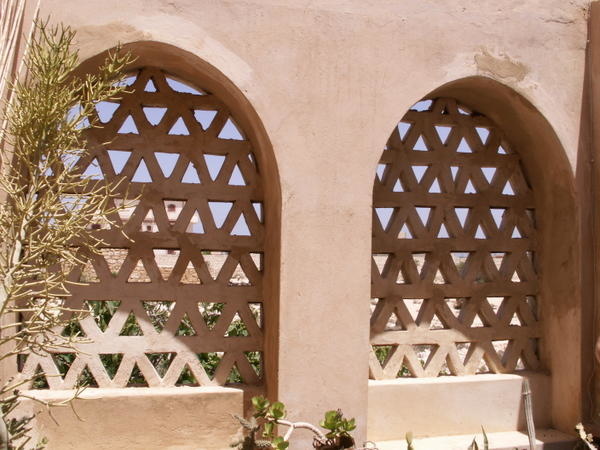
Before beginning to design a blueprint, Fathy studied the ecological conditions of the proposed locale, especially considering which direction winds blow there during the 24 hours. He designed windows and walls pierced in lattice designs to create shade and allow cooling ventilation to run through the rooms. His wrote about his experiences with sustainable design in a seminal work, “Natural Energy and Vernacular Architecture, Principles and Examples With Reference To Hot Arid Climates.”
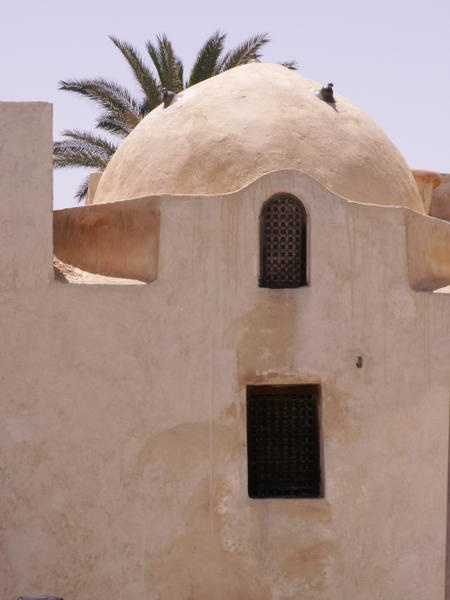
He had a passion for the simple beauty of curved lines, holding that rooms with walls and roofs designed around curves, rather than geometrical lines, have the power to heal.
Most of all, he believed that the poor deserve not only comfortable homes but also beautiful surroundings that reflect timeless Egyptian designs and Islamic themes.
Fathy’s students revered him as a sort of guru, but the Egyptian government, perhaps suspicious of his unconventional approach, failed to fund his projects to completion. Yet his projects survive, some physically on the ground and some in his collection of original blueprints, drawings, and published articles housed in the archives of the Aga Khan Trust for Culture in Geneva, Switzerland, and at the American University of Cairo.
Fathy’s most impressive project was the construction of New Gourna Village between 1946 and 1952 at Luxor, Egypt. (It’s in shambles) The residents of the original Gourna lived over the Thebes cemetery. They made their living robbing the Pharaonic tombs and selling the antiquities on. When the government woke up to the fact that priceless artifacts had been flowing out of Gourna for decades, they decided that the only way to stop the traffic was by relocating the residents. Although public officials had never been friendly toward Fathy, they granted him the construction of New Gourna in 1946.
Fathy proposed using clay bricks rather than cement to build New Gourna, although the skill had long since been forgotten in that part of Egypt. Having already successfully created clay buildings in Saudi Arabia, India and Greece, he brought skilled Nubian builders to teach the Gourna villagers. His reasoning was partly to use sustainable basic material and partly to provide the Gournians with a new, lucrative skill. Rather than robbing tombs, they would turn to agriculture, crafts, and brick-making.
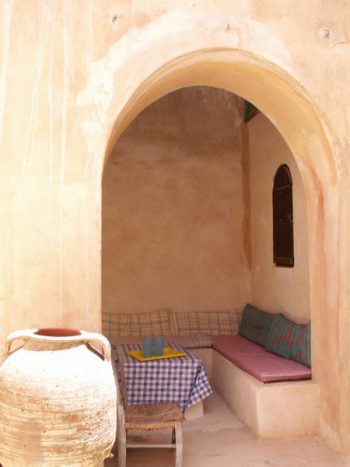
He invited the Gournians to participate in planning the new village, using their input in planning its buildings and layout. Important spaces like the mosque, the boy’s school, the khan and market naturally took prominence, but he was careful to oversee the smallest details in every home; for example, long benches built inside houses and courtyards, which, covered with cushions, served as seating and even as beds for sleeping on during the hottest summer nights.
One anomaly was an outdoor theater, which still stands although it has never hosted a performance.
New Gourna village is now part of the World Heritage Centre property in Egypt. Its homes and khan are seriously deteriorating today under factors like climate change, overcrowding, and underground water seepage. The village’s population has grown through multiple families under the same roofs, as men acquire second or third wives. The foundations, based on clay and salt, are collapsing.
There is still no modern sewage system. Sewage cisterns originally regularly emptied by trucks going around the streets, are leaking into the ground. Residents, rightly concerned about the roofs over their heads, are clearing Fathy buildings away and building with concrete and red bricks. The Egyptian government neglects the situation.
It’s acknowledged that New Gourna and other projects of Fathy’s were not built to withstand future changes. But Gournians, vehemently attached to their village, welcome reconstruction via UNESCO’s World Heritage Centre, at the urging of the international association Save the Heritage Of Hassan Fathy.
“We want to rebuild Gourna in Hassan Fathy’s spirit, although not with his materials,” they say.
For Fathy’s spirit lives on. His “Architecture for the Poor: An Experiment in Rural Egypt” published in 1973, continues to inspire a new generation of architects around the world.
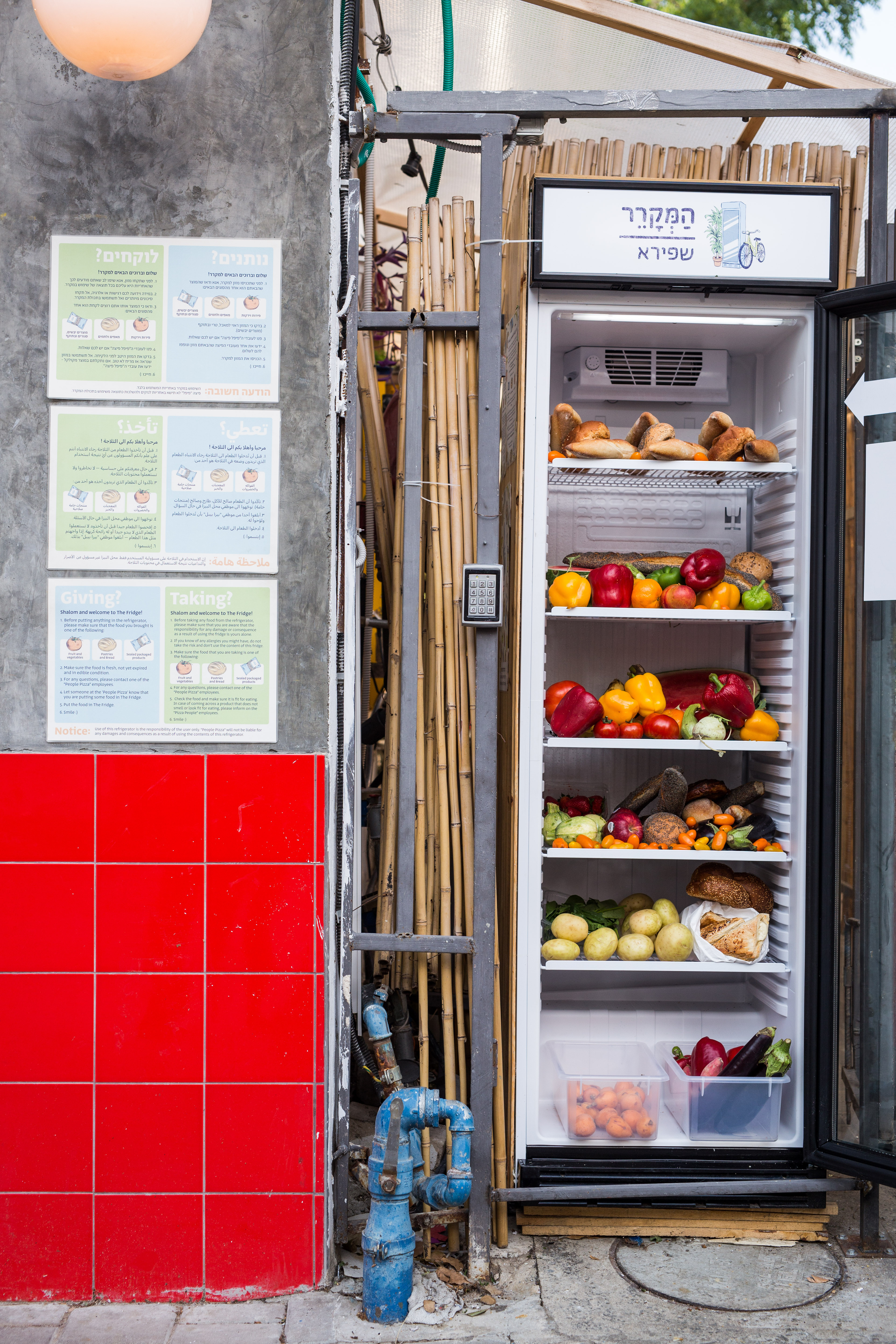
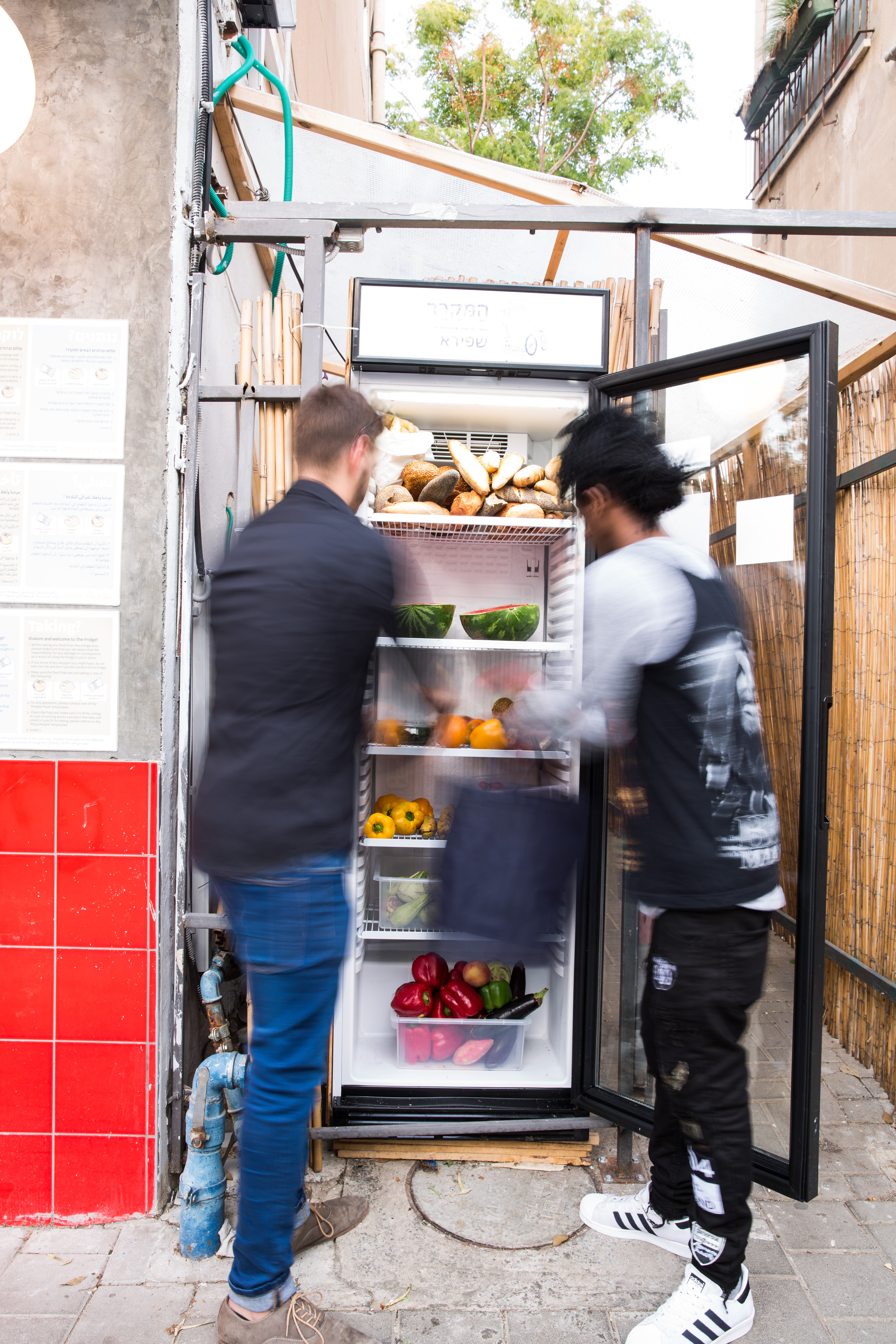
There’s a refrigerator standing on a Tel Aviv sidewalk. It’s not an empty fridge waiting to be hauled away to a dump; it’s full of food. There might be a box full of tomatoes, eggplants and bell peppers starting to go soft. You could cook a good pasta primavera from that.
But you need the pasta. The grocery store behind the Fridge will have it . Take what you need from the Fridge, for free, and go inside the shop to buy your pasta. There. You’ve saved money, saved food from going to waste, and supported a neighborhood business, all in five minutes.
David Roubach, founder of the Fridge.
The Fridge is the brain child of two young businessmen whose goal is to raise awareness of food waste in Israel. Individuals like this anonymous Saudi Arabian have set up charity refrigerators, but The Fridge is a project that’s operating across a whole country.
On vacation from business school in 2017, David Roubach sat in a London cafe and observed people putting food into a sidewalk refrigerator, then others taking the food away. He discovered that there were at least 50 such charity refrigerators operating in England. Taking the idea back to Israel, he convinced his fellow student and good friend Omer Ronen to start a similar project. Together, they developed a larger concept: educating the public about food waste through community refrigerators.
In household terms, that’s leftovers, or fruit past its best, or that package of quinoa drying up in the pantry. Leftovers can be reheated; soft apples can be baked in a pie, and that quinoa could make an excellent tabbouleh salad. Dumped into a landfill, the food will only make more methane greenhouse gas.
We may not feel it happening, but food waste also nibbles away at our personal income. Leket Israel, the National Food Bank, estimates that Israelis throw out 35% of the food they buy, mostly fruits and vegetables. Their 2018 report, focused on household consumption, states:
“…The volume of food loss in this sector amounted to 1,940 million pounds and a value of $2.2 billion. An average family in Israel throws away $890 a year, equivalent to a month and a half of food consumption, mainly due to the wasting of fruits and vegetables.”
The worst is that about half of food wasted was edible when it was dumped in the garbage. Maybe less than beautiful, maybe a bit bruised, but still edible.
With those facts, and fired by idealism, Roubach and Ronen created the Fridge project to reduce food waste. First, they haunted the open-air Carmel market in Tel Aviv to observe how surplus produce is wasted, especially on Friday afternoons , when vendors close up for the weekend.
“The vendors dump all the produce they couldn’t sell on the ground. City workers come and and clean it up and put it in garbage bins,” said Ronen.
“We talked to the Tel Aviv municipality, about setting up a refrigerator for charity in the market, but they raised all kinds of objections: who would be responsible for it, what about security, how would insuring it work?”
The partners realized that they had to modify the plan and create an independent model based on neighborhood participation. The plan is relatively simple. If you have surplus food, donate it to The Fridge. If you’re short on cash or need to reduce the cost of your food shopping, take food from The Fridge. But it took two years to get the project running.
They researched solutions for anything that could go wrong. A microbiologist at Hadassah hospital set down strict rules about which foods may be donated and, and about hygiene in the Fridge. (Fresh produce, dry goods in closed packages and canned goods within the expiry date are allowed, as are commercial baked goods. Nothing home-made and no meat, fish, or dairy.) A top lawyer helped them blueprint the community-based model. They created a brand and a logo. They raised funds to support the Facebook page and to pay for printed materials.
Ronen explains, “It was a new idea, involving the community with the Fridge. We approached food-based businesses in the Shapiro neighborhood in Tel Aviv, and explained about food waste, how they can give away their surplus instead of throwing it away. We gave them a social sticker to put on their front window that reads, ‘This business supports the Fridge’. People take what they need from the Fridge. If it doesn’t have everything they need, they buy it from one of these businesses bearing the social sticker. This way, a cycle is created. Businesses contribute to the community, and the community contributes to them.”
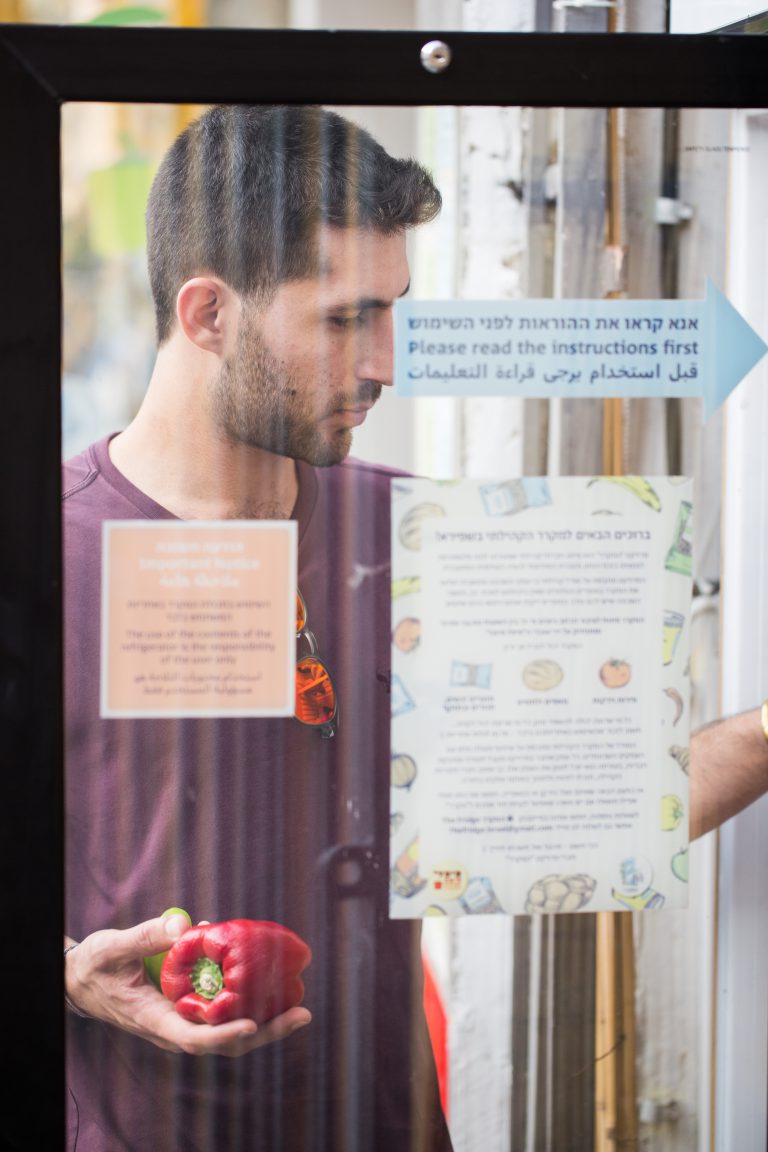
A shop owner signs a contract agreeing to insure the Fridge as part of their business, to abide by the rules set down, and make sure it’s cleaned every day. This is “hosting” a Fridge. The Fridge itself bears printed instructions in Hebrew, Arabic and English taped to its door.
Today there are six Fridges in Israel, from the south in Beersheva to Kiryat Shmonah in the north, with new Fridges in the works in other locations. All Fridges are open 24/7.
The first Fridge was hosted by an eatery in the Shapiro neighborhood called Pizza People.
“We asked all our friends to bring something from their own homes to get it started,” recalls Ronen, “Any soft tomatoes,a bag of flour, stuff like that. About three months later we saw that neighborhood people were donating food, not only the shop owner or our friends. And people were taking food regularly.”
“We have two goals,” says Ronen. “One, to physically help prevent food waste, and even more importantly, to raise awareness of the issue. We’ve had a lot of media exposure through radio interviews, a TV program, podcasts and YouTube. The biggest draw is through our Facebook page. People get inspired and email us to ask how they can establish a Fridge in their own community.”
Most of those inquiries don’t result in a Fridge. A return email from the partners carries a 30-page attachment explaining how the project works. It might take as long as three months to start seeing results in a neighborhood. Although although Ronen and Roubach provide stickers, printed matter, and guidance, people hoping to set up a Fridge must talk to local businesses until they find one to host it, and deal with the legalities and paperwork on their own. It can be daunting, unless you’re fired up with idealistic enthusiasm.
“There are always obstacles, something that’s going to stop you,” says Ronen. “Just put the fridge on the sidewalk. Afterward you can deal with the lawyers and insurance; it’s going to be OK. You need meaning, and a purpose to help others, to help the world. That’s what keeps you going when times are rough.”
Each Fridge is supervised by a local volunteer and develops its own character, says Ronen.“In Tel Aviv, Pizza People mostly stocks the Fridge. In Beersheva, university students ensure that the Fridge is full. They take 20-minute shifts to go around the neighborhood, collecting food. We have a Fridge in a primary school in Misgav, a northern community. The second-graders saw the TV interview about the project and decided to set one up in their school, which they did, and it’s working. Even hi-tech businesses have approached us for help putting a Fridge in their offices. We think that’s great – even a mini-Fridge in an office helps raise awareness about food waste.”
Ironically, after the second Fridge was launched in Jerusalem’s Mahane Yehuda market, the Tel Aviv municipality approached the partners and asked to work together. Ronen didn’t comment on the results of that conversation, but told Green Prophet how a large organization proposed to expand the project’s reach.
“Six months after the launch, a gentleman, head of a big non-profit charity dealing with distributing surplus commercially cooked food, asked to meet with us. He told us, ‘Quit your jobs (because we were both working to support our studies), and let me help you. I’ll give you money to start a non-profit, and give you a salary. I’ll pay for the Fridges, the marketing, everything. All you have to do is make 200 such fridges in Israel. We have the money – just go and do it.’
“We were really in a dilemma. That would have helped us realize our goal. But something else would have happened: we would have lost the authenticity of each and every Fridge. The Fridges of Jerusalem, Tel Aviv, Misgav – each is owned by the community; no money is involved. That’s what makes the awareness so strong.
“So yes, other organizations are interested, but it’s best kept the way it is, because that way, the project comes from the inside of a community.” Ronen adds that another benefit is that the project strengthens social ties.
“I’m hoping that two years from now, I’ll take my girlfriend to Pizza People and we’ll have a beer and eat pizza, and we’ll watch people putting food in the fridge and taking food out. And I’ll tell her, we have 100 more like this with the same logo… that’s something we did. I’m looking forward to the time when I can chill and watch this whole amazing thing work completely alone.”
Interested in starting a Fridge in your neighborhood? Go to The Fridge on Facebook and ask.
CBD a non hallucinogenic molecule in medical cannabis helps with sleep. Research shows it.
Cannabidiol (CBD) is sweeping the nation as a cannabis product that’s non-psychoactive and supremely helpful for treating multiple physical and mental health problems. It’s a hemp-derived product that, when sold legally, contains less than 0.3 percent THC. You can purchase it online throughout the United States or in dispensaries in states where cannabis products are legal.
CBD is commonly used to treat ailments like anxiety, pain, skin problems, and more. It’s also a commonly used sleep aid. Many who use CBD pills regularly to aid sleep claim that it’s better than using a sleeping pill. But does it really work to make you fall asleep faster?
How CBD Works
If you’re familiar with cannabis products, it might be confusing why CBD works so well when it has no psychoactive properties. It can’t give you an “out-of-body” experience to combat the pain and discomfort of your situation, so how is it effective at treating so many health problems?
CBD is made up of terpenes, cannabinoids, vitamins, and other nutrients. It works because your body is already full of cannabinoids that send messages to your endocannabinoid system. Like taking any supplement, taking CBD capsules increases levels in your body to help that system reach homeostasis.
The endocannabinoid system is responsible for hormone regulation. Oftentimes, a hormonal imbalance is the reason for sleep problems. A surge of anxiety, depression, fear, or adrenaline can all combat your body’s desire to rest, and CBD can help to correct that.
It’s all about changing brain chemistry. In her book CBD Oil: Everyday Secrets: A Lifestyle Guide to Hemp-Derived Health and Wellness, Gretchen Lidicker writes: “Studies mainly point to CBD’s ability to interact with … serotonin receptors and GABA receptors in the brain. Serotonin plays an important role in mood and anxiety, and GABA is known as the main ‘inhibitory’ neurotransmitter, meaning it calms excess activity in the brain and promotes relaxation. GABA receptors are the target of benzodiazepines, which are a class of anti-anxiety drugs.”
She also notes that CBD is linked with anti-anxiety properties, helping to promote relaxation and raising the body’s naturally occurring levels of melatonin. Taking CBD in combination with the correct dosage of melatonin supplement can make it even easier to fall asleep at night.
Studies on Sleep and CBD
The research on CBD and the human body is limited simply because of time. Since CBD was exposed as a product much different than THC, marijuana, and other cannabis products, there has not been a lot of time to develop comprehensive studies. It’s also relatively limited because it’s still considered a Schedule 1 drug in most states.
Yet, there have been a few recent studies to show how CBD works for promoting sleep: Here are a few of the most notable cases:
2019 Permanente Journal Study: Researchers here looked whether CBD could reduce anxiety and improve sleep as well as how the two work well together. There were 72 subjects, more than half of which experienced anxiety and a third of which had sleep problems. Each subject was given a 25mg CBD pill each day, and the first month showed that nearly 80 percent of participants had lower anxiety levels and more than two thirds had better sleep. The treatment of anxiety is more than likely an active reason for this study’s success.
2018 Frontiers in Pharmacology: Study authors examined the way that pain affects quality of life, including sleep. They used CBD to treat pain and found the following: “The study also showed improvements in the quality of life, sleep, and increased patient satisfaction.”
2014 PubMed Central: One of the most interesting finding about CBD for the treatment of sleep is that it doesn’t make you groggy. A 2014 review showed that patients who used CBD as a sleep aid did not wake up feeling groggy. In fact, many used it to treat grogginess after a poor night’s sleep. Researchers are uncertain why CBD works to both wake you up and put you to sleep, but it certainly helps erase one of the most unpleasant side effects of traditional sleep aids.
Side Effects of CBD for Sleep
Most CBD users like using the product because it has fewer side effects while helping them reach a peaceful slumber. That being said, there are still some side effects common for CBD users. Some of these side effects are part of sleep problems in general and some are from the increased number of cannabinoids in the body. Usually, side effects can be treated by adjusting the dosage.
Those using CBD to treat sleep report feeling irritable after taking a dose of CBD. This could be explained by the imbalance your body is already feeling for sleep problems, but it is present nonetheless. Nausea, vomiting, or diarrhea may occur with the wrong dosage as well.
Doctors strongly encourage CBD users to check with their primary care physician before taking CBD for sleep to make sure it won’t interact with a sleep aid. In some cases, sedatives mixed with CBD can cause a negative reaction you want to avoid.
In general, side effects for CBD use are much less invasive than side effects for sleep aids, particularly the prescription kind.
How to Use CBD Pills Effectively as a Sleep Aid
Countless individuals report achieving their sleep goals without harsh side effects, so how do they do that? It’s usually about getting the right dosage. According to Lidicker, the wrong dose of CBD “could keep [you] up all night…the way you react to cannabis is highly individualized.” Researching proper dosage for your weight and needs is important to getting the right dosage.
Additionally, CBD should be taken regularly to establish the substance in your system. With the right dosage and time, your endocannabinoid system will regulate, and you shouldn’t feel the side effects described above.
Everyone is different and some may feel side effects despite their best efforts to establish proper dosage in their everyday schedules. It’s always wise to seek the advice of a physician who’s familiar with CBD treatments to ensure you’re making the right choices for your needs and lifestyle.
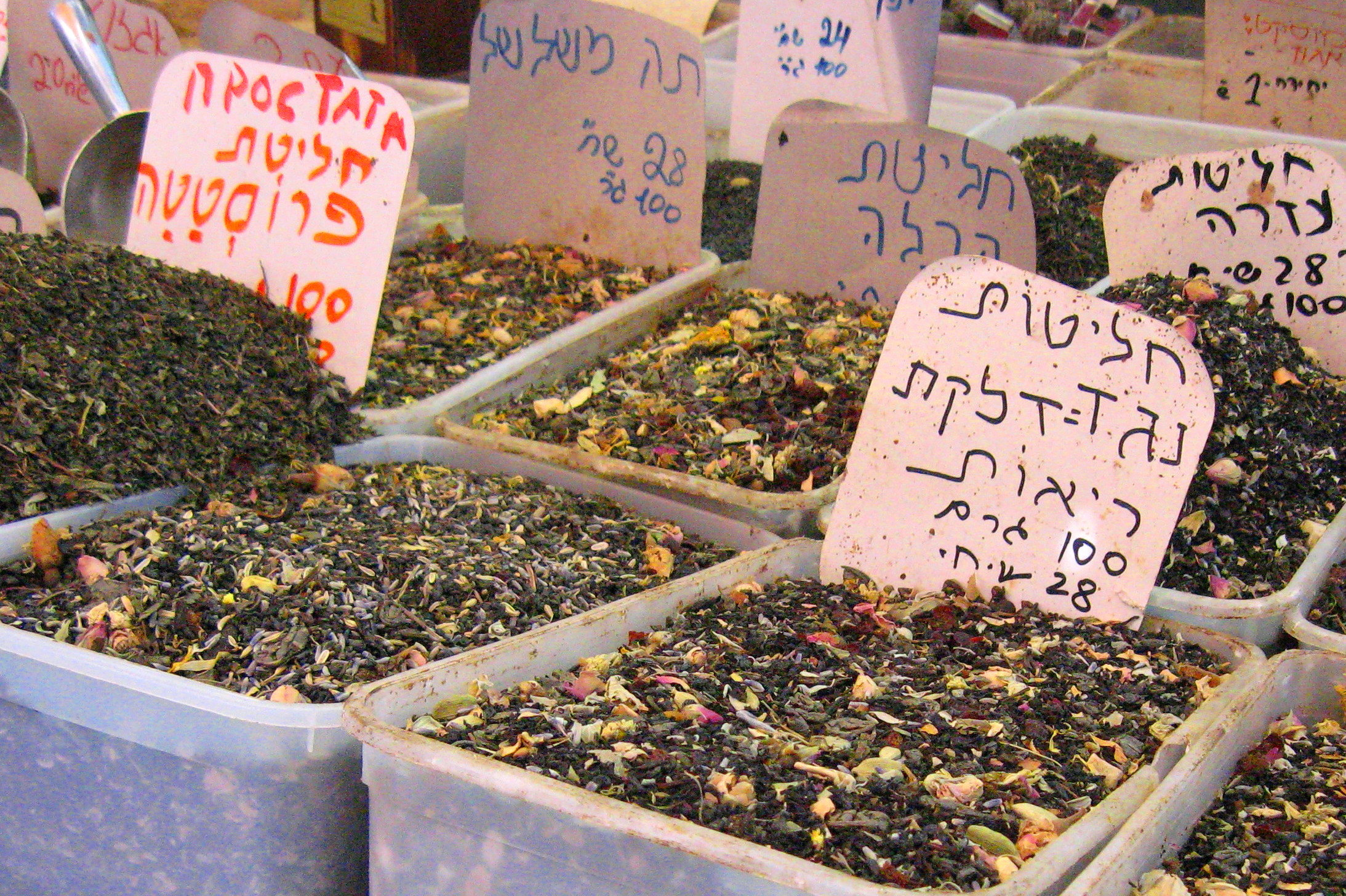
Dried tea mixes in Machane Yehuda, Jerusalem’s food market.
The UN has decided we need more days to celebrate food and agriculture and has decided that 2021 is the International Year of Fruits and Vegetables, 21 May as International Tea Day and 29 September as International Day of Awareness of Food Loss and Waste.
“Without healthy diets, we cannot hope to end malnutrition – and we will not eradicate hunger unless we curb food losses,” said FAO Deputy Director-General for Climate and Natural Resources Maria Helena Semedo. “By highlighting the value of fruits and vegetables, and the damage caused by loss and waste, the UN has taken a decisive step to promote fairer, greener, more efficient food systems. Honouring tea is a fitting tribute to the legions of smallholder farmers who help produce what is the world’s favourite drink, after water itself.”
Other resolutions, adopted by the UN General Assembly focused on progress and challenges related to agriculture, food security and nutrition; sustainable mountain development; the role of agricultural technology; the importance of natural plant fibres for livelihoods and the environment, and the need to eradicate rural poverty.
Fruit and vegetables
Chile has been a champion of devoting a year to promote fruit and vegetables, which have well-known nutritional qualities and also contribute to the prevention of non-communicable diseases (NCDs).
FAO and the World Health Organization recommend that each adult consumes at least 400 grams of fruit and vegetables on a daily basis to prevent chronic NCDs, including heart diseases, cancer, diabetes and obesity, as well as to counter micronutrient deficiencies.
Advocacy for fresh produce also fits well with the aim of strengthening the role of smallholder and family farmers, and fosters broader market options for millions of rural families. Gender equity opportunities are also noteworthy, as women often play leading roles for their households in both the production and consumption of fruit and vegetables.
Tea
International Tea Day has been celebrated by some countries – notably in South Asia and Tanzania – where tea has been a major commodity and important beverage for some time.
India proposed that FAO endorsed a greater recognition. The UNGA resolution was presented by Group of 77 and China.
The observance is meant to acknowledge and promote the herb’s contribution to human health, socialization, rural development and sustainable livelihoods. Tea is a major cash crop for millions of families in developing countries and as a labor-intensive sector, including processing, the industry provides jobs in remote and economically disadvantaged areas.
Food loss and waste
Women in Africa with the back breaking work of watering their farm
Andorra and San Marino played a key role in proposing the International Day of Awareness of Food Loss and Waste (FLW). The day offers an opportunity to sharpen focus on the need to reduce FLW and how doing so can contribute to sustainable development.
As explored in depth in FAO’s 2019 State of Food and Agriculture, food loss and waste entails significant emissions that exacerbate the challenge of climate change as well as impact on food security. An estimated 14 percent of the world’s food is lost along the chain from the point of harvest to the retail level, and likely even more is wasted later.

 Can a website dedicated to crowdfunding new green businesses make a measurable impact on our planet? Park your cynicism and take another look at Kickstarter where simple environmental innovations seek investors for affordable green products that help us make easy positive change. Meet the Pangea bamboo towel.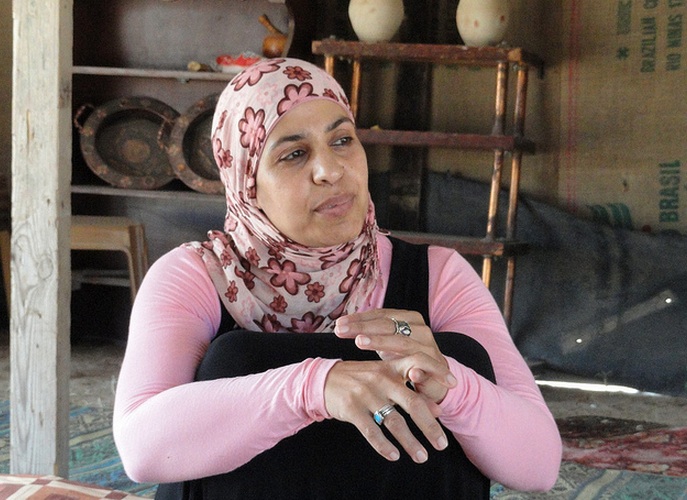





 Last Tuesday, the consortium behind the Leviathan gas production facility declared “an historic turning point in the history of the Israeli economy” when –