Being Green Starts in Your Own Backyard

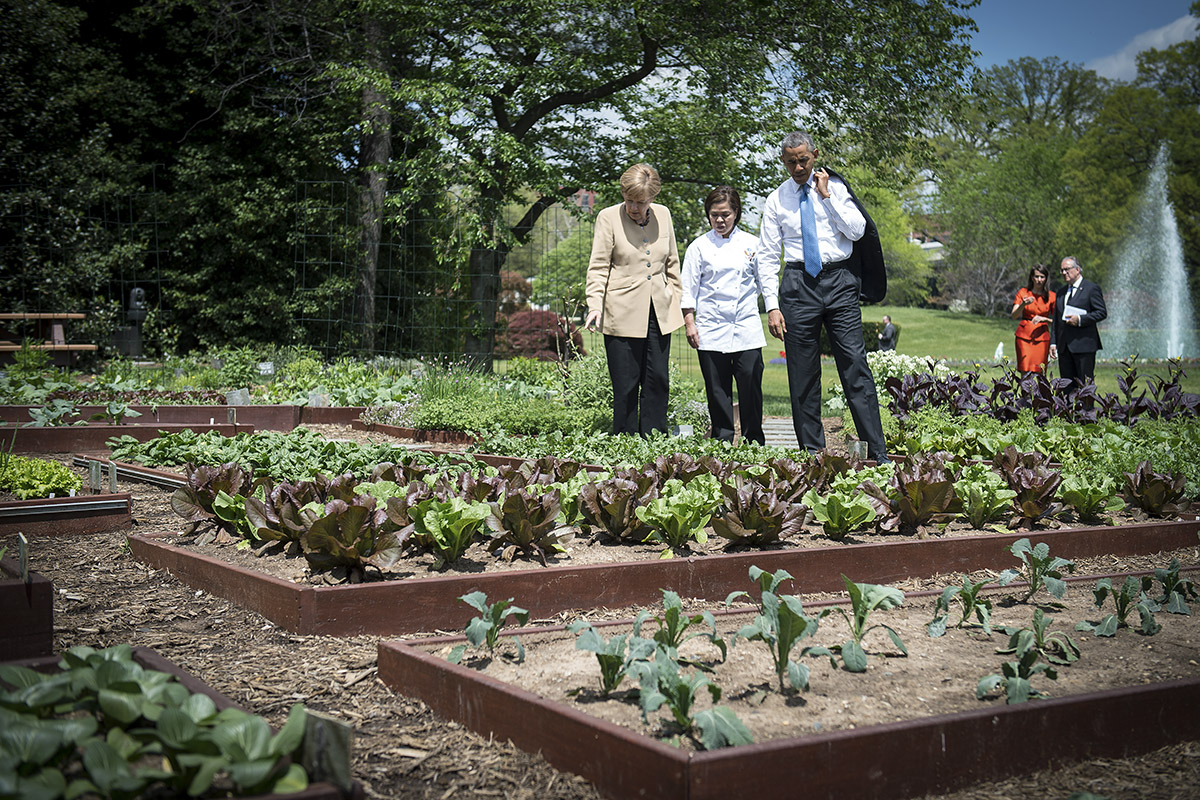
Michelle Obama helps start backyard gardens, one school at a time.

We’ve heard the word “Green” thrown around for years.  Sometimes it means recycling our newspapers and sometimes it means massive federal legislation to change our car exhaust.  Or maybe it means, as Alexandria Ocasio-Cortez (known in the media as AOC), the U.S. Representative for New York’s 14th congressional district believes, that this can only be accomplished through massive lifestyle changes for every American?  Or are real changes accomplished in your own backyard?   

And most importantly, is AOC’s Green deal truly about being green?

  1. 100% percent of the power demands of the United States through clean, renewable, and zero emission energy. Green, but anytime “100%” is used, it is unrealistic.
  2. Upgrading all existing US buildings to be energy efficient. Green, but again “all” means unrealistic.
  3. Working with farmers to eliminate all pollution and greenhouse gas emissions – no animal waste, no machinery in farming.  Are farmers really the largest polluters in the US?
  4. Overhaul the whole US transportation system including expanding electric car manufacturing, installing building “charging stations everywhere” and expanding the high speed rail system to a scale where air travel stops to become unnecessary. Not realistic.
  5. A guaranteed job with a family sustaining wage, adequate family and medical leave, paid vacations and retirement security for every American. Nothing to do with being “Green”.
  6. High quality health care for all Americans.  Again, nothing “Green” here.

Of the top 100 polluters, they fall into the following major categories: power plants, oil refineries, natural gas systems, chemical companies, metal and mineral processing plants, paper processing plants, waste management systems, and that is it.  Old McDonald’s farm is not on the list.

Where did AOC’s New Green Deal come from?

AOC’s New Green Deal, which originated from a 2009 UN Report.  The three objectives of the UN’s Global Green New Deal (2009) are the following:

  1. Revive the world economy, create employment opportunities and protect vulnerable groups.
  2. Reduce carbon dependency, ecosystem degradation, and water scarcity.
  3. Further the millennium development goal of ending extreme world poverty by 2015.

Source: A GGND (Global Green New Deal) Report Ed Barbier April 2009 (UNEP-global-green-new-deal.pdf)

Two out of the three goals of the UN’s Global Green New Deal (2009) have nothing to with “being Green”.  They have to do with economics. More specifically, worldwide economics and worldwide redistribution of wealth.  

So why is it under the umbrella of “Green”?  The answer is to make people feel guilty for not accepting worldwide wealth redistribution with unelected people living halfway across the world making the rules.

AOC’s chief of staff, Saikat Chakrabarti, has admitted the plan’s true objective is to radically transform America’s free enterprise economy into a socialist system.  Chakrabarti said this in a meeting with Sam Ricketts, climate director for Democratic presidential candidate wannabe, Gov. Jay Inslee.

“Do you guys think of it as a climate thing?” Chakrabarti continued. “Because we really think of it a how-do-you-change-the-entire-economy thing.”

AOC’s New Green Deal and the UN’s Global Green New Deal are doing the same thing.  they are hijacking the real green movement to hide their true intention of worldwide economic change.

If you truly want to “be green”, the solution is not in AOC’s New Green Deal or the UN’s Global Green New Deal.  The solution is actually in your own backyard, micro gardening.

What is micro gardening?

Attractive woman in hat with hydroponics

Do you really want to see real change to our environment, to the economy, to help the poor, to eliminate poverty?  The solutions start in your own family, in your own neighborhood, your own backyard, even your own windowsill.

Some people mistakenly believe that doing change means that it has to be grand, huge, and on a worldwide scale.  The truth is that the most powerful changes happen on the micro level.

Have you ever heard of micro container gardening?  Indoor or urban micro container gardening is the practice of cultivating vegetables, herbs, roots, and tubers in small spaces.  These gardening spaces might be balconies, small yards, patios, or rooftops, which make use of containers. Containers can be traditional plant pots, inspirational, repurposed old tires, plastic buckets, trash cans, or wooden pallets.  

These gardens can either be traditional soil-based gardens, hydroponic gardens, or a combination of the two, soil on the top with a way to store water below the soil while still providing a way for the roots to get water.

Water for these gardens can be obtained from tap water, filtered handwashing or bath water, or collected rainwater.

The point is that a bunch of micros become a macro garden.

What this means is that even a person living in an apartment living in a city can still have a positive impact on the environment through their own direct actions.

What to have even more impact?

Try this.  When you are going to or from school or your job, take a small grocery bag with you.  Make the commitment to pick up 10 pieces of trash on your journey. How much of an impact will that have over a week, a month, a year, or even 5 to 10 years?  But what about the ripple effect. Many people are hesitant to be the first to do something, but when somebody else does something, other people follow their lead.  How much impact will that have in your local environment to not only yourself but other people and animals in your community? 

Being in a healthy and clean environment not only affects the physical environment around us, but it also affects the emotional environment around us as well.  We look around us and we smile. When we smile, others smile.  

Smile and be friendly, and the other person will respond with smiling and being friendly as well.

Bhok Thompson
Bhok Thompsonhttp://www.greenprophet.com
Bhok Thompson is an “eco-tinkerer” who thrives at the intersection of sustainability, business, and cutting-edge technology. With a background in mechanical engineering and a deep fascination with renewable energy, Bhok has dedicated his career to developing innovative solutions that bridge environmental consciousness with profitability. A frequent contributor to Green Prophet, Bhok writes about futuristic green tech, urban sustainability, and the latest trends in eco-friendly startups. His passion for engineering meets his love for business as he mentors young entrepreneurs looking to create scalable, impact-driven companies. Beyond his work, Bhok is an avid collector of vintage mechanical watches, believing they represent an era of precision and craftsmanship that modern technology often overlooks. Reach out: [email protected]

Read More

TRENDING

90% of Americans worry about microplastics

Microplastics are showing up everywhere—from dollar store toys and synthetic clothing to bottled water, toothbrushes and even human sperm. A new Ocean Conservancy survey finds that nearly 9 in 10 Americans are concerned about the health impacts of microplastics, while support is growing for tougher regulations. As scientists uncover plastic particles in the heart, placenta and reproductive organs, the question is no longer whether microplastics are affecting our lives, but how much damage they are already doing.

Understanding Food Production: Karl Studer on the Urban-Rural Knowledge Gap

Karl Studer occupies an unusual position in American business. As President of Quanta Services, he oversees electrical infrastructure operations across the United States, Canada, and Australia, managing thousands of employees and multibillion-dollar projects.

Tigris River oil spill highlights Iraq’s environmental oversight and our addiction to oil

A fresh oil spill in the Tigris River, filmed by an Iraqi university student, has reignited concern over Iraq's polluted waterways. From ancient Mesopotamia to modern Basra, the country's dependence on oil has come at a steep environmental and human cost, with activists warning that unchecked contamination is putting ecosystems and public health at risk.

Doctor-Led Direct Hair Transplant: What Surgeon Involvement Means for Outcomes

Hair restoration technology continues to evolve, but the surgeon behind the procedure remains the most important factor. Doctor-led hair transplants emphasize careful diagnosis, conservative donor management, natural hairline design, and long-term planning rather than simply maximizing graft counts. By treating donor hair as a limited resource and tailoring each procedure to the patient's future hair loss, experienced surgeons can reduce the need for corrective surgery while delivering more natural, sustainable results.

Data centers in Space? Sophia Space and Apex plan on busing them in

Can data centers really be built in space? Pasadena-based Sophia Space is partnering with Apex to test the idea by launching modular AI computing systems into low Earth orbit in 2027. Using radiation-hardened compute TILEs cooled by passive radiative systems and mounted on scalable satellite buses, the companies aim to prove that edge computing can operate reliably in space. While challenges remain, the project represents an important step toward distributed orbital computing networks that could support everything from climate monitoring and pollution tracking to autonomous spacecraft navigation in an increasingly crowded orbital environment.

Yerukim Forms a New Green Economy Where the Money is Really Green

The Yerukim members who pick up the recyclables get to keep the monetary reward, the public earns "green" bills that can be used in shops, and business owners get to be associated with environmentalism.

Choosing Riyadh over Dubai? What Investors Should Know

Saudi Arabia is deploying capital at unmatched scale to catalyze tourism and advanced industry while rewiring its power-and-water backbone. The investable frontier is widening—especially in renewables, grid storage, water efficiency/desal retrofits, and hospitality operating platforms. Prudent investors will insist on phased delivery, enforceable KPIs (energy, water, biodiversity), and RHQ/zone compliance—while pricing political-economy and reputational risks alongside growth upside.

Sell your cooking oil for biodiesel money

Want to make money on old french fry oil? Sell it.

Qatar Alternative Energy Summit Pairs Investors And Innovators

Alternative energy investors and innovators can meet n' greet in Doha, Qatar March 16 and 17.

Here’s How To Implement The Four Pillars Of Employee Engagement

If you throw a party for your work team and they are vegans, don't make it a barbecue. Know the sustainability values of your team to boost moral and retain good people.

Locals From Rishon Fight IKEA

Big Box stores are a pretty new concept in Israel, and thank God that not every Israeli city wants them in their backyard. A word from someone who has see the beautiful farmland around her hometown Newmarket, Ontario stripped and converted into vulgar strip malls of big box shops: they have no place in a healthy and sustainable town or city.

The Jewish National Fund Meets An Inconvenient Truth

According to the JNF, it has transformed thousands of acres of barren land into green forests in Israel. They state that each person emits about 23 tons of carbon per year, estimating that each tree planted can absorb one ton of carbon in its lifetime. That's a whole lot of trees you'd need to be planting. Could so many fit in Israel?

How to quiet noise from construction in your office

Streets need to be resurfaced in New York but the humming and grinding noise is unsettling. Noise is environmental pollution. 

Popular Categories