Home Blog Page 176

More AirBnB renters? Pimp your photo to look like a happy mom

0

While studying hosts’ photos, researchers discovered a “trustworthiness” pecking order: women are deemed more trustworthy than men, older hosts over younger ones, smiling faces over neutral expressions, attractive hosts over unattractive ones. The photo is of me, and I do not have an AirBnB property. Sorry. 😉

Even the strange neighborhood where I live in Jaffa, Israel has random AirBNB renters. The easy-to-rent platform has taken over huge parts of Tel Aviv, so much that the city is proposing a 90-day-a-year limit on AirBNB rentals. Prices have skyrocketed and young people can no longer afford the rent. AirBNB or Craigslist or Facebook: it used to be something you could do when you went away for the summer. Now companies are buying up or renting out buildings and properties to service the AirBNB traveler. It’s common in the Middle East, making it easier to visit, Israel, Gaza or even to stay in a cave in Jordan.

So if you have a AirBnB rental, how do you make it more competitive? Airbnb rentals are chosen based on profile photos, new research from Hebrew University in Jerusalem has found.

Which host looks trustworthy? Who do I think will provide me a nice rental–one that closely resembles the photos they posted?

Professors Eyal Ert and Aliza Fleischer at Hebrew University of Jerusalem’s Department of Environmental Economics and Management set out to answer these questions and published their findings in Psychology & Marketing.  They analyzed 320 Airbnb listings in Stockholm, Sweden and gleaned two main criteria that determine “visual trustworthiness”:

One, is the host’s characteristics (gender, facial expression) and the second is the quality of the image itself (blurry or clear).  “Our new study quantified the qualities that define the sort of attractiveness that online shoppers identify with trustworthiness,” explained Ert.

While studying hosts’ photos, Ert and Fleischer discovered a “trustworthiness” pecking order: women are deemed more trustworthy than men, older hosts over younger ones, smiling faces over neutral expressions, attractive hosts over unattractive ones.

As for image characteristics, the pair found that high-quality photographs did better than blurry ones, and photos that showed the host interacting with other people (“a multi-person photo”) did better than solo shots of the host.  The thinking is that if a host is seen interacting with friends then it may signal their ability to maintain relationships, akin to a stamp of approval for reliability.

Better face, charge more

“Visual trustworthiness is king in the Airbnb arena. Hosts who are perceived as trustworthy enjoy higher prices and more frequent rentals than do hosts with less-trustworthy photos,” added Fleischer. Notably, race was not a factor in their analysis since 98 percent of the Swedish hosts were Caucasian.

Given the primacy of profile pictures in online commerce, it is interesting to note that Airbnb hosts are often unaware of these insights. While most smile in their photos (68%) the researchers would have expected to see more photographs of women, at least in those cases where the property is owned by people of both genders.

kristiane backer mtv hostess

Word to the wise, shared Ert and Fleischer, a high-resolution, multi-person shot of an elderly female host who is smiling is more likely to attract Airbnb guests than will photos of young hosts, men or poor-quality shots where the host’s face is obstructed.


How Norwegian Organizations are Making Money With Ecological Firelighters

0
hamburger with cheese
Any time is burger time. Can you make mine vegan?

Various organizations in Norway are always looking for different ways to raise money. Ecological firelighters have been embraced by many schools and sports teams due to the perks that come with selling them. The tennbriketter dugnad is long-lasting and tends to light in an instant. 

3 Top benefits of selling ecological firelighters

It’s imperative to contact a reputable ecological firelighters company in Norway to enjoy these benefits. Such brands usually offer awesome customer service and fast delivery. Without much ado, let’s take a look at some of the benefits of selling ecological firelighters.

1. They are in high demand

Ecological firelighters are not only in high demand in winter but throughout the year. Individuals and organizations make fires both indoor and outdoor in Norway.

The good thing is that you don’t need to visit a physical store to purchase them. You can just order online and get them delivered to your location.

2. You will make a cool profit in no time

There is no need to break the bank before you can buy or sell ecological firelighters. They are easy to move around and you’re bound to earn a decent profit within a short time.

The best companies that produce ignition briquettes often provide a minimum of 30 days payment deadline for their customers. You can take this step without paying any amount of money in advance. In case you’re skeptical about their efficiency, consider ordering for free samples.

3. They are environmentally friendly

Ecological firelighters are made from high-quality materials such as natural wax and sawdust. The latter is sourced from sustainable forestry.

They are odorless and non-toxic, unlike other types, making them a favorite of many Norwegian organizations. Make sure that you buy them from top brands that are certified by the Forest Stewardship Council (FSC).

3 Steps to money make with ecological firelighters

These tips will help you to sell your ecological firelighters faster.

1. Create a plan

Start by deciding the quantity your organization wants to sell. You can assign someone in your group to be in charge while other team members report to him/her.

Let every participant know the number of ecological firelighters they are expected to sell and the deadline for selling the products. You should also design a plan regarding how the money will be collected.

2. Define your target audience

Gaining clarity about your customers early on will go a long way. For instance, most students who want to raise money for field trips sell ignition briquettes to their family members and friends. Another option is to sell them to their neighbors.

Apart from that, you can approach hotels, stores, malls, tourists, commercial kitchen owners, and agricultural companies. It’s advisable to introduce yourself before informing them about the purpose of the fundraising.

Chances are your prospective customers will ask why ecological firelighters are different from the regular ones. Try to get valid information on the benefits and features of the products you’re selling.

3. Leverage social media platforms

Most organizations set up Facebook groups to communicate with team members effectively. Another way to use social media is to share your ecological firelighters on Instagram, Twitter, or Snapchat. This is a proven way to attract more customers and increase sales at no cost.

Top things to do in Brisbane

0
brisbane bike rental eco, stacks of bikes
Eco lovers will love Brisbane. Try renting bikes, finding second hand clothing shops or visit one of the science museums

Brisbane is a city full of excitement and fun. On your visit to the Queensland capital, you might want to learn the history of the city, observe amazing views, take in the culture, or something else entirely! There are so many things to do in Brisbane, it can be hard to decide where to start.

Climb Story Bridge

When someone says, “bridge climb,” you might think of the Sydney Harbour Bridge, but Brisbane’s Story Bridge is just as stunning. Climb the bridge at twilight, in the day, at dawn, or at night—whichever works best for you. The summit of the bridge is approximately 80 metres above sea level and offers 360° views of the city. For the more adventurous climbers, the Story Bridge offers something unique—it’s the only bridge that lets you abseil down the bridge, walk the plank at the top of the bridge, and do a cantilever lean out from the plank. The cantilever leans out over the city traffic 50 metres below. You’ll still be in your harness, perfectly safe, but it’s a truly unique experience.

Go Shopping in Queen Street Mall

Brisbane’s biggest shopping centre is the Queen Street Mall. Within the sprawling mall, there are over 700 stores spread over separate, unique sections. There’s QueensPlaza, The Myer Centre, the MacArthur Centre, the Brisbane Arcade, and Tattersall’s Arcade. The stores aren’t all you’ll find here though; the mall is often host to a range of performances to entertain and delight.

Go Bar Hopping in Fortitude Valley

If you’re the type that likes to sample the local bars and cocktails in a new city, you’ll want to head to Fortitude Valley. Fortitude Valley is a suburb on the northern half of Brisbane and it’s full of trendy bars that cater to both locals and tourists. Plan out your evening to visit a range of bars, or just walk through the city and pop into any watering hole that takes your fancy.

Check out the Queensland Cultural Centre

On the Brisbane South Bank is the Queensland Cultural Centre, a space home to several cultural institutes. If you’re looking for cultural things to do in Brisbane, a visit here is a must. You’ll find the Queensland Art Gallery | Gallery of Modern Art (QAGOMA), the Queensland Museum and Sciencentre, the Queensland Performing Arts Centre, and the State Library of Queensland. No matter what kind of cultural experience you want to enjoy, you’ll probably find it in the Cultural Centre.

This content is sponsored by Red Balloon content

How traveling slow led me to live a greener life

0
krista at the beach in Indonesia
Instagramming influencers, who hop on and then off for the photo op are giving travel a bad name. Some cities in Europe don’t even want these kinds of tourists. Krista shares how you can slow it down to change the world.

Traveling and green living are an awkward combination. At first glance, traveling seems to be at odds with a green lifestyle, as it almost inevitably involves carbon emissions. Yet traveling can also contribute to a greener world as I learned working with an NGO in Indonesia: it can be an eye-opening and transformative experience, planting seeds for a new environmental consciousness. In my own case, traveling the world installed a deep appreciation of the beauty of the natural world, the destruction that humans are causing to it, and the way in which our lifestyle fuels that destruction. Traveling has taught me invaluable green lessons (like how to use a moon cup)– lessons that I wouldn’t have learned staying at home.

Breaking free from the bubble

I long considered myself to be a city girl. Being born in a big city and having grown up in an urban environment, I hardly ever got out into nature. When I started traveling and finally got out there I was overwhelmed by the beauty of our planet and positively amazed by the natural wonders I encountered. I realized I was a nature lover after all.

It was in the lush jungles of Laos that I first discovered my love for hiking. I was stunned by the peace I experienced walking through ancient forests and sleeping under the stars. Scuba diving in Indonesia’s oceans showed me a whole new magical world existing under the surface. I learned to love the sound of ocean waves and the way it eased my mind.

In Nepal, eighteen days of trekking through the Himalayas showed me the power of nature. Making my way through mighty mountain peaks, it became clear to me how incredibly strong nature is and how tiny us humans are in the grand scheme of things – I suddenly realized we are completely dependent on our planet.

Being out in nature means feeling connected to the planet. Human beings have lived close to nature for ages, but modern life in big cities has disrupted this pattern. I’m sure I’m not the only city girl who never knew she loved nature: it’s hard to cultivate a love for nature when you’re stuck in a concrete jungle. You have to break free from the bubble and experience the force of nature first.

Traveling Slow Benefits You, Local Communities and the Environment 

The big disillusion while traveling

The euphoria that came with my newly found appreciation for nature was accompanied by another feeling: disillusionment. When you love someone or something, you don’t want to see it get hurt. But I was watching our planet get hurt beyond imagination. Of course, I had heard about environmental problems such as climate change and plastic pollution. But it’s one thing to know it’s there, and another to see it with your own eyes. It wasn’t until I started traveling that I truly grasped the nature and scale of the environmental crisis.

While wandering through a 130 million-year-old rainforest in the heart of Malaysia, I heard a local guide explain how climate change is killing the majestic trees. From a boat on the Mekong river, I saw the building of an industrial dam destroy vulnerable ecosystems. But worst of all was the endless piles of plastic trash: I saw plastic trash lining roads, choking rivers, covering beaches, and floating in oceans throughout Asia. Once you’ve seen this, it’s impossible to deny the environmental crisis is real – you’ll know without a doubt the crisis is happening and it’s happening right now.

plastiki david rothschild
About 10 years ago David de Rothschild set sail to document plastic at sea. It’s only gotten worse.

Mind you, I’m not pointing my finger at developing Asian countries for causing the plastic pollution problem. Highly developed countries are also to blame: they produce the largest amount of trash per capita and export much of it to developing countries. The difference is, in many developed countries, pollution is not that visible. Trash gets collected, so people don’t see it. This makes it easy to pretend the problem doesn’t exist. Traveling will surely cure you of this illusion.

The freeing effect of downsizing

People all over the world – but especially in developed countries – use and throw away enormous amounts of stuff at incredibly high rates. Most people aren’t even aware of it: they take their material wealth for granted and buy and ditch things without giving it a second thought. I used to be like that too – until I started traveling.

Just before I took off traveling, I got rid of my apartment and most of my stuff: my remaining possessions fit into a storage box. On the road, I carried all of my belongings on my back, which meant I wasn’t eager to carry anything unnecessary. Stuff I never used got ditched quickly and I resolved to throw something out for every new item I bought. This made me extremely conscious of what I bought: I only purchased things I really needed. Like a menstrual cup. Read all about it here.

moon cup instead of tampons
Mooncup is a good alternative to tampons for travelers.

Living out of my backpack, with so little possessions, had a surprisingly freeing effect. Having just a few sets of clothes I never wondered what to wear, and carrying just a small toiletry bag I stopped using unnecessary personal care products. It made life a whole lot easier. I learned that having a lot of things equals having a lot of things to worry about. Whatever you have, you can lose. If you don’t have much, you don’t have much to lose either. Getting rid of most of my possessions meant I gained a lot of mental freedom.

A lesson on the value of possessions

Inevitably, traveling led me to reflect on the value of possessions. Traveling through developing countries, I saw local people with few possessions living very happy lives. These people didn’t have a fancy home or shop for new clothes every month, but they valued the things they had. What’s more, they were quite satisfied with it – they weren’t driven by a constant need to purchase more.

You could describe this life as simple, but I realized that in non-materialistic ways it was a lot richer than the modern life I knew. I encountered tight communities with strong social ties, where people spent a lot of time together and derived much of their happiness from social interactions. I saw people living close to nature, only taking from the land and sea what they needed, and actually being thankful for it. They lived a life rich in meaning and connection.

Encounters like this taught me that happiness doesn’t come from buying things. When it comes down to it, the things that really matter in life are non-materialistic. The constant strive for more stuff keeps people trapped in busy but ultimately unsatisfying lives, deprived of meaningful connections. 

The powerful influence of media

If downsizing is such a freeing experience and having a lot of things doesn’t make us happy anyway, then why are people buying so much stuff in the first place? The media play a major role in this – and traveling can be a good way to break their spell.

slow travel at the sea
Hanging out with some new friends.

Traveling drastically lowered my media-intake: I stopped watching television, dramatically decreased the amount of time I spent on social media and started using the Internet more selectively. I had some of my most impactful travel experiences on remote islands without an Internet signal. In places like that something magical happened: I was able to slow down and focus on the simple things in life – the ones that really matter. Far away from the noise of modern life, I could finally connect to my environment, other people, and ultimately myself.

We are bombarded with advertisements on a daily basis: through television, radio, social media, and the Internet we are constantly – often unconsciously – influenced by adds. These adds have one specific purpose: to convince us that we don’t have enough stuff and need to buy more in order to be happy. Taking a media break allowed me to take a step back and created space for a different perspective. It was like resetting my system.

Towards a new green mindset 

The number one lesson I learned while traveling is that we live on an incredibly beautiful planet, and everything and everybody living on it is interconnected and interdependent. But modern life tends to disconnect us from nature and each other. It makes us believe we should pursue happiness through buying stuff, the production and disposal of which is leading to the destruction of our natural world.

krista with muslim friends

Traveling made me see the beauty of our planet and the true scale of the environmental crisis. It led me to experience a life free of possessions, question the value of material things, and get rid of my addiction to stuff. It helped me connect the dots and see things in a new light. Traveling didn’t just mean breaking free from the concrete jungle and getting out into nature. It also meant breaking free from a mindset and lifestyle based on consumption. Instead, it taught me to pursue a meaningful life based on connection to nature and other people.

If we want to reverse the process of environmental destruction, we have to find ways to create a new awareness and reconnect to our planet. Traveling is one way to do that.

7000 years before Fortnite, multiplayer games were etched onto city walls

0

ain ghazal ancient mancala

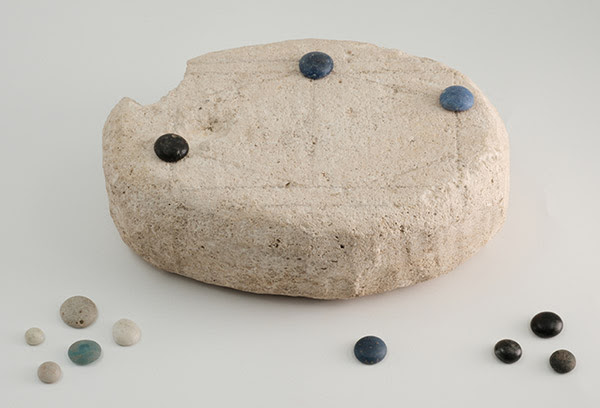
Neolithic game boards from Jordan. In some places like Petra they were carved into walls of the city for leisurely play? The early mancala game we know today is likely from this, but no one really knows the rules of the ancient games. But archeologists do know that they were a way for socializing people through the ages.

Ever thought about those new and interesting board games that are popping up? Like the ancient game Mehen, based on an Egyptian god and the path to enlightenment. As kids get overstimulated from technology and smartphones, a new trend is to get them to play board games. And now ancient games like mancala and mehen, much lesser known games than chess, are making a comeback. Historically, board games were played by ancient civilizations to socialize. And here we learn more about games from the western east.

According to American anthropologist, Gary Rollefson, western east area board games such as mehen, senet, and later mancala and chess (brought from India to Persia), have been an integral part of the human experience for at least 5000 years. While chess was invented in India it was brought to the world through the Persian empire when the Arabs conquered Persia. Chess was taken up by the Muslim world and subsequently spread to Southern Europe.

mehen on kickstarter
A new interpretation of Mehen. Follow the snake, find the path to enlightenment.

And all these old games we played have a history. We interview an anthropologist to find out more.

Over the past two decades what looks like game boards fashioned out of stone have been recovered from sites around 9000 years old, along with game pieces, explains Gary Rollefson, Professor Emeritus of Anthropology at Whitman College, Walla Walla, Washington.

Archeological records show how the less complex communities than Old World civilizations (Mesopotamia, Ancient Egypt) we know today enjoyed an extensive period of social interaction of this kind.

senet, ancient board game from Egypt
Senet, ancient board game from Egypt

“Board games were widely played throughout the Mediterranean into Africa and the Near East during the Classic period,” Rollefson tells Green Prophet and similar forms of game boards were also popular during the Bronze Age, about 4000 years ago.

“Origins of complex gaming remain debatable, but there is now a wealth of examples of analogous game boards that date from the Neolithic period in Jordan, Israel, Syria and Iran,” he said.

| Neolithic people or the New Stone Age era people, was the final stage of cultural evolution or technological development among prehistoric humans. |

Researchers discovered prehistoric game boards north of Petra, the gorgeous Pink City in Jordan built by Nabateans, at the site called Beidha. It happened in 1966 when Diana Kirkbride discovered them in Beidha.

game pieces archeology petra, jordan
Ancient playing pieces found by archeologists in Jordan

Games found in ancient garbage

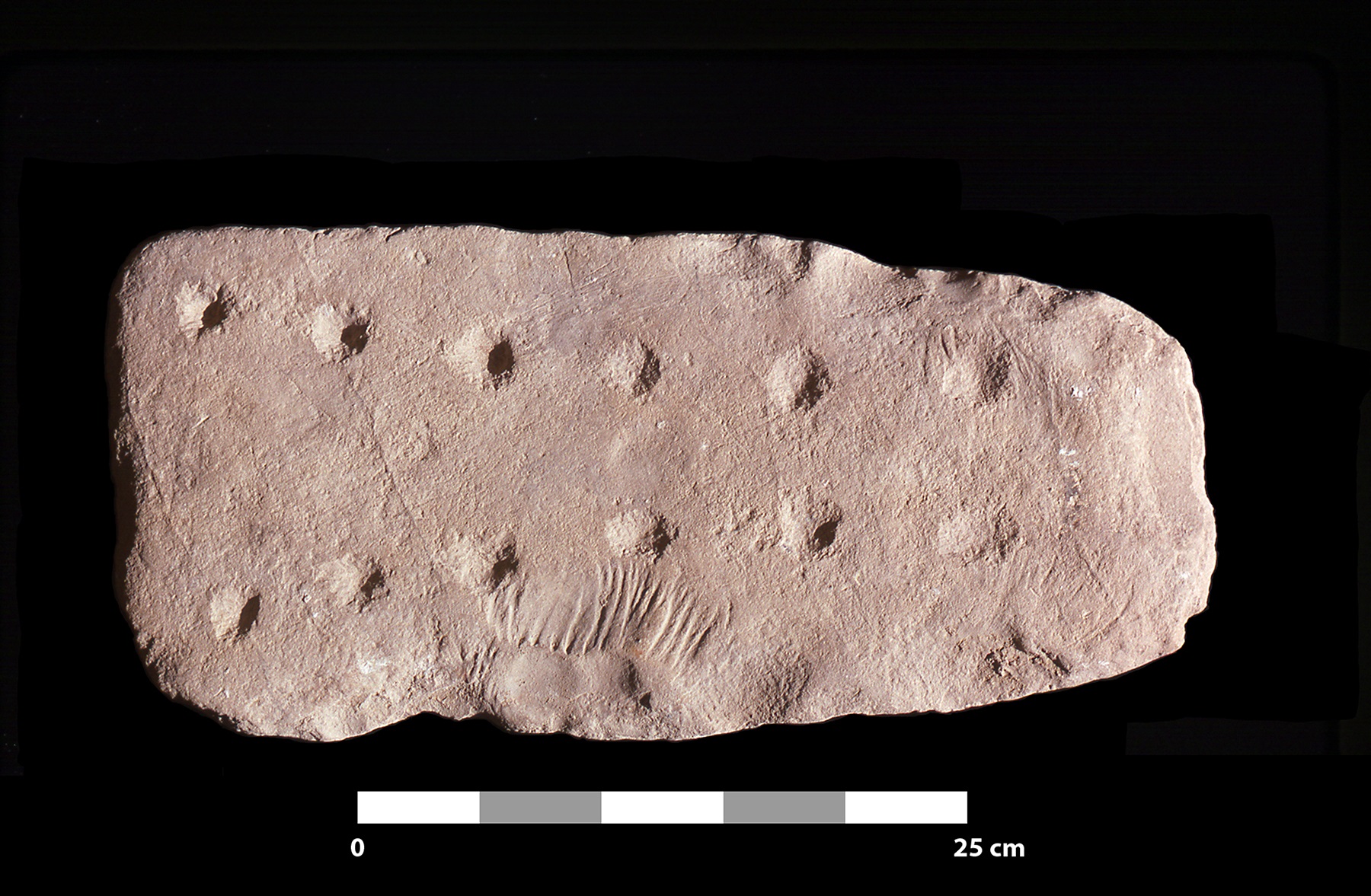
“Evidently made of local sandstone, one complete and three fragmentary examples were recovered from almost the entire span of the 8th millennium BC in domestic and trash contexts,” Rollefson pointed out, noting that all share similar traits, including two rows of depressions.

The depressions are approximately 1 inch in diameter and one quarter inch deep, he explained, adding that the complete “game” has four such holes in each row, all linked by shallow grooves: “the groove link is missing, but two separate grooves between the two rows trace a shallow sinusoidal pattern,” he points out.

Games ancient Iranians used to play

On the other hand, a different kind of board game can be found in Iran from Chagha Sefid found by Frank Hole: the board, made of gypsum, is broken and has 13 holes or traces of holes arranged in 3 parallel rows. The holes are small, measuring only a quarter inch in diameter and depth and the board comes from the Sefid phase, dating to 7400 to 6700 BCE, about 8000 years ago.

Games scratched into the city walls, beginnings of mancala?

Ain Ghazal is a well-known site on the northeastern outskirts of Amman, where two complete game boards came from. The ancient Nabataeans scratched what looks like game boards into flat surfaces all over the city. And they can be found all over the city. While the adults are looking at the big, huge tombs and carvings, send the kids to find the game boards.

Play board games like an ancient Egyptian

Depressions were pecked about a centimeter into the limestone and had a diameter of almost an inch, and the rows converge from the wider end toward the narrower end of the board.

More ancient games in Jordan

“The second specimen from ‘Ain Ghazal [northeast Amman] was recovered in 1996; it is much less intensively worked than the 1989 example. Two rows of four very shallow depressions [less than a centimeter deep and about 3 cm in diameter] were pecked into an almost circular hard limestone slab that is convex on the obverse side,” said Rollefson, noting that the lack of definition of the holes might be an indication that it was not finished, perhaps due to its extraordinary hardness compared to the softer kind of limestone of the other game board.

The stone was later used by ancient architects to serve as a base in a posthole that was part of the roof support system of an apsidal building that may have been used in a cult practice by a kinship group, he speculated.

On a terrace high above the lower Wadi Al Hasa in central Jordan, Adamanitos Sampson excavated two game boards from the site of Wadi Hamarash 1, including a complete and very elaborate specimen, Rolleson underlined, adding that it was made of pink sandstone, and it represents the largest Neolithic game board discovered so far. See top photo.

Game boards have been also found west of the Jordan Valley, in Jericho, when a single fragment of a game board came from a Pottery Neolithic era Rollefson elaborated, noting that only two circular depressions were preserved (and one was nevertheless incomplete) with a narrow channel connecting them.

“Two Late Neolithic game boards were excavated at Shir an agricultural village about 10 miles north-northwest of Hama in the Orontes Valley of Syria. One of the game boards was incorporated as a wall stone in a house; the second game board is a small fragment,” the scholar emphasized, adding that like the odd arrangement of holes in the stone from Chagha Sefid in Iran, the complete Shir game board has three parallel rows of ten shallow holes.

How were ancient games played?

Scholars in general assumed that board games were played by objects such as pebbles or seeds, a Japanese archaeologist Sumio Fujii claims that at Wadi Abu Tulayha colorful semi-translucent pebbles were found that are not available locally, implying that they must have been brought to the site from elsewhere.

ancient mehen board game Egypt
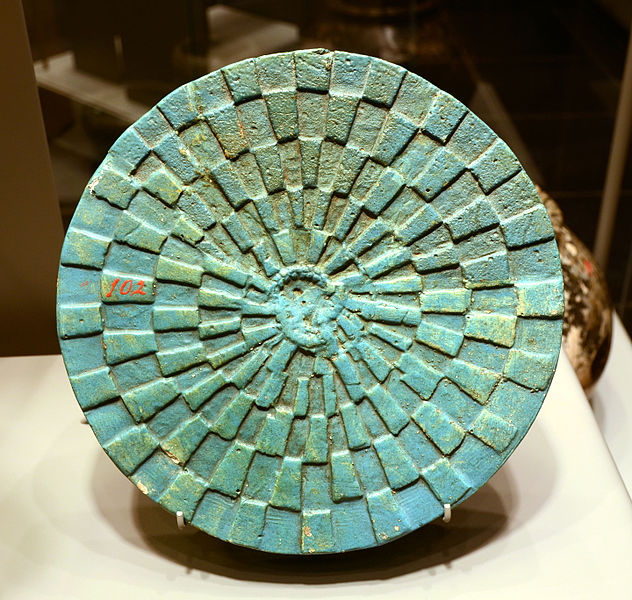
This is an original ancient version of Mehen, a game about a god and a path to enlightenment, from Egypt. A modern version with adapted or assumed rules of play can be found on Kickstarter

One of the major problems regarding the interpretation of human activities and social habits in prehistory is the lack of material evidence, not to mention written sources.

Abu Dhabi’s best green projects

Abu Dhabi Zayed National Museum, Foster and Partners, Al Saadiyat Island, islamic design, arab design, Islamic passive cooling, green design in Abu Dhabi, green roof, natural cooling techniques
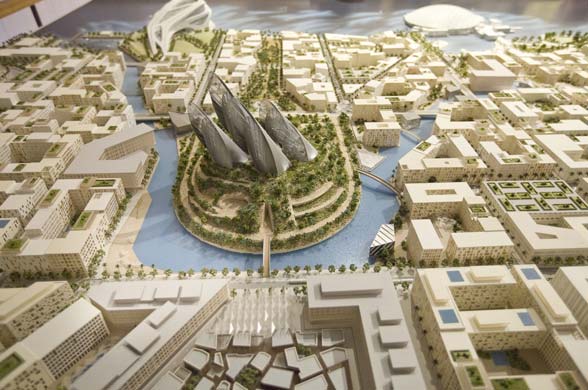
Like this Foster and Partners museum, and creations like artificial islands and Masdar. Abu Dhabi is moving at break-neck speed. New urban developments like a maker’s studio and a mangrove walk is showing how Abu Dhabians want to slow down a little and smell the finjan.

The Tenth Session of World Urban Forum, the world’s most important conference on cities convened biannually by UN Habitat has just concluded. For the first time, it took place in an Arab country, the United Arab Emirates, and the host, Abu Dhabi, had much to contribute to the conversation. 

Throughout the week-long event, representatives of Abu Dhabi municipality, the UAE government and private developers took part in forums and panels where they unveiled projects that are going to transform the landscape and character of the capital. The overall trend is to make the city more pedestrian-friendly and community-based. 

Abu Dhabi is located on several islands and the downtown of the city is situated on the biggest of them. The design of the city center comes from the late 1960s when car mobility was valued over walkability.

Now, the authorities aim to make the city more liveable and to do so, they focus on developing islands surrounding the downtown area. They have already done so with Saadiyat and Yas islands. While the first one became a cultural district with Louvre and New York University, the latter has been established as a globally-renowned entertainment destination. Now, the government is looking at Al Reem and Jubail islands.

Many of the projects that are going to be developed come under the umbrella of “For Abu Dhabi” initiative, which has been allocated $2.18 billion USD to improve liveability of the main cities of the emirate.

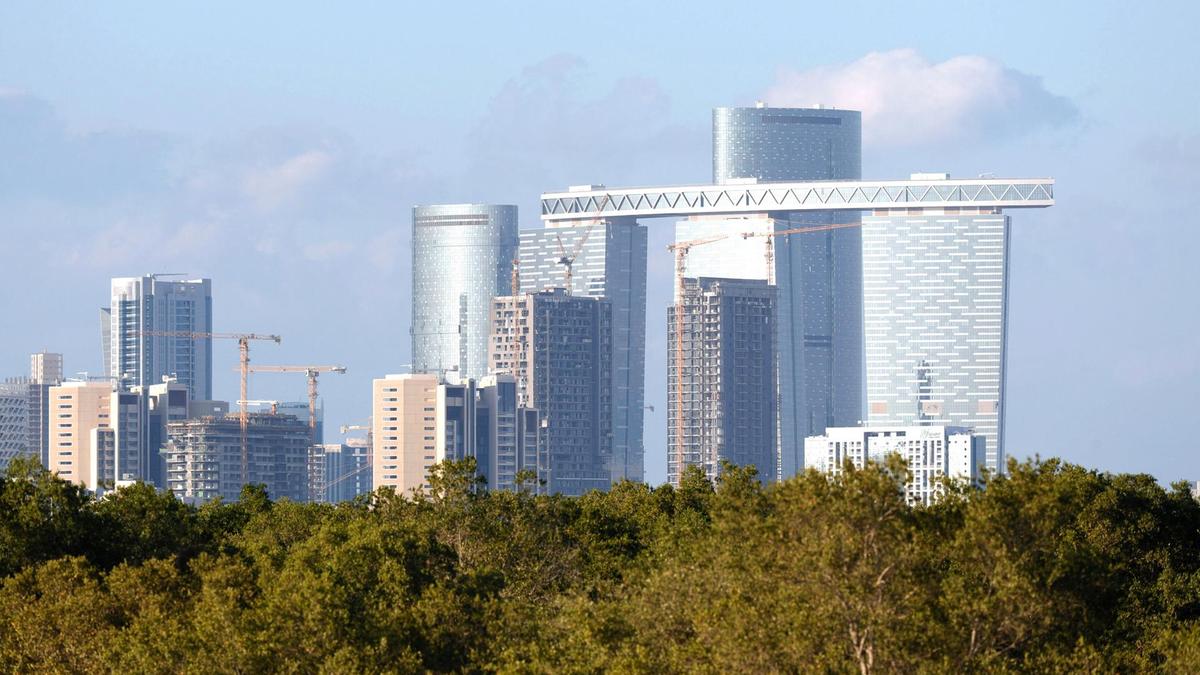
One of them will be the city’s first urban forest located on Al Reem Island. The goal is to create a self-sustaining forest with diverse fauna and flora which will let residents of the city get in touch with nature. Al Reem is well-suited for this venture as it is surrounded by a mangrove forest. 

Another project underway on Al Reem is undertaken by a private developer. The Makers District is going to be the first vicinity of the capital focused on artists and creativity. The area is aimed to provide an alternative to multiple-lane roads and high-rise buildings that currently dominate Abu Dhabi. New neighbourhood will comprise of houses, shops, leisure facilities and a hotel – all with an emphasis on fostering interactions. 

“Live different” is the motto of the new makers type village being grown in Abu Dhabi.

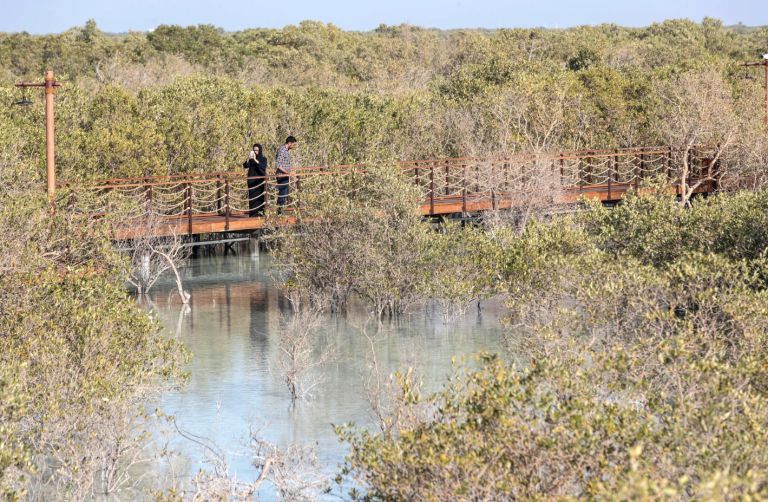
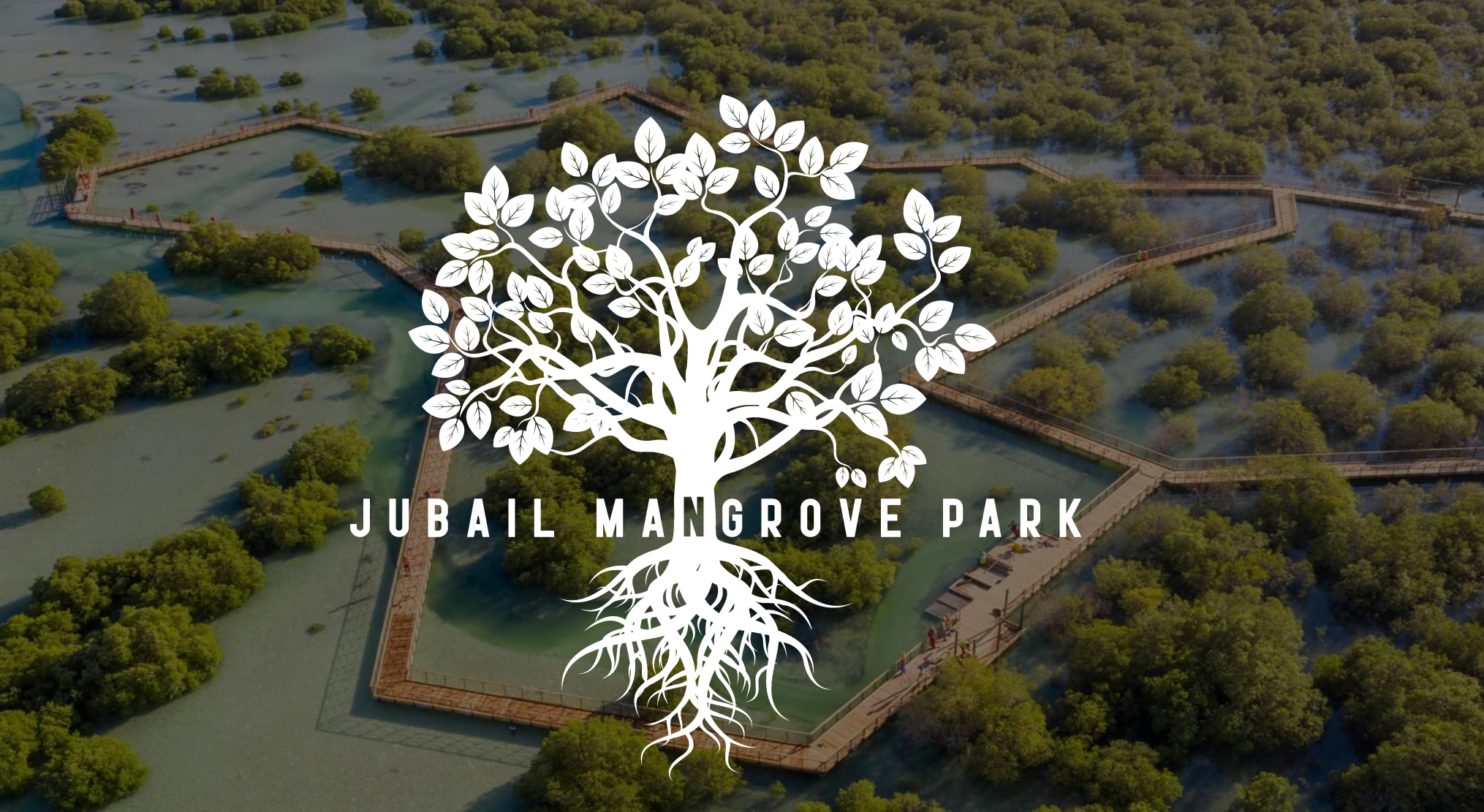
The second of the above-mentioned islands is Jubail – until now perhaps the most pristine part of the city. Less than a month ago, Jubail made headlines of Abu Dhabi news because of the new mangrove walk that has been opened on the island. Mangroves are unique trees growing in shallow, salty water and the ecosystem that they create is characterised by exceptionally high biodiversity.

Jubail mangrove walk, shows how the sidewalk moves through mangrove forest

On the side note, mangroves are the most effective trees in carbon capture and sequestration. This type of forest covers more than 150 square kilometres of the UAE shoreline and it is a true gem in otherwise deserted landscape of the country.

To give the residents an opportunity to interact with picturesque mangroves on Jubail Island, a boardwalk was built and opened to the public. 

In May of 2019, a newly established governmental company has unrolled a development plan for the rest of Jubail. 400 hectares of residential, retail, leisure and business areas will be smoothly integrated with the existing landscape of the island. New district will also provide residents with opportunities for nature-oriented activities like kayaking, horse-riding and so on. 

All of the projects described are part of a greater vision for Abu Dhabi to become associated with environmental sustainability rather than oil economy, both in terms of local initiatives and global policy-making. In less than a year, the city hosted two high-level UN events related to climate action – the World Urban Forum and the UN Climate Meeting, a run-up event to the UN Climate Action Summit in September 2019.

Moreover, the UAE showed strong commitment to developing and implementing renewable energy during the World Energy Council Congress, the IRENA Assembly and the World Future Energy Summit which took place in Abu Dhabi in the last few months. 

Masdar, Masdar City, clean tech, renewable energy, green design, sustainable design, Estidama, Future Build, Siemens, Abu Dhabi
Masdar City, the failed dream for a zero-energy intentional city

While Abu Dhabi is still much less popular than Dubai for the common public, it does not need to be introduced to anyone with interest in innovation. Even though Masdar City, one of the UAE’s flagship sustainability projects, is considered to be failed, the country continues to develop solutions that are likely to become blueprints implemented in other parts of the region and the world.

Wow. Talk a walk inside a mangrove forest. Normally done only by boat.

Play board games like an ancient Egyptian

0

mehen on kickstarter
It was the only multiplayer game known to Ancient Egypt. It’s called mehen and maybe possibly for the first time in 5000 years it is brought back to glory in a Kickstarter campaign by Pandora Games.

Board games are so important for green-minded people today. We are revolting against technology overuse, promoter and consumer culture. So this new but ancient game promoted on Kickstarter piques our curiosity: Mehen is a 5,000 year old Egyptian board game. It is the only widespread ancient game to use a spiral game board, making it one of the most unique games ever created.

Sadly, Mehen has not been available to non-ancient Egyptians for some time. Now you can play like the Ancient Egyptians, thanks to Pandora Games.

How does Mehen work?

The game is based upon the snake god, Mehen, who coils around Ra (the sun god) to protect him during his subterranean journey each night.

Mehen is a fierce, protective god, and a fitting deity for a perilous board game journey.  The gameboard is a representation of Mehen’s coiled body, beginning at the tail and progressing to the head at the center of the board.

While a number of ancient boards and sets of game pieces have been recovered by archaeologists, no indication of the rules of the game have survived.

Previous scholarly attempts to reconstruct the rules have assumed that Mehen was played as a simple, linear roll-and-move game.

With a complex, innovative board that looks nothing like other roll-and-move games of the time, we think this is unlikely.

Accordingly, game designer Zach Horton set about producing a new set of rules for Mehen that take into account what we know from the archaeological record, what we know of the game’s spiritual significance, and the unique features of its board and theme to create an exciting, strategically rich gameplay experience that makes you think in spirals.

This mehen board on Kickstarter, is optimized to new rules and cherry with walnut inlays for Mehen’s eyes! Wood is sourced from sustainable tree farms and small mills.

mehen kickstarter
Mehen on Kickstarter. Ancient Egyptians hung their mehen on the wall.

A basic game of Mehen involves 6 pawns per player, plus a number of “lions” equal to the number of players. The pawns begin off the board near Mehen’s tail, while the lions wait off the board elsewhere.  Players throw four wooden throwing sticks to determine their movement options for each turn.  Each player moves two pieces on their turn: either pawns or (when available) lions.

While the pawns are attempting to reach the center of the board (Mehen’s head), where they can achieve enlightenment, lions are soon moving backwards, from the center toward the tail, devouring pawns!

As the game progresses, the journey becomes more and more dangerous for the pawns, and more strategically complex as players must find a way to approach the center while protecting themselves against lions.

ancient mehen board game Egypt
This is an original ancient version of Mehen

At the same time, of course, each player must try to hinder the progress of their opponents, break up their opponents’ protective formations, and take advantage of fortuitous opportunities like forward slides and coil-to-coil jumps.

The god Mehen also has agency in this game: certain throws trigger Mehen’s actions, which can pull pawns to their doom if you haven’t planned ahead!

The first player to achieve enlightenment for three of their pawns wins the game.

David Attenborough’s PBS climate special features Greta, not Gore

0

Caption:  Sir David Attenborough  Credit:  BBC/Polly Alderton
Sir David Attenborough, Credit: BBC/Polly Alderton

On Earth Day, April 22, PBS (America’s Public Broadcasting Service) will premiere a compelling new documentary, Climate Change – The Facts, presenting scientific evidence of the impact of global warming.

The program also examines possible solutions to the crisis, including the latest innovations, technology and actions individuals can take to prevent further damage. The one-hour special, hosted by natural historian Sir David Attenborough, premieres Wednesday, April 22, 2020 on PBS in the United States.

350.org’s Phil Aroneanu On How To Build An Environmental Movement In The Middle East

Climate Change – The Facts brings together leading climate scientists who explain what might happen if global warming increases 1.5 degrees. Experts examine the consequences of rising temperatures on ice sheets, fragile ecosystems, developing communities and extreme weather events. Personal accounts of California wildfires, extreme coastal flooding in Louisiana and increasing temperatures in Australia paint vivid pictures of these devastating effects.

“In the 20 years since I first started talking about the impact of climate change on our world, conditions have changed far faster than I ever imagined,” said Sir David Attenborough in Climate Change – The Facts.

“It may sound frightening, but the scientific evidence is that if we have not taken dramatic action within the next decade, we could face irreversible damage to the natural world and the collapse of our societies. We’re running out of time, but there is still hope,” he says.

The program warns of potential tipping points that could trigger further catastrophic events, such as methane gas escaping from melting lakes in the arctic. While these scenarios are discouraging, the program also inspires individuals to take action and make a difference.

Experts offer hope that changes can be made in the next decade to reduce CO2 emissions and limit further damage. These include increased advocacy, advances in alternative energy technologies and innovative solutions to capture existing carbon dioxide.

Greta but no Gore?

Researchers from around the world provide global context to the crisis in the movie.

Featured experts include Dr. James Hansen, former director of NASA Goddard Institute for Science Studies; professor Naomi Oreskes, science historian at Harvard University; professor Michael Mann, climate scientist at Penn State University; Richard Black, director of the UK Energy & Climate Intelligence Unit; professor Andrew Shepherd, climate scientist at The University of Leeds, Sunita Narain, director general of India’s Centre for Science and Environment; and Greta Thunberg, Swedish teenage climate advocate and Nobel Peace Prize nominee.

The Importance of Providing One-On-One Coaching Services for Leaders In Your Organization

0

eco coach, woman holding cookie heart in forest
Everyone needs a coach, especially if a parent or sibling can’t help root for your cause. A coach or a mentor is the best way to start a revolution, or at least a recycling program or new sustainable business. Some coaches volunteer. The busy ones might charge a fee. Consider it an investment in you and the planet.

Is coaching a good thing or a bad thing? If you think that’s a silly question, picture someone whose first experience with being coached happened as part of a performance improvement plan. That person may still hold the opinion that coaching is used as a method of punishment. 

But for most people, coaching can be seen as a welcome opportunity for positive change and growth. For example, a manager working at a high level of responsibility is provided with a coach because both the manager and her employer want her to perform as well as possible. Think about top athletes—even the best performers work side by side with expert coaches. The same goes for business leaders. 

Organizations in every industry contract with corporate coaching services to help their leaders—from managers to top executives—get better at handling stress, communicating effectively, leading people, understanding emotion and motivation, and much more. Providing one-on-one coaching for influential individuals in an organization can only lead to better business results for both the organization and the individual.

What are the Benefits of Coaching?

Individuals who are coachable and willing can work with a skilled leadership coach to improve their skills, change problematic behaviors, gain better emotional intelligence, and make progress in many other respects. Here are eight primary areas that can be improved when an organization provides professional coaching for their leaders:


  • Refining and Achieving Goals


Executive coaches can help leaders define goals, make a plan for achieving them, and stay on task. In dialogue, leaders figure out what goals are realistic and coaches provide the support and resources the leaders need to succeed.


  • Evaluating Employees


Team leaders learn to see their employees, team members, and peers more clearly through their coach’s objective viewpoint as well as their own improving evaluation skills. This can help them better deploy their employees’ strengths and partner with peers who are the best fit.


  • Evaluating Oneself


Executive coaching helps leaders understand their own strengths and weaknesses and become more self-aware. They learn to emphasize their strengths for even greater performance and correct weaknesses that may be holding them back. 


  • Regulating Emotions and Reactions


Organizational leaders at every level benefit greatly when coached in the art of self-reflection. They learn the cause of their own emotions and how certain reactions are triggered. As the coach helps them understand both positive and negative feelings, leaders are able to control their external reactions and achieve more through self-motivation.


  • Empathizing with Others’ Emotions


As leaders gain skills in understanding their own emotions, their empathy for others will also improve. Understanding the emotions of others is essential to healthy relationships, both personal and professional. People are more likely to trust an empathetic leader, value their advice, and be more willing to follow them.


  • Thinking Flexibly 


Coaches work with managers and leaders to help them better understand others’ thoughts and points of view. Leaders who add other peoples’ perspectives to their toolbox of critical thinking skills are better at managing teams and getting the most out of others. Flexible thinking allows leaders to evaluate events and ideas from new angles.


  • Relating to Others Successfully


An executive coach helps managers and leaders practice specific social and relationship skills. This can make them better at communication, negotiation, teamwork, and cooperation with different kinds of people.


  • Leading


Ultimately, the improvements listed above will help executive team members and managers become stronger leaders. A coach can also help them practice the specific skills and mindsets—problem solving, confidence, creating community, etc.—that are proven to enhance their leadership approach.

Remember, you can contribute more to an organization’s results and build more successful teams using a coaching service—but only if these two ingredients are present: 

  • An outstanding company: Get recommendations and read reviews of different coaching service organizations until you find the one that is the best fit for you.
  • Individual commitment: People being coached need to be open to new ideas, committed to working with a coach, and willing to change.

It can feel difficult to act and think in new ways, but committing to sticking with a coach for a certain period of time and giving it your best effort can have an exceedingly positive outcome. You’re almost guaranteed to achieve unexpected, valuable results for yourself and your organization.

Top 8 Reasons For Considering A Garden Building

0
garden office, seat waiting for you
A tiny house, a room of one’s own, a little office, pottery studio, or granny flat. Building a tiny home in your garden might be a better eco investment that renting a whole new space.

Have you ever thought of investing in a structure set up in your backyard? It can serve as a garden office, workshop, hobby room, or for any other purpose. If not, then this is something worth considering if you have the space in your garden for putting up such a structure. Below are ten reasons for considering a garden building.

1.    Better Work-Life Balance

The many hours that go into your daily commute can be spent better with your family. You can use that time to organize your home or workspace before you start handling your task. Since you do not have to worry about the hassles of commuting, you also can use that time to keep healthy or indulge in your interests. As a result, you will be calmer and feel more fulfilled.

2.    Better Organization And More Efficiency

Having not to share an office with others means you can keep things in order however you like. Shared spaces are often a recipe for clutter. With the garden office, you can have an area to do your projects, and you have fewer incidents of bumping into others and getting distracted. You can have a neat and organized way of doing your work, and thus, you will be more productive and with better output, whether it is doing a hobby, work project, or some DIY crafts.

3.    You Control Your Schedule

Having to wake up and try to do a bit of housework and manage to rush out so that you can beat the traffic can be challenging. You will have to sacrifice one for the other. However, you can still handle both when you are working from home. You will manage to set some time apart to attend to your family’s needs and manage to get to your office and do some work. That means you will have better control of when your workday starts and ends.

4.    Good For Your Health

When it comes to structures, research shows that timber buildings are a better option. They are suitable for your body and spirit compared to plasterboard, steel, and brick structures. The wooden building has better temperature and humidity levels, and with some adequate treatment, they can discourage mould spores and dust. If you are looking for a workspace that helps you to destress as you handle your task, then consider investing in a timber garden office or workshop.

5.    Objectively Affordable

Most of the smaller garden buildings and summer houses are not that costly. See cargotecture offices. The designs are practical, and thus the installation is far easier to plan and implement. Therefore, you can have one custom-designed and attractively built and accessorized to suit your needs and preference at an affordable cost.

Moreover, if you consider the running costs of renting a small workplace, then you get to save a lot of money when you opt to erect a garden building and work from home. That is money that you can direct toward setting up an office of your preference and stock it with what you like, one-time costs that you will incur in the first year of the project.

6.    Eco-Friendly Solution

If you must run your HVAC all day so that you can work in a comfortable environment inside the house, you should consider investing in an eco-friendly, energy-efficient garden office, maybe with a green roof? Pick a building that has double-glazing and extra insulation so that you have less heating and cooling demands, and you manage to keep your energy bill low.

7.    Multipurpose Space

You do not necessarily have to make your structure a purely garden office. It can also be a leisure room, your get-away spot when you need a bit of quiet to chill and destress. It can serve as a gym, a hobby room for your DIY crafts, a summerhouse, or even a garage. You get to decide the functions that the structure will have and how to can combine them when such a need arises.

8.    Still Weighing The Cost-Effectiveness?

If you run VAT registered business, then you can claim the VAT for the installation costs and even some of the fixtures you installed in your garden building. Keep in mind, however, that most office premises do not qualify for the capital allowance against corporation tax. But you should look into the fixtures and fittings you install to ensure to pick the once that do qualify. Alternatively, you can build something big enough for you to have extra space that you can rent out and make money.

The Verdict

Overall, the primary objective of making this investment if for you to do things differently and save time, money, and manage to meet the needs of your home and work life. Having a personal workspace at home makes this possible. The garden building allows you to enjoy the outdoors, get closer to nature while still enjoy the comforts of your home.

Low Carbon Footprint Self-Employment Ideas

When Does Collecting Customer Data Become Intrusive?

0

cameras watching 2 women in the city, no privacy
Is your personal data being sold on the darkweb? In some western east countries, even environmental activists are persecuted. Know your rights and what tools can stop identity theft or incrimination.

To streamline and improve purchasing, eCommerce businesses have started logging more and more data to provide more personalized customer experiences.

Sure, that can feel very convenient, but where exactly do you draw the line on what is and isn’t appropriate?

Well, here’s a pretty good example:

Let’s say you ordered a set of dishes from a large retailer, and you decided to go pick them up yourself. A few months before, your wife also bought some shampoos and hair softeners from the same retailer.

When you get there to pick up the items you ordered, an employee suddenly asks if your wife enjoyed the hair products she bought, and if you’d like to refill your stock.

That right there is an action that starts bordering on creepiness. Maybe some people wouldn’t mind it, but I personally would feel really taken by surprise – and not in a good way.

A much better approach would be if the retailer would send you an email that mentions new discounts for hair-related products. That offers personalization, and doesn’t feel that intrusive.

Another less specific example of intrusive customer data collection would be when you check out or buy a product on an eCommerce website, and you suddenly start seeing ads for similar items everywhere you go on the Internet.

What Dangers Do You Face Due to Intrusive Customer Data Collection?

Feeling like your privacy is invaded isn’t the only problem. You also have to worry about:

Creepy Ads

Let’s continue where I left off with the ad example. The more data you give eCommerce platforms, the easier you make it for them to target you with personalized ads.

While they can be convenient at times, more often than not they just feel downright creepy and annoying.

Most eCommerce websites have enough personal data to create accurate customer profiles to set up their own ads. Amazon is one of the best examples of that, and they even give other advertisers access to their extensive ad network. A network which, by the way, contains sensitive info like where you live, how healthy you are, and how old your kids are.

Of course, there are claims that some eCommerce platforms sell your data to advertisers too.

Not gonna lie – that is a profitable strategy. Plus, it starts being really believable once you get bombarded with ads that are a bit too “friendly” after visiting an eCommerce website.

Project Loon launches balloon-based internet into the stratosphere

And while there aren’t any clear sources to prove that’s true, there have been reports that Amazon employees have sold customer data. Not to mention Amazon also started giving third parties access to customer demographics.

Data Breaches and Leaks

eCommerce is no stranger to breaches and leaks. Hackers love to target these platforms because they can get away with a lot of customer data.

In fact, research shows that around 90% of login attempts on online retail websites come from cybercriminals.

What’s more, eCommerce website can easily leak customer data – either due to poor configuration, system bugs and glitches, or employee errors. Some examples of that include Amazon cloud backups and Sephora.

What does that mean for you, though?

Well, mostly that hackers will get access to sensitive info like your credit card details, first and last name, email address, physical address, health info, buying preferences, age, gender, login credentials and so on.

They can then use that information to:

  • Clean out your bank accounts and take over your email and social media accounts (or any other account for that matter).
  • Commit identity theft and impersonate you – usually while committing fraud, sharing child pornography, and other illegal activities. The “best” case scenario is your credit will take a huge hit – to the point it takes years to get it back to normal.
  • Use your information in scams and phishing attacks.
  • Add your data to a database which they later sell on the dark web for anywhere between $1 and $450.
  • Hold your data hostage until the eCommerce company agrees to pay a large sum. Even if the money is paid, there’s no guarantee the hackers will give back the data. And if they do, there’s no telling if they made copies.

What Can You Do to Protect Your Privacy?

To be clear – you can’t 100% stop eCommerce websites from logging all your data. Well, unless you stop using the Internet completely.

But there are some things you can do to limit how much retailers can track and abuse your personal data:

1. Use a VPN

VPNs are online services that hide your IP address, and encrypt your traffic. Using a VPN when buying stuff online prevents the website from using your IP address to find out what country and city you live in, who your ISP is, and what your ZIP code is.

Also, by encrypting your traffic, a VPN stops anyone from monitoring your online habits – especially your ISP who can then sell that info to third parties.

2. Use a Privacy-Focused Email

If you don’t want eCommerce platforms logging your real email address, use a disposable one.

Or, better yet, use a more anonymous-ish option like ProtonMail. The service uses end-to-end encryption, doesn’t keep IP logs, and requires no personal info to set up an address.

3. Use Crypto Currencies and Prepaid Debit Cards

Crypto currencies are a great way to enjoy some anonymity when buying stuff online.

However, not all retailers support crypto payments. So, prepaid debits cards are a good alternative since they normally don’t have your name on them, nor do you need to show any ID to buy them.

Want to Learn More About Securing Your Personal Data Online?

Then my personal recommendation is to check out ProPrivacy.

The website has tons of useful tips on how to better protect your data on the web – including a comprehensive privacy guide, tons of VPN reviews, useful advice on how to pick the most secure email provider and web browser, and the latest in privacy news.

Matters of Genealogy: How DNA Testing Can Benefit You

0

Space DNA
Studying twins and the effects of one twin on Space travel, via NASA

Depending on your interest in the subject of genetics, you are likely to be aware of just how simple it can be to have your DNA samples mailed out, and for your chosen company to test and provide you with all sorts of details. It can be mind-boggling to think of how simple it is nowadays to work with DNA testing, especially when it was next to impossible to use commercially just a few decades ago.

That said, not too many people are aware of just how beneficial such a simple process can be. After all, your DNA is your genetic code – and there is a lot of information to be garnered from such code. Here are just a few ways in which DNA testing can benefit you.

Tracing the family lineage

Perhaps one of the most popular ways to utilize DNA testing comes from the mapping of a family tree using your DNA. There are plenty of companies nowadays capable of getting the job done, and some of the very best DNA testing kits are used to help figure out your ancestry. The best part is that it is quite an easy task to accomplish. Typically, the company will send you everything you need, which means all you have to do is register, use the kit, and mail back the results.

With a bit of effort and patience, you will be rewarded with knowledge of your family line. Considering how easily a family line can spread, you are likely to learn facts about yourself you might never have known!

Predicting potential outcomes

Without the use of DNA testing, some people would never know that they had an underlying condition that typically surfaces later on in life. A lot of lives have been saved through the use of the best DNA test for health, and it can also be used to help figure out whether parents are carriers of specific genes.

While it might not seem like such a big deal, having positive results of being a carrier for specific conditions might just push a family to adopt instead of risking a natural birth. A lot of potential heartache can be avoided thanks to the use of DNA testing.

The world of forensics

The use of genetic fingerprinting began in 1986 when Dr. Jeffreys made use of DNA testing to help solve multiple cases of rape. There is no denying that without the help of DNA testing, the world of forensics would be set back by an untold amount. Thanks to the advancement of genetic fingerprinting, it is now much more challenging for perpetrators to get away with heinous crimes.

While DNA testing might not necessarily be an essential part of life, there is no denying that it has helped scientists immensely in figuring out what makes us tick. Whether it has to do with tracing the family lineage or the use of forensics, genetic fingerprinting will continue to be a vital and legitimate field of study.

Moonshot aviation: Geoffrey Lipman on greening emissions globally

Geoffrey Lipman, green aviation

The high environmental footprint of air travel is something that most people are by now well aware of. For anyone who is wondering where the aviation industry is headed next and how to feel about it, Geoffrey Lipman, one of the key figures in the global travel and tourism industry provides some insights. 

Geoffrey Lipman was Executive Director of the International Air Transport Association, President of the World Travel & Tourism Council and Assistant Secretary General of the UN World Tourism Organisation. He is the President of SUNx Malta.

Currently, he works on promoting climate-friendly travel, with green growth at the core and in line with the Paris Agreement goals

GP: What changes do you see coming in the aviation industry? 

solar plane
The Solar Impulse flying into the Middle East

GL: The World Travel & Tourism Council recently pledged that the industry will achieve carbon neutrality by 2050. It is the biggest deal that exists right now on a global scale in the tourism industry but airlines have not committed to that yet.

The airlines have committed to produce half of the 2005 level emissions by 2050 and to stop increasing their emissions by 2020. The airlines argue that they cannot reduce because they do not have an alternative to fossil fuel-based propulsion. That is where the change has to come.

Every year the impact of the airlines gets worse because they have no options. You can have electric cars, you can have electric trains. These large chunks of transport emissions will disappear and then the aviation will account for 50% of total transport emissions instead of 15-20% now.

The airlines know that they have to change and ones like Emirates or Qatar are applying elements of a strategy to reduce their emissions. They are constantly upgrading their fleets, they are trying to get governments to let them fly straighter, they are doing everything possible on the ground to reduce the emissions. The big thing is if they do not have an alternative to aviation fossil fuel, the main problem will still be out there. On the other hand, we cannot just shut down air travel. We are all either travelers or we are travel hosts. 

GP: EasyJet is the first major airline to offset the carbon footprint of all of their flights. Why do you reckon they did it?

GL: I think they sat in a strategy session and they said: We are going to have to do this one day. The pressures are building up and we are not going to pass by. This pressure is going to increase so why don’t we make a preemptive strike. Why don’t we do what we have to do early and build a mechanism where we can pass this through to our customers?

The goal of airlines is to keep the price low but to encourage the passenger to pay for extras to compensate for it. So the airlines are now finding ways to market a carbon offsetting impact fee. One day, everybody will have to do this so it is about being the first and looking good with all the people saying “this is the right thing to do”.

It will not just be easyJet – the International Airlines Group consisting of Iberia and the British Airways has reached the same conclusion. 

GP: International aviation and shipping are one of the components that are not included in the Nationally Determined Contributions under the Paris Agreement. It seems like there is little regulation on aviation from an environmental point of view. 

GL: First of all, I think there are a lot of regulations dealing with emission. Historically it has been called noise or pollution, or limitations on flying hours around airports. So there is a fair amount of regulations, the airlines are used to it.

At the same time, the airlines have always opposed any tax increase for the same reason as you and I do not want a tax increase, and the more so because they never see a benefit from the extra taxes. Usually when you tax a sector of the community, you take the money and you use it for the benefit of that community. What the airlines say is: if you tax more on aviation fuel, we get no benefits and our industry gets no benefits. So of course, they will resist it. But it does not change the fact that they should pay their fair share.

You spoke about national contributions: if Emirates picks up fuel in Sydney, where is the real pollution pollution coming from? Is it an Australian pollution because most of the passengers might be from Australia? Or is it UAE-driven pollution? As soon as you get into those discussions, you need a very scrupulous mechanism.

I think the exemptions for aviation fuel are a historical anomaly and there should be some sort of updated international agreement that says “all fossil fuel will be taxed for its pollutant impact and there won’t be any exceptions”. 

GP: Do you foresee any technological improvements?

GL: We should have a moonshot. We should do what John Kennedy did when he said, “I want to put a man on the Moon.”

He envisioned cooperation between financial institutions, manufacturers and scientists. And the federal government was there to fund this. It was a moonshot. I think we need a moonshot for a clean aviation propulsion.

The aviation industry should be in the lead of this change from 2020 to 2050. We have 30 years and I think we can find an alternative source of propulsion. Some examples include electric planes for journeys up to 1000 kilometers and hyperloops between cities like Dubai and Abu Dhabi.

Elon Musk, hyperloop
How Elon Musk envisions the Hyperloop. It’s bound to happen.

These solutions are in this timeframe. We need to create an impetus for something that is totally new – a grand prize equivalent to the Nobel Prize for the person who comes up with the technology which replaces current propulsion methods over the next 30 years.

“I want to highlight that all travel has to become climate-friendly travel”

You need to have presidents of the WTTC, UNWTO and IATA standing behind the UN Secretary General when he says “We are going to have a moon shoot on clean aviation fuel.” That would be a Holy Grail of solutions. 

I want to highlight that all travel has to become climate-friendly travel. You need to factor desires of local people into strategic planning. Everyone has to do circular economy and social inclusion around the growth patterns that we developed. We have to make sure that whatever product is being developed, we have to have a pathway for it to become carbon neutral by 2050.

I do not care what their pathway is. It will be different for Qatar Airways than for a local taxi company in Madrid. Both of them are part of the travel and tourism industry. What we will try to do from within the industry is to put a registry so that companies and communities can identify their pathway, register it and review it annually.

It is not about standards because in a world where global ambitions come down to local actions, you cannot develop universal standards. You need directions for climate-friendly travel.

By 2030, people will be doing carbon accounting in the same ways as they are doing financial accounting now. When you go shopping, you will see the carbon footprint of the supply chain. Ben & Jerry’s is already doing it and it will be everywhere in 15-20 years. 

How Anaerobic Digestion Works

0

deepwater horizon oil spill
Deepwater Horizon oil spill, Gulf of Mexico. Microbes eat up the oil using aerobic digestion, or breaking it down with oxygen. There is another approach to breaking down unwanted materials which can be more efficient. It’s called anaerobic, or without oil – in a sealed environment.

Anaerobic digestion is the action of bacteria breaking down organic matter without oxygen. Biogas, mainly made up of methane, is formed as bacteria acts upon the organic matter such as manure.  Elements that do not contain methane are removed for methane to be utilised as a source of energy.

There are certain types of organic matter that is more difficult to break down than others. Organic matter that easily breaks down produces more biogas than that which is difficult to digest.

Codigestion happens when you use anaerobic digestion to break down many kinds of organic matter in a single anaerobic digester.  The following are among organic wastes that MBP Solutions uses with manure in codigestion:

  • Used fats, oil and grease
  • Restaurant food waste
  • Energy crops
  • Food processing wastes
  • Food processing by-products
  • Crop remains

Codigestion boosts the production of biogas from organic waste that is difficult to break down.

Collecting Organic Waste

Organic waste must be collected in a system that ensures all debris is removed. It is likely to contain particles such as stones, straw or sand. These particles can stop up the digester’s pipes and interfere with operation.

Production of biogas is possible in farms that collect manure in the following forms:

  • Liquid
  • Slurry
  • Semi-solid

In addition, the manure should be collected:

  • At a central point such as a pit, pond or tank
  • Every day or every few days
  • Every day or every other day

Elements that could be injurious to the anaerobic bacteria action are not added. Such elements include the following:

  • Feed additives that contain antibiotics
  • Compounds used for cleaning and maintaining equipment

Cleaning compounds may contain harmful ingredients such as halogens, acids as well as detergents.

The use of these materials has not been declared problematic. Nevertheless, maximum quantities have not been established. Therefore, one must be careful not to use them in large quantities in the organic waste.

Handling Manure

If you have a large farm, then you have a large amount of manure on a daily basis. Most times you struggle to dispose of it. Creating biogas gives a solution even as it provides you with your own source of power.

Manure is treated before it is fed into a digester for the adjustment of the total solid components. This usually includes adding separating solids, water followed by mixing or heating.

Designs of Anaerobic Digesters 

Plug Flow

Plug flow systems are best suited for dairy operations. These ones collect manure by scraping. The preferred ones are mixed plug flow systems because they are built to support a wider range of solid concentrations.

Covered Lagoon

The methane is recovered and then fed via a pipe to the combustion device from a lagoon that contains an adjustable cover. Some systems utilize a single cell for both digestion and storage.

Complete Mix

These digesters are created with a tank that is enclosed and heated with a mechanical hydraulic /gas-mixing system. They can also be used in dairy operations. This is because they work best with considerable dilution in the manure such as the wastewater from a milking centre.

Additional Designs

Other typical designs include:

Batch Digester:  in this one, manure is introduced into the reactor at the start of the process in a batch. The reactor stays closed for the length of the process.

Induced Blanket Reactors: A blanket of sludge develops retaining the anaerobic bacteria. This creates an environment that is rich in bacteria. The feedstock must pass through this environment.

Fixed film digesters: These ones come with plastic media such as pellets. Bactria attaches to the media and grows. They do not rely only on suspended bacteria in order to break down the digester feedstock.

Conclusion

Anaerobic digestion ensures the formation of biogas which forms as bacteria works on the organic matter. This then gives you an alternative source of clean energy as well as fuel.

How microbes find an oil spill

0

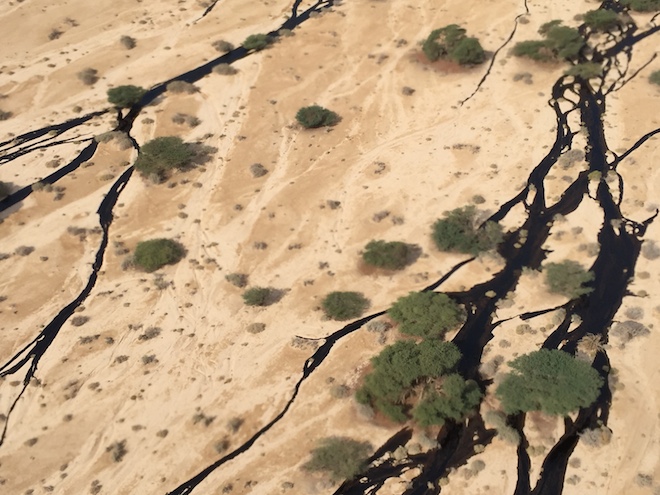
Israel oil spill
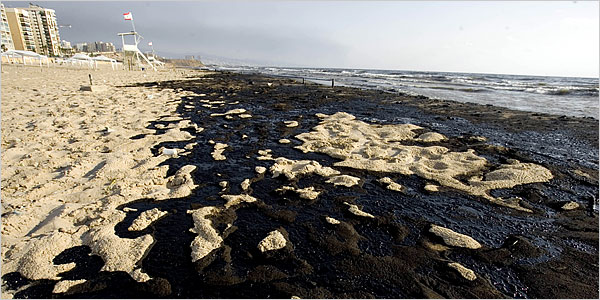
An oil spill in Israel, 2014

When containing a massive disaster like an oil spill, small microbes play a big role.

Arezoo Ardekani, a Purdue University associate professor of mechanical engineering, has published research that describes the complex hydrodynamics of microorganisms at liquid-liquid and gas-liquid interfaces, showing that microbes may flock to areas where surfactant has been applied. This is important news for the western east oil producing nations, as many oil spills threaten the Red Sea, Indian ocean and Mediterranean Sea. Bacteria are known to break down oil from oil spills but if we know how the system works we can speed it up and localize the process, when needed. Here’s how.

On April 20, 2010, a catastrophic explosion aboard the Louisiana oil rig Deepwater Horizon caused an underwater wellhead to rupture, discharging oil into the Gulf of Mexico. It took 87 days to cap the underwater well, by which point more than 200 million gallons of oil had discharged into the gulf. Officials used many different tactics to contain the damage of the oil spill, such as relying on microbes to digest hydrocarbons, and using dispersant (or surfactant) chemicals to break up oil slicks, making it easier for the microbes to digest.

deepwater horizon oil spill
Deepwater Horizon oil spill, Gulf of Mexico

“Microbes were the ‘first responders’ to the oil spill,” Ardekani said.  “They remediated a significant amount of hydrocarbons. But the Gulf of Mexico is a big place. How did so many microbes find this oil?”

As Ardekani discovered, the performance of the microbes was affected by the surfactant, but not how anyone expected.

“There are several things that cause microorganisms to move,” she said.  “For example, the microbes near an oil spill may be motivated by chemotaxis, i.e., picking up the chemical trail of a potential food source. But the surfactant actually created a hydrodynamic phenomenon that caused microbes to gather in even greater numbers.”

oil spill, nature, conservation, Glf

Ardekani’s team tested its hypothesis in the lab, using E. coli cells, single-celled bacteria, whose behavior is well-known. The researchers 3D-printed a small chamber, where they could microscopically observe the cells’ movements in a liquid suspension, and then tested what happened when that liquid came into contact with another liquid of different viscosity. The results showed that the E. coli cells accumulated at higher density at the liquid-liquid interfaces, and even greater density at gas-liquid interfaces.

Surfactants applied to an oil spill attract microorganisms, due to complex hydrodynamics that were recently discovered by Purdue researchers.

“Those surfactants changed the interface property,” Ardekani said. “If microbes are hydrodynamically attracted to gas-liquid interfaces, the presence of surfactants made it even more attractive.”

Using this experiment as a guide, researchers built theoretical models that successfully explained the complex fluid dynamics at these gas-liquid interfaces. Their research has been featured on the cover of the journal Soft Matter, and also published in the journal Physical Review E.


The use of dispersants during the Deepwater Horizon oil spill was not without controversy; Scientists disagreed on whether the chemicals did more harm than good for the ecosystem. In the aftermath of the disaster, BP spent $500 million to establish the Gulf of Mexico Research Initiative, an independent organization that funds thorough scientific research in mitigating the effects of the spill.

Ardekani’s research is one of the results of that effort.

“We didn’t know any of this before the spill,” Ardekani said.  “The main reason they used dispersants was to break up the size of the oil droplets. But now we have discovered a new hydrodynamic mechanism, that adding surfactant causes microbes to spend more time near oil droplets. That, combined with chemotaxis, may potentially give microbes more time to decompose these hydrocarbons.”