Home Blog Page 164

Catholics in Virginia finance solar energy for churches and schools

0
woman praying with bible, hipster hat
Doing change is much more important than just talking change: seven Catholic community groups in Virginia support renewables through investing in solar energy.

While Church may be cancelled in some parishes until further notice, Catholics aren’t feeling set adrift from the problem at the seven Catholic communities in Richmond, Virginia. The churches there are building and investing in solar energy to power the communities’ churches and schools, creating 1.6 million kW hours of clean electricity each year for decades while saving the churches more than $2 million in energy operating costs.

The solar power projects are being developed in partnership with Catholic Energies, part of the D.C.-based nonprofit Catholic Climate Covenant, which helps guide American churches and their response to climate change or “care for creation,” as they express it. Catholic Energies was able to obtain the total capital costs of the seven projects from a single investor source.

Solar energy into the collection basket

“Nearly $3 million in total installation capital costs were secured by Catholic Energies on behalf of the Diocese and its parishes,” said Dan Last, Catholic Energies Program Manager. “This is one of our largest collections of projects to date.”

solar energy farm, Catholic
In July, a 421-kilowatt solar system was installed at St. Anthony of Padua Catholic Church, in Falls Church, Virginia. The rooftop solar array is projected to offset almost 90% of the parish’s energy use and save it upwards of $1.3 million over 25 years. (Catholic Energies)

“At St. Pius X it was an easy decision for us to go solar; not only do we save money, but we help answer the call from Pope Francis to care for creation,” said Father Nixon Negparanon of St. Pius X Church in Norfolk, one of the seven projects.

“The children who will be sitting under the solar panels on our school roof are the ones that are going to be living with the choices that we make today.  As a faith community, we witness our commitment to good stewardship of the earth when we take tangible steps to reduce our carbon footprint, both here on the St. Pius X campus, and in each of our households.”

I went to a Catholic high-school and I remember us rallying together to buy some rainforest land to stop deforestation. Certainly communities of schools and faith-based groups can band collective climate aspirations together to make it happen.

Consider the energy required to power US buildings is responsible for about a third of greenhouse gases in the US, and these projects will help reduce those emissions. The Richmond Diocese projects are expected to offset more than 45,000 metric tons of greenhouse gas over 25 years (this is equivalent to some 100 million miles driven by an average passenger car.)

The list of solar energy projects include  Church of St Therese, Chesapeake: 100kW; Roanoke Catholic School, Roanoke, 61kW; Our Lady of Lourdes Catholic School, Richmond, 108kW; Diocese of Richmond Pastoral Center, Richmond, 245kW; Sacred Heart Church, Danville, 230 kW; St. Pius X Church, Norfolk, 316kW; Church of the Holy Family, Virginia Beach, 253kW.

Hearing the cry of the earth

“In a warming world, it is critical that we hear “both the cry of the earth and the cry of the poor,” as Pope Francis has urged. These parishes are showing us the way,” said Dan Misleh, executive director of Catholic Climate Covenant.

Parishes always have the option to pay upfront or finance their solar projects. However, a third-party financing model for nonprofits continues to grow in popularity in Virginia, especially after the recent passage of the Virginia Clean Economy Act, which seeks for the state to move toward 100% renewable energy.

Through a “Power Purchase Agreement” (PPA,) the churches pay no upfront costs for solar projects. Instead, Catholic Energies secures third-party investors who will pay for the entire solar project. In return, the investor receives tax credits, plus regular payments from the church for the solar-generated power.

The price the Catholic institution pays for the solar power is generally a discounted rate compared to their current utility power rate, which allows them to save on operating costs each month, year over year. The institution has options throughout the PPA to purchase the solar panel system outright. Parishes can also complete LED lighting retrofits to save energy and costs though the PPA. Most of the Diocese of Richmond projects were completed through a PPA and are also completing LED retrofits.

“It’s probably the best time ever in the history of the state of Virginia to make an investment in solar,” said Page Gravely, head of client services at Catholic Energies.
Ancient Buried Treasure Unearthed In Israel

0

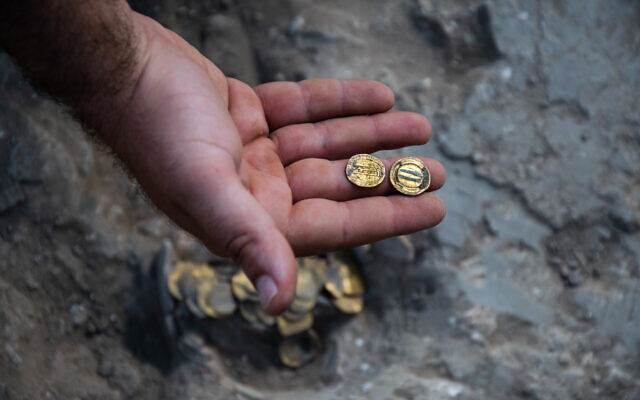
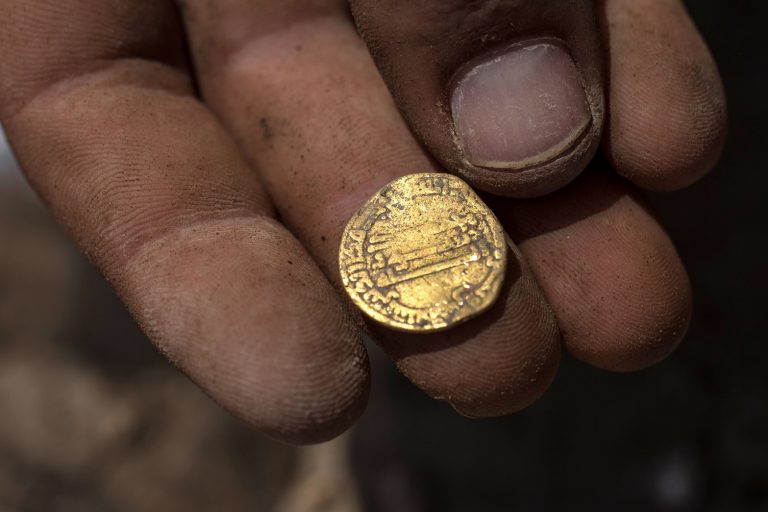
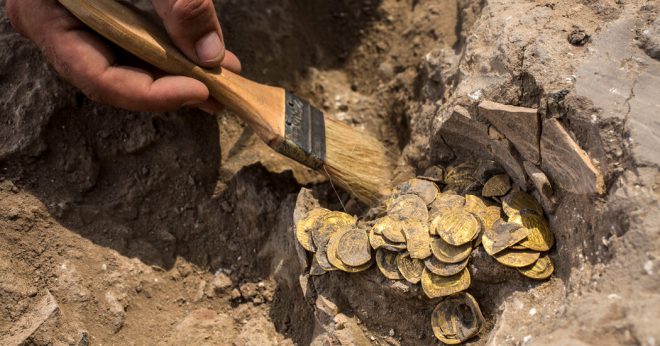
An exciting archaeological find in Israel was announced early this week: a hoard of ancient gold, unearthed in excavations near Tel Aviv. A teenage volunteer digging the ground saw something glittering in the dirt. “It looked like very thin leaves,” he said. It was gold coins spilling out of a  broken clay jug, exposed to daylight for the first time in perhaps 1,1000 years.

gold coins found in archeology dig in Israel

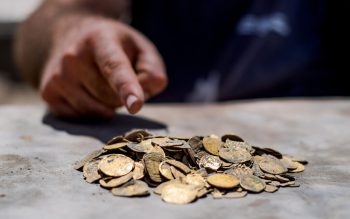
Israel Antiquities Authorities archaeologists Liat Nadav-Ziv and Elie Haddad said in a press statement that the”extremely rare” find comprised 425 complete gold coins and hundreds of gold clippings from other coins, to be used as change.

“We almost never find them in archaeological excavations, given that gold has always been extremely valuable, melted down and reused from generation to generation,” the directors said in a statement. “The coins, made of pure gold that does not oxidize in air, were found in excellent condition, as if buried the day before. Their finding may indicate that international trade took place between the area’s residents and remote areas.”

gold hoard in Israel, hand holding coins

Antiquities Authority coin expert Robert Kool estimates that the coins date from the late 9th century, an era when the Abbasid caliphate was at its peak of power in the Near East and North Africa.  “The hoard consists of full gold dinars, but also — what is unusual — contains about 270 small gold cuttings, pieces of gold dinars cut to serve as small change,” Kool said. 

Between entire coins and clippings, the total weight is 845 grams of pure gold. A rich man’s hoard, or maybe a businessman’s entire assets?

Nadav-Ziv estimates that one such gold coin would buy a horse.  Kool says of the whole hoard’s worth, “With such a sum, a person could buy a luxurious house in one of the best neighborhoods in Fustat, the enormous wealthy capital of Egypt in those days. ”

He added that one of the gold cuttings was exceptionally rare and never before found in excavations in Israel — a fragment of a gold solidus of the Byzantine emperor Theophilos (829 – 842 CE), minted in the empire’s capital of Constantinople.

gold coin found in Israel

According to the IAA, the existence of the fragment among Islamic coins is evidence of connections between the Abbasid Caliphate and the Byzantine empire.

Kool said, “Hopefully the study of the hoard will tell us more about a period of which we still know very little.”

The clay jug holding the coins had been firmly closed, and held in place with a nail before being placed in a hole and covered with dirt. There’s no way of knowing who buried it or for what purpose, but clearly it was concealed to be retrieved when the right time came.

Only the right time came an unimaginable thousand-odd years later.

Photos by Heidi Levine, AFP, and courtesy of Israel Antiquities Authority.

3 Options for Protecting Your Business During the Pandemic

0
woman showing how to make a craft business
Your eco business was already running on a dream and a prayer. How can you make it sustainable and secure as any other kind of business?

If you own a small business, there’s a good chance that you’ve had to navigate uncharted waters for a considerable portion of the past six months. And as social distancing policies and safety concerns continue to shift consumer shopping patterns and overall needs in response to COVID-19, more and more businesses are still scrambling to simply stay afloat. Not only have they had to implement a slew of improved cleaning procedures and install safety features that permit lower-risk interactions with their customers and clients, most have also been forced to seek out new ways of doing business altogether, dreaming up new products and services in order to meet new consumer demand. It’s an emotionally and financially difficult position for any business, which is why it’s important that they seek out strategies that buoy their interests, as well as their assets, if even for just a few months. Here are three options for protecting your business during this crazy time:

Federal Relief Programs

The U.S. government passed the CARES Act at the end of March which provides “$376 billion in relief to American workers and small businesses.” Although the first round of loans has already been dispersed, there are still opportunities for businesses with 500 employees or less to apply for some of the remaining funds through an Economic Injury Disaster Loan (EIDL). An EIDL allows up to $2 million of capital for small businesses experiencing a loss of revenue due to COVID-19 and includes a forgivable advance of $10,000 which is available within a few days of an application’s acceptance. In addition, many small businesses with existing loans can apply for aid programs designed to relieve some of their debt burden (such as an SBA Bridge Express Loan or SBA Debt Relief). Any of these programs offer economic assistance to cover the effects of the current pandemic.

Research Insights

Market research is part of any company’s success. During a crisis, it becomes critical because it helps decision makers allocate resources more effectively. When a situation — such as a global pandemic — threatens normal business practices, having direct access to various segments of a population means a company can quickly and easily assess consumer thoughts and behavior and develop a strategy for addressing any changing needs. Whether professionally constructed or done in-house, market research can provide the insight a business needs to stay ahead of the competition.

Communication

Robust communication amongst the entirety of a company’s shareholders is also crucial for maintaining trust, a business’s most valuable asset. Indeed, recognizing current circumstances and communicating your plans to address them show employees, customers, suppliers and management alike that you not only have a plan and are working hard to implement it, but that you respect your partners enough to keep them informed even in the midst of chaos. Communication allows everyone to remain connected, educated and informed and encourages people to continue supporting you even when it’s hard. In short, trust breeds loyalty, making it easy for stakeholders to positively report on your products, policies and procedures and come back to you again and again!

Regenerative agriculture the solution, says Woody Harrelson

Woody Harrelson, from regenerative agriculture

In a time where it seems like we need to choose light or dark, fear and hope, building or destruction, some stars and models lend their voices and faces to a solution to what appears to be the world’s biggest challenge right now: climate change. They have played a part in making a movie that explains regenerative agriculture and it’s called Kiss the Ground.

We humans call it climate change, and the problem might not be a problem at all but a clarion call for a bigger reset, the way Covid-19 retested some of our personal goals, family-life orientation, and how we spend our time and with whom. The movie will help us take some steps.

The big catchphrase in the ecosphere –  which to many is a spiritual place for understanding what we want to build on this planet –  is regenerative agriculture. If you plan on hanging out with conservationists or anyone who speaks the language of a future viable planet, this is what they are talking about. Rewilding (by bringing nature back to what it should be) sometimes goes along with that but not exclusively.

Regenerative agriculture is a method of farming (read about this regenerative farm in Saudi Arabia of all places)  which swings way back to the way our great-grandparents would have farmed. This is systems-thinking farming, considering the whole, not the parts, and brings in animals, plants, soil, and people into equal parts, minus heavy machinery, mono-crop thinking and commercial fertilizers (mined from places like the shrinking Dead Sea).

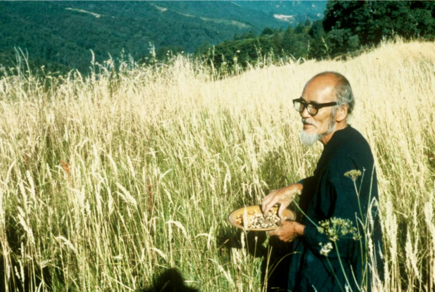
One of the early proponents of this new-old way of farming was a Masanobu Fukuoka. He was born into a wealthy family in Japan, and against what everyone was expected to do at the time, he listened to his inner compass, and became a renowned farmer and philosopher celebrated for his natural farming and re-vegetation of desertified lands. He died in 2008, but before then crossed the planet many times missionizing his approach to farming for body, mind and soul.

Fukuoka (shown below) was likely inspired by the ancient Japanese “Walden” called Hōjōki, translated as The Ten Foot Square Hut – a popular short work of the early Kamakura period in Japan by Kamo no Chōmei. This philosophy of living simply (bare minimum) and with nature in mind, is later expounded by Henry David Thoreau in America in the late 1800s. You know him as Walden and the pond he lived at for a couple of years. He grew his own food, and lived simply as one educated man could at the time.

Masanobu Fukuoka was a Japanese farmer and philosopher celebrated for his natural farming and re-vegetation of desertified lands.

Consider that traditional farming depletes the soil and releases carbon dioxide into the atmosphere. We don’t want that. But it’s not “new” science. Decades ago, an Indian scientist named Rattan Lal, born in 1944, helped start a movement based on the idea that carbon could be put back into the soil — a practice known today as “regenerative agriculture.” And it’s having a moment. 

Building on what was before now, a new film narrated by Woody Harrelson offers a solution to the pickle we are in – or the pickle we think we are in. There is a solution: (it’s not necessary to suffer the foibles of going Into the Wild) but it’s something tangible we can work towards toward healing the world, healing ourselves. We can do it in cities and even from our home offices. 

In a time when farming is absolutely romanticized (some meanly say fetishized) and working the land an antidote to our online addiction, the new film Kiss the Ground explains to the everybody how we can build a blueprint for stabilizing Earth’s climate, restoring lost ecosystems and creating abundant food supplies. The trailer is below.
Al Gore gave us the problem we know we needed to solve. Does Kiss the Ground give us the handbook on making it work? Stars of the film include Harrelson (who narrates), Ian Somerhalder, Gisele Bündchen, Jason Mraz, David Arquette. Producers are Rebecca Tickell, Josh Tickell, Bill Benenson, Ryland Engelhart and Darius Fisher.

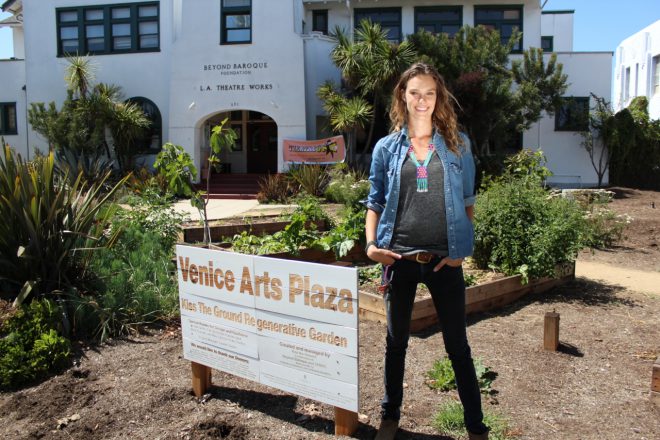
I heard the expression Kiss the Ground, not from the mouth of a cute Woody Harrelson, but from my friends in Venice, LA who like to learn about how they can be part of the solution. There is an NGO there in Venice with the mission to “awake” the woke with activities that include participation in the story of regenerative agriculture, mostly hard to do if you live in an apartment and spend your waking hours at WeWork.

Lauren Tucker, Kiss the Ground movie
Lauren Tucker from Kiss the Ground

Kiss the Ground, founded by Ryland Engelhart and Finian Makepeace, says they have educated and activated millions through through short films, mini-docs, a podcast, branded collaborations, and other content they produce. They also work locally in Venice, a neighborhood in LA, to start hyper-local, urban farms.

In more central LA (south central) you have Ron Finley, considered a “guerilla gardener. He talks about food deserts and other problems of the disenfranchised, which if we think too hard is none of us or all of us. We are sort of all in this boat together. 😉 I remember my dad dying of cancer in Toronto and I couldn’t find a fresh apple near the hospital. There was coffee, doughnuts, plenty of fast food. Fresh food? I walked 20 minutes in frigid winter to find a grocery store.

If you haven’t already started gardening during the Covid-19 lockdown, don’t worry. You won’t miss the boat. There is still plenty of room to grow: The movie is now available on Netflix. The link is here

Before the movie, download our Victory Garden handbook from the 40s. It was a great initiative to get all of America and Europe farming again.

Read more on regenerative and urban agriculture:

We interview Nature’s Path on Regenerative Agriculture

Leigh Ofer and Seed Street

Harlem Grown 

Agritecture

Farm.One

Fashioned from Hemp

0

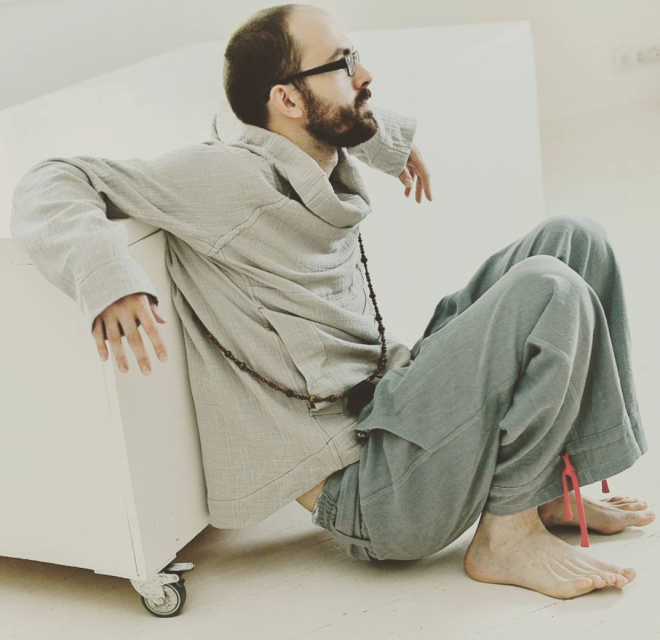
man wearing hemp ready to wear clothes sustainable slow fashion

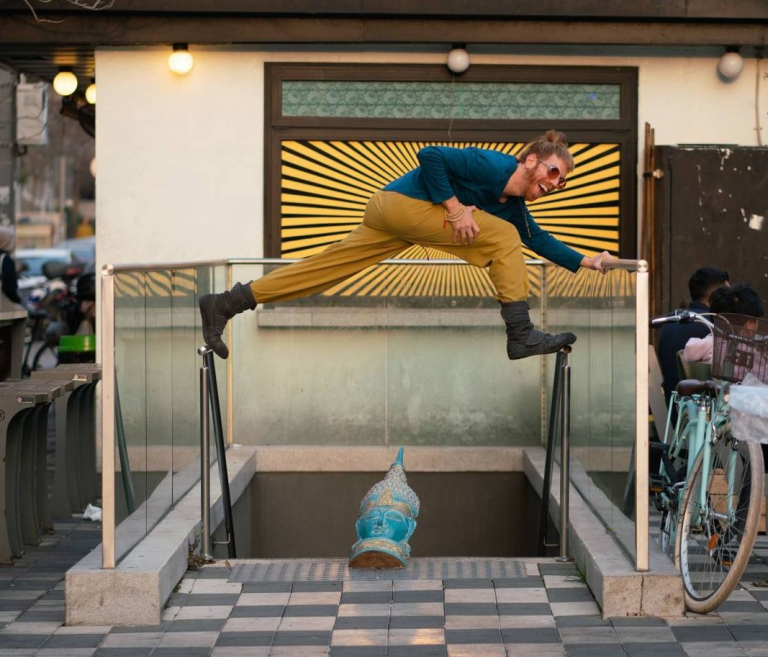
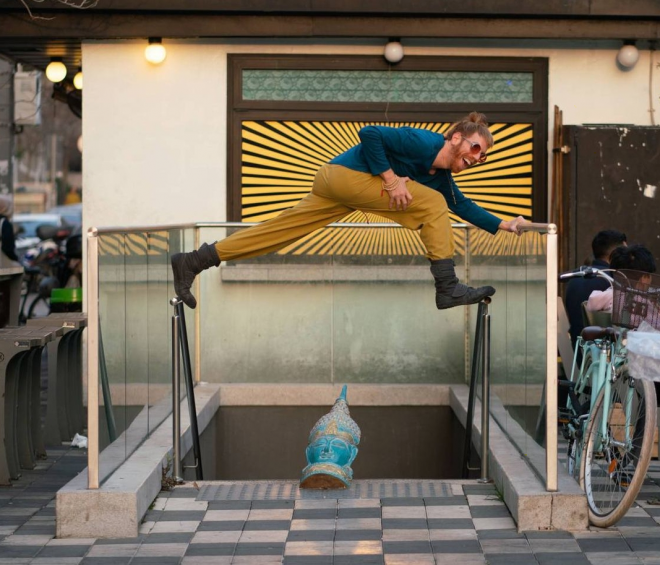
Parkour, singing and dancing– all ready for Haptic Path’s hemp-based, slow fashion  for men and women

Every once and a while you meet somehow who inspires – like Ondi in India. They are all over the world and you will find them if you are listening. They are people who listen to that inner voice, some of us call intuition, and who build something that helps others participate in building a new reality.

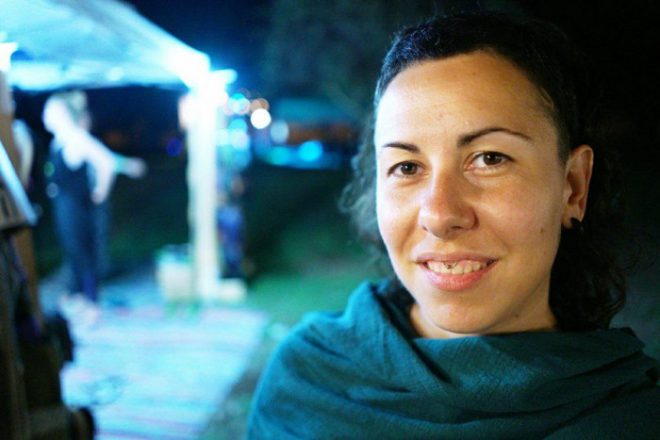
Today we are going to talk with Nina Skibnevsky, founder of Haptic Path, a sustainable clothing line – for women and men – made in Israel for body, soul and mind. She is launching her business online and has a story to share, one that may inspire you to buy clothes that suit your movement in body and sustainable fashion purchases. She also runs the Facebook group Eco-friendly Israel.

She considers that your clothes should reflect your life, how you move and where you move.

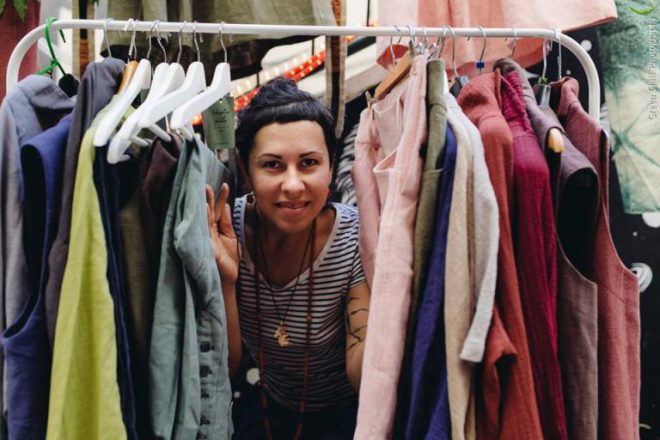
Nina Skibnevsky, Haptic Path
Nina Skibnevsky founder of Haptic Path

“My dream is to continue creating clothes that make the body sing and dance! To make clothes in which you can move effortlessly, look regal, and be confident in,” Skibnevsky tells Green Prophet.

Consider that when you buy clothes today at H&M or Forever21 you mainly contribute to a cycle of abuse of people and children, and the environment too. Clothes that are made for women and men today and sold in mainstream shops are built to distort and contort the body image and self-esteem –– to uphold an unrealistic quest of creating the ultimate image. They are also built to throwaway next season, like last year’s top model. They are not made slow; they are not made to last.

Green Prophet: Tell us more about you.

I’m Nina Skibnevsky, and my journey to become a fashion designer came from a life-long passion with fashion. I grew up in Moscow but spent lots of time in nature. From childhood I dreamt about being a designer. I went to University to study Environmental Psychology and shortly after, I opened my wings and traveled the world for several years with my daughter. 

Nina Skibnevsky in a pile of clothes made from hemp

I decided to retire my backpacking life 8 years ago and settle in Israel. 

Why was it important for you to put your energy into clothes?

I believe in style, high-quality and the freedom of movement; I prize equity, sustainability, and eco-living; I treasure nature, the ability to travel and to connect to the beauty of the world. In my wanderings, I have witnessed many ecological issues first hand and believe it is essential to create with our planet in mind. 

My aspiration is not just to make beautiful and comfortable apparel, but also to live my dreams and values – and, of course, to change the world!

man wearing hemp ready to wear clothes sustainable slow fashion

Tell us about some of the problems with the clothing industry today? 

I would mention three:

1) The business model of fast fashion brands pushes people to buy without thinking, to buy emotionally and to throw away after, because the garment falls out of trend and you need to keep up. This manipulative strategy was a king of marketing for many years and it’s destroying not only the environment, but the ability of each person to ask him/herself important questions (what do I like? how do I want to feel?) and to find his/her own path.

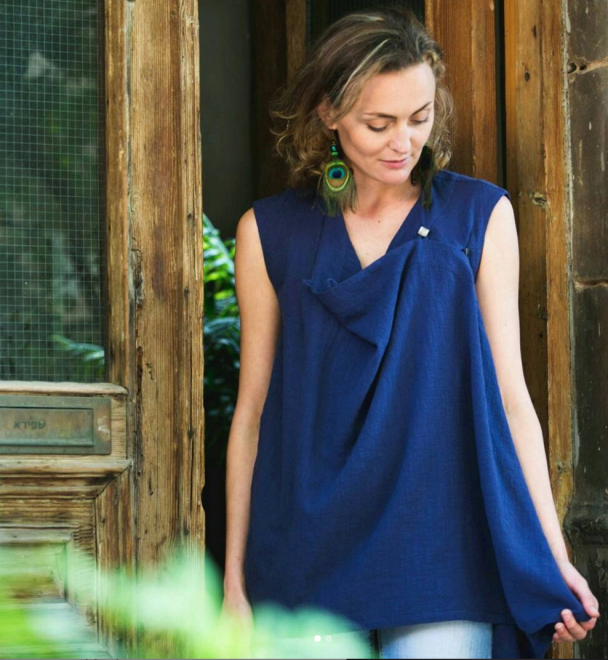
man wearing hemp ready to wear clothes sustainable slow fashion

2) The world of fabrics is very diverse nowadays, but most options are made of polyester, which is the same as plastic bottles and will remain in the landfill much longer than a human’s life.

3) Most of the production is taking place in Asia, where people work very hard and are paid very little; they struggle to afford life’s most basic necessities.This is because the majority of today’s fashion brands and retailers do not own their manufacturing facilities. Fashion supply chains are highly globalised, complex and untransparent. 
How is Haptic Path different than whatever else is out there?

My brand’s slogan is “Free motion in body and mind”.

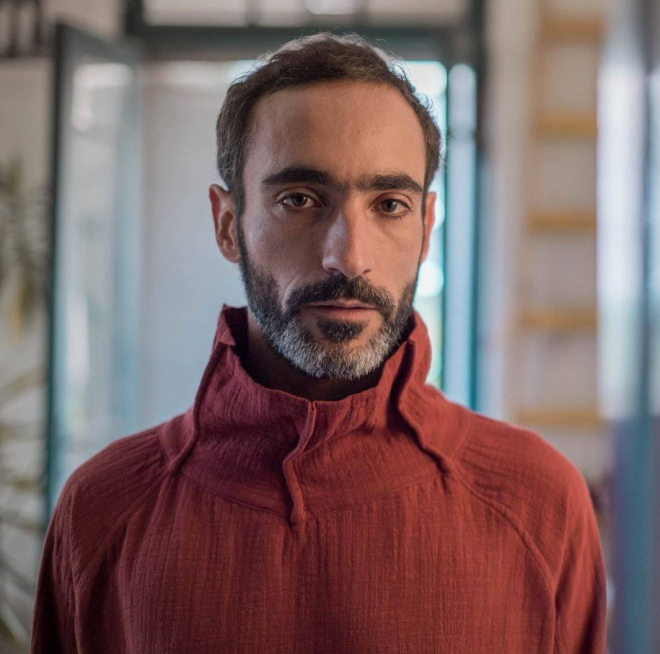
I believe that elegance and comfort should go hand-in-hand. Haptic Path’s clothes are created by a Psychologist (that’s me!)  to empower people, to inspire them to move forward to their dreams and to stay in harmony with their body. For years I was practicing yoga, contemporary dance, butoh. When you are present in your body, aware of its feelings, you simply can’t wear uncomfy clothes. For me, this is true mindfulness and it’s one of the basics of the Haptic Path brand. I chose 100% natural and one of the most environmentally friendly and strong fabrics – hemp. All the items are made to last long and to look great in many different functions so that they become like a home to your body. 

man wearing hemp ready to wear clothes sustainable slow fashion

What’s going on in Israel that concerns you?

The most common misconception is that clothes should be cheap.  Clothes are now like a helium balloon – one minute happiness.  It’s not true. If it’s cheap it means that the producer used fabric and a dyeing process that damages the environment; it might be produced in sweatshops and most likely it is not healthy.

It’s a question of values. Everyone going to their job expects fair payment. The same with workers in the fashion industry. 

Every item makes a very long journey to your wardrobe. It’s worth investing time to learn more about a brand and its values and to choose your clothes consciously.

Haptic Path is crowdfunding

Haptic Path is organizing a crowdfunding campaign for their new organic collection, Less is More”. Find it here. Donations come with a reward item of your choice. 

Fundraising with GoGetFunding

7 Must-Have Travel Tech Accessories

0

analogue camera, old map, compass and cash
Once the most important travel tech was your film camera, a map, some cash and a compass. Now don’t travel without a local SIM card, and a solar charger for your iPhone.

Travelling is the most intriguing part of a person’s life because it allows them to go on a social detox. Especially if you have planned to travel with your family, the vacation experience is going to be fun. However, cutting off from social life and relying on conventional laps can take a big toll on your tour if you have plans to explore different places in a short time. So when you pack your bag, don’t forget to carry your tech-friendly travel accessory. They’ll help you in keeping control over the travel noise and breathe life into your phone when the battery is dying. Here we will sift you through the must-have travel tech accessories:

1.      External Battery

Today, external battery charges are omnipresent. Secondly, because they are available in bigger sizes, one can easily buy a few of them for the entire trip. If you ask any of your friends, they will guide you through packing the external battery as a must-have accessory. Because many people love to explore mountainous regions during vacation, it becomes crucial to have a battery when you can’t find a charger slot every few miles up. External batteries don’t weigh much and can easily contour in your pocket. Make sure to read the customer reviews if you have plans to purchase the external battery from the web.

2.      A Bluetooth Speaker That is Waterproof

If you are setting off on a beach vacation, not having a waterproof speaker is going to make you regret it. Now, with much advancement in technology, you think of something, and it is already available out there. Beach is a fun place to go, so you must not overlook carrying a waterproof Bluetooth speaker in your bag. This way, you can enjoy your favorite track while swimming in the water. Another strong reason to carry a Bluetooth speaker is its tiny size. You can carry it anywhere you want without worrying about its weight.

3.      A Digital Watch

If you’re travelling to a different country, it is imperative that you wear a digital watch. Although they have been around for the last four decades, still many people overlook this option when it comes to travelling. Now, digital watches are better than ever and come with a plethora of interesting features. Suppose if you want to find the kids attraction near your hotel, a digital watch will quickly sift you through the chaos to your desired destination. You can also wear a fitness tracker when travelling with family.

4.      A Selfie Stick

Now selfie sticks have become a permanent companion for travelers. For those who love to encapsulate their entire trip, selfie sticks can easily help them in recording vlogs and interesting videos. However, you need to find a Bluetooth selfie stick because it can get paired with any phone. If you settle for the conventional selfie stick with a long cable, you will have to struggle with the wires throughout the journey. A selfie stick is portable and is light in weight, which makes it the perfect travel accessory.

5.      A Waterproof Phone Cover

There are many instances when your phone will slip from your hand. Secondly, if you have the plan to visit the beach or a place where water is in abundance, a waterproof phone cover will protect your device from getting damaged. Waterproof phone covers protect the mobile from getting drenched in water if they fall in it. However, when you decide to buy such a cover from the web, don’t forget to check the customer reviews. They will help you in weighing the pros and cons of buying from a particular seller. Want something fancy and sustainable? How about iPhone 13 cases by Carved?

6.      A Streaming Stick

If the hotel room is going to be your home for the next few days, you can’t forget the streaming stick at home. Especially when you’re obsessed with sifting through Netflix and Youtube, it becomes imperative to carry the streaming stick. The reason why many people prefer streaming sticks is because of its speed. Unlike the traditional internet or satellite connection, a streaming stick channels the content without any distortion. Secondly, a streaming stick doesn’t take much space in your bag. So it’s the most portable thing you’re going to carry.

7.      Headphones

Are you in love with music? Do you like listening to your favorite track while walking through the local streets? Buy headphones before you decide to fly with your luggage. You never know if you’ll get the best accessory for your phone when you land in a new country. It is best if you settle for the noise-cancelling headphones because they can curate the voice from any distortions. Headphones are imperative for your trip because they eradicate the chaos of carrying a wired ear device. So don’t forget to pack them in your luggage before setting off.

Solar powered yacht – sails and moors for off-grid escape

solar powered home yacht can moor like a barge in Amsterdam
A movable home that can plunge its support deep into the water against hurricanes, or be brought on land to live off-grid.

I grew up as a Dutch girl in Canada. Among part of our family’s storytelling and legends was the tale about the Dutch boy who plugged a dyke with his thumb to save his town, the country, the world? from an encroaching sea. The flatlands people of Holland or The Netherlands as you might call them are at home with the idea of climate adverse consequences.

artuk's solar power house boat roams to any city
The houseboat reimagined

The national psyche is built on man against nature or man with nature, and for that the Dutch people have been reasonably doing unreasonable things against climate change and for helping the environment. See our article on the extraordinary city of Rotterdam, the home to one of resident writers, or Boyan Slat, who boldly plans to clean up the seas with his plastic-corralling invention.

fly in with your helicopter to this solar powered house boat
Whatever floats your boat. Call it a yacht, a barge, a houseboat, but it’s not a tiny home.

While Americans might rather escape to Mars with Elon Musk, the Dutch are battening down the hatches and are offering more reasonable approaches to dealing with Mother Nature, or an angry Mother Nature. It was an ongoing fantasy in my home that if we won the lottery we would invite all our family and rent a boat and take them all on Caribbean yacht charters. We didn’t know about this luxury houseboat option then. Consider the Dutch firm who has designed a solar powered yacht that can lower stilts for a more permanent mooring.

Like the modern trailer also known as the #tinyhome or #vanlife, this yacht appeals to a certain eco personality that might also want to settle like the barge dwellers in Amsterdam. It is not your father’s houseboat.

solar power houseboat
Full speed ahead

The solar powered boat is created by the Dutch architecture studio Waterstudio.NL for the yacht maker Arku in Miami, with an option of it becoming an off-grid home.  

The craft is 75 feet long, is fully solar-electric, mobile and self elevating. This turn-key vessel is furnished and decorated in style by the acclaimed Brazilian furniture company, Artefacto.

interior design of solar power houseboat yacht
Interior designed to be as fancy as this concept houseboat

The first one is for sale at a cool price of $5,500,000.

iconic looking housboat
Have the captains drooling. This does not look like a houseboat. Transforms into stilted urban getaway at the port.

Arkup is a Miami, US-based company founded in 2016, to pioneer next-generation floating homes. The company rethinks life on water with its fully solar-electric, mobile and self-elevating livable yachts they call “future-proof blue dwellings.”

Weather and future proof, rain harvesting too

These livable yachts feature zero emission and silent electric propulsion which provide mobility and maneuverability. An automated hydraulic lift system, allowing the vessel to put down a stable foundation in up to 20 feet of water, ensures stability and hurricane resilience.

sailing away solar powered yacht into the sunset
Sail away with me. Or anchor for the night?

The livable yacht has four bedrooms in 2,600-square-feet of indoor space, with 4,350-square-feet in total, including its terraces and balconies. To achieve its sustainability objectives, the Arkup design is 100 percent solar-powered and has systems for harvesting and purifying rainwater, for complete independence.

With Covid and potentially other climate change disasters facing us, let’s start saving? The other option might be our collective thumbs in the dyke.

Death Valley peaks hot – the highest since ’31 at 130F

0

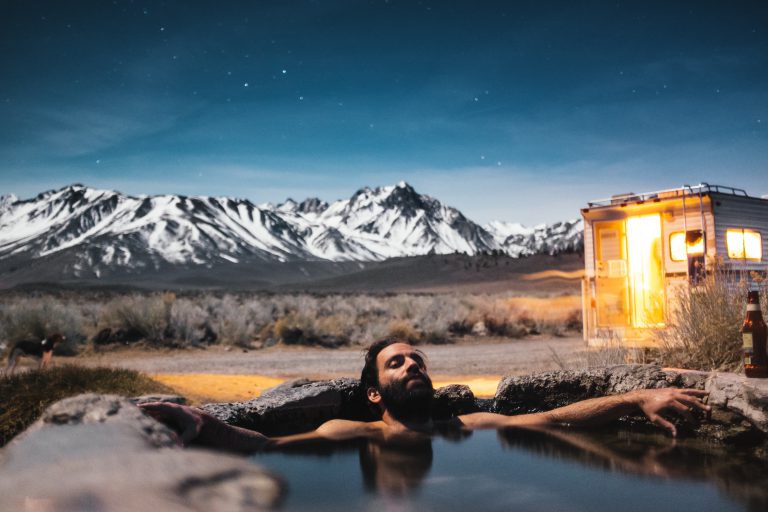
death valley and man overlooking mountain
Death Valley, USA. It’s looking pretty hot out there.

Think we know what’s in store for us? Abu Dhabi stands at an average high of about 110F in August, and now Death Valley, California peaks a record hot high at 130 degrees F (or  54.4 degrees Celsius) this month, the highest since 1931.

“The weather station at Furnace Creek in Death Valley, California, reported a temperature of 54.4C, which is 130F, on Sunday 16 August,” said Clare Nullis, the World Meteorological Organization (WMO) spokesperson. “If validated, it would be the highest temperature on Earth since 1931, and the third-hottest temperature ever recorded on the planet.”

“All indications” suggest that the extreme temperature reading of 54.4 degrees Celsius recorded in California’s Death Valley on Sunday, is legitimate,” she added.

Tunisia and Kuwait are in the top 3 hot spots

According to the data from the WMO’s Weather and Climate Extremes archive, the hottest temperature ever recorded there or anywhere was in Furnace Creek, Death Valley, California, reaching 56.7C (134.06F) on 10 July 1913. And that’s because someone was checking.

The next highest temperature for the world was then set in Kebili, Tunisia, in July in 1931 reaching 55C (131F).

A few years ago it reached 54C (or 129.2F) in Mitribah, Kuwait, on 21 July, 2016.

The conditions have coincided with a heatwave on the US west coast with heat warnings issued by US government groups.

The development follows repeated warnings from the UN weather agency about extreme high temperatures which are having an impact on sea ice melt, also causing extensive wildfires in places such as the Arctic. Earlier this month climate change science pioneer Konrad Steffen actually fell through a melting glacier at his research station and drowned. This is how depressing the whole climate change situation has become.

konrad steffen
US-Swiss climate change scientist falls through glacier while checking his weather station in Greenland.

Alarm for the Arctic

Siberia is experiencing a prolonged heatwave, with a recorded temperature of 38C (100.4F) on 20 June in the Russian town of Verkhoyansk. If this readout is verified it will be the highest temperature ever recorded in the Arctic Circle.

The glaciers are melting. Carbon is releasing into the air. If you thought Covid was scary, it might just be a taste of the hell to come.

Plant Sharing Point in Tel Aviv to green your city

0

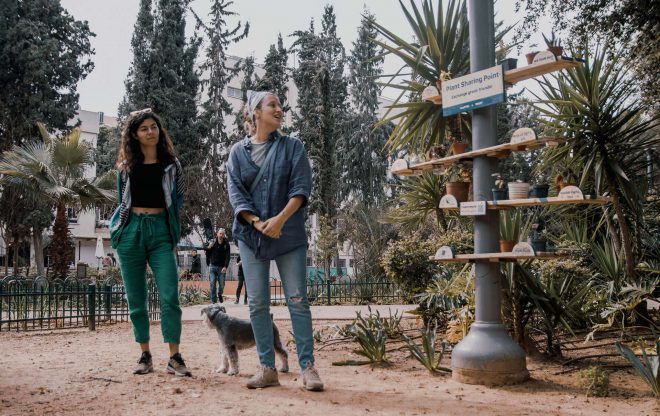
plant sharing point in Tel Aviv's Gan Meir
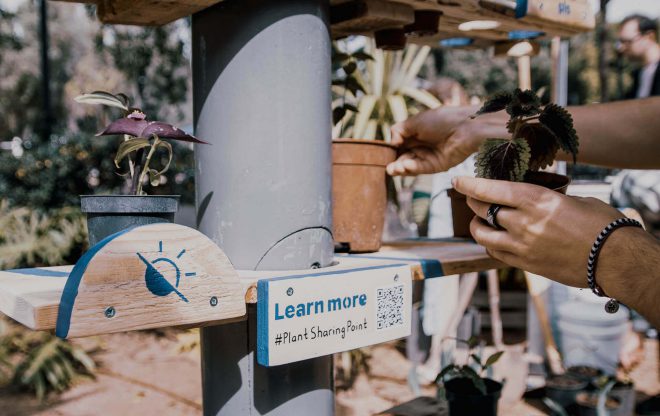
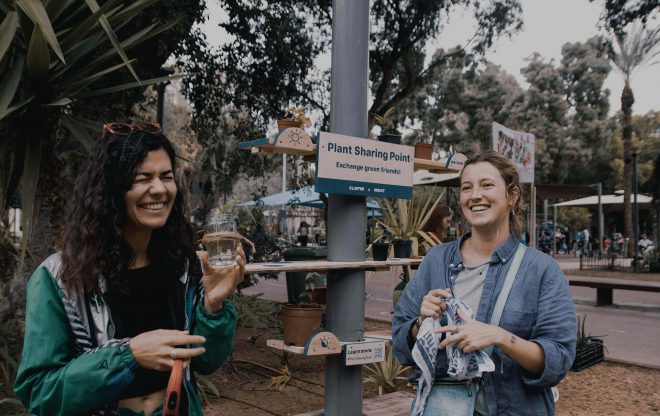
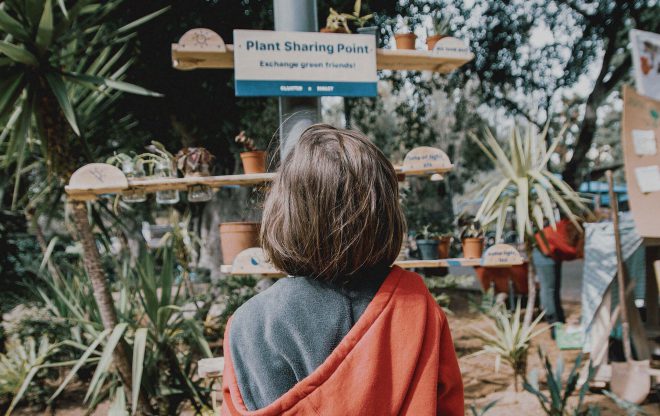
Made from upcycled pallets, the Plant Sharing Point allows green thumbs to share their little green babies.

A group of makers and creatives in Tel Aviv launched a pilot for a plant-share depot in Tel Aviv recently. Like the tiny library concept that has taken off around the world, or the Fridge for reducing food waste which has versions in Tel Aviv and Saudi Arabia the whole idea of community sharing is a noble one.

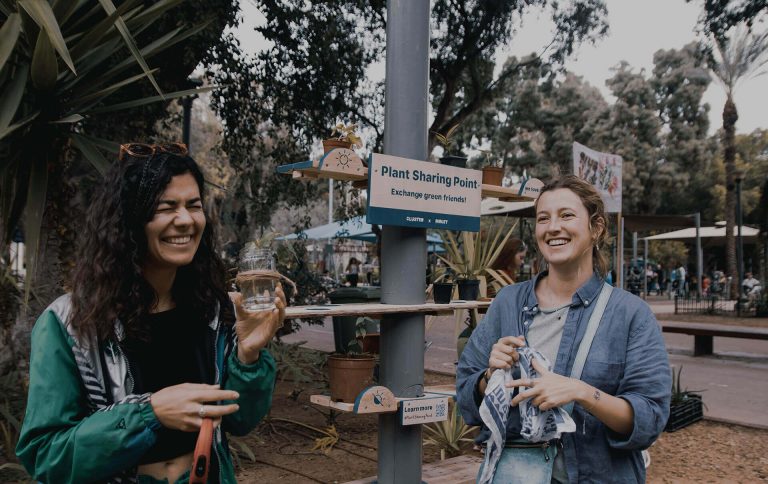
plant sharing two women holding pots. plant sharing point in Tel Aviv's Gan Meir
Plant sharing can make you smile. In Meir Park, Tel Aviv.

And in fact that’s how Airbnb started (took the idea from couchsurfing and made it capitalistic and very expensive to rent a room – instead of free. Same with WeWork who “borrowed” a beautiful co-working space social hub community with node around the world, turning it into a real estate business model.

plant sharing point in Tel Aviv's Gan Meir little girl looks into plant sharing in the park plant sharing all the seedlings in Tel Aviv plant sharing point in Tel Aviv's Gan Meir

But dreamers gotta dream and bring some of those dreams to life. The Plant Sharing Point was created by Molet and Cluster.TLV. Molet is a social do-gooder company located in Jaffa that upcycles pallets into useful goods like shelves and stools, and plant share points! They created the depot at Meir Park in Tel Aviv.

plant sharing point in Tel Aviv's Gan Meir

The reaction? “It was a test. A proof of concept. Can we build Plant Sharing Point in a sustainable way? Can it attract people to a public space and inspire them to interact? Will Tel Avivians actually want to exchange plants?
What will municipality think of it?” writes the Cluster people.

The used 4 decks from pallets and a couple of screws. Event guests actually brought plants to share: a “child” of a strawberry bush, a tiny lichi tree, pitango and others.

“By the end of the day all the green friends found new owners, taken by residents of Postel, TLV LGBTQ Center and just people who live nearby.”

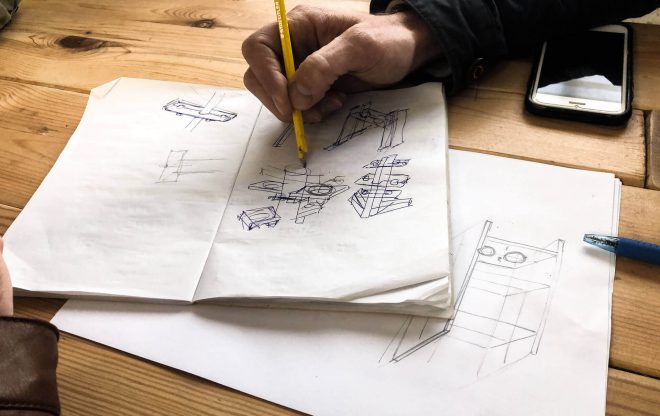
plant sharing point blueprints
Molet has a design studio in Jaffa. Here are the blueprints for creating the Plant Sharing Point.

The feedback?

? “I will bring more plants in the evening”
? “I love to have such point next to my home”
? “I came from the other side of the city to check it out”
? “Our city needs this”

The group meanwhile waits for permissions from the city to continue the project.

Delta8 THC: A Uplifting THC Experience Without The Psychotropic Effects

0

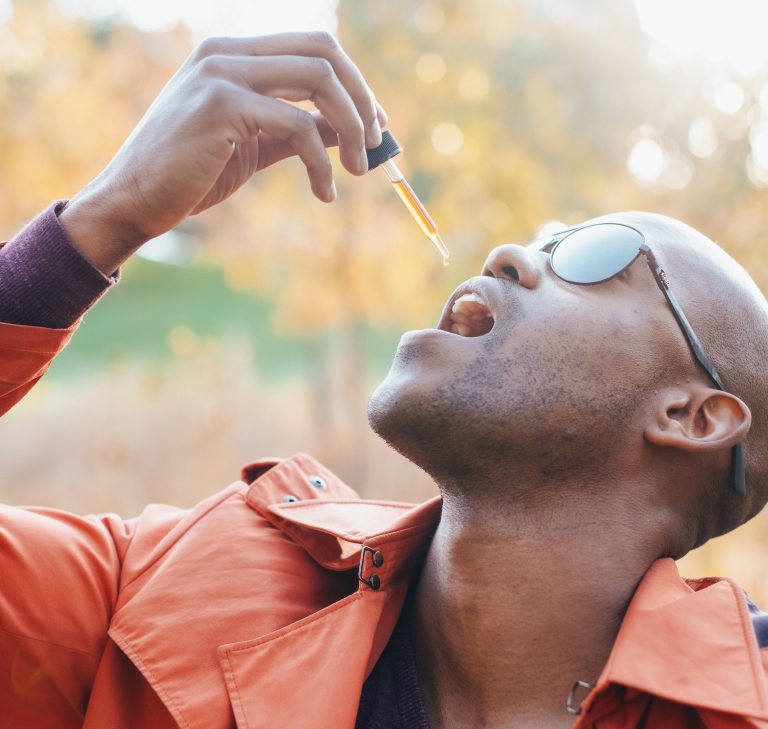
man dosing with CBD cannabis oil
There is growing evidence that medical cannabis can alleviate symptoms caused by Covid. When the THC count is low, as in some brands, you can use medical marijuana without federal repercussions.

The debate about the legality of cannabis-related products has persisted with quite some time now. One startling feature of this debate is the support that these products garner because of the numerous health benefits offered.

Owing to the lobbying in favor of cannabinoid products, in a revolutionary move, over 33 states in the United States of America have passed cannabis-related laws that have legalized cannabinoids. The legalization was premised on one strict regulation- cannabinoids should have lower than 0.3% THC and the source should be hemp rather than marijuana.

This decision was long coming. Years of research by the medical fraternity has shown the world the benefits of cannabinoids when it comes to relieving stress, anxiety, and pain. The staggering consumer base for cannabinoids has also led the market competition to come up with more innovative, effective, and safe products. Talking about innovative, effective, and safe cannabinoids, the delta8 thc gummies are set to revolutionize the consumer industry of cannabinoids, and not without strong reasons.

The delta-8-THC is a sophisticated cannabinoid, that has the potential to revamp any person’s health and wellness routine. Here are 3 reasons why delta-8 THC can improve the medical marijuana experience.

Delta-8 THC Strengthens Memory

Deta-8 THC is a helpful neuroprotectant. This finding is revolutionary for patients suffering from memory degenerative diseases such as dementia and Alzheimers. In a groundbreaking research experiment, mice were treated with delta-8 THC. This increased the levels of acetylcholine in the brain– an important neurotransmitter that plays a crucial role to sustain memory and learning, as well as overall mental health.

Lower levels of this neurotransmitter are associated with Alzheimer’s and dementia, so it can be established with authority that delta-8 THC can be used to prevent, treat or even reverse the onset of memory degenerative diseases.

Relieves Stress Without Overwhelming The User

The best feature of the delta-8 THC is that while it is as strong as the delta9-THC, it only produces half of the psychotropic effects. This means that the delta-8 can be uniquely beneficial for people that have anxiousness as compared to regular THC.

While delta-8 THC is psychotropic, users of the compound have reported maintaining their quirks about them, regardless of the quantity administered by them. Thus, it can be established that the psychotropic effect, at best, produces a very gentle type of upliftment. The compound ensures that the person stays clear-minded and intelligible, and doesn’t experience the classic ‘stoner’ condition which can be devastating for the brain’s function.

An Effective Nausea Suppressant and Appetite Stimulant

The worst feature of other psychoactive cannabinoids is that they leave a very unsettling feeling for the person’s appetite. Experiencing nausea, and a debilitated appetite can leave a person angry and agitated for a lengthy period of time.

In this context, the use of delta-8 THC is further warranted because it is well-established nausea reduces and appetite stimulant. This feature of the compound has made it a potent treatment of nausea in cancer patients. In one study, researchers used delta-8 THC to treat nausea in cancer patients that were children of the age group 3-13. Children that were given delta-8 THC stopped vomiting and were able to fight off uncomfortable feelings of nausea. What was even more startling was the fact that these children also didn’t experience any psychoactive effects.

Which Delta-8 THC To Choose?

The market is studded with products that claim to be delta-8 THC. but here’s an important catch that you should be wary of. The laws related to the legalization of cannabis state that only hemp-derived delta-8 THC is federally legal.

 Therefore, when selecting a product, users should ensure that they get premium CBD products that are derived from hemp flower rather than cannabis. This will not only heighten their medical marijuana experience, but also protect them from any potential legal offense.

What is Ethical Engineering and How Does it Work?

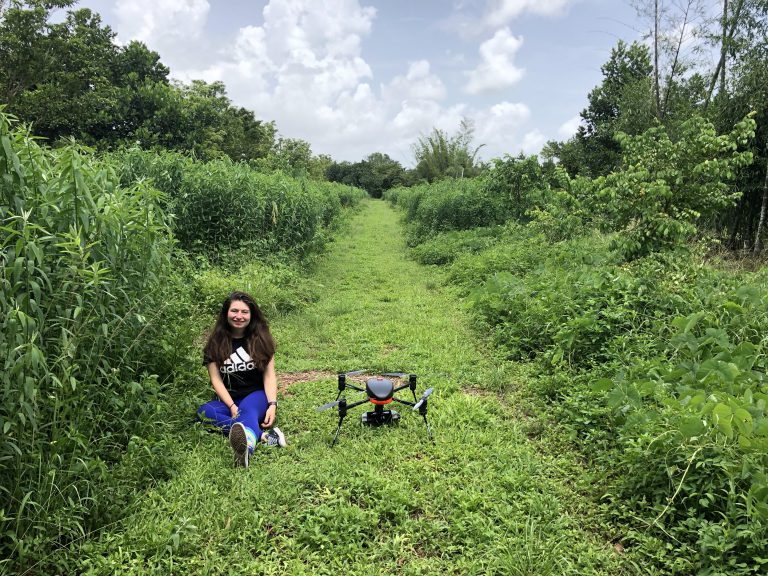
Freidenreich carambola
Drones can be used in engineering to help harvest better crops. Technologies like Flux help collect data using the blockchain. How can we ensure our future engineers are trained with ethics in mind?

Engineering is the method of developing efficient mechanisms that will quicken or ease tasks using limited resources and technological aid. Engineers study this specific field that includes taking our scientific understanding of our natural surroundings and using this knowledge to design, invent and create things that will solve our problems and achieve a practical goal. This involves the development of cars, roads, planes, bridges, computers, processes, machines and tools. Ethics are principles that are accepted by society and connected to the honor of human beings. When an engineer has ethics, they contribute to, and help, society in a better way. This is where ethical engineering comes into the equation. Today, we will be taking a closer look into what ethical engineering is and how it works.

Importance of Ethics

When it comes to learned professions, engineering is incredibly important. Those who study for this profession are expected to display the highest standards of integrity and honesty. An engineer has the power to make a vital and direct impact on the quality of life of any person. This is where the code of ethics for engineers comes into the profession. In order to have a positive impact on the people they are working with and for, engineers must be honest, fair and open-minded. They also need to be dedicated to protecting the health, welfare and safety of the public. Engineers must be willing to implement a degree of specialized behavior that compels them to abide by the topmost principles of ethical conduct. This will protect everyone involved in the process.

The Fundamental Canons

Now we know why ethical engineering is so important, it is time to take a look into the fundamental canons of ethical engineering. While engineers fulfil their professional duties, they must follow a set of rules in order to be morally correct. First, they must ensure the welfare, health and safety of the public is their top priority. They must only perform services in their areas of competence. Any statements issued to the public have to be made in a truthful and objective manner. Each client or employer must be treated faithfully and deceptive acts must be avoided. Finally, an ethical engineer should conduct themselves as an honorable, ethical, lawful and responsible individual in order to maintain the profession’s reputation, usefulness and honor.

Rules of Practice

The fundamental canons are just the starting point of ethical engineering. The rules of practice take a closer look into the above and explain them more thoroughly. This helps engineers who are working towards an ethical standard to understand the rules they need to follow in order to fall into this category, and includes the documents and reports that they must acquire and get their clients or employers to fill in, to protect them and themselves. The level of education and experience required is also listed in these sectors, as a number of areas in which engineers can work require a specialized qualification in order for them to carry out the job correctly. When it comes to avoiding deceptive acts, engineers are told that they must not fake or misrepresent their qualifications.

Their Professional Obligations

Professional obligations are a set of rules that are aimed at maintaining order and there will be a number of duties that an engineer must abide by. For ethical engineers, this involves acknowledging their error and not altering the facts. They should advise their employers or clients when they think a project is unachievable. Engineers should not accept other employment to the impairment of their fixed work or interests. If outside work is accepted, then the employer must be notified. Misleading or false pretenses should not be used to attract outside engineers. They should not push their own interests at the expense of the integrity and dignity of the profession, and no one should be discriminated against. This is just a handful of the professional obligations that ethical engineers must abide by.

Studying the Concept

In order to fully understand ethical engineering, existing and aspiring engineers have the opportunity to study engineering ethics. Engineering ethics is the study of values, decisions and policies that are virtuously desirable in engineering research and practice. Ethical engineers are most wanted during states of emergency. For example, if a bridge collapses, or a plane crashes, a team of government agencies, safety inspectors and engineers (preferably ethical engineers) will be called to the scene in order to piece the events together and isolate the cause. If you would like to understand more about studying ethical engineering in your own time, then you should look into learning more about it at Kettering University Online. Research and learning are key to understanding engineering ethics.

The Ethical Issues

For ethical engineering to exist, there needs to be a number of ethical issues in the first place. There are a number of case studies on engineering ethics, which highlight the issues that exist in the real world. One example is quality assurance when it comes to shipping potentially defective products. An engineer will have to decide whether shipping a product that may be defective is the ethical thing to do. Another example is copyright concerns when working with computers. The main cause of this issue is when a computer start-up company puts themselves at risk of violating copyright laws if it reuses a code that is actually the property of a different company. As mentioned previously, you can learn more about this concept by taking a look at Kettering University Online.

Ethical engineers must abide by a number of rules, regulations and obligations in order to treat everyone they work with in the correct way. This will ensure they form strong relationships, maintain a good reputation for the profession, and produce safe, accurate and high-quality products. Ethical engineering works by improving the morals and standards of engineers to benefit the client or employer and the overall product. Many people will agree that is an essential component of the profession and must be learned by all.

Beloved climate change scientist Konrad “Koni” Steffen loses life falling through melting glacier

0
Konrad Steffen: “Immense man. Immense loss. Tears falling around the world.”

Glaciologist Konrad “Koni” Steffen passed away at aged 68 on August 8 in an accident in Greenland. Steffan was a renowned researcher on rising sea levels, and died after falling into the kind of crevasse that global warming has created. “It looks like climate change actually claimed him as a victim,” a colleague said. His body was not found.

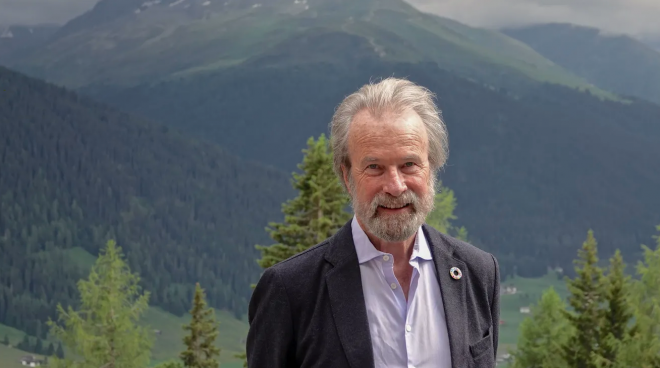
Konrad Steffen in front of mountains

Jason Box, an ice climatologist at the Geological Survey of Denmark and Greenland who was with Steffen before he died, said he believed his friend “remains 8 meters down in the water,” he told CBS News. “Personally, Koni was like a father,” Box told CBS. “Immense man. Immense loss. Tears falling around the world.”

https://www.youtube.com/watch?time_continue=5&v=mPJzAl414ps&feature=emb_logo

Professor Steffen contributed to the landmark Intergovernmental Panel on Climate Change as a lead author on the Special Report on the Ocean and Cryosphere in a Changing Climate.

Professor Steffen was Director of the Swiss Federal Institute for Forest, Snow and Landscape Research (WSL) and a former director of the Cooperative Institute for Research in Environmental Sciences at the University of Colorado at Boulder.

His passion was the polar regions and he devoted his career to research on climate change and the cryosphere in the in the Arctic and Antarctic. He was also a remarkable science communicator, the The Intergovernmental Panel on Climate Change said in a report they sent to GreenProphet.

https://vimeo.com/447787913

Steffen is highly recognized for his long-term scientific monitoring work of the Greenland ice sheet. Since 1990 every spring he went to the Swiss Camp meteorological base station in Greenland, where he worked with his colleagues collecting data on snow, ice and the atmosphere.

“The poles of the Earth are of great importance for the climatic balance of our planet. More research and knowledge of how they work is urgently needed,” Steffen said.

Steffen attended ETH Zurich, from which he received a Diploma in 1977 and a Doctor of Science degree in 1984. He was a professor at the University of Colorado, at EPFL in Lausanne and at ETH in Zurich. He was born on 2 January 1952 in Zurich, Switzerland.

A dual US and Swiss citizen, he was married and a father of two. He was a member of the International Glaciological Society, the American Geophysical Union and the American Meteorological Society. “We will deeply miss Koni, but are committed to continuing his mission towards making a contribution, big or small, to create a difference,” his colleagues from the Swiss Polar Institute said in a statement.

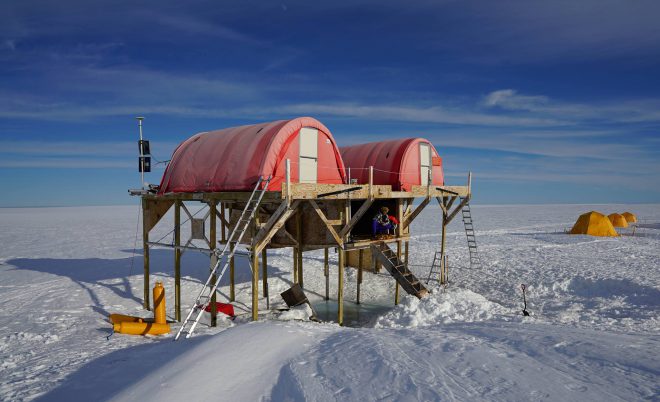
Swisscamp, Steffen’s research station on a glacier in Greenland.

Ancient olive oil soap factory unearthed in Bedouin city

0

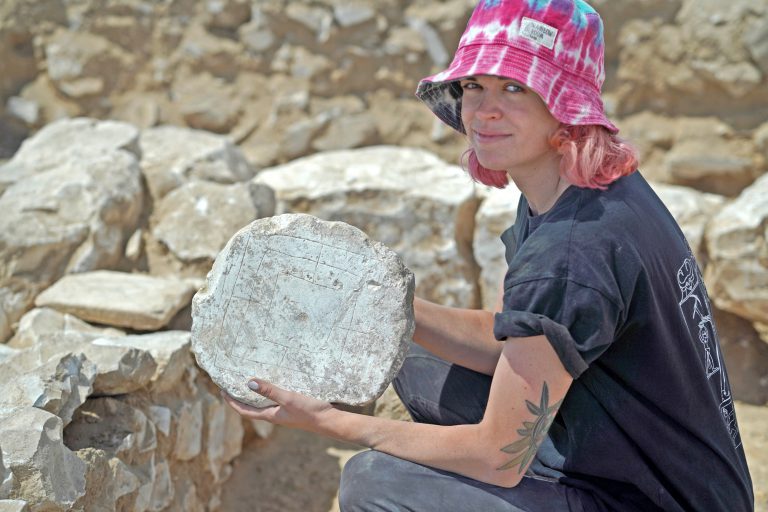
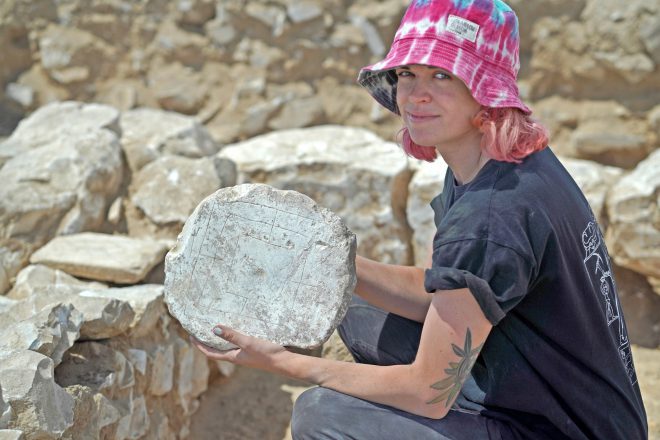
ancient game found in Israel, held by a woman archeologist wearing a pink hate
One of the fascinating games found at the archeology site, the oldest ancient soap factory, a soapery, found in the region.

Israel’s most ancient soap making workshop – a soapery – has been exposed in recent weeks at an excavation site run by the Israel Antiquities Authority and young participants, inside a wealthy home of the Islamic period from approximately 1200 years ago, in the Bedouin city of Rahat. Home to many green and eco activists.

Over the last six months, hundreds of youth and adults have been employed at the large archaeological excavation managed by the Israel Antiquities Authority, including participants from among the local Bedouin residents, university students and students in pre-military preparatory programs.

Rahat Bedoin town from above imaged by drone
The workshop was discovered in a 1,200-year-old home

The excavation was supervised by Dr. Elena Kogen-Zehavi, with the help of Dr. Yael Abadi-Rice and Avinoam Lehavi. The purpose was to reestablish the connection between the community and the local history. The excavations were carried out in light of new neighborhood developments in Rahat, initiated by the Authority for Development and Settlement of the Bedouin in the Negev.

The production of olive oil soap is mentioned in writings since the 10th century and it has been a significant industry in the region from the Middle Ages and until the early 20th century. During the soap-making process, olive oil was used as the base material, mixed with ashes produced by burning salsola soda (or saltwort) plants, which contain potash and water.

See Palestinians making it in the West Bank.

The mixture was cooked for about seven days, after which the liquid material was transferred to a shallow pool, where the soap hardened for about ten days until it could be cut into bars. These were piled for additional drying, and the final product was ready after an additional period of two months. The site at Rahat displays facilities associated with this industry.

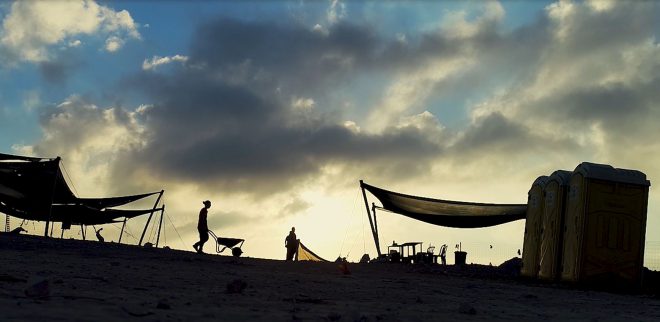
rahat archeology site from the horizon at dusk

“This is the first time that a soap workshop as ancient as this has been discovered, allowing us to recreate the traditional production process of the soap industry,” says Elena Kogen Zehavi, the IAA excavation director.

Olive oil soap is still made like the ancients did in the West Bank. It’s being poured on the floor to cool and solidify. The tradition goes back over a thousand years when the land was inhabited mainly by Jews and Christians, before the Islamic reign began.

This film shows the process of traditional soap production in the old soap factory in central Nablus. Film produced by Eirik Moe, Stavanger, Norway.

The games they played

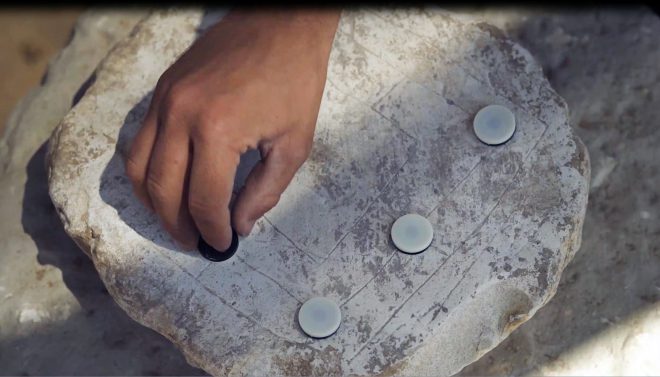
ancient limestone gameboard, The Windmill
An ancient gameboard called the Windmill.

According to on-site archeologist Svetlana Tallis: “One of the underground spaces of the wealthy building contained another exciting finding, shedding light on the daily life of the inhabitants – a round limestone gameboard used for a strategy game called the Windmill.”

This game is known to have existed as early as the 2nd and 3rd centuries CE (the Roman period), and it is still being played to this very day.”

Nearby, a second gameboard known as “Hounds and Jackals”, or “Fifty-eight Holes” was also found. This game was first played in Egypt and it spread to other parts of the Mediterranean basin and to Mesopotamia around 2000 BCE. In Israel, it has been discovered in ancient Megiddo and Tel Beth Shan. It was played by two players throwing dice or sticks that determined the number of places to move with each throw. The goal of the game seems to have been a specific point on the board.

Laundry soaps – is less more green? Jordanians Concentrate for the Environment

We have featured some ancient games on Green Prophet not long ago, like those played in Jordan, across the border. Once borders did not separate Bedouins, nomadic people now living sedentary lives in towns, villages and cities.

See ancient multiplayer game mehen here.

mehen on kickstarter
Ancient multiplayer game from Egypt revived by a kickstarter campaign.

According to the mayor of Rahat, Fahiz Abu Saheeben, “The excavation has revealed the Islamic roots of Rahat. We are proud of the excavation and happy that it took place in cooperation with the local community. We enjoy good relations with the Israel Antiquities Authority and the Authority for Development and Settlement of the Bedouin in the Negev and we hope to construct a visitors’ center that tourists and the local community will be able to enjoy.”

Ancient Roman Facial Cream Found In London Excavation

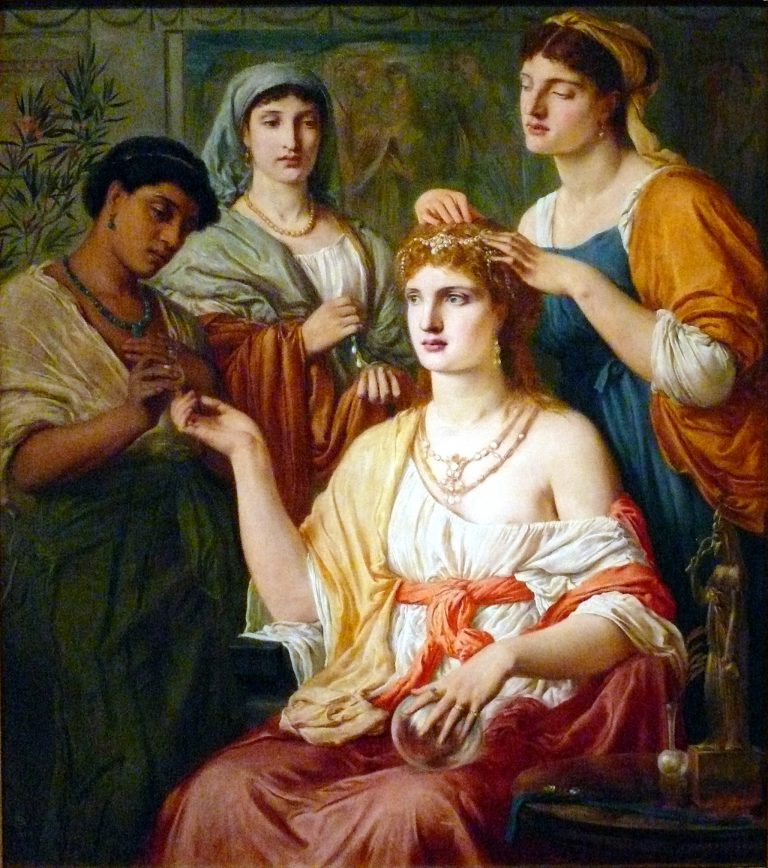
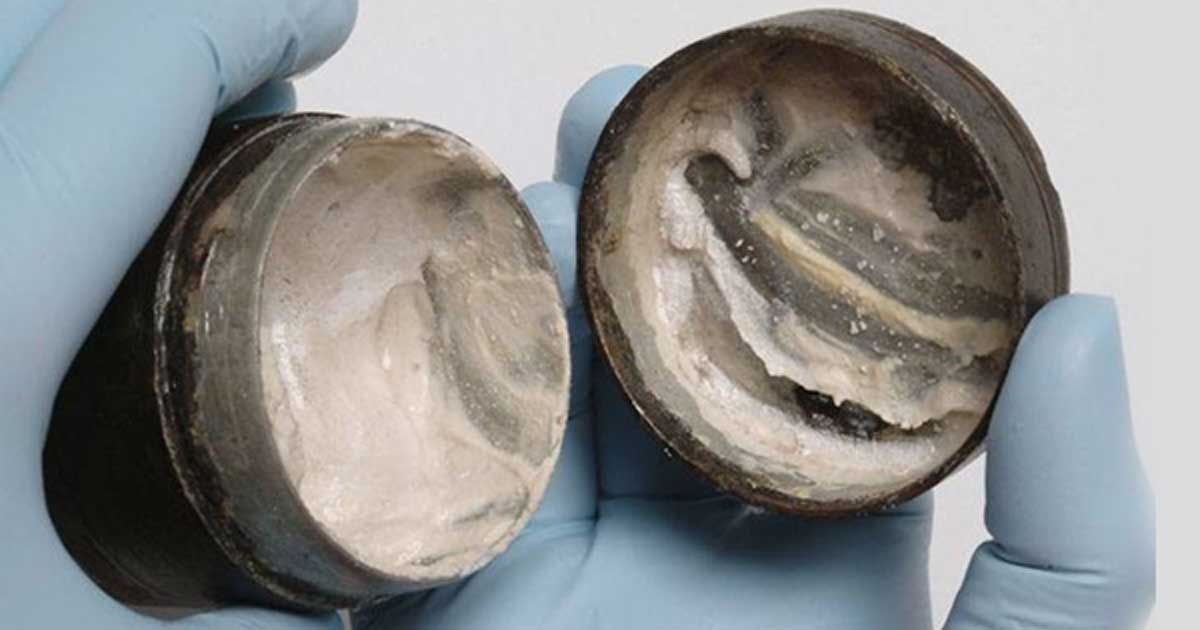
It was touching to see a picture of the finger imprints in the pot – fingers that scooped facial cream out of it 2000 years ago. You wonder, was the owner a wealthy woman with servants to dress her, and fix her hair? Maybe a high-class prostitute? Or just a woman of the middle classes who’d splurged on a fancy cream for once? 

ancient-roman-face-cream

The pot weathered two millennia with hardly any damage, an incredible find.  It was made of tin, considered a precious metal at the time. It was an expensive item, and the cream inside was likely the finest available. It must be said that when Liz Barham, curator at the Museum of London opened it, a powerful stench arose from the jar.

Hardly surprising. Cosmetic creams have always been formulated from fat, water, and something to blend the two. Today’s moisturizers are blended with fine vegetable oils, but in ancient Rome, it was animal fat, sometimes raw lanolin taken off sheep’s fleeces, and when they required something really fancy, gladiator’s sweat. Nothing likely to stay fragrant through the ages, although when fresh, it may have had rosewater added.

The tightly-sealed tin can was fished out of a ditch in Southwark, a busy London crossroads near the Thames. A Roman complex existed there that  housed two temples,  a hostel, an outdoor area that might have been used for mass worship, plinths for statues and a stone pillar. Given the religious character of the area, it’s easy to imagine  a scenario where a wealthy Roman and his wife or mistress went on pilgrimage, stayed at the guest house, and somehow mislaid the jar of cream. Maybe an envious servant stole it and stashed it in the ditch to come back for it later. The archaeologists who uncovered it say that it appears to have been deliberately hidden.

Federico Nappo, an expert on ancient Roman cosmetics of Pompeii, says, “It is likely that the cream contains animal fats. We know that the Romans used donkey’s milk as a treatment for the skin. However, it should not be very difficult to find out the cream’s composition.”

And indeed, the cream is undergoing scientific analysis today. We shouldn’t be startled if it was made of, among other things, oils of olive or almonds, honey, and perhaps fat taken from animals that had fought in the arena.

The well-brought-up Roman woman used kohl to outline her eyes, applied creams containing powdered lead to give their skin the treasured white hue, and rubbed perfume made from scented flowers macerated in oils. It was a delicate balance between looking good and looking too good to be respectable. Mummy portraits, pictures showing the deceased in life, show dramatically outlined eyes and brows, smooth skin free of freckles, and a demure expression.

ancient-roman-beauty

Philosophers of those times jeered at women who used cosmetics and perfumes, but the writer/poet Ovid wrote a long poem in favor of them, including five formulas for facial creams. Ovid’s moisturizers had innocuous ingredients such as barley, wild legumes, egg, powdered deer horn, spelt, and honey. “Any woman who uses this  on her face will shine smoother than her own mirror,” he wrote.

I’d be willing to try such a formula, if you can guarantee no animal fat, gladiator sweat, or another favorite ingredient – dung.

This Wadi Feynan eco hotel in Jordan is ideal for desert escapism

0

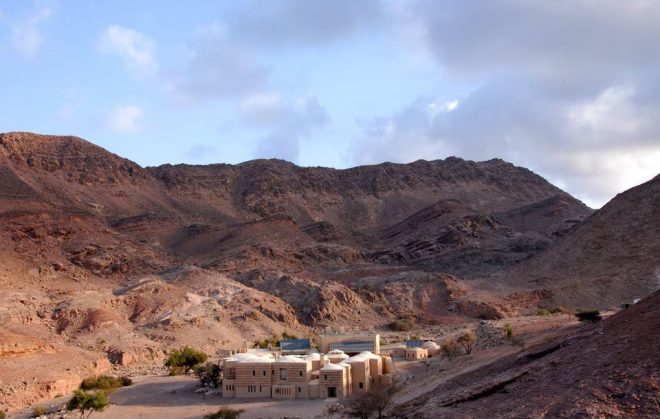
feynan eco hotel

There is a wonderful place to explore in Jordan in the region of Wadi Feynan. 

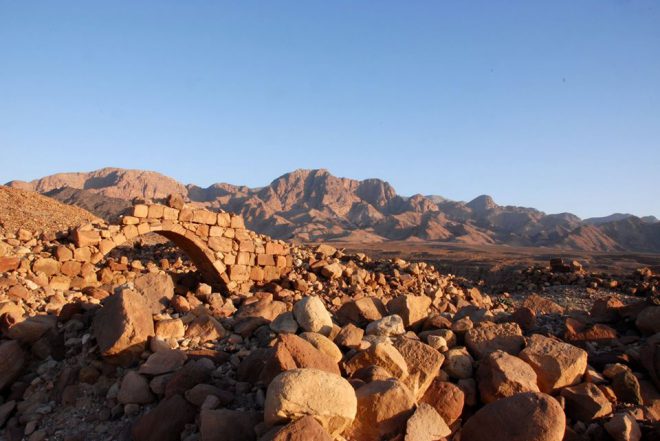
Getting there: Wadi Feynan is located about 200 miles southwest of Amman and represents one of the regional centers of the ancient metallurgy in the Middle East. The industrial-scale copper production started in the Early Bronze Age and continued during the Roman-Byzantine Period while the final exploitation of copper occurred in Mamluk Period.

The copper was transported to other parts of the region but this trade isn’t what we’ll talk about. It’s what you are going to do there.

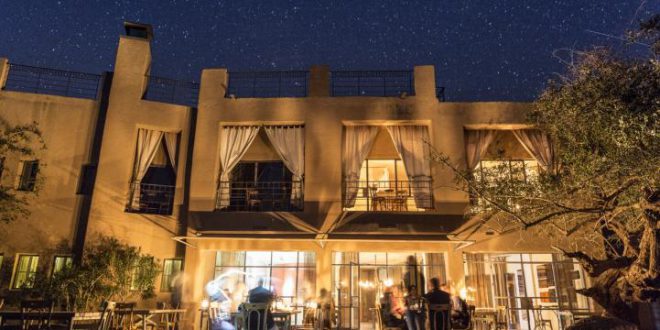
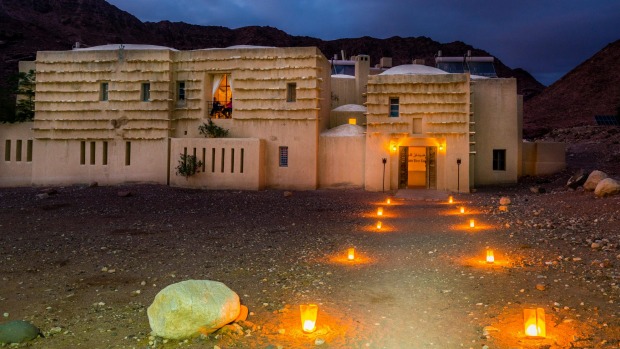
Feynan Ecolodge is one of the most basic and eco-friendly places in Jordan. It is also considered a top 50 eco hotel in the world. There’s no electricity in the hotel except for the kitchen, bathroom and showers. You won’t find plastic bottles, meat and alcohol – though you can bring your own.

The hotel is built in the middle of nowhere between the Dana Reserve on the mountain plateau and the valley where only four-wheel vehicles have access. The nearest road is miles away and the area is tough but good for a rugged hike and stargazing in the evening.

eco hotel jordan lite by candles, stars at night

At night, the hotel is lit by candles produced by the local Bedouin community.

eco hotel lit by candles

Rooms are nice but minimalistic while hefty price tag could be a big turn off for people used to luxurious accommodation or those who would rather choose one of many Bedouin camps in Wadi Musa and Wadi Rum. However, most visitors won’t stay more than a few days due to complete isolation from civilization. On the other hand, tourists who enjoy solitude can get the full board of breakfast, lunch and dinner. For most visitors, breakfast and dinner are included in the offer.

In the wintertime, the lodge can be freezing due to the lack of electricity so the hosts provide very thick blankets and hot water bottles. During the summer, the main issue is the scorching heat as temperatures range between 38 and 45 Celsius for most of the days between June and September.

The best period for hiking is fall and spring.

When it was established in 2005 by Jordan’s Royal Society for the Conservation of Nature, the Feynan Ecolodge was to offer travelers, particularly hikers and young people, the opportunity to learn more about untouched wilderness, the ancient history of Wadi Feynan and local communities.

Built as traditional waystations that are scattered throughout the Middle East and Central Asia, the Feynan Ecolodge uses solar panels while the inner courtyard is designed for stargazing or meteor showers.

In the Dana Biosphere Reserve

At the lodge, hot drinks and non-alcoholic beverages are served while guests can bring their own alcoholic drinks but are advised to use them discreetly because Jordan is primarily Muslim and alcohol is not permitted. Read more here about Muslims and alcohol.

Solar –generated electricity is used to light the bathrooms, kitchen, mobile phones and laptops. One can’t find an electric outlet in the rooms, but cameras, laptops and mobiles can be recharged at the front desk.

The lodge is smoke-free but travelers can go outside the lodge and smoke in a smoke-designated area. Because of the solar system, each room has enough hot water for the whole year.

The main outdoor activities are a sunrise hike, a sunset hike, the Feynan area plants, hiking between ruins of ancient civilizations and exploring famous mines. So hiking. Or doing nothing. Or exploring the area ion mountain bikes as well as interaction with local communities. Normally, hikes last between two and four hours and guests are escorted by a guide.

Spending a day with a local shepherd or cooking Arabic coffee, the weaving of a goat hair tent,preparing eye makeup called kohl and making arbood bread are interactive activities that would help a tourist understand the heritage of locals in Wadi Feynan. Highly recommended.

https://www.instagram.com/p/Bcl4XwEH1hi/

One of shortcomings of the lodge are flies especially in the summer and the lack of access for visitors with disabilities. The terrain around the hotel is very rough and the hotel has no elevator to the first floor.

To summarize, the ecolodge is an excellent place for travelers interested in meditation, extreme sports and physical isolation from modern civilization. Disadvantages are unreasonably high prices for a spartan accommodation, exposure to the elements –  hot summers and freezing winters – and a staff that barely speaks English.

If you are looking for wild travels in the Middle East or North Africa, try this eco hotel in Morocco