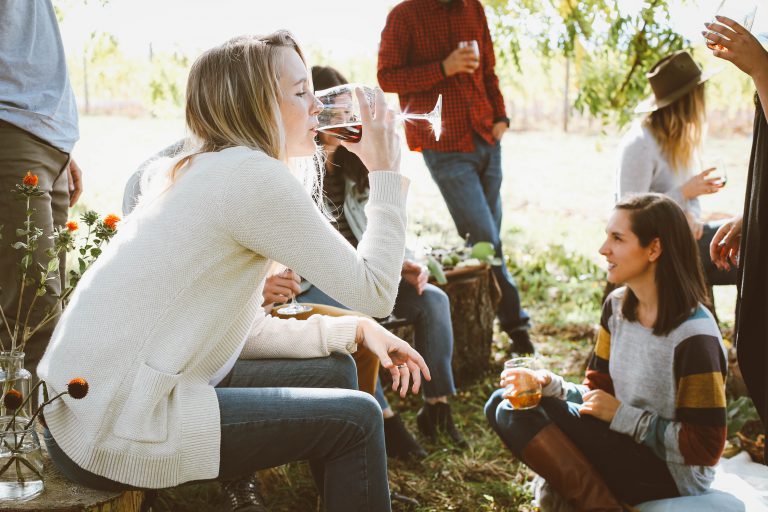
Peapod wine (get the recipe here) often associated with the classic British sitcom The Good Life, where the characters Tom and Barbara Good make and drink a potent “peapod burgundy”.
In the age of craft cocktails and artisan spirits, urban foraging and making the most out of the least, one unlikely throw-back is quietly making a comeback: peapod wine.
Once a humble “country wine” born out of thrift during hard times, it’s now being re-discovered for its simplicity, novelty and sustainable roots. The process involves simmering fresh green pea pods, discarding the pods themselves and fermenting the resulting infusion with sugar, grape concentrate (or raisins), yeast and other minimal additives.
Historically, peapod wine was born in rural kitchens where the shelling of peas left behind abundant pods and no desire to waste them. Rather than compost or discard, enterprising home brewers turned them into a light-bodied table wine. Vintage articles describe it as an old-school countryside favourite, and “a fine example of country wine thrift.”
The flavour profile is reportedly crisp, clean and surprisingly refined, with little trace of vegetal “pea” taste. Essentially, the fermentation and added grape concentrate mask the pod flavour, yielding a light dry white wine.
What’s driving the comeback? Sustainability. Up-cycling kitchen leftovers, minimising waste and making something homemade with basic ingredients resonates strongly with modern home-brewers and eco-aware drinkers. The DIY movement in fermentation (from kombucha to natural wines made from honey, even! ) has opened the door to recipes like this.
Also, the story and novelty add value: a wine made from what most would toss sparks conversation at dinner parties, tastings and small local producers seeking niche markets.
Want to make wine from your pea pods, or will you eat them raw?
That said, it’s not without challenges: sourcing enough pea pods in the right season, ensuring sanitary fermentation, that they are organic, and ageing time (many recipes suggest several months to a year before optimal clarity and flavour). If the pods are healthy and young, I’d probably just eat them raw.
But for those willing to experiment, peapod wine offers a bridge between heritage, sustainability and craft. It’s a reminder that innovation sometimes means looking backward — to what humble home-makers did when times were tough.
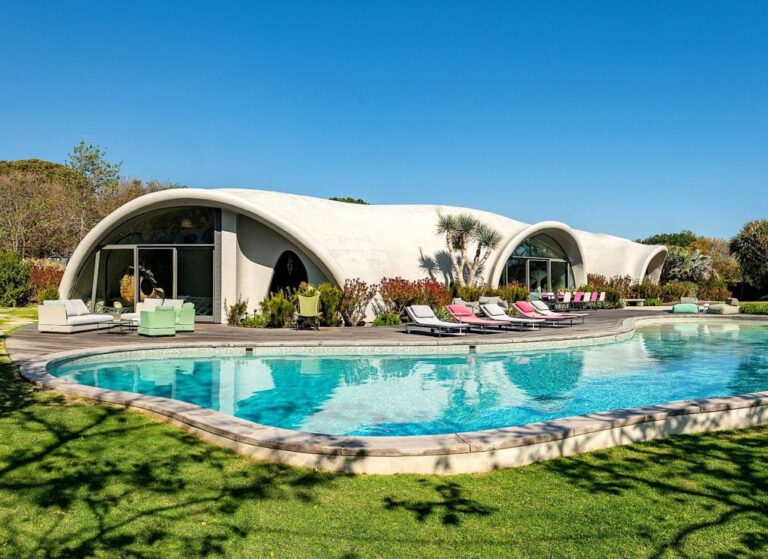
Robert Downey Jr.’s Binishell in Malibu. Courtesy of Nicolo Bini
Grocery prices and mortgages in cities are going through the roof. You’ve decided to go rural and you are looking at the options. What about an inflatable concrete home like the one built by Robert Downey Junior? If you’ve chosen this path, over superadobe, you wonder, how can you make the numbers work and make it sustainable? Read our article on inflatable concrete homes and how much they cost.
Let’s start: Imagine buying a modest rural plot, somewhere near Sudbury, Ontario, or in the Sierra foothills of California—and building a 1,000-sq-ft (93 m²) home using an inflatable-shell method like that created by Binishell. A flat, fabric form is inflated on-site and filled with a low-carbon concrete mix that hardens into a seamless, dome-like shell.
Binishell Robert Downey Junior home in Malibu
Inside, the walls are finished and insulated with hempcrete, a breathable, carbon-negative material that stores carbon as it cures. The entire build aims to reduce dependence on expensive mortgages, rising energy bills, and urban living costs while embodying resilience and ecological balance.
Because there’s no heavy scaffolding or formwork, construction is quick and more or less clean. Inflation and concrete pumping take a day; curing takes a week or so. The costs?
Ontario: Shell cost ≈ US $25–40 / sq ft.
California: Shell cost ≈ US $45–60 / sq ft.
After adding foundations (will you have a finished basement?), utilities, and finishes, total cost lands between US $120–16/sq ft—far below conventional rural builds, which often exceed US $250/sq ft. The finished home is highly energy-efficient: thick hempcrete walls and thermal-mass concrete stabilize interior temperature, lowering heating and cooling bills by up to 50%. Over 15 years, savings on mortgage and energy can reach tens of thousands of dollars. For people who want to start a regenerative farm or an online business in the country, this is a no-brainer.
Inflatable concrete house
Concrete’s carbon footprint is its biggest flaw, but newer mixes cut emissions dramatically. Take calcined-clay blends (LC³), fly-ash or slag substitutes, and carbon-mineralization technologies like CarbonCure which can reduce CO₂ output by 40 %. In California, renewable-energy credits further offset embodied carbon; in Ontario, pairing solar panels or micro-hydro with low-carbon materials can make the structure nearly net-zero.
Look out for hidden costs and restrictions. Some people prefer to buy land in unorganized townships to avoid too much government oversight. That doesn’t mean you can do what you want. Permits are still needed. In Ontario, you need a building permit for any new structure over 10 square meters (108 sq ft), or for any structure, including sheds, over 15 square meters (sq ft), depending on the municipality.
Hempcrete adds another layer of sustainability, absorbing CO₂ during curing and improving indoor air quality. Together, these materials turn a traditionally high-carbon building type into a model of circular design. Hempcrete is also fire resistant, and added bonus for people in forest fire prone areas in California.
The biggest barrier today in new sustainable building isn’t technology—it’s building codes. Inflatable concrete shells fall outside most standard residential classifications. In both provinces and states, permits require engineering certification, structural testing, and often a variance from conventional framing standards. Builders must collaborate with local inspectors early, providing proof of structural integrity, insulation values, and fire ratings. If you are into dealing with those hassles you can create a model home for your neighbors to follow.
Inflatable-shell homes offer a credible path to affordable, durable, and lower-carbon living. For those willing to navigate permitting and pioneer new methods, this approach could define the next generation of rural housing—fast to build, low in cost, and light on the planet. It always takes the first movers to start new dreams.
Inflatable Concrete Domes in Canada
The Monolithic Dome Institute (MDI) has helped bring air-formed concrete construction to Canada, proving that dome-shaped, energy-efficient homes can thrive even in cold northern climates. Its method, known as the Monolithic Dome system, relies on an inflatable air-form, steel-reinforced concrete, and foam insulation to create one continuous, highly durable shell.
In Yorkton, Saskatchewan (shown below), Canadian Dome Industries built a 40-foot (12.2 m) hemispherical home that demonstrates the system’s practicality and strength.
Another dome, located in central Alberta, measures 55 feet in diameter and was built off-grid in 2005. This structure uses passive-solar orientation, thick insulation, and thermal-mass concrete to remain comfortable year-round, reducing energy demand in both heating and cooling seasons.
Yorkton Dome in CanadaYorkdon Dome, finished
Construction begins with a flexible Airform membrane anchored to a circular foundation. The membrane is inflated to the desired dome shape, and workers spray its interior with polyurethane foam to form a stable surface. Steel reinforcement is attached to the foam, and layers of shotcrete (sprayed concrete) are applied, hardening into a self-supporting structure. The finished shell functions as roof, walls, and insulation all in one piece—eliminating many of the weak points found in conventional buildings.
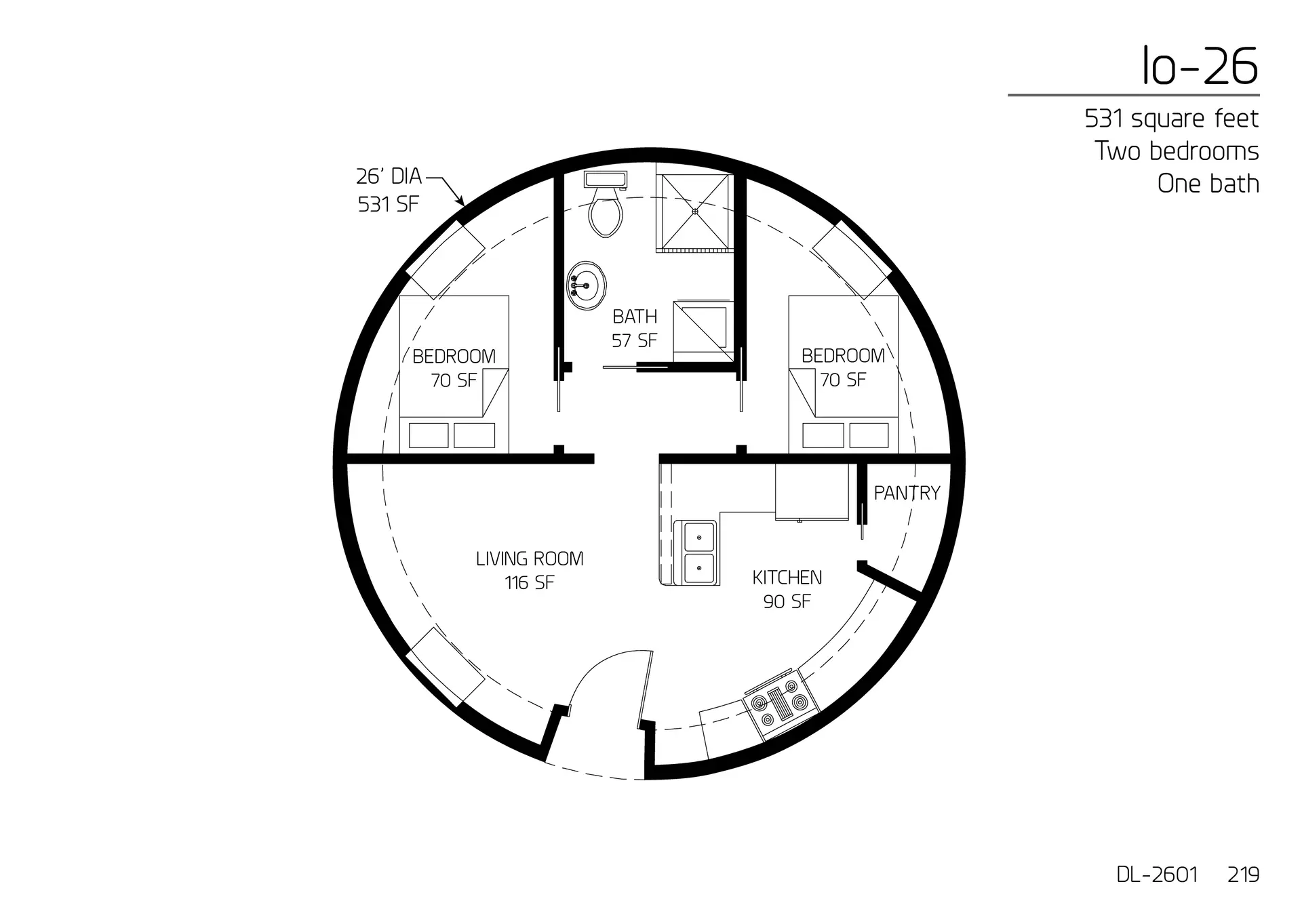
Monolithic dome planning
According to the Monolithic Dome Institute, these domes use up to 50% less energy than standard homes. Their rounded shape sheds wind and snow efficiently, making them highly resistant to storms, mold, fire, and pests—key advantages in Canada’s variable climate. We just need a new shape of bed to fit a square in a rounded room.
While MDI’s technique differs from newer “inflatable concrete bladder” methods—where the form itself is filled with concrete rather than sprayed over—the principle remains the same: air replaces formwork.
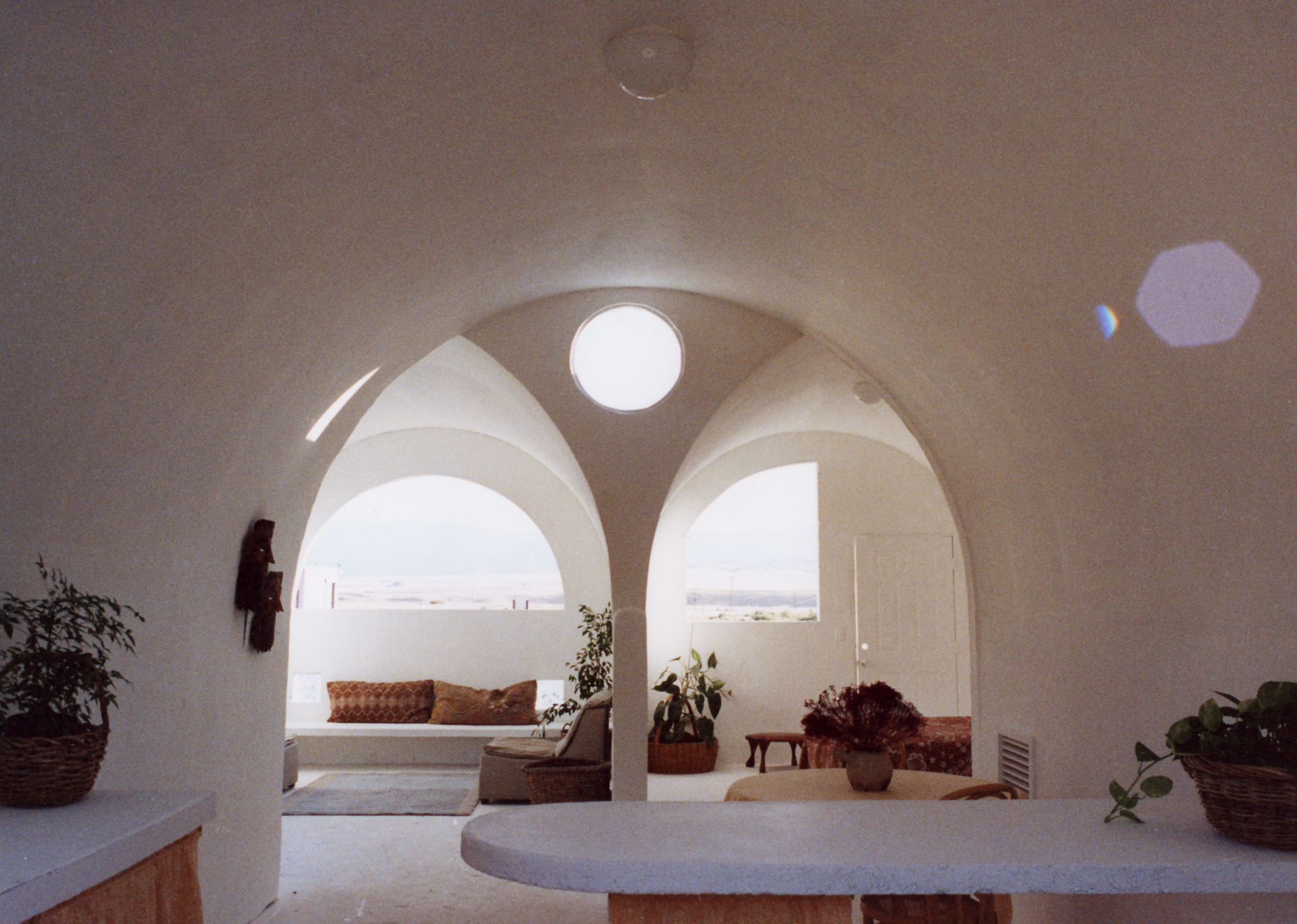
Inside a Binishell home
These Canadian dome homes demonstrate that air-formed, reinforced concrete shells are a proven, climate-resilient housing solution and a foundation for more sustainable, low-carbon building methods in the future. With builds for industry, the Monolithic Domes aren’t as pretty as Binishells.
What is an inflatable concrete house? Robert Downey Junior owns one. And they’ve been touted as costing a mere $3500 a build. An inflatable concrete house is a home whose structural shell is formed by using an inflated form or bladder, often made of fabric or drop-stitch material – see our article on Binishells. This form is then filled or coated with concrete—sometimes sprayed—to create a permanent, self-supporting shell. After the concrete sets, the inflatable form either remains as part of the structure or is removed.
A Binishell home, a modern eco-home works well in the warm, dry climate of California
There are several versions of this method, but the classic Binishell system was invented by Italian architect Dante Bini, and uses a large inflatable bladder laid on the ground. Reinforced concrete is poured or sprayed on top, then inflated so the shell lifts itself into its final domed shape.
Binishell homes for $3500
A newer approach developed by Automatic Construction employs inflatable flexible factory formwork—flat, lightweight drop-stitch fabric bladders that are transported easily, inflated on-site, and then filled with concrete to form both walls and roof. We can imagine that 3D printing concrete robots will be able to handle the lay-down of concrete in the future. Current designs don’t look great but are pilots in progress.
The company website states that their factory-made forms reduce on-site labour, transport cost, and job-site waste; they claim their buildings will cost “1/5th the cost” of standard cast-in-place concrete. Their website also notes that actual homes you can live in are “coming soon”.
Automatic Construction first pilots
Another experimental process, created by researchers at the Vienna University of Technology, uses pre-hardened concrete panels placed on an inflatable air cushion. When inflated, the panels lift and bend into their final curved geometry, a process known as pneumatic forming of hardened concrete. The research is coming out of TU Wien’s Institute of Building Construction and Technology, led by Professor Benjamin Kromoser and Professor Johann Kollegger.
Instead of pouring wet concrete into a form, the concrete is already cured, and the inflation pressure deforms it elastically, forming arches, shells, or domes. Once the desired shape is reached, it’s fixed in place with steel reinforcements or stiffening ribs. This technique allows the creation of elegant curved concrete roofs and shells without traditional scaffolding, molds, or 3D-printed supports.
The appeal of these systems lies in their efficiency and simplicity. Inflation and concrete filling can take place in a few hours instead of the weeks required for conventional formwork. Builders report significant labor and material savings, and dome or shell shapes provide exceptional strength and durability, even under severe environmental conditions. The method also carries a distinctive architectural character that attracts designers seeking expressive, futuristic, or minimalist aesthetics.
As for cost, estimates vary widely depending on design, size, and finishing.
Some small Binishell prototypes have been built for around US $3,500 using sprayed concrete over an inflatable form. Automatic Construction reports shell costs of roughly $10–$30 per square foot for 100- to 200-square-foot prototypes—far below standard homebuilding prices. The Vienna method is described as “quick and cost-saving” for double-curved shell structures, but specific dollar/€ cost numbers are not given in the available sources.
More conventional dome homes, which use similar air-form techniques, typically range between US $100 to 250 per square foot once fully finished. A 1,000-square-foot monolithic dome, for example, might cost about US $60,000 for the basic shell and around US $130,000 after interior finishing.
In all cases, actual costs depend on local labor, materials, foundation, insulation, utilities, and compliance with building codes—but inflatable concrete shells remain one of the fastest and potentially most cost-efficient structural methods emerging in contemporary housing design.
Superadobes built on this island in a greenwashing campaign
Caltech’s Nader Kalili invented prototypes for adobe dome homes (he called superadobes), earthen homes made to breath and which are sustainable at their core from a materials point of view, but this does not give them a pass if developers destroy islands like this one, in a quest to build a sustainable resort.
Adobe architecture
These are great solutions for rebuilding Gaza and Sudan with earthen homes, and for helping back-to-the-land movements create affordable homes that are healthy and safe. If you are in the space of sustainable home building, get this book Habitat. We’ve featured the editor Sandra Piesek here. It’s currently the best and more sober resource for land-based architecture of the people for the people. Some architects refer to it as vernacular architecture.
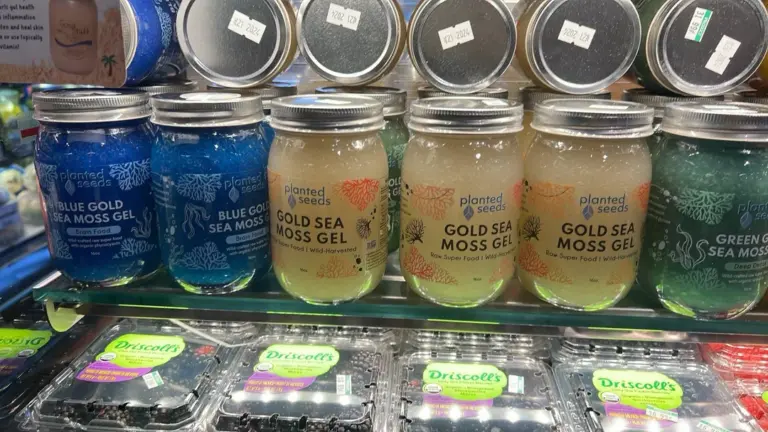
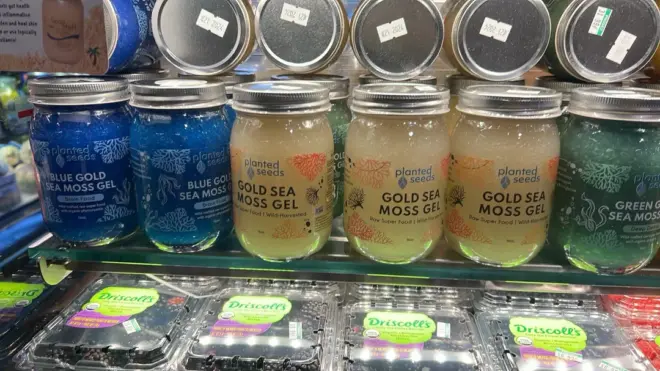
Sea moss became the new super-food when Kim Kardashian started talking about blending it into her smoothies. Fans following the trend claim that sea moss gives skin a new glow, raises energy, helps with weight loss, and keeps digestion, er, moving along. While it’s nice to think that a jar of mango or strawberry-flavored sea moss gel can change your life, it’s worth taking a closer look at the product before you invest your hard-earned bucks.
People living by the sea have gathered seaweeds for thousands of years as free and healthy food. Nowadays you can buy many varieties of seaweeds at the supermarket. Think of sushi, which is rice wrapped in nori seaweed. All good stuff, as long as you can be sure that the seaweed you buy has been sustainably harvested from pollution-free waters. More on that later. We’ve also posted about the benefits of a different superfood, spirulina.
Singer Azealia Banks makes her own sea moss blend, as posted on X.
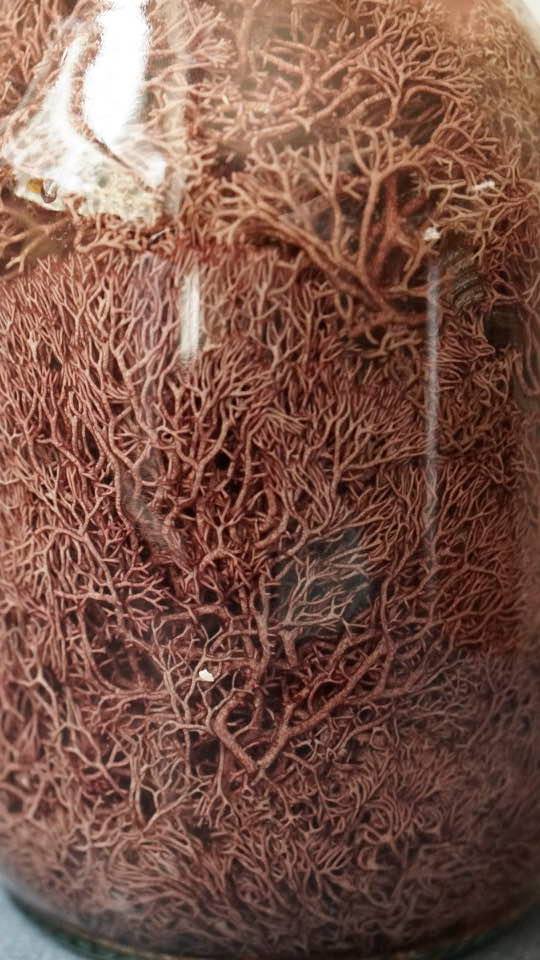
Commercially manufactured sea moss can come from different kinds of seaweed, although usually it’s the type known as Irish moss, or red algae. It’s soaked until the fronds become soft, then processed into gel, powder, gummies and capsules. It’s easy to blend into soups or smoothies, as gel or in powdered form.
Sea moss offers plenty of life-enhancing minerals and vitamins: calcium, folate, magnesium, vitamin K, and zinc, and iodine, a mineral essential for a healthy thyroid gland. It’s a natural source of carrageenan: a thickening and emulsifying agent in yogurt and ice cream, and non-dairy milks. Sea moss provides fiber too.
Yet too much iodine-rich sea moss can be harmful. Eating seaweeds in time-honored traditional ways is one thing; mixing a couple of tablespoons of gel into something liquid is another; and taking sea moss supplements is another thing yet.
“Some types of sea moss contain very high levels of iodine, and you could get more than your daily limit without realizing it. Going above the daily upper limits of iodine can lead to goiter, or an enlarged thyroid. The upper limit for adults is 1,100 mcg, but it’s less for children and teens.”
Seafoods, dairy, and eggs have iodine. Even some fruit and vegetables offer iodine: cranberries, strawberries, beans, spinach, and garlic are some. You could hardly overdose on iodine from eating normal amounts of fresh produce.
Sea moss from the Med Sea
“Sea moss supplements seem like an easy way to get the benefits of sea moss without the taste,” continues Oldham. “The problem is that the Food and Drug Administration does not regulate supplements, so you don’t always know what you’re getting.” Here we’re looking at the possibility of fillers and other un-labelled ingredients.
Oldham adds that sea moss growing in waters polluted with industrial runoff, heavy metals, and chemicals will naturally absorb all that garbage. If you if you’re interested in trying sea moss, look for brands that promise organic.
Blending two tablespoons of sea moss gel into your morning smoothie may safely fulfill the promise of boosted health and beauty. There are lots of glowing enthusiastic claims made for those benefits. But sea moss isn’t for everyone.
People taking medications for thyroid, high blood pressure, and potassium-sparing diuretics risk unpredictable interactions between sea moss and their meds. Sea moss may have blood-thinning properties, so those taking blood-thinning medication should avoid it.
Too much sea moss in your diet can cause nausea, vomiting, and diarrhea. Take no more than the standard 2 tablespoons of gel daily. It hasn’t been determined if sea moss supplements are safe for pregnant and breastfeeding people. Talk to your health practitioner before starting to supplement your diet with sea moss.
There isn’t enough research to validate claims that sea moss can slow the progress of Parkinson’s disease. True, there’s research on treating stiff, slow-moving worms with sea moss. No conclusions reached as to the possible effect on stiff, slow-moving humans.
Best, of course, is to eat a normal culinary portion of seaweed when you can. Are you lucky enough to harvest fresh sea moss from an unpolluted beach? Then you can make your own, safe gel. Here’s a recipe from webmd.com:
First, wash the sea moss and then soak it in cold water for a full day, changing the water frequently and removing any dirt you see. You can leave this on your kitchen counter to soak, as you don’t need to refrigerate it.
You’ll know your sea moss is ready to use when it’s doubled in size and has become white and jelly-like.
Once it’s ready, put the sea moss, along with some water, into a blender and blend until smooth. Start with 1 cup of water and add more if the mixture is too thick.Then refrigerate for at least 2 hours, which will thicken it some more.
Once you have your prepared sea moss, you can store it in the fridge for up to 2 weeks and use it in recipes. For instance: smoothies, soups, stews, baked goods.
You can also make sea moss gel from sea moss powder by blending 1/4 cup of powder with 2 cups of hot (not boiling) water in your blender. Cool the mixture and store it in your refrigerator.
Photo of fresh dried sea moss by Plateresca, Getty Images
A new study has found for the first time that magnetoelectric nanoparticles — tiny, wirelessly controlled particles activated by magnetic fields — can both locate and destroy pancreatic tumors in preclinical models, offering a potential new approach to minimally invasively treating one of the deadliest cancers.
The study was led by scientists and engineers at Sylvester Comprehensive Cancer Center, the University of Miami College of Engineering, Moffitt Cancer Center and Cellular Nanomed, Inc. The findings appeared in the issue of Advanced Science.
In the study, a single intravenous dose of these magnetoelectric nanoparticles (MENPs), when activated by a magnetic field inside an MRI machine, caused pancreatic tumors to shrink to one-third their size and completely disappear in one-third of the treated models. The treatment also more than doubled survival time, all without damaging healthy organs.
Unlike chemotherapy or surgery, this approach uses no drugs, heat, or invasive procedures. Instead, MENPs are injected into the bloodstream, guided by a small magnet to the tumor site, and then activated by the magnetic field of a standard MRI scanner. When switched “on,” the particles generate tiny electric fields that disrupt cancer cell membranes and trigger natural cell death — leaving nearby healthy tissue unharmed.
The approach could overcome key limits of existing electric-field-based therapies, such as tumor treating fields (TTFs) and irreversible electroporation (IRE), which require either wearable devices or surgical electrodes.
“This study brings us one step closer to connecting to the human body wirelessly to help it heal in real time,” said Sakhrat Khizroev, Ph.D., a professor in the College of Engineering and the study’s co-senior author. “We hope it opens a new era in medicine where technology can precisely target diseases that were once considered untreatable.”
The research shows how MENPs can be delivered directly to pancreatic tumors, where they are remotely activated by a magnetic field inside an MRI scanner. Once activated, the nanoparticles generate local electric fields that distinguish between healthy and cancerous cells based on their molecular properties, causing only the malignant cells to undergo apoptosis, or programmed cell death.
MRI scans confirmed that this treatment reduced tumor size and produced clear imaging signals, supporting MENPs as a powerful therapy and diagnostic, or “theranostic,” tool. Because the particles function without pharmaceutical drugs or biological reagents, the approach minimizes side effects and could eventually be applied to other difficult-to-treat diseases.
The idea of using MENPs to wirelessly control local electric fields was first proposed by Khizroev and Liang in 2011. Over the past decade, the concept evolved through global research partnerships and technological breakthroughs, culminating in this study.
Despite major advances in oncology, pancreatic ductal adenocarcinoma (PDAC) remains one of the deadliest cancers, with a five-year survival rate below 10%. It is projected to become the second leading cause of cancer-related death in the United States by 2030. Traditional methods, including surgery, radiation and chemotherapy, often harm healthy tissue, while newer approaches such as immunotherapy have shown limited success.
One of the greatest challenges in treating PDAC lies in controlling the electric fields that influence cancer cell growth. Because human tissue conducts electricity, it has been nearly impossible to manipulate these fields precisely inside the body.
The new findings suggest that MENP therapy could one day give patients a safer, more precise option.
Along the cold Pacific waters of British Columbia, Canada sea otters float belly-up, cracking shellfish on their chests. They look playful and carefree, yet inside their bodies something far more troubling is happening. A recent study of 11 dead sea otters found along B.C.’s coast revealed that every single one carried high quantities of eight different “forever chemicals” in both liver and muscle tissue.
These PFAS compounds—used in everything from food packaging and cosmetics to non-stick pans, water-repellent outdoor gear, and electronics—do not break down in nature. Over time they accumulate in the food chain, becoming more concentrated as they move from small organisms to fish and ultimately to top predators like otters.
One compound, perfluorooctanesulfonamide (PFOSA), once a key ingredient in Scotchgard, stood out. Its presence in multiple tissues signals long-term environmental exposure and a chemical load that these animals had no way to escape. Sea otters are more than charming coastal icons; they are keystone predators that keep kelp forests alive by controlling sea urchin populations.
When otters become sick or die, entire marine ecosystems begin to unravel. Their contamination is not a side note. It is a warning.
The danger does not end at the tide line. Humans eat the same shellfish and fish, swim in the same waters, and breathe the same coastal air. PFAS chemicals are already linked to fertility problems, hormone disruption, immune system suppression, cancer, and developmental issues in children. If sea otters are saturated with these chemicals, it raises a blunt question: what is happening in our own bodies?
While Canada has taken preliminary steps to regulate PFAS, efforts lag behind those in parts of Europe and the United States, where governments are moving to phase these chemicals out almost entirely. Here, the pace is slower, and monitoring remains limited. Meanwhile, each rainfall carries more PFAS into rivers and coastal ecosystems, and each product we buy that claims to “repel water or stains” brings the problem closer to our homes and oceans.
Saving sea otters is not simply about protecting a beloved species. It is about defending the health of coastal communities, marine food webs, and future generations. The toxins building up in otters are the same ones that build up in us, and their decline is a message we would be foolish to ignore. In the slick sheen of their fur and the stillness of their bodies on the shoreline lies a truth about modern life: we have filled our ocean with chemicals designed never to disappear, and now they are coming back to us through the creatures that depend on those waters to live.
If we want healthy oceans, healthy seafood, and healthy children, we must act before the kelp forests fall silent and the otters vanish from the Pacific coast. Their fate is tied to ours, and time is running out to change course.
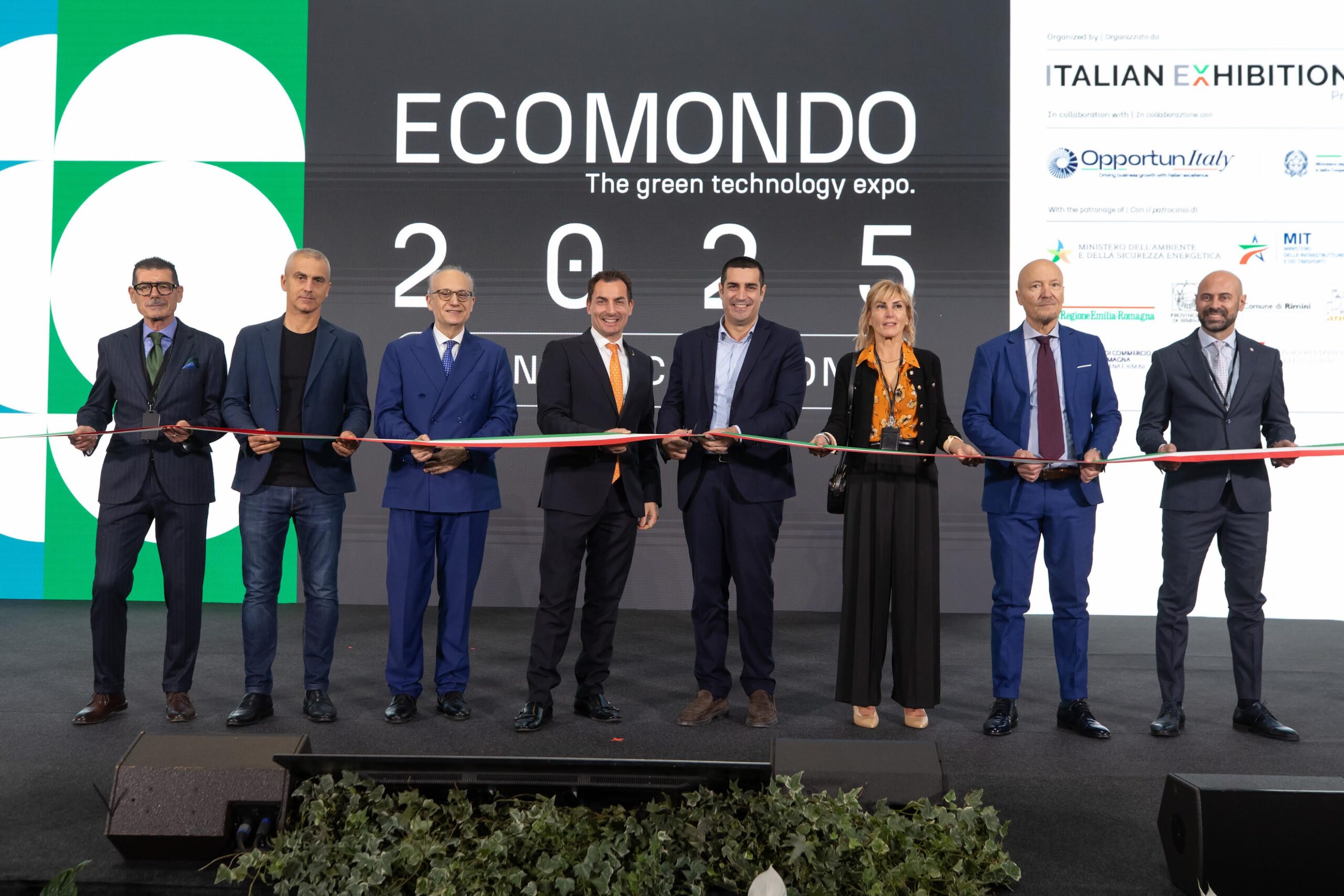
As the 28th edition of Ecomondo opens in Rimini, Italy it comes with a quiet truth that feels almost subversive in the era of climate mega-summits and scripted ministerial statements: this trade fair — full of waste-sorting robotics, composting technology, soil-remediation systems, and industrial biogas machinery — may now matter more to the planet’s future than the COP conferences that dominate global climate headlines.
COP has always been about diplomacy, negotiation, and political signaling. It is the global stage where nations gather to pledge emissions targets, debate loss-and-damage financing, and reaffirm their commitment to a shared climate agenda. It’s a place where people meet when the previous work has already been done.
But we are no longer living in a decade where promises are the substance of climate action. We are living in the decade of execution.
ANAS – CANTIERI STATALI. Incontro con Sindaco Alessandro Barattoni e tecnici Anas sui lavori della SS16 Adriatica e della Ss 67.
And execution does not happen in marble plenaries or UN press tents. It happens in exhibition halls like those in Rimini — in the sight of shredder lines turning textile waste into new feedstock, water-recycling systems being stress-tested, algae vats bubbling quietly, and biofertilizer reactors feeding regenerative agriculture.
In other words: COP is where the world talks about climate action. Ecomondo is where the world actually builds it.
This year Ecomondo brings together more than 1,700 exhibiting companies, 30 halls, 166,000 square meters of circular-economy innovation, 380 hosted buyers from 66 countries, and over 200 conferences led by industrial, academic, and regulatory experts. It’s a demonstration of scale — but not the theatrical scale of global diplomacy. It’s the scale of supply chains, of business models, of industrial ecosystems.
Walk through Rimini and the difference is instant: instead of panels debating ambition levels, you see companies demonstrating anaerobic digesters, next-gen composting infrastructure, optical sorters for plastic waste, textile-recycling machinery, aquifer-restoration systems, AI-enabled climate monitoring tools, lithium battery shredders, and sludge-to-fertilizer technology.
Europe’s emissions goals will not be met by pledges, but by infrastructure. The circular economy will not scale through slogans, but through procurement, factories, and financing models. And Ecomondo understands this.
The 2025 programme leans into the hardest industrial questions of the decade:
How do we close the loop on textiles under new EU rules?
What happens to 2030’s waste solar panels and wind turbines?
Can biogas and biomethane scale fast enough to displace fossil gas?
How do cities transform waste streams into economic resources?
How do we regenerate degraded soils at continental scale?
How do we secure critical minerals without opening new wounds?
COP’s theater vs. Ecomondo’s workshop
COP is necessary — it forces nations to face each other and acknowledge a shared emergency. But it is also a place of gesture politics, where governments announce recycled commitments, fossil fuel lobbyists measure influence, and energy companies pose as climate champions while expanding extraction.
In Rimini, the performance drops away. Nobody wins Ecomondo with a pledge or a photo op. You win if your system works, if your process scales, if a municipal department or multinational buyer signs a deal to decarbonize their operations.
Italy is not always positioned as a climate-policy powerhouse. Yet in circularity, water treatment, bioeconomy, and industrial ecology, it is quietly one of the most advanced economies in the world that knows how to dream –– and work.
In a global conversation often dominated by the U.S.–China technology rivalry, Ecomondo is a reminder: Europe’s strength is systems thinking. Decarbonization here looks like integration — circular supply chains, wastewater reuse, biobased feedstocks, land restoration, local manufacturing, and policy synchronized with industry.
Over the last month Saudi Arabia’s government-owned ACWA Power has signed roughly $10 billion in clean-energy and water-infrastructure agreements, stretching from the Gulf to Central Asia and Africa. On paper, it’s a renewables story as they erect gigawatt-scale solar farms, grid-scale batteries, and desalination plants powered by clean electricity. Development finance is flowing into emerging economies. The deals were signed at the Future Investment Initiative (FII9) in Riyadh known as Davos of the Middle East.
But strip away the slick branding and this feels uncomfortably like a new-era greenwash: the same wealth built on hydrocarbons now deciding the fate of clean power. One truth remains — oil money is now one of the biggest buyers of renewable infrastructure on the planet.
Should we cheer or flinch? It’s a moral knot: the petro-economies that fueled climate breakdown are now financing the transition — selling the sickness and then the cure. If this is the price of decarbonization, it forces a reckoning. Who gets to build the future? And why do we trust the arsonists to run the fire brigade?
ACWA’s largest shareholder is the Public Investment Fund of Saudi Arabia which is owned by Saudi Aramco. PIF’s finances come largely from oil revenue and Aramco dividends. Those petrodollars are now underwriting solar and wind farms abroad such as Uzbekistan’s vast steppe, North Africa’s desert grids, along with water-stressed coastlines from the Red Sea to the Indian Ocean.
The company announced the commercial commissioning of the Karatau Wind 100 MW Project in the Qorao’zak and Beruniy districts of Karakalpakstan, Uzbekistan. The project comprises 16 Envision Energy wind turbines of 6.5 MW each, a 15.4 km overhead transmission line, and a 220 kV substation, with associated Balance of Plant facilities. Electricity will be supplied under a 25-year Power Purchase Agreement to the National Electric Grid of Uzbekistan (NEGU).
For Africa, ACWA Power deepened its long-standing partnership with the International Finance Corporation (IFC) through two strategic agreements aimed at accelerating clean energy and water infrastructure deployment on the continent. The first Framework Agreement, valued at up to USD 1 billion, will provide project and corporate financing as well as capacity building and advisory support for ACWA Power’s growing portfolio across Africa.
This includes participation in the OPEC Fund for project financing, equity bridge loans, as well as equity investments support with USD 450 million as the initial target. “The agreement reflects the parties shared commitment to advancing utility-scale clean energy and water projects that drive inclusive, low-carbon growth across the developing world,” says ACWA, signaling its virtuousness as saving the world it is helping us destroy.
Halloween in Saudi Arabia
Saudi Arabia is modernizing, however, and this may open the monarchy up for criticism. Saudi Arabia let women drive in 2018, and this year users on social media showed how a Halloween party, considered haram by Muslims, was allowed to take place in Riyadh.
Swim suits Saudi Arabia
The country is scaling up for tourism and a culture shift by building megacity projects under the name of NEOM. Celebrities in favor of a great paycheck are already lining up to visit places like Shebara, a pristine island in the Red Sea built with no sustainability impact report.
View from above, Shebara in Saudi Arabia
This is not philanthropy but strategy. While Saudi Arabia can announce the “discovery” of a new oil reserve as a PR drill, consumers and oil importers will change loyalties the minute a university invents a way to create practical, unlimited, non-pollution energy. Saudis, whose wealth knows no limits, are building stakes in a post-oil world, and they’re doing it faster and more decisively than many Western democracies whose politics have stalled climate spending.
In Washington, clean-energy capital flows through regulatory funnels and election cycles. In Riyadh, it’s sovereign mandate and execution, but it’s complex because Saudis do not have convention ambitions in size and scale of anything they create, with little concern for the environment except “on paper”. See The Line.
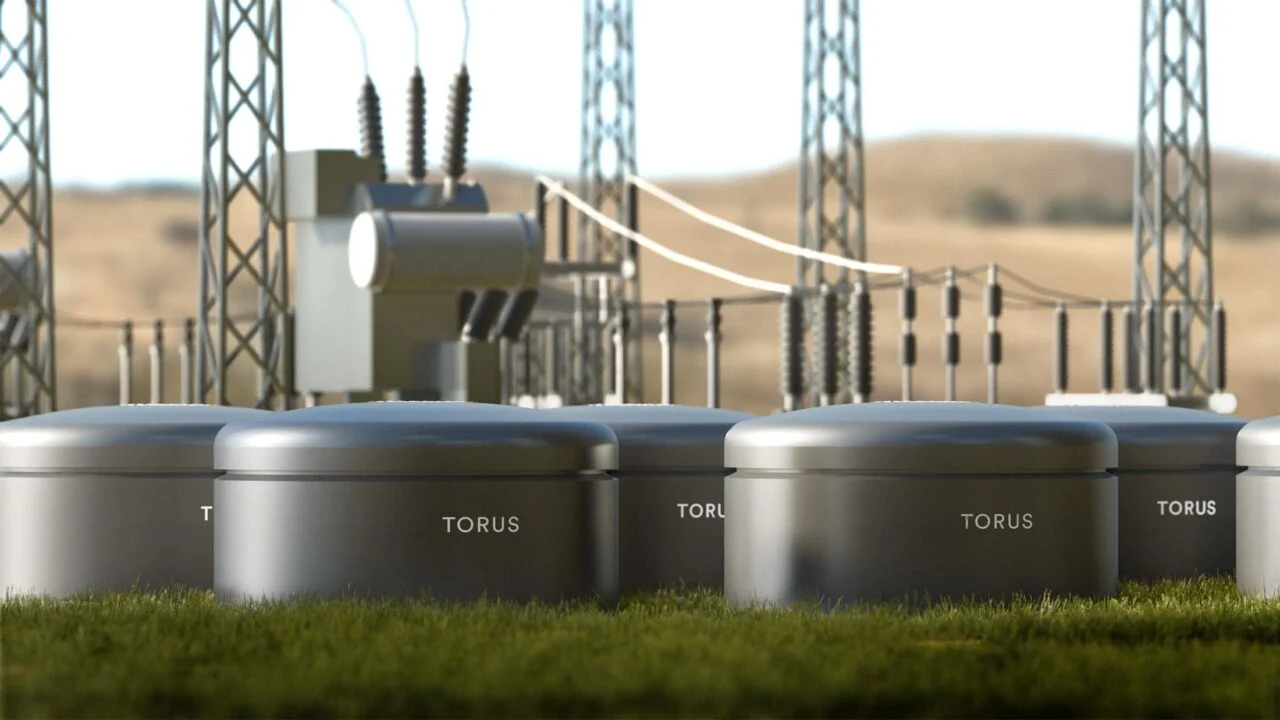
ACWA’s $10 billion announcement is about procurement, equipment orders, power-purchase frameworks, project finance. Meanwhile, the West is still arguing over heat pumps and carbon taxes. (Luckily Torus, connected to Warren Buffet’s company Berkshire Hathaway is putting practical energy in motion with a flywheel invention to stabilize the grid.)
There is a paradox here in every move ACWA and Aramco makes. Some call it green hypocrisy or hedging. But the more honest description is energy geopolitics moving into its next phase. Whoever builds and finances tomorrow’s grids will shape tomorrow’s trade routes, alliances, and dependencies — just as oil once did. So if you enjoy the west and your freedoms, fight for renewable energy independence by raising up and influencing projects and companies locally.
China understood this early through batteries, solar manufacturing, and Belt-and-Road transmission lines. Now the Gulf sovereigns have joined the board. They don’t want to be buyers of technology, but as builders and exporters of clean-power megaprojects.
The uncomfortable question is not whether oil money should fund renewables but maybe if anyone else can move this fast.
Investors debate between scaling up in Riyadh or Dubai, but the UAE will be the favored Middle East investment hub along with Tel Aviv insofar that conditions are made for great for employees, entrepreneurs and startups. A good business starts from the ground-up and co-working spaces give community and credibility to those who’ve outgrown the bomb shelter or second bedroom.
Emirates NBD, a banking group in the Middle East has partnered with Dubai’s own Letswork, a leading co-working workspace provider in the region, to offer bank employees access to over 4,000 coworking desks, meeting rooms and offices across the UAE and beyond. In Canada, leading banks are telling disgruntled staff working from home since COVID, that they need to come back to the office. What if there could be a middle way to large financial hubs in city centers? Could bank employees be shuttled around to co-work offices around the country?
According to the terms of the partnership, select Emirates NBD employees will join a 12-month pilot program to experience on-demand workspaces through Letswork’s intuitive platform, with the potential for wider rollout across the bank. The collaboration follows Letswork’s participation in Emirates NBD’s National Digital Talent Incubator Program, where early conversations between the bank and startup laid the foundation for this engagement and future ones.
The UAE is investing in AI and new businesses, including banks, will need places to work.
By leveraging Letswork’s secure and flexible platform, employees can book meeting rooms, coworking spaces and private offices instantly across over 100 hubs in Dubai, and more than 25 hubs in Abu Dhabi and the Northern Emirates, and additional international locations. according to a news release.
Aligning with the bank’s focus on excellence and customer service, the collaboration allows for greater flexibility and convenience when travelling for meetings in Abu Dhabi, with easy access to high-quality working and meeting spaces. It offers a more streamlined and efficient way to book external workshops and meeting spaces across the UAE through Letswork’s intuitive platform.
Letswork’s network of coworking hubs gives employees based in the outskirts of Dubai and the Northern Emirates to work closer to home thereby reducing commuting time and improving work-life balance.
Letswork was co-founded in 2019 by Omar Al Mheiri and Hamza Khan in Dubai, UAE. They identified a gap: freelancers and startups in Dubai needing flexible, affordable workplace options without the commitment of long-term leases. From one hotel partner in Dubai they expanded into a global network. It was modeled after WeWork, a global networking and office space provider. WeWork emerged from Chapter 11 bankruptcy in May 2024 after the U.S. Bankruptcy Court approved the company’s restructuring plan, which eliminated approximately US$4 billion in debt.
Before co-working spaces were a business model, communities organized their own community-focused and shared office spaces. As interest grew, so did the concept as a scalable business opportunity.
Coworking spaces are a sustainable choice as a multitude of businesses can share many resources such as machines and physical office space and meeting rooms, desk staff, marketing, kitchens and security.
Emirates NBD (DFM: Emirates NBD) is a leading banking group in the Middle East region with a presence in 13 countries, serving over 9 million active customers. As of 30th September 2025, total assets were AED 1.139 trillion, (equivalent to approx. USD 310.1 billion). The Group has operations in the UAE, Egypt, India, Turkey, Saudi Arabia, Singapore, the United Kingdom, Austria, Germany, Russia and Bahrain and representative offices in China and Indonesia with a total of 797 branches and 4,526 ATMs / SDMs. Emirates NBD is the leading financial services brand in the UAE with a Brand value of USD 4.54 billion.
Emirates NBD contributes to the construction of a sustainable future as an active participant and supporter of the UAE’s main development and sustainability initiatives, including financial wellness and the inclusion of people of determination. Emirates NBD is committed to supporting the UAE’s Year of Sustainability as Principal Banking Partner of COP28 and an early supporter to the Dubai Can sustainability initiative, a city-wide initiative aimed to reduce use of single-use plastic bottled water.
The global energy transition isn’t only about solar panels, electrolyzers, or the glamorous green-hydrogen whispers in Dubai conference halls. The revolutions come from the places the public hasn’t heard about, like an industrial campus outside Salt Lake City, where a company called Torus just secured $200 million to build a different kind of battery future.
Years ago when I interviewed the late David Anthony from 21Ventures, he told me his secrets to deal finding: hang out in laboratories and find the innovation before it gets to the tech transfer office. (Tech transfer offices have already done the due diligence and you’ll find deals there too, but they are no longer secret).
This story here isn’t lithium mining in the Andes or sodium-ion chemistry in Shanghai. This is physics, spooling at thousands of revolutions per minute and it started at a company called Torus.
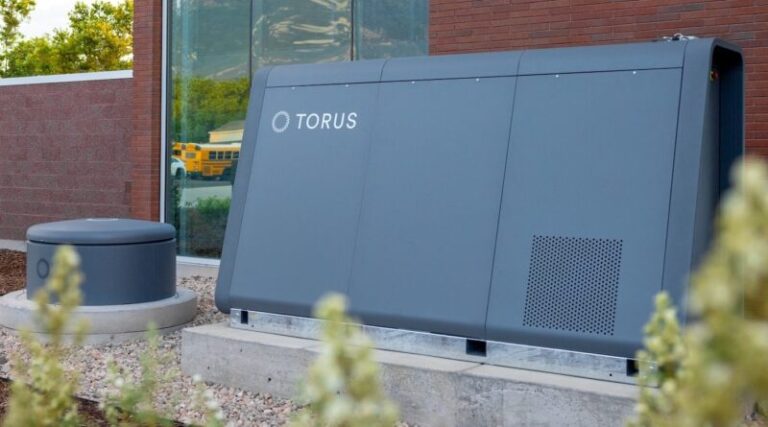
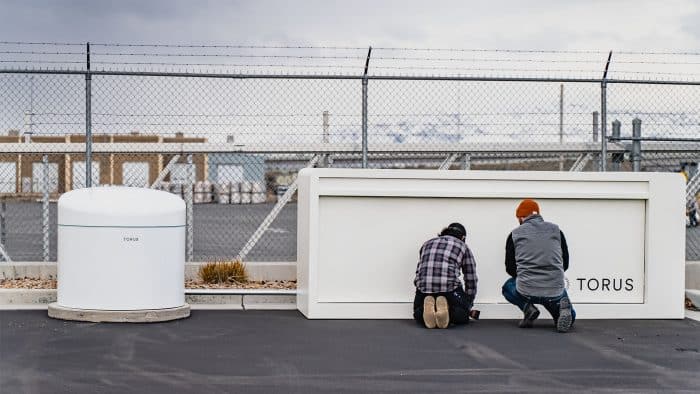
Torus combines flywheels — ancient devices (think pottery kick wheel) that store energy mechanically by spinning at high speed — with traditional batteries. The result is a hybrid system that can absorb and release power instantly, smoothing the chaos of electrons on a stressed electrical grid. A flywheel is like a spinning prayer wheel for the grid, storing kinetic intention, and releasing it stably when everything around it shakes.
In engineering-speak: “A flywheel comprises a rotating mass that stores kinetic energy. When charging, a torque applied in the direction of rotation accelerates the rotor, increasing its speed and stored energy,” explains Sandia National Laboratory. “When discharging, a braking torque decelerates the rotor, extracting energy while performing useful work.”
Flywheels are already powering parts of modern life. In big cities like London and Philadelphia, transit systems use flywheels to capture braking energy from trains and feed it back into the grid. In data centers at Microsoft and major telecom hubs, flywheel UPS units provide instant backup power before generators kick in.
Utilities from New York to Ontario use flywheel farms to stabilize the grid when wind and solar fluctuate. In space, satellites use flywheel “reaction wheels” to orient themselves without fuel. Even race cars like Porsche hybrids have used flywheels for rapid energy recovery and boost. This is proven tech, now scaling to the grid.
Why the world needs a stable grid?
Torus energy storage that uses a flywheel
AI and token-mining data centers are consuming city-scale power. The US grid is aging making it difficult to absorb new energy sources even when they become relevant. Extreme heat and cold events are becoming the new normal. And these factors influence whether or not the heating will go in Texas or Canada in the winter.
Torus’ new financing, led by Chicago-based Magnetar Capital, will scale a Utah manufacturing facility called GigaOne and push capacity beyond 1 gigawatt of storage within three years. Letters of intent are already on the table from PacifiCorp and Portland General Electric, both utilities managing real-world wildfire risk, winter storms, and transformer-meltdown summers.
Michael Cooper, our trusted in-house investment researcher from 36North says that Warren Buffet is the model for all investment students of the world to follow. So this latest round and interest in Torus by PacifiCorp caught his attention.
“As an investor, I am most excited by the potentially lower risk environment whereby industry is combining disciplines and technologies from physics to chemistry to build products and solutions. This stage is more rewarding than exploring theoretical physics or pure chemistry,” he says.
Though still private, Torus has already attracted major utility interest, including letters of intent from PacifiCorp and Portland General Electric—early signals that its technology is transitioning from promising pilot to grid-relevant infrastructure. Berkshire Hathaway (Warren Buffett’s conglomerate) via its subsidiary Berkshire Hathaway Energy (formerly MidAmerican Energy Holdings) owns PacifiCorp.
In a blog post on September 9, Torus CEO and co-founder Nate Walkingshaw described the company’s “modular power plant” technology in somewhat flowing terms, though the basic point is the key point. Flywheels are more responsive than conventional batteries, and batteries support the duration factor.
“The magical combination of flywheels, batteries, chipsets and cyber security appliances allows us to respond in milliseconds, and stay online with 99.9% uptime,” Walkingshaw said. “This year we have been deployed by our utility partners nearly every day to assist them with frequency and voltage support plus assisting our customers with peak shaving, emergency back-up and power quality concerns,” he added.
Torus
Lithium batteries are miracles we use every day and they are in our phones, laptops, Teslas. But lithium alone isn’t enough to stabilize a renewable grid. Batteries degrade. But flywheels don’t degrade the same way. They don’t catch fire. They don’t care if it’s −20°C or +50°C. They can discharge and recharge millions of times.
This isn’t a moonshot investment but one that Warren Buffett could get behind. Torus already runs a 400-MW manufacturing facility and it has purchase orders in the pipeline and has signed a memorandum of understanding (MOU) with Rocky Mountain Power (a division of PacifiCorp) to deploy up to 70 MW of its hybrid flywheel + battery storage solutions in Utah, Wyoming and Idaho.
“This partnership highlights our commitment to exploring new technologies and optimizing infrastructure as we work to meet the energy demands and challenges over the next decade,” said Dick Garlish, President of Rocky Mountain Power.
How flywheels work to store free energy
The opportunity is enabled through Rocky Mountain Power’s industry leading virtual power plan, specifically the Wattsmart Battery program. The partnership will deploy Torus’s cutting-edge Nova Spin and Nova Pulse technologies across multiple sites. These innovations allow for real-time response and deliver twice the lifespan of traditional batteries.
“Working with Rocky Mountain Power at this scale demonstrates the growing recognition of demand response as a crucial tool for modern utilities,” said Walkingshaw. “As Utah attracts more data centers, manufacturing facilities, and technology companies, reliable and affordable energy becomes even more critical. Our technology improves grid resilience and efficiency while supporting Utah’s vision for energy abundance that will power the next generation of economic growth.”
The story here isn’t that flywheels will replace lithium batteries but that the energy future will be stacked, layered, and hybrid.
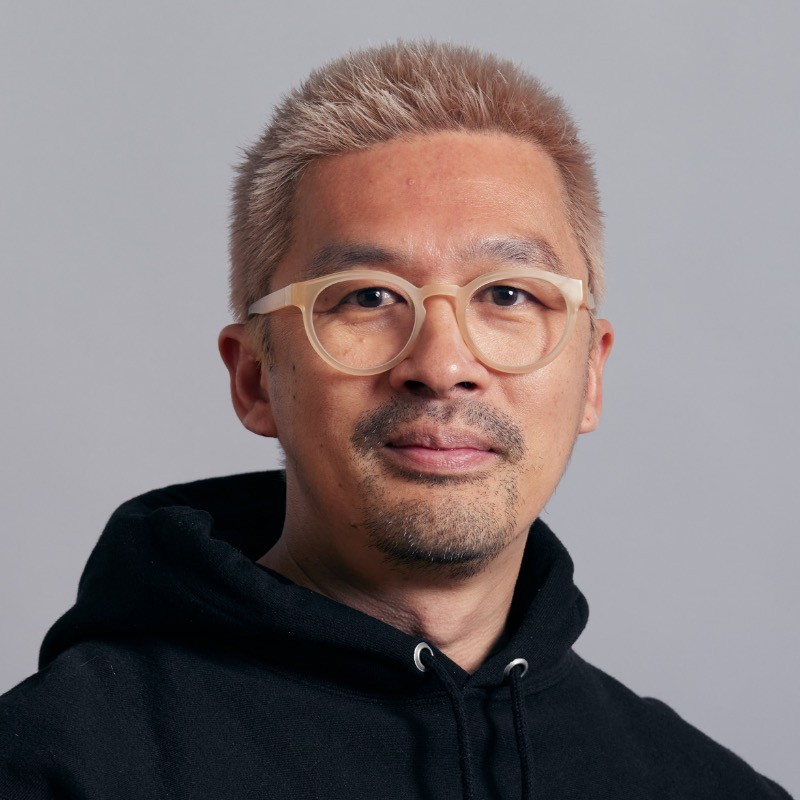
Gilbert Lee, Torus
Torus Inc., based in South Salt Lake City, Utah, was co-founded in 2021 by systems-engineer-turned-entrepreneur Nate Walkingshaw and energy technologist Gilbert Lee, with a vision to build a grid-storage platform that blends the physics reliability of flywheels with the flexibility of batteries.
The company has grown to roughly 70 employees as it scales its “GigaOne” manufacturing campus and deploys hybrid storage systems for utilities and data centers. Torus recently secured $200 million in growth capital from Magnetar Capital to boost production capacity beyond 1 GW within three years, following earlier funding that valued the company at approximately $535 million.
Belém’s COP30 puts forests, freshwater and oceans at center stage. How are emerging markets treating nature as infrastructure— and plugging it into finance and trade. We know that the world has reached the coral tipping point, and as you are busy saving the trees and oceans, know how activists, locals, banks and business can work together. Learn the lingo of finance mechanisms to help save the planet.
Everyone will cover the headlines from the United Nation’s climate conference, this year called COP30 and which is in Belém, Brazil. Fewer will explain the mechanics of how nature becomes cashflow, trade leverage and resilience infrastructure—especially for the Global South. That’s the gap we’re filling. Green Prophet offers a practical question: what instruments exist right now to turn living systems into value chains that stand up to droughts, floods and supply-chain shocks? And how can MENA, Africa and Latin America lead instead of only react.
Know your terminology if you want to follow the conversations in the room
Blended Finance
Econcrete restores coastal habitats with low-cost concrete that mimics a natural shoreline.
Blended finance is the engine room. Public and philanthropic “first-loss” capital de-risks deals; commercial investors come in behind. The aim is to move beyond pilot projects into pipelines that pay for restoration at scale. The World Bank’s recent review shows a surprising depth of activity in nature-based infrastructure, with millions of people already benefiting from coastal and watershed projects that reduce disaster risk while growing local economies.
Let’s take an example we can get behind: Imagine there is huge project to fix a coastline that’s getting destroyed by storms over and over again. We know that planting mangrove trees and building natural barriers to protect homes and schools works. But who pays for this, especially in developing nations like Thailand, where government money might be tight, especially on small islands.
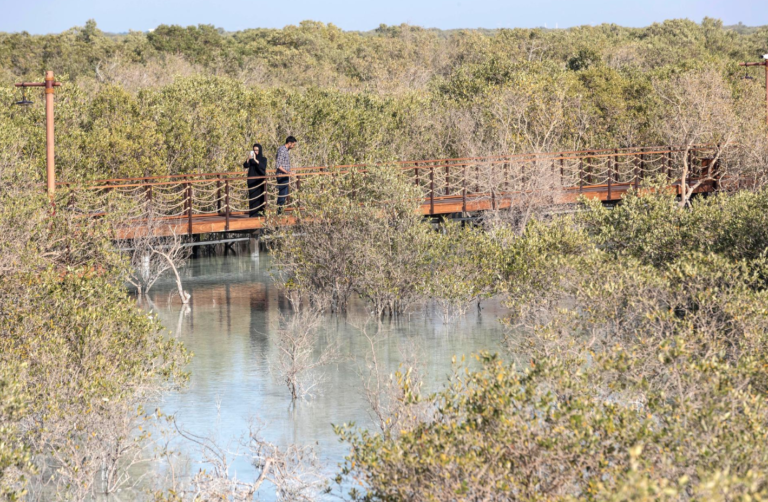
Thailand’s, and Saudi Arabian mangrove forests can help mitigate climate change by keeping rising tides and storms at bay
The problem is that it costs a lot to plant and maintain mangrove trees and natural barriers, and even less natural ones like the ones built by Eco-Concrete in costal areas of New York. There is a lot of good reasons why protecting coastlines are good: tourism, business and stability to invest in a region pay off in the long term.
So how does blended finance work? Big investors might not build a university or a business center in an at-risk area like Indonesia because its islands are at-risk from flooding. They watch as government and charities go first to build pilot projects. These groups take the first losses and are buffered to do so. When investors see a project or pilot is working, the investors and banks can join in.
The end result is that if it’s a project on island resilience, and it’s done well with the local community, the fishermen get more fish, the houses and infrastructure don’t flood, and tourism and businesses in the area improve. Now instead of the government or local municipality working to clean up new disasters as they happen, the community and investors protect a community and its economy.
Where this is doing well: Indonesia: planting mangroves to protect coasts and create jobs, in Kenya where they are restoring forests to secure water for cities and farms and in Colombia, where they are rebuilding riversides to stop floods and boost tourism. The World Bank found millions of people already benefiting from nature-based projects like these. They’re not just experiments — but are becoming real business pipelines.
Debt for Nature Swaps
Debt-for-nature swaps are also keywords you will hear coming out of COP30 and debt-for-nature is having a moment. By refinancing sovereign debt of a nation and locking savings into conservation endowments, countries can protect mangroves, reefs and forests while improving fiscal stability.
The Bahamas’ swap—backed by private guarantees and insurers—unlocked roughly $124 million for ocean protection and mangrove recovery. Expect more hybrids like “blue bonds,” watershed bonds, and biodiversity-linked notes as COP30 pushes nature up the finance agenda.
Canada is beginning to explore similar nature-finance mechanisms. They are offering grants for businesses that support climate change initiatives. While small island nations pioneered debt-for-nature swaps, the logic applies anywhere natural assets protect economies. Take the St. Lawrence River and the Great Lakes Basin. This is a freshwater system worth trillions in trade, shipping, drinking water, hydropower, and fisheries — yet it faces rising storm surges, coastal erosion, surges in algae blooms, and biodiversity loss.
Imagine a Canadian “watershed bond” modelled on the Bahamas’ blue bond play: federal and provincial governments refinance aging municipal debt in water-adjacent cities like Toronto beaches, Kingston, Thunder Bay, and Windsor. Interest savings are then routed into a protected watershed fund to restore wetlands, rebuild fish nurseries, and reinforce natural floodplains that protect ports and neighborhoods.
Who backs it? Pension funds like CPP Investments, insurers hedging climate risk, and Indigenous-led stewardship trusts that secure long-term governance. Satellite and LiDAR data verify improved water quality, carbon storage, and flood protection — giving investors confidence that nature isn’t just a moral win, but a balance-sheet asset.
Nature Markets
Circle farming in Holland uses AI and nature together.
Nature markets are growing up fast — and not just carbon trading. Investors and governments are starting to put real contracts behind things like restoring habitats, protecting species, and improving fisheries. In the past, these ideas lived in Canva or PowerPoint presentations and pilot projects that didn’t go far beyond the anecdote stage. Today, they’re showing up in legal agreements, budgets, and deal pipelines.
What changed? Measurement tech and startups working in the impact space. We can now track how many fish return to a reef, how much flood damage is avoided when wetlands are restored, or how many species come back when forests regrow. When you can measure nature’s value, you can finance it. Also, investors found that impact companies can return significantly higher returns on investment.
The early winners will be projects that do more than one thing: reduce carbon, protect coasts, boost fishing incomes, create jobs, and improve water security. In short, projects and companies that score high in ESG. Instead of selling just one benefit, they’ll earn money from many revenue streams. The future natural economy isn’t supposed to be about charity — it’s revenue, resilience, and concepts like regenerative agriculture working together.
What to watch at COP30
A Brazil rainforest
Belém in Brazil may be remembered as the summit where nature moved from a side-event to system change. If you are there at the event, Look for bigger blended-finance vehicles for forests and watersheds, standardized biodiversity/ecosystem credit frameworks, clearer guidance on how trade tools like CBAM and deforestation-free rules interact with development and equity goals, and concrete deals in the Amazon and beyond that link restoration to export growth.
Media attention will swirl around politics, but the durable story is finance and how data can turn ecosystems, including jungles and seashore towns, into resilient value-chains.
A conference “for peace” in the Mediterranean, funded by the EU and which demonizes Israel in its core
The European Institute of the Mediterranean (IEMed) in Barcelona, a so-called peace making think tank for the Mediterranean Region, is hosting the twelfth edition of its Aula Mediterrània lecture series—27 talks spanning politics, migration, and culture under the banner of “Thinking about the Mediterranean of the 21st Century.”
At first glance, it looks like a celebration of regional dialogue and academic exchange. But beneath the polished program lies a troubling current of politicized bias that calls into question the values the European Union claims to uphold: fairness, democracy, and balanced dialogue.
This year’s series devotes significant attention to the Israeli–Palestinian conflict—yet the framing of that attention is anything but balanced. One talk is titled “Palestine’s Maritime Rights vs Israel’s Bully Take Over: An Exit Path.” Another accuses the European Union of “Complicity, Silence and Double Standards.” Later in the schedule comes “The Fifteen Wars of Israel against Gaza,” a phrase that reads more like an activist slogan than a scholarly topic.
Not a single lecture explores Israel’s security concerns, democratic institutions, or peace efforts. Or how the Arab world works to combat terror. There are no Israeli speakers, no balance, and no nuance—just repetition of a single narrative that paints one country, and one people, as the villain of the Mediterranean story.
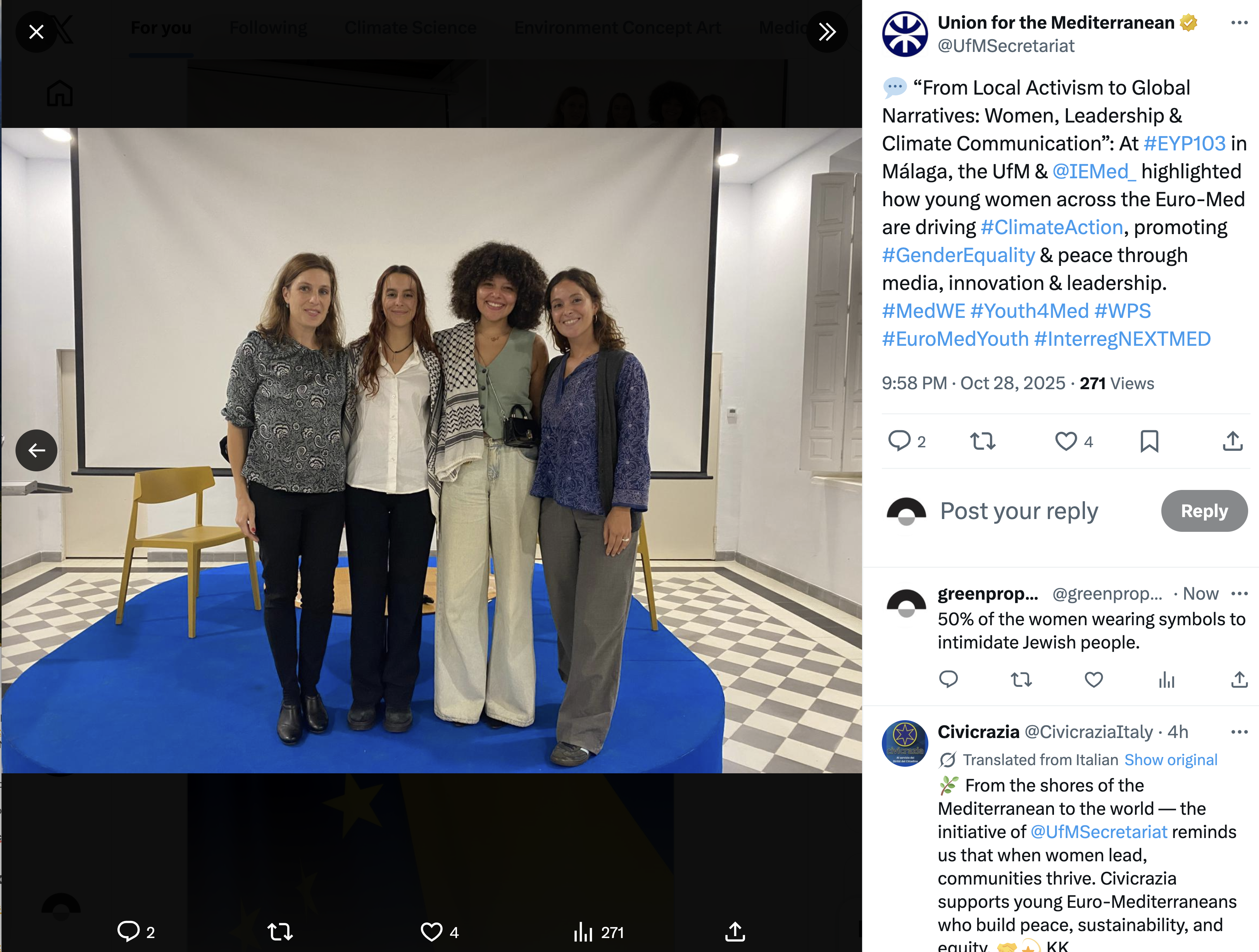
The Union for the Mediterranean, funded by the EU and the UN engages in the same flavor of dialogue when it comes to environmental issues and climate change. See the women on stage in keffiahs meant to virtue signal and intimidate Israelis and Jews. I have written to their directors, and spokesperson multiple times about exclusionary policies against Israelis and Israel data in the Mediterranean. No reply.
Union for the Mediterranean hosts climate events but turns them into a political spectacle.
That is not dialogue. It’s dogma.
When European taxpayers fund programs through institutions like IEMed, they do so under the promise of promoting mutual understanding and academic rigor.
Instead, Aula Mediterrània has become a platform for the normalization of anti-Israel bias wrapped in academic legitimacy –- and offers credit when you attend these lectures online. By platforming speakers who describe Israel’s policies in loaded, accusatory terms—without offering countervailing voices—the event risks turning the European lecture hall into an echo chamber for politicized grievance.
The EU’s own policies call for cultural initiatives that strengthen democratic debate, not replace it with monolithic thinking. How does a lecture that calls Israel a “bully” advance understanding between “both shores of the Mediterranean,” as the program claims? How can we speak of inclusion when the only Jewish and Israeli perspectives are erased from the conversation?
There is a dangerous irony in a publicly funded institution promoting exclusion under the guise of inclusion. Europe’s academic landscape is increasingly shaped by the politics of one-sided empathy—solidarity for some victims, silence for others. This is not just unfair; it is anti-democratic. True scholarship depends on the freedom to debate, to test ideas against evidence, to listen even when it is uncomfortable. By indulging in moral absolutism, Aula Mediterrània abandons the very foundations of intellectual democracy.
If the EU wishes to preserve credibility as a defender of democracy and dialogue, and the Arab world aspires to become a democracy in any shape and form, it must ensure that the institutions they fund and support reflect those principles. Supporting events that vilify one democratic state while romanticizing its enemies sends a message of hypocrisy, not harmony.
The Mediterranean deserves better—an academic space where truth, complexity, and compassion coexist. Until Aula Mediterrània embraces genuine pluralism, European taxpayers should ask a simple question: why are they paying for propaganda?
For an easy, luscious appetizer, wrap a semi-firm white cheese like Brie or feta in grapevine leaves and bake or grill it. It’s a delicious way to make the most of a few grapevine leaves left in the jar after you made mushrooms cooked in grapevine leaves or grilled fish..
The cheese becomes subtly flavored with an earthy, tangy note from the leaves and olive oil. Then there’s the wow factor when you unwrap the cheese and reveal the soft, spicy feta, or release the gooey, luscious Brie from the toasty grape leaves.
As always when cooking brined grapevine leaves, first rinse, then drain them, and pat dry. Snip off any stiff stem pieces.
First, the fluffy grilled feta…
Feta Grilled In Grapevine Leaves
Seasoned feta cheese grilled in vine leaves
length kitchen twine
scissors
8 large brined grape leaves (rinsed of salt and drained)
A block of feta of approximately 7-oz (200 grams)
Olive oil
Sprinklings of: dried oregano or za’atar leaves; sumac; ground pepper
2 tsp grated lemon peel
Put down a layer of grape leaves large enough to wrap the block of feta, depending on their size. Place the cheese on the center of the layer.
Dribble olive oil over the cheese.
Season with sprinklings of the dried herbs and pepper and grated lemon peel.
Wrap the cheese in the leaves as you would wrap a package. If needed to contain the cheese, place a leave over the top and fold in the sides.
Tie kitchen twine around the package. Brush with olive oil.
Grill the cheese package 3 minutes on each side.
Snip open the twine. Leave the cheese on the leaves to stay warm.
Serve immediately.
Appetizer
Mediterranean
cheese, Easy, edible leaves
And here’s your melty, rich baked Brie…
Brie Baked In Grapevine Leaves
Rich and gooey baked Brie
4-6 large brined grape leaves
1 Brie cheese of about 7 oz. – 200 grams (at room temperature.)
1 tblsp. olive oil
Garnishes of choice
Pre-heat the oven to 375°F – 190°C .
Rinse and dry the grapevine leaves. Cut away any stems.
Arrange the leaves to overlap in a circle.
Rub the olive oil into the Brie on all sides.
Place the cheese on top of grape leaves. Wrap it completely in the leaves.
Place the wrapped cheese on a baking sheet and bake 8-10 minutes.
The Brei will have melted: be prepared with a spatula to lift it off the baking sheet and onto your serving dish.
Spread the cheese on good crackers or crostini for a lovely start to a meal for four, or an intimate dinner for two.
To accompany the salty feta, put a selection of raw sliced vegetables on the table. Slice bell peppers, carrots, celery, even raw button mushrooms if they’re very fresh and perfectly white. If you want a mildly sweet flavor contrast, firm apples and pears also complement grilled feta.
Mild baked Brie pairs well with seasonal fresh fruit like grapes, figs, apricots, apples, or pears. No fresh fruit on hand? All sorts of dried fruit work too; in fact some favor a dried fruit garnish for the concentrated sweetness.
Don’t stop at feta or Brie. Goat cheese and mozzarella are also very good baked in vine leaves. Season with herbs as in the feta recipe above, or not, as you choose, but always dribble olive oil generously over the cheese before you wrap it in the leaves, and brush a little more over the wrapped package.
Photo of feta cheese on vine leaves via BBC Food.
Photo of Brie wrapped in vine leaves by Alexandra Tran via Unsplash.
Black cats banned for adoption so they won’t be used in witchcraft or as Halloween props
In early October, the Spanish town of Terrassa, north of Barcelona, made headlines for taking an unusual step to protect its feline population. From October 1 to November 10, all adoptions and fostering of cats — particularly black ones — have been suspended. The local animal welfare service said the measure was taken “to prevent possible risk … derived from superstitions, rituals, or irresponsible uses” during the Halloween period.
The announcement, made on October 6, echoes a growing concern among animal-welfare groups in Europe and North America: that black cats face abuse, abandonment, or death around Halloween. The folklore that links them to witches and bad luck still casts a long, dangerous shadow.
According to Noel Duque, Terrassa’s councillor for animal welfare, adoption requests for black cats tend to spike each October. Some people, he told the local Diari de Terrassa, want them “for ritual purposes” or “as decoration because it’s cool.”
On his own Facebook page, Duque sits next to a ginger cat — a small sign of solidarity with the animals he’s sworn to protect.
In previous years, Spanish shelters reported disturbing incidents: cats adopted as “Halloween mascots” and later abandoned, and others used in occult ceremonies. While many of these claims are difficult to verify, the risk is real enough for Terrassa to take precautionary action. “We cannot look the other way when faced with a grim topic,” Duque said.
The stereotype of the black cat as an omen of death dates back to medieval Europe, when cats were believed to be witches’ familiars. Despite centuries of scientific progress, superstition still dictates their fate each October. Social-media trends have made matters worse: black cats are sometimes adopted as props for Halloween photo shoots, only to be discarded afterward.
Terrassa’s policy is not absolute. “Exceptions will be duly justified and assessed by the technical team of the centre, where there is a full safety guarantee and a reliable history of the applicant,” the municipal welfare office said. Regular adoption procedures will resume after November 10, though the city hasn’t ruled out making the seasonal ban permanent.
Terrassa is home to more than 9,800 cats, according to municipal data — a population that lives quietly among its 220,000 residents. The temporary ban forces the town, and perhaps the rest of us, to confront a deeper contradiction. How can a culture that loves animals and fills social media with cat memes still tolerate cruelty in the name of tradition or aesthetics?
Halloween began as Samhain, the Celtic festival marking the boundary between life and death — a time to honor ancestors, not harm the living. Terrassa’s decision reminds us that compassion, not superstition, should guide how we celebrate.
So when the candles flicker this Halloween and black cats cross your path, consider it not a curse but a challenge — to outgrow our ghosts and protect those still paying for them.
We talk a lot about renewable energy, electric cars, and ocean cleanup projects when we talk about sustainability. But the fight for a greener planet often starts closer to home — behind the supermarket, in the back of a hotel, or inside a city recycling depot. Waste management doesn’t usually grab headlines, yet it’s one of the most immediate ways to cut emissions, save resources, and make sustainability practical instead of theoretical. Enter the unsung hero of modern recycling: the humble trash baler.
For decades, managing waste has meant hauling it away and hoping someone else deals with it. Trucks burn fuel, bins overflow, and recyclables get contaminated long before they reach a processing plant. But that model doesn’t really work anymore. As landfills fill up and the global waste stream keeps growing, cities and businesses are realizing they need to handle more of the problem right where it starts. The trash baler is part of that shift — a simple, industrial tool helping to reshape how we think about sustainability.
Rethinking Waste From the Ground Up
The old take–make–dispose model has been under pressure for years. Urban centers from Dubai to Los Angeles are wrestling with the logistics of waste that just won’t stop coming. Every delivery, every product, every plastic wrapper adds to a growing mountain of materials that, ironically, could have been reused if only they were managed better.
That’s where trash baler come in. By compacting waste — especially recyclable materials like cardboard, plastic, and paper — balers make it possible to keep materials clean and organized at the source. Instead of sending dozens of half-empty bins to a landfill, businesses can store compressed bales for recycling, reducing both transport costs and carbon emissions. It’s a simple fix, but it’s quietly powerful.
Small Machines, Big Change
A trash baler doesn’t look revolutionary. It’s a vertical machine that presses waste into neat, stackable cubes. But the ripple effects are huge. Less volume means fewer trucks, less fuel burned, and less air pollution. For small businesses or apartment complexes, that’s a direct line between everyday operations and measurable sustainability progress.
Companies like Bramidan USA have refined this technology to make it even more efficient and easy to use. Their vertical balers are designed for shops, restaurants, and warehouses that want to handle recycling in-house. The result is cleaner waste streams, less mess, and a lot less waste ending up where it shouldn’t.
It’s worth noting that many businesses adopt these machines not because they have to, but because they want to. They’re tired of paying for overflowing dumpsters and unreliable waste pickups. When people see that sustainability can save them time and money, it stops being a buzzword and starts being common sense.
Why Local Waste Management Matters
If you’ve ever watched a recycling truck weaving through city streets, you’ve seen the problem firsthand. Most of what we call “recycling” still depends on long-distance transportation and centralized sorting facilities. Those systems are energy-intensive and prone to contamination — the dreaded mix of wet food, plastic wrap, and paper that renders recyclables useless.
When businesses use balers, they can separate and compress materials on-site. That means cleaner recyclables and fewer rejected loads. The material that leaves the premises is ready for reprocessing, not another round of sorting. Multiply that across thousands of small operations, and suddenly local waste management becomes a genuine climate solution.
It’s not glamorous work, but it’s exactly what sustainability needs more of: everyday, scalable efficiency. You don’t have to overhaul an entire supply chain or build a new power grid to make a difference. Sometimes you just need to manage your trash better.
From Waste to Resource
In the circular economy, waste doesn’t really exist — it’s just material waiting for its next use. Compacted bales of cardboard and plastic have value. They’re easier to sell, ship, and recycle. Instead of paying to throw waste away, businesses can often make money by selling these materials back into the recycling market.
That small economic incentive turns sustainability from a burden into a business case. When you can quantify the savings — fewer pickups, lower disposal fees, extra revenue — it changes how organizations think about environmental responsibility. Sustainability stops being a side project and becomes part of daily operations.
The Human Side of Waste
There’s something almost poetic about it. The more we automate and globalize, the more sustainability comes back to something simple: caring about what we leave behind. Waste management might not feel as exciting as solar panels or carbon capture, but it’s deeply human. It’s about cleaning up after ourselves and doing it a little better every year.
That’s why machines like the trash baler are quietly revolutionary. They give power back to people and businesses to handle their own waste responsibly. They make recycling visible and tangible. And they remind us that progress isn’t always about new inventions — sometimes it’s about using old ideas more intelligently.
Making Sustainability Practical
Sustainability can sometimes sound like a lofty ideal, something reserved for big corporations or government programs. But in reality, it’s built on small, repeatable actions. Every time a store compacts its cardboard instead of throwing it away, every time a logistics center reduces its trash pickups, the planet benefits.
That’s what makes the story of the trash baler worth telling. It’s proof that practical, everyday choices can scale into real environmental progress. Machines like these are redefining what sustainability looks like — not as an abstract goal, but as something you can switch on, load up, and actually see working.