Home Blog Page 100

Jaffa’s home-roasted coffee and music curated at Ada Hanina Cafe

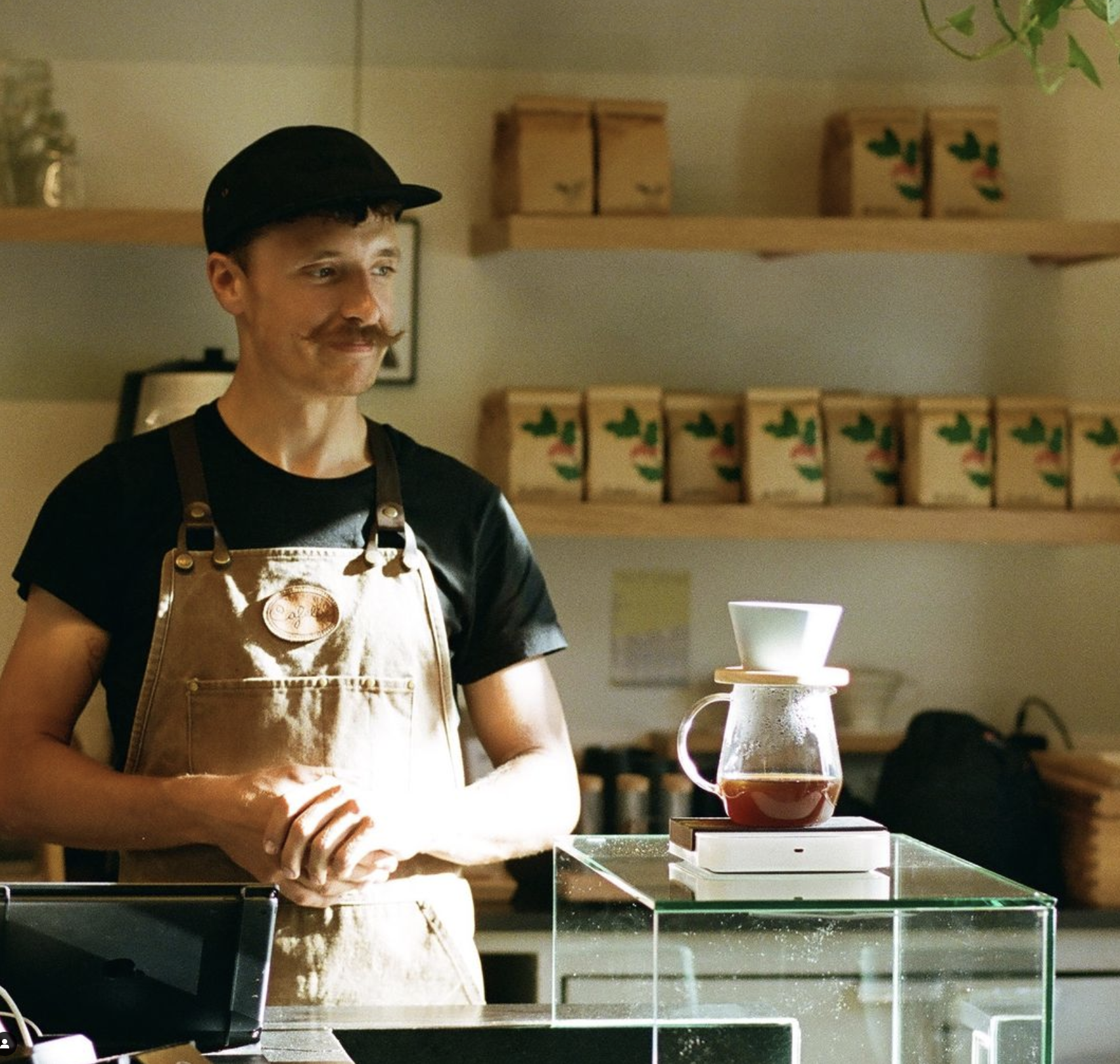
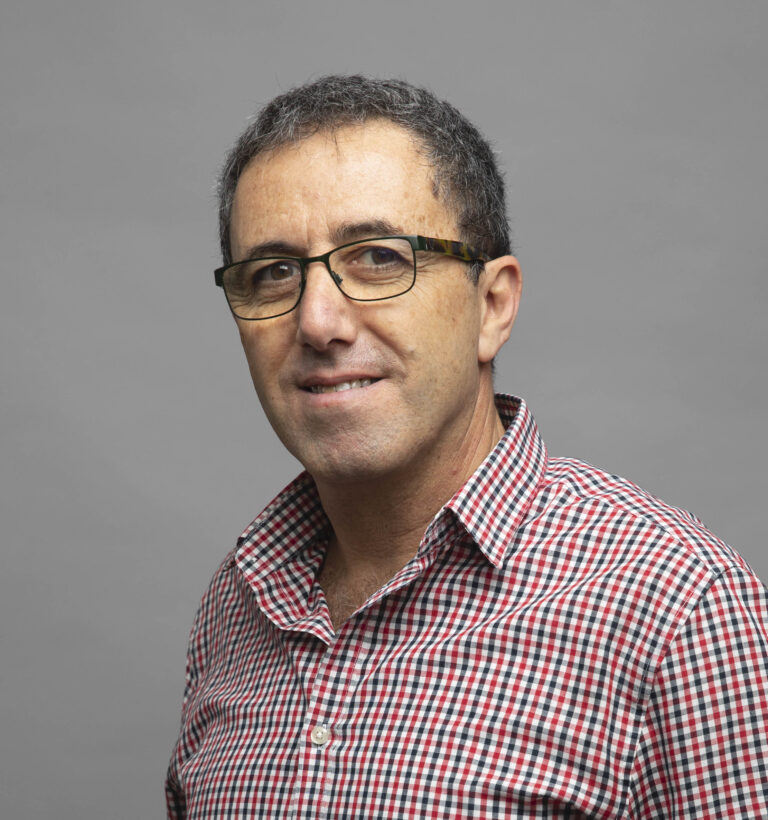
picture of Tomer inside Ada Hanina Cafe in Jaffa
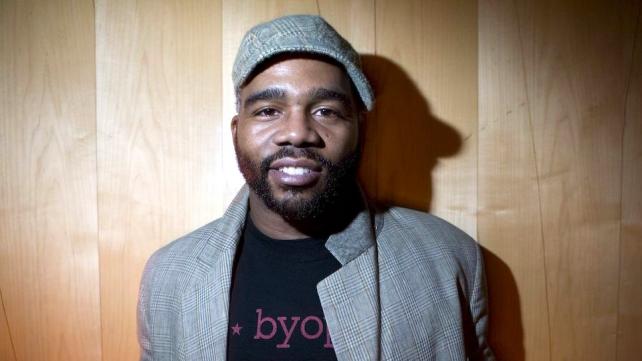
Tomer Adam Lenzinger, the mastermind behind Ada Hanina Cafe

In the beautiful streets of Jaffa near the Flea Market, Ada Hanina Cafe is a marvellous cafe must-try, an exquisite and artistic coffee shop offering the highest quality coffee. As a coffee guru who enjoys trying different coffee shops, Ada Hanina Cafe is unlike any other.

Owner Tomer Adam Lenzinger has been running this cafe for four years now and hasn’t disappointed. With his well-crafted blends featuring both dark and light roasts from the best coffee bean destinations in the world, you are guaranteed a fabulous cup of coffee.

What makes Ada Hanina stand out like any other cafe is how Tomer integrated his love of music into the design of the cafe. An element that stands out once you walk into Ada Hanina is the large stereo speaker and sound system. Either Tomer himself will play music or he will bring in others to play.

Tomer told me he plays music as often as he can, and he will play vinyl. For him, it’s all about the experience of a cafe, and for that reason, he designed the shop with two doors, so you can go in and go out. “It’s all about the vibe,” Tomer said, “a cafe is about talking, exchanging, taking a break, falling in love, or writing a book.” Coffee brings people together, he said and that was what was important in the designing and planning of the cafe, blending all these aspects into one.

picture of the stereo and sound system inside Ada Hanina Cafe

Sourcing his own beans, applying fair trade

The source of Tomer’s coffee beans comes from far and wide: including Africa, Brazil, Columbia, Guatemala, and more. The farmers they work with are the best, specifically the ones in Africa, the beans are wild and are picked by hand, never purified, and no use of chemicals or salts. You can watch videos of the farmers in action on their Instagram. The whole idea, says Tomer, is having fewer hands between us and the farmer. In addition, whatever is not used in the selection process gets composted.

The farmers in Ethiopia are being taught how to harvest and package more sustainably. It is important to Tomer that the farmers in Ethiopia are receiving at least 70% of the profits. Over in Brazil, the terra farmers in Brazil are the first and best rainforest alliance coffee farm. Overall, Tomer strives to have the best connections between him and his farmers to ensure quality coffee is delivered to his customers.

picture of the different coffee blends inside of Ada Hanina Cafe and the menu

Sustainable water

Like I previously wrote about in my article on Tel Aviv’s Vegan Fest vegan festival, Ada Hanina cafe also has vegan options. The most common milk option they use is Oatly oat milk, (you can make your own at home) which is used 70% of the time in the cafe.

According to Tomer, almond milk takes away from the flavor of the coffee and just turns the coffee into an almond flavor. He also is not a fan of the popular trend in America of flavor additives, which are sugary and are used to disguise the taste of bad coffee. In addition, Ada Hanina only sells water in boxes to take away from the plastic waste issue.

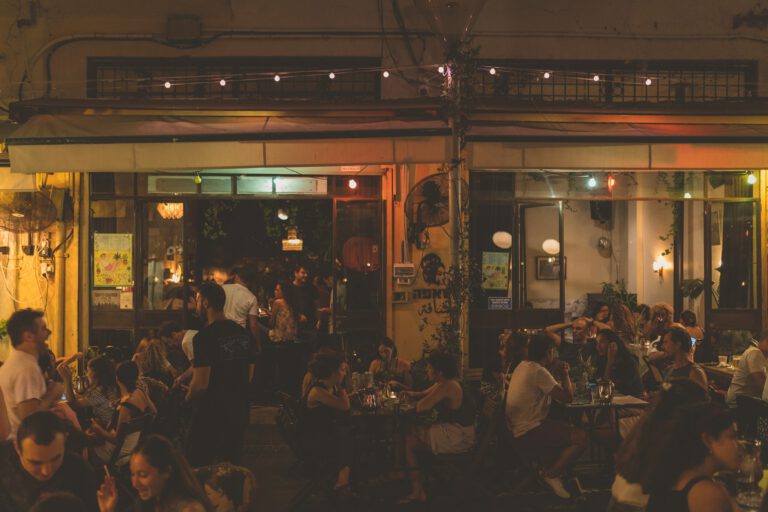
customers at Ada Hanina Cafe in Jaffa
Streetview of customers at Ada Hanina Cafe

The straws are from the Upper Galilee and are made of real straw. Tomer believes the biggest environmental issue in Israel right now is the issue of plastic, and wishes there were to-go cups for the cafe that were made of sustainable material. He also thinks there should be more green electricity and says we are moving way too slowly in our efforts to make energy all renewable.

Picture of the boxed water that is sold at Ada Hanina Cafe
Boxed water reading: “Drink water from a paper box and leave fewer footprints”

His favorite thing about his job is having customers come up to him and tell him that this is the best coffee they’ve ever had. He enjoys guiding his customers through the coffee selection process and finding the perfect coffee for them. The inspiration behind the cafe is all about having “a very, very good coffee with very, very good music around,” Tomer said emphasizing the very. He’s met people all around the world at coffee conferences who tried their coffee and asked him why he doesn’t bag it and sell it all over the world.

I had a coffee with oat milk, which Tomer said was made with about 20 hand-picked cherries, each having two seeds inside. I also had one of their best sellers and one of Tomer’s favorites, the Worka Wuri blend from Ethiopia, made wild and in an anaerobic process, meaning it was made fermented without oxygen.

It was delicious and had notes of flowers and fruit. Tomer most importantly wants to share with people the beauty of coffee and have access to taste the high-quality coffee beans that are offered inside his cafe in Jaffa. I highly recommend checking out Ada Hanina and asking Tomer all about his coffee. Check out our Green Guide to Jaffa for more sustainable travel ideas.

picture of the drinks I got at the cafe: a coffee with oat milk and the water in a box
A cold coffee with oat milk and the boxed water
picture of the Worka Wuri coffee at Ada Hanina Cafe
The Worka Wuri coffee, an Ethiopian coffee blend

The tradition of honey in Yemen

0
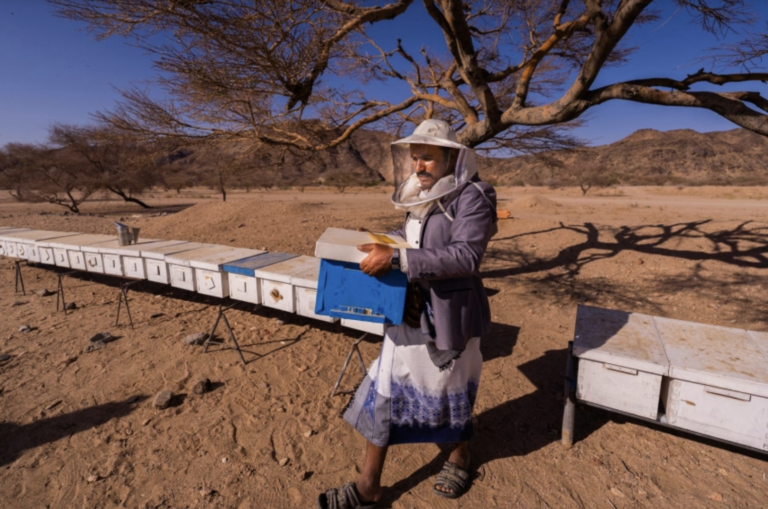
Yemen beekeepers keep ancient tradition alive
Yemen beekeepers keep ancient tradition alive. Now they get support from the UN/credit FA

Yemeni honey has a history going far back into antiquity, tracing its origins to the tenth century BCE and gaining global fame for its quality. So not surprisingly, this golden liquid is found in practically every Yemeni home. It helps to sweeten many social events and is not only prized for its nutritional and social qualities but also regarded by Yemenis as having medicinal value. It is the first thing a woman eats after giving birth, while a patient usually licks honey before visiting a doctor.

But the production of Yemeni honey faces daunting challenges. In addition to the damage done by the country’s long-running conflict, honey producers like Salem Al-Diwali must also grapple with the unpredictable climate. In the dry season, pastures are depleted, and beekeepers must buy the pollen grains that are the main source of nutrients for the bees. When the beekeepers cannot afford to meet the high transport costs for these grains, hives are sometimes abandoned.

Although, at the age of 41, Salem has been keeping bees for more than 15 years in Abadan village in Shabwa Governorate, he has recently changed his approach, after taking part in trainings under the Smallholder Agricultural Production Restoration and Enhancement Project (SAPREP) of the Food and Agriculture Organization of the United Nations (FAO) and the World Bank. The initiative is part of the World Bank’s broader Global Agriculture and Food Security Program.

The SAPREP has helped beekeepers across Yemen to increase their productivity and nutrition through better beekeeping practices. These included more efficient handling of the bees and techniques for extracting honey.

The initiative also provided participating beekeepers with modern beehives and tools, allowing them to increase the quality and quantity of their production and earn more income to enhance their families’ food security.

Bees make a sweet business

beekeeper honey in Yemen, holding and inspecting hives
Beekeeping is a traditional form of agriculture. Supporting beekeepers supports our planet

For Salem, making the most of his honey business involves a significant daily commitment. He inspects his hives, observing bee movement and the amount of honey in the hive. Other crucial elements to monitor are the stock of pollen grains and nectar and the condition of the queen bees. By observing their activity, he can decide whether to transfer queens to different hives to increase output.

He must also juggle the responsibilities of being married with seven children and a lifestyle, which like many Yemeni beekeepers uphold, is partly nomadic. He spends a portion of his time trucking his hives around in search of the best bee pastures and avoiding the worst of the country’s harsh climate. Once he has found a suitable spot, he sets up his hives away from fields on which farmers have been using pesticides. But he often enlists the help of villagers to ensure the safety of his bees, turning the cultivation of honey into a “team effort.”

Salem has been able to grow his operation, though he admits it took a great amount of effort. He says he greatly benefited from the FAO training on how to extract raw wax and better monitor the production of pollen and amber.

As one of the beneficiaries of SAPREP, he received eight beehives, a water tank, a sorter to separate honey from wax and sheets of base wax on which bees can start building a honeycomb. This allowed him to upgrade his hives and increase the total number to 30, translating into increased yields of honey and wax.

Even so, Salem believes that despite the position which honey holds in Yemenis’ hearts, the lack of markets for it in the country does not reflect the high quality of the product. In fact, he keeps some of the honey collected at home due to the stagnation of the local market.

Confronting challenges as a beekeeper

Not surprisingly, one overwhelming factor influencing both supply and demand is the conflict, with explosions decimating many of Yemen’s beehives, especially at the beginning of the violence in 2015. Many of the obstacles faced by beekeepers, such as rough roads, are related to the conflict, making the transportation of honey, beehives and pollen a challenge. Then there are the additional challenges of poor rainfall, pests including bee flies, bee-eaters and wasps and the weak state of the Sidr trees, which provide a unique flavour to Yemen’s honey.

Despite these setbacks, the honey value chain plays a key role in food and nutrition security in Yemen and provides income for an estimated 100 000 beekeepers in the country. There is also huge potential for further development. FAO and the World Bank, under the Yemen Food Security Response and Resilience Project, are encouraging farmers to take beekeeping as an alternative income generating activity.

Thanks to such initiatives, smallholder beekeepers like Salem, are increasingly able to confront some of the challenges, continue producing the world-famous Yemeni honey and just perhaps look forward to sweeter times ahead.


The largest vegan food festival, Vegan Fest and it’s in Tel Aviv

0
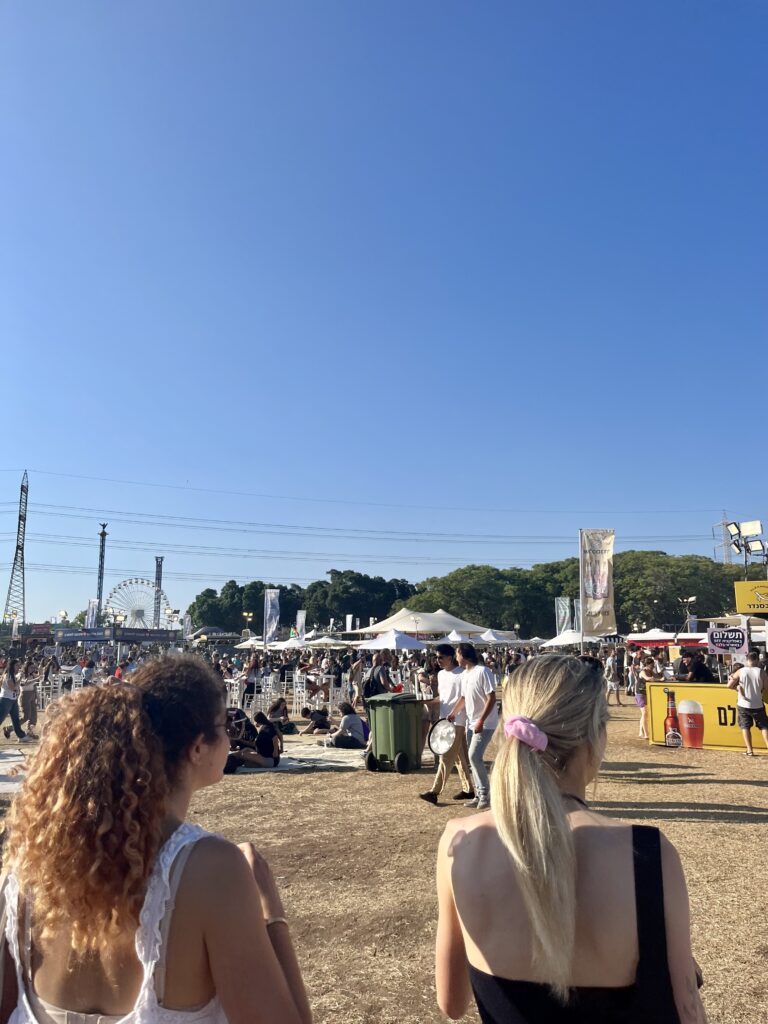
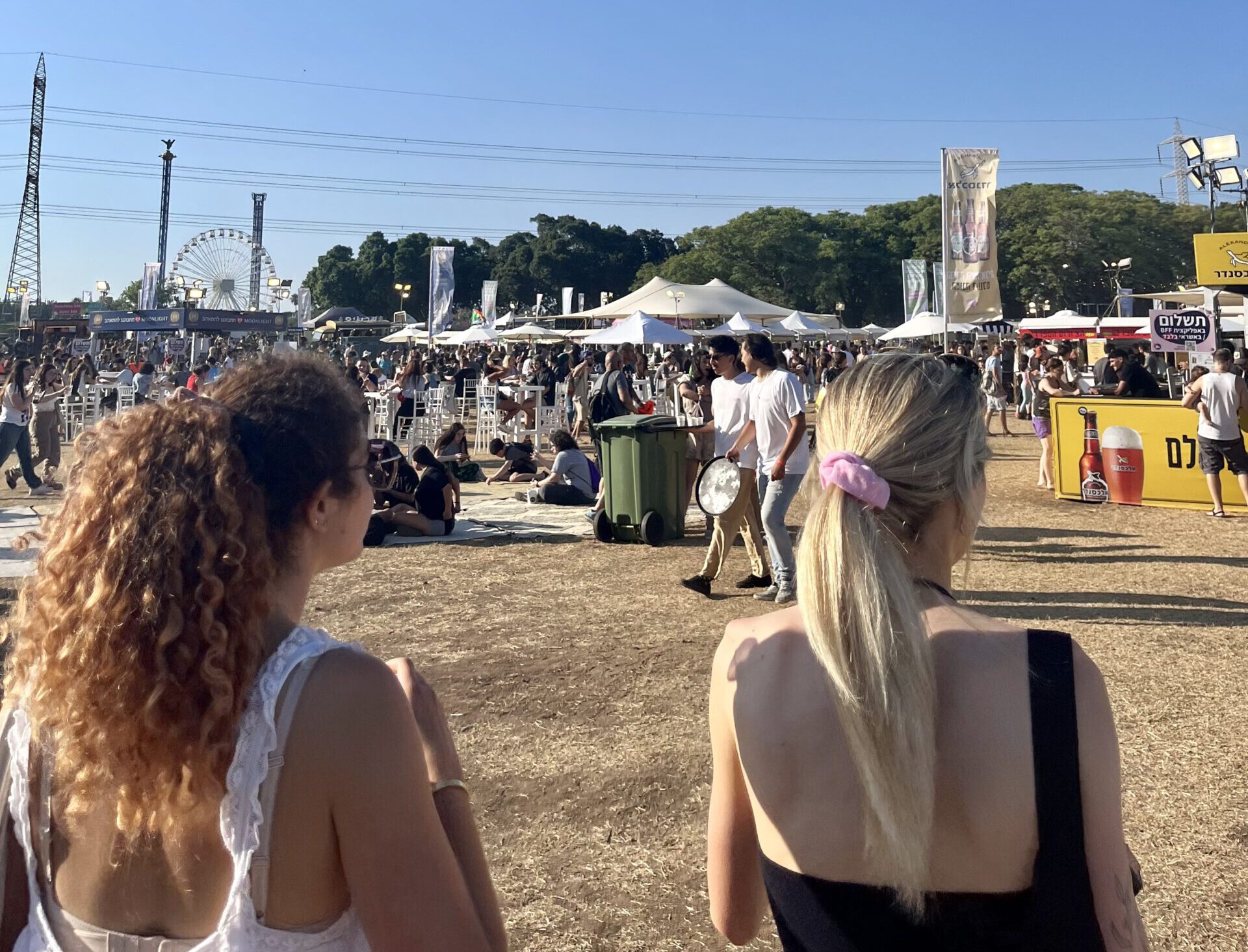
picture of the vegan festival
Looking forward to sampling vegan food in Tel Aviv at the Vegan Foodfest, June 21 to 22, 2023

This past Thursday, I attended the world’s largest vegan festival, Vegan Fest at the Yarkon Park in Tel Aviv. This festival had over 100,000 attendees and 100 different food stands, guaranteeing everyone something they will enjoy. The festival had vegan sushi, meats, cheeses, desserts and so much more. They even had vegan soaps and clothing made from sustainable sources. My personal favorite, the vegan mac and cheese came in an assortment of colors.

VioLife 100% vegan mac and cheese

Going vegan does not mean one must cut out all the foods they enjoy, it just means cutting out certain sources their food comes from. Today, being vegan has become so normalized that thousands of brands and companies across the globe have revolutionized their food systems to accommodate vegans. In addition, there are over 2,500 vegan startups, dedicated to spreading veganism. 

Israel is the vegan capital of the world. It is also one of the world’s biggest innovators of alternative meat, milk, eggs and vegan fish products.

A big reason why one decides to go vegan is because of its enormous environmental impact. The livestock industry has a massive impact on carbon emissions and majorly contributes to global climate change. It has been proven time after time that meat eaters have an exceptionally larger carbon footprint compared to those who do not eat any meat. In addition, according to Zero Smart, going vegan can reduce an individual’s carbon footprint by up to 73%.

In celebration of the Tel Aviv vegan festival that I was lucky enough to be able to attend, I will list some of the brands that showed their products this year at Yarkon Park.

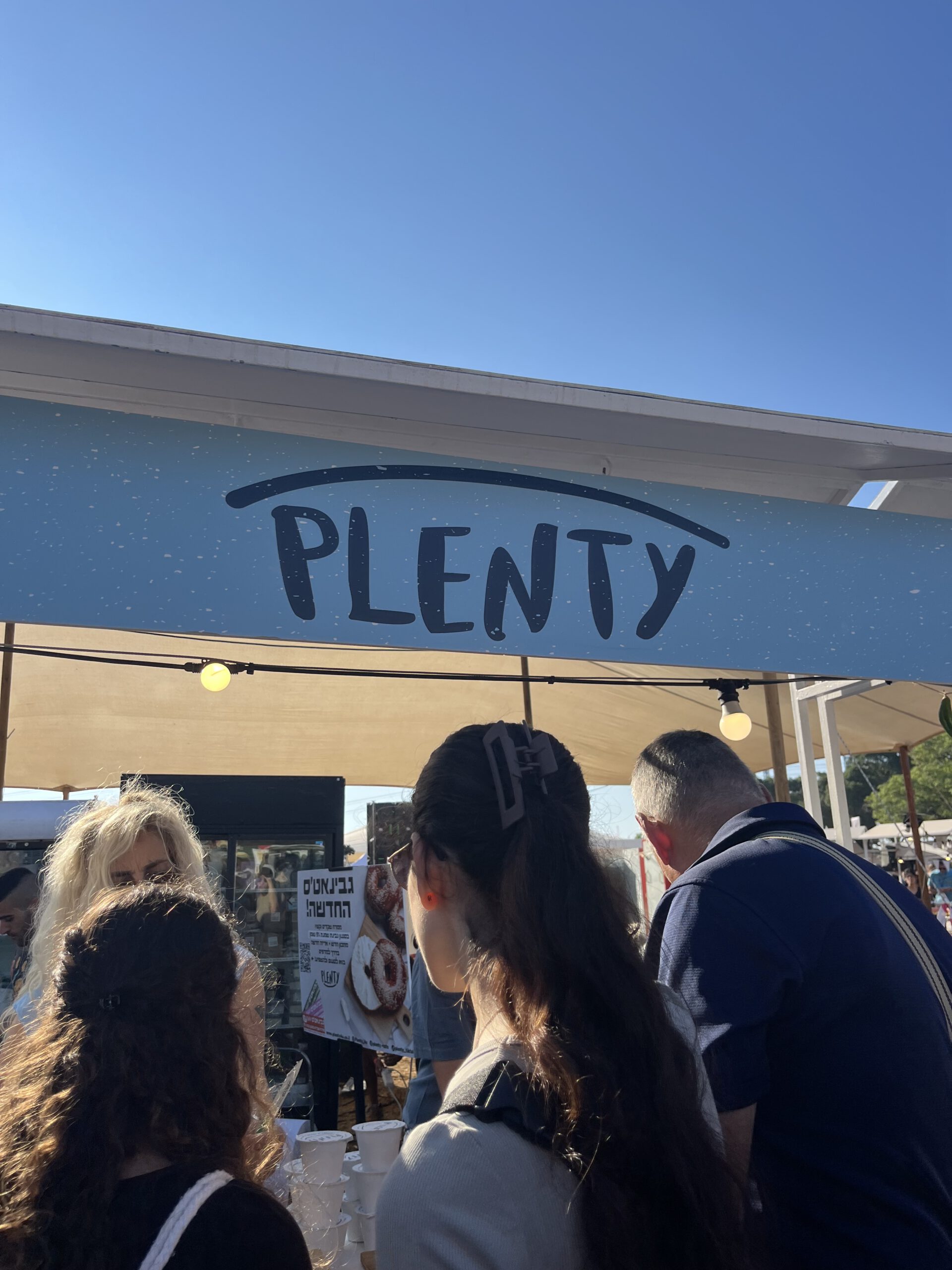
Plenty

Plenty is a 100% plant-based company that sells a variety of dairy substitutes to accommodate the vegan diet. Some of their products include yogurt, ravioli, and different cheeses. The cheeses they sell include mozzarella, feta, and parmesan, all of which come from cashews and almonds.

Plenty vegan cheese, hebrew text, alternative cheese made from almonds
Plenty vegan cheese, made from almonds

They sell their products in stores around Israel and are all based on natural, raw materials that are highly nutritional. I picked up one of their vegan cream cheeses which has a delectable nutty, yet smooth taste and texture.

picture of the Plenty stand at the vegan festival

Creative Pea

This company Creative Pea is for meat lovers out there that want to try a vegan diet but don’t want to give up the delicious taste of meat. Creative Pea offers high-quality, vegan meat that is both delicious and sustainable. Their products include vegan chicken, beef, and fish. I tried all three of these and they were absolutely delicious.

Their meats are made from pea protein, each serving packs 16 grams of protein, so you don’t miss out on the protein in your diet. Creative Pea is a fabulous option for high-protein, nutritious meat substitutes.

picture of the vegan chicken at Creative Pea at vegan festival

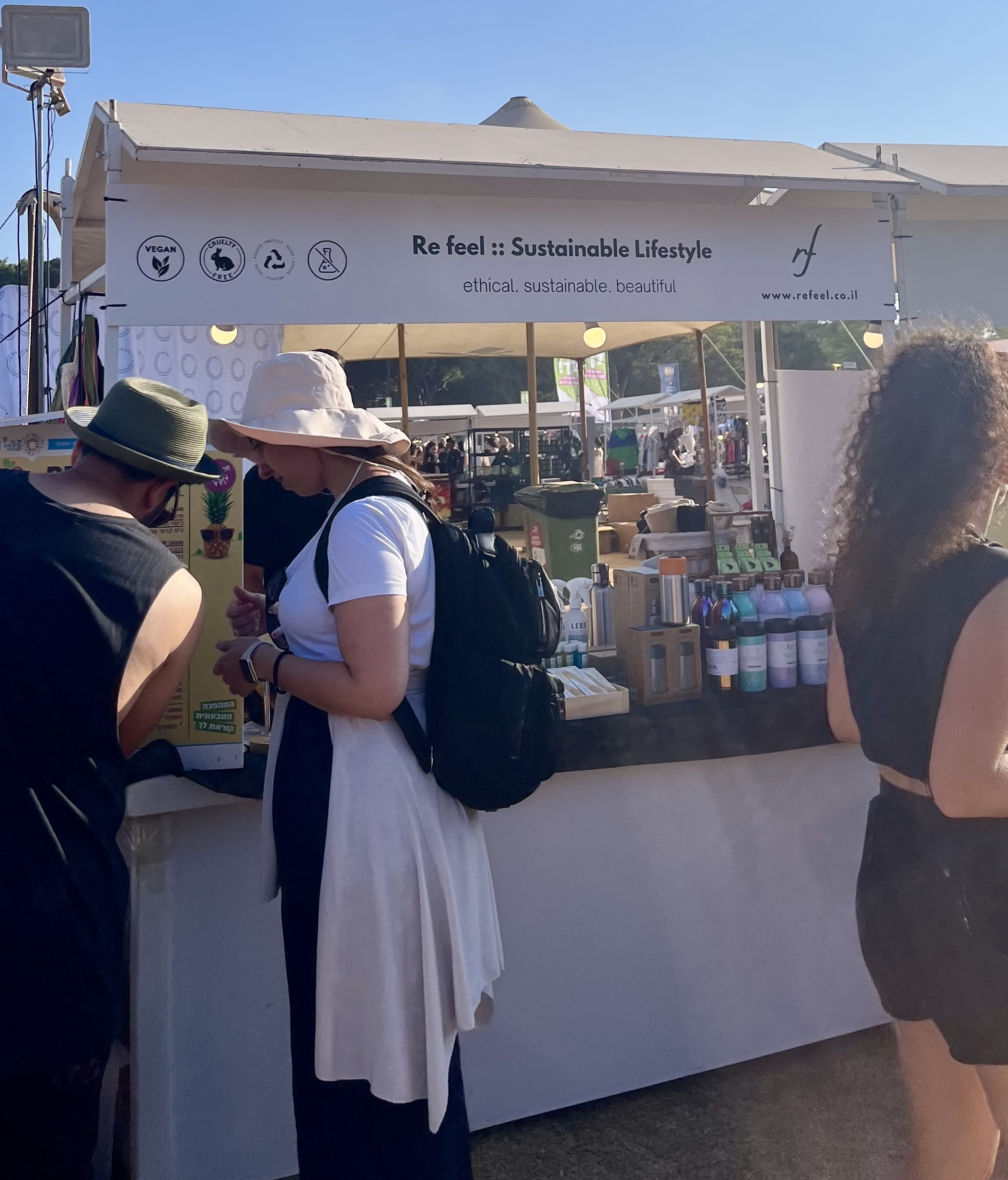
Re Feel

Re Feel is a sustainable and ethical shop that sells products from sustainable materials to promote a vegan lifestyle. Their products include bags, water bottles, and even floss. Similarly to Madeo eco-chic, they re-sell products from other brands, including Black & Blum, Brush with Bamboo, Woodie, and Dental Lace. They sell toothbrushes from Brush with Bamboo, which is what it sounds like, a toothbrush made from bamboo.

The floss from Dental Lace is made from silk and is plastic-free and compostable. This company proves that almost anything can be made vegan and encourages a robust vegan lifestyle.

picture of the Re Feel stand at the vegan festival

Green Roll Sushi

Do you like sushi? Do you want to go vegan but love a good sushi roll? Check out Green Roll Sushi, which makes a variety of exciting sushi rolls without the fish. Located right next to Rothschild Street, Green Roll Sushi is a hit and showcased its rolls at the vegan festival.

My personal favorite, the Green Roll Special, is made with sweet potato, cucumber, tofu, and avocado. This roll won’t disappoint, and I like it better than normal sushi. Green Roll also offers buns, sushi sandwiches, and salads, all of which are perfect for the vegan diet.

pictured is Green Roll Vegan sushi's "Green Roll Special"
Green Roll’s “Green Roll Special”

Panda vegan chocolate

Lastly, for people who have a big sweet tooth, don’t worry about giving up chocolate. Panda vegan chocolate was created by two friends who were vegan but loved chocolate too much to settle for a no-chocolate diet. Instead, they invented Panda, a now big company all over Israel based on vegan chocolate. Their products are made from oats and cocoa, which the couple was able to create into 14 different flavors. The dairy-free chocolate is well worth trying, and good for the planet.

image of chocolate from unsplash

Vegan Fest included music shows, speed-dating for vegans and workshops on how to sustain a vegan diet and way of life. More about the Vegan Fest here.

What do young adults have to say about climate change?

0

Green Prophet young adult survey on climate change, man with pine needles in background
Young people are our future. What are the young, global elite thinking about climate change? Ariel asks her peers

Climate change has emerged as a pressing concern for young adults worldwide. With its far-reaching consequences and potential for irreversible damage, the impact of climate change weighs heavily on the minds of the younger generation.

A study conducted by The Lancet sheds light on the concerns of young adults. The survey, which included 1,000 participants aged 16 to 25 from ten different nations, revealed that 84% of them were moderately concerned about climate change, while 59% expressed high levels of concern.

Climate crisis fuels fears of an incertain future

Maya Cohen, an American University student interning in Tel Aviv says, “My biggest fear is that my kids won’t be able to see the stars.” Maya’s concern reflects the broader anxieties about the future generations’ quality of life in light of the climate crisis.

Maya is in Tel Aviv on a program called Onward Israel. Onward provides University students in America an opportunity to live and work in Israel for the summer. The goal is to propel students personally and professionally, while immersing its participants in modern day Israel while equipping you with valuable experience and knowledge through internship opportunities. In the most previous cohort Onward had 3,200 participants..

The climate crisis impacts daily lives

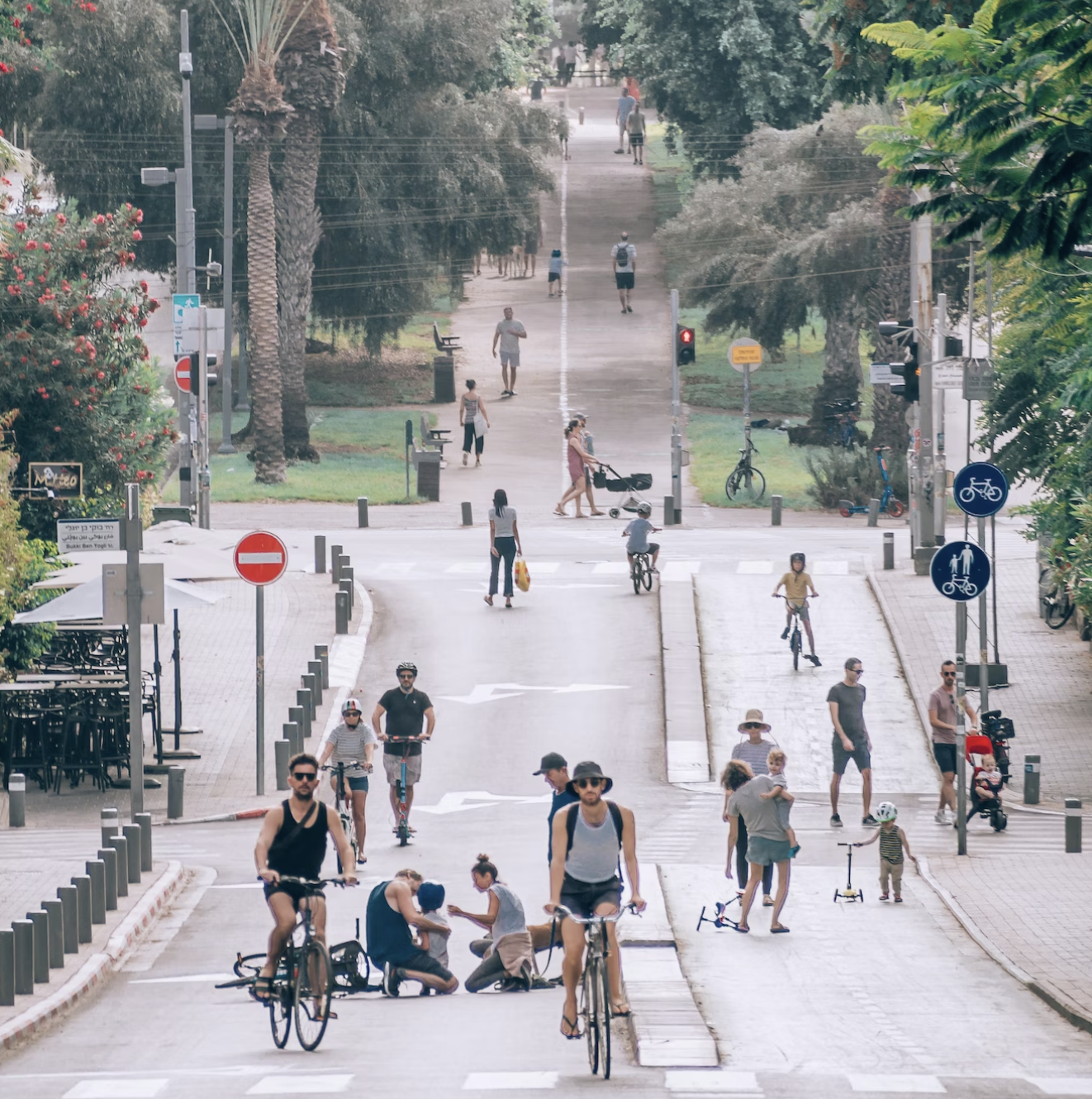
bike paths downtown Tel Aviv, Rothschild Boulevard
Cycling paths are now linking all centers of Tel Aviv.

Young people worldwide are experiencing a sense of fear and discontentment with government actions, influencing their daily lives. 

Hannah Dworsky, a 20-year-old student also working in Tel Aviv for the summer, shares her concerns about bringing new life into an uncertain world: “I am concerned and scared for my future family and children due to the possible irreversible damage we have done to our environment.” Hannah explained that she does not doubt that the majority of people our age are scared of climate change effectively, just not enough to make a lasting difference.

Ava Selbst, another American abroad in Tel Aviv, fears that once climate change starts impacting necessities such as food, clean water, and essential resources, unthinkable scenarios where humanity begins to fight over natural resources. Ava says, “Once climate change starts impacting necessities such as food, clean water, and essential resources, humanity will possibly start to fight over natural resources.”

Ava foresees a future where access to basic necessities becomes a privilege reserved for the super-wealthy, potentially leading to civil conflicts over scarce resources.

I asked other university students living in Tel Aviv about their climate change fears. 

  • Kaley French says, “My biggest climate-related fear is that the careless actions of human beings will continue to affect the innocent lives of animals.”
  • Dylan Weiss says, “I am stressed about the things I love and think we take for granted being something that will be taken away.”
  • Lars Djuve says, “No more skiing all of the ski mountains are closing because of climate change”

Transforming fears into action

Tel Aviv, a thriving hub for environmentally sustainable innovation, provides a positive perspective for concerned young adults like Maya, Ava, and Hannah. Their summer experience in Israel offers them a unique opportunity to witness firsthand the transformative efforts undertaken by individuals and companies dedicated to making a positive impact. The crises feel endless, and it is easy to feel helpless as an individual. 

Paige Bohart is working this summer for a makeup company researching sustainable labeling options and the qualifications for these labels. Paige tells Green Prophet:  “My biggest fear for climate change is that we will not reduce our plastic consumption fast enough.”

She agrees that individual actions are vital to reducing global levels of plastic waste. Paige continues, “small decisions like choosing products with sustainable packaging makes a difference.”

Her work has shown me her sustainable initiatives can successfully intersect with different work spheres. 

Hannah emphasizes the need for collective action, stating, “We all have to do our own part to defeat this battle.”

It is through collective efforts, individual responsibility, and innovative solutions that we can overcome this global challenge. 


The ultimate hummus recipe

0

plate of hummus with chickpeas, black background

Got a yen for the food of strong men?

It’s so easy to just bop down to the corner falafel stand and pick up a pita full of the Middle Easts’ favorite fast food. But get to know – and make, another meal, the kind you have to sit down for.

In this recipe, dark, meaty fava beans set down in a nest of yellow hummus and a beige ring of tehini, topped with a brown hamine (long-cooked) egg. Parsley, to offset the earthy flavors. Lemon juice, to balance the dish with a little acidity, and a generous drizzle of good olive oil. On the side, pickles for piquancy, and a little bowl of hot sauce. Onion, just because. Some preserved lemon quarters. And fresh pitas. Nutritious, cheap, comforting. Satisfying in every sense. It’s ful and hummous: the Middle Eastern workingman’s lunch.

The ingredients are always the same, but each cook makes them a little different and never with frozen or canned chick peas. Some people like dark fava beans, using a traditional pot whose long neck allows slow evaporation of the cooking liquid. Some just boil up the quicker-cooking, lighter, haricot bean. Either way, ful and hummus is easy to make, but requires a number of steps. If you want to do this totally from scratch, you will need to prepare three ingredients the night before: beans soaking in one bowl, chickpeas in another, and a pot of gently-boiled eggs simmering on the stove.

The classic hummus and ful recipe

Make your Middle East friends proud with this genuine and tested recipe for hummus with ful

  • 1 pound dried fava or haricot beans, soaked overnight (organic everything if possible)
  • 2 cups dried chickpeas soaked overnight
  • 1 1/3 cup tehini
  • 6 eggs
  • 2 lemons, juice of 2 halves and one more tbsp
  • 2 large onions
  • olive oil
  • 5 cloves garlic
  • 1 bay leaf
  • water for cooking
  1. The Ful.

    Pick over the beans.Rinse them and put them to soak overnight in plenty of water. Next morning, drain the beans and put them up to cook in fresh water.Add a fat clove of garlic, a bay leaf, and some olive oil to the water. Cook the beans till tender.

    Favas take 1-3 hours. If you choose white beans, they will cook in far less time – up to an hour.When the beans are soft but not falling apart, crush 2 fresh cloves of garlic into a small bowl. Stir 1 tsp. each of salt and cumin in, and add this seasoned garlic to the bean pot.

    Add a tablespoon of lemon juice. Stir the beans up. Crush some of them with a potato masher or a fork, so that they’ll absorb the flavors of the seasoning. Let them cook another 5 minutes.

    Then either turn the flame off, or start serving.

  2. The Hamine or Slow-cooked Eggs

    You can just boil eggs as usual, or take this opportunity to do it the old-fashioned way. Make several, it’s not worth the trouble for only one or two. Take 6 eggs and the peels from 2 large onions. Put it all in a pot.

    Cover the eggs and peels in plenty of cold water; bring to a simmer.Drizzle a layer of olive oil over the surface. This prevents the water from evaporating during the long cooking period. Simmer the eggs, covered, over the very lowest flame you can achieve for 6 hours or overnight. They are delicate, creamy eggs, unlike any others.

  3. The Hummus

    Put 2 cups of dried chickpeas in a separate bowl. Cover them with plenty of water and let them soak overnight. As with the beans, drain them, and cook in fresh water till soft. It’s not a sin to open a can of chickpeas either. Although fresh-cooked always taste the best, canned chickpeas still make good hummousDo not add salt to either beans or chickpeas till they are completely cooked and easy to mash.Put the cooked or canned chickpeas in a blender or food processor.

  4. To them, add

    1 fat clove of garlic

    3 Tblsp. of tehini

    Salt to taste

    Juice from 1/2 lemon

    2 Tblsp. olive oil

  5. Tehini

    Put into a bowl:

    1 cup raw tehina paste

    3/4 – 1 cup water, depending on how thick or thin you like it

    1 fat clove garlic, crushed

    salt olive oil

    juice of 1/2 lemon

  6. Get Blending

    Blend all the ingredients, either by hand or in the blender. If you’re not used to the ways of tehini paste, don’t be alarmed that it initially becomes very thick when mixed with water. Keep mixing, it will smooth out amazingly.

  7. To serve:

    Spoon a generous amount of hummous onto the plate. Take the spoon and spread it into a neat circle, thinner in the middle.

    Spoon a ring of tehina on the inside of the hummous circle.

    Put a pile of hot beans in the center of the plate. Top the beans with a little chopped onion, chopped parsley, and a peeled, still-warm hamine egg. Squeeze lemon juice over the whole; drizzle olive oil over it. If you’re fond of hot sauce, drizzle a few drops of it over the dish too.

    Put some small plates or bowls with pickles, olives, sliced onions, or pickled lemons in them.Now tear a chunk off your pita and use it to scoop up some of everything. Savor every mouthful, it’s the real McCoy.

Appetizer, Breakfast, Main Course, Side Dish
Mediterranean
hummus, vegan

Like this one?

Don’t stop here:

See also:

Organic Trend Hits Tel Aviv Where It Counts. The Hummus.
Pickling 101 – Vinegared Cucumber Salad

Dentistry’s Waste: 7 Ways Dental Offices Can Protect the Environment

0

baby at highchair chewing on toothbrush
Greening your teeth with a sustainable dentist. It’s never too early to start.

Industries across the board are beginning to understand the need of reducing their environmental impact as global environmental awareness grows. The dental health industry, which offers vital services to the public, is also working to lessen its impact on the planet. 

According to my Surrey general dentist single-use plastics, toxic substances, and the quantity of water used all add up to a considerable amount of trash produced by dental clinics. But dental clinics may do their part to protect the planet and advance sustainability by embracing eco-friendly procedures.

This post will discuss seven efficient strategies dental clinics may use to save the environment and minimize their consumption of natural resources. 

  • Minimizing Single-Use Plastic

Disposable gloves, face masks, syringes, and even some packing materials may be found in abundance at dental clinics. Although they play an important role in preventing the spread of disease and ensuring the safety of patients, these products also add to the worldwide issue of plastic pollution. Fortunately, dental clinics may take the initiative to reduce their usage of disposable plastics and increase the use of more environmentally friendly options.

One strategy is to look at potential replacements for regularly used plastics. For instance, dental clinics may start using gloves that can be reused after being cleaned and sanitized, or gloves manufactured from biodegradable materials like latex or nitrile. Cloth masks and masks produced from sustainable materials are two alternatives to throwaway plastic masks that might considerably cut down on plastic use.

In addition, dental clinics may create recycling programs for single-use plastics. The correct recycling of plastic packaging materials, such as plastic wrap or dental tool packaging, prevents them from being thrown away or washed up in landfills or the ocean.

  • Implementing Amalgam Separator Systems

Mercury, which is found in dental amalgam, is very hazardous and presents serious dangers to human and environmental health if not controlled appropriately. Without proper safeguards, mercury from dental amalgam waste may enter wastewater and travel to rivers, lakes, and oceans, where it can pollute these waterways and potentially kill aquatic life. Dental clinics may take preventative action by installing amalgam separation devices to deal with this problem.

In order to prevent amalgam waste from being released into the wastewater system, special equipment called amalgam separators might be used. Filtration technology is used by these systems to remove amalgam particles and other solids from wastewater from dental offices. Dental clinics may significantly reduce mercury waste by using amalgam separators.

  • Proper Disposal of Hazardous Materials

As part of their everyday operations, dental clinics make use of a wide variety of chemicals, disinfectants, and X-ray fixer solutions. While these materials are necessary for delivering safe and effective dental treatment, they pose a threat to both human and environmental health if disposed of improperly. For this reason, it is critical that dental practices adhere to environmental standards regarding the separation, storage, and disposal of potentially dangerous chemicals.

First and foremost, dental clinics should have a thorough strategy for separating medical waste from other types of trash. The proper disposal of hazardous materials including chemicals, disinfectants, and sharps is facilitated by properly labeled containers or bins for each kind of trash. 

  • Efficient Water Management

Because of the importance of conserving this finite resource, it is imperative that dental clinics implement effective water management practices. Water is typically used in large quantities during dental operations for purposes such as rinsing and irrigation. Dental practices may help support sustainable water management by cutting their water use and making investments in water-saving methods and technology.

Low-flow faucets and toilets are two examples of water-saving devices that may be installed. To save water without sacrificing performance, low-flow faucets include aerators or flow restrictors to control water flow. Installing low-flow toilets, such as those with dual-flush mechanisms or lower flush volumes, may also drastically cut down on water use each flush.

  • Energy Conservation

By using these energy-saving procedures, dental clinics may have a big impact on environmental preservation. Most of the electricity used by dental offices goes toward powering the building’s lights, HVAC, and other electrical appliances. Dental clinics may help the environment and encourage responsible energy use by adopting these measures.

Changing to more efficient lighting is a crucial first step. Light-emitting diode (LED) lights are a great alternative to incandescent and fluorescent bulbs in dental offices since they use a fraction of the energy and last 10 times as long.

  • Paperless Practices

Paperless practices have the potential to improve dental offices in many ways, including efficiency and the health of the environment. Dental offices may make major strides toward environmental responsibility and efficient operations by switching to electronic dental records and using electronic communication platforms.

  • Eco-Friendly Materials and Practices

The use of eco-friendly products and procedures in dental offices may have a major positive effect on the planet. Dentist offices may help the environment by reducing their use of nonrenewable resources by switching to eco-friendly dental products and launching recycling initiatives.

Sustainable or biodegradable dental supplies are a good option for those concerned about environmental impact. Patient bibs used in dental clinics, for instance, may be crafted from compostable paper or plant-based fibers, both of which decompose quickly and easily. 

Final Words

Dental practices that implement these measures benefit the environment, their patients, and their bottom line. Incorporating sustainable methods shows that dentists care about their patient’s health and the health of the earth as a whole, which is in line with people’s changing expectations.

As dental clinics work to improve oral health for their patients, they can make a difference in the world by adopting eco-friendly practices. By adopting these seven eco-friendly procedures, dental clinics may make a real impact and set an example for the healthcare sector as a whole.


Gazoz: Cafe Levinsky’s delicious summer time beverage

picture of Benny Briga in Cafe Levinsky
Benny Briga: the owner and founder of Cafe Levinsky

A must-try location in the Levinsky Market after Tavlinksy in Tel Aviv is Cafe Levinsky. In the heat of an Israeli summer, this is definitely a place you want to stop at. Ever heard of a gazoz? This is the drink to try at Cafe Levinsky. Ask Benny Briga about it, the founder and owner of Cafe Levinsky.

Benny Briga opened Cafe Levinsky because he loved nature. He loved how nature blooms beautiful and delicious fruits which he recalls plucking off of trees as a kid. Benny wanted to spread the pleasure of nature to others, which led him to open Cafe Levinsky.

After finishing in the military and traveling the world, Benny settled down in Tel Aviv. After exploring the hospitality industry and opening his own restaurant, Benny reevaluated his career and wanted to open a place that allowed him to invest in his childhood delights. He opened the tiny shop and bought a tank of CO2 and began storing all sorts of herbs and flowers in the tiny corner shop in Florentin in Tel Aviv. He began storing all it in jars with sugar water and making gazoz.

picture inside of Cafe Levinsky

What is gazoz?

Gazoz is a bubbly seltzer drink made by the fermentation of fruit. (Like beer, Ethiopian honey bee, wine). The gazoz that Benny sells is non-alcoholic, all-natural, and highly nutritious. Similar to soda, gazoz is refreshing and makes the perfect beverage in the heat of the summer.

Gazoz goes way back was originally invented in Tel Aviv in 1909 and has been a popular beverage ever since. Each gazoz that Benny sells includes macerated fruit, syrup, and some type of herb, depending on the gazoz of your choice. For example, the “Green Almond” gazoz is made of arugula flowers, fresh lemon verbena, lavender, and dried licorice root stick. It is fermented with green almonds and syrup, and topped by seltzer and ice.

Benny made me an apple gazoz, which tasted fresh and sweet. Once you finish your gazoz gives free seltzer refills.

picture of the apple gazoz that I got from Cafe Levinsky
The apple gazoz with sustainably made straw and spoon

Sustainable practices

Cafe Levinsky also practices sustainable measures of service. For starters, the straws are all natural because they are made from apples. You can even eat the straws after you finished your gazoz. In addition, the spoons are made free of plastic. Benny also composts at his farm in Jaffa where they grow all of the ingredients used in the cafe.

A sustainable studio

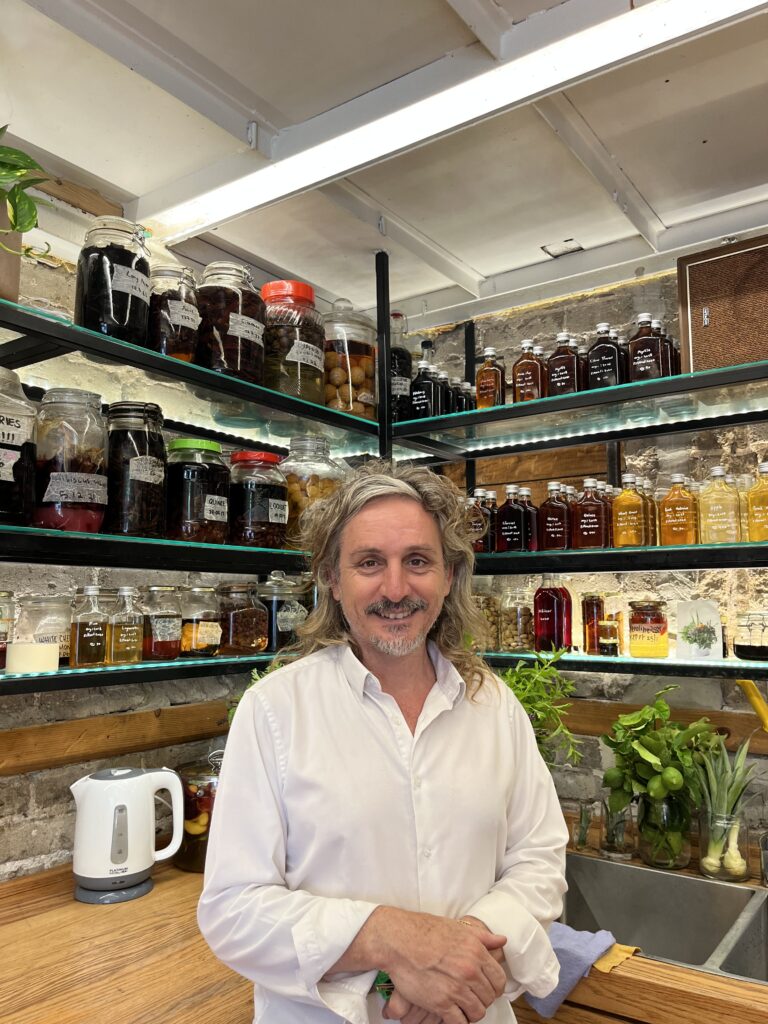
Benny took me into the studio right around the corner from the shop were the fermentation magic goes down. The beautiful studio is filled with jars filled with all kinds of things, from fruits to herbs.

One of the oldest of which is six years old: the “Quince” is from 2017. A quince is a kind of apple that when cooked becomes pink. Benny thinks it is better the longer something is fermented. Some jars are fermented with sugar and water, while others are fermented with salt and vinegar. He also uses anaerobic fermentation and aerobic fermentation.

Each day, he ferments something new for the gazoz, constantly having new and tasty things for his customers. He also has a wide array of alcohols that are available to buy from the bottle from 5% to 7% alcohol.

picture of Benny's fermentation studio which shows his alcohols in the back
Inside of Benny’s fermentation studio in the Levinsky Market showing the array of alcohols he fermented

Picture of a jar of quince that Benny has been fermenting since 2017
The Quince fermented fruit is the oldest in the studio

Ful medames and musabaha recipes

0

humus via  Unsplash

Make two flavorful, easy dips at one go, with fresh or canned fava beans and chickpeas. We’re fond of eating beans over here at Green Prophet, and supply you recipes like this little-known lupini bean recipe every so often. These dips are easy appetizers for a party or a meal with guests, or as a snack with pita chips. These are considered salads in the Middle East, but “dip” expresses the soft texture of these dishes better. 
Ful Medames Recipe

Ingredients:

2 cups small brown fava beans: either 2 cans, heated with their water, or 2 cups prepared cooked favas – instructions below
2 cups chickpeas, either 2 cans, heated with their water, or 2 cups prepared cooked chickpeas. Reserve 1 cup for making the masabaha recipe below.
2 garlic cloves, peeled and crushed with a little salt
1 medium tomato, chopped fine – reserve 1 tablespoon for garnish
1/2 medium red onion or 1 shallot
2 tablespoons roasted red pepper (grilled or from a jar) or 2 tablespoons finely chopped fresh red chili pepper – reserve one tablespoon for garnish
1 handful cilantro or parsley – reserve a few good pinches for garnish
Juice of 1/2 lemon
About 1/4 cup olive oil 

Directions:

Drain and pour the hot ful into a bowl. Strain 1 cup of hot chickpeas with a slotted spoon into the ful bowl but don’t dump the chickpea water; you’ll need it later.
Crush the ful and chickpeas together with a potato masher.
Add the crushed garlic, chopped tomatoes, onion or shallot, chili or roasted red pepper; mix well. Continue crushing everything together coarsely.
Chop the cilantro or parsley finely; add to bowl and mix well.
Stir in the lemon juice.
Taste for salt and adjust.
Pour a generous amount of olive oil around the ful mixture.
Garnish with reserved chopped tomato, chili or red pepper, and cilantro.

Make Musabaha

Musabaha is a rough humus made with whole chickpeas instead of blending them.  Slather it on bread and garnish it with whatever takes your fancy.

dips with garnishes

Ingredients :

Remaining cup of hot chickpeas from the ful mesdames recipe above – reserve a handful for garnish
2 tablespoons raw tahini paste
1/4 – 1/2 cup chickpea cooking water
1 clove garlic, crushed with a little salt
Juice of 1/2 lemon
Sprinkles of cumin and paprika
Olive oil
2-3 tablespoons chopped cilantro
4 or 5 slices of chili or fresh red bell pepper, cut vertically to make a garnish

Directions:

Pour the hot, whole, remaining chickpeas into a serving bowl
In a small separate bowl, mix the tahini with 1/4 cup of the chickpea water. Add water as you go to make a dip that’s loose enough for your liking. Mix thoroughly, until white.
Add the crushed garlic clove and lemon juice to the tahini; mix.
Spoon the tahini into the chickpeas. Crush together lightly.
Taste for salt and adjust.
Garnish with reserved whole chickpeas.
Pour olive oil around the bowl.
Sprinkle cumin and paprika around the bowl.
Pile up a little chopped cilantro in the center.
Place 4 or 5 slices of chili or fresh raw bell pepper around the bowl.

How to eat these dips with pita or other flatbread: tear a piece of bread off, fold it to make a little cup, and spoon some dip into it. Eat as is, from your hand.
Suggested dishes to accompany: hard boiled eggs, baby radishes, all sorts of pickles, cucumber sticks.
This makes a light meal. Serve fish, chicken, or kebabs with these salads for a heartier meal.

* To prepare ful and chickpeas from raw:
Rinse 1 cup of each. In separate bowls, cover generously with cold water and allow to soak overnight.
Rinse each again and cook in separate pans, in plenty of water. It will take 1-1/2 hours to cook them until tender.
Do not drain the cooked chickpeas; you will need some of the cooking water for the musabha.

More excellent bean-based recipes from Green Prophet, and some history about well-loved Middle Eastern ful beans. The recipe below includes canned ful, tomatoes, peppers, and cumin.

Ful from Sudan, made in Sinai

Fresh Fava Beans For Salads

Ultimate Traditional Ful And Humus Recipe

Time To Settle The Debate: Oldest Ful and Humus Beans in Israel

Tel Aviv Guide to Strays in Need

0
Stray cats Tel Aviv, how to help them
A guide to finding homes for strays in Tel Aviv

Unlike many cities in America, street cats are found everywhere in Israel. Every corner you turn you are likely to find a street cat. Some of the strays are in excellent condition, getting well taken care of by the locals or by organizations like Hapishpesh in Jaffa. Others, are not being taken care of as well, and have to work really hard to fend for themselves. Unfortunately, the world is a tough place, and things always happen when these street animals are put in danger. For this reason, I’ve decided to write a guide to help you know what you should do when you see a stray cat or dog in critical condition.

Veterinary Hospital Babikar

Veterinary Ba Kikar
Vets taking care of a dog at Veterinary Bakikar

In continuation of my article on Hapishpesh and the AEA Bethlehem Shelter, I’d like to introduce another clinic that helps take care of stray pets in Tel Aviv. Veterinary Babikar, located on 157 Yigal Alon Street, Tel Aviv works long and hard to support the street cats that are brought in. Open 24/7, Veterinary Babikar always has staff on call to ensure the people that their pets have an inlet to receive care. I spoke with Dr. Shuki Karako, a fourth-year veterinary practitioner at Veterinary Bakikar in Tel Aviv.

He grew up in Tel Aviv but spent time studying veterinary medicine in Italy. Dr. Shuki always makes sure that the street cats that are brought into him are being taken care of. The clinic is a chain business, but the location in Tel Aviv is old and historic. Dr. Shuki and the rest of the vets work with clients that bring in stray cats for castration and treatment. Dr. Shuki told me that he is trusted in the area and that people come to him when they find strays that are in need of help. 

While people are good about bringing in sick/injured, they commonly don’t stay for them. Dr. Shuki said people just bring them in and leave them, expecting the vet to take care of them. However, he can’t do much for them after and they often just send the stray back to where they were found after receiving treatment. There are some people that will decide to adopt them afterward, but this is a common struggle that the vet clinic has to deal with. 

SOS Pets Israel

A pile of stray cats
Stray cats in Jaffa

SOS Pets Israel is a nonprofit organization that also works to help save and take care of stray pets. As part of their code of conduct, they believe that caring for homeless dogs and cats is essential to humanity as pets provide a great deal of nurture to our lives. Therefore SOS Pets strives on giving back to pets by ensuring they are well taken care of and being protected. SOS Pets has three distinct units: a dog unit, a cat unit, and an educational unit.

The dog unit, which is their oldest unit works to improve the lives of stray dogs by providing rehabilitation against euthanization. They take dogs out of kill shelters and work on their own to rehabilitate the dogs into loving homes. The cat unit specializes in providing castration procedures since the population of stray cats in Israel is so large. They also work to provide medical attention to injured and sick street cats in order to better their lives and find them new homes. Lastly, their educational unit prides to raise awareness of animal cruelty. They work alongside the Ministry of Education and the Ministry of Environment to teach young children and youth organizations to inspire compassion for animals at a young age. SOS Pets is also looking for donations and volunteers to continue with their good work.

Let the Animals Live

Let the Animals Live is a nonprofit organization that works to provide care and protection to animals in need of rehabilitation. Located in Ramat Gan, near Tel Aviv, the NGO strives to promote animal rights and welfare by expanding and enforcing the Animals Welfare Act.

In addition, the organization is strictly no-kill, therefore they ensure that each and every animal that is brought in will have the best chance of being adopted. They do numerous things for stray animals, including providing training, veterinary attention, sheltering, and transportation for rescues. Professional veterinary practitioners will spay and neuter animals at Let Live. They also have a legal department, the only of its kind in Israel, which handles any kind of protection of the animals’ rights. As a consequence of the Animal Welfare Act, the legal department handles many filed complaints of abuse and harassment that their animals have undergone. 

The Municipality of Tel Aviv

The Municipality of Tel Aviv vets will take care of stray dogs and cats, which, according to Dr. Shuki, does a good job and he hears mostly good stories. The Municipality helps stray and domestic animals in Tel Aviv live a better life and away from trouble. They partner with many agencies (including Let the Animals Live and SOS Pets Israel) to ensure that all dogs and cats are kept in good hands.

They help endangered and suffering animals get rescued and put into shelters, act against rabies, and provide access to vaccines for pet owners. They also initiated a project called Adopt an Animal in which they encourage adoptions of sheltered animals via special adoption days for every Friday of each month. You can find out more information on the municipality on their website as well as who to contact. You can read more about adoption days here.

SPCA Israel

SPCA Israel– or the Society for Prevention of Cruelty to Animals, based in Jaffa. The Society takes in abandoned animals and tries to find adopting homes for them. Additionally, it provides various services to the community: a veterinary clinic with subsidized prices, a boarding facility for pets, rescue and collection of animals in trouble and a department of education and guidance. This is a great place to find and rehome a pet in need. 


Why a career in international environmental law can change the world

looking up to the trees

A couple of years ago, I remember sitting in the kitchen of my home in New Jersey hearing a news report about the wildfires happening in California. When I first heard about this, I had no idea why these were occurring, but remember watching them with tremendous horror. Seeing these massive wildfires plow through the beautiful forestry that makes up the Sacramento area was unbelievably astonishing to me as I could not believe this was happening in real life.

Due to this news report, I was determined to understand why this was happening, and what I could do to help it. I learned that wildfires are a major outcome of climate change, and from that day forward, I knew that this was what I was interested in studying.

World on fire from climate change

I later went off to study environmental science at the University of Massachusetts Amherst, where I continue to learn about the worsening climate and what causes these changes in our world. However, as I continue to explore the field of environmental studies, I learn what I want to do and what I don’t want to do. I also learned what is most important to me in the work that I do one day, which is to make a difference. I was not interested in sitting in a lab or going out into a field to do manual work.

Danielle Meyers
This is me, Danielle Meyers looking into how law can work to save the environment

I did not enjoy business or accounting or anything mathematical. However, I realized that the most effective way to generate change in the environment is to be at the forefront of the problem. This meant to me being in a position where I can force change to happen, which meant studying environmental law and policy.

My campus at the University of Massachusetts Amherst

To learn more about a career in environmental law, I met with Gidon Bromberg, the director/cofounder of EcoPeace: an organization that brings regions together in the Middle East to solve environmental problems.

Gidon got his Master’s Degree in international environmental law at American University in Washington D.C. and has been directing EcoPeace for the last 30 years: “The most important thing that law school taught me was how to think clearly, how to think relevant to the issue, how to assess what is relevant to solving or advancing or dealing with a particular issue and blocking out everything else,” said Gidon on his experience in law school.

When going to school for law, there are so many different styles of law that one can study, like criminal, corporate, business, but when it comes to studying environmental law, you also need a background in environmental science to know why law is necessary to address environmental solutions. Therefore, attending law school and getting a degree in environmental law is so beneficial to one’s career because you learn how to interpret law on the international level in order to find compromises across nations.

Gidon Bromberg from Ecopeace

When it comes to international law, it becomes quite complicated for people like Gidon. A common issue that occurs when trying to form treaties across nations is the issue of free riding, where other countries want a cleaner environment but don’t want to bear the costs. However, in a lot of cases, especially in the Middle East, conflicts between countries cause great tension to arise in its discussion.

Israel is surrounded by countries that do not like them, and when we try to discuss ways we can collaborate to discuss environmental solutions, surrounding countries become hesitant. Since climate change is a worldwide issue that affects every country, one country cannot do all the work. Therefore it is necessary that every country is on board to discuss and come up with solutions.

Like Gidon who works to bring countries together in the discussion of the environment, specifically Jordan and Palestinians in the West Bank and Gaza, international environmental lawyers are so important and continue to be more necessary as our environment continues to worsen. And as so many people in Israel preach on what they’d like to see from their country is peace, the climate crisis may be the unspoken solution.

When nations come together to discuss a problem that affects us all equally, we are forced into a position where we can all come to an agreement. The degradation of our environment is a negative concept, but its discussion makes us all see something on the same level, something that is bringing us down together. Furthermore, we have no other option but to come together and discuss ways in which we can do better, for the planet and for the people who live on it.

A career in international environmental law not only creates a cleaner environment but also creates a better society and a more resilient economy. Gidon, for example, strives to make EcoPeace the example of what we can and should seek for international environmental law-related solutions. That is why the projects headed by EcoPeace have been so admirable because they head a cleaner environment and an opportunity for peace. For example, in Project Prosperity, EcoPeace created relations between Israel and Jordan by finding solutions to water desalination for Jordan. And on the other hand, renewable energy solutions for Israel.

Via renewable energy, the project aims to create a desalination plant in Israel’s Emek Hefer for shipping low-cost water over to a water-parched Jordan. Israel expects to buy lower-cost solar energy from Jordan where the deserts are more vast for collecting solar energy, and the labor to run the solar energy plants is  more cost-effective. In the early stages, this project will tighten the bond between these two countries while also bettering our environment, a win-win scenario.

It is now more important than ever to come together and discuss peace agreements, as we cannot continue to let our environment retrogress. We can look up to EcoPeace as an example of this amendatory act and understand its importance. A career in international environmental law is guaranteed to be necessary and can change the world forever.

::Ecopeace

Sonovia’s denim starts with a sustainable, ultrasonic dye

Sonovia has created a process for using less dye and water for sustainable fashion
A Sonovia machine dying fabric in a more sustainable way. Via the use of physics, Sonovia is harnessing the power of ultrasonic cavitation jet-streams to impregnate textiles with color.

Sonovia is taking the textile industry into the future as we speak, developing the newest way of production in fashion. I spoke with Shay Hershcovich, the co-founder of Sonovia: “It takes eleven-thousand liters of water to produce one pair of jeans,” Shay says. Another problem: the enormous amounts of wastewater dumped due to unsustainable textile production has turned the Jian River in China red from dye.

Shay and the rest of his team at Sonovia are working long and hard to revolutionize the textile industry. By breaking away from outdated methods of dyeing and finishing manufacturing practices, Sonovia aims to create a sustainable future for textile production. According to Sonovia, they claim to “leave the most significant mark on the textile industry since its inception and to enable humanity to enjoy the textiles that surround our lives with a clearer conscience.”

Jian River, China is red from textile dye
The Jian River in China contaminated with red dye via ecohubmap.com

Developed originally at Bar Ilan University outside of Tel Aviv, Sonovia is expanding the new technology of using ultrasound soundwaves to cut down emissions in the textile industry. Via the use of physics, Sonovia is harnessing the power of ultrasonic cavitation jet-streams to impregnate textiles with color. Like “chemistry guns”, they call it, the technology works to generate cavitation bubbles that implode and generate 1,000 meter/sec jet-streams.

Sonovia ultrasonic dye
Sonovia’s ultrasonic dyeing machine

Related: She puts consciousness in her textiles using natural indigo

The machine is called Sonofix, manufactured and supplied by their partners at Bruckner Trockentechnik GmbH. Sonovia affirms this machinery to have breakthrough durability and performance, non-toxic chemistry, and 100% agnostic to fiber type, as well as being cost competitive.

Sonovia textile dye
Leading European textile machinery maker Bruckner partners with Sonovia to cut carbon footprint of clothing production ahead of new European rules. From left, Sonovia CEO Igal Zeitun, Sonovia owner Shuki Herschkovitz, Brückner Textile Technologies owner Axel Pieper. Photo courtesy of Sonovia

In addition, Sonovia has other partners all over the world, including companies all over Asia, and in Germany and Italy. The French Luxury group, Kering, which owns big brands such as Gucci and Saint Laurent even decided to integrate Sonovia’s technology into their production methods for the withseen future.

Sonovia machines and indigo
Sonovia can dye jeans with 90% less waste
Sonovia for better dying using physics
Pictures of Sonovia’s technology

According to a study produced by Made2flow, a company that specializes in testing the environmental impacts the textile industry has, Sonovia’s technology reduces greenhouse gas emissions by 60%, 85% in water use, 99% in polluting wastewater, and 90% in land utilization, compared to the traditional industrial dyeing process of jeans.

Their technology has been tested in labs around the world, including Hohenstein, VisMederi Textyle, Microbe Investigations Switzerland (MIS), and Bureau Veritas.

Sonovia’s products include an innovative and sustainable means of indigo dyeing and odor-controlling technology. The current project D(y)enim, is the indigo dyeing system that uses indigo pigment dispersion to save water and be more eco-friendly.

Related: the secrets of Israel’s holy blue

Unlike the traditional method, D(y)enim only includes 2 dye baths, no redox/oxidation dyeing mechanism, and results in no hydrosulfite waste. There is no need for merceization/scouring prep process before dyeing or need for multiple wash baths after the dyeing baths passage. In their recent study, the production of 1 pair of jeans using their technology saved 9.8% of water, equivalent to 160 days of drinking water per person on average.

In addition, the study concluded that 4% of GHG was saved, equivalent to 12 Km driven by an average private car. And lastly, it saved 1.4% of land use, equivalent to 249 grams of flour produced from equal land use. 

Jeans made with Sonovia indigo
Sonovia has created a process for using less dye and water for sustainable fashion. These are jeans dyed with the Sonovia process

As Sonovia continues to expand internationally, its mission is to serve as the face of sustainable textile production is not bleak. The Future of Sonovia looks propitious, especially as the climate crisis continues to demand change in our society. With the immense research proving Sonovia’s technology massively saves enormous amounts of water, CO2, and land-use, as well as being more cost-effective, companies around the world continue to be inspired to adopt Sonovia’s technology. The company has even been listed in the Tel Aviv stock exchange (TASE: SONO).

Sonovia on the TASE
Ittai Ben Zeev, Joshua Herchcovich, Aaron Garzon, Yaron Yaacobi, Liat Goldhammer, Shay Hershcovich, and Yana Chernyak at TASE’s Listings Unit

To learn more about Sonovia, check out their website. 


In memory of green deen Ibrahim Abdul-Matin: “the earth is a mosque”

Green Prophet green deen Ibrahim Abdul-Matin
Green Prophet and green deen Ibrahim Abdul-Matin

Environmental activist, green deen, Green Prophet, urban strategist and Islamic author Ibrahim Abdul-Matin passed away in California on June 21, 2023. He was only 46 and leaves behind a wife and children. Abdul-Matin interviewed several times on Green Prophet leaves legacy of deepening democracy and environmental advocacy. 

Abdul-Matin wrote the book Green Deen: What Islam Teaches About Protecting the Planet, worked as a Senior Fellow with Interfaith America and New Yorkers for Clean Power, and with the NYS Advisory Board member of the Trust for Public Land.    

He was a proud eco-Muslim and loved sharing his love for the planet. As an intro to his popular book, he writes: “Muslims are compelled by their religion to praise the Creator and to care for their community. But what is not widely known is that there are deep and long-standing connections between Islamic teachings and environmentalism.

“Green Deen draws on research, scripture, and interviews with Muslim Americans to trace Islam’s preoccupation with humankind’s collective role as stewards of the Earth.

“The Earth is a mosque.”


Deen means “path” or “way” in Arabic. And in his exploration Abdul-Matin offers dozens of examples of how Muslims can follow, and already are following, a Green Deen in four areas: waste, watts (energy), water, and food.

At last, people of all beliefs can appreciate the gifts and contributions that Islam and Muslims bring to the environmental movement. Proceeds from the sales of his book will go toward supporting his family. 

Here is an excerpt from our inspiring interview with green deen Ibrahim in 2010:

Green Deen Ibrahim Matin

Why do you believe that Muslims have an important role to play in combating climate change?
Because it’s our God given duty. Allah has entrusted human beings with the planet and all that’s in it. Creation is not ours – it’s Allah’s and He has made us responsible, as the best of Creation, to take care of it. Allah has generously given us these things and that we cannot forget to be grateful. We also must serve with justice and not destroy, pillage, or hurt any of the things He has provided.

What one person or group or way of thought has inspired your Green Deen?
Definitely my father. He grew up on a farm in southern Virginia and has deep connections to the land. He’s spent the last 15 years in upstate New York and frequently takes trips into the woods, the mountains, to simply exist among Allah’s creations and praise Him. My father prays outside a lot – he says that it’s good to be reminded of what we’re a part of and who to be thankful to.

What do you think is holding back Muslims from doing more for the planet (particularly in the Muslim world)? And what can be done to tackle these constraints?
I think it’s the same reason as the old woman in Memphis. Muslims need to feel compelled spiritually to make dramatic changes in their lives. They need to feel like Allah has commanded them to do something – that’s what “Green Deen” is about. I argue that Allah has told us that protecting the planet is a major priority in our practice of Islam.

If you could get Muslims to do one thing for the environment, what would it be?
Become advocates for worldwide clean water. Muslims need to pay attention to and get involved in issues that don’t just affect them – but affect everyone. We are stewards of the Earth. Not just stewards of Muslims. Water is every creature’s most basic need for survival. Our Prophet taught us to not waste water while making wudu, even if we live next to a flowing river. Our Holy City of Mecca exists because of the Well of Zamzam.

::Green Deen


The Green Travel Guide to Jaffa

0
The East West House, venue in Jaffa
The East West House in Jaffa. 

Jaffa, Tel Aviv’s historic sister city, is famous for its rich biblical tales and unmatched sightseeing. With its unique combination of history and modernity, Jaffa offers countless opportunities for environmentally sustainable and unique day and nighttime activities.

Green Spaces of Jaffa

Fairuz Festival Jaffa
Fairuz Festival Jaffa at the Pisgah Park. Have you ever seen a view of Tel Aviv quite like this?

Jaffa Port

Make sure to check out Jaffa Port, one of the oldest ports in the world. Jaffa Port is a historical landmark well known for being the biblical location of Jonah and the Whale. In addition to its historical roots, the port serves as an active fishing port, allowing visitors to peek into the daily lives of fishermen. Visitors can rent kayaks for paddling around in and some local boat owners sublet their yachts for a night or a week for those who want to sleep on the water. Jaffa, Tel Aviv’s historic sister city, is famous for its rich biblical tales and unmatched sightseeing. With its unique combination of history and modernity, Jaffa offers countless opportunities for environmentally sustainable and unique day and nighttime activities.

Jaffa Slope Park

Along the seaside is the Jaffa Slope Park. Embrace the awesome scenery and spice up your day by packing a picnic and taking a nature walk to enjoy natural beauty. Slope Park is an excellent escape from the “hustle and bustle” of city life. This park was a construction waste site, later transformed into a park on the insistence and lobbying of environmental activists. If you walk from the port to the Slope Park look into the sea and find Eco Wave’s pilot project collecting energy from the sea. 

The Slope Park is a great location for flying a kite. There are no electricity wires and few trees to get stuck on.

It’s a great stretch of park for runners who start in Tel Aviv. Run all the way to the end of the boardwalk around Aliya Beach near the Shimon Peres Center and return back along the sea. 

Givat Aliya Beach

Givat Aliya Tel Aviv-Jaffa’s Southernmost beach is the perfect location for beachgoers. Have a picture-perfect day and enjoy the palm trees, limestone, and stunning arches. After soaking up sun rays, Givat Aliya conveniently offers nearby trendy bars and restaurants.

HaPisgah Park

Another beachside park worth exploring is Gan HaPisga. Named after the Hebrew word for the summit, this park has an eye-popping view of the coastline in addition to a well-known amphitheater used for outdoor concerts and summer events.

Local and Sustainable Dining in Jaffa

Shaffa bar and restaurant in Jaffa

Hummus

Jaffa is about the hummus. It’s simple and vegan. Abu Haasan serves what consider the best hummus in Jaffa. They are a family-owned local spot that serves both traditional and spicy hummus, which are excellent vegan and sustainable options. The best idea- try the triple plate and taste all three vegan dishes.

Israelis are pretty picky when it comes to hummus. Some locals suggest these ones might be just as good. Some say better:

Alkalha “is a deluxe experience” says one resident of Jaffa. They are located on Salame. Eliyahu Hummus in the flea market is a nice place to hang out. Asli on the corner of hatkuma and yerushalayim across from the hotel. Dani Ful in the same area of Asli.

Jaffa Coffee Shops

picture of Tomer inside Ada Hanina Cafe in Jaffa
Tomer, the mastermind behind Ada Hanina Cafe. He travels to Ethiopia and meets the farmers who grows his coffee beans.

We have tried them all. The only two coffee shops we can recommend in Jaffa are Ada Hanina Cafe, in the Flea Market area run by Tomer Lenziger, who picks hand-selected beans from countries like Africa where he pays farmers direct and roasts locally, and the other is Cafelix in the Noga area. 

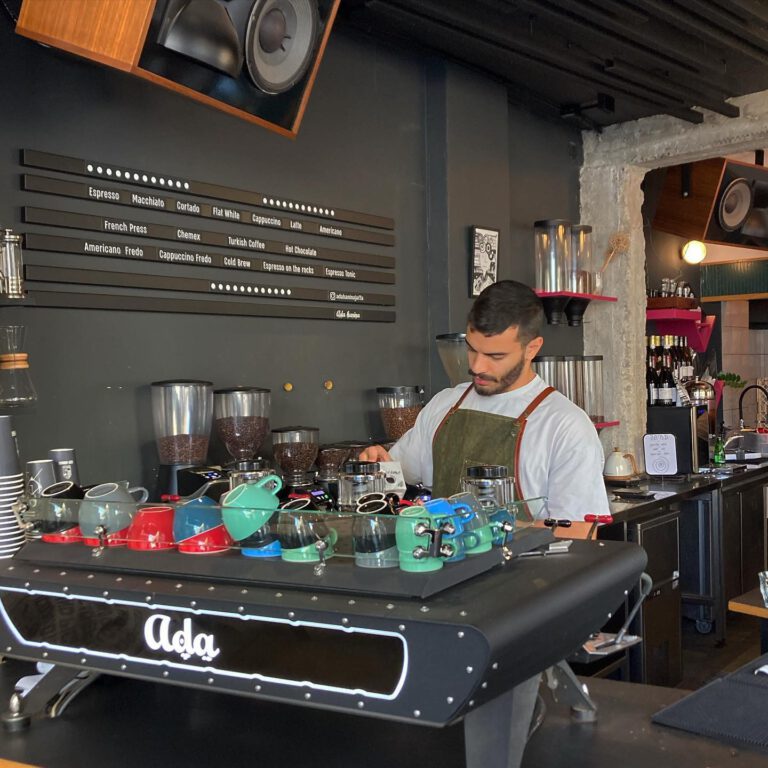
Ada Hanina Cafe, barrista pouring coffee at the free trade, organic coffee shop in the Flea market of Jaffa
Cafelix in the Noga neighborhood of Jaffa

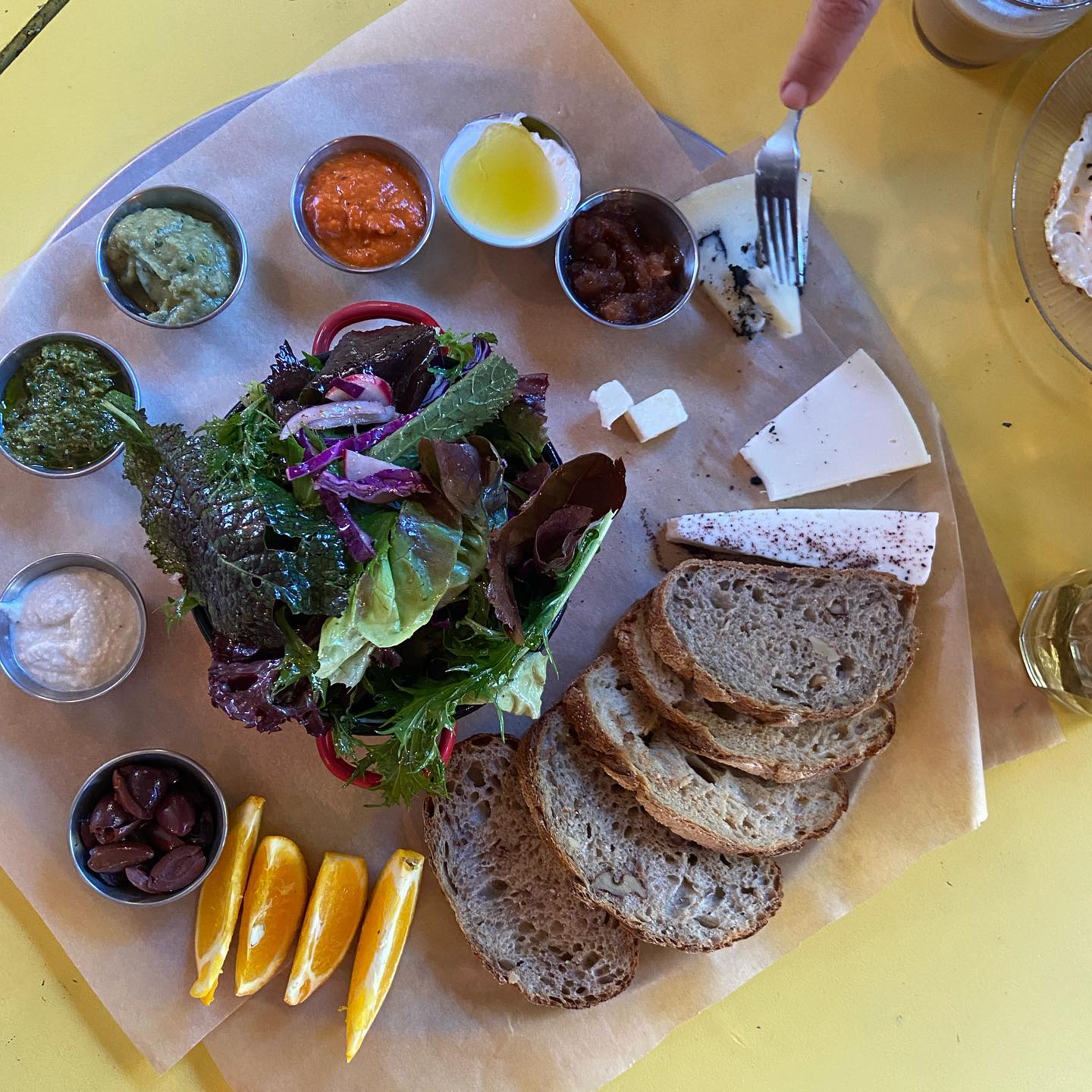
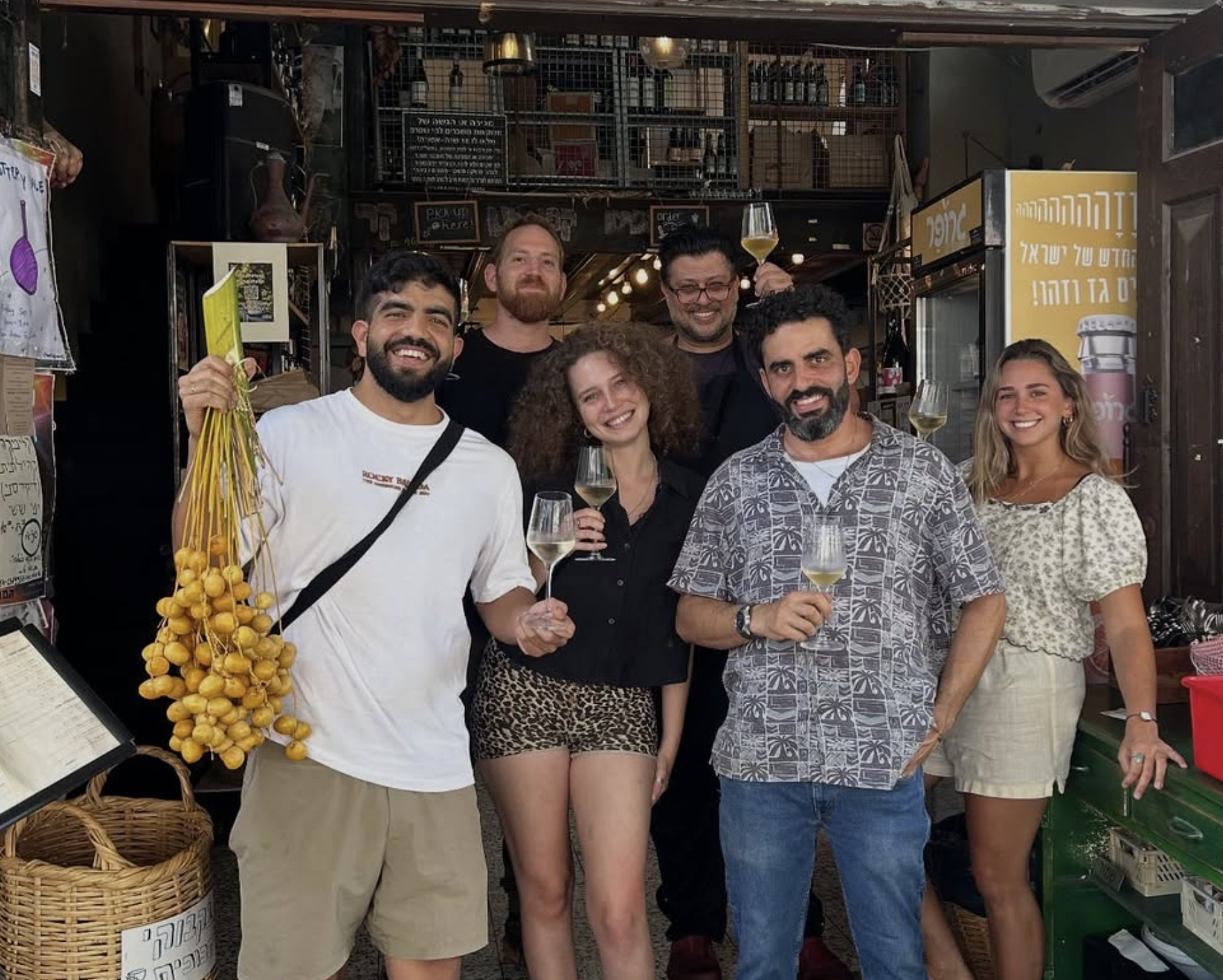
Alhambra Deli and cafe offers a unique Farm to Table experience. They have much more than coffee, and offer culinary experiences of Slow Food sourced from all over the Land of Israel. 

A plate of local delicacies
Yakir Knafo, center right, with his crew from the deli Alhmabra in Jaffa

Jaffa Fishery

Visiting Jaffa port by 7:00 in the morning is a treat for the early birds as you witness fishermen unloading their fresh daily catches and displaying them along the harbor. Take advantage of this opportunity to purchase high-quality doral, snapper, and seafood directly from the fishermen, all at a more affordable price than restaurants.

Pizza

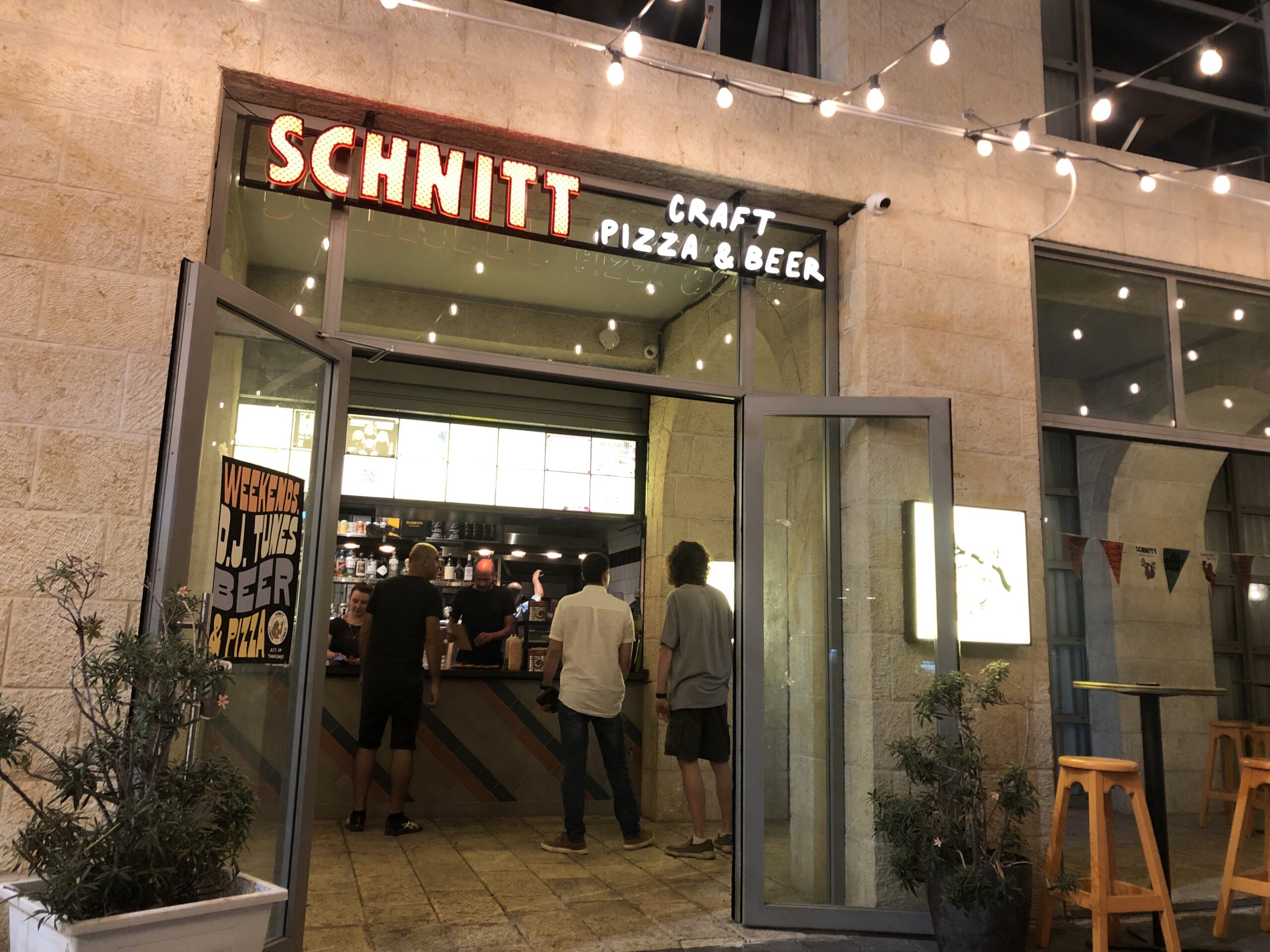
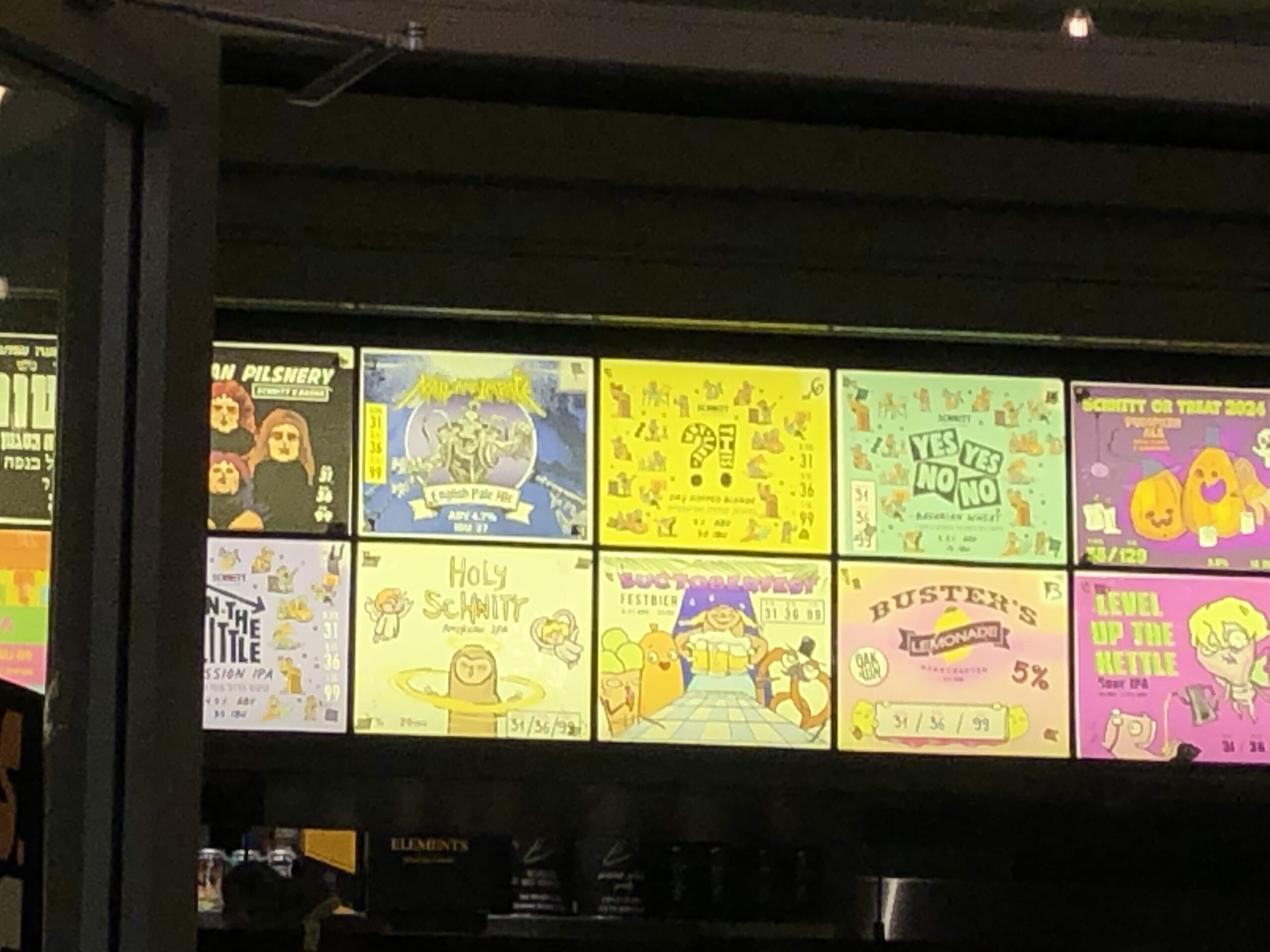
Schnitt Pizza and craft beer in Jaffa

Eat pizza and drink local craft beer from Schnitt. You might feel that you are in a Swiss or German beer garden. The beer and pizza are our favorite

Shaffa Bar

Immerse yourself in 70s vibes and enjoy locally sourced ingredients at Shaffa Bar. Known for its vibrant ambiance, this bar offers a range of cocktails during happy hour with the bonus of eating sustainably. Indulge in great company and feel good about your environmentally positive choices.

Eco-Friendly Transportation

Electric Scooter

If you love an adventure like me, I’d like to introduce you to Tel Aviv-Yafo’s electric scooter takeover. Many scooter-sharing companies operate in the city, allowing people to rent electric scooters for short-distance travel. They produce zero emissions and make a greener and more fun alternative to driving in a car. Watch out for reckless drivers. 

Biking

Get active by biking around Jaffa’s bike-friendly city and using the dedicated bike lanes and bike-sharing programs. Renting a bike to explore the city while minimizing your carbon footprint is encouraged. Several bike rental stations throughout Jaffa make it easy for locals and visitors alike to help the environment.

Walking

Jaffa is certainly a walkable and pedestrian-friendly city. Enjoy the city’s charm and discover new places only seen on foot. Walking does not only reduce pollution but also allows a fully immersive experience of the culture and overall vibe of the city. 

Public Transportation

The old city is conveniently well-connected to the Tel Aviv metropolitan area through public transportation networks. The choices are abundant between the easily accessible bus system and light rail trains, providing convenient and eco-friendly options for traveling within Jaffa and nearby destinations. 

Sustainable Cultural Experiences

The East West House, venue in Jaffa
The East West House in Jaffa

Flea Market

The Jaffa flea market, known as the Shuk Hapishpeshim, is where creativity thrives. Endless treasures, including antiques, crafts, and locally made products, are yours to find. Supporting local artists and small businesses as well as sustainable entrepreneurship. A few boutique hotels have opened in recent years.

Galleries

You aren’t doing Jaffa’s correctly if you do not explore its renowned art scene and visit its many galleries of local visionaries. Admire or even purchase unique pieces from the local art community. Try Beit Kandinof which is an art gallery and happening space combined with a high-end restaurant. 

Live Music

The East West House offers weekly shows featuring local music with ethnic roots from the Arab and Jewish world. There is also a more taverna-style showing of a similar vibe at Shaffa Bar many days of the week.

Artisanal Shops and Workshops

havie upcycled hipsters
Making work trousers at Havie in Jaffa

And finally, from pottery and ceramics to jewelry-making and textile weaving, Jaffa’s artisans combine their gorgeous work with the city’s rich cultural heritage. Gain insight into their creative processes and learn about the importance of their craft. Make sure to check out hands-on workshops, mainly concentrated in the area called Noga.

  • There is Beit Hamelacha which offers print-making and textile-dying workshops in Noga.
  • Ilanit Neutra maker of upcycled tire bags has her studio in Noga.
  • Enjoy a free co-working space for the 18-25 year-old crowd on 83 Yefet Street. It is supported by the Tel Aviv-Jaffa Municipality.

Take a walk around the streets of the Noga neighborhood in Jaffa. You will discover hand-made shoes, pottery shops and young fashion designers like these guys from Havie making goods and clothing out of upcycled army tents

How to quiet noise from construction in your office

street resurfacing in New York
Streets need to be resurfaced in New York but the humming and grinding noise is unsettling. Noise is environmental pollution. 

A construction site near your office can be a source of constant annoyance. The noise can be unbearable. From hammering and drilling to the buzzing of saws, particularly if you work in a creative or knowledge-based profession that requires a quiet workspace. 

Noise pollution can increase stress, decrease productivity, and impact overall satisfaction and well-being in the workplace.

Creating a quiet workspace should be a top priority for both employers and employees. Here are 10 solutions for employers to reduce construction noise in the office.

Sound Barrier Fence

Sound barrier fences aim to reduce noise pollution by absorbing or reflecting sound waves using materials like wood, concrete, or metal. They are commonly employed in residential areas to alleviate noise from highways, airports, or other sources.  

Double-Glazing Windows

Double-glazing windows can reduce noise pollution from outside sources. The double-pane application serves as an extra layer of insulation that helps absorb sound and keep it out of your workspace. 

Acoustic Wall Panels & Ceiling Tiles

sound pollution is a thing, boy screams into mic
Unwanted sound is a form of pollution with real health effects

Acoustic wall panels and ceiling tiles effectively reduce sound in your office. The absorbent material helps absorb noise and reflects it away from your workspace. 

Rugs & Carpeting

Rugs and carpeting muffle noise in the workplace. By adding a layer of material between you and the floor, you can help reduce overall sound levels. 

Soundproofing Curtains & Blinds

Soundproofing curtains reduce noise pollution in the office. These heavy-duty curtains provide an extra layer of insulation that helps block out unwanted noise. Noise-reducing blinds are another excellent way to help keep sound from entering or leaving the office space. They provide an additional layer of protection against outside noise, allowing for more comfortable conversations in the office. The curtains and blinds also help reduce the amount of light entering the office, providing a comfortable working environment. 

White Noise Machines

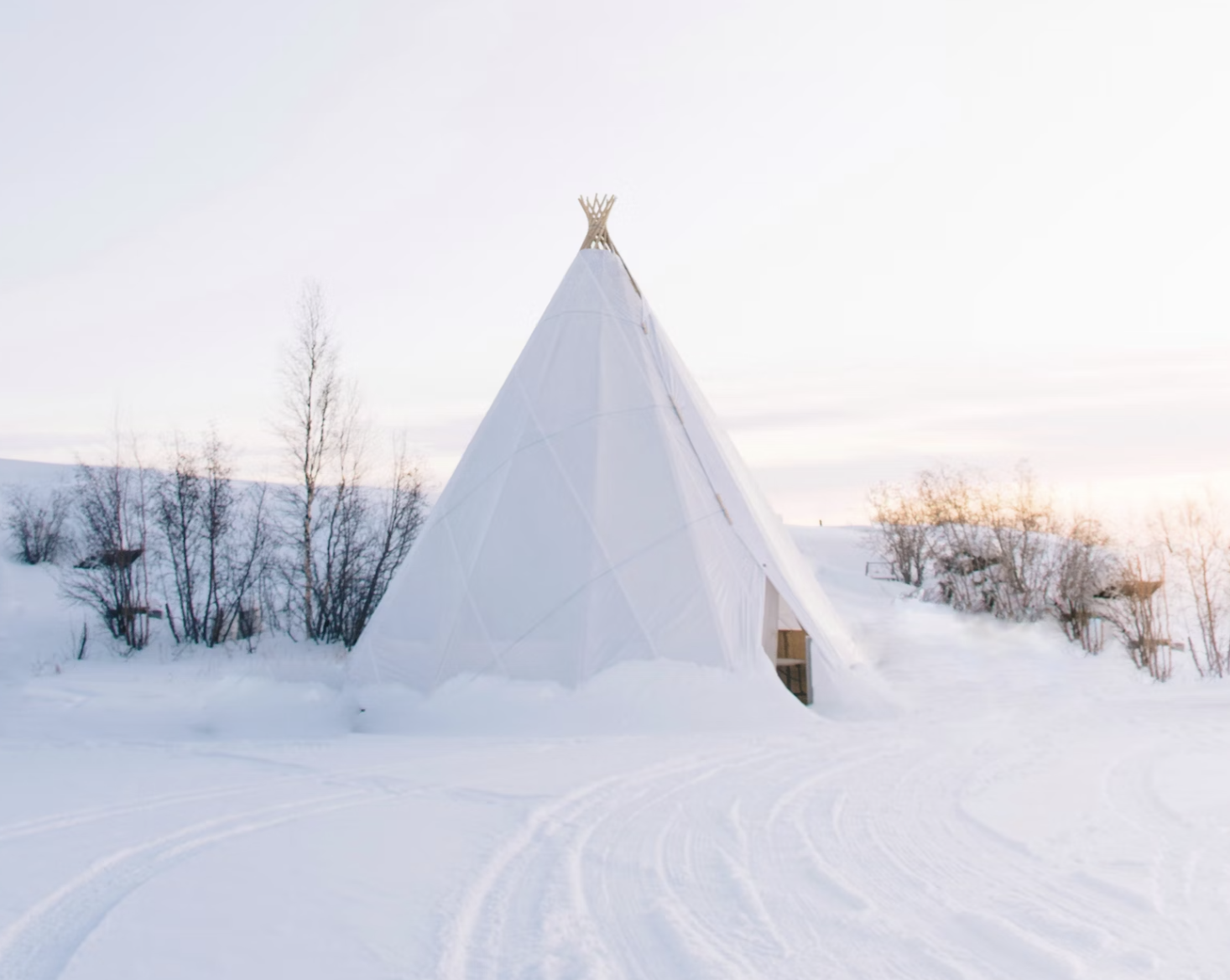
Teepee in snow
This is how white noise feels

White noise machines generate soothing ambient sound to cover up distracting noises. While often used to sleep better in a noisy bedroom, they can be used in cacophonous offices, too. With these machines, you can customize your sound preferences so that it is easier to focus on work instead of being distracted by outside noise. These machines help create a more peaceful atmosphere and a more focused work environment where it is easier to concentrate and be productive. 

Soundproof Paint & Acoustic Foam Panels

Soundproof paint, which uses silica aerogel, is yet one more way to reduce noise pollution in the workplace. By applying a layer of soundproof paint, sound waves can be blocked.

Foam Panels

Foam panels placed on walls and ceilings are another way of blocking sound waves more effectively. This solution will allow you to talk without distractions from outside noise. 

Noise-Cancelling Headphones

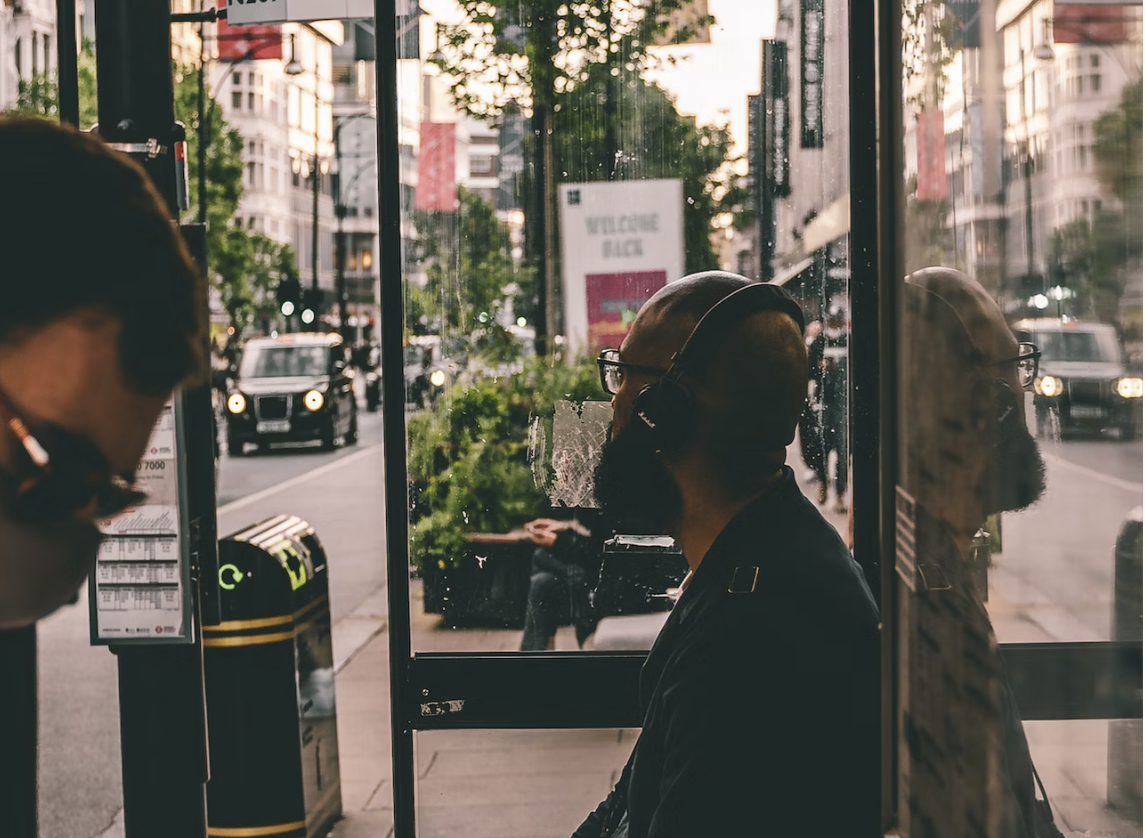
Man wearing noise reducing headphones
Noise cancelling headphones can reduce the stress of city noise

Noise-cancelling headphones are great for blocking out distracting noises in the office. They also provide a great way to listen to music without disrupting your colleagues or fellow office workers. With them, you can do more than just cancel outside noises. You can also enjoy your music without having to worry about bothering anyone. 

Soundproofing Materials

Soundproofing materials such as dampening panels can be used to reduce the amount of sound that travels through walls in office spaces. This will provide a quieter environment for everyone in the office. 

Currently, Eco-Friendly Construction Does Not Address Noise Pollution

Although many green construction building projects have adopted a wide range of eco-friendly products, these focus on energy and resource conservation or eliminating toxic products. Since reducing noise pollution in surrounding offices is necessary, employers must invest in soundproofing materials, install acoustic insulation, use noise-canceling headphones, encourage employees to use headsets, or try other noise-reducing options.


Top-5 Benefits of Using an Online Flyer Creator for Your Next Event

0
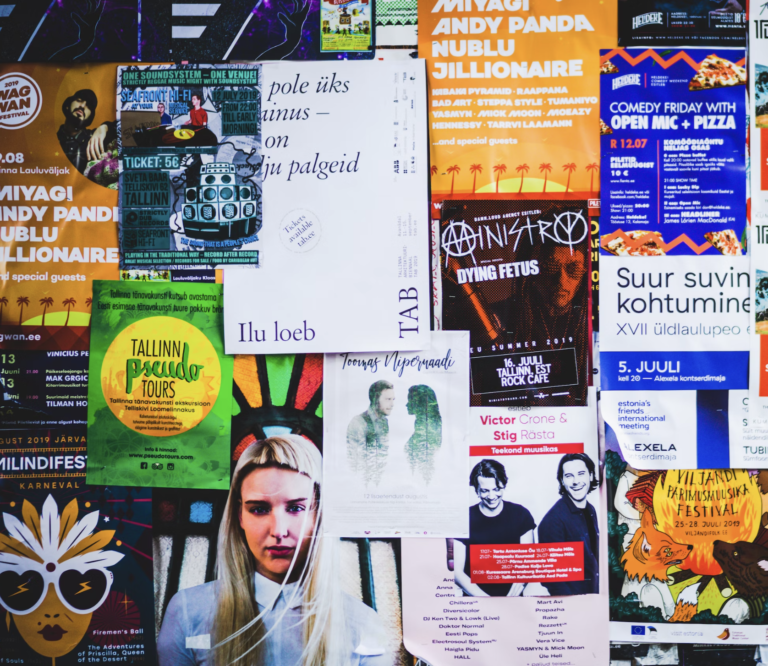
colorful posters in Europe printed with algae and sustainable eco-dyes
Colorful posters in Europe printed with algae and sustainable eco-dyes

In today’s digital age, various design tools have revolutionized how we make and promote various materials. An online flyer creator is one of them that has gained significant popularity. And that’s for a reason. 

With a wide range of customizable templates and a user-friendly interface, this tool simplifies the process of creating eye-catching flyers for occasions, businesses, and more. This post will look at the top five benefits of using this great thing for your next event.

1: Easy-to-Use Templates

Creating a visually appealing flyer from scratch may be daunting, especially if you don’t have a design background. Dedicated online creators come equipped with a diverse range of pre-designed templates, allowing you to choose a layout that suits your event’s theme. They often incorporate professionally developed elements, ensuring your creation looks polished and attractive even if you’re not a design expert.

Using a web flyer creator, you can browse various templates categorized by types or styles. Whether organizing a music concert or a bake sale, you’ll find great options tailored to your needs. Templates provide a solid foundation for your small creative project, making it easier to compose a flyer that captures the essence of your event.

2: Time and Cost Savings

Printing and distributing physical flyers may be time-consuming and expensive. Using online tools for designing them offers a cost-effective solution by eliminating the need for printing and allowing you to share your creation digitally. With just a few clicks, you can make it, download it in popular shareable formats (PDF, PNG, etc.), and distribute it on the web via email, social media platforms, or your website.

3: Customization Options

posters printed with sustainable ink
Biodegradable poster paper and sustainable ink. Ask for these. 

One of the key advantages of using an online flyer creator is the ability to customize your work. These tools often provide a wide range of options for tweaking things like:

  • colors;
  • fonts;
  • images;
  • layouts.

You may add branding elements like logos and slogans to make a flyer that aligns with your event or business. By tailoring the whole design to your precise demands, you can effectively convey your message and capture the attention of your target audience.

These dedicated design tools typically present intuitive editing interfaces that allow you to make real-time changes to your project. You can experiment with different color palettes, fonts, and image placements until you achieve the desired look. Some even provide advanced features, such as layering and effects, meaning you can add depth and uniqueness to your designs.

4: Flexibility and Versatility

add seeds or guitar pics to your business card
Add seeds for the garden or picks made from recycled paper and plastic to show off your handmade guitar business. Be creative

Online flyer creators offer flexibility in terms of design changes and revisions. If you need to update the details of your event or make any modifications, you can just open and edit your saved project without starting from scratch. It means eliminating unnecessary repetitive work.

If you’re organizing multiple events or running several campaigns, you can easily modify and repurpose existing projects, saving valuable time and effort. This feature is particularly useful when dealing with time-sensitive promotions or when you need to make last-minute shifts.

Overall, it’s possible to re-design your creations effortlessly. Suppose you initially developed a flyer for online promotion but later decided to print physical copies for a similar occasion. In that case, you can simply adjust the needed points and ensure that your work retains its visual appeal in the new look. This versatility saves you from the hassle of composing the entire new project and guarantees consistent branding across different mediums.

5: Analytics and Insights

Unlike traditional printed resources, some online creators deliver valuable insights and analytics about your campaign’s performance. Many web tools offer tracking features that enable you to monitor the number of views, clicks, and conversions generated by your creation. This data helps you evaluate the effectiveness of your design and promotional strategies, allowing you to make data-driven decisions for future marketing efforts.

You may also gain insights into your target audience’s preferences and behaviors by analyzing the analytics provided by dedicated tools. You can determine which design elements, headlines, or calls to action perform better and optimize your future project designs accordingly. This iterative process lets you continually improve your marketing collateral and maximize the impact of your promotional campaigns.

Conclusion

Using a special online design tool streamlines the process of developing and distributing stunning event flyers. Whether you’re promoting a concert, a charity fundraiser, or a local business, harnessing the power of web flyer creators can help you make visually attractive materials that captivate your audience and drive engagement.