

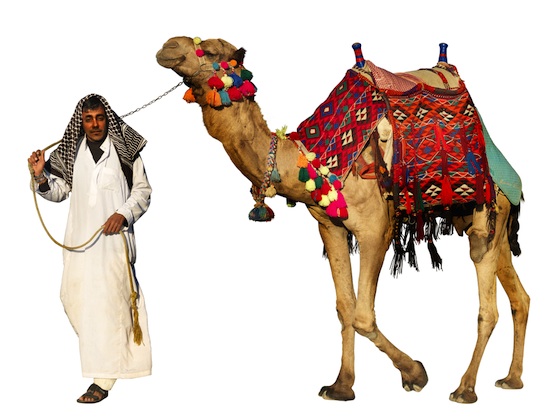
 The same research laboratory behind the world’s first cloned camel and a hybrid llama and camel called Cama has recently announced that they are genetically modifying camels in order to produce pharmaceutical proteins through their milk.
Dr. Nisar Wani from the Reproductive Biology Laboratory at the Camel Reproduction Center outside of Dubai says the project is designed to decrease the cost of life-saving medicines such as insulin, but the words genetically modified are likely to sound off an alarm – especially since no other first world country has approved drugs produced from transgenic animals.
Humans have been altering the genetic makeup of animals for a long time. This tampering allows us to express favorable traits, with no harm to either us or the animals themselves. In the case of the Dubai’s Cama, for example, Dr. Skidmore wanted to produce an animal that would have the llama’s lovely fleece and the camel’s resilience and strength.
But genetic modification is different as it involves introducing foreign genes into the animal’s genome.
Dr. Wani told SciDev.net that they are creating camel cells that have been modified with exogenous DNA for use in producing transgenic cloned animals. Eventually, perhaps as soon as this year, the lab will transfer the transgenic embryos to surrogate mothers.
Cloning is very difficult and comes with a very low success rate.
We talked to Dr. Mark Band, the Director of Functional Genomics at the University of Illinois at Urbana-Champaign, who says that thousands of transgenic animals around the world have been produced.
“Most likely they will insert human genes to produce proteins through the camel’s milk,” he said. “These genes will then be modified so that they are only expressed in the mammary.”
This ensures that the camel will not use the inserted proteins themselves, which could be potentially harmful to them, as they will only be produced through the camel’s milk.
However, Dr. Band notes that, as far as he knows, no other countries in the world have approved drugs produced by transgenic animals.
In 2009, the United States Federal Drug Administration compiled a list of frequently asked questions related to transgenic animals.
“To date, no transgenic animals have been approved for use as human food. A very limited number have been approved for rendering into animal feed components,” the agency notes.
This means that any drugs produced by Dubai’s genetically-modified camels can only be sold in Dubai, as it would be unlawful to sell them in countries that do not approve such pharmaceuticals.
We contacted Dr. Wani for comment but have not yet received a response.



Vow, it is a great news. I think this is a very good project. One of my friends is on a constant need of highly priced exogenous drug for her body to fight diseases. They say it is becuase of some genetic abnormality which does not allow her body to produce a protein responsible for it. There will not be a better news for her than sucess of such projects, wherein she can get the drug at cheaper prices.
Wouldn’t it be better to help PREVENT diabetes via healthy lifestyle and healthy nutrition and clean air in the cities??
://
This is very bad news. I pray there is no success in this GMO endeavor. As far as I see it, cloned animals are more disgusting than the offspring of two siblings.
This is very bad news. I pray there is no success in this GMO endeavor. I personally believe cloned animals are as worse than the offspring of two siblings.
This happens with all the new technologies. People do not like them initially but then become so much dependant on them that they become a part of routine life. Take example of testtube babies, insemination and so many other things. In few years we will have most of the drugs fron transgenic animals and that is good because it will make it cheaper.