BPA Chemical Banned from Baby Bottles, Cups in the US

bisphenol A, BPA ban in baby bottles america, FDA

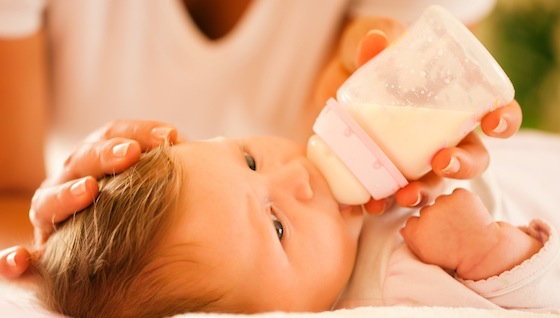
America, next to some European countries, has the most stringent environmental policies on health and safety. In 2008 America’s Food and Health Administrations (the FDA) declared BPA, or bisphenol A, an estrogen mimic used in plastics, as safe. But in 2010 it started backpedaling over concerns that it might have health risks, especially in children. Yesterday it was announced that BPA is now banned in baby bottles and sippy cups across America. What does that mean for the health of babies around the planet?

“FDA is amending the food additive regulations to no longer allow BPA in the plastic used to make baby bottles and sippy cups,” said Curtis Allen, an FDA spokesman in an official announcement. “As a result, consumers can be confident that these products do not contain BPA.”

Many manufacturers in America and around the world have stopped adding BPA to their plastic products. Usually those companies that have made the effort to stop using BPA in their products widely advertise it as “BPA free.”

For women in the Middle East who might not have regulatory bodies guarding them and their children, be on the lookout for BPA-free products when buying anything for your baby or small child. That includes a BPA-free label in bottles, sippy cups, soothers, and even in the plastic used in breast pump containers and pipes.

BPA is an industrial chemical that has been present in many hard plastic bottles and metal-based food and beverage cans since the 1960s.

According to the FDA, studies employing standardized toxicity tests have thus far supported the safety of current low levels of human exposure to BPA.

But now they admit, that there is “some concern about the potential effects of BPA on the brain, behavior, and prostate gland in fetuses, infants, and young children.”

Women who are pregnant or who are thinking about becoming pregnant should also consider refraining from using BPA products, this Green Prophet suggests.

Environmentalists in America agree that even more vigilance should be taken on making sure that BPA is removed from all our food and beverage containers.

Where can you find BPA? It’s in a type of clear and hard plastics called polycarbonate which is used in water and soda bottles. It is in the resin linings of food and beverage cans as well as in the containers of infant formula. It’s ubiquitous and some experts warn that the ban for baby products is largely symbolic, and that wider bans need to be enforced.

Image of baby and bottle from Shutterstock

Karin Kloosterman
Karin Kloostermanhttp://www.greenprophet.com
Karin Kloosterman is an award-winning journalist, innovation strategist, and founder of Green Prophet, one of the Middle East’s pioneering sustainability platforms. She has ranked in the Top 10 of Verizon innovation competitions, participated in NASA-linked challenges, and spoken worldwide on climate, food security, and future resilience. With an IoT technology patent, features in Canada’s National Post, and leadership inside teams building next-generation agricultural and planetary systems — including Mars-farming concepts — Karin operates at the intersection of storytelling, science, and systems change. She doesn’t report on the future – she helps design it. Reach out directly to [email protected]

Read More

2 COMMENTS

LEAVE A REPLY

Please enter your comment!
Please enter your name here

TRENDING

Abortion Pills, Plan B and Mifepristone and what the new US mail ban means

Abortion pills, often confused with Plan B (the morning-after pill), and historically referred to as RU486 (mifepristone), are part of a broader category of reproductive health medications that women have been using for decades. But they are not the same thing.

Baby teeth read like tree rings paint a picture of toxins in early life

A new study from the Icahn School of Medicine at Mount Sinai in New York offers a striking insight into how the environments we are born into can quietly shape our brains years later. By analyzing naturally shed baby teeth, the ones tucked under pillows for the tooth fairy, researchers have reconstructed a detailed timeline of exposure to environmental metals during pregnancy and early infancy.

Is artificial turf bad for your health?

Artificial turf, the green plastic stuff that is supposed to look like grass, was sold to many home-owners as a clever compromise: a green-looking surface that makes you feel homey, but which needs no mowing. It survives heavy use, and in dry places like Middle East deserts, and in California or Texas, it can replace thirsty lawns. But it is toxic.

Why does eczema so often begin in childhood and how can we prevent it?

The first years of life may represent a critical window when environmental exposures: dust, mold, indoor allergens, pollutants, microplastics, all shape immune trajectories in lasting ways. If scientists can find safe ways to calm this early-life immune pathway, it may be possible to prevent allergic disease before it spreads from the skin to the lungs or gut.

Forever chemicals banned from Europe’s drinking water

The EU is taking a bold step in making sure all European Union member states worked to monitor and reduce PFAS levels in drinking water.

How to quiet noise from construction in your office

Streets need to be resurfaced in New York but the humming and grinding noise is unsettling. Noise is environmental pollution. 

EarthX and a blueprint for sustainable investing

Trammell S. Crow, a Dallas-based businessman and father of four, is focusing his efforts on impact investing, and media that focuses on saving the planet through EarthX.

Mining Afghanistan’s Mineral Discoveries Similar to Avatar

Now that American forces in Afghanistan are commemorating the longest period of any war that America has been involved in, including the 1965-73 Vietnam War, the recent discoveries of large and extremely valuable mineral and metal deposits may finally bring to light a reason to continue the presence of US fighting forces in this war torn and backward country.

From Pilot Plant to Global Stage: How Aduro Clean Technologies’ 2026 Expansion Signals a Turning Point for Chemical Recycling Investors Like Yazan Al Homsi

The company's Next Generation Process (NGP) Pilot Plant in London, Ontario, has officially moved into initial operating campaigns, generating the kind of structured, repeatable data that separates laboratory promise from commercial viability.

Nobul’s Regan McGee on Shareholder Value: “Complacency Is the Silent Killer” 

Why the governance framework designed to protect shareholders so...

Should You Invest in the Private Market?

startustartup Unlike public stock exchanges, which offer daily trading, strict...

How to build a 100-year-company

Kongō Gumi is a Japanese construction company, purportedly founded in 578 A.D., making it the world's oldest documented company. What can we learn about building sustainable businesses from them?

How AI Helps SaaS Companies Reduce Repetitive Customer Support Work

SaaS products are designed for large numbers of users with different levels of experience, and also in renewable energy.

Popular Categories