Israel to Compensate Jordan for Polluted River Water With the Sea of Galilee

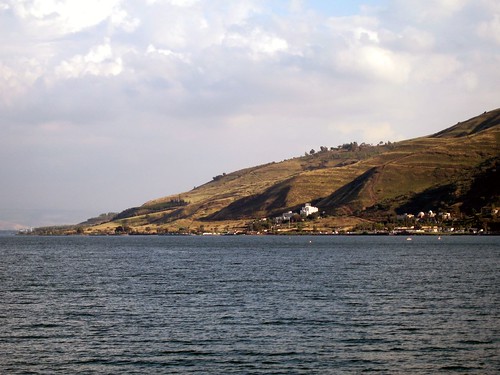
Israel’s Lake Kinneret (Sea of Galilee).  As compensation for polluting the Yarmouk River, Israel will pump freshwater from the lake into Jordan

As if the regional water scarcity wasn’t bad enough already, Israel will soon begin compensating Jordan with freshwater after oil waste and sewage contaminated the shared Yarmouk River water supply.

After detecting pollution from the Israeli side of the river last week, the Jordanian Ministry of Water and Irrigation suspended pumping from the King Abdullah Canal, which supplies Amman with one-third of its total water demand.

The ministry also filed an official complaint against the Israeli government, claming a violation of Jordan’s 1994 peace treaty with Israel. According to the agreement, Jordan receives 60,000 cubic meters of water daily from Israel’s Lake Kinneret during the month of March.  Jordan Valley Authority (JVA) Secretary General Musa Jamaani said Israel will pump up to 180,000 cubic meters from the Kinneret to Jordan, and will pump another 50-60,000 cubic meters this summer.

Mr. Jamaani also indicated that, although the relevant authorities will take steps to prevent similar incidents in the future, there are no safety guarantees.  He said, “If it reoccurs, we will close down the waterways and get our compensation. If Israel is fine with supplying us extra water in return for what it pollutes, it’s up to them… the pressure is on them rather than on us.”

He also assured the public that none of the contaminated water was pumped to consumers.  Instead, the polluted waters were discarded into valleys that pour into the Jordan River, which flows to the Dead Sea.

To me this is still a cause of concern, however, because the Jordan River is already extremely polluted, and the Dead Sea is a fragile, shrinking ecosystem.  Although Jordanian treatment plants do not have the capacity to treat the entire quantity of contaminated water, dumping the polluted waters into this floundering watershed seems like a not-too-prudent choice.

Another cause for concern is that Israel will be pumping even more water out of the Kinneret.   As further evidence of the severity of Israel’s water crisis, the water level of the Kinneret is at an all-time low.  This past summer, the level reached the black line, where pumping the water can cause permanent danger to the entire lake.  So is it really a feasible solution for Israel to promise Jordan more water from the Kinneret, especially during the hot summer months?  And if Israel can’t provide the water it promised, how will this impact Jordan, whose own water crisis is even more severe?

In any case, it’s great that the two countries were able to solve this problem amicably, since we’ve so often seen how the environment, specifically when it comes to water, can be a tricky conflict issue in the Middle East.

:: Jordan Times

Image: Ladyhawke

For more on water pollution in the Middle East, check out the following Prophecies:
High Radioactive Content Found in Jordanian Groundwater

Kishon River 2? IDF NAHAL Infantry Unit Afflicted by Cancer–Causes Unknown

Old Israeli Dump Threatens Water Resources in West Bank

Rachel Bergstein
Rachel Bergsteinhttps://www.greenprophet.com/
When her vegan summer camp counselor explained to a fifteen-year-old Rachel how the dairy industry pollutes the groundwater in poor rural communities and causes global warming, there was no turning back. Her green fire lit, Rachel became increasingly passionate about the relationship between human societies and the natural environment, particularly about the systemic injustices associated with environmental degradation. After snagging a B.A. in Peace and Justice Studies at the University of Maryland, where she wrote an undergraduate thesis on water injustice in Israel/Palestine and South Africa, Rachel was awarded the New Israel Fund/Shatil’s Rabbi Richard J. Israel Social Justice Fellowship to come and spread the green gospel in Israel for the 2009-2010 academic year. She currently interns for Friends of the Earth Middle East in their Tel Aviv office. When Rachel is not having anxiety about her ecological footprint, carbon and otherwise, she can be found in hot pursuit of the best vegetarian food Tel Aviv has to offer. She also blogs about her experience as an NIF fellow and environmentalist in Israel at organichummus.wordpress.com. Rachel can be reached at rachelbergstein (at) gmail (dot) com.
4 COMMENTS
  1. i think you shouldn't just be tslking about what you think you should have more facts then what you have already.

Comments are closed.

TRENDING

What are AWG air-water generators, and why they aren’t a golden-bullet solution (yet)

Atmospheric water generators (AWGs) sound like magic: machines that can pull drinking water out of air. The idea is mentioned in the Bible, where the elders would pray for water collected as dew on plants and the catch on turning this into a machine is in the physics. To turn invisible vapor into liquid, you must remove heat, especially the latent heat of condensation.

Jordan’s $6 Billion Aqaba–Amman Desalination Project from the Red Sea Moves Forward

In 2025, the Jordanian government signed agreements with a consortium led by Meridiam and SUEZ, alongside VINCI Construction and Orascom Construction. Under a 30-year concession agreement, the consortium will design, build, finance, operate, and maintain the system before transferring it back to the Jordanian government. The total investment is estimated at approximately $6 billion USD.

Earth building with Dead Sea salt bricks

Researchers develop a brick made largely from recycled Dead Sea salt—offering a potential alternative to carbon-intensive cement.

Peace hospital opens between Jordan and Israel

The proposed medical centre, described by Emek HaMaayanot Regional Council head Itamar Matiash as “a centre for cancer treatment, so that people from Jordan or further away could come and receive treatment,” would become the flagship of a wider cluster of medical, academic and innovation-based services planned for the Israeli half of the zone.

Iran’s water mafia and thirst for war leaves the country on brink of being dry

Iran’s Lake Urmia, once the Middle East’s largest saltwater lake, has shrunk by 90 percent due to mismanagement, dams, and drought. As Tehran pours billions into foreign conflicts, water activists face repression at home. The crisis mirrors Syria’s drought-driven unrest, showing how water scarcity can destabilize entire regions.

Should You Invest in the Private Market?

startustartup Unlike public stock exchanges, which offer daily trading, strict...

How to build a 100-year-company

Kongō Gumi is a Japanese construction company, purportedly founded in 578 A.D., making it the world's oldest documented company. What can we learn about building sustainable businesses from them?

From Pilot Plant to Global Stage: How Aduro Clean Technologies’ 2026 Expansion Signals a Turning Point for Chemical Recycling Investors Like Yazan Al Homsi

The company's Next Generation Process (NGP) Pilot Plant in London, Ontario, has officially moved into initial operating campaigns, generating the kind of structured, repeatable data that separates laboratory promise from commercial viability.

How AI Helps SaaS Companies Reduce Repetitive Customer Support Work

SaaS products are designed for large numbers of users with different levels of experience, and also in renewable energy.

Pulling Water from the Air

Faced with water shortage in Amman, Laurie digs up...

Turning Your Energy Consultancy into an LLC: 4 Legal Steps for Founders in Texas

If you are starting a renewable energy business in Texas, learn how to start an LLC by the books.

Tracking the Impacts of a Hydroelectric Dam Along the Tigris River

For the next two months, I'll be taking a break from my usual Green Prophet posts to report on a transnational environmental issue: the Ilısu Dam currently under construction in Turkey, and the ways it will transform life along the Tigris River.

6 Payment Processors With the Fastest Onboarding for SMBs

Get your SMB up and running fast with these 6 payment processors. Compare the quickest onboarding options to start accepting customer payments without delay.

Related Articles

Popular Categories