Turkish Energy Analyst Says Biggest Emitters Avoided Durban Commitments

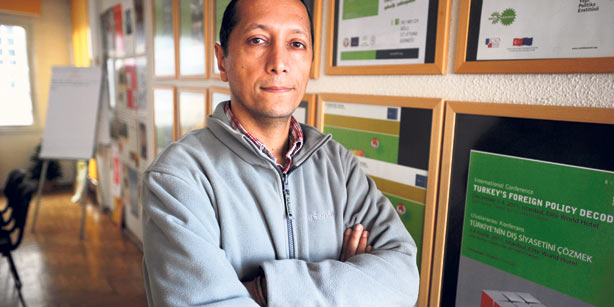
 Özgür Gürbüz, turkey energy analystThe countries that emit the most greenhouse gases only agreed to “vague, fragile” reduction targets at the recent climate change conference in Durban, according to Özgür Gürbüz, who was present at the conference.

For MENA countries, there are some bright spots in the outcome of the most recent United Nations Framework Convention on Climate Change (COP17) in Durban, South Africa. No legally binding greenhouse gas-emissions reduction target was set at the COP17, however. Instead, countries aimed at reducing their emissions by 25 to 40 percent from 1990 levels by 2020.

Prospects for real reductions: slim

But the world’s biggest polluters — the United States, Canada, Russia, and Japan, who together emit approximately one third of global emissions — will probably not adhere to this target without a legally binding protocol.

That’s the opinion of Özgür Gürbüz, a Turkish energy analyst, journalist, and consultant who has attended several climate change conferences, including COP17, who was recently interviewed in the Turkish daily Today’s Zaman.

Compared to the first commitment period of the Kyoto Protocol, which expires next year, says Gürbüz, the targeted 25-40% reduction from Durban is a wide, vague range, and gives countries too much time to reduce their emissions.

“An international, legally binding treaty… has to be finalized and realized by 2017, but preferably earlier,” he told the Zaman. “The current agreement is very fragile and could break down.”

All the technology needed to substantially reduce GHG emissions in developed countries already exists, according to Gürbüz, but political will and commercial interests are holding countries back from doing so.

“When it comes to oil, we are ready to talk about values and human rights, but when it comes to lives that are not attached to material benefits, there is nobody to speak out,” he pointed out.

Turkey’s strategy

Turkey is still included in the list of Annex I (developed) countries in the COP charter, but the “special circumstances” of its in-between stage of development, which exempted it from certain requirements in the Kyoto Protocol’s first commitment period.

Turkey’s emissions since 1990, however, have grown by 97 percent — one of the highest rates in the world. Per capita carbon-equivalent emissions are close to 5.2 tons, close to China’s and higher than the world average.

With very low hydrocarbon reserves of its own and plentiful renewable resources, Turkey’s energy future should be obvious, Gürbüz says.

Yet Turkey’s leaders seem to be fixated on following the same development path as the nations with the highest emissions of today.

“We are taught that higher electricity consumption per capita is a criterion of development. That is nonsense. Let’s keep the lights on all the time in our houses! I am sure it will double per capita consumption but the country will be worse off because of wasted energy.”

Instead, Turkey should focus on improving the energy efficiency of its vehicles, devices, and industrial facilities, adds Gürbüz. That’s the only path to true energy independence and energy security for this rapidly growing country.

:: Today’s Zaman 

Read more about what happened at Durban:
Durban Gives 6 Reasons For The Middle East To Celebrate
How Will Saudi-Driven Carbon Capture Work Under the Durban Climate Agreement? 
Saudi Acts As Oil Cheerleader At COP 17 Circus

Image via Today’s Zaman

Julia Harte
Julia Hartehttp://www.greenprophet.com
Julia spent her childhood summers in a remote research station in the Rocky Mountains of Colorado, helping her father with a 25-year-old experiment in which he simulated global warming over a patch of alpine meadow. When not measuring plant species diversity or carbon flux in the soil, she could be found scampering around the forests and finding snowbanks to slide down. Now she is a freelance journalist living in Istanbul, where her passion for the environment intersects with her interest in Turkish politics and grassroots culture. She also writes about Turkish climate and energy policy for Solve Climate News.

Read More

1 COMMENT
  1. …..biggest polluters – USA, Canada, Russia and Japan….
    Don’t we like to offend China and India, who probably also make up over another third of the worlds pollution???

LEAVE A REPLY

Please enter your comment!
Please enter your name here

TRENDING

5 projects to help kickstart your company’s sustainability journey 

True progress happens when environmental ambition meets action. Decarbonizing efficiently is possible for any business in any sector, but actually getting started can sometimes feel daunting.   The trick? It’s to start small and build momentum. Here are five potential projects to help you get started.  

Abortion Pills, Plan B and Mifepristone and what the new US mail ban means

Abortion pills, often confused with Plan B (the morning-after pill), and historically referred to as RU486 (mifepristone), are part of a broader category of reproductive health medications that women have been using for decades. But they are not the same thing.

Hormuz 2026 Conflict Poses an Energy and Food Security Dilemma in a Warming World

As tensions rise in one of the world’s most critical maritime chokepoints, the ripple effects go far beyond oil—touching food systems, climate pressures, and regional stability

Climate change traced in sea turtle shells

It's sea turtles which may in the end save islands in the Seychelles. They may also better help us understand climate change. Like rings on a tree, scientists have found a way to read sea turtle shells and how they are impacted by climate change tells a story. 

We’ve lived through the past 11 of the hottest years on record

Have we forgotten about global warming when the world...

How to quiet noise from construction in your office

Streets need to be resurfaced in New York but the humming and grinding noise is unsettling. Noise is environmental pollution. 

EarthX and a blueprint for sustainable investing

Trammell S. Crow, a Dallas-based businessman and father of four, is focusing his efforts on impact investing, and media that focuses on saving the planet through EarthX.

Mining Afghanistan’s Mineral Discoveries Similar to Avatar

Now that American forces in Afghanistan are commemorating the longest period of any war that America has been involved in, including the 1965-73 Vietnam War, the recent discoveries of large and extremely valuable mineral and metal deposits may finally bring to light a reason to continue the presence of US fighting forces in this war torn and backward country.

From Pilot Plant to Global Stage: How Aduro Clean Technologies’ 2026 Expansion Signals a Turning Point for Chemical Recycling Investors Like Yazan Al Homsi

The company's Next Generation Process (NGP) Pilot Plant in London, Ontario, has officially moved into initial operating campaigns, generating the kind of structured, repeatable data that separates laboratory promise from commercial viability.

Nobul’s Regan McGee on Shareholder Value: “Complacency Is the Silent Killer” 

Why the governance framework designed to protect shareholders so...

Should You Invest in the Private Market?

startustartup Unlike public stock exchanges, which offer daily trading, strict...

How to build a 100-year-company

Kongō Gumi is a Japanese construction company, purportedly founded in 578 A.D., making it the world's oldest documented company. What can we learn about building sustainable businesses from them?

How AI Helps SaaS Companies Reduce Repetitive Customer Support Work

SaaS products are designed for large numbers of users with different levels of experience, and also in renewable energy.

Popular Categories