

Salt Cedars are Carbon Sinks in the Desert

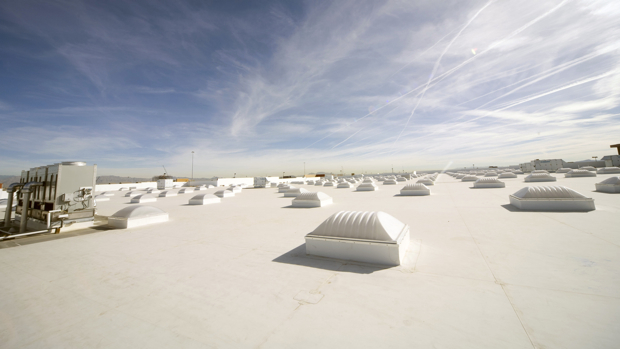
tamarix salt cedar israelConsidered a pest in California, a tamarix salt cedar tree found in the Arava Desert could sequester greenhouse gases on barren, desert land.

Fears of global warming and its impact on our environment have left scientists scrambling to decrease levels of atmospheric carbon we humans produce. But Tel Aviv University researchers are doing their part to reduce humanity’s carbon footprint by successfully growing forests in the most unlikely place — deep in Israel’s Arava Desert.

With environmental “extras” such as a local plant species, recycled sewage water unsuitable for agriculture, and arid lands unusable for crops, a group of researchers including Profs. Amram Eshel and Aviah Zilberstein have discovered a winning combination.

In many parts of the world, including areas of India, central Asia and the Sahara desert, their new crop of plants would be not only viable in difficult terrain, but valuable in terms of carbon reduction. These standing crops, grown on land once considered barren, can soak up carbon dioxide from the atmosphere and convert it into oxygen.

Their research is soon to be published in the European Journal of Plant Science and Biotechnology.

Though maintaining our current forests is a necessary initiative, Prof. Eshel says, it is not enough to off-set human carbon output. In their quest to create forests that diminish carbon dioxide in the atmosphere, many countries have been converting fertile agricultural lands into forests.

But TAU researchers believed that encouraging growth on a piece of land that was traditionally barren, such as desert land, was a step in a better direction.

“When you take the overall carbon balance of converting agricultural land and freshwater into energy products, you may not gain that much,” says Prof. Eshel. “You’re investing a lot of energy in the process itself, thus releasing a lot of carbon into the atmosphere.”

To conserve fresh water, the researchers used water considered of low quality, such as recycled sewage water and salt water that was the by-product of inland desalination plants. The final piece of the puzzle was to find a plant hearty enough to successfully grow in the desert.

The researchers turned to Tamarix, a botanical genus that includes salt cedar trees and is indigenous to the old-world deserts. Some 150 different varieties of the botanical genus were used, grown in both a common garden setting and in densities that mimicked commercial crops.

With the first harvest of trees just last summer, researchers have much to process, including analyzing the amount of carbon dioxide the crops have successfully captured from the atmosphere. The answers will determine how much carbon such a crop can offset.

A source for biofuel?

The cut trees themselves might also be used as a source of renewable energy. These “biomass” or “biofuel” crops, derived from natural crops, could help to reduce dependence on traditional fossil fuels such as coal. But the question of where to grow crops dedicated to fuel production had to be addressed, since converting agricultural land could have the side effect of creating food shortages.

Arid and previously unused desert lands provide an ideal solution, Prof. Eshel says. To make his approach economically feasible, much more land would be needed than Israel can provide. But similar tracts of land, such as the Sahara Desert, are big enough to grow these types of crops on a larger scale. He adds that what has been done in the Israeli desert can be replicated elsewhere to great effect.

TRENDING

140 companies bought dubious carbon credits from Brazil; BlackRock, Deloitte, and Phillip Morris among them

BCG retired around 90,000 credits. KPMG and Deloitte each retired around 5,500 credits. Other corporations using these problematic offsets include Barilla, Philip Morris, Uber, SWIFT, Mastercard, S&P Global, Engie, Yamaha Motor, and Dell.

Leading Through a Dual-Energy Transition: Balancing Decarbonisation with Energy Security

Experience in one area of the energy industry isn't enough to guarantee readiness across all the others. That's where a structured program like an MBA in energy can come in. Today's advanced curricula explore energy economics, finance, policy, and strategic management alongside the technical subjects. And when pursuing an energy MBA online, professionals can skill up and retrain without having to step out of the labor market -- an important perk at a time when skilled professionals are already in short supply.

Can biochar reduce ‘Forever Chemicals’ in food if it’s used in farms?

Biochar is produced by heating organic material in a low-oxygen environment so it does not burn. This process, known as pyrolysis, transforms plant matter into a stable, carbon-rich material.

How you create green steel on a blockchain

The thing about raw materials is that once they are melted down, you can't prove the source of the material. Same is true with gold, cucumbers and even forged products that look the same as the real thing. When it comes to steel, and how we produce it, it has a massive carbon problem. What's happening in Japan right now could change how we think about heavy industry and climate action.

Nature as Capital at COP30 and how blended finance and debt-for-nature swaps work

Belém in Brazil may be remembered as the summit where nature moved from a side-event to system change. If you are there at the event, Look for bigger blended-finance vehicles for forests and watersheds, standardized biodiversity/ecosystem credit frameworks, clearer guidance on how trade tools like CBAM and deforestation-free rules interact with development and equity goals, and concrete deals in the Amazon and beyond that link restoration to export growth.

Should You Invest in the Private Market?

startustartup Unlike public stock exchanges, which offer daily trading, strict...

How to build a 100-year-company

Kongō Gumi is a Japanese construction company, purportedly founded in 578 A.D., making it the world's oldest documented company. What can we learn about building sustainable businesses from them?

From Pilot Plant to Global Stage: How Aduro Clean Technologies’ 2026 Expansion Signals a Turning Point for Chemical Recycling Investors Like Yazan Al Homsi

The company's Next Generation Process (NGP) Pilot Plant in London, Ontario, has officially moved into initial operating campaigns, generating the kind of structured, repeatable data that separates laboratory promise from commercial viability.

How AI Helps SaaS Companies Reduce Repetitive Customer Support Work

SaaS products are designed for large numbers of users with different levels of experience, and also in renewable energy.

Pulling Water from the Air

Faced with water shortage in Amman, Laurie digs up...

Turning Your Energy Consultancy into an LLC: 4 Legal Steps for Founders in Texas

If you are starting a renewable energy business in Texas, learn how to start an LLC by the books.

Tracking the Impacts of a Hydroelectric Dam Along the Tigris River

For the next two months, I'll be taking a break from my usual Green Prophet posts to report on a transnational environmental issue: the Ilısu Dam currently under construction in Turkey, and the ways it will transform life along the Tigris River.

6 Payment Processors With the Fastest Onboarding for SMBs

Get your SMB up and running fast with these 6 payment processors. Compare the quickest onboarding options to start accepting customer payments without delay.

Related Articles

Popular Categories