
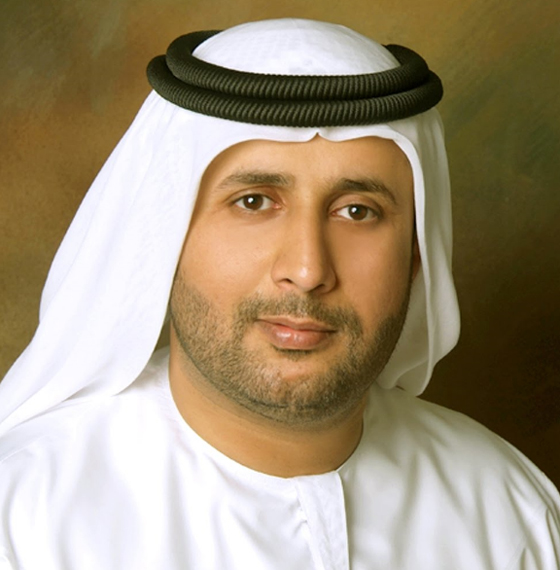
Empower to Cool Dubai With Recycled Sewage


District cooling is already super green. Now Ahmad Bin Shafir plans to take the mission one step further

Wild and crazy Dubai is hardly known for sensible conservation of scarce resources, but CEO Ahmad Bin Shafir could change all that with a radical new approach to keeping cities cool. His rapidly growing company Empower already cools Dubai’s most efficient new buildings with district cooling.

Far more efficient than air conditioning, district cooling uses water that has been cooled once in a central plant and then distributed through a network of piping systems to individual customer buildings. It achieves economies of scale because it uses centralized plants instead of duplicating the energy used with individual cooling units in each building.

Along with district heating, district cooling has been widely used in the greenest nations globally, such as Sweden, to minimize energy use and achieve carbon neutral buildings.

In Dubai, Empower has grown by leaps and bounds: in 2010 the company had a 37 percent increase in its signature district cooling plants, and as a result – it added 34 employees. Many CEOs, faced with that kind of success, would just keep doing things the same way, regardless of the fact that Dubai, like all the MENA nations, has extreme water scarcity, which will get worse over the next decades with climate change.

But Empower CEO, Ahmad Bin Shafir appears to be an unusual CEO. He plans an innovative solution to Dubai’s water scarcity. Instead of wasting freshwater, circling endlessly inside the cooling pipes of his district cooling projects, Empower has just begun to substitute recycled waste water to do the same work.

“The purpose of district cooling is to save energy” he says. “As we lead by example, we have adopted this new technology. Most real estate projects in Dubai are equipped with district cooling services which require a huge amount of water. Using sewage or recycled water represents a huge step in water conservation.”

Using waste water in place of fresh water is even more crucial in Dubai. The arid nation uses energy to desalinate water to make drinkable freshwater. It makes little sense to then waste that energy that has already been expended, by simply pushing that desalinated water around in contained pipes to cool buildings, negating the energy savings of district cooling.

::Empower

Related stories:
Israel Well Positioned to Meet Growing Gulf Need for New Water
Dubai’s New Net Zero Building Codes Should Boost Cleantech Worldwide
Abu Dhabi’s Costly Desalination Plants Prompt Wastewater Treatment Plans

Read More

LEAVE A REPLY

Please enter your comment!
Please enter your name here

TRENDING

OPEC and energy stocks in the UAE – insight from eToro

Energy equities are responding unevenly to the evolving landscape. Companies with direct exposure to UAE production growth and infrastructure are benefiting from increased activity expectations, while global oil majors face a more mixed outlook.

Hormuz 2026 Conflict Poses an Energy and Food Security Dilemma in a Warming World

As tensions rise in one of the world’s most critical maritime chokepoints, the ripple effects go far beyond oil—touching food systems, climate pressures, and regional stability

Baby teeth read like tree rings paint a picture of toxins in early life

A new study from the Icahn School of Medicine at Mount Sinai in New York offers a striking insight into how the environments we are born into can quietly shape our brains years later. By analyzing naturally shed baby teeth, the ones tucked under pillows for the tooth fairy, researchers have reconstructed a detailed timeline of exposure to environmental metals during pregnancy and early infancy.

Poop in the East River shows the city’s rat problem and what people like to eat

New York ecology and health can be monitored by a jug of water a week.

Dubai sets up smart feeding stations for abandoned cats

Dubai Municipality has set up 12 AI-powered "Ehsan Stations" to safely and officially feed strays. The city also officially supports Trap-Neuter-Return (TNR) programs. 

How to quiet noise from construction in your office

Streets need to be resurfaced in New York but the humming and grinding noise is unsettling. Noise is environmental pollution. 

EarthX and a blueprint for sustainable investing

Trammell S. Crow, a Dallas-based businessman and father of four, is focusing his efforts on impact investing, and media that focuses on saving the planet through EarthX.

Mining Afghanistan’s Mineral Discoveries Similar to Avatar

Now that American forces in Afghanistan are commemorating the longest period of any war that America has been involved in, including the 1965-73 Vietnam War, the recent discoveries of large and extremely valuable mineral and metal deposits may finally bring to light a reason to continue the presence of US fighting forces in this war torn and backward country.

From Pilot Plant to Global Stage: How Aduro Clean Technologies’ 2026 Expansion Signals a Turning Point for Chemical Recycling Investors Like Yazan Al Homsi

The company's Next Generation Process (NGP) Pilot Plant in London, Ontario, has officially moved into initial operating campaigns, generating the kind of structured, repeatable data that separates laboratory promise from commercial viability.

Nobul’s Regan McGee on Shareholder Value: “Complacency Is the Silent Killer” 

Why the governance framework designed to protect shareholders so...

Should You Invest in the Private Market?

startustartup Unlike public stock exchanges, which offer daily trading, strict...

How to build a 100-year-company

Kongō Gumi is a Japanese construction company, purportedly founded in 578 A.D., making it the world's oldest documented company. What can we learn about building sustainable businesses from them?

How AI Helps SaaS Companies Reduce Repetitive Customer Support Work

SaaS products are designed for large numbers of users with different levels of experience, and also in renewable energy.

Popular Categories