Iran Lacks Water Planning

The importance of recycling used water is understood more today by the Iranian environmental authorities, but converting theories to practice needs more investment. Mohammad J. Mohammadi Zadeh, the head of Iranian Environmental Protection Agency has declared how the water supplies of the country, which is among the arid and semi-arid lands, are wasted: “From 410 billion cubic meters of rainfall of the country, 280 billon cubic meters are evaporated, 92 billion cubic meters flow on the surface, and 38 billion cubic meters are added to underground water reservoirs.”

He has also said that the enture water supply of Iran includes a volume of 130 billion cubic meters, of which 50 billion cubic meters are guaranteed as a source of water supply.

The two main issues that are worth considering concerning this problem are recycling plans and water usage patterns. What the mentioned governmental authority focuses on is the high amount of water that is used by Iranian households as a result of poor consumption patterns that wastes water. According to him, the average annual water use per capita is 191 liters, while this figure is 150 liters for the whole world.

What draws attention at the first glance is that Iranians are wasting water unwisely. But if we think a minute, then we see showing consumption patterns to people can be of a central government’s responsibilities. This can happen by means of the media, which are mainly in hands of the government in Iran.

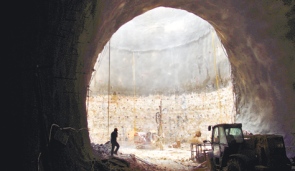
The recycling plans have been fundamentally implemented through building dams during the past two decades. These large construction projects have sometimes caused environmental debates and cultural problems that occurred after the construction of Sivand Dam in southern province of Fars.

However treatment and recycling the industrial used water has so far been neglected. There are many things that could be learnt regarding this issue. Brown and Caldwel in “Water System Management Plan” for the City of Davis, California (1989) have presented the most important factors that should be noted in an industrial water reuse program as follows:

  • Identification of water reuse opportunities
  • Determination of the minimum water quality needed for the given use
  • Identification of wastewater sources that satisfy the water quality requirements
  • Determination of how the water can be transported to the new use

They have also recommended important factors in a more general reuse program in Clover/Chambers Creek Basin Groundwater Management Program and EIS” (1990). For this second recommendation, they have generalized the factors for all recycling plans:

  • Identification of water reuse opportunities
  • Evaluation of the minimum water quality needed for a particular use
  • Evaluation of water quality degradation resulting from the use
  • Determination of the treatment steps, if any, that might be required to prepare the water for recycling

I am urging the government authorities in Iran to consider adopting some of these ideas.

Photo by farrokhi

More Middle Eastern water articles:

Abu Dhabi’s Costly Desalination Plants Prompt Wastewater Treatment Plans

Water from Alaska to the Middle East – Like Towing Icebergs from Antarctica?

Upstream African Countries Sign Nile Water Deal Against Egypt’s Interests

Mehrdad Parsipour
Mehrdad Parsipourhttp://www.greenprophet.com
Mehrdad Parsipour is an urban researcher who is based in Germany. He is originally from Iran and is interested in the traditional urbanism and architecture of Iran and Middle East. Mehrdad’s other research interests are western traditional urban development trends, Islamic cities, and sustainable urban forms, and finally the environment. Since 1997 he has been working in the field of civil engineering, and also urban and regional planning.
2 COMMENTS
  1. I am in favour of building artificial lakes to store water for use in irrigation
    it will assist to some extent floods, and supply water during dry season

    I can also project how to save water in gardening and farming

    Organic Gardener, Farmer

  2. What Tehran needs to do, is implement a real sewage system from every new area built gradually trickling down to the older areas, as at the moment all buildings drain water into there own sespit. Image 12 million people all using sespits!

Comments are closed.

TRENDING

A Fact-Based Reflection on Sustainability and Tourism in Hormuz

A Documented Response to the Article “The Aga Khan...

Dubai sets up smart feeding stations for abandoned cats

Dubai Municipality has set up 12 AI-powered "Ehsan Stations" to safely and officially feed strays. The city also officially supports Trap-Neuter-Return (TNR) programs. 

Is your groundwater too young? New study finds risks for Parkinson’s and type of water you drink

People whose drinking water came from newer groundwater had a higher risk of developing Parkinson’s disease than those whose drinking water came from older groundwater, according to a preliminary study released March 2, 2026, that will be presented at the American Academy of Neurology’s 78th Annual Meeting taking place April 18–22, 2026, in Chicago and online.

Eco organization offices destroyed by Iran missile

Tel Aviv's eco organization, the Heschel Center, was impacted by an Iranian missile.

Should You Invest in the Private Market?

startustartup Unlike public stock exchanges, which offer daily trading, strict...

How to build a 100-year-company

Kongō Gumi is a Japanese construction company, purportedly founded in 578 A.D., making it the world's oldest documented company. What can we learn about building sustainable businesses from them?

From Pilot Plant to Global Stage: How Aduro Clean Technologies’ 2026 Expansion Signals a Turning Point for Chemical Recycling Investors Like Yazan Al Homsi

The company's Next Generation Process (NGP) Pilot Plant in London, Ontario, has officially moved into initial operating campaigns, generating the kind of structured, repeatable data that separates laboratory promise from commercial viability.

How AI Helps SaaS Companies Reduce Repetitive Customer Support Work

SaaS products are designed for large numbers of users with different levels of experience, and also in renewable energy.

Pulling Water from the Air

Faced with water shortage in Amman, Laurie digs up...

Turning Your Energy Consultancy into an LLC: 4 Legal Steps for Founders in Texas

If you are starting a renewable energy business in Texas, learn how to start an LLC by the books.

Tracking the Impacts of a Hydroelectric Dam Along the Tigris River

For the next two months, I'll be taking a break from my usual Green Prophet posts to report on a transnational environmental issue: the Ilısu Dam currently under construction in Turkey, and the ways it will transform life along the Tigris River.

6 Payment Processors With the Fastest Onboarding for SMBs

Get your SMB up and running fast with these 6 payment processors. Compare the quickest onboarding options to start accepting customer payments without delay.

Related Articles

Popular Categories