4 passive energy environmental solutions from the Middle East

windcatcher iranWhen we think of the environment today, the West looks like the clear leader. But did you know that some of the world’s most important discoveries originated in the Middle East?

The Middle East, perhaps because of its challenging environment, has seen the genesis of many environmental discoveries and techniques. Some of these are so ancient and ubiquitous that we take them for granted: domestic animals; agriculture; and of course cities. The five discoveries listed here range in age from seven thousand years to cutting-edge, and yet they all remain important today.

Irrigation qanats from Iran
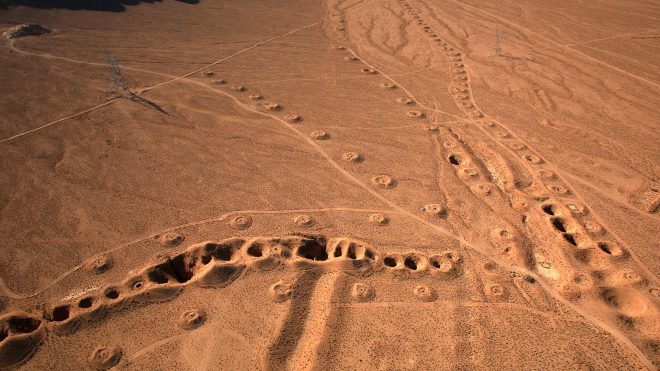
The Persian Qanat: Aerial View, Jupar

Agricultural irrigation has been invented at many times and places. However, by far the earliest civilizations to use irrigation were the Egyptians and Mesopotamians.

Irrigation systems in the fertile crescent were used to raise barley in otherwise arid land; they date back to at least 5,000 BC, and quite possibly earlier. Some of these systems, such as the qanats in Iran, are still in use today after nearly 3000 years of operation.

This very long history has been fraught with difficulties, and middle eastern societies have wrestled with problems of line failure, evaporative loss, and salinization. Today, for instance, Israel produces some of the most efficient point-irrigation technology in the world.

Windmills of Yadz

Nishatfun windmills in Iran

Windmills did not appear in Europe until the 1200s, but they are mentioned in Persian texts as early as the 600s AD, and al-Masudi’s description of Sistan in 950 AD makes it clear that they were already commonplace in that region. (It seems likely that waterwheels are also of Middle Eastern origin, but the earliest known examples are Roman.)

The vast bulk of all wind power, historically, has been used to drive sailing vessels. Still, after a millennium and a half, fixed-point wind power remains one of the most promising methods of generating clean energy.

Harvesting Fertilizer from Doves
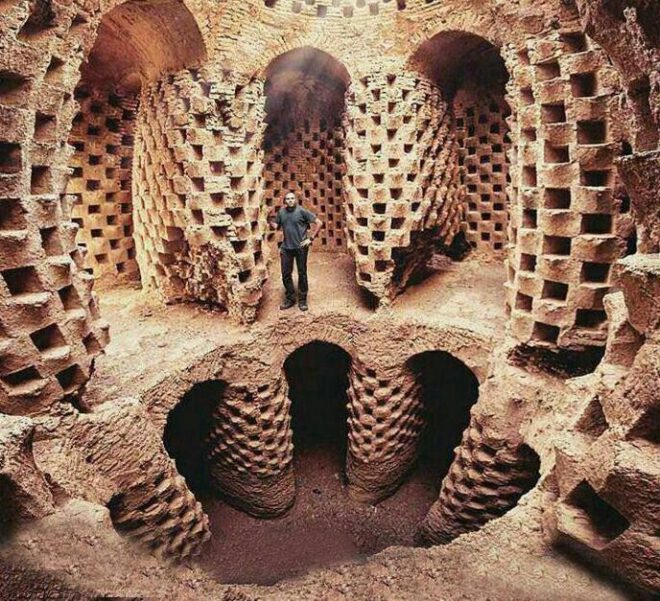
isfahan dovecoats fertilizer
Dovecoats in Isfahan

The famous medieval dovecotes or pigeon towers of Esfahan, in Iran, are usually regarded as architectural attractions. But they are also the most visible part of a larger technology: harvesting fertilizer.The purpose of the dovecotes is to harvest nitrogen and phosphorus from pigeon droppings, and replenish the marginal soils of the region.

A related, though less dramatic technique is to graze sheep and goats over gardens after the harvest. There is an important environmental lesson here.

Just as early societies struggled to avoid using high-quality fertilizer as low-quality fuel, modern societies struggle to recycle livestock waste, while we simultaneously expend large sums on producing synthetic fertilizer.
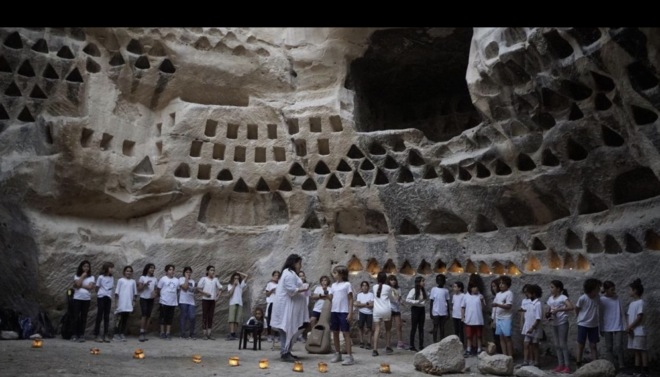
Dovecoats in Israel

Reforestation and Erosion Control

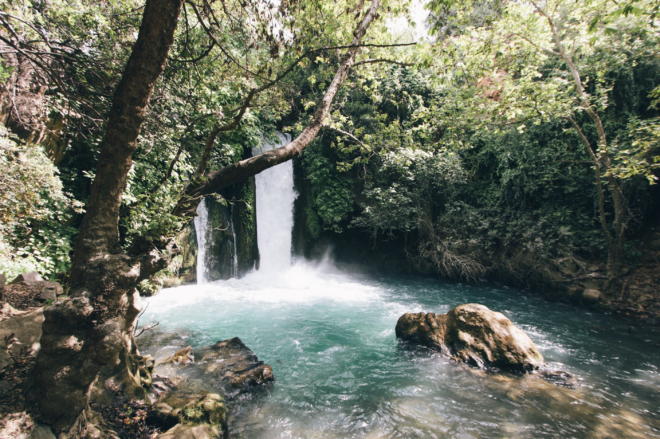
Ein Gedi Israel
Ein Gedi, Israel

The Middle East was heavily deforested by the dawn of history, and combatting erosion and desertification have been constant challenges. It has long been both the birthplace and the best testing grounds for erosion control techniques, ranging from ancient terracing to modern synthetic, modular water diversion blocks.

Israel has run a particularly successful reforestation campaign in the last half-century, being one of relatively few countries worldwide to show a net gain in forest cover. Israeli immigrant Moshe Alamaro has also been one of the major proponents of aerial reforestation, using repurposed military technologies to plant seedlings in remote or hard-to-access regions.


Karin Kloosterman
Karin Kloostermanhttp://www.greenprophet.com
Karin Kloosterman is an award-winning journalist, innovation strategist, and founder of Green Prophet, one of the Middle East’s pioneering sustainability platforms. She has ranked in the Top 10 of Verizon innovation competitions, participated in NASA-linked challenges, and spoken worldwide on climate, food security, and future resilience. With an IoT technology patent, features in Canada’s National Post, and leadership inside teams building next-generation agricultural and planetary systems — including Mars-farming concepts — Karin operates at the intersection of storytelling, science, and systems change. She doesn’t report on the future – she helps design it. Reach out directly to [email protected]

TRENDING

A Fact-Based Reflection on Sustainability and Tourism in Hormuz

A Documented Response to the Article “The Aga Khan...

Dubai sets up smart feeding stations for abandoned cats

Dubai Municipality has set up 12 AI-powered "Ehsan Stations" to safely and officially feed strays. The city also officially supports Trap-Neuter-Return (TNR) programs. 

Eco organization offices destroyed by Iran missile

Tel Aviv's eco organization, the Heschel Center, was impacted by an Iranian missile.

Jordan’s $6 Billion Aqaba–Amman Desalination Project from the Red Sea Moves Forward

In 2025, the Jordanian government signed agreements with a consortium led by Meridiam and SUEZ, alongside VINCI Construction and Orascom Construction. Under a 30-year concession agreement, the consortium will design, build, finance, operate, and maintain the system before transferring it back to the Jordanian government. The total investment is estimated at approximately $6 billion USD.

The Saudi Startup Turning Desalination’s Toxic Waste Into Its Own Disinfectant

For millennia, the Middle East's water crisis seemed an immutable fact of geography — a region defined as much by what it lacked as by what lay beneath its sands. Today, a convergence of plummeting solar costs, advancing membrane technology, and hard-won engineering expertise is rewriting that story.

Should You Invest in the Private Market?

startustartup Unlike public stock exchanges, which offer daily trading, strict...

How to build a 100-year-company

Kongō Gumi is a Japanese construction company, purportedly founded in 578 A.D., making it the world's oldest documented company. What can we learn about building sustainable businesses from them?

From Pilot Plant to Global Stage: How Aduro Clean Technologies’ 2026 Expansion Signals a Turning Point for Chemical Recycling Investors Like Yazan Al Homsi

The company's Next Generation Process (NGP) Pilot Plant in London, Ontario, has officially moved into initial operating campaigns, generating the kind of structured, repeatable data that separates laboratory promise from commercial viability.

How AI Helps SaaS Companies Reduce Repetitive Customer Support Work

SaaS products are designed for large numbers of users with different levels of experience, and also in renewable energy.

Pulling Water from the Air

Faced with water shortage in Amman, Laurie digs up...

Turning Your Energy Consultancy into an LLC: 4 Legal Steps for Founders in Texas

If you are starting a renewable energy business in Texas, learn how to start an LLC by the books.

Tracking the Impacts of a Hydroelectric Dam Along the Tigris River

For the next two months, I'll be taking a break from my usual Green Prophet posts to report on a transnational environmental issue: the Ilısu Dam currently under construction in Turkey, and the ways it will transform life along the Tigris River.

6 Payment Processors With the Fastest Onboarding for SMBs

Get your SMB up and running fast with these 6 payment processors. Compare the quickest onboarding options to start accepting customer payments without delay.

Related Articles

Popular Categories