

The public discussion of Israel’s water problems intensified last week, with Israel’s most respected newspaper, Ha’aretz, calling on water authorities to shift to regulating demand for the scarce resource. During the same week, a new study was released which suggested that a shift to electric cars could seriously impact water consumption in countries where this technology is adopted.
The crux of the study’s argument is that, as cars increasingly rely on the national grid for energy (instead of on gasoline), national electricity generation (currently based on non-renewable sources) must increase, which will significantly elevate power plants’ demand for water resources.
As Andrew from TreeHugger has noted, yes, it takes water to produce electricity – but this does not have to be a deal-breaker. However, in Israel, where ambitious entrepreneurs aim to put 100,000 electric cars on the road by the end of 2010, authorities would be wise to heed the advice of the researchers, and consider the broader impacts of large-scale adoption of the plug-in vehicle before plunging head first in this direction.
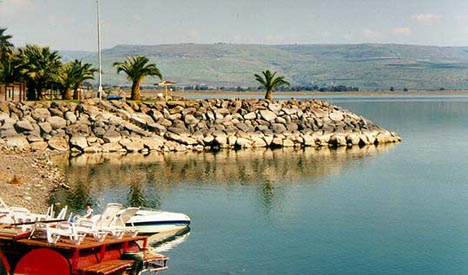
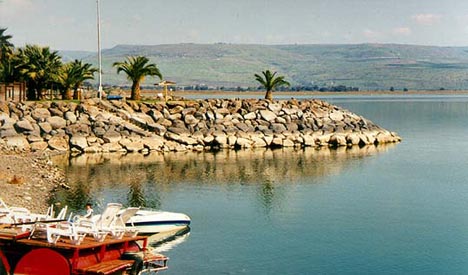
Located downstream from other regional consumers of water, and with no precipitation for around half of the year, Israel has never been a land flowing with water (unlike milk and honey, which still flow in abundance). And, as Israel approaches the end of the current rainy season, the country is facing the worst crisis the national water economy has seen in a decade. The agricultural sector, already in crisis mode, will probably be the first to suffer the economic effects of the drought, and the local effects of global climate change are only expected to exacerbate the situation over the coming years.
On top of the energy demands of the electric cars themselves, the factories that manufacture them will likely be built in Israel, and, despite the welcome boost to the country’s green economy, will also become major consumers of energy and water. Although Israeli water authorities and green groups have held up transport projects in the past, it is not yet clear how the various groups involved view the electric car project at this stage.
The researchers behind the study on electric cars and water consumption, Carey W. King and Michael E. Webber of the University of Texas at Austin, offer these words of caution to policy-makers:
Overall, we conclude that the impact on water resources from a widespread shift to grid-based transportation would be substantial enough to warrant consideration for relevant public policy decision-making. That is not to say that the negative impacts on water resources make such a shift undesirable, but rather this increase in water usage presents a significant potential impact on regional water resources and should be considered when planning for a plugged-in automotive economy.
The best solution to the dilemma may be a wholesale shift to renewable energy. While Israel currently gets most of its energy from fossil fuels, King points out that, in an energy economy based on wind or solar energy, the electric car’s additional contribution to water consumption would be “essentially zero.”
Israel is well-positioned to take advantage of one of its only major natural resources, the sun, with considerable academic, technical, and business prowess in the solar field. The solar economy is just beginning to take off, with new regulations allowing private citizens to sell power produced by their solar panels to the national grid and new solar power plants planned in the southern Negev and Arava regions.
Via TreeHugger
Image courtesy of http://pini.freeyellow.com/Tour03.htm.




[…] Unveils Prototype of Electric Car Recharging Station Israel’s Electric Car Guru Gets Wired Israel’s Electric Car and Impact on Water Shortage Green Smoke And Mirrors: A Voice of Reason on the Electric Car […]
We my need to accept that the key to our energy future may not come from the government or big energy companies, but rather from small research and development companies and individual inventors working on water cars, fuel cells and on board hydrogen fuel generators.
As Far as I know the electric car is not going to be manufactured in Israel . It is a Renault-Nissan product. Shy Agassi is developing an infrastructure on Israel Roads to swap batteries in the car while empty’, a kind of “battery station” like we have “Oil station” to day.
I understood from Agassi say that there “solar energy” will be produce in the amount of that will compensate the electry supply for the car. Let see if the promise will be filled