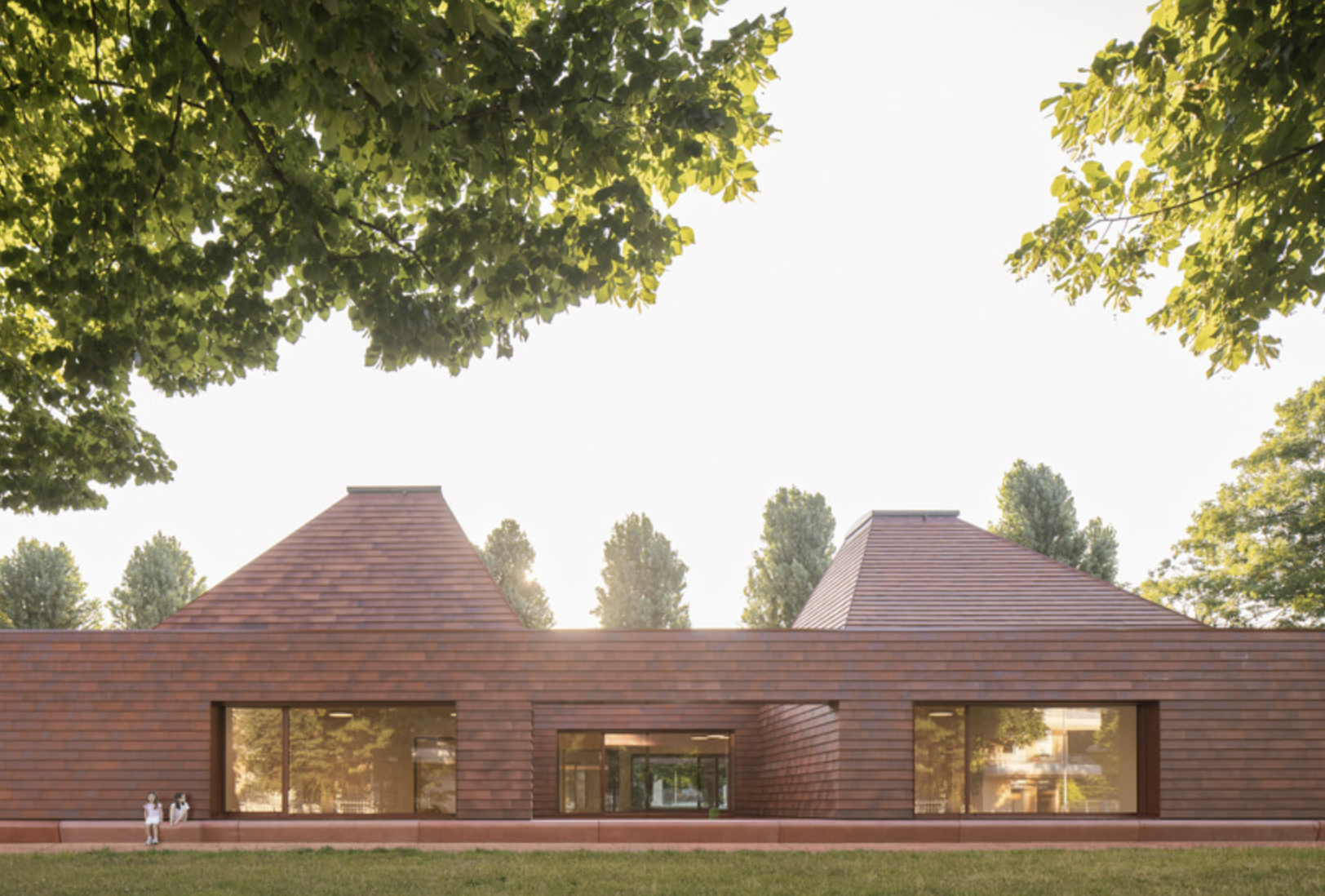
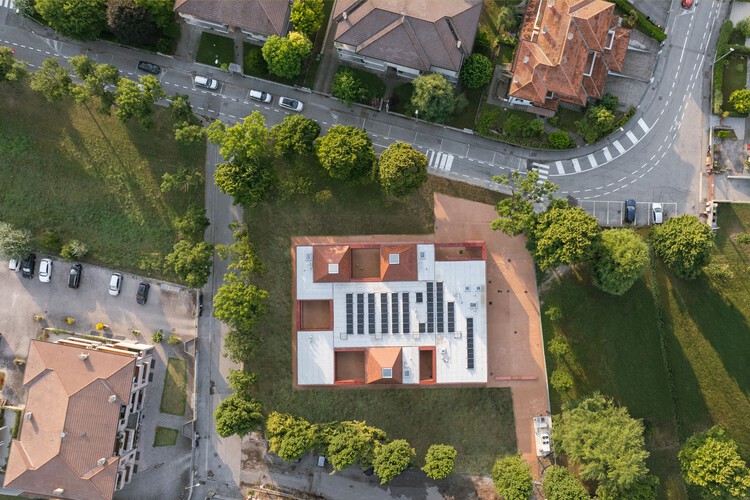
In the Veneto region of northern Italy, a kindergarten rises like a small village from the earth. Its roofs are steep and terracotta-colored, its forms simple and geometric, and its courtyards open to sky and garden. The building is called Kinder Rain, designed by the Italian studio AACM – Atelier Architettura Chinello Morandi, and it feels less like a school and more like a small settlement where children can wander, gather, and grow gardens and themselves.
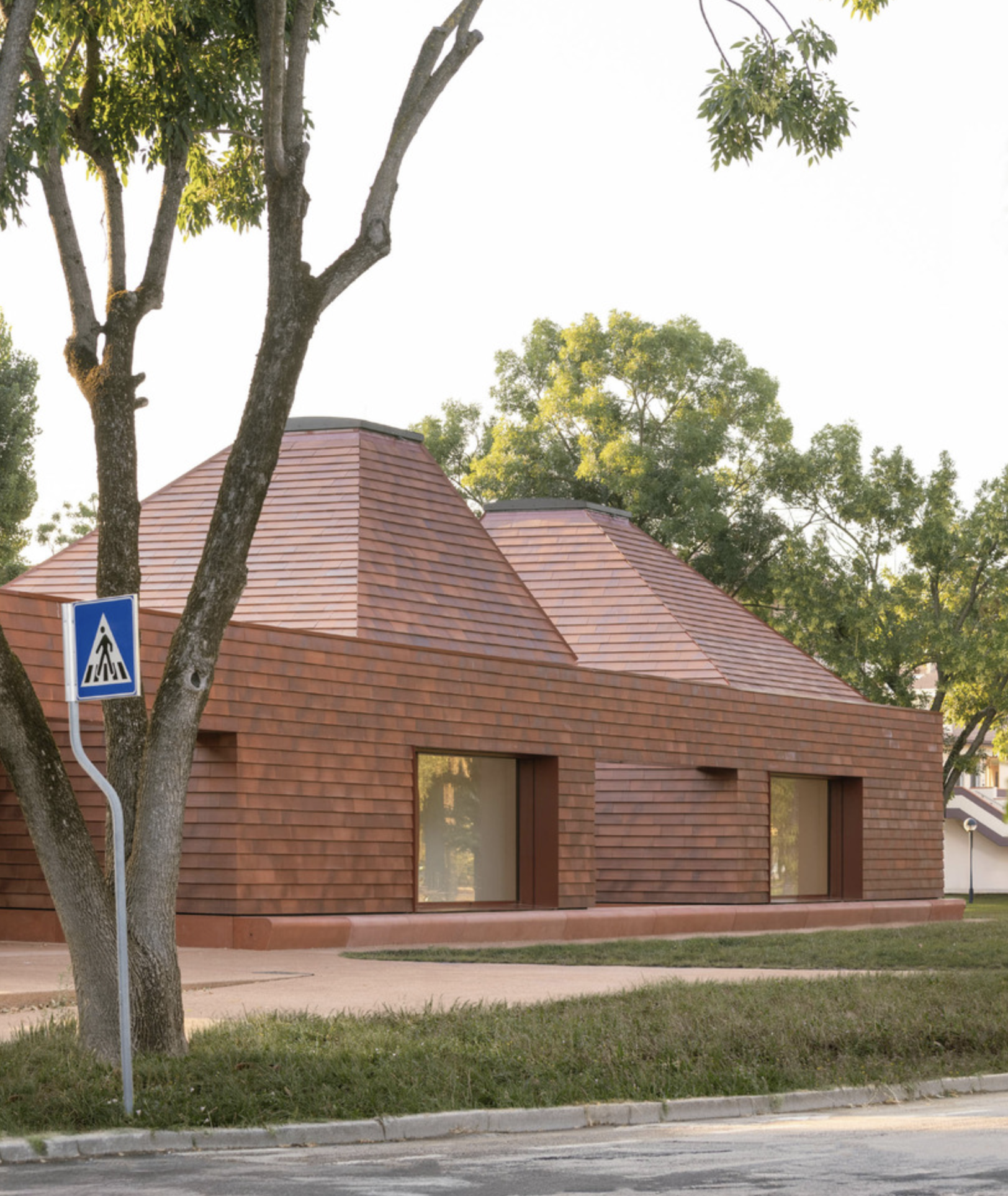
At a time when many educational buildings resemble efficient boxes of steel and glass, and thankfully container houses are out (read here why container houses can be a health hazard) Kinder Rain looks backward to move forward in the way our spirits need. Its design draws inspiration from the Casone Veneto, a traditional rural house once used by farmers and fishermen in the surrounding landscape. These structures were humble but deeply rooted in place: thick clay walls, steep roofs, and forms shaped by weather, agriculture, and the rhythms of everyday life.
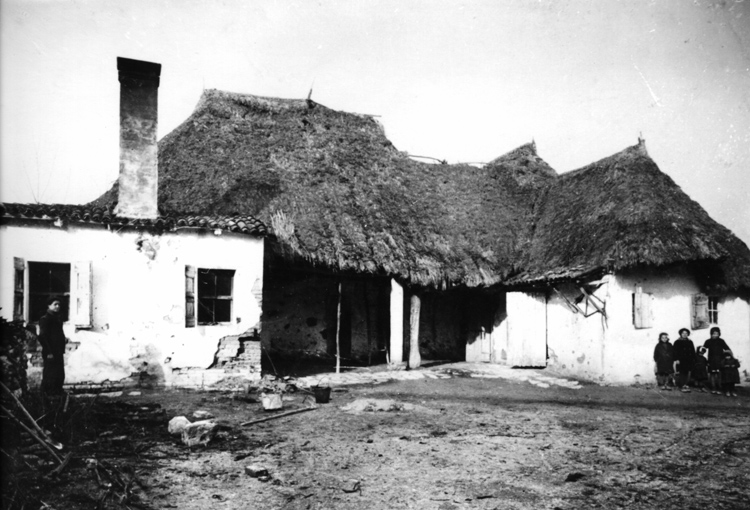
Kinder Rain reinterprets this vernacular architecture through a series of pyramidal classroom volumes, clustered together like houses in a tiny town. Instead of corridors and rigid classroom grids, the kindergarten is organized around open courtyards and shared spaces.
These spaces function as an architectural commons, allowing children to move fluidly between indoor learning and outdoor play.
The result feels almost like something from a Waldorf-inspired environment, where architecture becomes part of the educational philosophy. Spaces are tactile and human-scaled, encouraging exploration and imagination rather than control. A pigmented concrete bench traces the base of the building, forming a soft threshold between garden and classroom. Children can sit, climb, gather, or simply watch the world from its edge.
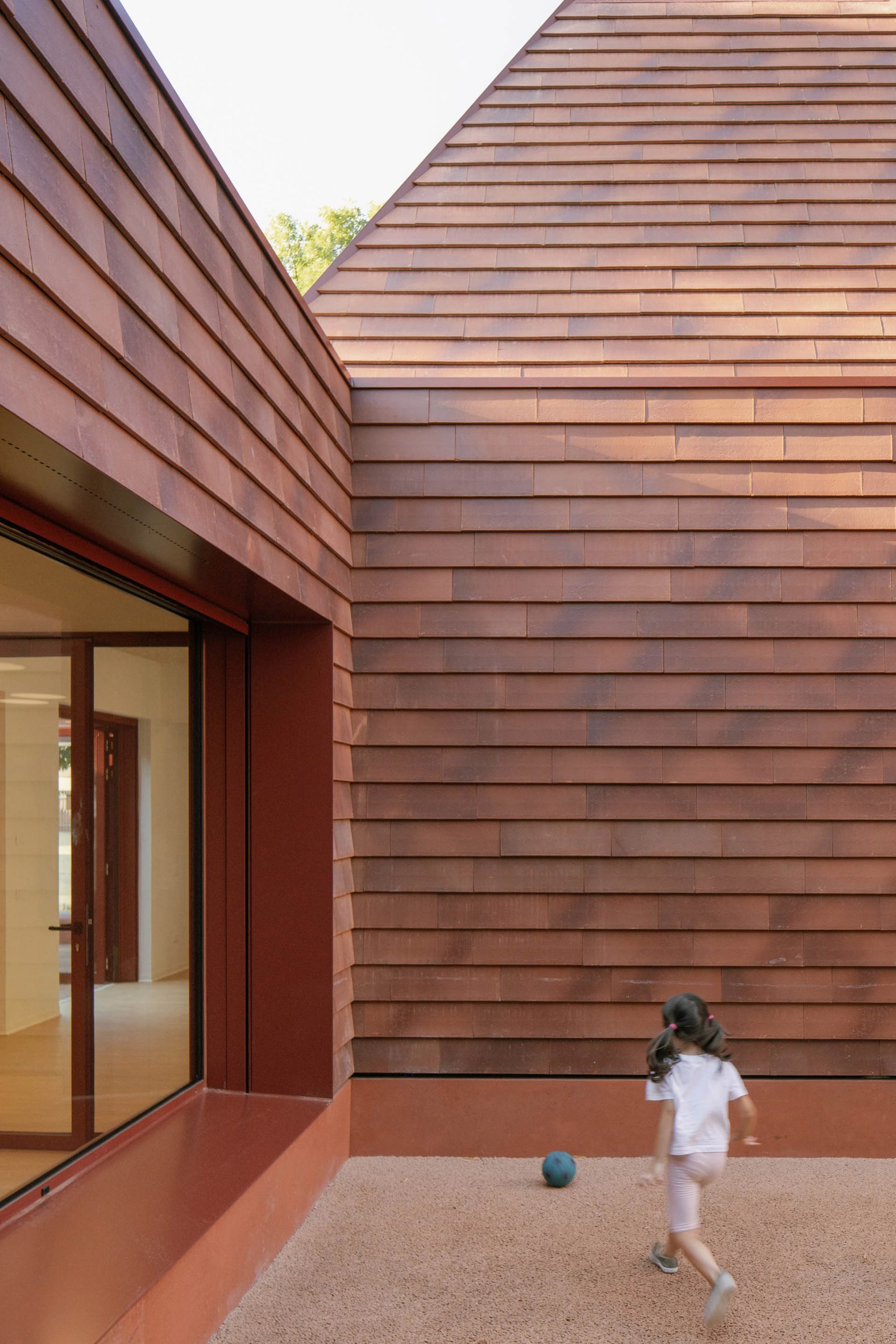
Materials play a central role in this atmosphere. The kindergarten is wrapped in a continuous terracotta envelope, referencing the clay tiles and earthy construction traditions of the Veneto countryside. The tones are warm and grounded, connecting the building visually to the surrounding landscape.
Inside, wooden ceilings echo the texture of traditional thatched roofs. A skylight above the central space lets sunlight pour downward through the structure, quietly marking the passage of time during the day. Morning light spills into classrooms, while afternoon shadows stretch across the courtyards.
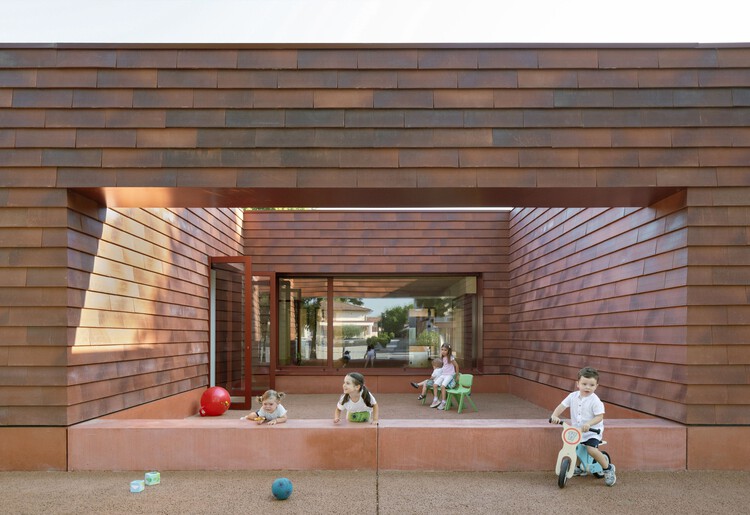
Each classroom opens outward into a protected patio, creating semi-enclosed outdoor rooms where lessons can spill into fresh air. These patios blur the boundary between inside and outside, an important idea in early childhood education where nature and play are inseparable.
The spatial logic of Kinder Rain follows an interplay of solids and voids. Pyramidal classrooms provide shelter and focus, while courtyards provide openness and community. At the center lies a shared internal agorà, a gathering space that allows teachers and children to see one another across the building.
The architecture is simple, but its message is powerful. Kinder Rain suggests that schools do not need to dominate their landscape or overwhelm young minds with scale and complexity. Instead, they can grow organically from local traditions and materials.