
Another “Mediterranean Women’s Event” —  and the same political stage for the Union for the Mediterranean


Time and again, Mediterranean policy platforms disproportionately center the Palestinian question, subtly redefining a gender and agrifood discussion into a geopolitical one.

A new regional forum on women in agrifood systems is being presented as a Mediterranean-wide platform for gender equality, resilience, and rural justice. Hosted under the institutional umbrellas of CIHEAM and the Union for the Mediterranean, the agenda appears technocratic and inclusive on paper: welcome remarks, keynote evidence on gender gaps, and a panel discussion on justice pathways in rural and agrifood contexts.

But look more closely. While the Mediterranean spans more than 20 diverse countries — from Spain and Italy to Morocco, Israel, Egypt, Türkiye, Greece, Tunisia and beyond — the panel composition again leans toward a familiar narrative axis. The inclusion of Dr. Zeina Jallad of the Palestine Land Studies Center signals that land and political grievance will likely dominate the “justice” framing.

Related: How the Mediterranean’s most hopeful UN green organizations fail at peace-building

Palestinian rural women face serious challenges, as many religious women are not allowed to work outside the home, as do women farmers in Lebanon’s collapsing economy, Morocco’s drought zones, southern Spain’s migrant labor farms, Israel’s border agriculture, and North African climate-vulnerable regions. Yet time and again, Mediterranean policy platforms disproportionately center the Palestinian question, subtly redefining a gender and agrifood discussion into a geopolitical one.

This pattern matters. When events branded as regional repeatedly foreground one national conflict lens, it risks distorting priorities and narrowing solutions. Women farmers across the Mediterranean face structural gender gaps in land rights, financing, market access, and climate adaptation. Those issues require cross-border cooperation, not selective amplification.

The upcoming International Year of the Woman Farmer 2026 offers an opportunity for genuine Mediterranean solidarity. But that requires balance. If the conversation becomes another stage for symbolic positioning rather than practical agrifood reform, the women most in need — from Andalusia to the Negev to the Atlas Mountains — will once again be sidelined.

Bees for peace
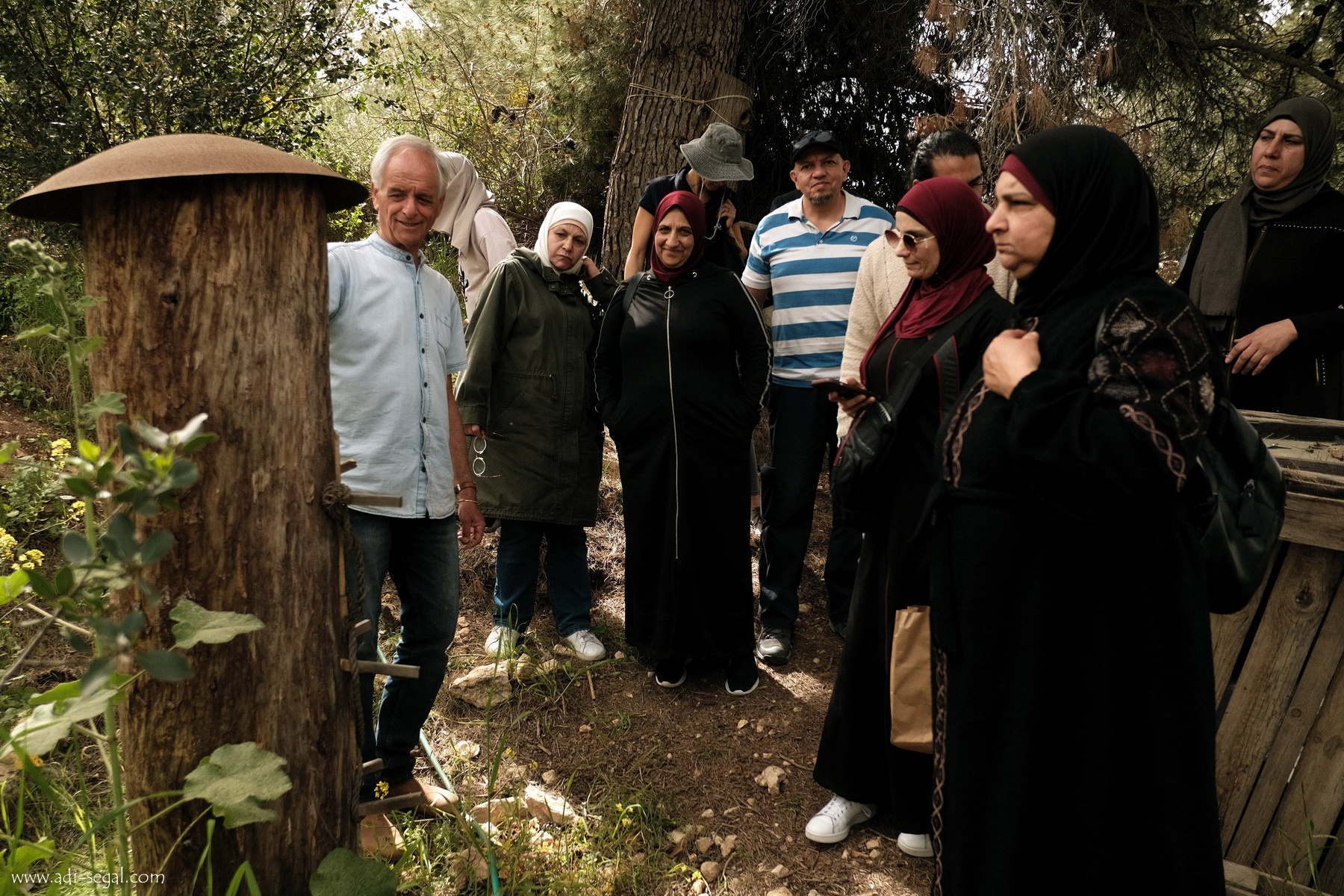
Muslim women learn how to raise bees using the biodynamic method with Bees for Peace

EU and UN funding mechanisms must decide: is the UofM convening for rural transformation — or rehearsing familiar political scripts? I vote for the latter. This time they didn’t put a woman with a hijab on the cover. We know that in many traditional Muslim societies women face restrictions on working outside the home, never mind farming. A panel worth featuring would have been beekeeping for peace, an actual initiative that could help Palestinian women earn income from their rooftops. But the UofM would never dare mention it because the founder of the project is Israeli.

Karin Kloosterman
Karin Kloostermanhttp://www.greenprophet.com
Karin Kloosterman is an award-winning journalist, innovation strategist, and founder of Green Prophet, one of the Middle East’s pioneering sustainability platforms. She has ranked in the Top 10 of Verizon innovation competitions, participated in NASA-linked challenges, and spoken worldwide on climate, food security, and future resilience. With an IoT technology patent, features in Canada’s National Post, and leadership inside teams building next-generation agricultural and planetary systems — including Mars-farming concepts — Karin operates at the intersection of storytelling, science, and systems change. She doesn’t report on the future – she helps design it. Reach out directly to [email protected]

Read More

TRENDING

Recommended Precious Metals Companies: A Due Diligence Checklist for Retirees

The CFTC, FINRA, and NASAA have jointly warned retirees about precious metals fraud targeting retirement accounts. This checklist provides a structured framework for evaluating any company before transferring savings — and illustrates what credible providers look like across 7 measurable criteria.

Appalachian lithium could supply America with EV batteries for 300 years

A vast and largely untapped lithium reserve may be hiding beneath one of North America’s oldest landscapes, the Appalachian Mountains, offering a surprising twist in the global race for clean energy materials. According to new findings from the U.S. Geological Survey (USGS), as much as 2.5 million tons of lithium could be buried across the region, stretching from the Carolinas up through New England.

OPEC and energy stocks in the UAE – insight from eToro

Energy equities are responding unevenly to the evolving landscape. Companies with direct exposure to UAE production growth and infrastructure are benefiting from increased activity expectations, while global oil majors face a more mixed outlook.

10 Surprising AC Water Uses Cities Are Ignoring

All air conditioners release water. That's Physics. Cities like Los Angeles pour billions of water down the drain every year. And while home owners who are savvy to water reuse are finding ways to use AC water in the garden (here are 5 ways to use air con water at home), or in art studios (it's basically free distilled water), cities could save water in meaningful ways by using creative ideas. These are solutions you can send to urban planners and those running smart city accelerator programs. Pick one of them and you might win the grant! 

Hormuz 2026 Conflict Poses an Energy and Food Security Dilemma in a Warming World

As tensions rise in one of the world’s most critical maritime chokepoints, the ripple effects go far beyond oil—touching food systems, climate pressures, and regional stability

Mining Afghanistan’s Mineral Discoveries Similar to Avatar

Now that American forces in Afghanistan are commemorating the longest period of any war that America has been involved in, including the 1965-73 Vietnam War, the recent discoveries of large and extremely valuable mineral and metal deposits may finally bring to light a reason to continue the presence of US fighting forces in this war torn and backward country.

From Pilot Plant to Global Stage: How Aduro Clean Technologies’ 2026 Expansion Signals a Turning Point for Chemical Recycling Investors Like Yazan Al Homsi

The company's Next Generation Process (NGP) Pilot Plant in London, Ontario, has officially moved into initial operating campaigns, generating the kind of structured, repeatable data that separates laboratory promise from commercial viability.

Nobul’s Regan McGee on Shareholder Value: “Complacency Is the Silent Killer” 

Why the governance framework designed to protect shareholders so...

Should You Invest in the Private Market?

startustartup Unlike public stock exchanges, which offer daily trading, strict...

How to build a 100-year-company

Kongō Gumi is a Japanese construction company, purportedly founded in 578 A.D., making it the world's oldest documented company. What can we learn about building sustainable businesses from them?

How AI Helps SaaS Companies Reduce Repetitive Customer Support Work

SaaS products are designed for large numbers of users with different levels of experience, and also in renewable energy.

Pulling Water from the Air

Faced with water shortage in Amman, Laurie digs up...

Turning Your Energy Consultancy into an LLC: 4 Legal Steps for Founders in Texas

If you are starting a renewable energy business in Texas, learn how to start an LLC by the books.

Popular Categories