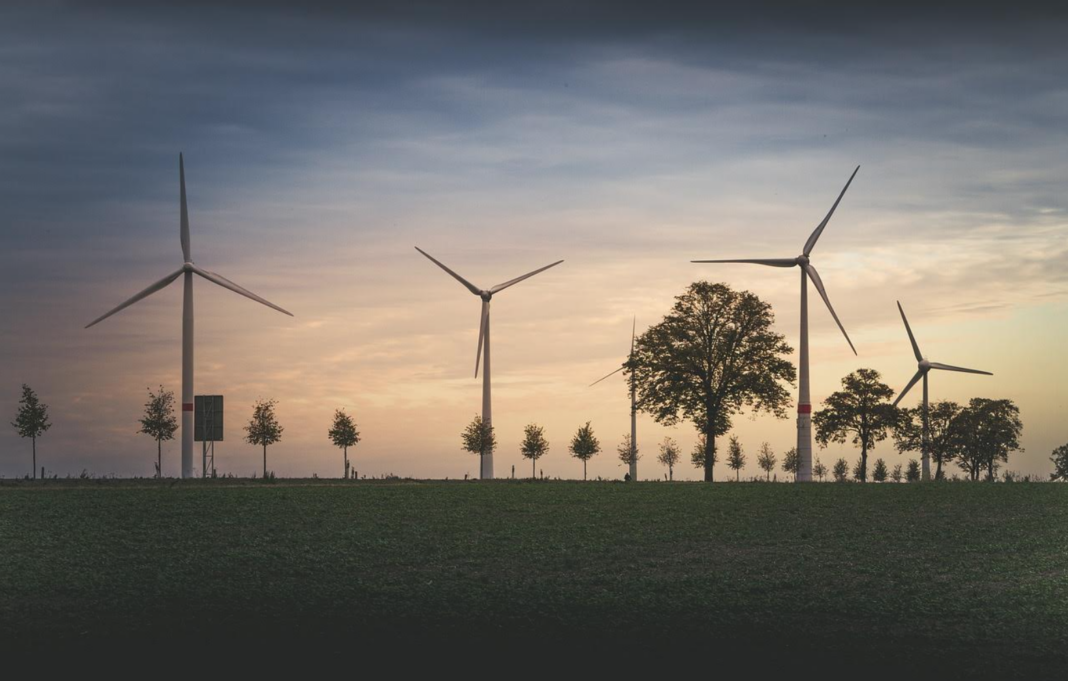

Wind energy is a real asset to the energy transition. Turbines rise quickly, emissions fall sharply, and electricity flows without smoke, spills, or tailings. But behind the clean lines of a wind farm lies a question that is rarely asked out loud: what happens when the wind itself begins to change?
Across Europe, North America, and parts of Asia, wind power has become one of the most scalable tools available to decarbonize energy systems. It can be built faster than nuclear, expanded more flexibly than hydro, and deployed almost anywhere grids exist. Whether offshore or onshore, industrial or rural, wind power adapts.
To make that expansion possible and get the best performance possible, the sector increasingly relies on advanced modeling tools, such as Meteodyn’s software and services, which translate wind and atmospheric behaviors into usable data for developers and planners. But a new critical question arises: will the wind still be there?
Because climate change does not stop at temperature charts.
Wind is changing, quietly
Climate change alters atmospheric circulation, pressure gradients, and seasonal weather patterns. These changes rarely make headlines, yet they directly influence how, when, and where wind blows. In some regions, average wind speeds may increase; in others, they may weaken or become more erratic.
For a wind farm designed on 20 years of historical data, this matters. A project that looks profitable today may deliver less energy in the future, on the opposite, way more. Uncertainty replaces confidence.
Developers and utilities are beginning to face this reality. Can yesterday’s wind statistics still be trusted for assets expected to operate until 2050? Or are we planning tomorrow’s infrastructure based on a climate that changes faster than we ever thought?
Ignoring the shift would be convenient and easy, but it would also be reckless.
Why long-term planning needs future wind data
Wind projects are not short-term bets. They are built to last decades, financed over long horizons, and integrated into national energy strategies that assume stability. When climate change enters the equation, that assumption weakens.
Assessing future wind resources under different climate scenarios is no longer a theoretical issue: it is a risk-management exercise. By looking ahead—rather than only backward—energy planners can identify regions where wind potential remains robust, where variability increases, or where adaptation may be required.
This is about avoiding blind spots, because blind spots are costly.
Climate scenarios meet energy reality
The IPCC’s climate scenarios—like SSP2-4.5 or SSP5-8.5—are often cited in reports, yet rarely translated into site-level energy decisions. Doing so requires expertise, validated modeling chains, and transparent assumptions.
When wind projections are aligned with recognized climate scenarios, developers can stress-test projects against plausible futures, investors can better understand exposure, and policymakers can plan with fewer surprises.
Climate change analytics help clarity replace guesswork.
Meteodyn and future wind and AEP projections
Meteodyn has developed a dedicated service to evaluate how wind resources and energy production may evolve under different climate scenarios, performing cutting-edge statistics on IPCC-aligned projections.
The goal is informed anticipation to make sustainable decisions. By quantifying potential changes in wind regimes over time, stakeholders gain a clearer view of long-term performance, risk, and resilience.
Because planning early is usually cheaper than reacting late.
Making climate-aligned wind data accessible
Since October 2, 2025, Meteodyn makes climate-aligned wind and AEP projections datasets available through a dedicated shop, the Wind Data Portal. These datasets allow users to access standardized wind and energy production projections linked to climate change scenarios and localised to projects’ locations.
This matters. Access to future-oriented data should not be limited to large institutions alone. Shared data enables shared responsibility, and responsibility is the foundation of a credible energy transition.
The climate change will not wait
Wind energy remains one of the strongest tools available to fight climate change, but it is not immune to it. As the climates shift, so must the way wind resources are assessed, planned, and valued.
Adaptation is not optional, it is the price of durability.