A key region of Antarctica is getting warmer and therefore greener with alarming speed — a trend that will spur rapid change of Antarctic ecosystems say climate change researchers.
Scientists looked at satellite imagery of one of the continent’s fastest-warming regions: the Antarctic Peninsula, which juts north towards the tip of South America. They found that the area covered by plants increased by almost 14 times between 1986 and 2021.
“It’s the beginning of dramatic transformation,” says remote-sensing specialist and study co-author Olly Bartlett.
Vegetation cover across the Antarctic Peninsula has increased more than tenfold over the last four decades, new research shows.
The new study – by the universities of Exeter and Hertfordshire, and the British Antarctic Survey – used satellite data to assess how much the Antarctic Peninsula has been “greening” in response to climate change.
Read related: make your own moss wall art and graffiti
It found that the area of vegetation cover across the Peninsula increased from less than one square kilometre in 1986 to almost 12 square kilometres by 2021.
Published in the journal Nature Geoscience, the study also found this greening trend accelerated by over 30% in recent years (2016-2021) relative to the full study period (1986-2021) – expanding by over 400,000 square metres per year in this period.
In a previous study, which examined core samples taken from moss-dominated ecosystems on the Antarctic Peninsula, the team found evidence that rates of plant growth had increased dramatically in recent decades. This new study uses satellite imagery to confirm that a widespread greening trend, across the Antarctic Peninsula, is under way and accelerating.
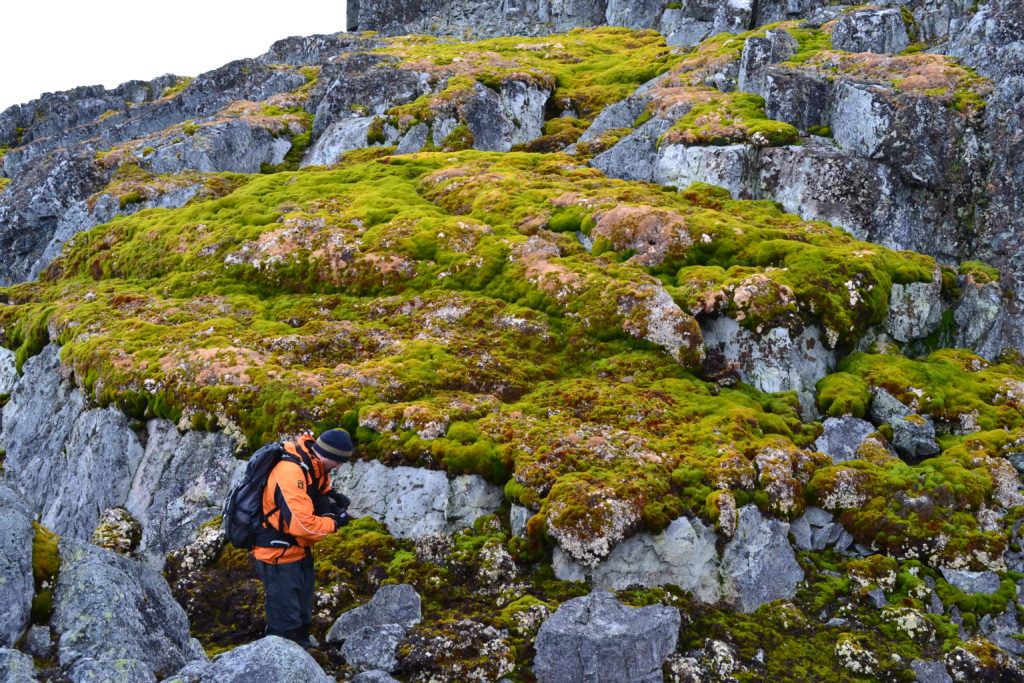
“The plants we find on the Antarctic Peninsula – mostly mosses – grow in perhaps the harshest conditions on Earth,” said Dr Thomas Roland, from the University of Exeter.
“The landscape is still almost entirely dominated by snow, ice and rock, with only a tiny fraction colonised by plant life.
“But that tiny fraction has grown dramatically – showing that even this vast and isolated ‘wilderness’ is being affected by anthropogenic climate change.”
Olly Bartlett, from the University of Hertfordshire, added: “As these ecosystems become more established – and the climate continues to warm – it’s likely that the extent of greening will increase.
“Soil in Antarctica is mostly poor or non-existent, but this increase in plant life will add organic matter, and facilitate soil formation – potentially paving the way for other plants to grow.
“This raises the risk of non-native and invasive species arriving, possibly carried by eco-tourists, scientists or other visitors to the continent.”
The researchers emphasise the urgent need for further research to establish the specific climate and environmental mechanisms that are driving the “greening” trend.
“The sensitivity of the Antarctic Peninsula’s vegetation to climate change is now clear and, under future anthropogenic warming, we could see fundamental changes to the biology and landscape of this iconic and vulnerable region,” said Dr Roland: “Our findings raise serious concerns about the environmental future of the Antarctic Peninsula, and of the continent as a whole. In order to protect Antarctica, we must understand these changes and identify precisely what is causing them.”