Essay on pleasure revealed in ancient scroll

virtual unwrapping scroll of ancient papyrus
Virtual unwrapping scroll of ancient papyrus

AI deciphers the text of 2,000-year-old charred papyrus scripts, unveiling musings on music and capers.

Student researchers have used machine learning to read text hidden inside charred, unopenable scrolls from the ancient Roman city of Herculaneum. The charred scroll was buried 2,000 years ago by the eruption of Mount Vesuvius.

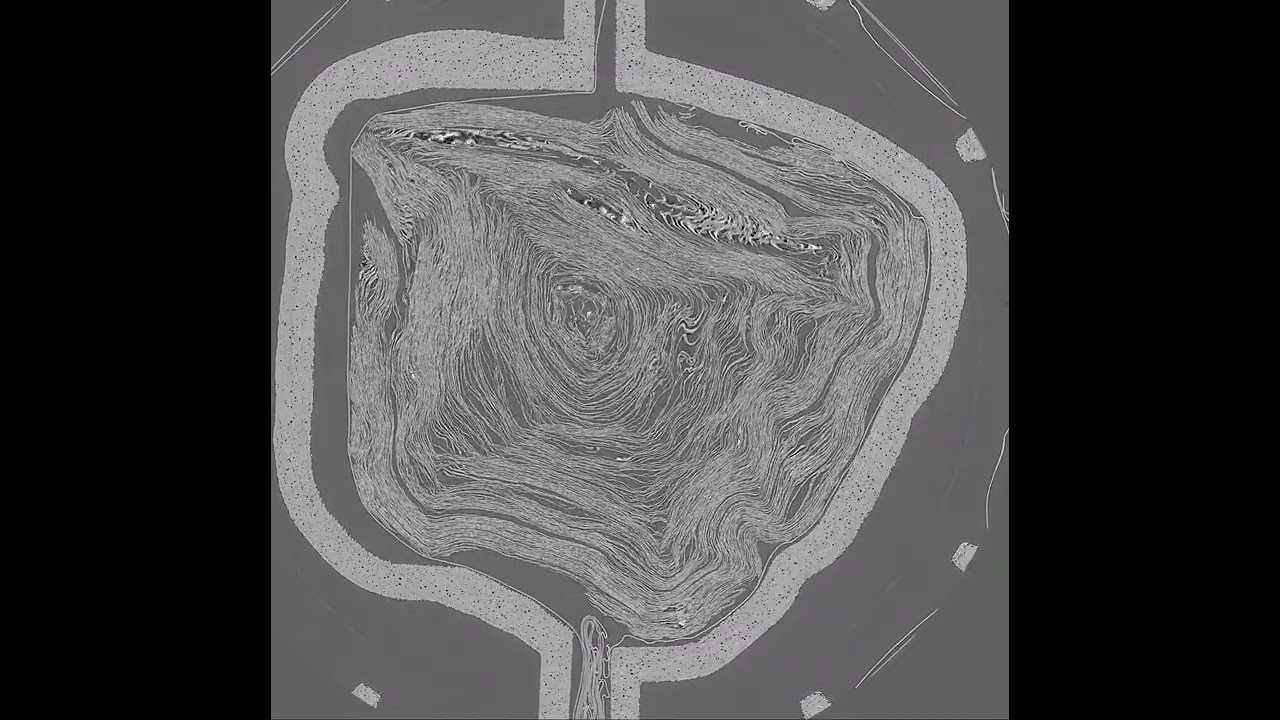
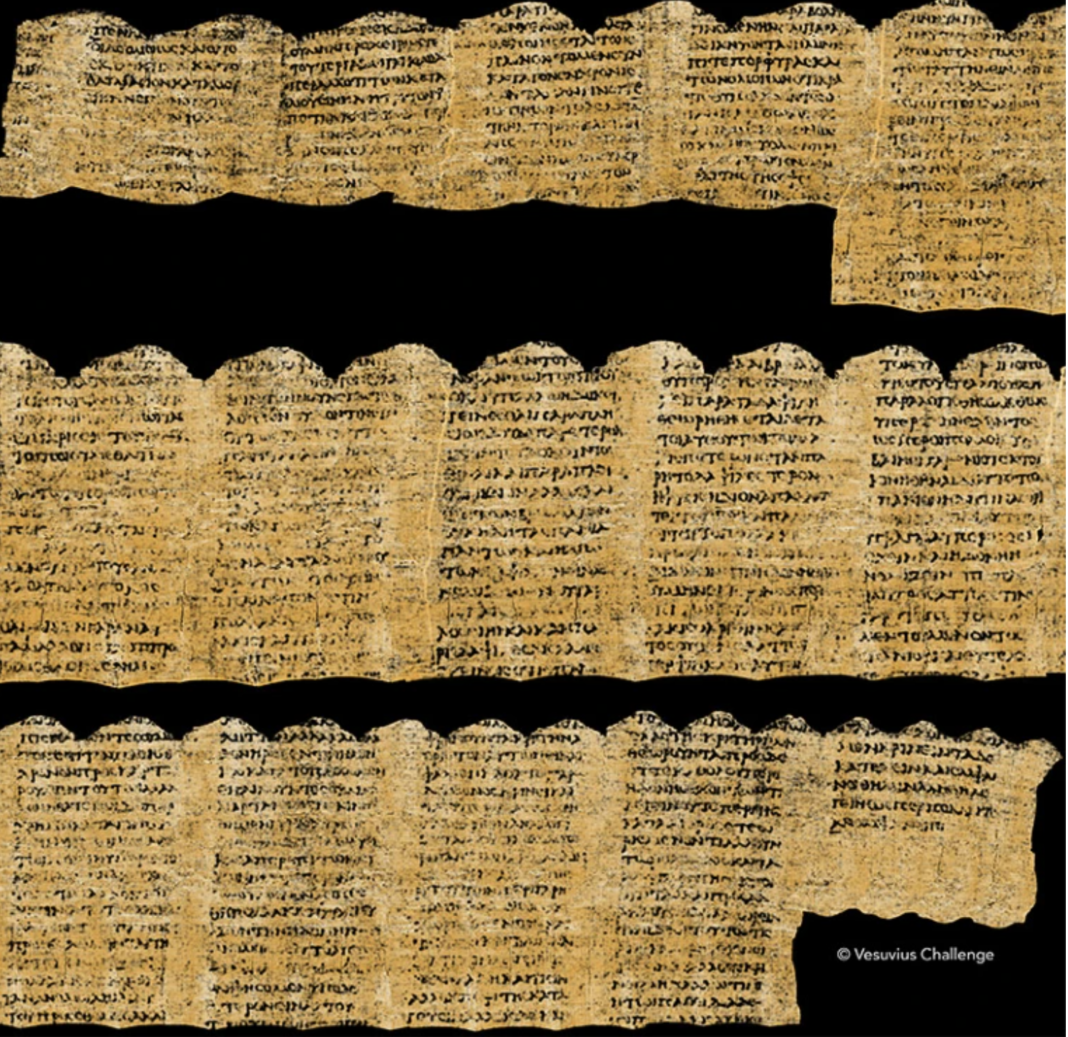
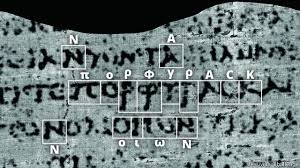
The newly revealed passages, using software and scanning called virtual unwrapping, discuss sources of pleasure including music, the colour purple and the taste of capers. The team trained an algorithm on tiny differences in texture where the ink had been, based on three-dimensional computed tomography scans of the scrolls.

The scroll is one of hundreds of intact papyri excavated in the eighteenth century from a luxury Roman villa in Herculaneum, Italy. These lumps of carbonized ash — known as the Herculaneum scrolls — are the only library that survives from the ancient world, but are too fragile to open.
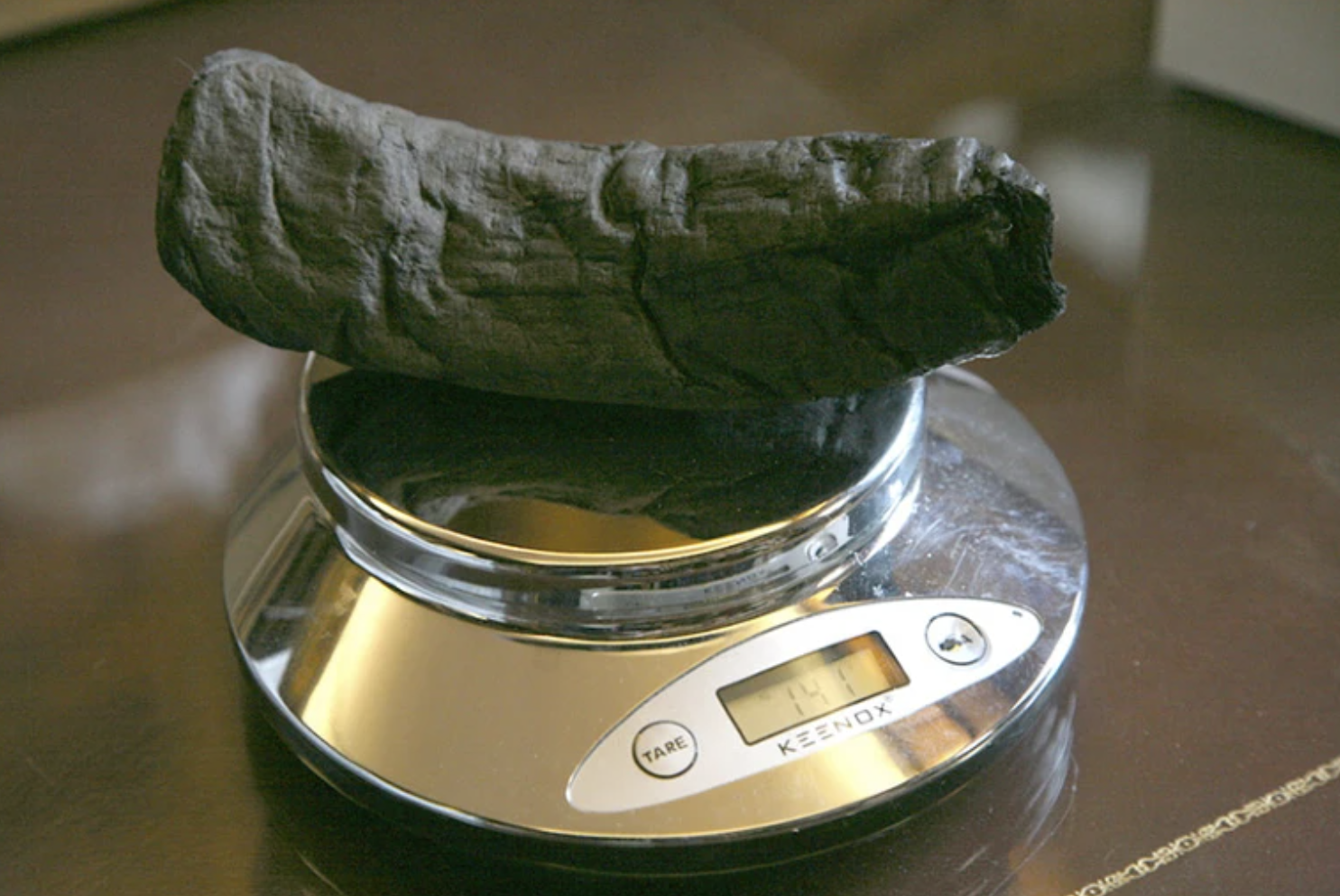
fragile, charred papyrus
Charred papyrus, too fragile to open

The winning entry, announced on 5 February, reveals hundreds of words across more than 15 columns of text, corresponding to around 5% of an entire scroll. “The contest has cleared the air on all the people saying will this even work,” says Brent Seales, a computer scientist at the University of Kentucky, Lexington, and co-founder of the prize. “Nobody doubts that anymore.”
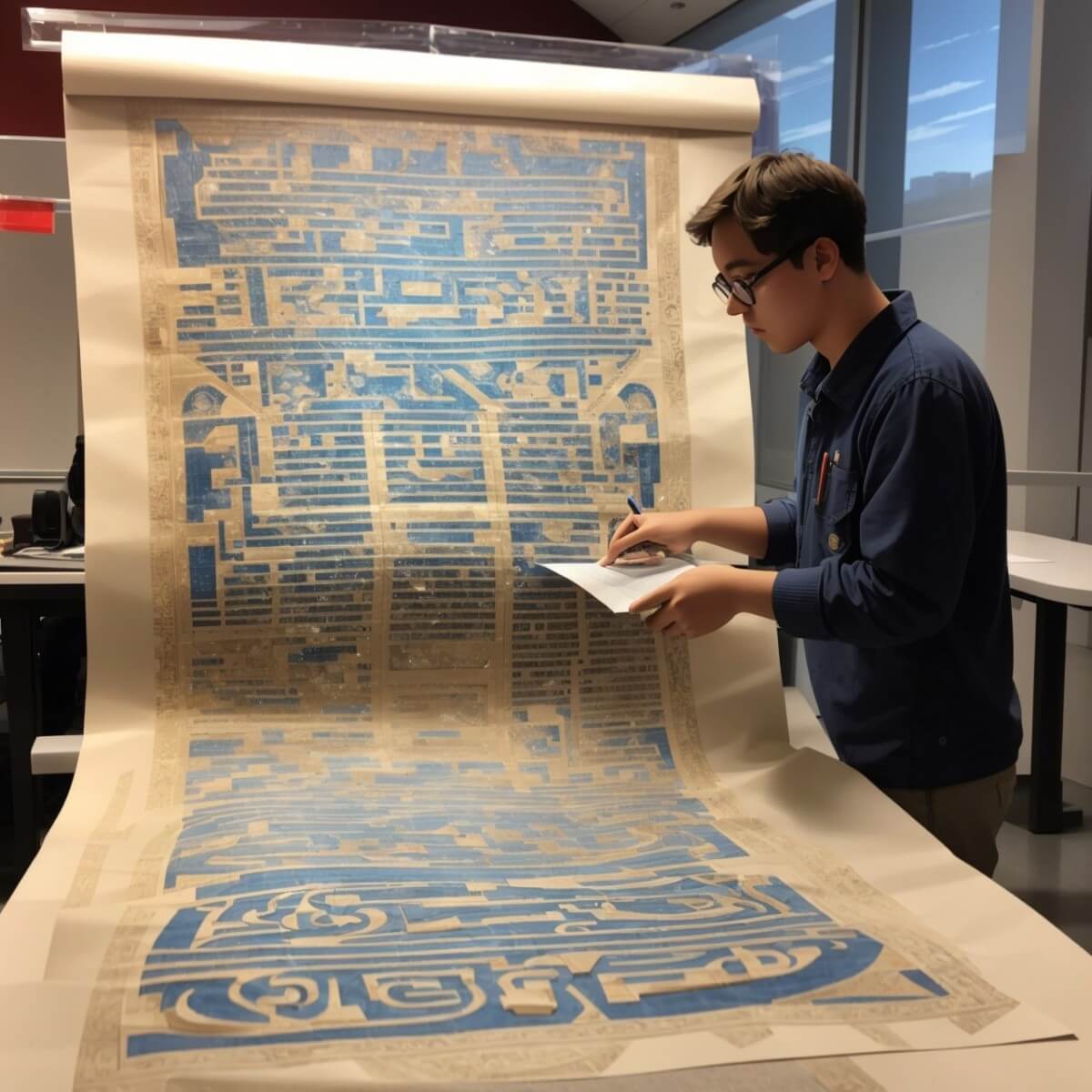
ancient papyrus scrolls read using AI
Ancient papyrus scrolls read using AI

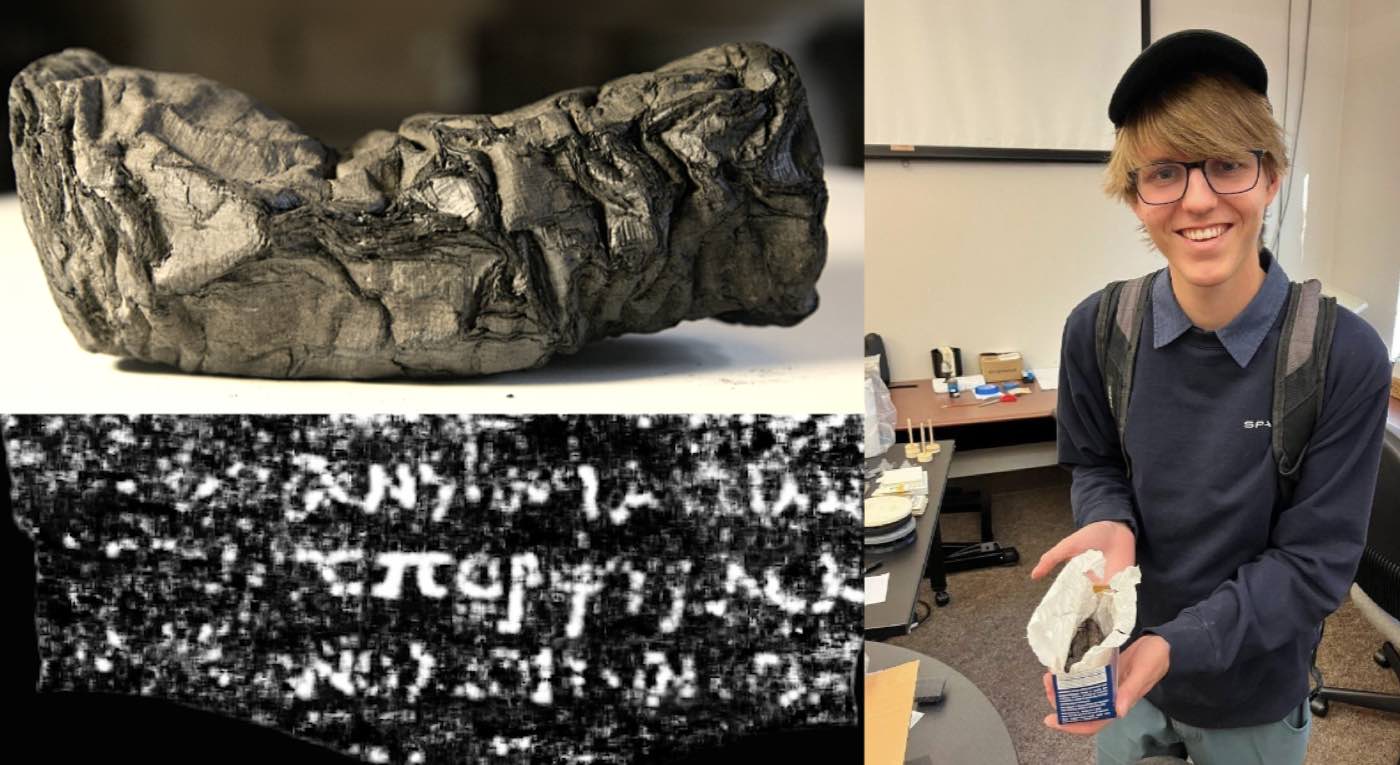
Luke Farritor, an undergraduate studying computer science at the University of Nebraska-Lincoln, used the crackle to train a machine-learning algorithm, revealing the word porphyras, ‘purple’, which won him the prize for unveiling the first letters in late October. An Egyptian PhD student in Berlin, Youssef Nader, who followed with even clearer images of the text, came second.
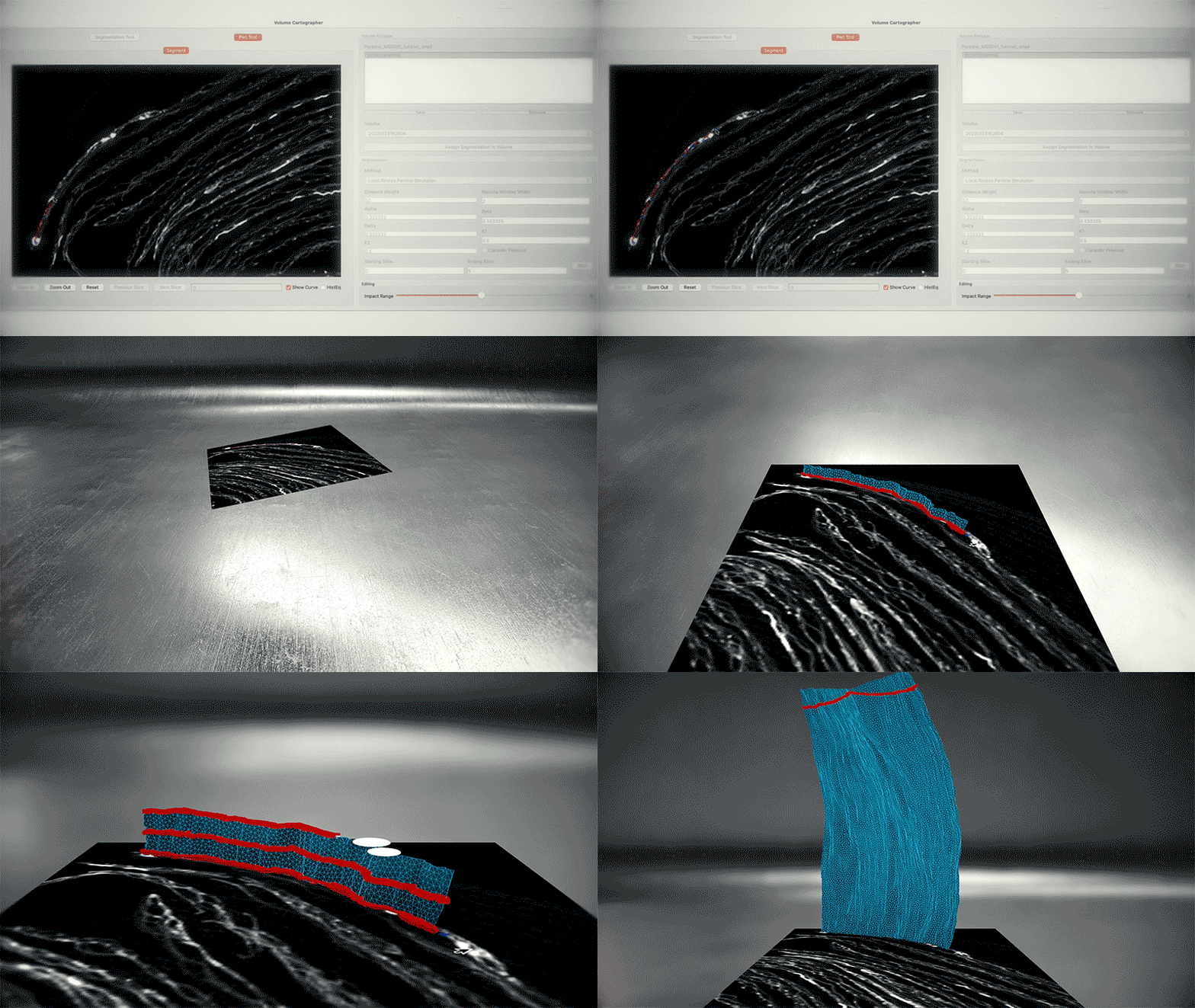
vesuvius challenge
A team of researchers used machine-learning to image the shapes of ink on the rolled-up scroll.Credit: Vesuvius Challenge

The content of most of the previously opened Herculaneum scrolls relates to the Epicurean school of philosophy, and seems to have formed the working library of a follower of the Athenian philosopher Epicurus, who lived from 341 to 270 BC, named Philodemus.
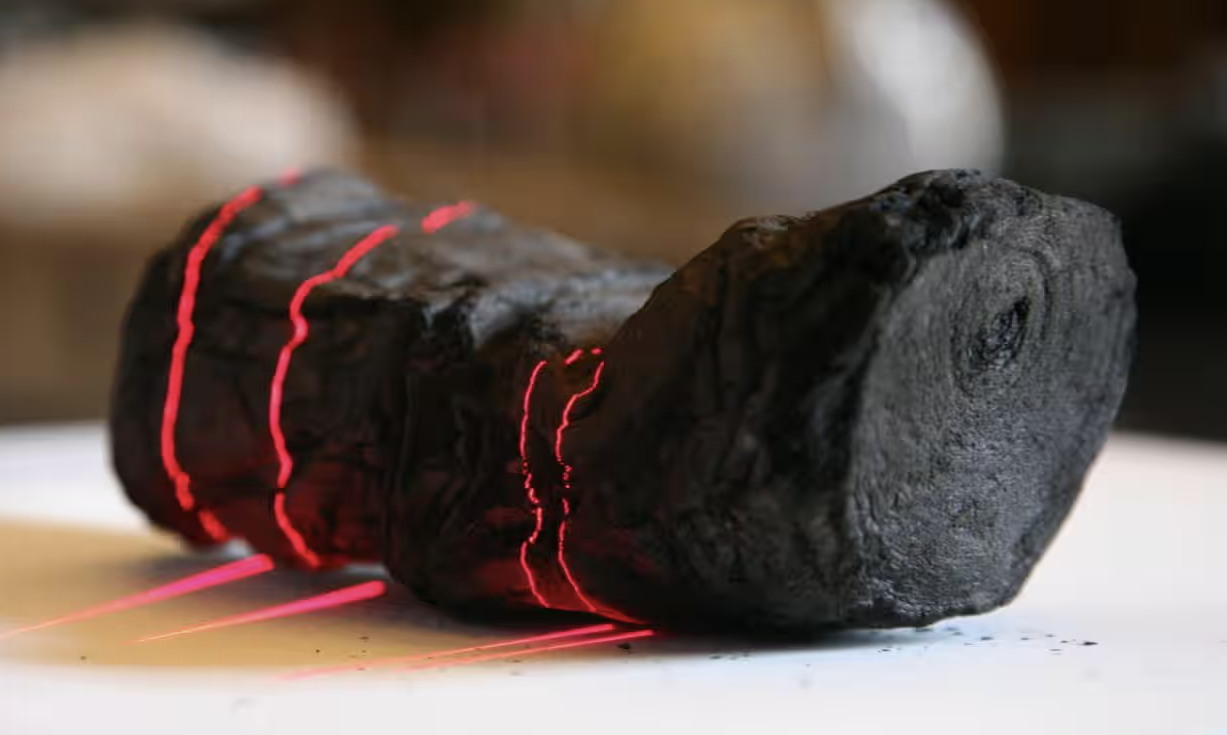
AI looks at Vesuvius papyrus scroll to look inside

The new text revealed in the contest doesn’t name the author but, from a rough first read, researchers predict it is by Philodemus. As well as pleasurable tastes and sights, the scroll includes a figure called Xenophantus, possibly a flute-player of that name mentioned by the ancient authors Seneca and Plutarch, whose evocative playing apparently caused Alexander the Great to reach for his weapons.

Mount Vesuvius Ancient papyrus scrolls read using AI

Researcher Seales has been trying to read these concealed texts for nearly 20 years. His team developed software to “virtually unwrap” the surfaces of rolled-up papyri using three-dimensional computed tomography (CT) images. In 2019, he carried two of the scrolls from the Institut de France in Paris to the Diamond Light Source particle accelerator near Oxford to make high-resolution scans.

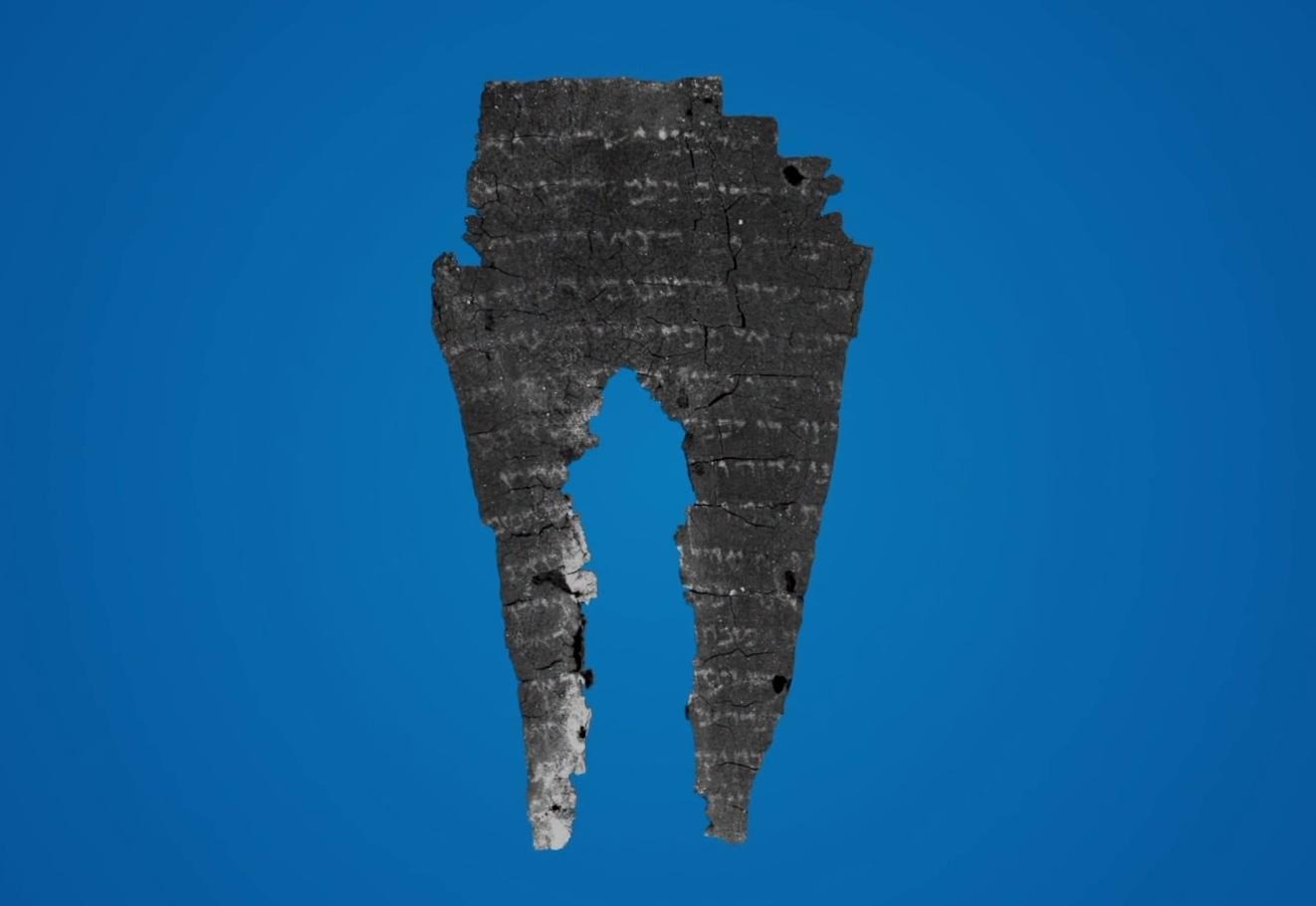
Seales team read Dead Sea scrolls from the Ein Gedi region in Israel. The Dead Sea Scrolls, also called the Qumran Caves Scrolls, are a set of ancient Jewish manuscripts from the Second Temple period. They were discovered over a period of 10 years, between 1946 and 1956, at the Qumran Caves near Ein Feshkha on the northern shore of the Dead Sea, Israel.


 

Karin Kloosterman
Karin Kloostermanhttp://www.greenprophet.com
Karin Kloosterman is an award-winning journalist, innovation strategist, and founder of Green Prophet, one of the Middle East’s pioneering sustainability platforms. She has ranked in the Top 10 of Verizon innovation competitions, participated in NASA-linked challenges, and spoken worldwide on climate, food security, and future resilience. With an IoT technology patent, features in Canada’s National Post, and leadership inside teams building next-generation agricultural and planetary systems — including Mars-farming concepts — Karin operates at the intersection of storytelling, science, and systems change. She doesn’t report on the future – she helps design it. Reach out directly to [email protected]

TRENDING

Ancient Roman strategy game figured out with AI

Two thousand years ago, someone scratched a web of lines into stone in a Roman settlement on the empire’s northern edge. Soldiers, traders, or locals passing time in Coriovallum—now Heerlen in the Netherlands, moved small counters across those lines in a tactical duel of blockade and entrapment.

Astro uses AI to help procure land for renewable energy

For oil-rich, environmentally vigilant Gulf states, Astro isn’t just another startup story. It is a blueprint for accelerating an energy transition that is now existential, not optional.

Earth building with Dead Sea salt bricks

Researchers develop a brick made largely from recycled Dead Sea salt—offering a potential alternative to carbon-intensive cement.

Kia’s bootcamp trains car mechanics on EVs and the future 

During Bootcamp 1.0 in 2025, their pilot program, Kia trained 87 professional mechanics, and 34 have already secured jobs at local dealerships. Another 50 trainees are currently in training in Morocco.

What Renewable Energy Means for Long-Term Environmental Planning

In the context of American energy policy (setting the stage for the world as oil prices are in USD), the relevance of renewable energy planning is increasingly evident. Federal agencies are preparing final biofuel blending mandates under the Renewable Fuel Standard, with decisions expected early in 2026 after delays that have left investors and producers in limbo.

Should You Invest in the Private Market?

startustartup Unlike public stock exchanges, which offer daily trading, strict...

How to build a 100-year-company

Kongō Gumi is a Japanese construction company, purportedly founded in 578 A.D., making it the world's oldest documented company. What can we learn about building sustainable businesses from them?

From Pilot Plant to Global Stage: How Aduro Clean Technologies’ 2026 Expansion Signals a Turning Point for Chemical Recycling Investors Like Yazan Al Homsi

The company's Next Generation Process (NGP) Pilot Plant in London, Ontario, has officially moved into initial operating campaigns, generating the kind of structured, repeatable data that separates laboratory promise from commercial viability.

How AI Helps SaaS Companies Reduce Repetitive Customer Support Work

SaaS products are designed for large numbers of users with different levels of experience, and also in renewable energy.

Pulling Water from the Air

Faced with water shortage in Amman, Laurie digs up...

Turning Your Energy Consultancy into an LLC: 4 Legal Steps for Founders in Texas

If you are starting a renewable energy business in Texas, learn how to start an LLC by the books.

Tracking the Impacts of a Hydroelectric Dam Along the Tigris River

For the next two months, I'll be taking a break from my usual Green Prophet posts to report on a transnational environmental issue: the Ilısu Dam currently under construction in Turkey, and the ways it will transform life along the Tigris River.

6 Payment Processors With the Fastest Onboarding for SMBs

Get your SMB up and running fast with these 6 payment processors. Compare the quickest onboarding options to start accepting customer payments without delay.

Related Articles

Popular Categories