
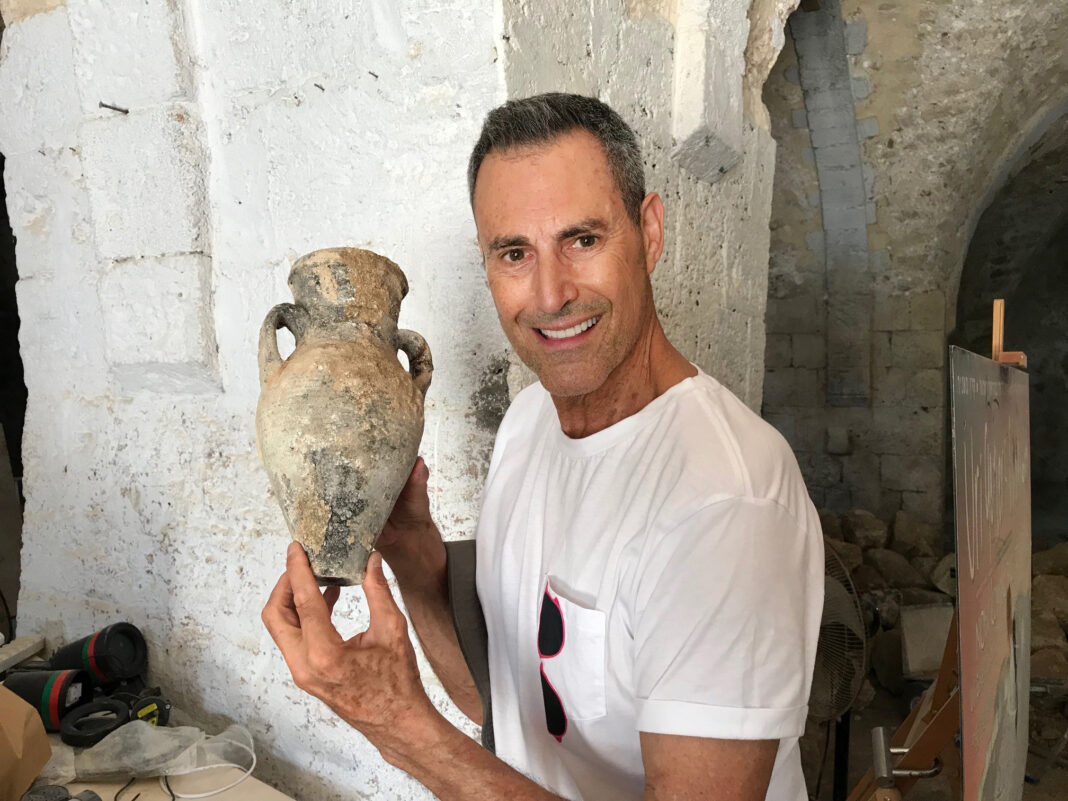
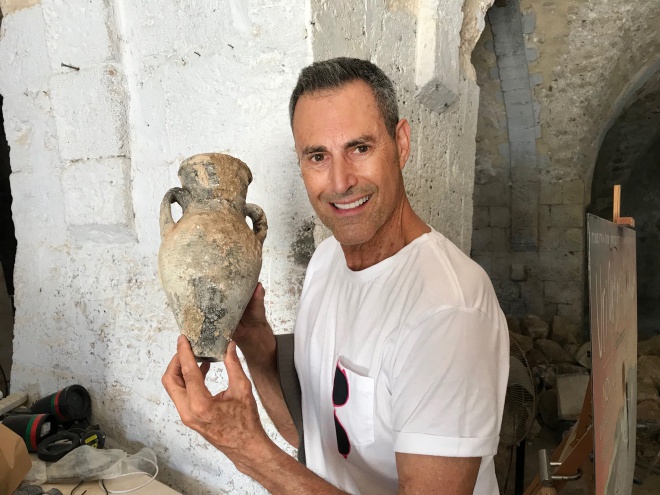
Uri Geller predicted it: An ancient, kosher natural soap factory found in Jaffa

Mentalist Uri Geller is building a museum in the world’s most ancient port city, Jaffa. When they start digging, an ancient olive soap factory is unearthed. The impressive masbena – or soap-manufacturing factory – dates back to the nineteenth century was discovered along with several large underground chambers.

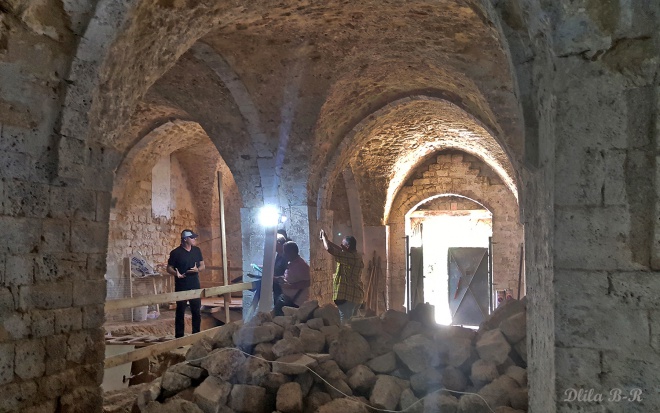
“Our work on the museum required, among other things, that we rewire the electricity in the ancient building,” Uri Geller recounts. “When the Electricity Company began working on the structure, in tandem with inspectors from the Israel Antiquities Authority, we were amazed to uncover a large chamber with moulded recesses. As the work proceeded, I noticed a pile of refuse on one side. I intuited that there was something hidden there. To the surprise of the Israel Antiquities Authority inspectors, an Exceptional find was revealed: a factory for making soap (masbaneh in Arabic, Masbena in Hebrew).”

The site was well preserved and included troughs for mixing raw materials for the soap, a large cauldron, a hearth, water cisterns and underground vaults that were used for storage.

The production of soap from olive oil in the Land of Israel is an industry that was recorded as far back as the tenth century. Soap became an important and lucrative product in Israel, starting out in the Middle Ages and continued as recently as the beginning of the last century. Some of the soap was sold locally, while a large share was destined for export to regions within the Ottoman Empire – mainly for the Egyptian market. Read more about the importance of olives here.
The production center was in Nablus, a town with abundant olive groves and where two traditional soap factories operate to this day. Soap was also manufactured on an industrial scale in Jaffa, Jerusalem, Gaza and Lod. In addition to this find, there is one other soap factory known of in Jaffa: the Damiani Family Masbena, which operated in a large vault beneath the Jaffa Museum. That factory, which was active until 1948, is closed to visitors today, but can be glimpsed from a vantage point on Mifratz Shlomo Street. It is interesting to note that both Jaffa soap factories have nearly identical equipment.

Look out for fake organic olive oil from Israel in this article here.

See soapmaking in Nablus today:

One of the explanations for the commercial success of the Land of Israel soap, compared to its European competitors, is in the raw material. European soap was made, inter alia, with pig fat – a substance shunned by Muslims and Jews – while in the Land of Israel other materials were used: The soap’s core ingredient was “kosher” olive fat, and to this was added soda ash derived from potash-rich saltwort plants, water and lime.

Artisans would oversee the apportioning, preparation and mixing of the ingredients, all of which culminated in them being cooked in large vats or cauldrons for seven to 10 days. Next, the liquid soap would be poured onto special, lime-covered surfaces, where it would cool down and solidify for another 10 days until it could be cut into bars onto which the factory seal would be embossed. These would be stacked up and left to dry out for another two months. Only then could the soap be wrapped in paper for sale.

The soap factory utensils will be put on display at the Uri Geller Museum when it opens at 7 Mazal Arieh Street.


Karin Kloosterman
Karin Kloostermanhttp://www.greenprophet.com
Karin Kloosterman is an award-winning journalist, innovation strategist, and founder of Green Prophet, one of the Middle East’s pioneering sustainability platforms. She has ranked in the Top 10 of Verizon innovation competitions, participated in NASA-linked challenges, and spoken worldwide on climate, food security, and future resilience. With an IoT technology patent, features in Canada’s National Post, and leadership inside teams building next-generation agricultural and planetary systems — including Mars-farming concepts — Karin operates at the intersection of storytelling, science, and systems change. She doesn’t report on the future – she helps design it. Reach out directly to [email protected]

TRENDING

Plant trees in cities, for your heart

It seems like a no-brainer, but sometimes you need to give evidence to city councillors: A new multi-institutional study led by UC Davis Health suggests that not all green space is created equal. Living in urban neighborhoods with more visible trees is associated with a 4% lower incidence of cardiovascular disease, while areas dominated by grass or low shrubs may be linked to higher cardiovascular risk.

Ancient Clay Jug with Camel Art Unearthed in Israel’s Yatir Forest

The striking red-painted jug was found in a cave that had once been an underground olive press before being repurposed as a dwelling. Researchers believe the cave was in use during the Abbasid period (9th-10th centuries CE), when camels dominated trade routes, helping to move goods across vast distances.

Tel Aviv’s mayor Huldai is taking smart phones from schools – his irony in education

Waldorf schools, created by Austria's Rudolph Steiner, are the fastest-growing school system in Israel because of their focus on arts and crafts and their avoidance of technology in the classroom. It’s ironic that Huldai is being praised for pushing a tech-free school environment while his administration shattered a community that has been practicing this philosophy for over a decade.

Wave power collector opens at ancient port city on the Mediterranean

Developed by the company Eco Wave Power, the station was built in collaboration with EDF Renewables. The power station is recognized as “pioneering technology” by the Ministry of Energy.  For the first time, electricity generated from sea waves will power the country's national grid—a historic milestone in the country’s renewable energy progress. 

Are black olives safe to eat?

The store bought olives are often made with lye and other chemicals you might not want to eat.

Should You Invest in the Private Market?

startustartup Unlike public stock exchanges, which offer daily trading, strict...

How to build a 100-year-company

Kongō Gumi is a Japanese construction company, purportedly founded in 578 A.D., making it the world's oldest documented company. What can we learn about building sustainable businesses from them?

From Pilot Plant to Global Stage: How Aduro Clean Technologies’ 2026 Expansion Signals a Turning Point for Chemical Recycling Investors Like Yazan Al Homsi

The company's Next Generation Process (NGP) Pilot Plant in London, Ontario, has officially moved into initial operating campaigns, generating the kind of structured, repeatable data that separates laboratory promise from commercial viability.

How AI Helps SaaS Companies Reduce Repetitive Customer Support Work

SaaS products are designed for large numbers of users with different levels of experience, and also in renewable energy.

Pulling Water from the Air

Faced with water shortage in Amman, Laurie digs up...

Turning Your Energy Consultancy into an LLC: 4 Legal Steps for Founders in Texas

If you are starting a renewable energy business in Texas, learn how to start an LLC by the books.

Tracking the Impacts of a Hydroelectric Dam Along the Tigris River

For the next two months, I'll be taking a break from my usual Green Prophet posts to report on a transnational environmental issue: the Ilısu Dam currently under construction in Turkey, and the ways it will transform life along the Tigris River.

6 Payment Processors With the Fastest Onboarding for SMBs

Get your SMB up and running fast with these 6 payment processors. Compare the quickest onboarding options to start accepting customer payments without delay.

Related Articles

Popular Categories