
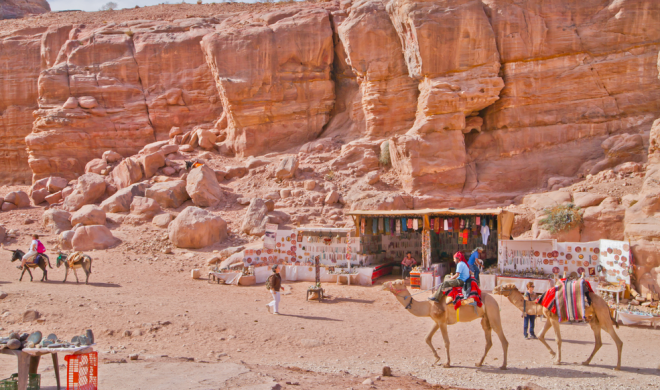

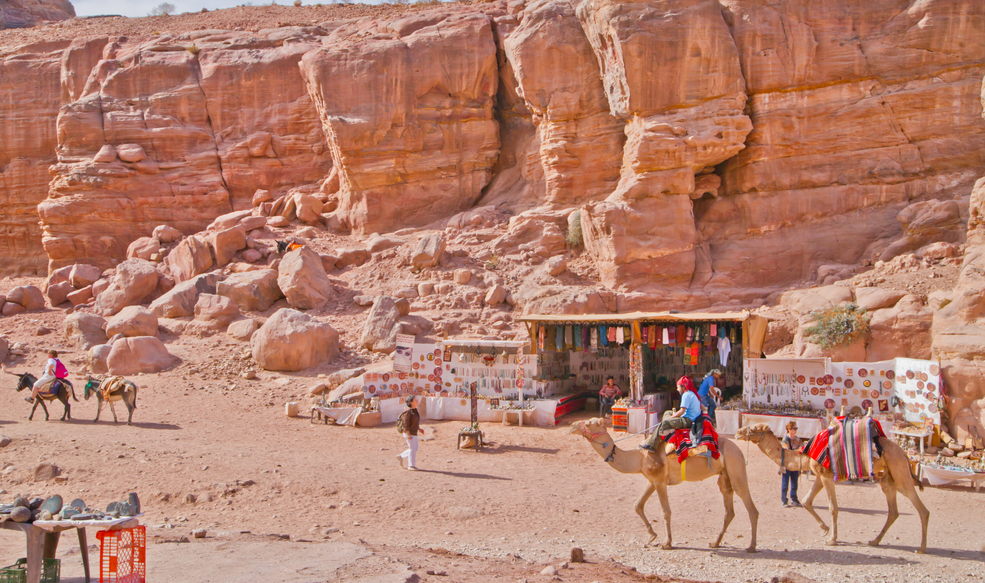
Camel milk and camel burgers are attracting attention in the west, but these desert dwellers have been long-loved in the Middle East. Camels are the horses of the Middle East. Their domestication helped people in the region travel, build and communicate. But when did camels come to the Holy Land?
At the time of the Bible as described or long after? New clues from Tel Aviv University challenge the Book.
Camels are mentioned as pack animals in the biblical stories of Abraham, Joseph, and Jacob in the Bible. But archaeologists have shown that camels were not domesticated in the Land of Israel until centuries after the Age of the Patriarchs (2000-1500 BCE). In addition to challenging the Bible’s historicity, this anachronism is proof that the text was compiled after the events it describes, according to researchers.
Erez Ben-Yosef and Lidar Sapir-Hen from Tel Aviv University have used radiocarbon dating to pinpoint the moment when domesticated camels arrived in the southern Levant, pushing the estimate from the 12th to the 9th century BCE, according to them.
The findings, published recently in the journal Tel Aviv, further emphasize the disagreements between Biblical texts and verifiable history, and define a turning point in Israel’s engagement with the rest of the world.
I would like to point out that Tel Aviv University swings very much to the left so much to the point where they go out of their way to disprove biblical texts. This is in direct contrast to the Hebrew University in Jerusalem, a right-wing university which swings in the other direction.
“The introduction of the camel to our region was a very important economic and social development,” said Ben-Yosef in a press release. “By analyzing archaeological evidence from the copper production sites of the Aravah Valley, we were able to estimate the date of this event in terms of decades rather than centuries.”
Copper mining and camel riding
Archaeologists have established that camels were probably domesticated in the Arabian Peninsula for use as pack animals sometime towards the end of the 2nd millennium BCE. In the southern Levant, where Israel is located, the oldest known domesticated camel bones are from the Aravah Valley, which runs along the Israeli-Jordanian border from the Dead Sea to the Red Sea and was an ancient center of copper production.
At a 2009 dig, Ben-Yosef dated an Aravah Valley copper smelting camp where the domesticated camel bones were found to the 11th to 9th century BCE. In 2013, he led another dig in the area.
To determine exactly when domesticated camels appeared in the southern Levant, Sapir-Hen and Ben-Yosef used radiocarbon dating and other techniques to analyze the findings of these digs as well as several others done in the valley. In all the digs, they found that camel bones were unearthed almost exclusively in archaeological layers dating from the last third of the 10th century BCE or later — centuries after the patriarchs lived and decades after the Kingdom of David, according to the Bible.
The few camel bones found in earlier archaeological layers probably belonged to wild camels, which archaeologists think were in the southern Levant from the Neolithic period or even earlier. Notably, all the sites active in the 9th century in the Arava Valley had camel bones, but none of the sites that were active earlier contained them.
The appearance of domesticated camels in the Aravah Valley appears to coincide with dramatic changes in the local copper mining operation. Many of the mines and smelting sites were shut down; those that remained active began using more centralized labor and sophisticated technology, according to the archaeological evidence. The researchers say the ancient Egyptians may have imposed these changes — and brought in domesticated camels — after conquering the area in a military campaign mentioned in both biblical and Egyptian sources.
Humping it to India
The origin of the domesticated camel is probably the Arabian Peninsula, which borders the Aravah Valley and would have been a logical entry point for domesticated camels into the southern Levant. In fact, Dr. Ben-Yosef and Dr. Sapir-Hen say the first domesticated camels ever to leave the Arabian Peninsula may now be buried in the Aravah Valley.
The arrival of domesticated camels promoted trade between Israel and exotic locations unreachable before, according to the researchers; the camels can travel over much longer distances than the donkeys and mules that preceded them.
By the seventh century BCE, trade routes like the Incense Road stretched all the way from Africa through Israel to India. Camels opened Israel up to the world beyond the vast deserts, researchers say, profoundly altering its economic and social history.




I wonder how they distinguish between ‘wild’ camels and those that were domesticated. I guess (from the article) it is based on where the bones were found but what does that have to do with carbon dating? I doubt if anyone with a sense of faith would really believe that the author of the Hebrew scriptures lied about camels.
I think to paint Tel Aviv University as Left and the Hebrew University as Right is an over simplification. Two of my children attended Hebrew University and they had some Left leaning teachers. I’m sure that each lecturer should be taken as an individual.