
Climate change and the sea

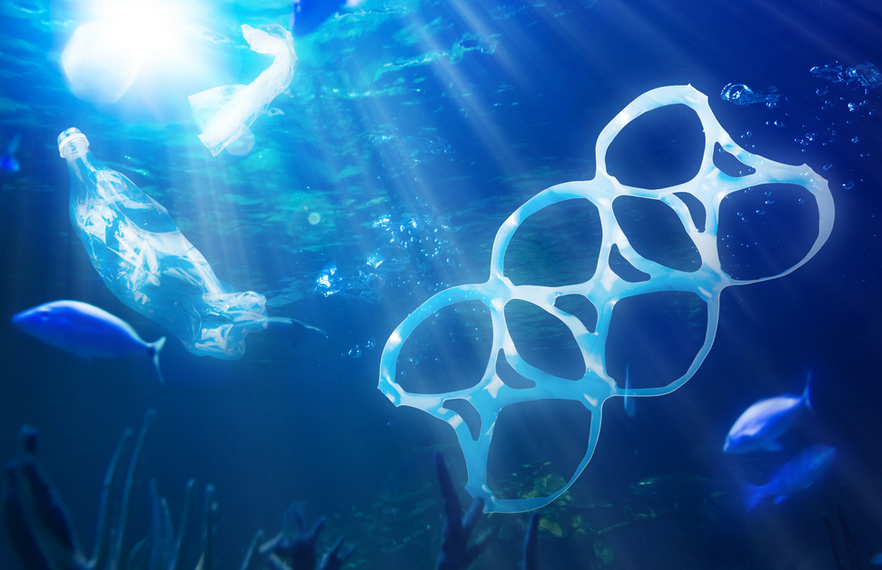
plastic rings choking life at sea
Major changes in how the planet’s marine resources are managed and used are needed to safeguard global food security and ensure the wellbeing of coastal and island countries, the United Nation’s FAO Director-General José Graziano da Silva told a group of high level policymakers meeting today in Abu Dhabi.

“We cannot keep using marine and aquatic resources as if they were endless. And we cannot keep using our oceans as a waste pool,” he said in remarks made at the Blue Economy Summit (19-20 January, Abu Dhabi), attended by heads of state, environment and fisheries ministers, and other key stakeholders.

Serious threats to ocean health such as pollution, overfishing, and altered weather and rising sea levels resulting from climate change must be tackled in earnest – starting now — argued FAO’s chief executive.

“The health of our planet itself, our health and food security, depends on how we treat the blue world,” he said.

Time to act

On average, nearly 17 percent of animal protein consumed worldwide comes from fisheries and aquaculture, and in many small island developing states the figure is much higher.

At the same time, the livelihoods 12 percent of the world’s population depend on fisheries and aquaculture, mainly in the developing world.

But 30 percent of world fish stocks are estimated to be overexploited, depleted or recovering from depletion, with economic losses in marine fisheries resulting from poor management, inefficiencies, and overfishing adding up to $50 billion per year, FAO studies show.

And now climate change is posing new challenges to populations who rely on the oceans, by modifying the distribution and productivity of marine and freshwater species, affecting biological processes, and altering food webs.

Weather changes due to climate change are also taking a toll on many ocean-reliant communities, while the threat of rising sea levels is poised to have major impacts, in particular for small island developing states (SIDS). (Learn more about the challenges facing small island developing states, and how they are organizing to meet them.)

The last thirty years have seen some 80 different commitments on dealing with various ocean threats promulgated at the global level, Graziano da Silva noted, adding: “We not only need to commit, we need to act.”

A blue economy

The concept of a “blue economy” that came out of the 2012 Rio+20 Conference will have an important role to play in achieving the post-2015 global sustainable development goals, Graziano da Silva said during his remarks.

The blue economy model emphasizes conservation and sustainable management, based on the premise that healthy ocean ecosystems are more productive and represent the only way to ensure sustainable ocean-based economies. It also aims to ensure that small island developing states and developing world coastal states equitably benefit from their marine resources.

To support a shift to this new approach, FAO is establishing a new Blue Growth Initiative, through which the Organization will assist countries in developing and implementing blue economy and growth agendas.

The initiative will aim to foster partnerships and act as a catalyst for policy development, investment and innovation in support of food security, poverty reduction, and the sustainable management of aquatic resources.

Karin Kloosterman
Karin Kloostermanhttp://www.greenprophet.com
Karin Kloosterman is an award-winning journalist, innovation strategist, and founder of Green Prophet, one of the Middle East’s pioneering sustainability platforms. She has ranked in the Top 10 of Verizon innovation competitions, participated in NASA-linked challenges, and spoken worldwide on climate, food security, and future resilience. With an IoT technology patent, features in Canada’s National Post, and leadership inside teams building next-generation agricultural and planetary systems — including Mars-farming concepts — Karin operates at the intersection of storytelling, science, and systems change. She doesn’t report on the future – she helps design it. Reach out directly to [email protected]

Read More

3 COMMENTS
  1. They are very late as climate change is about to escalate beyond control. The only hope is to safely recycle 100% of human-generated waste materials, and gently reduce the population with family planning programs around the World. But we humans are addicted to the growing yet ecocidal power of money.

  2. I think it is time they stop talking and start acting. I’m not sure which heads of state the article is referring to but it would be interesting to see a list of who attended and from what countries. The big players (big polluters) need to be at the table for starters. Of course, they all live in a world of denial and finger pointing and are sadly willing to let their citizens be poisoned.

    I wonder if they discussed the current and future effects of The Fukushima Daiichi nuclear disaster.

LEAVE A REPLY

Please enter your comment!
Please enter your name here

TRENDING

Meet Seramic Materials from Abu Dhabi

Based in Masdar City, Abu Dhabi, Seramic Materials was founded in 2019 by Dr. Nicolas Calvet and Dr. Jean-François Hoffmann, researchers working at the intersection of renewable energy and materials science. The company grew out of the Masdar Institute ecosystem and is supported by clean tech programs like The Catalyst, with early backing of around $150,000 and more than $2 million invested in research and development over time.

OPEC and energy stocks in the UAE – insight from eToro

Energy equities are responding unevenly to the evolving landscape. Companies with direct exposure to UAE production growth and infrastructure are benefiting from increased activity expectations, while global oil majors face a more mixed outlook.

Renewables hit 5,149 GW in 2025 as the world edges away from oil shocks and fossil-fueled conflict

“In the midst of uncertain time, renewable energy remains consistent and steadfast in its expansion,” said Francesco La Camera, IRENA’s Director-General. “A more decentralised energy system, with a growing share of renewables and more market players, is structurally more resilient.”

Celebrate International Seagrass Day

Seagrasses are “land plants” that have moved into ocean habitats. They have roots, stems, leaves, flowers, fruits and seeds. There are only about 70 species of seagrasses, representing just 0.02% of all flowering plant species. 

BM Studios is designing systems, not just buildings in the UAE

Balsam Madi is an architect and systems thinker whose work bridges culture, sustainability, and design intelligence across the Middle East and Europe.

How to quiet noise from construction in your office

Streets need to be resurfaced in New York but the humming and grinding noise is unsettling. Noise is environmental pollution. 

EarthX and a blueprint for sustainable investing

Trammell S. Crow, a Dallas-based businessman and father of four, is focusing his efforts on impact investing, and media that focuses on saving the planet through EarthX.

Mining Afghanistan’s Mineral Discoveries Similar to Avatar

Now that American forces in Afghanistan are commemorating the longest period of any war that America has been involved in, including the 1965-73 Vietnam War, the recent discoveries of large and extremely valuable mineral and metal deposits may finally bring to light a reason to continue the presence of US fighting forces in this war torn and backward country.

From Pilot Plant to Global Stage: How Aduro Clean Technologies’ 2026 Expansion Signals a Turning Point for Chemical Recycling Investors Like Yazan Al Homsi

The company's Next Generation Process (NGP) Pilot Plant in London, Ontario, has officially moved into initial operating campaigns, generating the kind of structured, repeatable data that separates laboratory promise from commercial viability.

Nobul’s Regan McGee on Shareholder Value: “Complacency Is the Silent Killer” 

Why the governance framework designed to protect shareholders so...

Should You Invest in the Private Market?

startustartup Unlike public stock exchanges, which offer daily trading, strict...

How to build a 100-year-company

Kongō Gumi is a Japanese construction company, purportedly founded in 578 A.D., making it the world's oldest documented company. What can we learn about building sustainable businesses from them?

How AI Helps SaaS Companies Reduce Repetitive Customer Support Work

SaaS products are designed for large numbers of users with different levels of experience, and also in renewable energy.

Popular Categories