

Make a conscious click through a Connected Butterfly

Connected butterfly, blue background
A new app helps consumers and stakeholders trace ESG policies and practices of luxury goods

You might not know the name Positive Luxury, the firm, but if you’ve ever bought luxury, sustainable goods, you will know the mark: a small butterfly, with Butterfly Certified Mark written on it clearly. Like an organic trade association that certifies your coffee is grown under fair trade practices, the mark of the Butterfly means your purchase has been produced with care for people and the land. 

Connected ButterflyIn furthering consumer accessibility to data you can now tap the “Connected Butterfly” with a phone and access a company’s ESG policy and applications. ESG stands for environmental, social, governance, and innovation. 

What if a company says they are going to go net zero by 2027 but actually do nothing now? How do you really know that their workers in a long supply chain of people and countries are offered a fair wage? 

Companies like Tom Ford Beauty, Smythson, Anya Hindmarch and Etro don’t want you to believe them or guess about what’s going on behind their claims. They want to show consumers, partners, employees and investors the Connected Butterfly. Once inside you can find answers. 

Tom Ford Beauty branding, woman with makeup
Tom Ford Beauty products boast a Connected Butterfly

How do manufacturers treat waste products, or deal with greenhouse gases? The answer’s in a tap of the app, unifying data and processes so this information is no longer in a black box or sitting on a report in the boardroom.

Over 200 leading luxury brands have worked with Positive Luxury since its founding in 2011, and many more are in the wing to sign up. It’s a process that also helps your brand innovate, they tell Green Prophet.
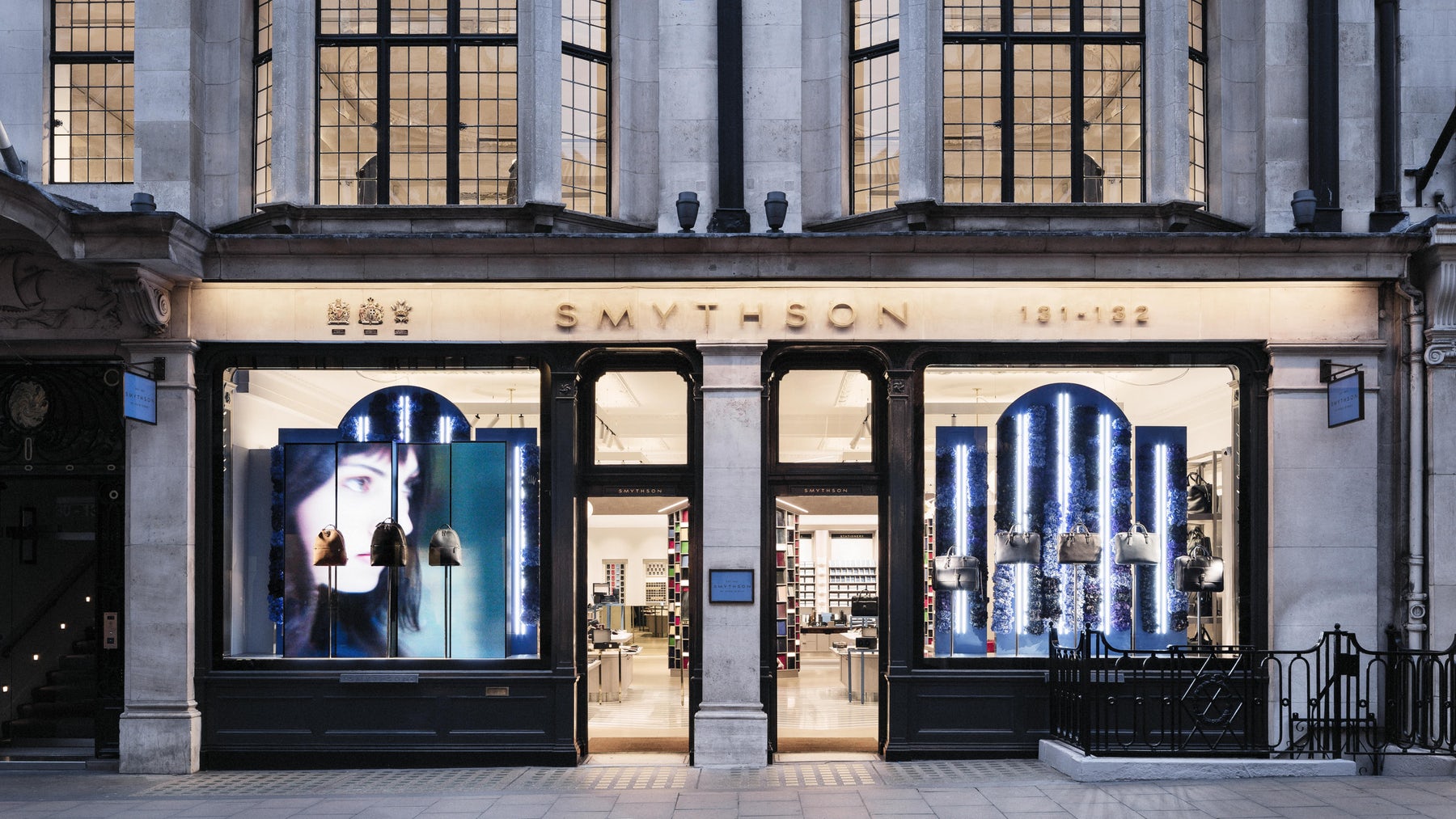
Smythson shopfront, connected butterfly
Smythson builds their brand with “Butterfly” ESG in mind

Keeping in line with the times, the Connected Butterfly applies blockchain and certification systems that are digitized, secure, agile and transparent. 

How does the Butterfly work?

When a luxury brand signs up to apply for the butterfly mark, Positive Luxury independently verifies evidence supplied to them and also advises the clients how they can do better according to global expectations. 

The Connected Butterfly integrates websites, social channels, advertising, products, packaging, in-store and window POS, sustainability reports, and employee handbooks – via a widget, QR code, NFC tag, or hyperlink.  

Performance scores, educational content for consumers, other certifications and accreditations, United Nations SDG targets and achievements; and areas of excellence map, a sustainability journey tracker, positive actions, and company information are all included as part of the tool. 

Find your single source of truth
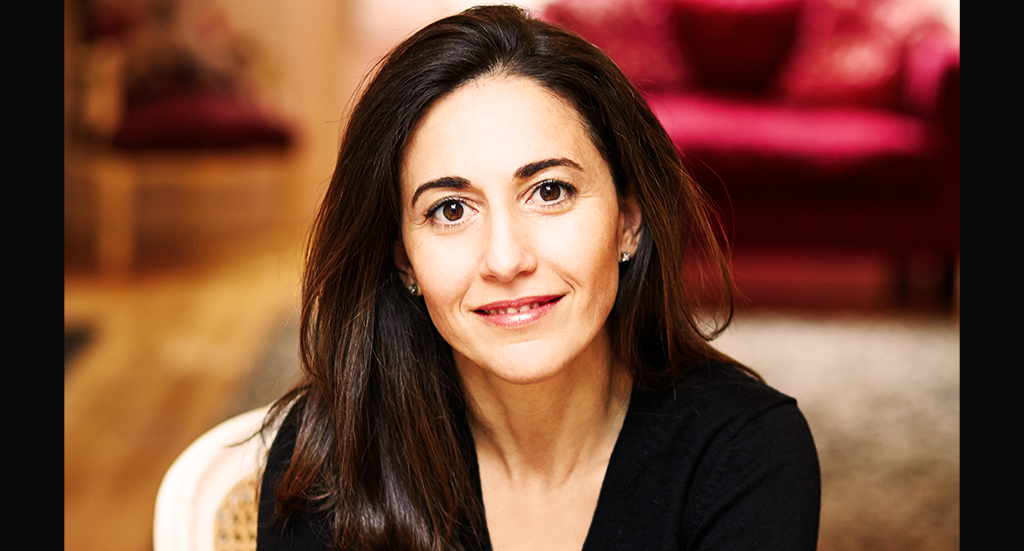
Diana Verde Nieto, from Positive Luxury
Diana Verde Nieto of Positive Luxury

Positive Luxury is co-CEOed and co-founded by Diana Verde Nieto an entrepreneur who was a pioneer in ESG, keen on helping companies adapt to the new climate economy. Diana holds a degree in Global Leadership & Public Policy from Harvard Kennedy School, was trained by Former USA Vice President Al Gore at the Alliance of Climate Protection and was subsequently honored by the World Economic Forum as a Young Global Leader. 

Not seeing ahead and being part of consumer sensibilities and climate risks can be a liability for your brand, she points out. And research shows that companies who do work with ESG in mind, fare better than companies who do not, Verde Nieto recognizes.

She says, “From a single source of truth, people can easily access an unparalleled depth of verified ESG+ verified performance data, including a brand’s sustainability journey, clearly stating their actions and ambition. This level of disclosure raises the bar for Luxury and beyond.” 

How brands embrace National Recycling Day

November 15 marked National Recycle Day in the world. This is the first one after Greenpeace sent us the somber report that most plastics aren’t recyclable anyway. So if you are building a brand, it’s time to think about the beginning of life, and end of life, to your product. In short, Cradle to Cradle. 

Verde Nieto responds to this challenge with a service: “Recycling is important as it minimizes landfill waste; allowing the material to be upcycled offers manufacturers the opportunity to produce using fewer resources. 

“Butterfly Mark-certified brands such as IVAR, Aera, Mark Cross, and Ocean+Main lead the luxury industry by implementing positive recycling actions. As consumers, we are responsible for buying recycled products and continuing recycling as part of our day-to-day lives. The impact has never been more important than it is now,”

We’d be happy to hear about your experience on the app as a consumer or employee of the company’s using it. 

::Positive Luxury


Karin Kloosterman
Karin Kloostermanhttp://www.greenprophet.com
Karin Kloosterman is an award-winning journalist, innovation strategist, and founder of Green Prophet, one of the Middle East’s pioneering sustainability platforms. She has ranked in the Top 10 of Verizon innovation competitions, participated in NASA-linked challenges, and spoken worldwide on climate, food security, and future resilience. With an IoT technology patent, features in Canada’s National Post, and leadership inside teams building next-generation agricultural and planetary systems — including Mars-farming concepts — Karin operates at the intersection of storytelling, science, and systems change. She doesn’t report on the future – she helps design it. Reach out directly to [email protected]

Read More

TRENDING

90% of Americans worry about microplastics

Microplastics are showing up everywhere—from dollar store toys and synthetic clothing to bottled water, toothbrushes and even human sperm. A new Ocean Conservancy survey finds that nearly 9 in 10 Americans are concerned about the health impacts of microplastics, while support is growing for tougher regulations. As scientists uncover plastic particles in the heart, placenta and reproductive organs, the question is no longer whether microplastics are affecting our lives, but how much damage they are already doing.

Understanding Food Production: Karl Studer on the Urban-Rural Knowledge Gap

Karl Studer occupies an unusual position in American business. As President of Quanta Services, he oversees electrical infrastructure operations across the United States, Canada, and Australia, managing thousands of employees and multibillion-dollar projects.

Tigris River oil spill highlights Iraq’s environmental oversight and our addiction to oil

A fresh oil spill in the Tigris River, filmed by an Iraqi university student, has reignited concern over Iraq's polluted waterways. From ancient Mesopotamia to modern Basra, the country's dependence on oil has come at a steep environmental and human cost, with activists warning that unchecked contamination is putting ecosystems and public health at risk.

Doctor-Led Direct Hair Transplant: What Surgeon Involvement Means for Outcomes

Hair restoration technology continues to evolve, but the surgeon behind the procedure remains the most important factor. Doctor-led hair transplants emphasize careful diagnosis, conservative donor management, natural hairline design, and long-term planning rather than simply maximizing graft counts. By treating donor hair as a limited resource and tailoring each procedure to the patient's future hair loss, experienced surgeons can reduce the need for corrective surgery while delivering more natural, sustainable results.

Data centers in Space? Sophia Space and Apex plan on busing them in

Can data centers really be built in space? Pasadena-based Sophia Space is partnering with Apex to test the idea by launching modular AI computing systems into low Earth orbit in 2027. Using radiation-hardened compute TILEs cooled by passive radiative systems and mounted on scalable satellite buses, the companies aim to prove that edge computing can operate reliably in space. While challenges remain, the project represents an important step toward distributed orbital computing networks that could support everything from climate monitoring and pollution tracking to autonomous spacecraft navigation in an increasingly crowded orbital environment.

Yerukim Forms a New Green Economy Where the Money is Really Green

The Yerukim members who pick up the recyclables get to keep the monetary reward, the public earns "green" bills that can be used in shops, and business owners get to be associated with environmentalism.

Choosing Riyadh over Dubai? What Investors Should Know

Saudi Arabia is deploying capital at unmatched scale to catalyze tourism and advanced industry while rewiring its power-and-water backbone. The investable frontier is widening—especially in renewables, grid storage, water efficiency/desal retrofits, and hospitality operating platforms. Prudent investors will insist on phased delivery, enforceable KPIs (energy, water, biodiversity), and RHQ/zone compliance—while pricing political-economy and reputational risks alongside growth upside.

Sell your cooking oil for biodiesel money

Want to make money on old french fry oil? Sell it.

Qatar Alternative Energy Summit Pairs Investors And Innovators

Alternative energy investors and innovators can meet n' greet in Doha, Qatar March 16 and 17.

Here’s How To Implement The Four Pillars Of Employee Engagement

If you throw a party for your work team and they are vegans, don't make it a barbecue. Know the sustainability values of your team to boost moral and retain good people.

Locals From Rishon Fight IKEA

Big Box stores are a pretty new concept in Israel, and thank God that not every Israeli city wants them in their backyard. A word from someone who has see the beautiful farmland around her hometown Newmarket, Ontario stripped and converted into vulgar strip malls of big box shops: they have no place in a healthy and sustainable town or city.

The Jewish National Fund Meets An Inconvenient Truth

According to the JNF, it has transformed thousands of acres of barren land into green forests in Israel. They state that each person emits about 23 tons of carbon per year, estimating that each tree planted can absorb one ton of carbon in its lifetime. That's a whole lot of trees you'd need to be planting. Could so many fit in Israel?

How to quiet noise from construction in your office

Streets need to be resurfaced in New York but the humming and grinding noise is unsettling. Noise is environmental pollution. 

Popular Categories