WASHINGTON — Israel is the best-prepared country in the Middle East for climate change, followed closely by the United Arab Emirates, Qatar and Turkey, according to data released Nov. 5 by the University of Notre Dame Global Adaptation Index (ND-GAIN).
Publication of the 2014 index was followed only a week later by the signing of a landmark agreement in Beijing between President Obama and his Chinese counterpart, Xi Jinping, that commits the two countries to reduce or limit carbon dioxide emissions in coming years. It also comes right before the United Nations Climate Change Conference (COP20), to take place Dec. 1-12 in Lima, Peru.
ND-GAIN is the world’s leading annual index that ranks 178 nations based on their vulnerability to climate change and their readiness to adapt to the droughts, superstorms and natural disasters that climate change can cause.
Leading this year’s index worldwide is Norway, with a score of 82.7 out of a possible 100, followed by New Zealand, Sweden, Finland, Denmark, Australia, United Kingdom, United States, Germany and Iceland.
Middle East countries ranked by readiness
In the Middle East, the highest-ranking countries were Israel (70.4); United Arab Emirates (69.1); Qatar (66.8); Turkey (66.7); Jordan (65.87); Oman (65.2) and Bahrain (64.7). At the other end of the spectrum were Iraq (41.1); Yemen (43.9); Mauritania (49.0) and Djibouti (49.6).
Ranking somewhere in the middle were Kuwait, Tunisia, Egypt, Saudi Arabia, Lebanon, Morocco, Iran, Syria and Libya.
Worldwide, the country least prepared for climate change is the landlocked African nation of Chad, with a score of 31.6.
Study Norway for better climate change future
All these countries could learn a thing or two from Norway, suggests Oslo’s ambassador in Washington, Kåre R. Aas.
“This index is an important acknowledgement of what Norway is doing,” he said. “Norwegians are ourselves being affected by climate change. For instance, a huge part of our population lives near the coast and in cities, which will see increasing precipitation. We also see some challenges related to more floods and heavier landslides.”
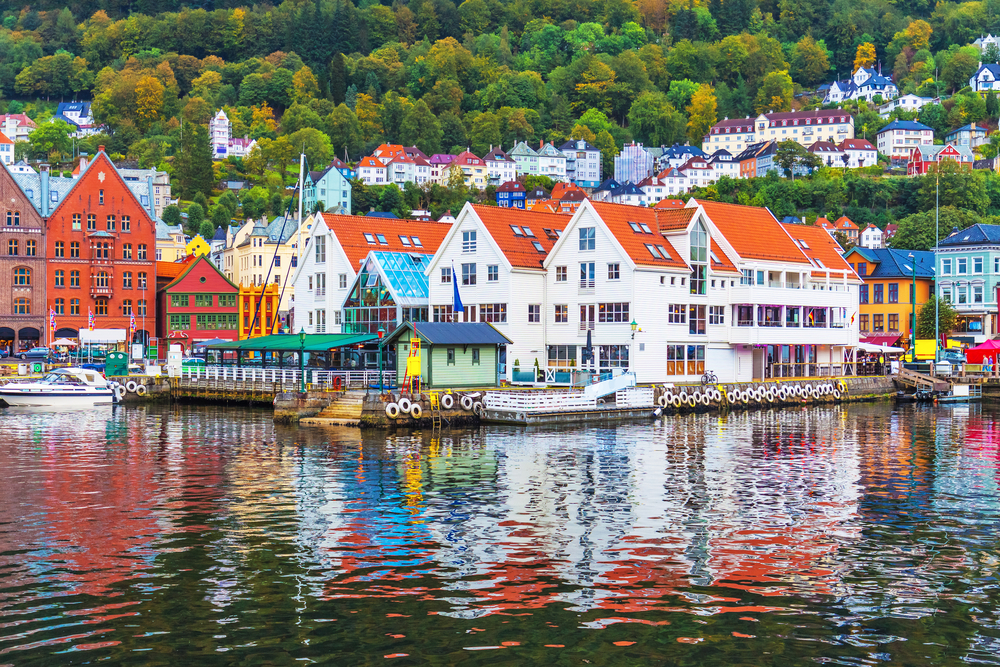
With only 5.1 million inhabitants spread across its territory, Norway enjoys relatively low population density and a very high standard of living. It ranks first among 185 countries in the Human Development Index compiled annually by the United Nations Development Program, and also came out on top — for the sixth year in a row — in the 2014 Legatum Prosperity Index published earlier this month.
But Aas said Norway’s readiness for climate change has little to do with its wealth, and even less with its size or geography.
“Other countries can learn some obvious ideas and concrete proposals from Norway,” he said. “First and foremost, science is key. You need to have a research-based understanding of climate change, and we in Norway have been doing scientific work on this for many years.”
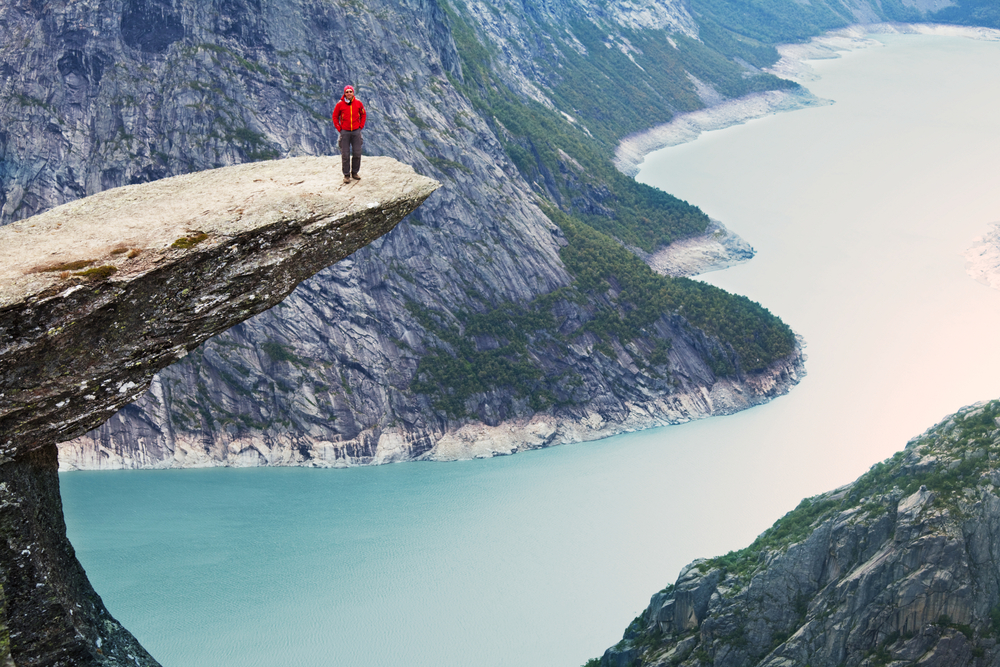
Aas said Norway continually monitors climate change on Spitsbergen — a remote, Maryland-sized island in the Svalbard archipelago near the North Pole that’s home to fewer than 2,500 inhabitants (not including polar bear pictured below) — while elaborating climate models to face future challenges.
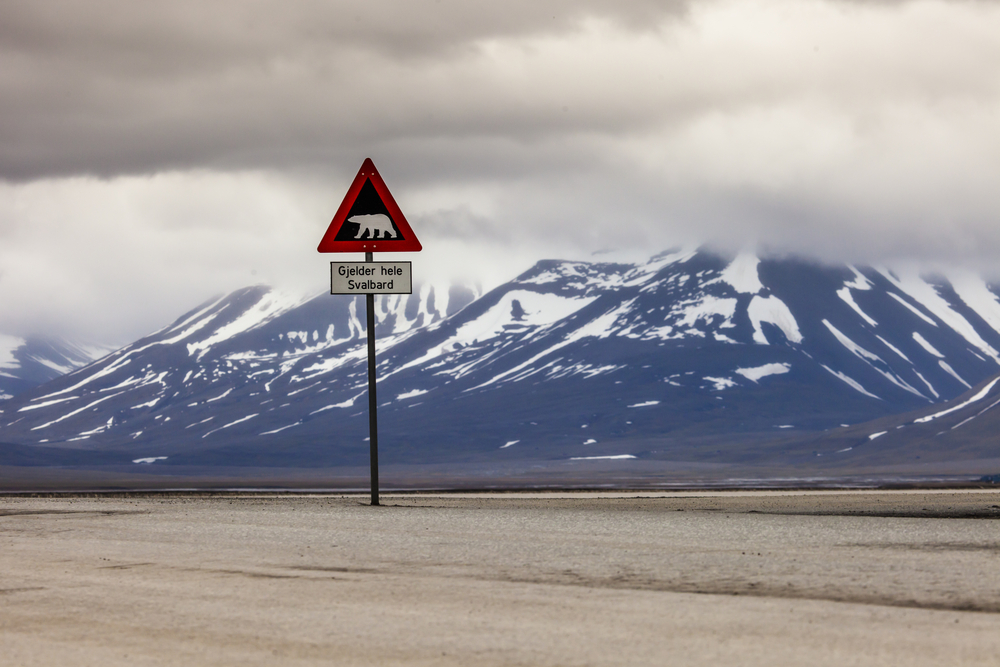
“When we look at temperature increases, we see 2C globally but 4C in the Arctic. That’s why we’ve been consistently inviting members of Congress to the Arctic, in order for them to witness what is really going on,” said the ambassador.
Norway and other high-ranking countries in the Global Adaptation Index do share certain characteristics. Many face moderate exposure to climate change, but they also have good capacities to deal with the risks, such as high access to amenities like electricity, sanitation and clean drinking water. In general, they’re also less dependent on natural capital and better prepared for natural disasters. They also practice good governance.
“This 2014 index captures the latest in vulnerability and readiness data and research,” said Jessica Hellmann, ND-GAIN’s research director. “In Norway and other members of the ND-GAIN leaderboard, we see role models in countries positioned to adapt to climate change. We also see a need for improvement. Not even the most developed countries are risk-free and completely prepared to deal with climate change.”
Hellmann was one of several speakers to address ND-GAIN’s Nov. 5 annual meeting at the Wilson Center, a nonpartisan think tank. This meeting serves as the premier gathering of domestic and international experts on climate change adaptation, and is attended by leading figures from the government, nonprofit and private sectors.
“ND-GAIN continues to be an open, transparent and actionable index, which has been conceived with the aid of open-source, state-of-the-art data and analysis tools,” said Nitesh Chawla, the organization’s index director. “ND-GAIN also is preparing a scenario-analysis tool for users to conduct ‘what-if’ analyses and evaluate the impact of different possible action plans. This actionable nature of the index, and the tools we have, allows us to provide customized products to partners and other interested parties.”
Private sector investment needed
Juan José Daboub, founding CEO of Notre Dame’s Global Adaptation Institute and a member of the ND-GAIN advisory board, is a former finance minister of his native El Salvador, and is also former managing director of the World Bank. He said the world must spend $30 billion to $100 billion annually for the next 25 years just on adaptation. That doesn’t even include mitigating the effects of climate change.
Since few governments can possibly cover that cost, the answer can only come through private-sector investment — especially since it doesn’t appear likely that the world will come to an overarching agreement on reversing climate change anytime soon.
“My country, El Salvador, went literally from hardship to investment-grade in a relatively short period of time,” Daboub said. “We used to use indicators very similar to the ND-GAIN to persuade, convince and encourage policymakers to adapt the right, proven policies to change the future of our country. This means opening up the economy and investing in health and education.”
He added: “The different matrixes used in ND-GAIN allows any decision-maker to dive in and see, for example, how come Costa Rica is doing better than El Salvador in access to clean water. We use tools like that to help move the needle and attract investments. When you implement the right public policies, you’ll open the eyes of private investors.”
Meanwhile, Aas said Norway has implemented several successful policies of its own, such as offering its citizens generous tax incentives to buy electric vehicles. Other perks include free use of bus lanes, free parking, free ferry rides and free charging at municipal stations — all this in a country where gasoline costs the equivalent of $9 a gallon. This helps explain why Norway now has 25,000 electric vehicles on the road — mostly of the Telsa Model S and Nissan Leaf varieties — and hopes to double that number by the end of next year.
Aas said that when it comes to preventing irreversible warming of the planet in coming years, it isn’t a question of adaptation versus mitigation.
“We have to do both. We can’t just do one or the other,” he said. “What the United States and China have agreed on indeed sends an important message to the international community. There is an increased awareness on climate change globally, but also here in the United States. The EU also has come up with concrete proposals on reduction of emissions reductions. We have to keep going steadily forward.”
Top image: Ryan Rodrick Beiler / Shutterstock.com; Image of Bergen, Norway from Shutterstock; Trolltunga, Norway