
Israel Offers a Too-Low Rate For Wind Feed-in Tariff

wind energy israelIsrael fails the “Goldilocks test” for feed-in tariffs with a rate that is too low to hit the sweet spot for wind farm proliferation

Israel’s Public Utility Authority posted on Monday for public comment its revised proposal for feed-in tariff rates that the government will pay for the output of small wind turbines up to 50 KW. It will pay between NIS 0.44 (US $0.10) and NIS 0.54 (US $0.12) per kilowatt hour, a mere quarter of what was floated in 2009 as a possible payment rate.

A feed-in tariff policy was originally decided upon in June, 2008, with the PUA agreeing to purchase the electricity from small domestic and commercial wind turbines.

Then in 2009 it proposed rates that would have been much higher than today’s, according to PUA documents (PDF) posted by feed-in tariff expert Paul Gipe at wind-works (PDF).

In 2009, for turbines smaller than 10 KW the PUA floated a payment rate of NIS 1.60 per kilowatt/hour (PDF) ($0.40), and for up to 50 KW turbines, NIS 1.25 ($0.30) per kilowatt/hour. The total quota was for 30 megawatts through 2016.

These rates were to have been stepped down by 2% a year, giving investors the certainty needed for calculating payback, to prevent the problems of instability such as Spain experienced with its overly generous fixed rate feed-in tariff, that then had to be sharply curtailed as it became oversubscribed.

Typically, feed in tariffs work well enough when they are set at about double the retail rate paid for electricity.

And “well enough” is actually what an ideal feed in tariff aims for, a Goldilocks-like “just right”. Too generous, and they bankrupt a country as renewable energy skyrockets through paying unnecessarily high rates. But too feeble, and no action is spurred, leaving only dirty energy in place.

The average retail cost of electricity in Israel is about NIS 0.50, about the same as the rate being offered to consumers to become small wind developers. This revised rate is probably not enough in itself to spur action by consumers, because it is not double.

However, it would offset the cost to add wind power at home for those homeowners who are committed to going green. The agreements would be in place for seven years.

However, the policy push for more wind power at the utility-scale will remain in effect, since Israel has just ruled that 5% of its energy must come from wind power by 2012, so utilities will have to buy the utility-scale power generated by wind farms.

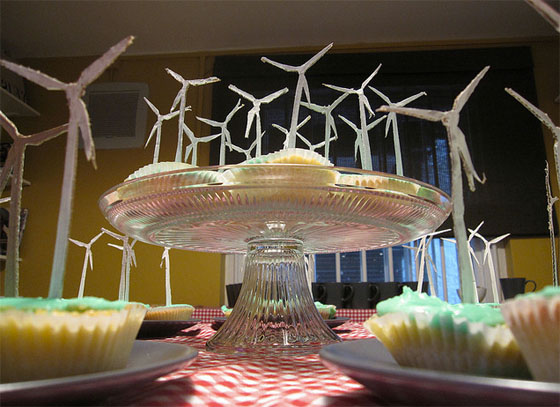
Image: Ed Gillespie

More on the effect of renewable policy on wind development in Israel:
Can Israel’s Wind Power Sector Compete with Solar?
Israel’s First Wind Energy Developer Mey Eden (Eden Springs), Gets Windier on the Golan
Israelis and Investors to Benefit from Feed-in Electricity Tariffs


Read More

3 COMMENTS
  1. I advise you to read the proposed regulation more carefully. it does not replace the existing tariff for small turbines (up to 50 Kw) but adds another regulation for bigger wind farms with over all capacity of over 100 KW. the purpose is to give incentives to erect farms with installed capacity of 7 MW (that connect to the distribution network) and 50 MW (which connect to the transmission network). please reevaluate this post according to the right information.

LEAVE A REPLY

Please enter your comment!
Please enter your name here

TRENDING

5 projects to help kickstart your company’s sustainability journey 

True progress happens when environmental ambition meets action. Decarbonizing efficiently is possible for any business in any sector, but actually getting started can sometimes feel daunting.   The trick? It’s to start small and build momentum. Here are five potential projects to help you get started.  

AI data centers are triggering panic, instead of cleantech opportunities

AI may unintentionally become the economic engine that finally modernizes America’s aging grid. California is experiencing a massive AI data center boom, ranking 3rd in the U.S. with 227 operating centers and 54 more in development as of April 2026, according to Stanford.

24 7 renewable energy: how solar, wind, batteries and AI SaaS replace fossil fuels

A new report from the International Renewable Energy Agency based in Abu Dhabi makes something clear that many in the industry already suspected. When solar and wind are paired with battery storage, they can deliver reliable, round the clock electricity at costs that compete with, and often beat, fossil fuels.

Hormuz 2026 Conflict Poses an Energy and Food Security Dilemma in a Warming World

As tensions rise in one of the world’s most critical maritime chokepoints, the ripple effects go far beyond oil—touching food systems, climate pressures, and regional stability

Korean researchers create battery from greenhouse gases

Professor Ji-Soo Jang, in collaboration with Professor Taekwang Yoon of Ajou University and Professor Hansel Kim of Chungbuk National University, has developed a novel energy device that generates electricity during the process of capturing greenhouse gases.

How to quiet noise from construction in your office

Streets need to be resurfaced in New York but the humming and grinding noise is unsettling. Noise is environmental pollution. 

EarthX and a blueprint for sustainable investing

Trammell S. Crow, a Dallas-based businessman and father of four, is focusing his efforts on impact investing, and media that focuses on saving the planet through EarthX.

Mining Afghanistan’s Mineral Discoveries Similar to Avatar

Now that American forces in Afghanistan are commemorating the longest period of any war that America has been involved in, including the 1965-73 Vietnam War, the recent discoveries of large and extremely valuable mineral and metal deposits may finally bring to light a reason to continue the presence of US fighting forces in this war torn and backward country.

From Pilot Plant to Global Stage: How Aduro Clean Technologies’ 2026 Expansion Signals a Turning Point for Chemical Recycling Investors Like Yazan Al Homsi

The company's Next Generation Process (NGP) Pilot Plant in London, Ontario, has officially moved into initial operating campaigns, generating the kind of structured, repeatable data that separates laboratory promise from commercial viability.

Nobul’s Regan McGee on Shareholder Value: “Complacency Is the Silent Killer” 

Why the governance framework designed to protect shareholders so...

Should You Invest in the Private Market?

startustartup Unlike public stock exchanges, which offer daily trading, strict...

How to build a 100-year-company

Kongō Gumi is a Japanese construction company, purportedly founded in 578 A.D., making it the world's oldest documented company. What can we learn about building sustainable businesses from them?

How AI Helps SaaS Companies Reduce Repetitive Customer Support Work

SaaS products are designed for large numbers of users with different levels of experience, and also in renewable energy.

Popular Categories