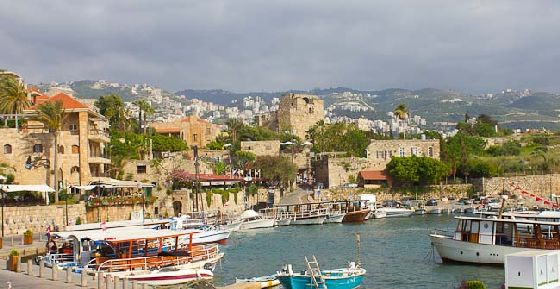
Byblos, Lebanon is best Arabian city to visit this year

byblos-city-arab_tourism_capital_2016-history-harbor-port-ancient-phoenician

I remember that when I visited Byblos, in the Jbeil district of Lebanon, in the summer of 2011, I felt like a true beholder of history. Historians agree that it’s the second oldest continuously-inhabited city on earth, runner-up only to the Palestinian city of Jericho. I sat at Feniqia restaurant in the heart of the old Phoenician city, eating shanklish cheese and tabbouleh and imagining life in that very spot, if time were to rewind 7,000 years.
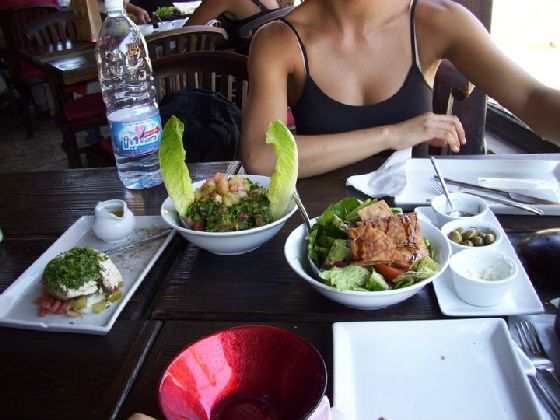
byblos-tourism-fenigia-lebanese-restaurant-jpg

Since about 5,000 BCE, people have been walking the streets of this city. Bartering turned into buying and selling; hunting and gathering was first conducted out in nature, but in the present day, it all goes down in the local souk. Undoubtedly, homemakers hunt for the freshest red peppers to use for muhammara (see our recipe here) and gather the heartiest chickpeas for making hummus, a recipe that has been perfected over generations.

Through successful trade with Egypt, Byblos grew from a small village to a wealthy city. Today still it thrives, by way of a modern phenomenon called tourism, attracting travelers like me looking for a journey back in time.

Byblos was named the 2016 Arab Tourism Capital by the Arab Council of Tourism. Green Prophet was here to salute Erbil and Sharjah as the Arab Tourism Capitals of 2014 and 2015, respectively.
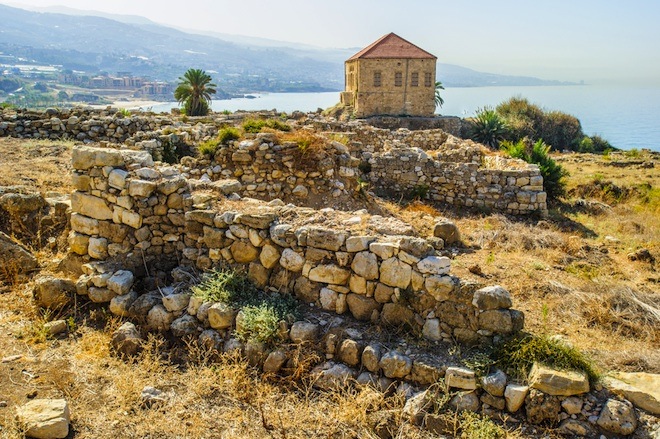
Jbeil, Byblos, Lebanon, Best Arab Tourist City, green spaces, urban rehabilitation, Beirut, urban planning, electric vehicles, travel in Lebanon, archaeology sites in Lebanon

Although thousands of tourists visit Lebanon every year, with Byblos as the top of their to-see lists, municipal leaders say they expect an increase in tourism by up to 30 percent, in the foreseeable future. There are plans to inaugurate five-star international hotel chains and, well, keep up the good work with the Lebanese cooking.

Archaeologically, Byblos is fascinating. It is home to Neolithic, Chalcolithic, Greek and Roman ruins, including a Church of St. John the Baptist and a restored 12th century Crusader castle.

The Byblos International Festival is an annual summer music festival and the biggest public event in Lebanon. Musicians and singers from all over the world, including but not limited to the Middle East, fill the air with everything from classical sounds to pop tunes. For the last few years, the municipality has projected a brief 3D animation movie showing historical highlights of Byblos on tower walls in the fishermen’s harbor.
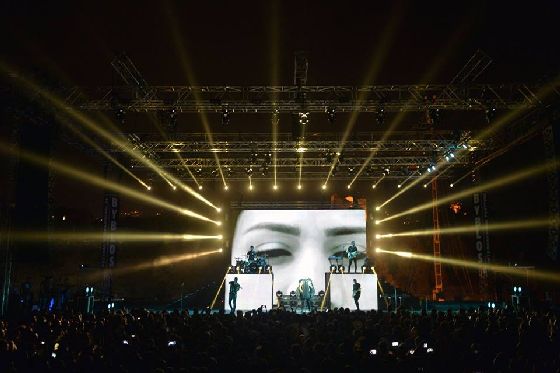
byblos_international_festival-music-mashrou_leila

Efforts for environmental sustainability are also at work. The air in Byblos is cleaner than it has been in a while. With aims to make Byblos more pedestrian-friendly, local leaders recently closed part of the old city to vehicles after 4pm on weekdays and noon on weekends. With decreased air pollution and less noise, visitors will be breathing fresh air in this very old city.

I’d recommend a few days in Byblos, although it could easily be made into a day trip from Beirut. I think spending more than 24 hours there only makes sense, for you’ll be stepping far, far back in time and there’s a lot of ground to cover!

What will the Arab Tourism Capital of 2017 be? Comment below with your guesses.


Kelly Milone
Kelly Milonehttp://www.greenprophet.com
Kelly Milone holds an MA in cultural heritage management (Johns Hopkins University), BA in anthropology, BFA in dance and Arabic minor (Montclair State University). She is a dance teacher and choreographer, quick-study interior designer, and aspiring creative and travel writer.

Read More

TRENDING

Listening to Water: Tarek Atoui’s Next Work for Tate Modern

Born in Beirut, Lebanon in 1980 and now living in Paris, Atoui has spent years building instruments that don’t sit comfortably in concert halls. Many of them involve water, glass, and ceramics — materials that react to sound instead of simply producing it.

In The Dark Review – An Immersive Music Experience in Total Darkness at St Andrew Holborn

In complete darkness, inside the holy space of St Andrew Holborn, listening begins to feel like a form of prayer. With no light and no distraction, sound fills the church and holds the room. For an hour, attention itself becomes the shared act.

Lebanon reporting fellowship for truth-tellers

Lebanon’s environmental crisis is not abstract. It is shaped by war, neglect, corruption, and silence. Rivers carry untreated sewage and industrial waste into the Mediterranean. Dynamite fishing shatters fragile marine ecosystems along the coast. In many areas, Hezbollah’s military presence and decades of instability have made environmental accountability nearly impossible. What flows into the sea is not only pollution — it is politics, poverty, and unresolved war. And yet, these stories are rarely told with depth, care, or courage. Silat Wassel’s Environmental Justice Journalism Fellowship is opening space for exactly that. They are looking for a few brave souls. 

In the dark returns to London in 2026 with immersive sound experience in total darkness

After a sold-out London debut in 2024, the acclaimed immersive audio experience "in the dark" returns to the capital in January 2026, with performances scheduled for January 22, 23, 29 and 30 at St Andrew’s Church in Holborn.

Slow food market Souk el Tayeb in Lebanon celebrates food and Eid El Barbara

What makes Souk El Tayeb in Lebanon remarkable is not only its insistence on local, seasonal produce, but its belief that dignity and sustainability must go hand in hand. Farmers are paid fairly. Villages are uplifted. Traditional recipes are kept alive not as nostalgia but as knowledge systems: real food is carbon-light, waste-free, and is adapted to the land.

Yerukim Forms a New Green Economy Where the Money is Really Green

The Yerukim members who pick up the recyclables get to keep the monetary reward, the public earns "green" bills that can be used in shops, and business owners get to be associated with environmentalism.

Choosing Riyadh over Dubai? What Investors Should Know

Saudi Arabia is deploying capital at unmatched scale to catalyze tourism and advanced industry while rewiring its power-and-water backbone. The investable frontier is widening—especially in renewables, grid storage, water efficiency/desal retrofits, and hospitality operating platforms. Prudent investors will insist on phased delivery, enforceable KPIs (energy, water, biodiversity), and RHQ/zone compliance—while pricing political-economy and reputational risks alongside growth upside.

Sell your cooking oil for biodiesel money

Want to make money on old french fry oil? Sell it.

Qatar Alternative Energy Summit Pairs Investors And Innovators

Alternative energy investors and innovators can meet n' greet in Doha, Qatar March 16 and 17.

Here’s How To Implement The Four Pillars Of Employee Engagement

If you throw a party for your work team and they are vegans, don't make it a barbecue. Know the sustainability values of your team to boost moral and retain good people.

Locals From Rishon Fight IKEA

Big Box stores are a pretty new concept in Israel, and thank God that not every Israeli city wants them in their backyard. A word from someone who has see the beautiful farmland around her hometown Newmarket, Ontario stripped and converted into vulgar strip malls of big box shops: they have no place in a healthy and sustainable town or city.

The Jewish National Fund Meets An Inconvenient Truth

According to the JNF, it has transformed thousands of acres of barren land into green forests in Israel. They state that each person emits about 23 tons of carbon per year, estimating that each tree planted can absorb one ton of carbon in its lifetime. That's a whole lot of trees you'd need to be planting. Could so many fit in Israel?

How to quiet noise from construction in your office

Streets need to be resurfaced in New York but the humming and grinding noise is unsettling. Noise is environmental pollution. 

Popular Categories