Health insurance is a regulated financial product. Insurers operate under binding contracts, overseen by state insurance commissioners, that legally obligate them to pay claims meeting policy terms. Policyholders who believe a covered claim was wrongfully denied have legal recourse through state regulatory channels.
The New Zealand Merino Company, now rebranded as Zentera, has quietly removed the phrase “world’s leading ethical wool brand” from its website, a notable change that comes after a disturbing investigation by PETA Asia-Pacific into the company’s ZQ-certified wool supply chain, PETA reports to Green Prophet.
Somehow vegetables with short seasons excite the imagination and appetite more sharply than produce that’s available all year around. Good Middle Eastern cooks have many recipes for delicate fava beans, and this turmeric-fragrant soup is one.
Health insurance is a regulated financial product. Insurers operate under binding contracts, overseen by state insurance commissioners, that legally obligate them to pay claims meeting policy terms. Policyholders who believe a covered claim was wrongfully denied have legal recourse through state regulatory channels.
The New Zealand Merino Company, now rebranded as Zentera, has quietly removed the phrase “world’s leading ethical wool brand” from its website, a notable change that comes after a disturbing investigation by PETA Asia-Pacific into the company’s ZQ-certified wool supply chain, PETA reports to Green Prophet.
Somehow vegetables with short seasons excite the imagination and appetite more sharply than produce that’s available all year around. Good Middle Eastern cooks have many recipes for delicate fava beans, and this turmeric-fragrant soup is one.
Health insurance is a regulated financial product. Insurers operate under binding contracts, overseen by state insurance commissioners, that legally obligate them to pay claims meeting policy terms. Policyholders who believe a covered claim was wrongfully denied have legal recourse through state regulatory channels.
The New Zealand Merino Company, now rebranded as Zentera, has quietly removed the phrase “world’s leading ethical wool brand” from its website, a notable change that comes after a disturbing investigation by PETA Asia-Pacific into the company’s ZQ-certified wool supply chain, PETA reports to Green Prophet.
Somehow vegetables with short seasons excite the imagination and appetite more sharply than produce that’s available all year around. Good Middle Eastern cooks have many recipes for delicate fava beans, and this turmeric-fragrant soup is one.
Health insurance is a regulated financial product. Insurers operate under binding contracts, overseen by state insurance commissioners, that legally obligate them to pay claims meeting policy terms. Policyholders who believe a covered claim was wrongfully denied have legal recourse through state regulatory channels.
The New Zealand Merino Company, now rebranded as Zentera, has quietly removed the phrase “world’s leading ethical wool brand” from its website, a notable change that comes after a disturbing investigation by PETA Asia-Pacific into the company’s ZQ-certified wool supply chain, PETA reports to Green Prophet.
Somehow vegetables with short seasons excite the imagination and appetite more sharply than produce that’s available all year around. Good Middle Eastern cooks have many recipes for delicate fava beans, and this turmeric-fragrant soup is one.
Health insurance is a regulated financial product. Insurers operate under binding contracts, overseen by state insurance commissioners, that legally obligate them to pay claims meeting policy terms. Policyholders who believe a covered claim was wrongfully denied have legal recourse through state regulatory channels.
The New Zealand Merino Company, now rebranded as Zentera, has quietly removed the phrase “world’s leading ethical wool brand” from its website, a notable change that comes after a disturbing investigation by PETA Asia-Pacific into the company’s ZQ-certified wool supply chain, PETA reports to Green Prophet.
Somehow vegetables with short seasons excite the imagination and appetite more sharply than produce that’s available all year around. Good Middle Eastern cooks have many recipes for delicate fava beans, and this turmeric-fragrant soup is one.
Health insurance is a regulated financial product. Insurers operate under binding contracts, overseen by state insurance commissioners, that legally obligate them to pay claims meeting policy terms. Policyholders who believe a covered claim was wrongfully denied have legal recourse through state regulatory channels.
The New Zealand Merino Company, now rebranded as Zentera, has quietly removed the phrase “world’s leading ethical wool brand” from its website, a notable change that comes after a disturbing investigation by PETA Asia-Pacific into the company’s ZQ-certified wool supply chain, PETA reports to Green Prophet.
Somehow vegetables with short seasons excite the imagination and appetite more sharply than produce that’s available all year around. Good Middle Eastern cooks have many recipes for delicate fava beans, and this turmeric-fragrant soup is one.
Health insurance is a regulated financial product. Insurers operate under binding contracts, overseen by state insurance commissioners, that legally obligate them to pay claims meeting policy terms. Policyholders who believe a covered claim was wrongfully denied have legal recourse through state regulatory channels.
The New Zealand Merino Company, now rebranded as Zentera, has quietly removed the phrase “world’s leading ethical wool brand” from its website, a notable change that comes after a disturbing investigation by PETA Asia-Pacific into the company’s ZQ-certified wool supply chain, PETA reports to Green Prophet.
Somehow vegetables with short seasons excite the imagination and appetite more sharply than produce that’s available all year around. Good Middle Eastern cooks have many recipes for delicate fava beans, and this turmeric-fragrant soup is one.
Health insurance is a regulated financial product. Insurers operate under binding contracts, overseen by state insurance commissioners, that legally obligate them to pay claims meeting policy terms. Policyholders who believe a covered claim was wrongfully denied have legal recourse through state regulatory channels.
The New Zealand Merino Company, now rebranded as Zentera, has quietly removed the phrase “world’s leading ethical wool brand” from its website, a notable change that comes after a disturbing investigation by PETA Asia-Pacific into the company’s ZQ-certified wool supply chain, PETA reports to Green Prophet.
Somehow vegetables with short seasons excite the imagination and appetite more sharply than produce that’s available all year around. Good Middle Eastern cooks have many recipes for delicate fava beans, and this turmeric-fragrant soup is one.
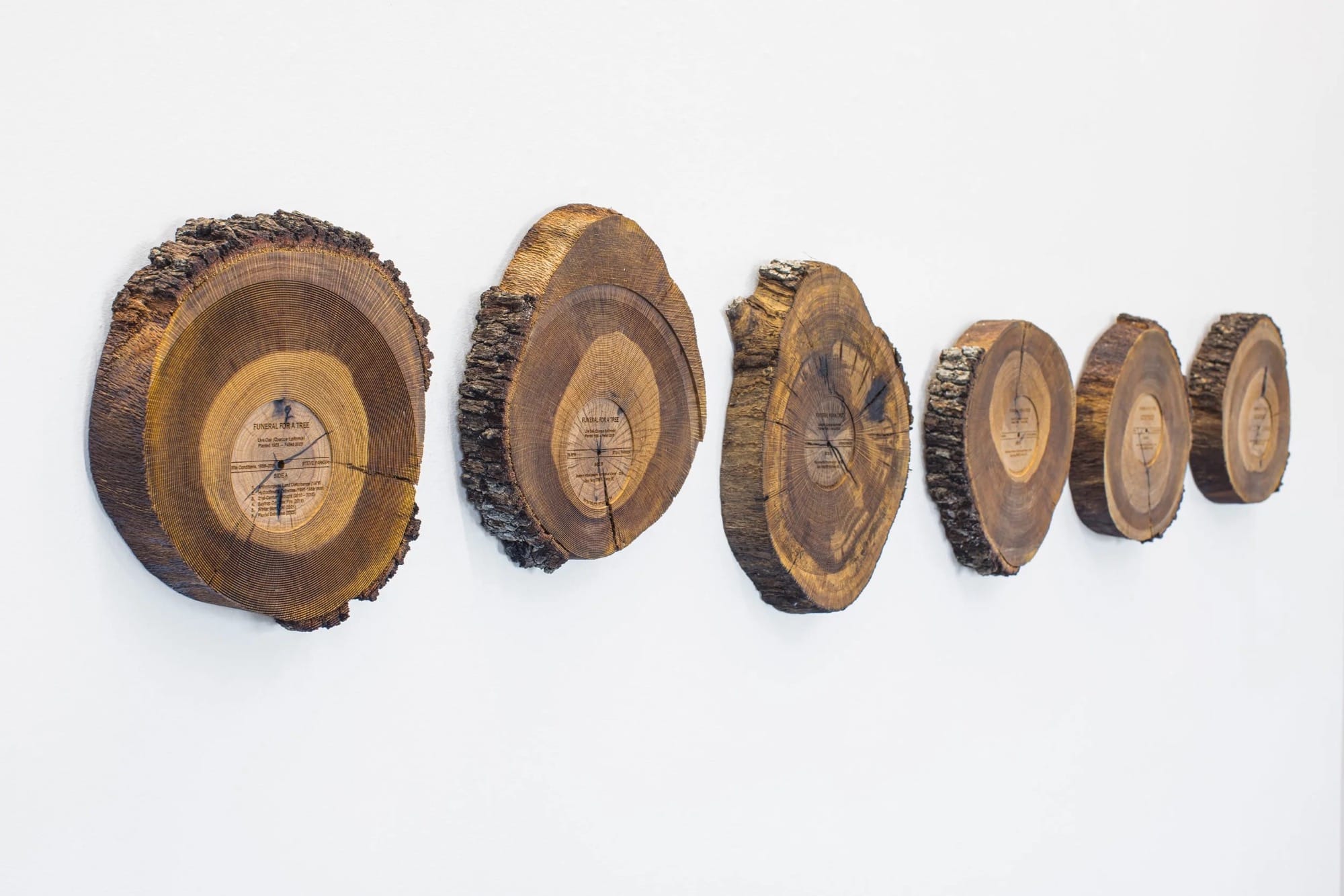
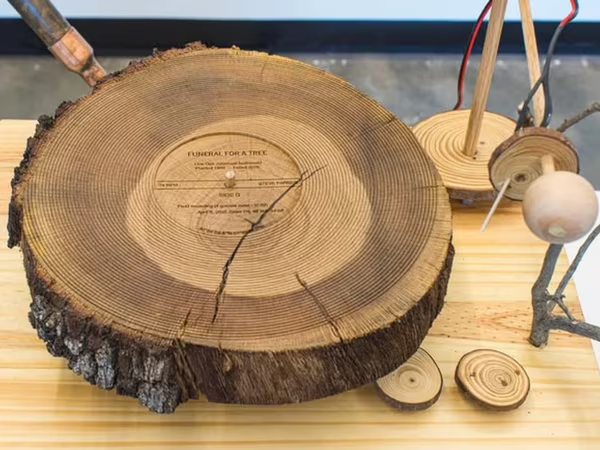
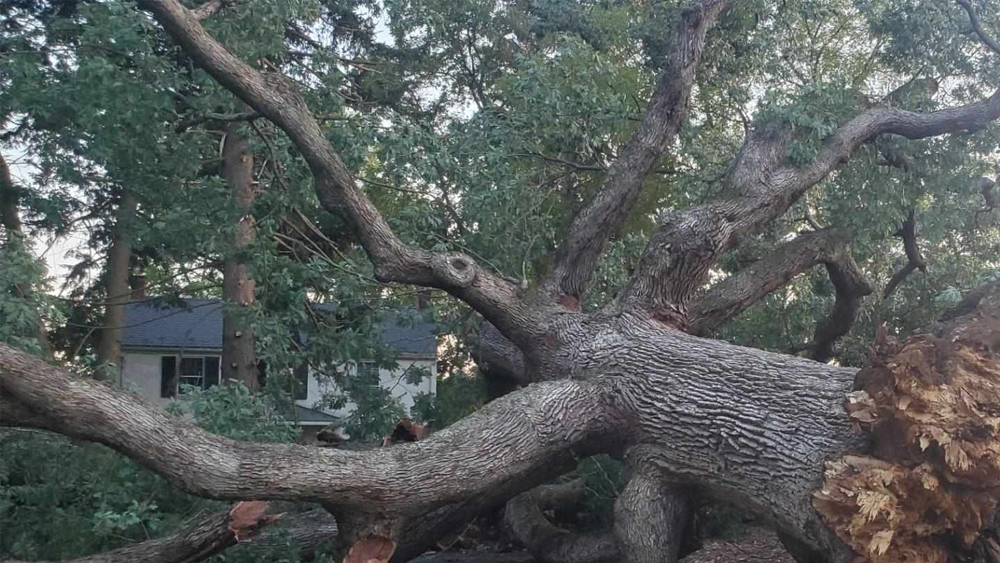
When a 65-year-old oak tree in Steve Parker’s yard died from fungal disease, he did not cut it into firewood or haul it away. He did not erase it. He cut the tree into disks and then turned them into records that play birdsong –– a touching tribute to the years that the tree was house and home to birds and all manners of creatures.
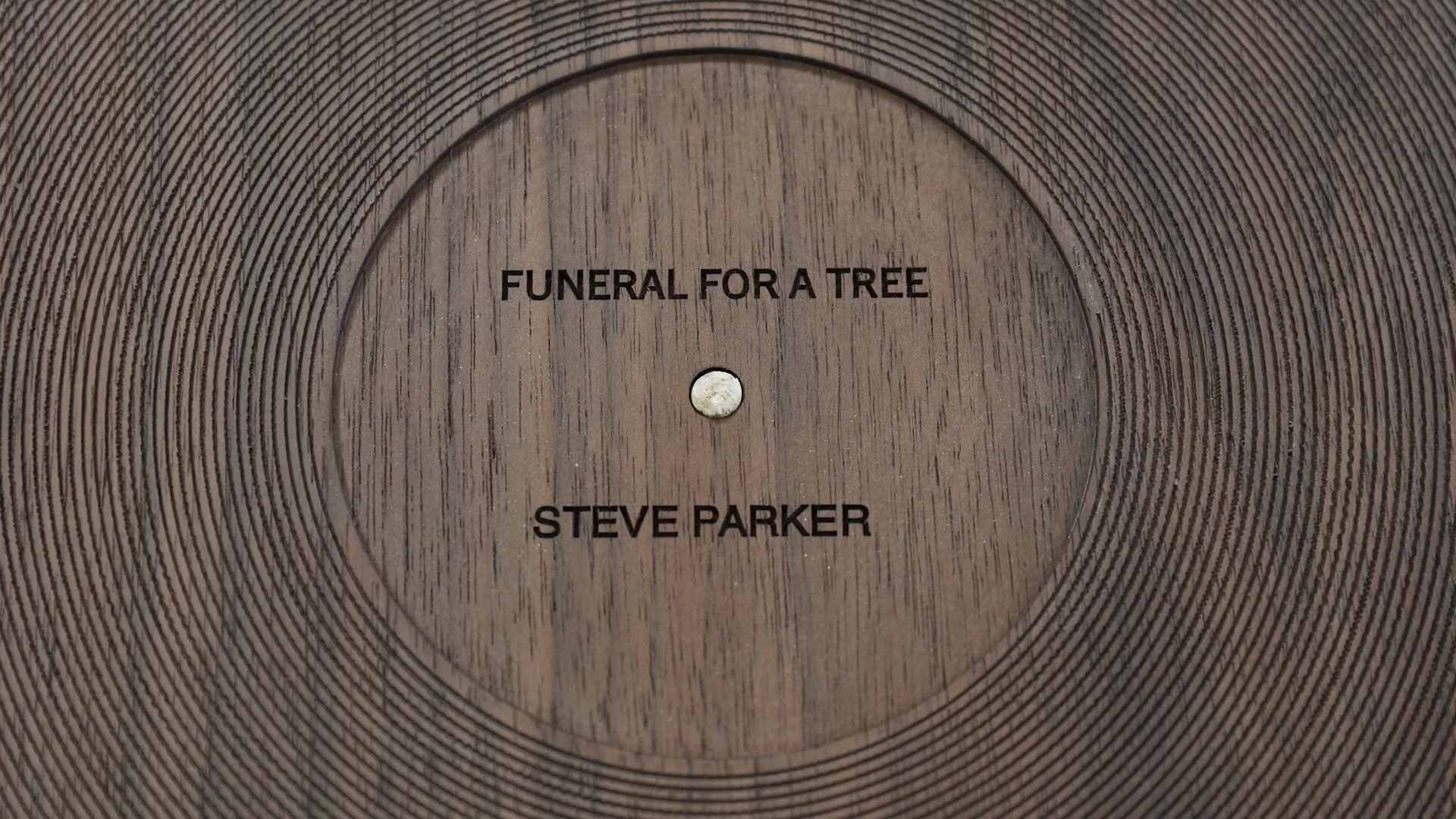
Parker, a Texas-based sound artist known online as @parkerstevesounds played the disks of wood on a Victrola-style turntable, and from the it the wooden records emit layered avian soundscapes, transforming dead wood into a living archive. He called the project Funeral for a Tree.
I once worked on a similar project in clay. I created a series of vessels designed to hold seeds. While shaping each one, I spoke to it — prayers, fragments of thought, small conversations with the material itself. I recorded my voice and the surrounding landscape of sound into the walls of the ceramic. Today’s machines cannot retrieve those recordings. But future instruments — capable of hearing at finer scales — may. The vessels are simply waiting for the right ears.
Funeral for a tree; Promotional material – Steve Parker.Funeral for a tree; Promotional material – Steve Parker.A disk from the old oak, Funeral for a tree; Promotional material – Steve Parker.The oak tree featured in Funeral for a tree; Promotional material – Steve Parker.Funeral for a tree; Promotional material – Steve Parker.
Trees are not neutral objects. Their rings hold records of rainfall, drought, heat, and cold. Their fibers contain chemical traces of stress, recovery, and time. In scientific terms, trees are environmental witnesses. In Parker’s hands, they become storytellers.
The project was later exhibited at Ivester Contemporary in East Austin, Texas where visitors encountered both the wooden records and the physical remains of the tree itself. The installation did not explain the tree. It allowed people to sit with it.
In a time when climate loss is reported in numbers — hectares, parts per million, extinction rates — Funeral for a Tree insists on intimacy. It is easy to talk about forests. It is harder to mourn a single trunk. It’s like people fighting for Gaza or Iran or places thousands of miles beyond their city limits, but they don’t have time to call their grandmother or check on the sick boy down the street.
Parker’s work invites us to create rituals and intimacy with objects and meaning close to our homes and hearts.
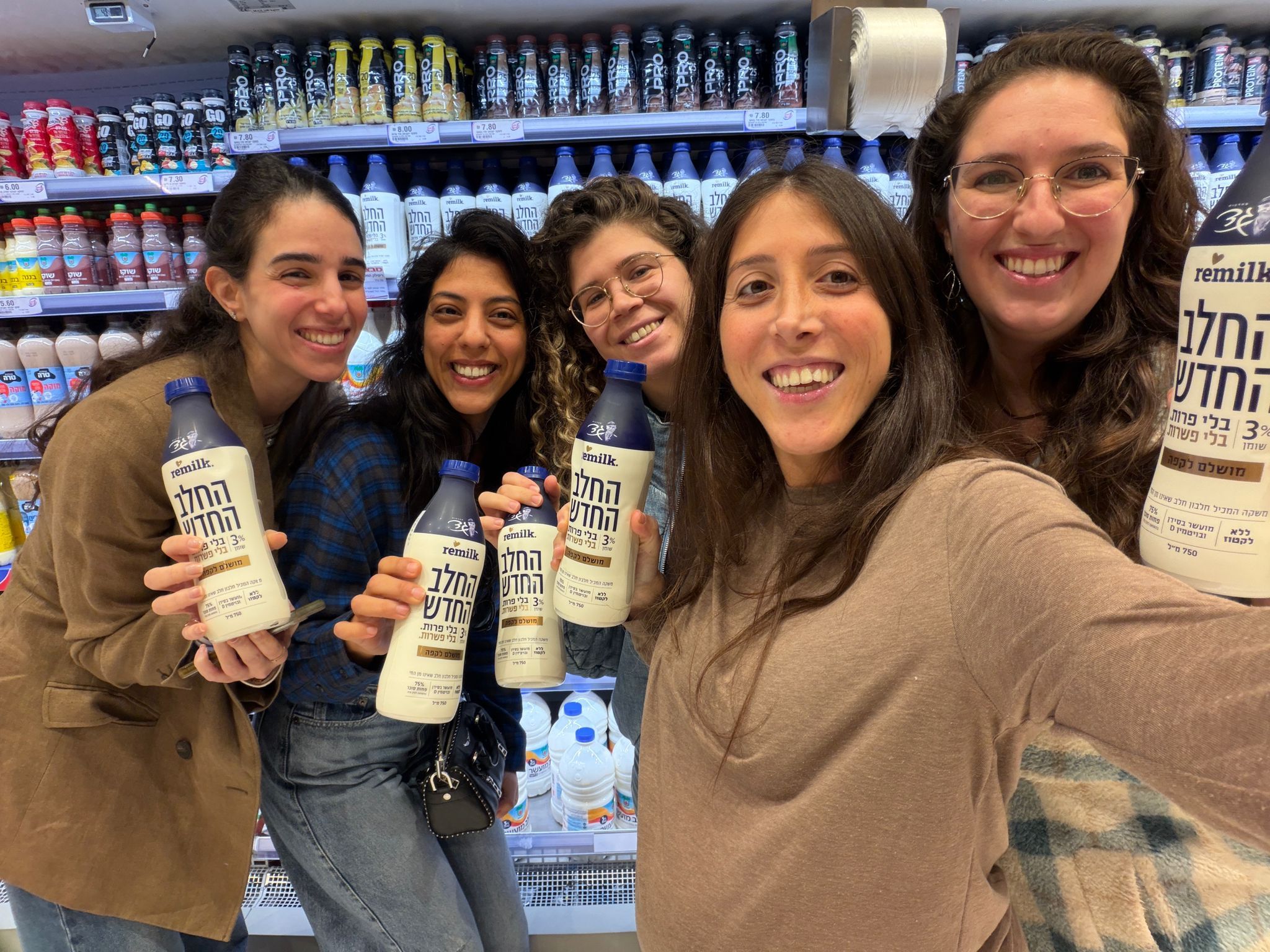
Remilk is now hitting the shelves in Israel. Courtesy Remilk.
This week, Israel’s precision-fermentation milk from Remilk is finally appearing on supermarket shelves. Staff members have been posting photos in Hebrew, smiling, tasting, and clearly enjoying the moment — not because it’s science fiction, but because it tastes like the real thing.
Remilk doesn’t come from cows. It uses microorganisms programmed to produce the same milk proteins found in dairy. The result is real milk protein — without the animal.
Having fun in the supermarket. Courtesy of Remilk.
Why does that matter? Because traditional dairy is one of the most resource-intensive foods we produce. It requires land, water, feed, antibiotics, and creates methane emissions. Precision-fermented milk needs far less land, far less water, and produces dramatically lower greenhouse gas emissions.
Why many scientists say cloned (fermented) milk is better:
No cows → no methane emissions that cause climate change
No antibiotics or hormones
Much lower land and water use
Identical proteins → same taste and texture
Suitable for people with lactose intolerance (depending on formulation)
Stable, scalable, and climate-resilient
It doesn’t mean traditional dairy and the taste of brie disappears tomorrow. But it offers a serious alternative in a world facing climate pressure, food security concerns, and ethical debates about industrial farming.
Israel has become a global leader in this field, alongside companies working on cultivated meat, egg proteins, and cheese alternatives. What once sounded futuristic is now simply… food. How do you say mooooo in Hebrew?
Lebanon’s environmental crisis is not abstract. It is shaped by war, neglect, corruption, and silence. Rivers carry untreated sewage and industrial waste into the Mediterranean. Dynamite fishing shatters fragile marine ecosystems along the coast. In many areas, Hezbollah’s military presence and decades of instability have made environmental accountability nearly impossible. What flows into the sea is not only pollution — it is politics, poverty, and unresolved war.
And yet, these stories are rarely told with depth, care, or courage. Silat Wassel’s Environmental Justice Journalism Fellowship is opening space for exactly that. They are looking for a few brave souls.
Rooted in South Lebanon and guided by feminist, youth-led, and independent journalism values, the Rooted Voices Rising initiative invites young journalists to document the environmental injustices shaping daily life — from contaminated water and illegal dumping to land exploitation, unsafe construction, and the invisible costs of conflict.
This is not a workshop for press releases and sound bytes but a five-day Environmental Justice Journalism Lab designed to equip six selected journalists with tools, mentorship, and editorial backing to produce two publishable investigations each. This will set the stage for helping more people become honest, environmental reporters.
Participants will explore environmental justice frameworks, solutions journalism, digital safety, and advanced storytelling methods — while remaining grounded in ethical reporting and lived community realities.
The fellowship is open to journalists across Lebanon, with priority for:
– Conflict-affected and underrepresented regions
– Women and rural youth
– Displaced individuals
– Marginalized communities
In a country where environmental damage is often normalized as collateral damage of politics, this fellowship insists that land, water, and life still matter.
The deadline to apply is 24 January 2026. Only shortlisted applicants will be contacted. Training details will be shared with selected fellows.
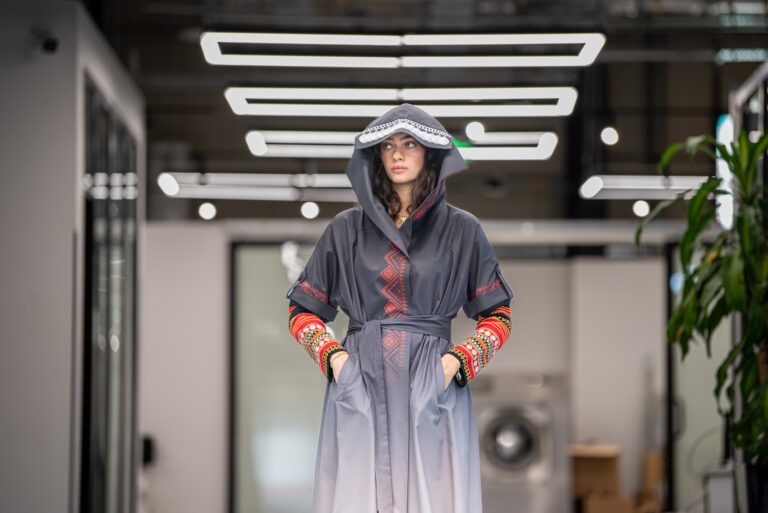
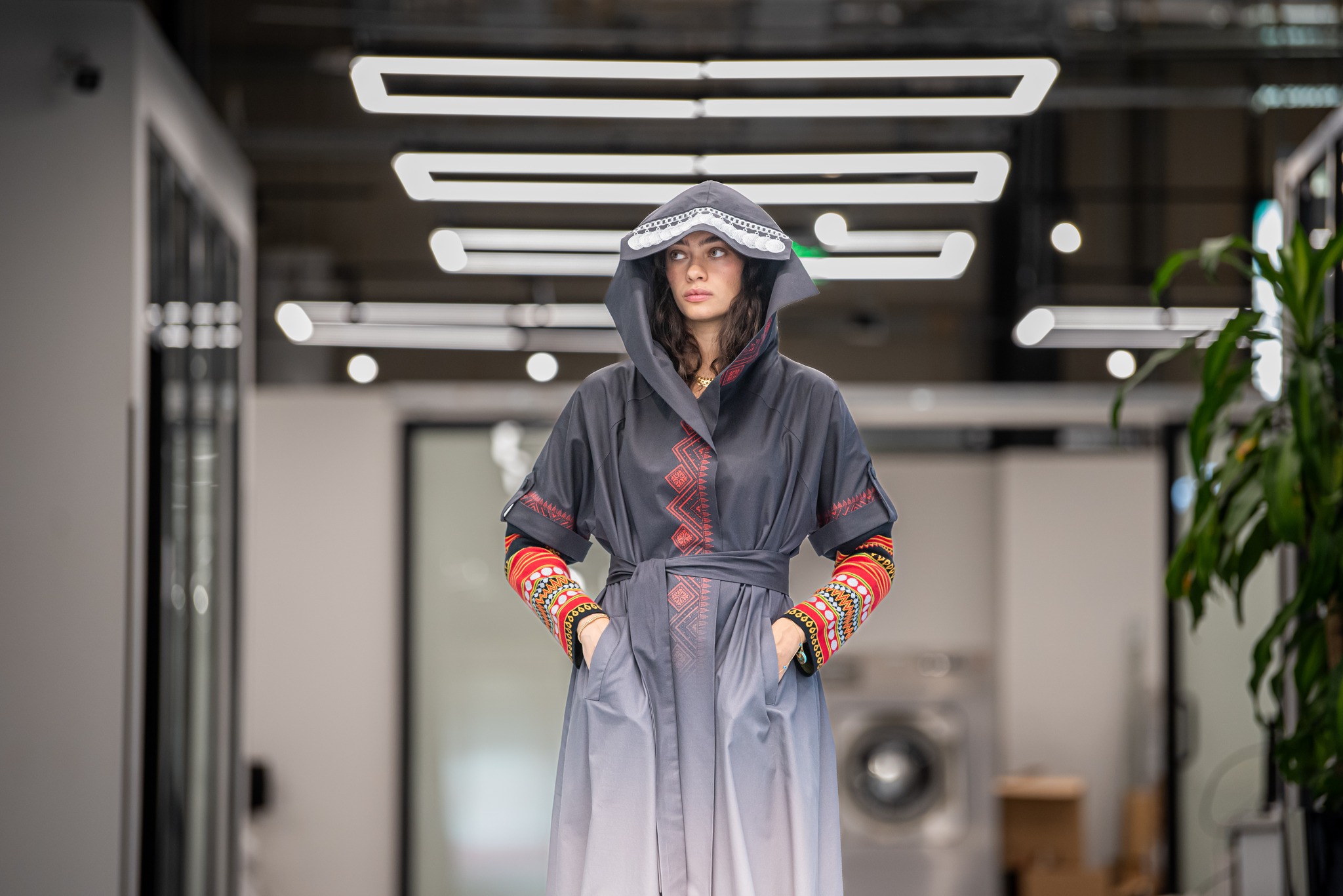
Seaweed abaya courtesy of King Abdullah University of Science and Technology (KAUST)
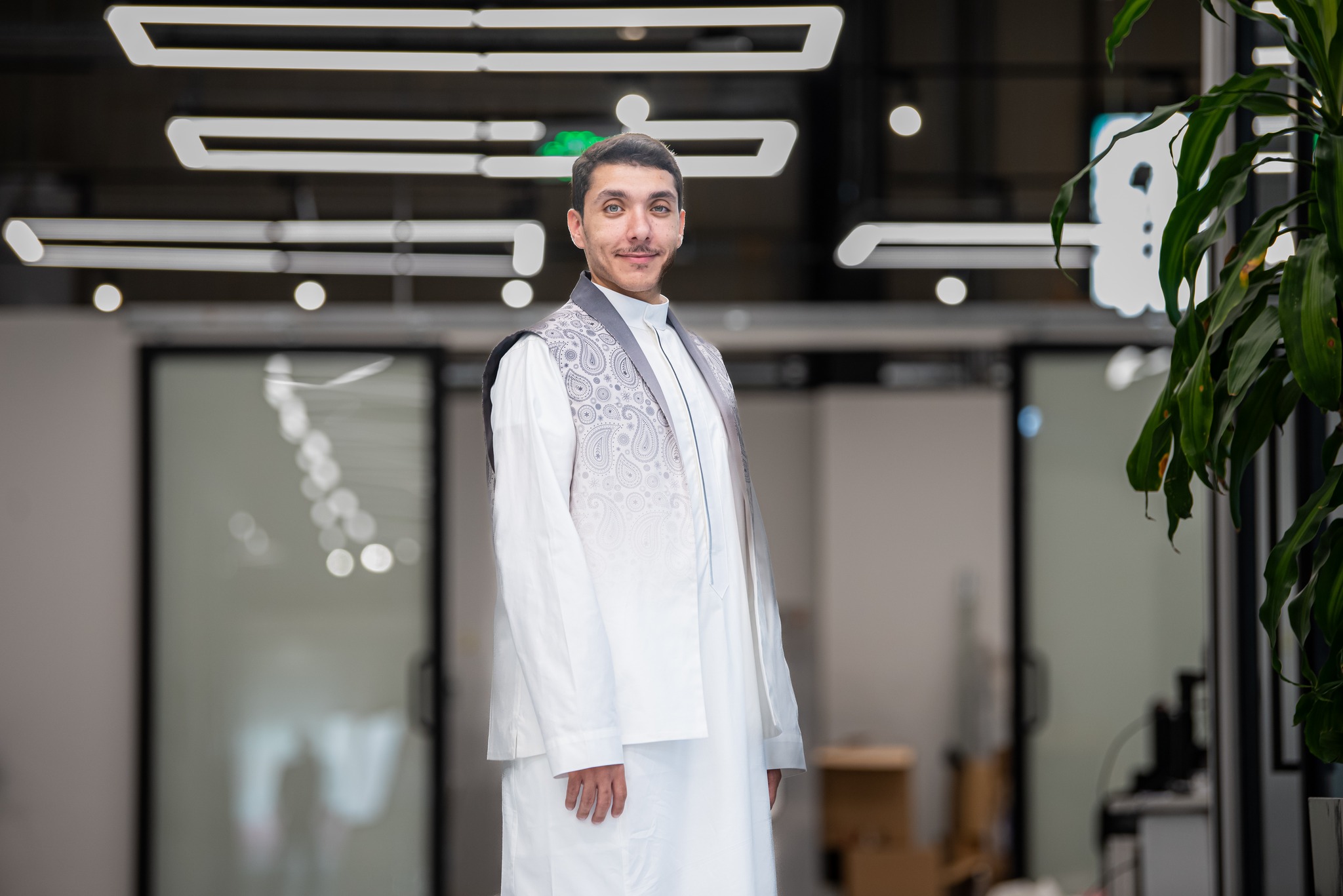
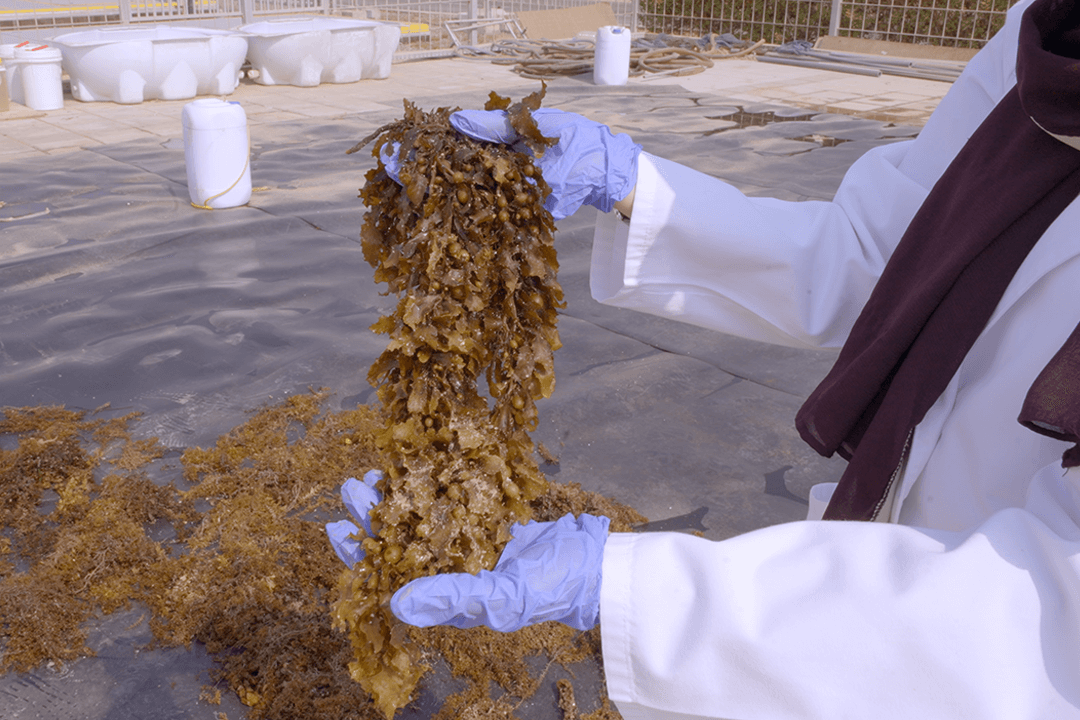
Fashion’s next material revolution may not come from a lab in Paris or Milan — but from the tides of the Red Sea. Along Saudi Arabia’s coastline, scientists, designers, and textile innovators are transforming Sargassum seaweed into a wearable fabric, turning a fast-growing marine biomass into a new generation of sustainable textile. The initiative, led by KAUST Beacon Development in collaboration with the Saudi Fashion Commission and PYRATEX, is part of a broader effort to rethink how fashion sources its raw materials.
The project was recently presented as the Red Sea Seaweed Textile, demonstrating how locally sourced algae can be converted into blended yarns and finished garments. Stella McCartney does it. So why not Saudis?
“This material represents a milestone in our mission to build a future-focused, sustainable fashion ecosystem in Saudi Arabia. It demonstrates how local resources, scientific excellence, and creative talent can come together to deliver solutions for the global fashion industry,” said Burak Çakmak, CEO of the Saudi Fashion Commission.
KAUST’s role has been central. Its marine scientists studied the biochemical structure of Red Sea seaweed and developed responsible harvesting methods that preserve both the ecosystem and the algae’s functional properties.
An abaya made from seaweed?
Seaweed abaya courtesy of King Abdullah University of Science and Technology (KAUST)
“By researching the biochemical properties of Red Sea seaweed, we were able to integrate local algae species into an innovative blended yarn,” said Fiona Symes, COO of KAUST Beacon Development.
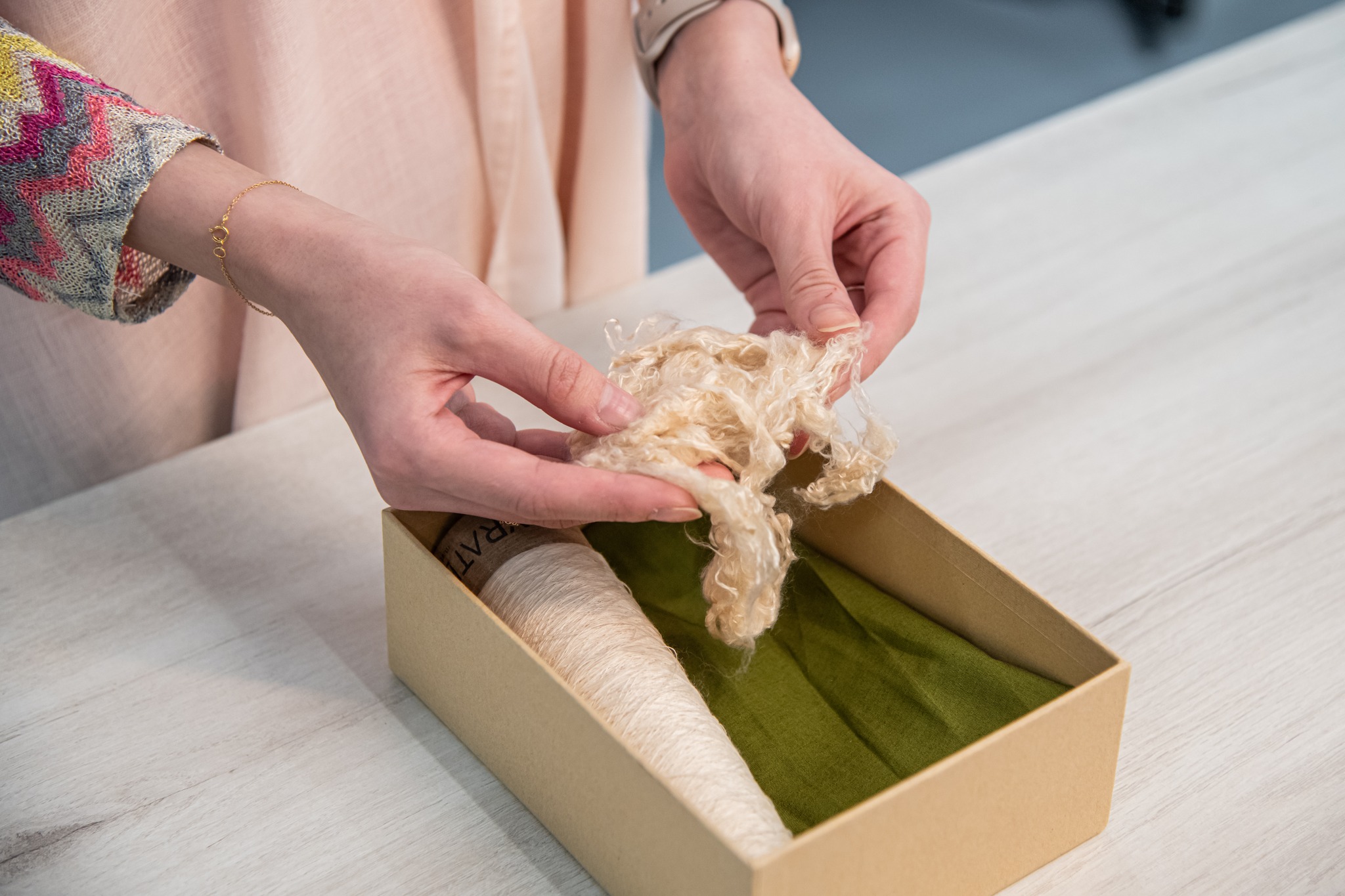
PYRATEX then translated that biomass into textile form, blending the algae with Lyocell and organic cotton to produce a fabric that is breathable, traceable, and suitable for garment production. The Saudi Fashion Commission’s development studio produced complete garments from the material — not as conceptual pieces, but as real clothing.
Saudi fashion week features Moroccan designer Yasmina Qanzal. Courtesy photo.
These shows reflect a larger shift in how fashion in the Middle East engages global trends while honoring local sensibilities — moving beyond traditional expectations to embrace broader stylistic expressions that include functional, climate-appropriate swimwear alongside couture and everyday wear.
The seaweed fabric project reflects a growing shift across the fashion world. Designers such as Stella McCartney have long argued that sustainability cannot rely only on recycled synthetics or reduced harm. McCartney has repeatedly called for materials that are regenerative, ethical, and transparent — fibers that restore ecosystems rather than merely slow damage.
Luxury and performance brands alike are now experimenting with algae, mycelium, pineapple fiber, cactus leather, and agricultural waste. But what makes the Red Sea initiative distinctive is its regional grounding: a local marine resource transformed locally, with scientific validation and design integration.
Men’s suit courtesy of King Abdullah University of Science and Technology (KAUST)Men’s suit courtesy of King Abdullah University of Science and Technology (KAUST)
Fashion is one of the most environmentally demanding industries on Earth, responsible for heavy water use, chemical pollution, and carbon emissions. Changing fabrics may seem small, but materials determine supply chains, farming practices, and waste streams.
Seaweed offers a radically different model. It grows without freshwater irrigation, fertilizers, or farmland. It absorbs carbon and regenerates rapidly. It does not compete with food systems. And it invites coastal stewardship rather than land exploitation.
Images of seaweed courtesy of King Abdullah University of Science and Technology (KAUST). From Red Sea seaweed to runway-ready fabric, Saudi Arabia is quietly reshaping fashion’s material future. KAUST scientists, designers, and textile innovators are proving that sustainability can begin in local ecosystems. As seaweed becomes wearable, fashion is learning to grow not from fields — but from tides.Images of seaweed courtesy of King Abdullah University of Science and Technology (KAUST)
For Saudi Arabia, this project also signals a broader narrative shift. The Kingdom is increasingly positioning itself not only as an energy producer, but as a knowledge and innovation economy — where science, sustainability, and culture intersect.
For fashion, the message is equally clear: the future of luxury will not be defined only by design houses, but by material intelligence. Garments made from seaweed may not replace cotton or polyester tomorrow. But they challenge designers, investors, and consumers to imagine clothing that begins in ecosystems rather than factories.
As Stella McCartney and other sustainability leaders have shown, fashion does not change when trends shift. It changes when materials do.
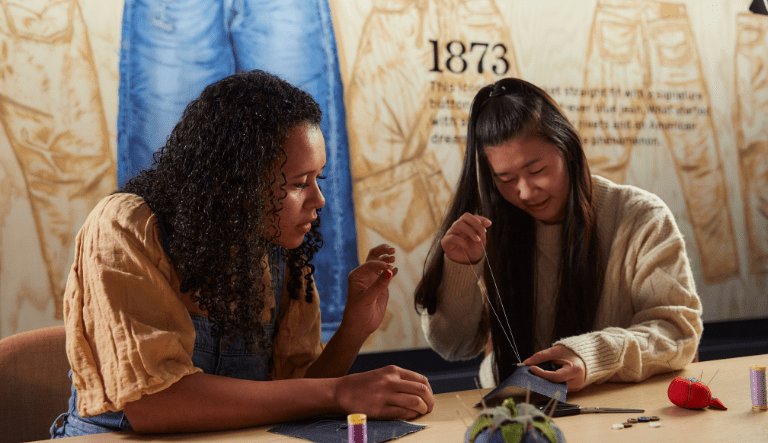
Somewhere between TikTok hauls and next-day delivery, we forgot how to fix things. We forgot how to cook without an app and a pre-made box, grow food without a kit, and sew a button back onto a shirt without throwing the whole garment away. Clothing, once stitched with intention (my mother made her own dresses!), has become fast fashion and disposable. And with it, a quiet loss of skill, patience, and care.
Levi’s is trying to reverse that. The brand has launched a new program in high schools that teaches students how to repair, reinforce, and customize their own clothes. It’s a small intervention with big implications.
“At Levi Strauss & Co., we’ve spent more than 170 years designing clothes to be worn and loved for as long as possible. The Levi’s®Wear Longer Project builds on that legacy by giving young people the confidence and tools to extend the life of what they already own,” said Michelle Gass, President and CEO, Levi Strauss & Co. “By building up repair skills within the next generation and emphasizing the idea of durability, we’re helping spark a culture of creativity, sustainability, and pride in taking care of the things we value.”
The idea isn’t new. Many of us remember clothing swaps, community repair nights, and the early sustainability movement that made secondhand feel rebellious and smart. It carried the same spirit as freecycle and the pop-ups that would help women repair their clothes — spaces where fashion stopped being about perfection and started being about longevity. We also love it when people in big cities put clothes out on park benches. Nothing like finding a haul of cosy clothes.
For years, knitting circles, stitch-and-bitch nights, and repair cafés were quietly led by women in their 30s, 40s, and beyond. They weren’t trying to start trends. They were trying to make things last and they enjoyed creating and being together. Now, that knowledge is finally being passed to a generation that understands waste instinctively, but often lacks the tools to act on it.
Image supplied by Levi’s
In the 2010s, greening your wardrobe was pretty easy. But Gen Z doesn’t just want sustainability slogans. They want agency. My daughter is a Gen Z and she can repair jeans with a sewing machine, she can crochet a hat and halter top and she make a bag. Learning how to patch denim, reinforce seams, and turn damage into design gives young people something rare: control over consumption.
“Every year, millions of wearable garments end up in landfills, many taking centuries to decompose. By teaching repair, customization, and sustainable care, the Wear Longer Project interrupts that cycle,” said Alexis Bechtol, director of Community Affairs at Levi Strauss & Co.
Levi’s is supplying teaching tools so young people can learn the craft of repair. Levi’s.
Created with Discovery Education, the Levi’s Wear Longer Project brings clothing repair back into the classroom — not as a hobby, but as a core life skill. Through free lesson plans, teacher toolkits, and hands-on workshops, students learn how to sew, hem, patch, and redesign their clothes. The materials are built to fit directly into existing high-school programs for grades nine to twelve, making repair part of everyday learning rather than an after-school afterthought.
New research commissioned by Levi’s found that 41% of Gen Z lack any clothing repair or customization skills — from altering a hem to sewing a custom patch — compared to less than 25% of older generations who often learned these skills at home or in school. However, 35% of Gen Z say they would keep their clothing for longerif they knew how to alter or repair them.
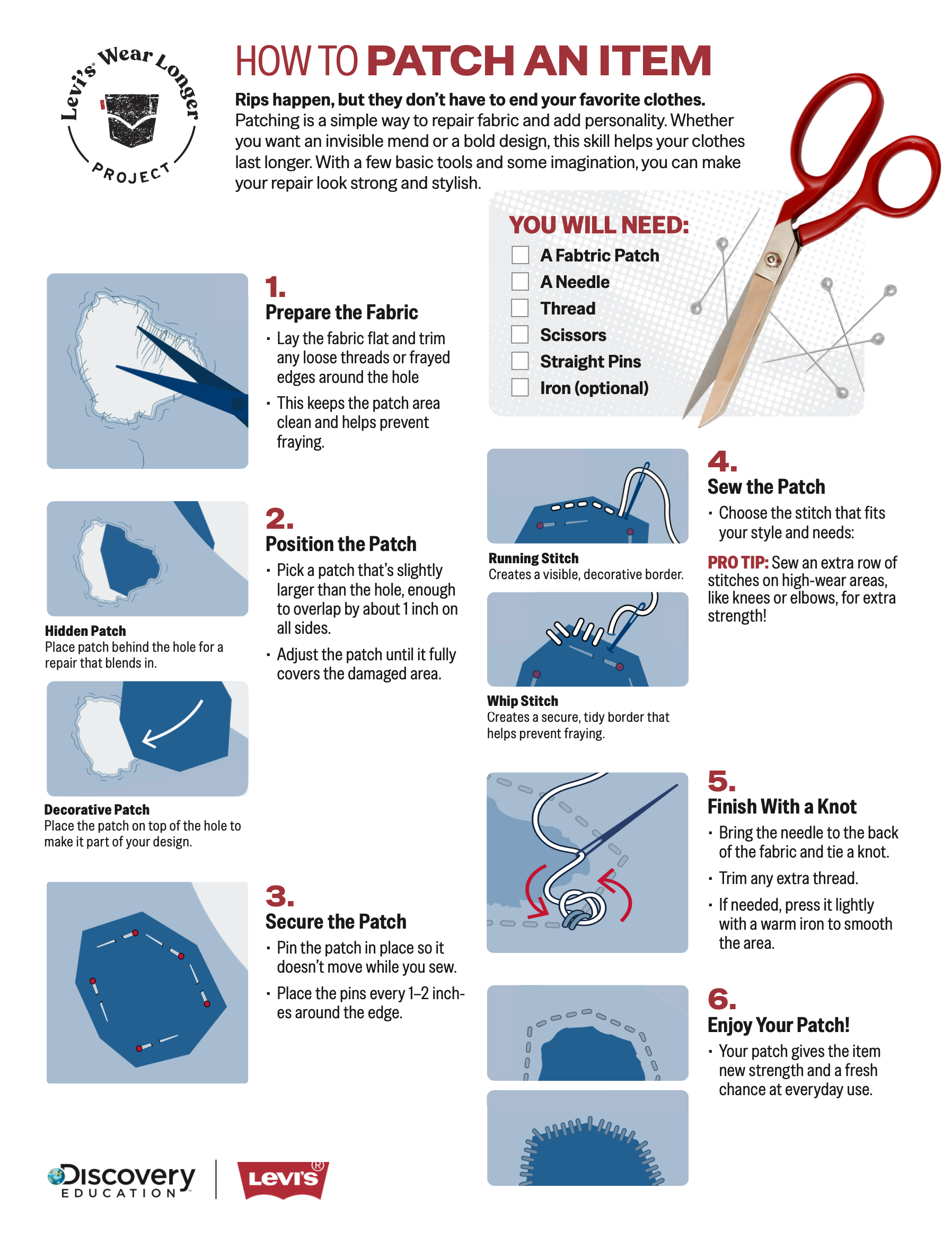
Levi’s sample guide on how to patch jeans. Free from Levi’s
Gen Z may lead the way in thrifting, swapping, and upcycling, but nearly half of those surveyed admitted they don’t know how to fix their clothes. Without repair skills, even the most circular fashion habits eventually collapse back into waste. The company argues that sustainability only works when durability is personal. Knowing how to extend the life of a garment is what turns environmental intention into real impact. Without that knowledge, circular fashion remains a theory instead of a practice.
In other words: you can love second-hand clothes all you want — but if you can’t repair them, they still end up in the bin.
The Levi’s Wear Longer Project is supported by a practical set of classroom-ready repair guides that make sustainability tangible, not theoretical. Students learn how to sew on buttons, hem clothing, patch holes, and fix tears through step-by-step facilitator and student guides designed for hands-on learning. Teachers can find the guides here –– with a version for students and one for teachers.
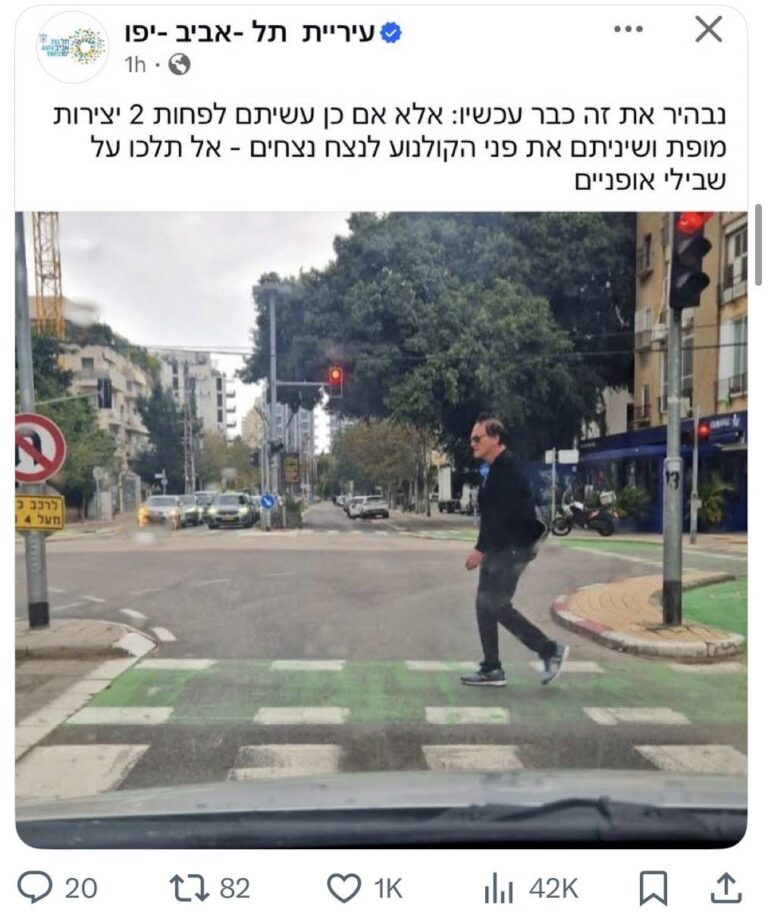
Quentin Tarantino lives in Israel now, quietly blending into Tel Aviv life (which is pretty loud and late night!) — until Tel Aviv, of course, notices him.
This week the city spotted Tarantino walking in a bike lane and turned the moment into a public teaching joke, reminding residents that even cinematic legends must obey urban etiquette. The post went viral with the line: “Let’s make this clear right now: Unless you’ve made at least two masterpieces and permanently changed the face of film forever and ever — do not walk on the bike lane.”
It was classic Tel Aviv humor: irreverent, civic-minded, and oddly affectionate. Most citizens do not have patience though for the lawlessness of electric bike riders.
Quintin has little kids of his own and has spoken often about finding calm and inspiration in Israel, has become part of the city’s cultural landscape.
The Muslim prophet Muhammad never traveled to the city of Jerusalem in his lifetime. Yet his dream is celebrated as a spiritual transformation. The Isra and Mi‘raj story describes a spiritual or visionary experience, not a recorded historical journey. Even early Islamic scholars debated whether the event was physical or symbolic. Yet today, Muslims around the world are marking Isra and Mi‘raj as a living spiritual tradition filled with prayer, storytelling, and community rituals around the world.
The approximate date when the Prophet’s night journey occurred is the 27th of Rajab (7th month of the Islamic calendar), about 12 years after the start of revelation, which is about 1 year before the Prophet’s migration from Mecca to Medina, considered the starting point of the Islamic calendar, according to Islamic scholars.
Isra means night journey and mi’raj means ascending like on a ladder.
Isra = the night journey
Mi‘raj = the ascent
In the Old Testament at the same location, Jacob dreams of a ladder reaching from earth to heaven, with angels ascending and descending on it. The vision symbolizes a connection between the human and divine worlds, made visible during a night of spiritual revelation.
In Christianity, Jesus’ Ascension into heaven mirrors the idea of rising toward God, while Jacob’s ladder (shared with Judaism) is interpreted by Christians as a symbol of Christ connecting heaven and earth. Like Isra and Mi‘raj, these stories express the belief that humans can encounter the divine beyond ordinary physical limits.
How Isra and Mi‘raj Is Celebrated Today
Stuffed dates.
Across Muslim communities, the night is observed with special mosque gatherings, Qur’an recitations, sermons, and family discussions. In many countries, the evening becomes a moment for reflection rather than public festivity. Food also plays a quiet but important role. Families prepare simple shared meals, sweets, dates, and regional dishes that vary by culture:
In Indonesia and Malaysia, communal rice dishes, sweet porridge, and traditional cakes are served after prayers.
In Turkey, families share pastries and syrup-soaked desserts.
In the Middle East, dates, flatbreads, and warm drinks accompany storytelling and prayer.
Children learn the story through songs, drawings, and school programs, while elders emphasize humility, gratitude, and discipline. The night is not about celebration in a modern party sense, but about remembering faith and spiritual responsibility.
The Isra and Mi‘raj festival commemorates not travel, but transformation — and a reminder that in Islamic tradition, spiritual elevation begins with inner struggle.
When Zarathustra started preaching around 1200 BCE in ancient Persia, which is known today as Iran, he wasn’t just founding a religion—he was creating the world’s first environmental protection movement. Good thoughts, good words, good deeds. But there was a mantra and words to live by: don’t pollute the earth, water, or fire. Ever.
Take Zoroastrian burial practices. We’ve covered the Towers of Silence here at Green Prophet before—those circular stone structures where bodies were placed on top for vultures to consume. Why did they do this? Because Zoroastrians believed dead bodies were contaminated with evil (druj) and could not touch the sacred elements: earth, water, or fire.
Vultures pick on bones at the Tower of Silence in Iran. An interesting eco tourism destination.
No burial (pollutes earth). No cremation (pollutes fire). No river disposal (pollutes water). Sky burial was the only option that honored nature. The body became food for birds, a final act of charity. Today most Zoroastrians use cement-lined coffins to prevent earth contamination, or they’ve moved to other methods as vulture populations crashed from human causes such as electrical shocks and poisoning. But the principle remains: respect the elements that sustain life.
Celebrating Nature’s Turning Points
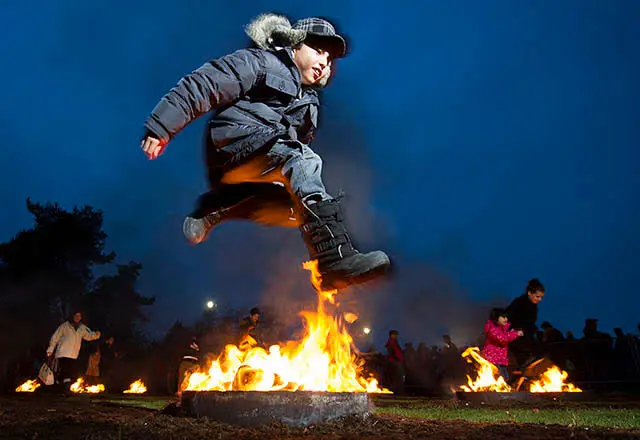
Fire jumping in Iran to celebrate Nowruz – Chaharshanbe Suri
Nowruz, the Persian New Year celebrated on the spring equinox, is perhaps Zoroastrianism’s most visible environmental legacy. As we’ve written about on Green Prophet, this isn’t just a cultural festival—it’s a celebration of nature reawakening. Families grow sabzeh (wheat or lentil sprouts) weeks before Nowruz, watching green life emerge from seeds.
Goldfish are a traditional symbol of life, renewal, and fortune on the Haft-Seen table for Nowruz, the Persian New Year, representing vitality and a prosperous year ahead, though animal welfare concerns have risen due to millions dying after being released into ponds, leading some to use edible alternatives like marzipan goldfish or sugar fish instead.
The holiday marks when day and night are equal, when light spreads evenly across hemispheres. Fire is lit. People jump over flames during Chaharshanbe Suri, singing “my yellowness is yours, your redness is mine”—asking fire to take weakness and give strength. The whole celebration is about alignment with natural cycles. Spring cleaning before the new year. Visiting graves on the last Friday. Placing hyacinths and tulips in homes. Everything synchronized with the earth’s rhythm around the sun.
Engineering in Harmony with Nature
Ancient Persians didn’t just philosophize about respecting the elements—they engineered around them. As we’ve explored in previous Green Prophet articles, their architecture shows remarkable environmental sophistication.
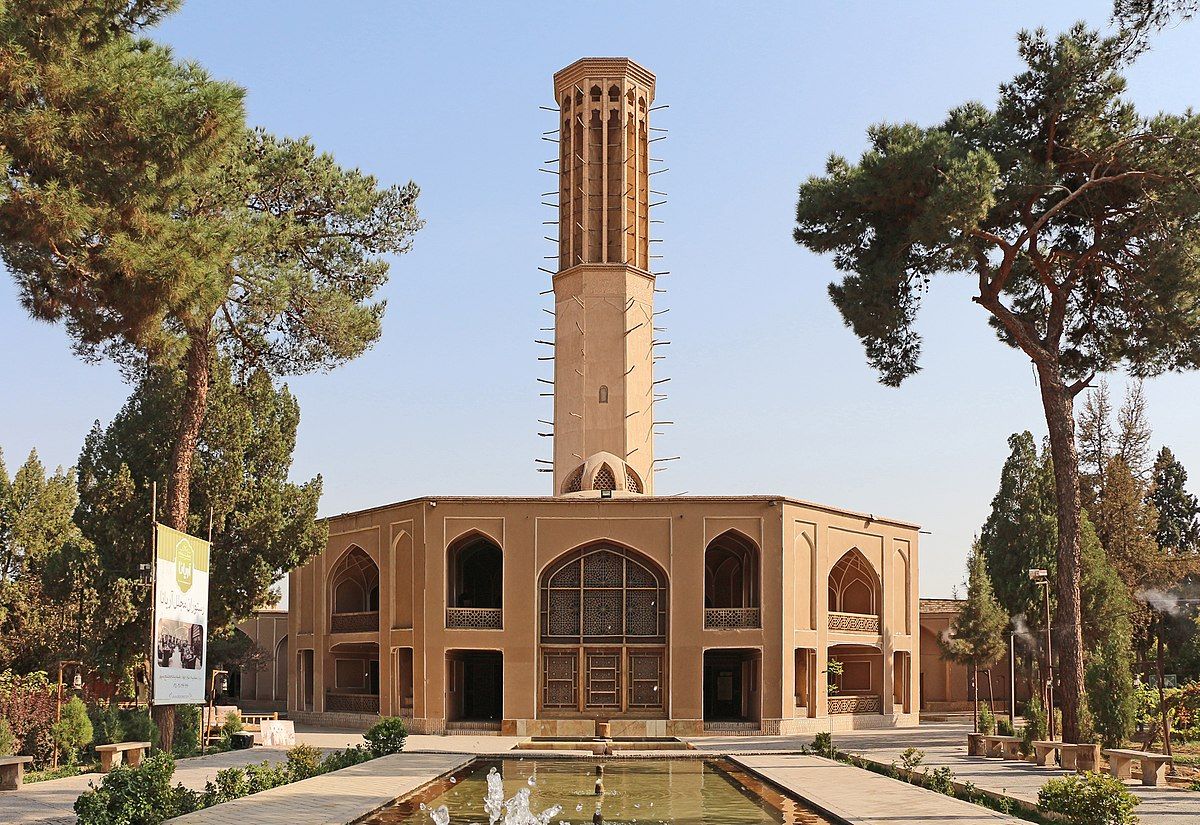
Wind catchers (badgir) in Yazd and other desert cities are essentially ancient air conditioning. These tall towers catch breezes and channel them down through buildings, sometimes over underground water channels called qanats. The Dolat Abad windcatcher in Yazd stands 34 meters tall—still the highest in Iran—and can drop indoor temperatures by 10 degrees without electricity.
Dolat Abad windcatcher in Yazd
Qanats themselves are engineering marvels: underground channels that move water from mountain aquifers to desert cities without pumping. Some are still functioning after a thousand years. UNESCO recognizes them as world heritage because they represent “creative genius” in sustainable water management.
Qanats in Iran
These weren’t just practical solutions to live by. They were Zorastrian expressions of a worldview that said: work with the elements, don’t violate them. Here’s what makes Zoroastrianism ecologically radical even today: it treats environmental degradation as moral corruption.
The world is a battlefield between truth (asha) and lies (druj). When you pollute water, you’re choosing druj. When you contaminate earth, you’re siding with evil. Every small choice—where you put your waste, how you use fire, whether you honor or desecrate water is a moral decision that tilts the cosmic balance.
You can’t separate ethics from ecology in this system because they are the same thing.
Modern environmentalism often frames nature protection as enlightened self-interest or future-oriented planning. Zoroastrianism says: the earth itself is holy. Polluting it is sacrilege. You don’t need utilitarian arguments. You need to not be an asshole to creation.
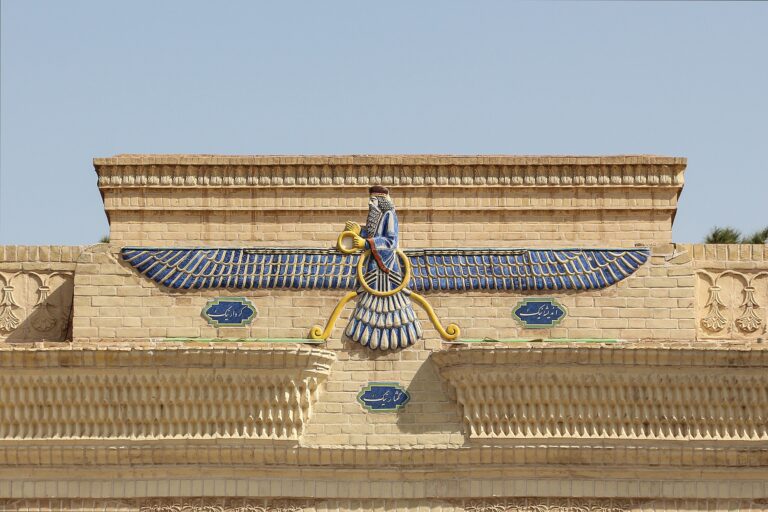
Faravahar symbol on Fire Temple of Yazd, Iran
There are maybe 100,000 to 200,000 Zoroastrians left worldwide, mostly in Iran and India (where they’re called Parsis).
Zoroastrianism introduced a radical idea for its time: that humans stand inside a moral universe. That our choices matter. Long before monotheism found its later forms, Zoroastrianism articulated heaven and hell, angels and judgment, free will and ethical responsibility. Judaism absorbed these ideas during the Persian period. Christianity and Islam carried them forward.
The eternal flame inside the Yazd Atash Behram
Today, Zoroastrians are not fighting for dominance. They are fighting for continuity. Intermarriage, migration, shrinking birth rates, and cultural dilution place constant pressure on a faith that does not proselytize and does not adapt easily. They don’t have a leader or a “Pope” figure making it difficult to create leadership.
Yet the ecological principles remain stubbornly relevant. In a world drowning in plastic, choking on emissions, and treating the planet like an expendable resource, Zoroastrianism’s insistence that nature is sacred, not because it’s useful to humans, but because it is sacred.
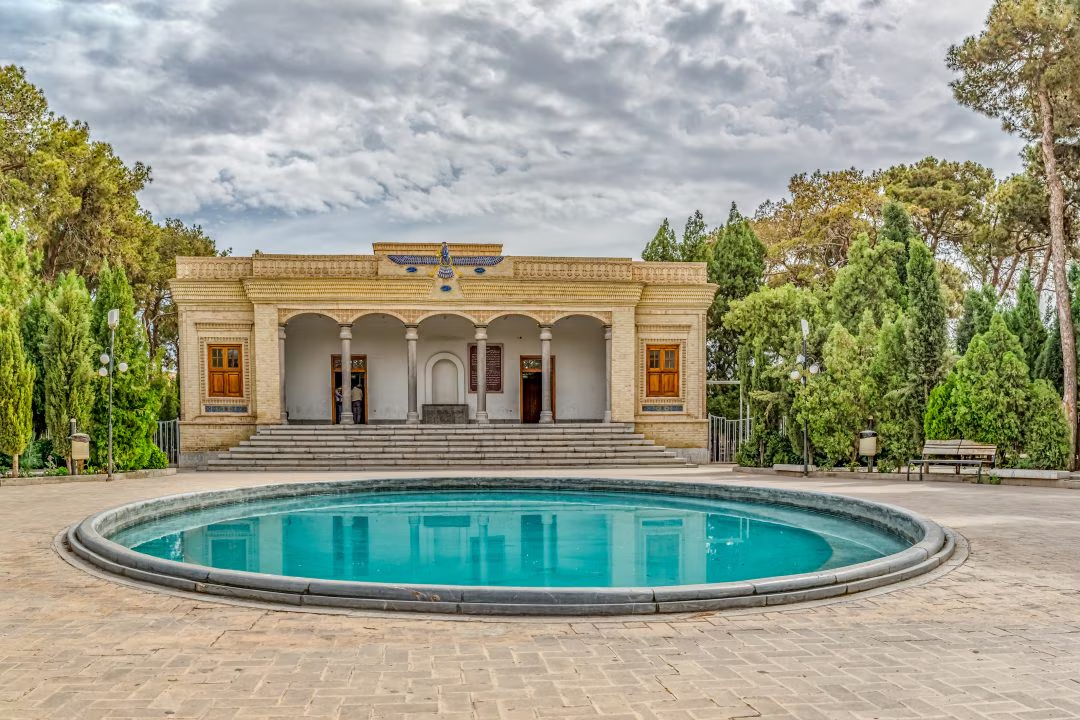
The Yazd Atash Behram
If Iran becomes free, consider visiting the eternal flame: The Yazd Atash Behram in Iran shelters one of the world’s oldest living flames — a sacred fire burning continuously since 470 AD. Though the temple itself was built in 1934, the “Victorious Fire” has survived centuries of exile, invasion, and careful guardianship, standing as a quiet, stubborn symbol of Zoroastrian endurance and divine purity.
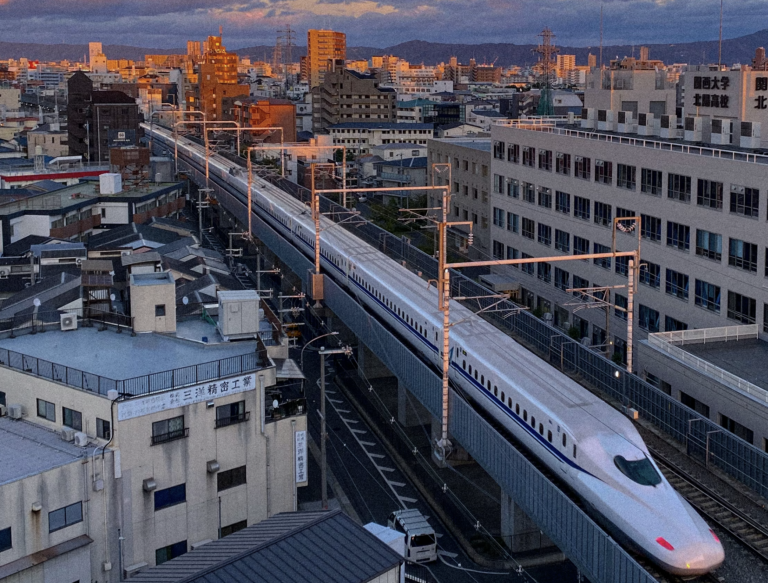
Japan’s bullet train was made with faulty Kobe aluminum.
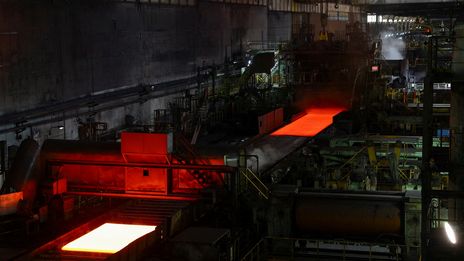
Remember when everyone was stealing steel in your city to melt it down for the Chinese building market during the Olympics in Beijing? Grates from storm sewers were being lifted, iron gates gone, slides gone missing from Japanese playgrounds. The thing about raw materials is that once they are melted down, you can’t prove the source of the material. Same is true with gold, cucumbers and even forged products that look the same as the real thing. When it comes to steel, and how we produce it, it has a massive carbon problem. What’s happening in Japan right now could change how we think about heavy industry and climate action.
The steel sector is wrestling with an existential question—how do you prove that the product being smelted is actually “green steel”—steel produced with renewable energy and which doesn’t harm people and planet? And more importantly, how do you make sure that environmental value doesn’t get lost, duplicated, or mysteriously multiplied as steel moves through processors, distributors, and manufacturers through endless countries back and forth? You can’t put a barcode on raw material that gets changed but you can barcode the process and that’s what Fujitsu is doing.
It seems transformative but the technology has been around for 10 years. Enter Fujitsu—before your eyes glaze over, this has nothing to do with Bitcoin or crypto speculation. Think of it more like a digital receipt system that nobody can fake.
Fujistu makes green steel and tracks it in a pilot project
Starting in December 2025, Fujitsu launched a pilot project—backed by Japan’s Ministry of Economy, Trade and Industry—to trace and track green steel certificates through the supply chain using blockchain. Fujitsu is a technology company that makes computers, servers, IT systems, and digital solutions for businesses—they don’t manufacture steel themselves but provide the digital infrastructure that helps industries track and verify their processes. The pilot runs through February 2026 and involves actual steel businesses testing whether this tracking system works in real-world conditions.
Here’s the problem they’re solving: Japan’s steel industry has developed methods to produce lower-emission steel. One approach, called the GX Mass Balance Method, lets companies pool their emission reductions from various green projects and allocate them to specific steel products. Another method, GX Allocation, distributes emission reductions across different products while keeping total emissions constant.
But the problem is that once a green steel certificate gets issued, it needs to travel through an entire supply chain—from the mill to processors to fabricators to whoever’s building the final product like cars, buildings, bridges, home appliances, or beverage cans. At each handoff, there’s a risk the environmental claim gets duplicated, lost, or disputed. One certificate could theoretically be claimed by multiple parties, inflating the actual environmental benefit. We’ve seen this with BioBee strawberries in Israel. What was once an eco label to show pollinated by bees is now believed to be a symbol for organic strawberries—which isn’t true.
They aren’t organic. Suppliers are printing their own stickers and it’s a forgery that everyone goes along with. It happens in the US too—Kohl’s and Walmart both settled with the FTC in 2022 for $2.5 million and $3 million respectively after falsely advertising rayon products as “eco-friendly bamboo fiber.” McDonald’s also introduced “recyclable” paper straws in 2019 that turned out to be non-recyclable.
What was the Japanese Kobe Steel Scandal?
The Kobe Steel scandal of 2017 exposed how Japan’s reputation for quality manufacturing could crumble when data gets falsified. Employees deliberately falsified strength and durability data on over 600 products shipped to clients, with data manipulation occurring at 23 domestic and overseas plants involving more than 40 employees—a practice that had been endemic since the 1970s according to Wikipedia.
At least 20,000 tons of aluminum and copper products with fabricated inspection data were shipped to around 200 companies =including Toyota, Boeing, and Japan’s bullet train manufacturers. The problem wasn’t poor quality steel, it was lying about the specifications. Products that didn’t meet customer standards were shipped anyway with fake certificates claiming they did. This is exactly why blockchain tracking matters: without a tamper-proof record of what’s actually in your supply chain, you’re just trusting someone’s word.
Fujitsu’s blockchain platform creates a permanent, tamper-proof record of each green steel certificate as it moves downstream. The technology ensures traceability while maintaining confidentiality—companies can verify the environmental value without exposing sensitive business information about who’s buying what from whom. Blockchain allows for complete anonymity while still proving authenticity.
What makes this interesting isn’t just the technology. It’s the recognition that producing green steel is only half the battle. The other half is building trust in those environmental claims across complex, global supply chains. Without that trust and verification, green steel becomes just another marketing claim that buyers and regulators can’t verify.
The steel industry produces roughly 7 to 9% of global CO2 emissions, so decarbonizing it matters enormously. But green steel typically costs more to produce, which means manufacturers need assurance they’re paying for something real. End users—say, a car company promising carbon-neutral vehicles—need proof that the steel in their products actually has the reduced emissions they’re claiming. Otherwise, they are just suckers with a feel-good label that means nothing.
Fujitsu is positioning this platform, which they call the Sustainable Value Accelerator, as potentially expandable beyond steel into other industries facing similar verification challenges. The company employs 113,000 people and reported revenues of 3.6 trillion yen for fiscal year 2025, so they’ve got the resources to push this forward. While products in the 60s from Japan were cheap and lousy, that label has moved to China. Everyone trusts the quality of Japan today like they trust Switzerland. We can trust they will make a system that will be fair and honest and reliable.
Except, not that long ago in 2007, Japan suffered a steel scandal. Top Japanese automakers had to assess the safety of vehicles containing products from Kobe Steel, which has admitted falsifying quality data. Toyota, Nissan, Honda, Mitsubishi Motor, Subaru and Mazda joined aviation firms and defense contractors Mitsubishi Heavy Industries, Kawasaki Heavy Industries and IHI that have used the steelmaker’s products.
Japan’s famous “Shinkansen” bullet trains also used Kobe Steel’s aluminum, as did high-speed trains in Britain, according to engineering firm Hitachi. “Products used (for both Japanese and British trains) met safety standards. But they did not meet the specifications that were agreed between us and Kobe Steel,” a Hitachi spokesman told the media.
Like what Fujitsu is doing? Do you think this is the right way forward? To invest in Fujitsu, you can purchase its stock (shares) through an international or online stockbroker. Fujitsu Limited is primarily listed on the Tokyo Stock Exchange (TSE) under the ticker code 6702. It also trades on the over-the-counter (OTC) markets in the US under the ticker FJTSY. Green Prophet has no affiliation with the company.
Big MEGA secures loans to build wind farms in Romania
BIG MEGA Renewable Energy, a joint venture between publicly listed Israeli real-estate companies BIG Shopping Centers Ltd. and MEGA OR Holdings, has built a growing presence in Romania’s wind energy sector through two major project financings over the past two years.
In 2024, BIG MEGA secured financing for its 102-megawatt Urleasca wind farm in Braila County. That project was later constructed by Portuguese EPC contractor CJR Renewables and marked the company’s first large-scale Romanian wind development.
In late 2025, with public reporting in January 2026, BIG MEGA announced a second major financing: a €100 million syndicated loan to support the construction of a 102-MW wind farm in Vacareni, Tulcea County. The financing was arranged with a syndicate of European lenders including Erste Group Bank, Banca Comerciala Romana, Intesa Sanpaolo’s Romanian unit, and Vseobecna uverova banka, according to deal advisor Kinstellar. The Vacareni project has ready-to-build status and will include 17 wind turbines.
Together, the two projects represent more than 200 MW of wind capacity in southeastern Romania, a region with strong wind resources and increasing demand for low-carbon electricity under European Union climate targets. Romania has become one of Southeast Europe’s more active renewable markets as grid modernization and policy alignment continue.
Tafila wind farm in Israel
BIG MEGA Renewable Energy was created to extend the founding companies’ activities beyond traditional real estate into long-term infrastructure assets. BIG Shopping Centers and MEGA OR Holdings are both experienced developers and operators of capital-intensive, income-producing properties and are publicly traded on the Tel Aviv Stock Exchange (TASE).
Their renewable expansion comes during a period of strong performance on the Israeli stock market. Over the past three years, Israel’s major indices — including the TA-125 and TA-35 — have delivered some of the strongest cumulative returns among developed markets, supported by gains in technology, finance, real estate, and defense-related sectors. This market strength has increased international visibility of Israeli public companies and supported their ability to expand abroad.
Foreign investors cannot invest directly in BIG MEGA Renewable Energy (on Crunchbase), which is a private joint venture led by Eran Davidi. However, they can gain indirect exposure by investing in its publicly listed parent companies through institutional brokers, global investment banks, Israel-focused equity funds, or international ETFs that track Israeli equities.
BIG MEGA has not yet announced a commercial operation date for the Vacareni wind farm, nor any additional project phases. But the two successive financings — in 2024 and 2026 — show a steady, project-by-project strategy rather than a single one-off investment, reflecting a longer-term commitment to Romania’s renewable energy market.
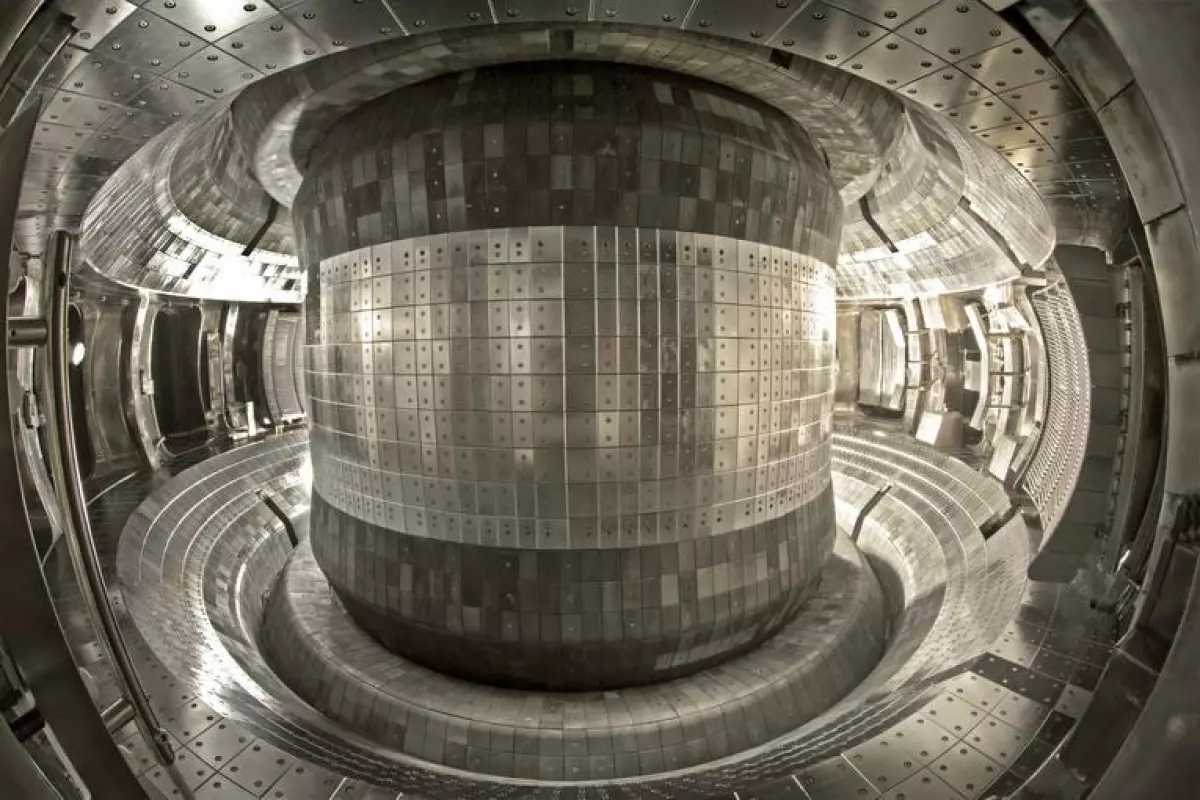
Researchers hope that nuclear fusion in reactors like this one will one day produce clean, virtually limitless energy by replicating the processes that power the Sun.
Why China’s “Artificial Sun” Density Breakthrough Matters
Nuclear fusion is often described as the holy grail of clean energy: a process that could one day provide abundant power without carbon emissions or long-lived radioactive waste. It has so much promise, but it’s difficult. This article on fusion explains why. But turning fusion into a practical energy source depends on solving a set of extremely difficult physics problems. One of the most important is how to keep plasma — a super-hot, electrically charged gas — dense, stable, and confined long enough to produce useful energy.
In January 2026, researchers working on China’s Experimental Advanced Superconducting Tokamak (EAST), often called the “artificial sun,” reported a breakthrough in this challenge in Science Advances. Their experiment showed that plasma could operate at densities 30% to 65% higher than EAST normally achieves — beyond a long-standing boundary known as the Greenwald density limit — while remaining stable. They reported their breakthrough in the journal Science Advances. Their plasma burned 5 times hotter than the sun.
China fusion burns 5 times hotter than the sun
Why does density matter? Fusion reactions become more efficient when more particles are packed into the plasma. High density is essential to meeting the Lawson criterion, the basic condition for producing more energy than the reactor consumes. For decades, however, increasing density has usually caused plasma to become unstable and suddenly collapse, ending the experiment.
The EAST team overcame this by using a carefully designed start-up method that combines traditional electrical heating with electron cyclotron resonance heating (ECRH), a microwave technique that warms electrons directly. They also adjusted the amount of neutral gas in the chamber before ignition. Together, these changes allowed the plasma to enter what scientists call a “density-free regime,” predicted by a recent plasma-wall self-organization theory.
Burns 5 times hotter than the sun
In simple terms, this means the plasma and the reactor walls interacted in a way that reduced harmful impurity radiation — one of the main causes of instability. With fewer impurities cooling the plasma, the system could tolerate much higher densities.
The experiment achieved line-averaged electron densities up to 1.65 times the standard operating range of EAST. Importantly, the results matched theoretical predictions, strengthening confidence in the underlying physics model.
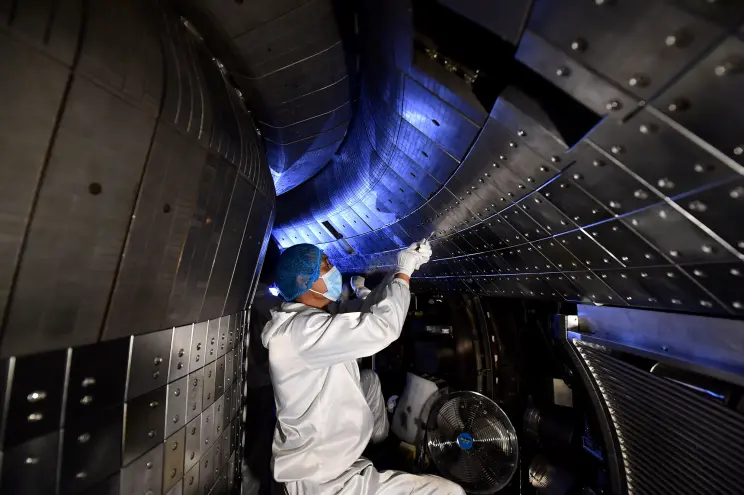
Researchers working on China’s Experimental Advanced Superconducting Tokamak (EAST)
This does not mean fusion power plants are now close to commercial operation. EAST did not produce net energy from fusion, and many engineering and materials challenges remain. However, the study demonstrates that a fundamental limitation in tokamak operation may be more flexible than once believed.
For the public, the importance is simple: every improvement in plasma stability and density brings fusion researchers closer to designing reactors that could one day operate continuously, efficiently, and safely. This work shows that the “rules” of fusion confinement are still being rewritten — and that progress is coming from careful physics, not science fiction.
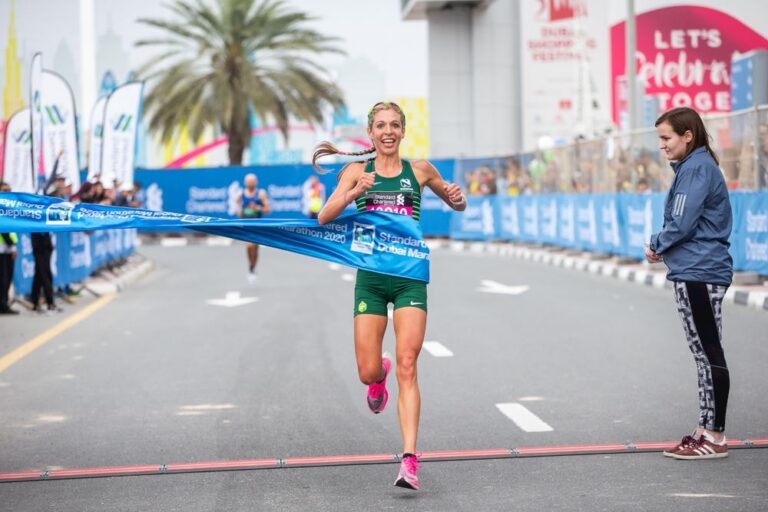
Runners are the upcoming Dubai marathon are challenged to break and make Guinness world records
Runners at the Dubai Marathon will have a rare chance to enter the Guinness World Records archive this year, as the global record-keeping authority partners with the marathon to mark the race’s 25th anniversary.
Announced on January 12, 2026, the collaboration invites participants in the February 1 Dubai Marathon to attempt officially recognized world records under the banner “Be Part Of It.” The initiative merges one of the Middle East’s most established distance-running events with the world’s leading authority on record-breaking achievements.
Rather than focusing only on finishing times, the partnership opens the door to a wide range of creative, endurance-based, and community-driven record attempts. Runners can apply for approved Guinness World Records titles across distance categories, or propose new ones through the official Guinness World Records platform.
Among the record categories available are:
– Fastest marathon completed by a father and son together
– Fastest marathon completed by a mother and daughter together
Additional opportunities include records involving sporting equipment, blindfolded running, roller skating, professional attire, novelty endurance challenges, and visually distinctive running formats.
Break a record at the Dubai marathon. You don’t need speed, just endurance
The aim is to expand how athletic achievement is measured — moving beyond pure speed to include connection, creativity, and participation.
All Guinness World Records applications submitted specifically for the Dubai Marathon will be processed free of charge. Participants will also benefit from fast-tracked application reviews and immediate eligibility assessments, making the process more accessible than traditional record attempts.
Fundraising-related record attempts must receive written approval from an officially authorised UAE charitable entity, in line with national regulations.
The initiative also places strong emphasis on inclusion. People with disabilities are encouraged to apply through Guinness World Records’ dedicated Impairment Classification categories, ensuring fair and consistent assessment across all abilities.
Participants can explore record titles or submit proposals in Arabic or English through the Guinness World Records registration page, and can register for the marathon itself via the official Dubai Marathon website.
Now in its 25th year, the Dubai Marathon has established itself as one of the region’s most respected long-distance running events, attracting elite athletes and community runners from around the world. The Guinness World Records collaboration adds a new dimension to the race, turning it into both a competitive sporting event and a platform for storytelling, legacy, and shared achievement.
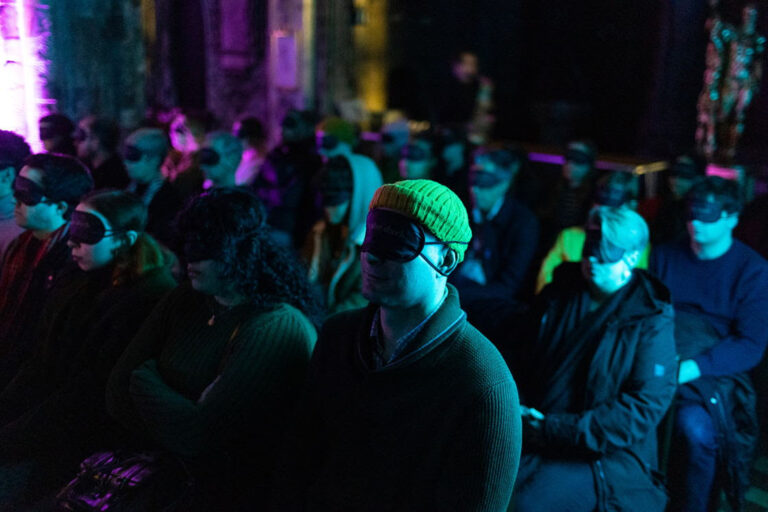
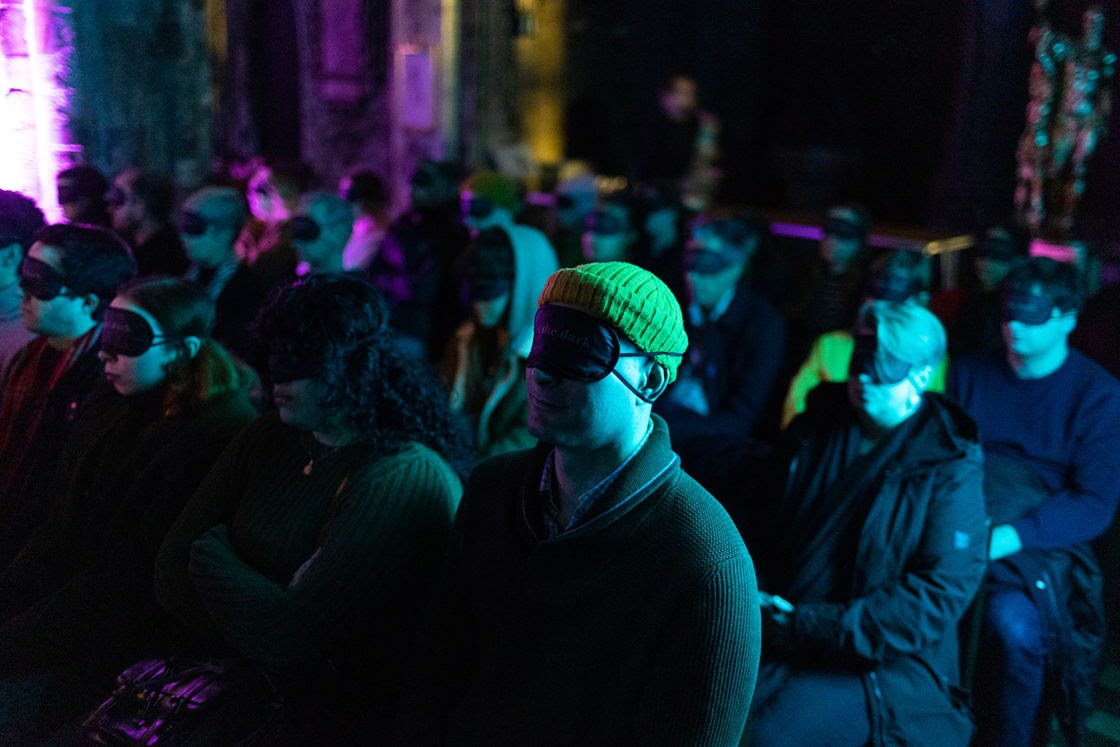
In the dark music experience. Could be romantic when you reach for a loved one’s hand.
After a sold-out London debut in 2024, the acclaimed immersive audio experience “in the dark” returns to the capital in January 2026, with performances scheduled for January 22, 23, 29 and 30 at St Andrew’s Church in Holborn.
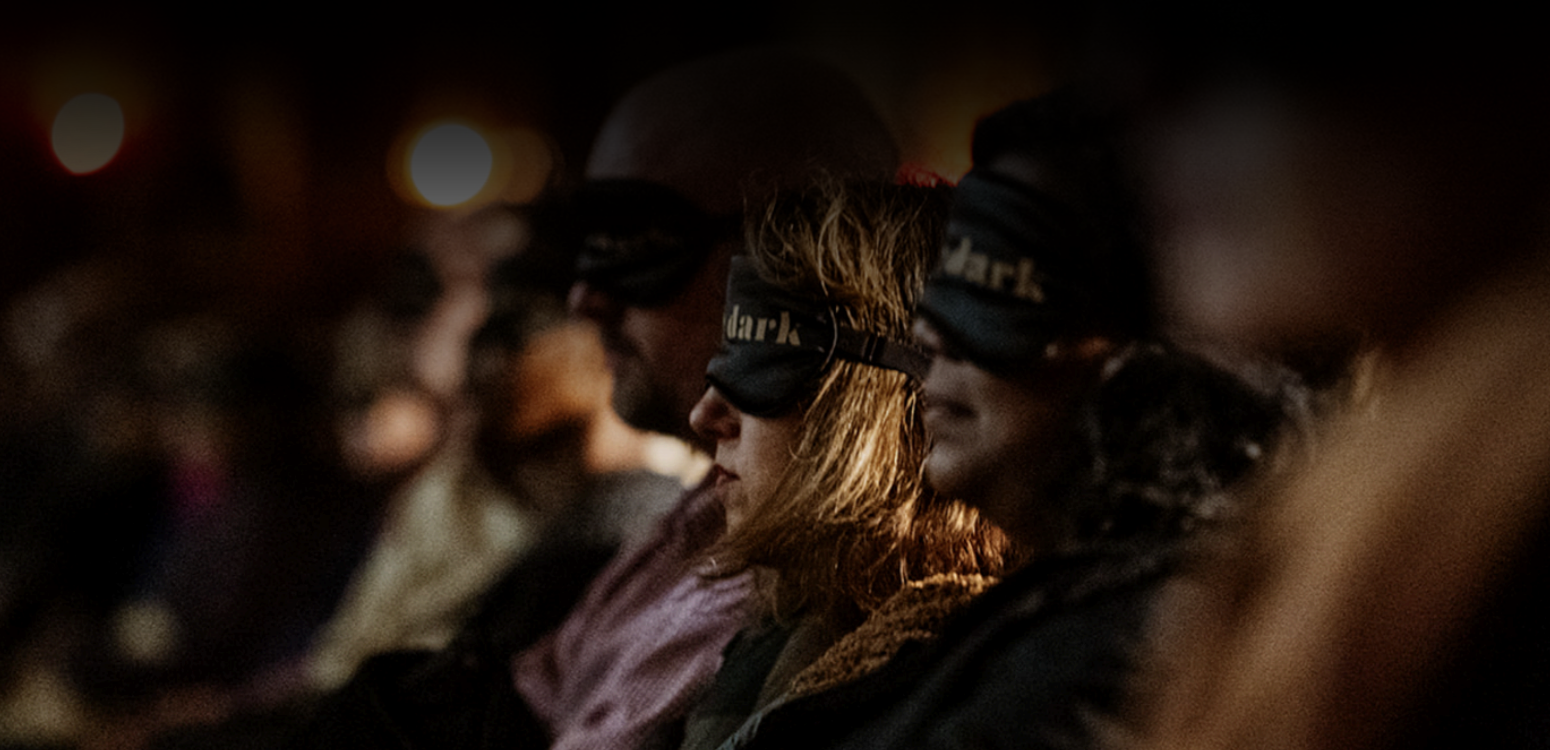
The 60-minute performance places 30 musicians around the audience in complete darkness. Audience members wear sleep masks while the musicians perform fully live and acoustically, without amplification, speakers, or a conductor. Sound moves around the space in a choreographed 360-degree journey, allowing listeners to experience music purely through hearing.
A similar concept in dining exists in the Jaffa Port, where diners eat in a blacked out dining hall. There are no masks to wear and servers are already blind. You need to have faith and trust in the people around you.
The concept of listening in the dark, first developed in Cambridge in 2017, has grown into an international phenomenon. Its London season in 2024 received the Offies Assessors Choice award and strong critical and audience response. Since its launch, in the dark has staged more than 60 performances for over 8,000 people in venues across the UK.
Musicians are drawn from leading institutions including the Royal College of Music, Guildhall School of Music and Drama, and West End productions. Each performance is shaped by the natural acoustics of the venue, making every show distinct.
Founder Andrea Cockerton describes the philosophy behind the project: “In a world obsessed with being seen, we’re asking people to disappear for an hour. in the dark is a quiet, sound rebellion. No phones, no spectacle, no distractions… just the rare chance to actually feel music again.”
Cockerton, an award-winning arts entrepreneur, is known for her ethical approach to the arts and has received recognition including the NESTA / Observer New Radicals award and the SheSaidSo Alternative Music Power 100 honour.
While not positioned as a wellness event, in the dark mirrors the way nature restores attention and awareness: by removing visual dominance, the experience encourages deep listening, stillness, and presence — the same mental state many people seek in forests, deserts, or by the sea.
The absence of spectacle becomes the point. Each seat offers a different sound perspective. Each listener becomes an active participant in shaping their own experience.
Often described as the “Cirque du Soleil of the senses,” in the dark is now planning future performances across the UK, Europe, Australia and North America.
Tickets for the January performances at St Andrew’s Church, Holborn are now on sale.
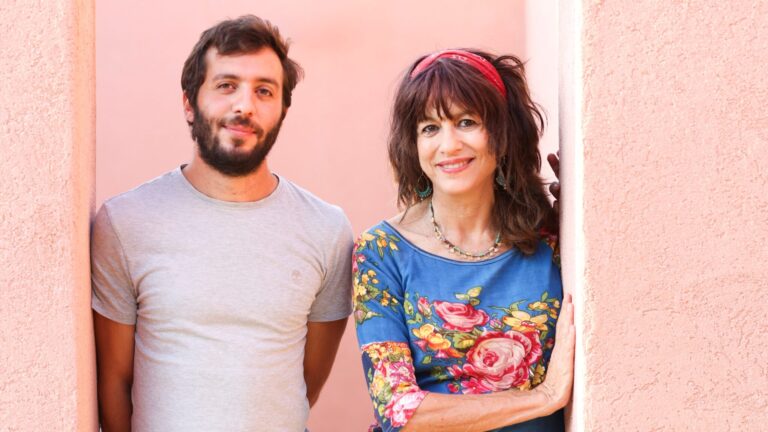
Nitsan Joy Gordon and Jawdat Lajon Kasab, the co-founders of the Army of Healers
In a region more accustomed to headlines of loss than of listening, the Institute of International Education (IIE) has chosen to honor something quietly radical: healing. The 2025 Victor J. Goldberg Prize for Peace in the Middle East has been awarded to Nitsan Joy Gordon and Jawdat Lajon Kasab, the co-founders of the Army of Healers, for building spaces where Israelis and Palestinians — Jews, Muslims, Christians, Druze, and Bedouins — can grieve, speak, and rebuild trust together.
The two leaders will share the US$20,000 prize, marking the 21st anniversary of an award created to recognize joint Jewish-Arab partnerships advancing peace.
The Army of Healers emerged after October 7, in response to what Gordon and Kasab describe as a region living inside collective trauma. Rather than launching a political initiative, they created something more fragile — and more human. Today, their program has trained 30 facilitators from across communities and now supports more than 20 healing circles with over 400 participants, conducted in multiple languages and across age groups.
Through ten-session dialogue groups, participants confront fear, express grief, and slowly relearn how to see one another as human beings. “In moments of deep division,” Gordon and Kasab say, “the world needs an army — not of soldiers holding weapons, but of healers cultivating pathways toward peace.”
The circles draw on Internal Family Systems therapy, movement and dance therapy, playback theater, nonviolent communication, and trauma-informed dialogue. The work is hosted under the Israeli nonprofit Together Beyond Words.
Why the Goldberg Prize matters
The Victor J. Goldberg Prize is unique. It does not reward governments or institutions. It honors pairs — one Jewish Israeli and one Muslim Arab — working together at the grassroots level. Victor J. Goldberg, a former IBM executive and longtime IIE trustee who endowed the prize in 2005, emphasized this spirit during the ceremony:
“Nitsan and Jawdat are inspiring examples of the brave individuals and groups who are building platforms of mutual trust and cooperation. Most importantly, they have not lost their commitment to bringing people together to get to know one another as human beings.”
He added that the prize exists to keep hope visible when despair dominates.
Over its 21-year history, the Goldberg Prize has honored 26 pairs whose work has reshaped how peacebuilding looks on the ground. Past laureates have included:
Israeli and Palestinian educators who rewrote textbooks to remove demonization of “the other.” Families who lost children in violence and chose reconciliation over revenge. Medical volunteers who treated patients regardless of religion.
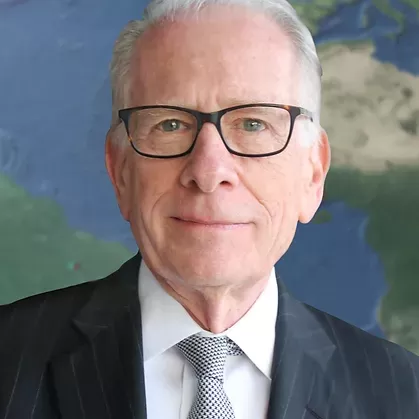
Allan E. Goodman
IIE President Emeritus Allan E. Goodman summarized their legacy: “People who started out hating each other and rejecting each other’s narratives somehow managed to overcome all that to do something good.”
Placed in this lineage, the Army of Healers represents a new generation of peace work — one that recognizes trauma as a political force, and healing as an act of resistance.
We used to think climate work lived in laboratories, policy rooms, and protest signs. But these days it’s living comfortably inside Jewish thought. The Jewish Climate Trust is quietly proving that climate action doesn’t sit outside Judaism — it grows from it. Jewish Climate Trust (JCT) isn’t a think tank that lives only in theory, and it isn’t a charity that writes checks without strategy. It is a values-driven investment in how Jewish life — and Jewish responsibility — shows up in a world already shaped by climate change.
The starting point is simple and uncomfortable: the climate crisis is real, measurable, and accelerating. Denial is not a Jewish position. Despair isn’t either. Judaism teaches obligation without guaranteed success. You are not required to finish the work — but you are not free to abandon it. JCT lives inside that idea: it insists on action without pretending to own the ending.
The focus of the JCT is twofold: putting less carbon into the atmosphere and preparing communities for what is already unfolding.
But there is a third layer that feels distinctly Jewish: co-benefits. Every climate action should strengthen human relationships — between Jews and Jews, Israel and the diaspora, and across borders between people. We see that work in action in Israel’s Arava Center, a cross-border environment research study center that funds desert research, water, cleantech, advancing partners for peace along the way. Climate work, according to the JCT is not only environmental; it is social, political, spiritual, and it’s the moral thing to do.
In North America, JCT has made the largest climate grant ever given in the Jewish world, funding Adamah to accelerate Jewish climate leadership. This includes expanding the Jewish Climate Leadership Coalition, building regional hubs, and integrating climate into young leadership training. They also helped launch a Green Business Network, which is growing faster than anticipated.
Green Prophet founded a chapter of Green Drinks in Israel in 2009. Adamah is continuing the spirit with their next meet-up in Boston in February.
The goal is cultural change — not a single project, but a shift in how Jewish institutions understand responsibility.
In Israel, JCT is funding major research on climate preparedness and security. Climate awareness in Israel is not only about nature — it is about stability, health, migration, food systems, and national resilience. The JCT is pushing Israel to think ahead rather than react too late.
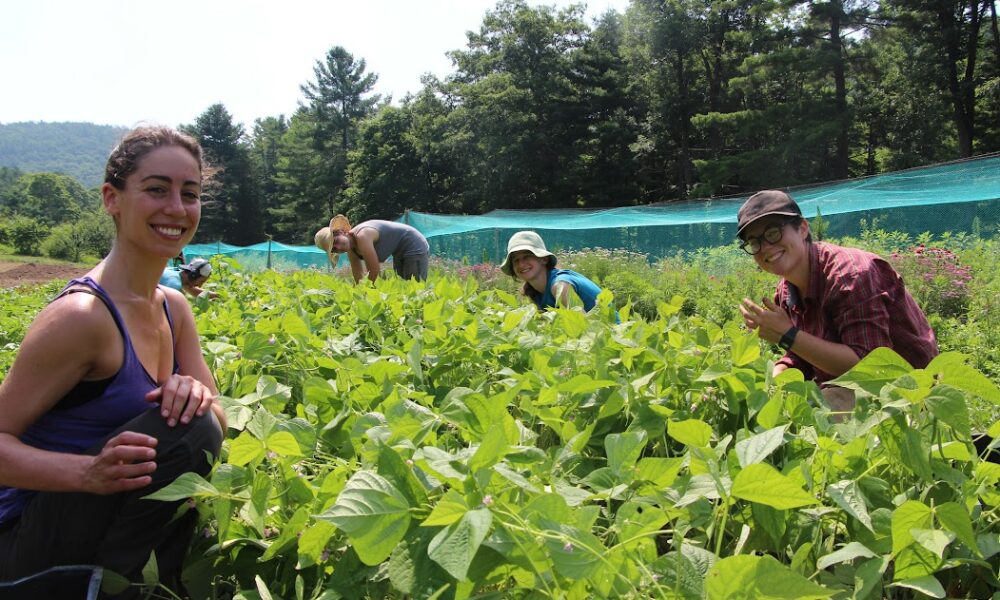
Adamah people on the farm
Regionally, JCT is supporting the Center for Applied Environmental Diplomacy at the Arava Institute — one of the most important cross-border environmental cooperation platforms in the Middle East. When USAID funding was lost, years of trust-building between Israelis, Palestinians, Jordanians, and international partners were suddenly at risk. JCT stepped in with a significant multi-year commitment, joined by private stakeholders, to keep this fragile but vital ecosystem alive.
Israelis and Palestinians work together at the Arava Center
Jewish Climate Trust has quickly attracted the attention and support of some of the most influential voices in Jewish philanthropy, drawing backing from prominent family foundations and business leaders connected to the Bronfman and Schusterman philanthropic networks, alongside climate-focused investors and community builders aligned with founding leader Nigel Savage. Together, these donors have committed many millions of dollars to build a serious, long-term climate platform for the Jewish world — not as a symbolic gesture, but as a strategic intervention in one of the defining challenges of this generation.