“In the midst of uncertain time, renewable energy remains consistent and steadfast in its expansion,” said Francesco La Camera, IRENA’s Director-General. “A more decentralised energy system, with a growing share of renewables and more market players, is structurally more resilient.”
Health insurance is a regulated financial product. Insurers operate under binding contracts, overseen by state insurance commissioners, that legally obligate them to pay claims meeting policy terms. Policyholders who believe a covered claim was wrongfully denied have legal recourse through state regulatory channels.
The New Zealand Merino Company, now rebranded as Zentera, has quietly removed the phrase “world’s leading ethical wool brand” from its website, a notable change that comes after a disturbing investigation by PETA Asia-Pacific into the company’s ZQ-certified wool supply chain, PETA reports to Green Prophet.
Somehow vegetables with short seasons excite the imagination and appetite more sharply than produce that’s available all year around. Good Middle Eastern cooks have many recipes for delicate fava beans, and this turmeric-fragrant soup is one.
“In the midst of uncertain time, renewable energy remains consistent and steadfast in its expansion,” said Francesco La Camera, IRENA’s Director-General. “A more decentralised energy system, with a growing share of renewables and more market players, is structurally more resilient.”
Health insurance is a regulated financial product. Insurers operate under binding contracts, overseen by state insurance commissioners, that legally obligate them to pay claims meeting policy terms. Policyholders who believe a covered claim was wrongfully denied have legal recourse through state regulatory channels.
The New Zealand Merino Company, now rebranded as Zentera, has quietly removed the phrase “world’s leading ethical wool brand” from its website, a notable change that comes after a disturbing investigation by PETA Asia-Pacific into the company’s ZQ-certified wool supply chain, PETA reports to Green Prophet.
Somehow vegetables with short seasons excite the imagination and appetite more sharply than produce that’s available all year around. Good Middle Eastern cooks have many recipes for delicate fava beans, and this turmeric-fragrant soup is one.
“In the midst of uncertain time, renewable energy remains consistent and steadfast in its expansion,” said Francesco La Camera, IRENA’s Director-General. “A more decentralised energy system, with a growing share of renewables and more market players, is structurally more resilient.”
Health insurance is a regulated financial product. Insurers operate under binding contracts, overseen by state insurance commissioners, that legally obligate them to pay claims meeting policy terms. Policyholders who believe a covered claim was wrongfully denied have legal recourse through state regulatory channels.
The New Zealand Merino Company, now rebranded as Zentera, has quietly removed the phrase “world’s leading ethical wool brand” from its website, a notable change that comes after a disturbing investigation by PETA Asia-Pacific into the company’s ZQ-certified wool supply chain, PETA reports to Green Prophet.
Somehow vegetables with short seasons excite the imagination and appetite more sharply than produce that’s available all year around. Good Middle Eastern cooks have many recipes for delicate fava beans, and this turmeric-fragrant soup is one.
“In the midst of uncertain time, renewable energy remains consistent and steadfast in its expansion,” said Francesco La Camera, IRENA’s Director-General. “A more decentralised energy system, with a growing share of renewables and more market players, is structurally more resilient.”
Health insurance is a regulated financial product. Insurers operate under binding contracts, overseen by state insurance commissioners, that legally obligate them to pay claims meeting policy terms. Policyholders who believe a covered claim was wrongfully denied have legal recourse through state regulatory channels.
The New Zealand Merino Company, now rebranded as Zentera, has quietly removed the phrase “world’s leading ethical wool brand” from its website, a notable change that comes after a disturbing investigation by PETA Asia-Pacific into the company’s ZQ-certified wool supply chain, PETA reports to Green Prophet.
Somehow vegetables with short seasons excite the imagination and appetite more sharply than produce that’s available all year around. Good Middle Eastern cooks have many recipes for delicate fava beans, and this turmeric-fragrant soup is one.
“In the midst of uncertain time, renewable energy remains consistent and steadfast in its expansion,” said Francesco La Camera, IRENA’s Director-General. “A more decentralised energy system, with a growing share of renewables and more market players, is structurally more resilient.”
Health insurance is a regulated financial product. Insurers operate under binding contracts, overseen by state insurance commissioners, that legally obligate them to pay claims meeting policy terms. Policyholders who believe a covered claim was wrongfully denied have legal recourse through state regulatory channels.
The New Zealand Merino Company, now rebranded as Zentera, has quietly removed the phrase “world’s leading ethical wool brand” from its website, a notable change that comes after a disturbing investigation by PETA Asia-Pacific into the company’s ZQ-certified wool supply chain, PETA reports to Green Prophet.
Somehow vegetables with short seasons excite the imagination and appetite more sharply than produce that’s available all year around. Good Middle Eastern cooks have many recipes for delicate fava beans, and this turmeric-fragrant soup is one.
“In the midst of uncertain time, renewable energy remains consistent and steadfast in its expansion,” said Francesco La Camera, IRENA’s Director-General. “A more decentralised energy system, with a growing share of renewables and more market players, is structurally more resilient.”
Health insurance is a regulated financial product. Insurers operate under binding contracts, overseen by state insurance commissioners, that legally obligate them to pay claims meeting policy terms. Policyholders who believe a covered claim was wrongfully denied have legal recourse through state regulatory channels.
The New Zealand Merino Company, now rebranded as Zentera, has quietly removed the phrase “world’s leading ethical wool brand” from its website, a notable change that comes after a disturbing investigation by PETA Asia-Pacific into the company’s ZQ-certified wool supply chain, PETA reports to Green Prophet.
Somehow vegetables with short seasons excite the imagination and appetite more sharply than produce that’s available all year around. Good Middle Eastern cooks have many recipes for delicate fava beans, and this turmeric-fragrant soup is one.
“In the midst of uncertain time, renewable energy remains consistent and steadfast in its expansion,” said Francesco La Camera, IRENA’s Director-General. “A more decentralised energy system, with a growing share of renewables and more market players, is structurally more resilient.”
Health insurance is a regulated financial product. Insurers operate under binding contracts, overseen by state insurance commissioners, that legally obligate them to pay claims meeting policy terms. Policyholders who believe a covered claim was wrongfully denied have legal recourse through state regulatory channels.
The New Zealand Merino Company, now rebranded as Zentera, has quietly removed the phrase “world’s leading ethical wool brand” from its website, a notable change that comes after a disturbing investigation by PETA Asia-Pacific into the company’s ZQ-certified wool supply chain, PETA reports to Green Prophet.
Somehow vegetables with short seasons excite the imagination and appetite more sharply than produce that’s available all year around. Good Middle Eastern cooks have many recipes for delicate fava beans, and this turmeric-fragrant soup is one.
“In the midst of uncertain time, renewable energy remains consistent and steadfast in its expansion,” said Francesco La Camera, IRENA’s Director-General. “A more decentralised energy system, with a growing share of renewables and more market players, is structurally more resilient.”
Health insurance is a regulated financial product. Insurers operate under binding contracts, overseen by state insurance commissioners, that legally obligate them to pay claims meeting policy terms. Policyholders who believe a covered claim was wrongfully denied have legal recourse through state regulatory channels.
The New Zealand Merino Company, now rebranded as Zentera, has quietly removed the phrase “world’s leading ethical wool brand” from its website, a notable change that comes after a disturbing investigation by PETA Asia-Pacific into the company’s ZQ-certified wool supply chain, PETA reports to Green Prophet.
Somehow vegetables with short seasons excite the imagination and appetite more sharply than produce that’s available all year around. Good Middle Eastern cooks have many recipes for delicate fava beans, and this turmeric-fragrant soup is one.
Most people know that organic produce is good and that pesticides are bad. Not only do pesticides have negative effects on human health, having been linked to neurological problems, various cancers, Parkinson’s disease, kidney damage, and reproductive disorders, to name a few, but pesticides have negative effects on the environment as well.
The toxic pesticides used to keep insects off our produce end up poisoning the ground, air, water and food supplies.
The problem is worsened by the fact that many insects develop resistance towards chemical pesticides after a while, which causes a constant need for chemicals to be sprayed more often and for stronger chemicals to be used.
We all know the saying: one’s mans trash is another man’s treasure. Embarrassing as it was in my younger years, my father was a collector and seller of other people’s trash and today makes a living from it. He calls it curbside shopping. It might be in the genes, because I too have a penchant for finding discarded treasures and good homes for my unwanted things. He also taught me how to make a chicken coop and raise chickens.
Besides all that good recyclable stuff like clothing and furniture, there is a whole spectrum of trash that one needs to account when focused on living an environmentally-friendly lifestyle.
Why is trash something important to reduce?
There are a number of reasons: costly and polluting packaging usually serves no purpose other than carrying your items from the store to the trunk of your car. Petrol costs for transporting excess waste adds up as does the world’s precious resources. Not to mention that some trash contains dangerous chemicals that eventually gets recycled in our ecosystem.
Taking a look inside your garbage, what’s there? If you live in a European or North American town, hopefully you will have a nearby glass, tin, plastic bottle, newspaper and cardboard recycling facility nearby.
In some countries, such facilities don’t yet exist, so making use of packaging in creative ways can help reduce landfill. Before you even have to find ways to reduce packaging, try eliminating it from your purchases. One way is to take your own plastic containers to bulk food and grocery stores and ask them to put your sliced cheeses, meats, olives and salads in your own reusable containers.
Plastic Bags and Other Packaging
Try and say no to the endless stream of plastic bags salespeople are trying to give to you. The average person uses 167 plastic bags a year and likely more than 99% of them end up in landfill where they will take centuries to break down, choking wildlife and polluting our surroundings along the way. The plastic bag is becoming such a hot topic in some countries such as Australia and Ireland – and recently even Israel.
“Every time we use a new plastic bag they go and get more petroleum from the Middle East and bring it over in tankers,” said Stephanie Barger, executive director of Earth Resource Foundation in California in a newspaper story. “We are extracting and destroying the Earth to use a plastic bag for 10 minutes.”
Speaking of plastic, today many environmentalists agree that people shouldn’t support the bottled water industry. Some cities in the US are even banning sale of bottled water in public buildings, like San Francisco Mayor Gavin Newsom. Instead, buy a Brita or a filter system for your water tap if you are worried about health issues and your local water supply.
An Organic Matter
Uncooked organic matter such as eggshells, vegetable peelings, and teabags should never be thrown in the trash. Either set up a composting bin (often available through your municipality) or suggest that a few buildings on your block develop one together in less trafficked areas of land. Just by keeping organic non-meat and non-dairy products out of the trash can reduce the weight of your garbage by about 50%.
It is possible to make a compost for meat and dairy, but this is more complicated because specific kinds of insect feeders should be introduced to keep nasty bacteria away. In such composts, women’s sanitary napkins and tampons can be also be broken down.
Bags of Leaves
Do you throw out bags of leaves, twigs and organic matter that land on your walkway and lawn? Truth is, it is not green to wrap this material and then ship it off to landfill. Organic matter that stems from the source it originated is important to keep in its place so that the cycle of life spinning in your back yard can keep its wheels turning. It will provide next year’s nutrients to your plants.
Unwanted Mail
Sometimes there is no way to get around it. But there are tips for reducing unwanted mail: First of all, avoid surveys that promise free goods. Such companies sell your address to promotional companies who will send you ads for stuff you probably don’t need anyway. Don’t give your address to strangers online, on the phone and when filling out contest entries in grocery stores. When in doubt use your email address (it’s much more environmentally friendly) and leave a note on your mailbox that unauthorized mail is not welcome.
Clothes
Old clothing, sheets and curtains should never be tossed in the trash. Based on my personal experience, there is always someone out there who will find your old and much loved T-shirt to be one of their greatest finds. In the most direct way, find a local Goodwill, Salvation Army or depot where you can drop off all your old clothes. Those items that are stained, can be kept for rags or stuffed into an old pillowcase and used for your pet’s mattress. Also, try to buy items that are of quality so that they last longer.
Furniture and knick-knacks
The old bowling ball. The organ. Your grandmother’s 50s style kitchen set. The electric fireplace that you inherited from your father’s golf buddy. While the easiest and obvious choice might be to toss everything into a big black bag and forget about it by throwing it to the curb, know that there are other ways of keeping your old trash alive.
Garage sales are one way. And if you notice that there are people collecting trash on a regular basis in your neighbourhood then try and get one of their numbers for pickup. Like my father, he is more than happy to stop buy and pick up a load of good junk, an old barbecue and even unwanted computers when someone calls.
If you have found no other outlet and must throw what you can’t compost and recycle to the trash, don’t do it on a rainy or snowy day. You never know who is looking for what treasures you no longer want.
When looking for the next candidate for whatever office we look at whether the candidate is good for us. What are his/her ideal? Is s/he a good manager? Does s/he understand micro and macro finances? … oh yeah, and is s/he good for the environment?
Environmental organizations launched a campaign yesterday to evaluate candidates according to their environmental record ahead of November’s municipal elections in Israel.
The other day I was out with a friend and she told me that she had to stop by the shoe store to get knew shoes. I asked her why, and she responded that the backs of her shoes had been squashed and it was uncomfortable. I was able to convince her to check out a shoemaker first…
To make a long story short, for a tenth of the price of a new pair of shoes the shoemaker had a solution that made her sneakers even more comfortable than they had been before the incident.
Ask yourself: “Can this be fixed?” In today’s world, thank god, everything is accessible. If something’s broke, buy a new one right? Well think about it before you do. Often it can cost less and be just as good as new if you get it fixed instead.
The public discussion of Israel’s water problems intensified last week, with Israel’s most respected newspaper, Ha’aretz, calling on water authorities to shift to regulating demand for the scarce resource. During the same week, a new study was released which suggested that a shift to electric cars could seriously impact water consumption in countries where this technology is adopted.
The crux of the study’s argument is that, as cars increasingly rely on the national grid for energy (instead of on gasoline), national electricity generation (currently based on non-renewable sources) must increase, which will significantly elevate power plants’ demand for water resources.
Climate change is heating our seas so less oxygen can be absorbed. What does this mean for reef health?
How can you set your professional dreams in motion if you have mountains of fear to overcome? For some it may be quitting one’s job to start up the new “green” home business, for others it may be as simple as asking the boss for a raise.
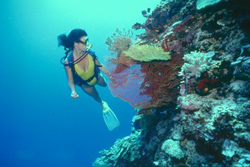
For me, as an environmental journalist dreaming about marine biology and reporting on coral reefs, I didn’t have to overcome my fears, I needed to dive straight into them and walk the walk, or rather, swim the walk – by getting my diver’s certification in order to see my subjects first hand.
Fortunately, I had a loving friend by my side, who reminded me before embarking on my first dive, the words of the Jewish sage, Rabbi Nachman, “The whole world is a very narrow bridge, and the most important thing is not to be afraid!
These are words I would come to know quite well, and take to heart, as I made my first dive.
Underwater, the refraction of light made everything look bigger – especially my fear of drowning. Knees on deep sea-sand, small squares of lead weights holding my body down 18 metres below, in a place where birds never get to fly, I was petrified.
Breathing slowly like my Yoga teacher once taught me was something I was thankful for learning.
Before my first dive off the small island of Koh Tao (Turtle Island) in Thailand, I had tried to prepare myself on the beach – where I compared hypothetical ocean depths to the height of trees, spying through the gap between my forefinger and thumb as a way to estimate how low I would need to go.
Despite the panic swelling up inside of me due to the treacheries of diving we had learned in the classroom, such as decompression sickness, dangerous sea animals, and the possibility of our lungs swelling up like balloons and then bursting, I wanted to be a diver.
As a journalist keen on writing about marine biology and environmental science, I needed that passport to change theory into practice.
How could I speak about the dying coral reefs and polluted marine life if I had never been to any great depths?
But with my head underwater and breathing through the lifeline of my scuba gear, dreams of marine biology were swept away with the current. Once submerged, survival was the only thing I was concerned about.
I clamped my teeth down on the regulator, which supplied a steady flow of oxygen, and reluctantly let the air out of my BCD. My body sank slowly.
As we descended deeper, I watched our spent air rocket to the surface in the shape of silver-coloured mushrooms. The fish, blasé about their natural talent to breath underwater, appeared to be mocking me. One white fish the size of my hand caressed my arm in support.
The dive instructor then prompted our group of six, one at a time, to flood our masks. In order to earn a license, he told us, one must be able to demonstrate a familiarity with water and the ability to perform certain tasks underwater should we get caught on seaweed, run out of air or lose our masks.
As I watched the others remove their masks without hesitation, my breathing became quick and sharp. Water was already threatening to enter my nose; panic swelled inside my chest. I was going to die.
Biologists call it the “fight or flight reaction” of the sympathetic nervous system – my body’s physiology changing abruptly from a perceived threat. What would I do? The flight option sounded most appealing.
The swaying rope we slid down suddenly seemed inviting. I, on the edge of extreme panic, was separated from the world by a wall of time: when diving one must never swim quickly to the surface, or hold one’s breath. To go up would need to be controlled and with caution.
In that case, better to just get a hold of myself on solid ground, I reason, even if the ground is covered in water. Maybe a million years ago, this sand was actually soil in a forest.
In truth, I ached to join the bubbles on the surface where they broke and where my body would have been free to laugh out loud, cough, and breathe though its nose.
There was no way to speak to tell my instructor I needed time. I faced him, pupils dilated, as he waited for me to release the edges of my mask and let the water well up inside.
Switch breathing to your nose, I told my brain. But the panic had set in and my breathing became too fast to control with Yoga exercises. The instructor grabbed my vest and with two hands held me on the ground. Underwater or above, the ground felt solid. The instructor’s hands were on my heart and an overwhelming rush of love for humanity and nature overtook me.
“The whole world is a very narrow bridge, and the most important thing is not to be afraid!” said Nachman in my head, reminding me as a Jew by choice I have joined a community of people who only through miracles by the hand of God and facing their fears have survived for centuries, against the odds.
Needless to say, I lived.
For the second dive, the sea was rough, but a rainbow arched across the sky. Sinking down into the water, I saw that narrow bridge materialize, in the form of a sunbeam penetrating through the blue.
This time, all the tests my instructor asked me to accomplish underwater were done with ease.
“Our dive club used to volunteer to clean up the reefs,” said my instructor nonchalantly, swimming beside me after the dive. “Rising gas prices and the fact that other dive clubs backed out of the project was the reason why our group stopped helping out. There are a few important marine protection groups here on the island you should check out,” he continued.
“And,” he added, “How about a fun dive at 30 meters tomorrow?”
What’s that? A dive for fun? He’s treating me like a diver, I said to myself as I lugged my tank towards the boat, energized. I was now a diver, having faced my fears and found my faith.
Before the short, but icy winter melts into the fierce summer heat, Israel’s Heschel Center for Environmental Leadership will be teaming up with Hazon in New York for a four-day hike along the northern stretch of Shvil Yisrael, the Israel National Trail next week (23 to 27 March).
Walking For A Sustainable Future For Israel will bring hikers from across the world to experience some of the most breathtaking natural spaces in the country as well as to support the two environmental organisations.
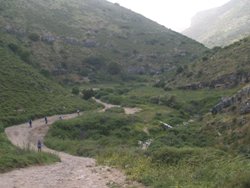
Starting from the Dishon Valley not far from the Lebanese border, the trek will run to the Sea of Galilee, taking in the Amud River as well as the ancient city of Tzfat and Mount Meron, the highest peak in the Upper Galilee, on route. Wow.
A limited number of places are still available for the hike as well the popular Hazon/Arava Institute Israel Bike Ride that happens in Israel every year. Israel is certainly best experienced on two-wheels or by foot so, needless to say, I’m a little green with envy of the hikers. Maybe next year!
At the beginning of my teenage years in Canada, I remember my mother talking in hushed tones about Aunt Hana, who suddenly and mysteriously starting feeling strange aches and pains in her body. Doctors couldn’t find a systemic cause for her ailments, until she traced back dates to when she was last in Poland visiting her mother.
Poland was not immune to the effects of the Chernobyl nuclear disaster that spat radioactive dust across the northern hemisphere landing as far as Ireland, Scandinavia and Israel.
For years after the blast originating in the Ukraine, Westerners were told not to consume wine and foodstuffs from the Ukraine, Belarus and Russia – for fear of subjecting oneself to untold amounts of nuclear radiation.
Ever have the gimme gimme’s? Hyper-consumption is a major contributor to environmental degradation. By getting in the habit of asking ourselves the question “Do I really need this?” each time we see something that catches our eye we can lessen the impact on the planet and save a ton of cash too.
Slowly, but surely Israel is catching on to the idea of green building. We are wondering if the Israeli-style new “green” building neighborhood set to take over 650 dunams of land in Kfar Saba is really as green as it boasts.
A while back we read about single-family homes to be built there (a la white picket fence middle America suburbia) replete with tree-lined neighbourhoods and recycling and compost compartments built into the kitchen. Although solar energy panels were mentioned, implementing green technologies and concepts does not necessarily green a building or neighborhood make.
Israel is too small to keep developing its open spaces. We’d like to see a movement happening, where more people are encouraged to go green in the city — by revamping old apartments into shiny new green abodes. Have any good ideas to make this happen?
All the life of a sloth. Karin talks about all she knows on the Slow Food Movement.
Have you ever had the pleasure of watching the life of a lazy sloth? In Costa Rica on the Pacific shore near a busy surfing village, I rented a room in a small hotel for a week. There I watched the slowness of a sloth with curiosity and envy. For days she sat perched above my balcony in a large tree chomping slowly on its leaves.
In the room beside me was a writer looking to complete his next novel, on the other side was a surfer waiting to catch the next big wave. I, on a break from university, was looking for enlightenment and love.
In the hopes of finding some answers I took interest in the sloth who appeared, unlike those around her, to have no great aspirations in life.
Microwaves are great cooking tools, they might not be the healthiest way to go but they sure do save time. Here are some tips to keep that cooking green:
The greenest, and safest, way to cook in a microwave is to cover your food using oven-safe glass cookware, which eliminates waste and the potential for chemicals leaching from plastic wrap.
“Microwave-safe” containers only means that the plastic won’t melt or crack in the microwave, but doesn’t guarantee that it won’t leach chemicals into your leftovers.
If you DO use plastic, only loosely cover your food, allowing steam to escape, and NEVER let plastic wrap touch food directly.
Only use ink-free paper towels in the microwave. Most printed paper towels use non-food-grade inks. (blech)
Never cover food with plastic bags, aluminum foil, grocery bags, or newspapers.
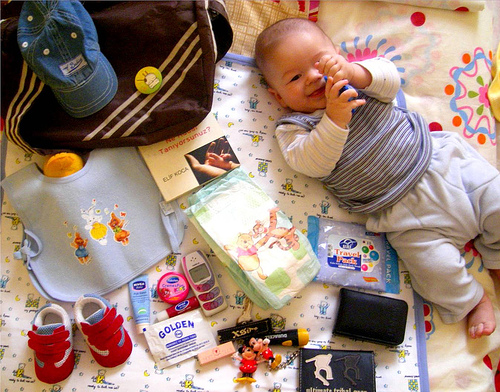
In previous stories we covered baby food and nursery furniture. Next on the list are those beautifully packaged and very enticing creams, soaps, lotions and wipes, which us as new moms are bombarded with and sometimes feel that our children will not survive without.
Baby toiletries are one of our biggest pet hates, they are a waste of money most of the time and off the shelf products are full of undesirable chemicals.
So what to do? Well at the risk of repeating ourselves, this will save you money and the environment, and be ever so kind to your health.
First: Quit the baby wipes! They are one of the most intrusive products around. Sure they clean your baby’s bottom, but what exactly are they leaving behind? Let’s have a look:



 Most people know that organic produce is good and that pesticides are bad. Not only do pesticides have negative effects on human health, having been linked to neurological problems, various cancers, Parkinson’s disease, kidney damage, and reproductive disorders, to name a few, but pesticides have negative effects on the environment as well.







 At the beginning of my teenage years in Canada, I remember my mother talking in hushed tones about Aunt Hana, who suddenly and mysteriously starting feeling strange aches and pains in her body. Doctors couldn’t find a systemic cause for her ailments, until she traced back dates to when she was last in Poland visiting her mother.
 Ever have the


 Slowly, but surely Israel is catching on to the idea of green building. We are wondering if the Israeli-style new “green” building neighborhood set to take over 650 dunams of land in Kfar Saba is really as green as it boasts.
 All the life of a sloth. Karin talks about all she knows on the Slow Food Movement.