Home Blog Page 745

Israeli Eco Tourism Welcomes the Yurt

8

yurt eco tourism Israel

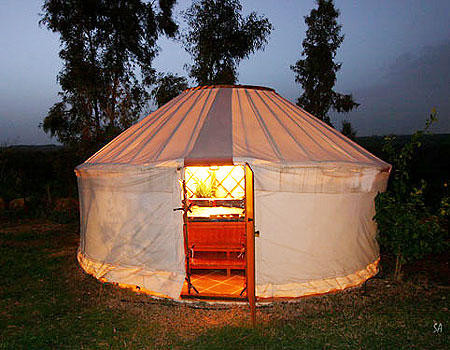
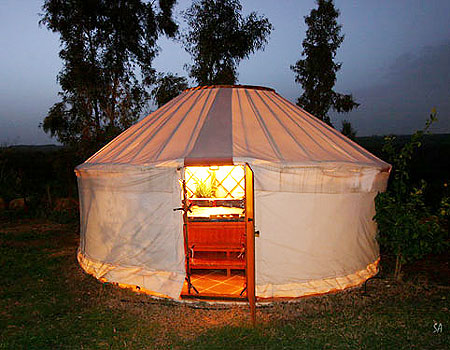
If you don’t know what a yurt is, have no fear.  Most people don’t (including yours truly).  But yurts, with their portability, suitability for nature trips, and simple low-tech structures are highly suitable for eco-tourism – so they definitely deserve our attention.  And it certainly is exciting that yurts are entering the Israeli tourism scene.

So what is a yurt?  A yurt is a portable fabric covered dwelling with an underlying wooden structure that was first used by nomads in central Asia.

What do yurts have to do with Israeli eco tourism?  Thanks to the Indian Village at Moshav Avnei Eitan in the Galilee, plenty.

The Ripple Effect

0

ripple effectHarness the power of the ripple. When you drop a small pebble in a big pond it sends out waves in every direction affecting the entire pond.

There are many ways that you can harness this power. One way is by donating US$1 to your favorite eco-cause (check out some options at www.onebuckfortheplanet.org). If you spread the word to others to do the same you can create a ripple of giving that makes a huge difference for our planet.

Continue this ripple!

Thanks to Jenson for the tip! Do YOU have a green-living tip you’d like to Share?

Here’s how others are donating

Review of 'No Logo': Getting Frustrated With Klein's Screed

4

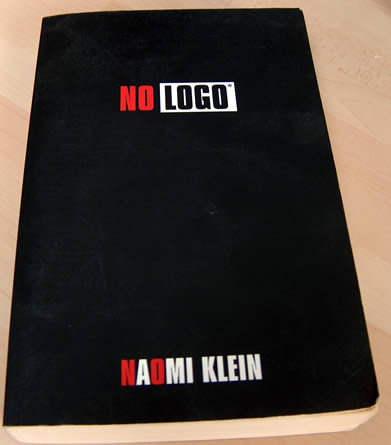
no logo book cover naomi klein image
This week’s eco-book review is by Prophet Daniella Cheslow: Although Starbucks never made it in Israel, McDonald’s, Burger King, Puma, Crocs, Nike, Diesel, and the Coffee Bean are among the hundreds of global brands that have found eager customers among Sabras. I read Naomi Klein’s ‘NoLogo’ for some insight into the branded city of Tel Aviv.

Ah, the good old days, when the most pressing global issues were G-8 meetings and Nike’s sweatshops. Published in 1999, ‘NoLogo’ reminded me how much the world has changed since September 11, two years later.

Klein’s 490 pages details the branding of public space, the reduction of quality manufacturing and service jobs, and the rising global anti-corporation movement. By the time I was finished with the book, if I suspended my knowledge of what came between Klein and reality in the last nine years, I would almost expect Tel Aviv to be alive with protesters of corporate abuses every Friday instead of plastered with signs for “The Human Race,” Nike’s upcoming 10K night run.

Klein’s book includes some fascinating insights. She documents the moment when America’s leading companies ceased selling products and began hawking their image instead. According to Klein, this occurred during the 1970s recession. In the face of competition, Marlboro cigarettes decided to lower their prices, which showed how badly they were being battered by the market. At the same time, a few corporations chose to keep the same prices but expand their advertising budgets. Those companies, such as Apple, The Body Shop, Levi’s and Disney, found continued success even in a time of reduced national consumer spending.

Power Your Own Workout. GO, dy-na-MO!

5
Team Dynamo
Team Dynamo

When you were kids, did you have that cool attachment on your bike – a dynamo – that powered your bike lamp with no battery?  All the kids who had them would go whirring by in the dark, the dynamo spinning against the side of the wheel, and their lights glowing brighter and brighter, the faster they went.  Of course, when they stopped, the beam would fade and the world would grow dark again.  At Adam Boesel’s Green Microgym in Portland, Oregon, this gadget is taken to a whole new level.

Adam aims to have the greenest workout place around. First, he installed solar panels on the window shades (to save electricity) and then decided not to install showers (to save water and heat) [HEY! There is a limit to how far one should go!]  Feeling that was not enough, he then added a Human Dynamo – a set of four full-body workout machines with pedals and hand cranks that generate electricity in a dynamo – and three spin bikes attached to a motor to generate electricity from all the sweat and tears invested by the customers.

Recycled Paper

2

For every ton of paper, roughly 200,000 sheets of paper, that is recycled paper saves us from cutting down approximately 17 trees. The average school tosses 38 tons of paper each year, the equivalent of 644 trees.

When you buy notebooks and paper think green and spend a couple extra to get recycled (it’s not always more expensive).

Raise the awareness in school, perhaps you can rally others to the cause and organize a school-wide paper recycling program. And see some tips below, via Masterclass:

Verify the type of paper your recycling center accepts. Even though most places in the United States have similar rules for recycling, you should check with your local plant to confirm which paper products they accept. Some recycling centers are “single-stream,” meaning you can pile all of your recycling into one bin and the plant will sort it later; other centers are “sorted-stream,” and require you to separate your paper out from your glass and other recycling, or even sort paper by its type (e.g., old newspapers, mixed paper, office paper, etc.).

Keep it unshredded, where possible. Many people shred papers that have identifying or confidential information to prevent that information from being shared. However, shredding paper reduces the length of its fibers, thereby reducing its recyclability. In addition, some recycling centers can’t process shredded paper and instead request that you deliver it to a separate plant. Where possible, try to avoid shredding paper, instead black-out sensitive information using an ink marker. If you shred your important papers and your recycling center can’t process them, consider using your paper shredding around the house—for instance, in composting, vermiculture, or as an absorbent bed for small-animal litter.

Avoid wetting the paper. Once paper becomes wet, it’s much harder to recycle and often has to be thrown away. Keep your paper separate from other recyclable materials that may dampen the paper (such as rinsed plastic containers or used aluminum cans). Avoid getting grease on paper bags used to hold food. Additionally, try not to put your recycling bin out too early on rainy days.

Don’t worry about staples. If some of your printed materials contain staples, you may wonder if you need to pry them out before tossing the stack in the recycling. In fact, most paper recycling plants have machines that can remove staples from the paper stream, so you don’t have to remove them beforehand. However, check with your local recycling center to verify whether they remove staples.

Go paperless. While paper is an ideal candidate for recycling, most paper fibers can only be recycled up to seven times before the fibers become too weak for recirculation. That’s why the best way to conserve paper is to go paperless wherever possible. Try storing digital versions of files rather than printing out documents, from boarding passes to event tickets.

You can also offset your books.

 

Greenpeace’s "Rainbow Warrior" Comes to Israel

1

Greenpeace Rainbow Warrior climate change Israel

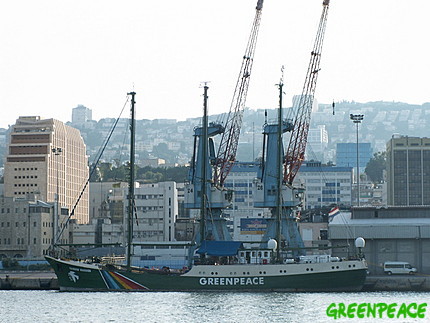
It’s not just Morrissey and Paul McCartney who are on tour in Israel this summer, but Greenpeace’s legendary Rainbow Warrior ship is also paying the country a visit this weekend.

As part of its latest tour of the Mediterranean Sea, the well-travelled vessel (the original was sunk in 1985 protesting against nuclear weapons testing in the Pacific) is due to dock at Haifa Bay this Saturday (6 September, 12pm) to spread its message: CLEAN ENERGY, NOT COAL!.

Apart from an opportunity to board the ship, meet its crew and learn about climate change, Rainbow Warrior’s visit will help remind Israelis about plans to build a new coal power station further along the coast at Ashkelon. In May, Greenpeace activists abseiled from the roof of the Infrastructure Ministry in Jerusalem wielding a clear message for Infrastructure Minister Binyamin [Fuad] Ben-Eliezer: “Fuad will kill Ashkelon in one week. COAL KILLS!”

:: Greenpeace Mediterranean (Hebrew).
:: Greenpeace Mediterranean (English).
:: Facebook event (Hebrew).

Photo: © Greenpeace / Yonatan Leibowitz.

Is Sustainability in Tel Aviv an "Urban Legend"? New Film Challenges City Planners to Think Outside the Box

2

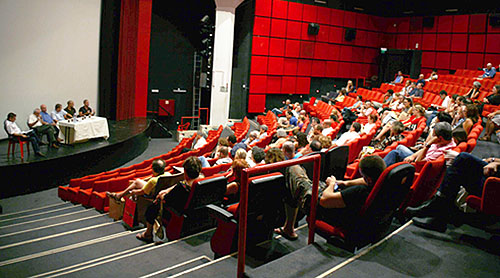
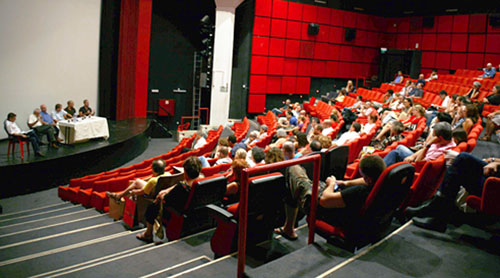
Tel Aviv residents at the Cinemateque: "Why isn't our city greener?" (Daniel Cherrin)

Sometimes it is necessary to confront our decision-makers with what has been called “the threat of a good example” – to bring them face to face with evidence that, despite their insistence to the contrary, it is possible to do things differently.

That, in a nutshell, was the idea behind an event held last week at the Tel Aviv Cinemateque which challenged Israel’s city planners to think creatively about Israel’s cities and the many challenges they face.

The event began with the screening of “Urban Legend,”a 50 minute Hebrew film which recounts the courageous steps that various cities around the world have taken to improve the quality of life of their residents, while lessening the pressure they put on their environments.

The film was followed by a panel discussion, which included the participation of the official city planners of Haifa, Netanya and Tel Aviv. Moderator Nitzan Horowitz, who directed the film, posed them the following question:

“If they can do it there, why can’t we do it here?”

A Green Prophet Tour of the Big Green Apple (aka New York City)

2

green ecological New YorkThis Prophet recently got the chance to travel to New York City, and was a little bit apprehensive about the green-ness factor of the Big Apple.  For a city so notorious for its chic blacks and greys, we figured that a fairly untrendy color like green wouldn’t be too popular.  We were wrong.  Apparently green is the new black.

Eco consciousness is all over the place in NYC (to be referred to from now on as the Big GREEN Apple), and eco tourists should feel very comfortable there.  Here’s a list of some of the top best green stuff in Manhattan:

green New York transportationPublic Transportation: Considering how many people actually live in Manhattan and the other four boroughs of New York City, there is a relatively small carbon footprint associated with transportation in the city and it keeps getting smaller.  Why, you might ask?  Because NYC public transportation is going green in a big way.  The buses are hybrid electric vehicles now.  The subway stations are changing their lighting to energy efficient CFLs.  And the subway cars themselves?  They reuse the energy generated when the subways brake.
Leave No Trace: Ecologically Responsible Hiking

0

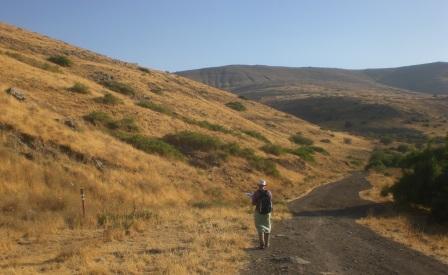
hiking trail Israel

It’s September already and officially the end of the summer (not that you would notice by the still-scorching Middle Eastern climate). As the temperature begins to cool down (slightly), the next couple of months offer the ideal time to hit one of the many hiking trails, forests, or natural springs in Israel.

But sometimes enjoying the Great Outdoors can leave it in a worse state than it was found, as I discovered at the weekend rafting on the River Dan with fellow Green Prophets James and Jeff. The tranquillity of drifting along a wide, clean river a few minutes from the Lebanese border was tempered by the plastic bags, bottles and other human debris that have accumulated along its lush, green shores.

To educate campers and day-trippers about their ecological footprint, the Leave No Trace Center for Outdoor Ethics in Colorado developed a guide for ecologically-responsible outdoor recreation. Their seven Principles of Leave No Trace have recently been adapted for the Israeli landscape courtesy of Derech HaTeva, the Society for the Protection of Nature in Israel’s environmental education initiative:

Prof. Alon Tal to Receive Lifetime Achievement Award for Environmental Protection

1

Alon Tal Lifetime Achievement Award

Prof. Alon Tal of Ben-Gurion University of the Negev will receive a Lifetime Achievement Award for Environmental Protection from Israel’s Ministry of Environmental Protection. The award, which is being granted to 12 recipients, recognizes the honorees for their work on behalf of safeguarding Israel’s environment and is being granted as part of the country’s 60th anniversary celebrations.

University President Prof. Rivka Carmi praised the recognition, noting that Prof. Alon Tal is “both an exemplary academic and an environmental leader, who transformed Israel’s environmental movement and its approach to ecological challenges.”

SafeCell Educates and Protects Against Cell Phone Radiation

5

safecell esti allina-turnauer photoIsrael has the highest per capita cell phone use in the world at 2.2 cell phones per person. Israeli children, teens and young adults are among the most active users. This presents a huge, urgent health crisis in the making as more research proves the health risks of cell phone radiation.
SafeCell Ltd., is an Israeli company started by a natural health professional, Esti Allina-Turnauer to educate the public about this pandemic-in-the-making, while offering solutions to reduce the potential health damage.

Electromagnetic pollution and cell phone microwaves are an invisible yet very harmful new form of environmental pollution, that affects every life form on the planet. Please visit our site for more information. SafeCell’s mission is to get every man, woman, and child in Israel – and beyond – protected from cell phone radiation and EMF.

::SafeCell

Gleaning the Shuk: Fugee Fridays Feeds Refugees With Produce Donations

1

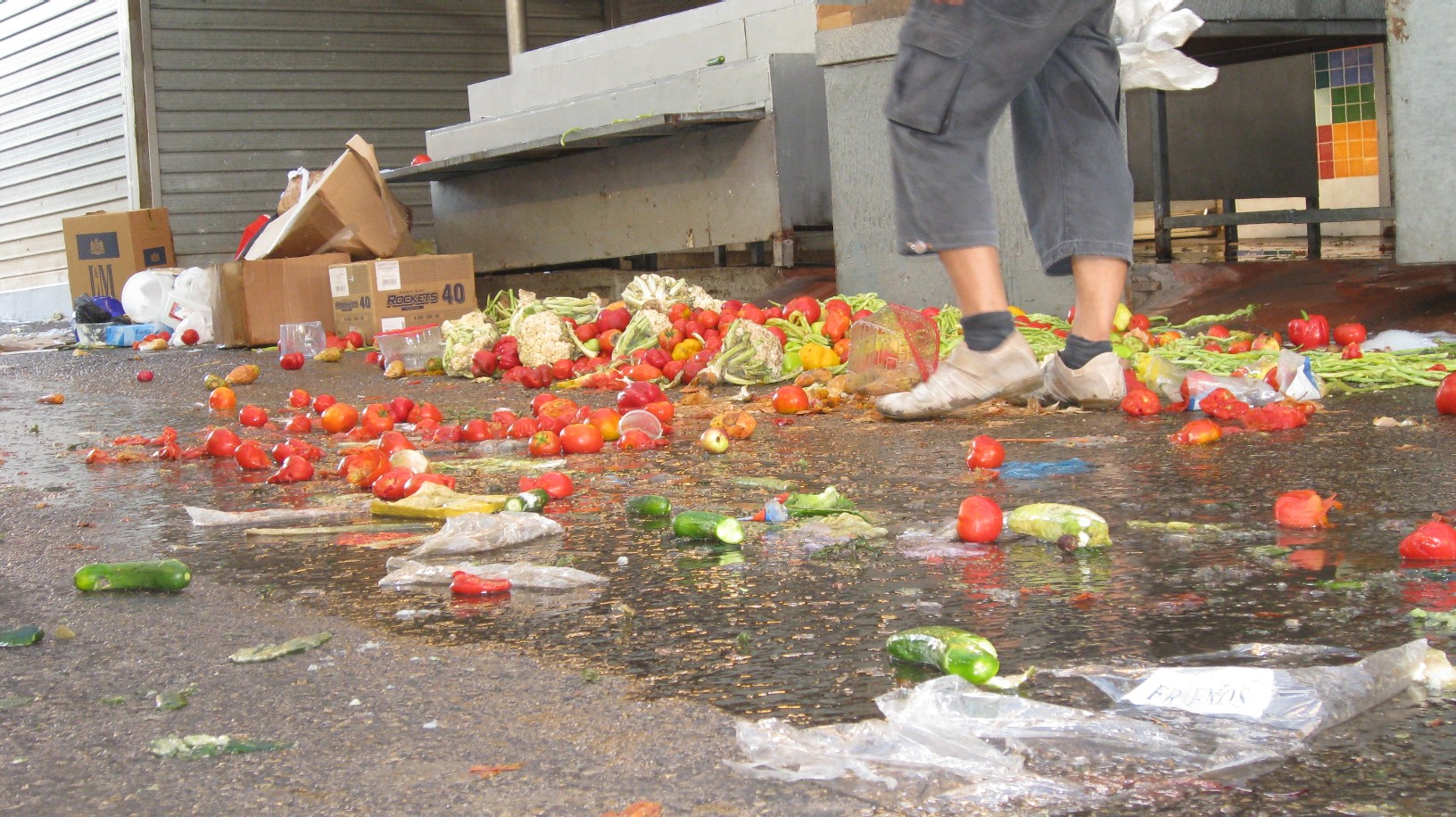
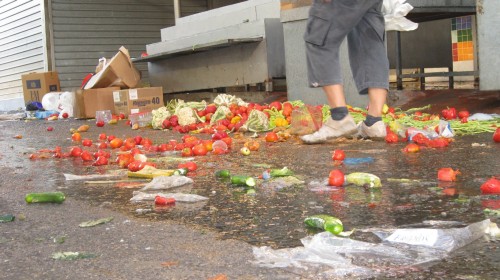
The carmel market shuk floor on a regular Friday in early August

The shuk floor on a regular Friday in early August (photo: Daniella Cheslow)

One of the best things about most major Israeli cities is the shuk, the giant outdoor food market where bright vegetables sit in precarious piles and entire alleyways are devoted to freshly butchered meat and refrigerated cases full of fish, sometimes even still squirming.

But one of the worst things about these shuks is the terrible waste at the end of each day, especially on Friday afternoons before the Sabbath comes in and the shuks are closed for the day. Lettuce covers entire meters of asphalt, chicken offal sits in piles surrounded by squashed tomatoes, and soggy cardboard boxes soak up the rotting vegetable mash.

In Tel Aviv, there are plenty of people who could use those discarded vegetables and fruit, and ‘Fugee Fridays – an initiative of Green Prophet Jesse Fox, his brother Steven, and their friend Gilli Cherrin – started up in February to collect excess produce from the shuk vendors and bring it to refugee shelters in southern Tel Aviv. Fugee Fridays meets at the bottom of Shuk Hacarmel each Friday at about 6 pm.

Ras Al-Ayn: A Model for Composting in Israel!

2

composting solid waste

Israel’s search for solutions to solid waste management has been no secret. Last year, for instance, the Knesset passed new taxes for dumping in landfills, and a law requiring businesses to recycle tires.

Luckily, it’s not only the policymakers who are working on the problem, and it’s not only the Jewish sector either! Ras al-Ayn, an Arab-Israeli village in the Galilee is currently operating a compost project that could serve as a model for organic waste recycling throughout the entire country

Jordanian Ministry of the Environment Launches Eco-Cities of the Mediterranean Forum 2008

0

Jordan eco-citiesIn a press conference held last week the Jordanian Minister of Environment, His Excellency Khaled Irani, announced the launch of a Jordanian initiative called “Eco-Cities of the Mediterranean Forum 2008” to be held at the Ministry’s premises this coming October.
When explaining the reasons for initiating the regional conference, Irani said:

Our region’s energy, water, air and environment are all facing significant and complicated challenges that are affecting the quality of our lives today and will continue to affect the quality of future generations if they are not addressed… During this three day event, we aim to create a momentum towards addressing environmental challenges and opportunities in cities across the Mediterranean region and to promote the adoption of environmentally friendly practices by suggesting policies, strategies and programs bringing together the relevant public and private sectors.

Back To School – Reuse Books

2

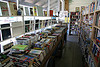
used booksWith everyone going back to school over the next few days, now is a good time to connect with parents from your children’s school. Find out who has children in grades above your child and see if you can get their old books. There are also many book stores which will buy and resell used school books. Unless requested specifically there is no reason to buy the newer books. Growing up I used to enjoy discovering comments left for me from the previous owner. Turn it into a game for your child!