Home Blog Page 743

Sustainability Blogger Hamutal Dotan

0

Hamutal Dotan organic food sustainable food

Meet Hamutal Dotan, our expert on all things culinary and delicious. Hamutal is currently working as a web editor in Toronto and aspires to be a full time writer.

Read about Hamutal’s thoughts on sustainable food, gardening education for kids, and her mouthwatering (and popular with our readers) strawberry jam recipe.

Homemade Strawberry Jam Recipe

How would you define yourself environmentally?

A writer, educator, and food activist.

How do you get around?

My feet! They are always there when I need them. I walk between 10-20km/day. Except in the snow. Snowy days are subway days.

Can you tell us about your biggest green passion? What fires you up?

Food, and everything about it: gardening, marketing, cooking, eating, feeding, preserving, baking plum buckle. Eating is the most visceral connection most of us have to the natural environment.

What do you think is the most important issue the world faces today?

I’m not remotely qualified to issue judgements on this, but access to sustainably produced food is definitely high on that list. The cost of staples is going up around the world, and this is leading to (at least apparent) conflict between our need to increase the volume of food produced by expanding the scope of industrial agriculture, and our desire to produce food sustainably, via the use of organic, local, and small-footprint agriculture.

What is the most important issue in the Middle East?

Peace seems like the obvious answer – the lynchpin which will enable us to tackle every other issue. I’m not actually sure it will go that way, though: there may be a bit of a chicken-and-egg thing lurking in the background. Do we need to make peace before we can decide how to allocate our water, or does the water crisis force everybody to cooperate, eventually leading to peace?

What’s the saddest environment-related thing you’ve ever seen?

I’ve definitely not witnessed the saddest environmental tragedies – people displaced because of climate change, toxic waste dumps, and the like. But one of the most poignant moments for me personally was when a grocery cashier asked me what it was I was buying, so she could ring me up (it was broccoli). That kind of alienation from something so basic is astonishing.

What’s the most hopeful project/company/event you’ve seen?

Programs that introduce gardening for food into urban school curricula, especially in poorer neighbourhoods. Kids that tend vegetable patches as part of their education are both happier and better fed. If you grow up being excited by raising your own tomatoes, a lifetime of environmental consciousness will follow much more naturally than it otherwise might.

What do you do to play your part in greening the earth?

I advocate, hopefully in a way that is intelligent and thoughtful rather than belligerent. I don’t drive, don’t shop for more than I need, and try to buy what’s been produced responsibly. I vote based on environmental policies.

What are you reading now?

Michael Pollan’s ‘In Defense of Food’. TreeHugger,  Grist. The Ethicurean is a great source of information about sustainable food.

What’s your favorite post/topic on Green Prophet, and why?

I’ve just started out here, but so far my favourite has to be the strawberry jam recipe. The day that I wrote that, I spent the morning at a farm picking berries, the afternoon teaching a friend how to make jam, and the evening writing about it, and it was all SO much fun. People often seem to think that being environmentally responsible is a dour, joyless sort of commitment, one that strips you of luxuries and habits you’d like to keep. And there are obviously ways in which that’s true. But it also introduces a whole other range of thoroughly pleasurable activities into your life. Being that engaged in what you do, even just in what you eat, is deeply satisfying.

hamutal dotan srawberries
Hamutal Dotan goes strawberry picking and then cans her jam. Learn how.

Who are your environmental heroes?

Alice Waters, who is one of the first people to have really promoted thoughtful, attentive agriculture and eating. The Norwegian seed vault – it’s a safehouse for the world’s crop diversity, and the people that built it have performed an invaluable (and under-reported) public service. Rachel Carson, who had to fight harder than any of us ever will to get environmental issues taken seriously.

If you could meet with one of these heroes what would you ask them?

How to persevere, and keep your sense of humour, in the face of institutional apathy.

If you could make one green wish (or have one of your prophecies come true) what would it be?

Get genuinely green-sensitive politicians in office in the major food-producing, and pollution-emitting countries. All our individual efforts at reducing our footprints won’t make much of a dent unless they are accompanied by legislative revolutions.

To learn more about sustainability writers and their passions, read more articles in the Green Prophets series:

Green Prophets in Focus: Sophie Ohana

Green Prophets in Focus: Michael Green

Green Prophets in Focus: James Murray-White

Green Prophets in Focus: Karen Chernick

Green Prophets in Focus: Jesse Fox

EcoMum on Nappies & Laundry

1

The subject I seem to be always answering questions about is keeping those nappies clean.

Unlike most European countries or the States we are yet to be blessed with nappy services. So how does one keep those cloth nappies (diapers) clean without feeling swamped?

To tell the truth it’s really easy and no it does not feel like extra work, quite the opposite in fact, once you have a routine you will wonder what all the fuss was about.

So how do you keep those nappies clean?

National Pollution Prevention Week

0

It’s National Pollution Prevention Week in the USA this week. This is a great time to assess your wasting habits. Where can I waste less (which inevitably means save too) Share ideas with friends. Start a campaign!

Car2Go brings car sharing to Tel Aviv

9

car2go car sharing in tel aviv, israel
It was bound to happen, sooner or later.  After the kibbutz – the classic Israeli collective community where members shared everything – urban car sharing services were only a hop, skip, and a car engine purr away. Thanks to new Israeli company, Car2go, the concept of car sharing (which has already enjoyed great success all over the world, including New York and New Jersey thanks to Zipcar) has arrived in Tel Aviv.

So how does car sharing work and why is it green?

Eilat Fish Cages: Out of frying pan, into Ashdod harbor

3

The Israel Union for Environmental Defense (IUED) reported that yesterday (September 14) the Israeli government approved plans to place fish cages in the Ashdod harbor.  This marine agriculture initiative was removed from the Eilat harbor after a controversy over whether they were harming the coral reefs in the Bay of Eilat/Aqaba.  Without getting into the discussion over the situation in Eilat, which was covered extensively in any possible forum, no-one is arguing that the cages will harm the water quality in Ashdod port.

Quite the opposite.  Aside from the tremendous activity of large ships, which are a source of fuel and oil contamination, the harbor area includes a large industrial area with oil refineries, a power plant and Agan Chemicals, whose effluent reaches the harbor without passing through a treatment plant.  These effluents include such hazardous chemicals as pesticides, methanol, fuel mixtures, ammonia, disinfectants and more, which have accumulated in the port waters over the years.

Bustan Qaraaqa: Permaculture and Empowerment For Palestinians in the West Bank

4

palestine permaculture project bustan turtle photoAlthough Palestinian environmental activism is clearly on the rise, Palestinians still face a myriad of environmental and social challenges. 

These issues often have both ecological and political aspects; the current water shortage, for instance, is influenced both by global climate change and Israel’s policies in the West Bank.

This past year, a team of four British environmentalists came together to address these problems at all levels. 

In February 2008, Steve Collings, Tom Fernley-Pearson, Alice Gray and Nick Marcroft established Bustan Qaraaqa, a revolutionary new educational permaculture farm and eco-guesthouse in the West Bank.

In June, the Bustan Qaraaqa team opened their facility in Beit Sahour, near Bethlehem.  It consists of both an eco-guesthouse for both visitors and volunteers, and 12 dunams (4 acres) of farmland for teaching permaculture.  Currently, the site boasts a greywater recycling system, composting bays, a composting toilet, a series of swales (irrigation ditches) across the valley floor and the beginnings of a rainwater-collecting cistern. 

The team reports that they have hosted over 55 guests from all over the world.

Bustan Qaraaqa, which means “Tortoise Garden” in Arabic, represents these activists’ desire to build a grassroots environmental movement in the Palestinian Territories.  The aim of the project is to

Shari Arison Officially Launches Water Services Company Miya

6

leaky faucet leaking tap arison image
Shari Arison, Israel’s wealthiest citizen, took advantage of the International Water Congress in Vienna to formally announce Miya. The new company aims to make a profit on cutting back water losses.

Miya says one third of the world’s drinking water is lost through leaky pipes. CEO Booky Oren, a former chair of Israel’s national water utility Mekorot, said by patching even just half the leaks an additional 130 million people could have clean water.

Oren said 1.4 billion people already lack adequate drinking water and that with population growth and urbanization there will be a 40 percent increase in demand by 2025. He said “Miya is the first global company to offer an unparalleled range of solutions, based on innovative technological solutions.”

"Project Interchange" Invites Europe’s Green Makers, Movers and Shakers To Go On “Tour” in Israel

8

green cooperation in israel and europe project interchange illustration

From September 20-27, a delegation of European environmental journalists, policy makers (ie World Bank and EU parliament), energy and climate change specialists, and activism leaders are coming to the Middle East to explore Israel’s environmental issues, policies, and clean technology.

The whirlwind tour will take these leaders to Hiria (Tel Aviv’s rehabilitating garbage dump); they will visit the renewable energy company Ormat, see solar technology in action, and will learn about Dead Sea issues at the Dead Sea. They will essentially experience different shades of “green” in Israel and discuss and debate with their Israeli counterparts along the way.

This trip, sponsored by the Washington-based Project Interchange gives leaders from international communities, an opportunity to understand Israel’s complicated reality through a “green” lens.

Go Digital

2

billsMany companies now offer to send a bill via email instead of it’s snail contemporary. Call your bank, phone company and others to see if you can make the switch. You’ll be surprised, some offer discounts and insentives to make the switch! In Israel, Orange now offers such benefits.

Looking to green your life? Find out more! Have a green-living tip to share?

The California-Israel Chamber of Commerce to Bring Top Israeli Cleantech Companies to the US

1

cleantech israel drip irrigation image
For four days in November up to fifteen Israeli cleantech companies are to be given VIP access to top decision makers including potential partners, funders and clients in California.

The delegation is being billed as the first of its kind, and will bring the Israeli companies to meet with executives from cleantech leaders including General Electric (GE),  Pacific Gas & Electric Company (PG&E), Google, Applied Materials, California Public Utilities Commission (CPUC), The Cleantech Group, Israel Cleantech Ventures, US Venture Partners, and Greylock Partners.

Green Prophet in the Garden State

0

postcard from new jersey image

This prophet just made the flight from Tel Aviv to his childhood home of New Jersey. After a year of observing Israel and it’s eco-consciousness (and at times lack thereof), I was eager to see how the Garden State measured up to its nick name. I couldn’t help but compare my observations in New Jersey with the realities I’ve observed in Tel Aviv.

Transportation

As expected, the mini-vans and SUVs still dominate New Jersey roads despite the high gas prices. There are no scooters and very few small cars. A few hybrids can be spotted but they hardly enough to make a difference. Here Israel really has the advantage on New Jersey.

Recycling

Perhaps the greatest thrill of in New Jersey was the simple act of drinking Root Beer in a glass bottle and then ever so simply placing it in the recycling bin. This is nothing new in New Jersey but it speaks to a major deficiency in Israel’s green policies. Israel’s lack of recycling has always frustrated me to no end. It’s appalling. At my most motivated I’d collected hundreds of glass bottles and separated them into different sizes and varieties and walked them over to various supermarkets, sometimes being turned away and sometimes being forced to wait for upwards of half an hour. At my weakest moments I’ve…[gasp] actually thrown away foreign wine bottles that the supermarkets wouldn’t recycle. It felt awful. Then there’s the whole issue of plastic bottle recycling being controlled by the Mafia, which makes it hard to feel happy when placing one’s bottles in those yellow cages in Israel’s streets

Ormat, Leviev Group and Evogene To Produce Castor Oil Biodiesel in Africa

4

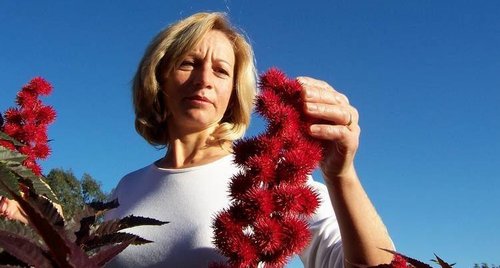
ormat leviev and evogene create biofuel in africa with castor oil picture

An Israeli Real Estate mogul partners with Ormat and gene company Evogene to investigate castor oil crops in Africa.

L.L Biofuel Namibia of the Leviev Group and Evogene (announced yesterday) that together with Orfuel, a subsidiary of geothermal power giant Ormat, they will establish a new company focused on the growth of specialized castor plants for use as feedstock for biodiesel. The new company will be headquartered in Namibia, with operations in Namibia and possibly other locations in Africa.

According to the terms of the agreement, the new company will examine various castor varieties in field tests in Namibia, and following the selection of best performing varieties, the new company will work to commercialize and grow the selected varieties on a commercial scale in Namibia, and possibly in other locations in Africa.

Two Books 'Spiritual Compass' and 'Free To Be Human' Direct Us To Act Local

0

spiritual compass book cover image

Guest reviewer Jeremy Zauder relishes two views of ethical development in a special double review this week: part of our ongoing Green Prophet ‘Eco-Reads’ green book summer festival:

‘Spiritual Compass’ and ‘Free To Be Human’: Reading these two fine books in succession, I found that they could be companion texts: though different in style and focus, each appealed to a different part of my brain and stimulated lively discussions.

It was good to read “Spiritual Compass” [by Satish Kumar] first. The book is a pleasant, fast read, with nice hand-drawn illustrations. The preface (by Deepak Chopra), the foreword, and “An Invitation” may be too much as an introduction because the same principles are repeated throughout the book.

The framework of Kumar’s topic is the three qualities of life, or three gunas of the Vedic tradition: sattva is the shining moral example towards which we should strive; raja includes the transforming stimulating actions of pursuits for gain or display; and tamas is the inert, dark, destructive means and ends which we should strenuously avoid. For an in-depth comparison of these models, please see the chart I compiled while reading Three Gunas.

These three qualities can be applied to all aspects of life. Sattvic environmental solutions offer simple long-lasting benefits with minimum impact and maximum harmony between people and nature. Rajasic ideas are more complicated. They deal with symptoms, not causes, and are unnaturally forced upon the environment. The root of the word comes from “rajah”, or king. Governments may attempt to lead us towards good, but they usually fail because the goal is not achieved by worthy means. Too much rajas leads to tamas, an empty, depressing, harmful state of existence.

"Sustainability Brothers" a Model for Collaboration of Different Environmental Activists

1

sustainabilityThere are many types of environmental activists.  Not only are there those concerned with one type of environmental issue rather than another (such as being more of an advocate for organic farming than for alternative energy), but there are those involved to a higher degree than others.
No matter their differences, however, the big picture and the overall goal remain the same and so it is important that environmental activists be able to collaborate instead of fight against each other.

Which is why the Sustainability Brothers (yes, they’re literally brothers – ask their mom) are so wonderful.  Active in different realms of the environmental world, they nevertheless work together and are strengthened by their differences.  And so even though these brothers are not active in the Middle East, we hope that their collaboration (despite their differences) can serve as a model for populations in this region that may not be inclined to work together on environmental issues.

So who are the Sustainability Brothers?

Have a Healthy Ramadan: Greening Your Fast

12

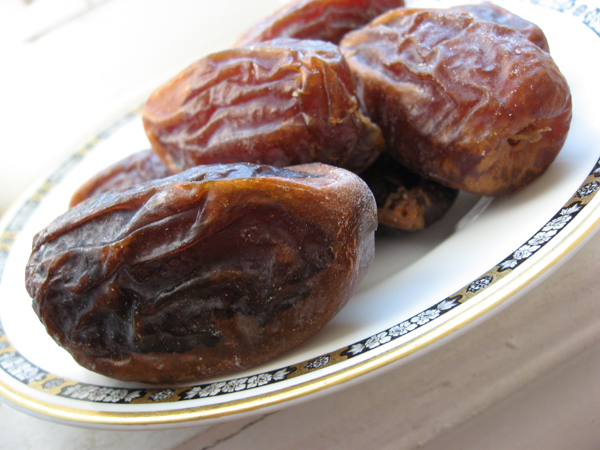
ramadan iftar dried date

We’re now just over a week into Ramadan, and hopefully those of you that are fasting have settled into a comfortable routine.  For any of you that may still be trying to find your way, though, we thought we’d do a bit of research into the best ways to keep your eating healthy and earth-friendly during the month:

  • Make sure to eat a full range of foods, in manageable quantities. Your body will respond best if you eat a regular and varied diet, and avoid gorging – excessive quantities of food can stress your system.
  • Emphasize foods that are slow to digest, and that provide a gradual release of energy during your fasting hours. Complex carbohydrates, lots of fibre, protein, and nutrient-dense foods are your friends. Think whole grains, lentils, fruits and vegetables, dried seeds and nuts…