Home Blog Page 740

Public Transportation Day 2008: Still Stuck in Traffic

2

Tuesday, September 23 was Public Transportation Day in Israel, the local answer to European Mobility Week and World Carfree Day, an attempt to “remind the world that we don’t have to accept our car-dominated society.” In Europe, they managed to keep the cars off the streets for a few hours. In Israel, we will have to wait until Yom Kippur for our own day without cars.

The day’s events featured a professional conference on “Public Transportation in the City,” organized by Transport Today & Tomorrow and the Ministry of Transportation, and a race between different modes of transportation, organized by SPNI Tel Aviv.

Lebanon Celebrates Three Years of an Organic Farming Project

3

Last Friday, World Vision and the United States Agency for International Development (USAID) celebrated the achievements of a three year project that has helped hundreds of Lebanese farmers grow organic agriculture in Lebanon.  The project – called the Sustainable Agri-Business Initiative for Lebanon Project – directly helped 800 farmers and over 4500 people in total.

USAID helped spearhead this widespread organic farming by providing the funding to develop specialized organic agriculture practices, provide state-of-the-art processing, packaging, and storage facilities throughout Lebanon, and put the necessary marketing services in place in order to successfully bring organic Lebanese farm products to the market.

Life in the Suburbs in America and Israel

2

On of the most depressing bus rides I have ever taken in Israel was a late-night local from Kfar Saba to Tel Aviv. In addition to its sheer length (an hour and a half ride for a trip that should take 40 minutes), the bus went from suburb to suburb, revealing identical buildings and streetscapes on every stop.

Yet if bland architecture got to me in Israeli suburbs, they have nothing on America. Beyond inventing suburbs, Americans also spent trillions over the years to pave the roads, lay the wires, build the sprawling strip malls and erect the McMansions that have spread over so much of our open land to devour habitats and make us dependent on our cars.

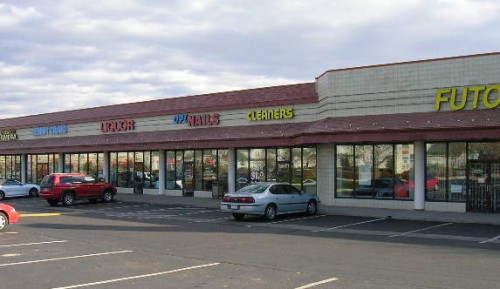
strip mall in the suburbs

In my first week back in New Jersey from Tel Aviv I have been taking a special glee from listening to James Kunstler’s Kunstlercast, a weekly podcast devoted to “the tragic comedy of suburban sprawl.” Kunstler, the author of “The Geography of Nowhere,” “The Long Emergency,” and other books on the environment and urban planning, believes that suburbs are the worst waste of resources committed in world history, and he eagerly looks forward to their demise when what he calls our “oil fiesta” is over.

In his podcasts, which usually run for 15 to 30 minutes, Kunstler visits suburban shopping malls, where he remarks on the irony of sitting on wooden Adirondak chairs outside an L.L. Bean outdoor goods shop when the only outdoors is the parking lot. He also coins new terms to describe the bleak realities of suburban life, such as “parking lagoons” that sprawl around shops. And he analyzes why America has “a rail system that even Bulgaria would be ashamed of,” and recommends rebuilding it immediately as the first step toward energy independence.

It is easy to hate American suburbs; they are an unusual blend of ugliness and environmental destruction. Moreover, because Israelis are following America’s terrible example, it’s important to understand why the strip malls and shopping centers sprouting faster than a JNF forest may not be the best of news.

Yet Kunstler’s biting sarcasm and his knowledgeable comments infuse a new life into the debate, and you may not even notice how much you learn because you will be laughing so hard.

Photo: http://www.freewebs.com/jadeindustrailmaintenance/

The Compost Guy Takes on his Mother

2

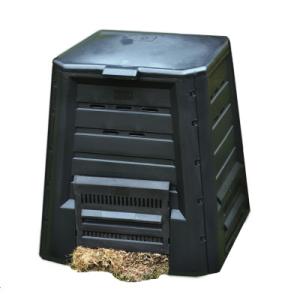
Compost plays an important role in this Green Prophet’s life as has been written about in previous posts, and over the years I’ve become somewhat of an advocate.  I must have spoken with hundreds of people on the topic and have convinced a good many to at least try composting in their backyards, both in American and Israel.  However, I’ve never fully gotten through to my parents.  At least not fully. After enough conversations with my mother I’ve managed to induce a sense of guilt in her every time she throws away food scraps, though I haven’t successfully provided her with a composting option that meets her needs.  Recently, when hesitantly placing carrot shavings in the trash, she turned to me and said, “I’m ready.”

Now I’m on a hunt to make composting simple and easy for her. Like many people I’ve spoken to about composting in the suburbs, my mother is really into the idea but has a list of basic concerns:

1)    How will it look?  Especially in New Jersey, but also definitely in Israel, people are wary of neighborly judgment, and it’s important for yards, as small or big as they are, to look neat and orderly.  I’ve always been more of a let it grown wild kind of guy, but my parents aren’t so much.  My mother’s asked me for something that will not attract attention, and that doesn’t look homemade.

2)    Animals.  In Basking Ridge, New Jersey we have lots of deer, squirrels and foxes, and our backyard is essentially a forest.  We have no fences to keep anything in or out. Thus, my mother wants a closed container that won’t become a hot lunch spot for wildlife.

Rishon Lezion Schools Walk for the Environment

1

If you live near a school, then you know what 8 am and afternoon pick up times mean for the environment.  With all of those parents driving their individual children to and from school, the carbon emissions associated with getting elementary, middle, and high school students to school can be pretty detrimental.

Not only is this bad for the environment at large, but if often creates denser air pollution around the school – exposing school aged children to greater health risks.

So it’s a good thing that the municipality of Rishon Lezion, Israel’s fourth largest city, decided to do something about it.  After a pilot run in 2007 that was sanctioned by the National Parents’ Association, the municipality has launched a project calling on all 6000 school children in the city to walk to school on Fridays in an attempt to boost environmentalism, road safety, and physical education.

Sustainable Reading: The CEO of Eco-Libris Speaks

3

eco-libris sustainable reading books

You love reading books, and at the same time you care about the environment and don’t feel too good about all the trees cut down for printing these books. So what can you do to green up your reading?

There are several options for the eco-conscious reader who wants to act in support of the environment, and we are happy to share few of these ideas with you. One of our goals at Eco-Libris is to increase the awareness to the need in change in the book industry and we believe that readers can have a significant role in it. So here we go:

Join your local library
.

My mother is a librarian for the last 27 years and I spent many hours as a kid and a grown up in the public library where she worked (you can still visit her at the library and say hi if you live in Rishon Letzion J). So you can imagine I am a big fan of public libraries, especially since a public library is not just a great cultural institute, but also a very eco-friendly place.

Public libraries are maximizing the usage of every printed copy and we need to remember that ‘reuse’ is a greener strategy than ‘recycle’. I don’t know the data about libraries in Israel, but according to the book “Seven Wonders for a Cool Planet” (recommended!), the average North American library lends out 100,000 books a year, but buys fewer than 5,000 books. Because less books are needed to be printed, the library is saving a huge amounts of CO2 emissions, or for those who are in favor of figures – 250 tones of greenhouse gas emissions every year.

Swap books with other avid readers.

Book swapping is a great concept: you get books you are looking for at no cost, give books others to enjoy and of course benefit the environment. It’s very similar to the idea of a library – maximizing the usage of every printed book minimizes the need to print new ones and saves many trees from being cut down.

Solutions to Sewage Sludge – energy and wetlands

1

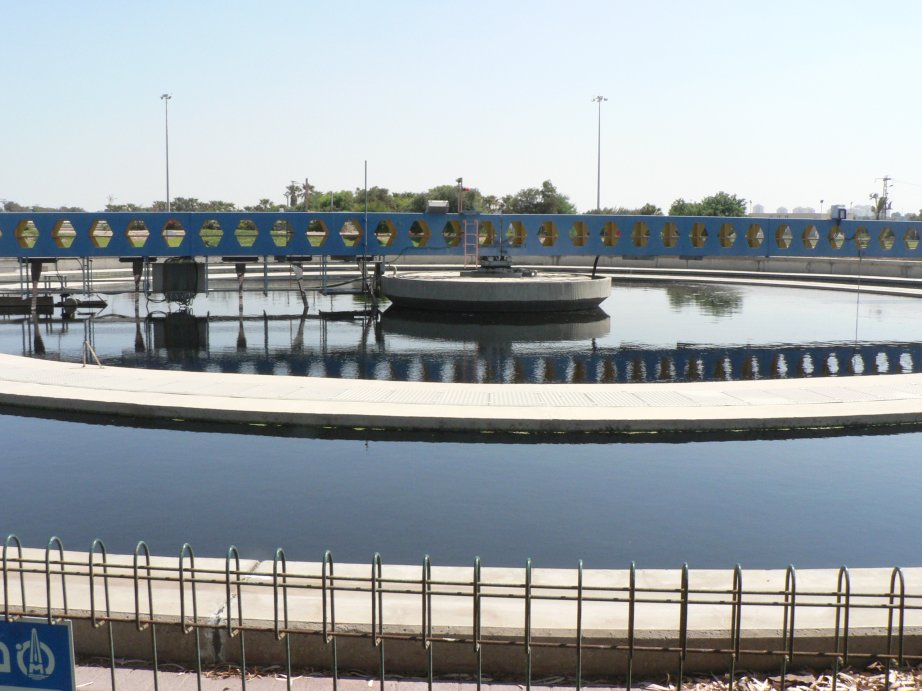
Any place that has wastewater treatment plants, must deal with the issue of sludge – all of the solids left over after the sewage is treated. Sewage treatment consists of a number of stages.

Stage I, where the solids are flocculated (encouraged to glom together) and settled out of the stream.

Stage II, where the organic content is removed. This step is important because the organic matter serves as a source of nutrients in the water, and if it is released into open bodies of water, it will promote the growth of algae, leading to oxygen deprivation and problems for the aquatic populations. The most common method these days is to bubble air through holding tanks that contain bacteria which consume the nutrients. At the end of this stage, the solids containing the bacteria – the sludge – are removed. Previous technology trickled water over a bed of gravel where a bio-film grew.

Stage III, where the water is disinfected using chlorine or UV light, to kill all of the pathogens in the sewage and the bacteria used for the water treatment.

Deliver

1

Considering the rising price of gasoline it is probably cheaper to get your groceries delivered than to take your car to the supermarket. Yes, the delivery van will be doing the driving for you, so why bother? Well, they deliver multiple deliveries for the same amount of gas that you would use to go and return. So you save money and save a little bit of the environment as well!

EcoMum Goes Back To The Beginning With Pregnancy

3

pregnant woman organic perfumes products imageFor most people the first steps to a more organic, greener lifestyle is often when we start to think about children. We start to look at our diets and lifestyles from a different persepective. What is healthy to eat, drink and do. This is when most poeple take the step to buy organic food but as we are hearing more and more about chemical threats from our cosmetics, make-up, furniture and toys and bottles for our children, organic food is really just the tip of the iceberg.

Our first port of call in the family raising stakes is pregnancy and keeping mother and baby healthy.

So what should we be doing & avoiding?

Green Profits – Cleantech Israel on the Up and Up!

0
Image Credit: Chop1n

Israel seems to fall into the thick of the boom, and I’m not talking terror. With the tech boom, we were on the forefront. Now with the world-wide eco-conscience growing, Israel is one of the forerunners of exciting new markets opening up – all of them working to make our planet a better place for us all.

Last week Green Prophet interviewed Eyal Hadas, managing director and head of renewable energy at Cukierman & Co. Investment House Ltd. You may have browsed through our Solar Energy Co. Guide. Due to popular demand we have decided to run with the idea and this week we are proud to announce our Cleantech directory: Green Profits.

As you can see there are plenty of great ideas out there churning. If you’re an entrepeneur looking for an angel we have some great pick-up lines for you. If you are in the field already and can’t find your company on our list, we are still filling out the ranks, please submit your company. We don’t want to leave anyone out!

Pickling 101 – Vinegared Cucumber Salad Recipe

5

slice cucumber vinegar salad brine

It’s about this time of year that the air starts to change. Evenings cool off and breezes pick up. Put another way: it is a time to put some food by, as the old phrase goes, the season for trying to make freshly harvested vegetables last as long as they possibly can. We’ve already explored the sweet end of the food-preserving spectrum, so we thought it only fair to look at the savory side as well. Thus we arrive, happily, at the wonderful world of pickling.

Beeologics cures Bee Colony Collapse-Associated Virus?

7

bees, honey, agriculture, colony collapse disorder, farming, Lebanon, winter, extreme weather

Colony Collapse Disorder (CCD), a bee virus leading to the widespread deaths of worker bees, has long signified a threat to agricultural industries. It’s not the honey that’s important in agriculture–it’s pollination, and therefore the effects of CCD on this process can be devastating.

But now Israeli company Beeologics has discovered a cure for CCD, which has been clinically tested on 60 hives in Florida. The Beelogics solution, marketed under the name Remebee, operates via the mechanism of gene silencing.

Nitzan Paldi, Chief Technology Officer of Beelogics, explains: “The technology is based on naturally occurring biological agents. Conceptually, we’re introducing the factor that prompts the silencing response,” says Paldi.

“We didn’t invent gene silencing, it’s been around for eons, and discovering its broad applicability earned Andrew Fire and Craig C. Mello the Nobel Prize for Medicine in 2006. However, as far as we know we are the first to use it commercially on non-humans.”

Paldi also explains that he believes CCD is caused by another virus that was discovered by a Hebrew University professor called Israeli Acute Paralysis Virus (IAPV). Remebee not only protects hives from IAPV, but from other viruses as well.

Another breakthrough achieved by Beelogics is the production of this expensive solution in commercial amounts–a production process which can be applied in other fields of manufacture.

Remebee is now in the process of obtaining approval from the U.S. Environmental Protection Agency.

Green Prophet has covered many Israeli discoveries in technology:
Hillpoint Energy’s Israeli Design Team is Soon to Announce a New Wind Turbine Design
Quick Guide to Israeli Solar Energy Companies
Trio Energy Invents a Greener, More Energy Efficient Greenhouse

Start the Year Right with a Sustainable Rosh Hashanah

11
Rosh Hashana greeting from sustainable Israeli artist, Merav Feiglin

With the Jewish new year coming up in next week, some of us are thinking about green new year’s resolutions and lifestyle changes that we’d like to make.  Whether it’s recycling more items or starting a compost heap, there’s no such thing as a small difference.

But what about greening your celebration of Rosh Hashanah?  How can you make your celebratory meal or family gathering more sustainable? What about Rosh Hashana’s symbolic foods?

Gefilte Fish Without Harming a Single Fish:

“Gefilte Fish Without Harming a Single Fish” is the adorable name of a Rosh Hashanah cooking workshop being offered at City Tree (Tel Aviv’s oasis for all things green).  Just like the title promises, the workshop teaches participants how to make a vegan version of the classic Rosh Hashanah dish and avoid all of the carbon emissions involved with eating meat or fish. 

(And let’s be honest – a vegan version of Gefilte Fish is probably a lot more edible than the traditional kind.)  Other items on their sustainable holiday menu include raw dried fruit kugel and fruit juice wine.  Yum.  The four hour workshop will be held this Friday (September 26) at 9am (contact Alon at [email protected] to sign up).

Sustainable Gifts For Your Loved Ones: Many families exchange small gifts during big holidays such as Rosh Hashanah and Passover, and what better way to spread the sustainability bug than giving away a local, sustainably designed gift? 

Whether its a wastepaper basket made from wasted paper or a purse made out of reused tires, your sustainable gifts will surely be the talk of the table.

Get There Sustainably:  In addition to eating sustainably and gifting sustainably, try to make your journey to your holiday feast as green as possible.  If public transportation is not an option, try greener private car options such as carbon neutral car rentals (courtesy of Avis) or Car2Go, a carsharing service in central Israel.

Please share your ideas for celebrating a sustainable Rosh Hashanah with us in the comments section below!

Read more about how we’ve celebrated other Jewish holidays in green, eco friendly ways:

Heschel Center’s Online Environmental Shavuot Webinar

Green Shavuot Activities (Because You’re Gonna Need a Break From All That Cheese) 

A Happy, Sustainable Passover to All

Don’t Pass Up on Eco Camp This Passover

A Healthy, Sustainable Purim

Feed Your Soul on Tu B-Shvat

Hillpoint Energy’s Israeli Design Team is Soon to Announce a New Wind Turbine Design

0

renewable energyPerhaps the next green power revolution will come out of Israeli engineering.

Hillpoint Energy CEO Ben Spitz told Green Prophet’s Tyson Herberger his company’s Israeli development team will soon unveil a one megawatt high-altitude wind turbine. They are filing for a provisional patent, and hope to officially announce the new design “in the coming weeks.”

While Dubai is building a wind powered sky scraper, Hillpoint Energy’s Israeli researchers are designing wind power generators that will fly. Spitz said the wind turbine will be “lighter-than-air” and “float at a high altitude.” He continued to say the design is set to “get much stronger and consistent winds and generate a lot more power” than currently commercialized technologies.

Plunge Away!

0

The other day I was showering and when I stepped out of the shower I found that my house had showered with me. Hair had gotten stuck in the drain and backed up the water forcing it to exit out all over my floor! It was a nightmare. (These things usually happen right before company comes.) After freaking out for a minute or ten (probably ten seconds but it feels like ten when water is pouring out everywhere)

I finally was able to think clearly and grabbed the plunger from next to my toilet. I usually typecast the handy plunger for using only in the comfort station but I decided to give it a try. It worked great! And with no nasty chemicals!

Since then I have cleaned my plunger well and have used in many sinks and drains.

Chemical drain cleaners are among the most dangerous household products–hardly a shocker, since these lye-based formulas are meant to dissolve plugs of grease, soap, hair, and ground-up food. Yet most don’t clear undersink clogs as well as old-fashioned mechanical methods, including the humble plunger.

There are many alternatives to the messy chemical solutions that are popularly used today. One example is the drain king sink declogger, uses no electricity, just pressure! And now in Israel too!

Thanks Melanie for the tip! Do YOU have a green-living tip to SHARE?

Source: Consumer Report