“In the midst of uncertain time, renewable energy remains consistent and steadfast in its expansion,” said Francesco La Camera, IRENA’s Director-General. “A more decentralised energy system, with a growing share of renewables and more market players, is structurally more resilient.”
Health insurance is a regulated financial product. Insurers operate under binding contracts, overseen by state insurance commissioners, that legally obligate them to pay claims meeting policy terms. Policyholders who believe a covered claim was wrongfully denied have legal recourse through state regulatory channels.
The New Zealand Merino Company, now rebranded as Zentera, has quietly removed the phrase “world’s leading ethical wool brand” from its website, a notable change that comes after a disturbing investigation by PETA Asia-Pacific into the company’s ZQ-certified wool supply chain, PETA reports to Green Prophet.
Somehow vegetables with short seasons excite the imagination and appetite more sharply than produce that’s available all year around. Good Middle Eastern cooks have many recipes for delicate fava beans, and this turmeric-fragrant soup is one.
“In the midst of uncertain time, renewable energy remains consistent and steadfast in its expansion,” said Francesco La Camera, IRENA’s Director-General. “A more decentralised energy system, with a growing share of renewables and more market players, is structurally more resilient.”
Health insurance is a regulated financial product. Insurers operate under binding contracts, overseen by state insurance commissioners, that legally obligate them to pay claims meeting policy terms. Policyholders who believe a covered claim was wrongfully denied have legal recourse through state regulatory channels.
The New Zealand Merino Company, now rebranded as Zentera, has quietly removed the phrase “world’s leading ethical wool brand” from its website, a notable change that comes after a disturbing investigation by PETA Asia-Pacific into the company’s ZQ-certified wool supply chain, PETA reports to Green Prophet.
Somehow vegetables with short seasons excite the imagination and appetite more sharply than produce that’s available all year around. Good Middle Eastern cooks have many recipes for delicate fava beans, and this turmeric-fragrant soup is one.
“In the midst of uncertain time, renewable energy remains consistent and steadfast in its expansion,” said Francesco La Camera, IRENA’s Director-General. “A more decentralised energy system, with a growing share of renewables and more market players, is structurally more resilient.”
Health insurance is a regulated financial product. Insurers operate under binding contracts, overseen by state insurance commissioners, that legally obligate them to pay claims meeting policy terms. Policyholders who believe a covered claim was wrongfully denied have legal recourse through state regulatory channels.
The New Zealand Merino Company, now rebranded as Zentera, has quietly removed the phrase “world’s leading ethical wool brand” from its website, a notable change that comes after a disturbing investigation by PETA Asia-Pacific into the company’s ZQ-certified wool supply chain, PETA reports to Green Prophet.
Somehow vegetables with short seasons excite the imagination and appetite more sharply than produce that’s available all year around. Good Middle Eastern cooks have many recipes for delicate fava beans, and this turmeric-fragrant soup is one.
“In the midst of uncertain time, renewable energy remains consistent and steadfast in its expansion,” said Francesco La Camera, IRENA’s Director-General. “A more decentralised energy system, with a growing share of renewables and more market players, is structurally more resilient.”
Health insurance is a regulated financial product. Insurers operate under binding contracts, overseen by state insurance commissioners, that legally obligate them to pay claims meeting policy terms. Policyholders who believe a covered claim was wrongfully denied have legal recourse through state regulatory channels.
The New Zealand Merino Company, now rebranded as Zentera, has quietly removed the phrase “world’s leading ethical wool brand” from its website, a notable change that comes after a disturbing investigation by PETA Asia-Pacific into the company’s ZQ-certified wool supply chain, PETA reports to Green Prophet.
Somehow vegetables with short seasons excite the imagination and appetite more sharply than produce that’s available all year around. Good Middle Eastern cooks have many recipes for delicate fava beans, and this turmeric-fragrant soup is one.
“In the midst of uncertain time, renewable energy remains consistent and steadfast in its expansion,” said Francesco La Camera, IRENA’s Director-General. “A more decentralised energy system, with a growing share of renewables and more market players, is structurally more resilient.”
Health insurance is a regulated financial product. Insurers operate under binding contracts, overseen by state insurance commissioners, that legally obligate them to pay claims meeting policy terms. Policyholders who believe a covered claim was wrongfully denied have legal recourse through state regulatory channels.
The New Zealand Merino Company, now rebranded as Zentera, has quietly removed the phrase “world’s leading ethical wool brand” from its website, a notable change that comes after a disturbing investigation by PETA Asia-Pacific into the company’s ZQ-certified wool supply chain, PETA reports to Green Prophet.
Somehow vegetables with short seasons excite the imagination and appetite more sharply than produce that’s available all year around. Good Middle Eastern cooks have many recipes for delicate fava beans, and this turmeric-fragrant soup is one.
“In the midst of uncertain time, renewable energy remains consistent and steadfast in its expansion,” said Francesco La Camera, IRENA’s Director-General. “A more decentralised energy system, with a growing share of renewables and more market players, is structurally more resilient.”
Health insurance is a regulated financial product. Insurers operate under binding contracts, overseen by state insurance commissioners, that legally obligate them to pay claims meeting policy terms. Policyholders who believe a covered claim was wrongfully denied have legal recourse through state regulatory channels.
The New Zealand Merino Company, now rebranded as Zentera, has quietly removed the phrase “world’s leading ethical wool brand” from its website, a notable change that comes after a disturbing investigation by PETA Asia-Pacific into the company’s ZQ-certified wool supply chain, PETA reports to Green Prophet.
Somehow vegetables with short seasons excite the imagination and appetite more sharply than produce that’s available all year around. Good Middle Eastern cooks have many recipes for delicate fava beans, and this turmeric-fragrant soup is one.
“In the midst of uncertain time, renewable energy remains consistent and steadfast in its expansion,” said Francesco La Camera, IRENA’s Director-General. “A more decentralised energy system, with a growing share of renewables and more market players, is structurally more resilient.”
Health insurance is a regulated financial product. Insurers operate under binding contracts, overseen by state insurance commissioners, that legally obligate them to pay claims meeting policy terms. Policyholders who believe a covered claim was wrongfully denied have legal recourse through state regulatory channels.
The New Zealand Merino Company, now rebranded as Zentera, has quietly removed the phrase “world’s leading ethical wool brand” from its website, a notable change that comes after a disturbing investigation by PETA Asia-Pacific into the company’s ZQ-certified wool supply chain, PETA reports to Green Prophet.
Somehow vegetables with short seasons excite the imagination and appetite more sharply than produce that’s available all year around. Good Middle Eastern cooks have many recipes for delicate fava beans, and this turmeric-fragrant soup is one.
“In the midst of uncertain time, renewable energy remains consistent and steadfast in its expansion,” said Francesco La Camera, IRENA’s Director-General. “A more decentralised energy system, with a growing share of renewables and more market players, is structurally more resilient.”
Health insurance is a regulated financial product. Insurers operate under binding contracts, overseen by state insurance commissioners, that legally obligate them to pay claims meeting policy terms. Policyholders who believe a covered claim was wrongfully denied have legal recourse through state regulatory channels.
The New Zealand Merino Company, now rebranded as Zentera, has quietly removed the phrase “world’s leading ethical wool brand” from its website, a notable change that comes after a disturbing investigation by PETA Asia-Pacific into the company’s ZQ-certified wool supply chain, PETA reports to Green Prophet.
Somehow vegetables with short seasons excite the imagination and appetite more sharply than produce that’s available all year around. Good Middle Eastern cooks have many recipes for delicate fava beans, and this turmeric-fragrant soup is one.
Air pollution from transportation is costing Arab countries $5 billion in damages, the United Arab Emirates (UAE) Minister of Environment and Water recently announced. The cost is calculated based on the number of deaths, medical care for health problems and chronic diseases that are attributed to air pollution.
The minister, Dr. Rashid Ahmed Bin Fahad, added that while the developing world is spending more than five percent of its Gross Domestic Product to repair the effects of air pollution, and proposes a solution that would involve developing the existing laws, standards and specifications in the UAE for fighting air pollution.
Unfortunately, the minister notes, health issues arising from air pollution are only part of the problem.
How pirating in the Middle East affects the state of the environment.
Pirates are not just in the movies these days –– a group of Somali pirates recently hijacked a large Saudi oil taker, fueled up and took off the coast of Kenya on its way to the US. The $120-million ship contained up to 2 million barrels of oil worth more than $100 million, according to the LA Times. This might the largest ship ever hijacked by bandits; and it presents some environmental questions and safety concerns.
Piracy in the Indian Ocean, Arabian Sea and Gulf of Aden has become a scourge, threatening shipping lanes and driving up insurance costs.
The pirates often stage their heists out of Somalia, a lawless country, with a weak central government that is grappling with a violent Islamist insurgency. Using speedboats that swarm the targets, the machine-gun-toting pirates take control of merchant ships and then hold the vessels, crew and cargo for ransom.
We can imagine the bandits are not thinking about the planet, when they attack ships.
What would happen if they used their guns and the ship caught fire?
What do the pirates plan on doing with the oil?
It’s not likely that they know how to handle it responsibly. Captains of oil tankers, out of fear, will now need to steer tankers thousands of miles off course, upping the cost of fuel used in transport and also the quantity of greenhouse gas emissions. Insurance costs will also soar.
A CNN rep, Nina, reached out t o Green Prophet that a new pirate detection device is about to hit the Seven Seas: “I saw Karin’s post about pirates hijacking the Saudi oil tanker and thought you might be interested in a video that CNN just released showing exclusive footage of the pirates and describing a new (and non-lethal) anti-piracy device.
“At least this device won’t spark any fires or environmental hazards,” she tells Green Prophet.
According to Forbes (2006), she is the richest woman in the Middle East, with assets totaling $5.5 billion. Today she has found a way to merge business and do-gooding for the planet, setting an example for future environmental philanthropists and clean technology experts.
Shari Arison, who inherited the Carnival Cruise Line’s fortune and her late father Ted Arison’s billions of dollars in assets, is about to help return lost drinking water to those most in need.
Miya (which Green Prophet reported on earlier) intends to return lost drinking water – dripping through leaky valves and faulty equipment – to quench the thirst of millions who go without safe and clean drinking water every day. About one third of the world’s drinking water is going to waste, getting lost through leaky pipes and valves. This is a factor that continues to deprive people from drinking water, according to the company. Miya intends to cut this statistic in half.
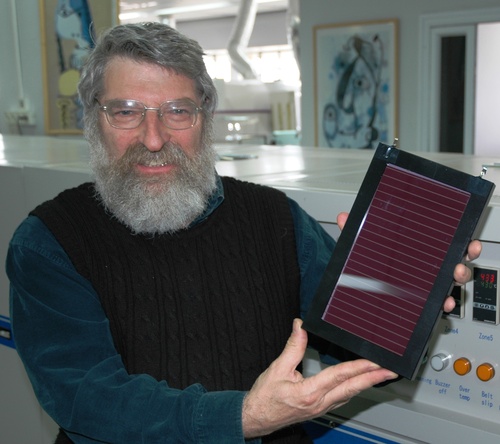
The Jerusalem-based solar company3GSolar (formerly known as OrionSolar) is preparing go public in Canada. This would make 3GSolar the first Israeli company to ever go public in Canada.
Founded by Dr. Jonathan Goldstein, a former Luz scientist, 3GSolar technology is based on a wine-colored dye that serves as a low-cost alternative to silicon.
Cost is only one advantage to replacing silicon; another is that there may be limited quantities of silicon left, and the high-energy process of working with the substance is not necessarily “green.” Goldstein has suggested that his technology could be ideal for providing electricity to places that currently have none, such as Third World countries.
Tomatoes are still, mercifully, quite readily available. Though we hate to think about it, this won’t always be the case. In just a few short weeks, tomatoes—at least the good, locally grown varieties—will be gone on winter hiatus. It always seems to come too soon, and it always somehow seems to take us by surprise. In order to combat those first painful weeks of tomato-less-ness, we thought we’d give you a recipe for extending the period of tomato goodness.
Basically, you slow-roast tomatoes with some oil and garlic and herbs, until they get fragrant and wrinkly and almost candied. It’s a great treatment for end-of-season tomatoes: the roasting sweetens and intensifies flavour which might otherwise seem a bit faded. Kept in the fridge these tomatoes will last a few weeks; put them in the freezer and you can enjoy them for three or four months.
Come a blustery day in February, you’ll be very glad to have planned so far ahead.
In American colleges, being part of “Greek” culture means that you’re part of a fraternity or sorority (and, by extension, that you usually engage in lots of drinking and debauchery). In Israel, this has been lost in translation. Like, really lost.
As of Friday, November 28 being part of “Greek” culture in Israel will mean participating in a Green Geek Unconference. There may be debauchery, but it’s sure to be environmentally friendly.
The unconference will be held at the Bank Hapoalim Training Center at the Shefayim Hotel in central Israel. It is being sponsored by “Greek” – a grass roots cleantech for the people who know what is needed and the people who know how it’s done. Greeks aims are to expose and inspire creative minds to thinking about environmental solutions, serve as a meeting place for people of various disciplines who share the same philosophy, allow for new ideas to evolve, enable people to mingle and network, and, of course, to have fun.
The unconference will have lots of different interactions going on:
For years I have been using Dr. Bronner’s Magic Soap. I like the tingly peppermint smell, how clean it makes my skin feel, and the fact that the ingredient list is short and organic. Last weekend, at the annual Washington DC Green Festival, I learned that not only is Dr. B’s good for my body and good for the earth, but it’s good for the Middle East, too!
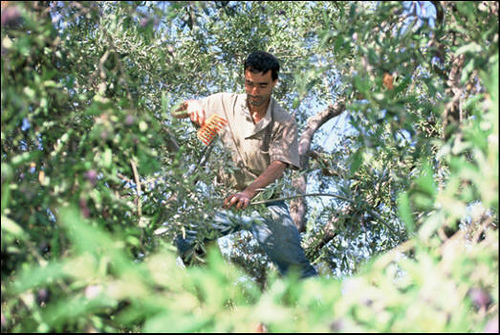
As it turns out, since 2007 Dr. Bronner’s has been sourcing 100% of its organic olive oil needs from producers in Israel and the West Bank!
The majority (90%) of the oil comes from Palestinians in the West Bank. Dr. B’s works with Canaan Fair Trade, a trading firm founded by Palestinians who “support peaceful co-existence with Israel and see profitable olive farming as one means of improving Palestinians’ economic situation.”
Canaan purchases oil from 1,700 small farmers who are organized in the Palestine Fair Trade Association. Since Palestinian olive oil competes in the global market with subsidized oil from EU countries, oil production was not so economically lucrative in the past. As members of the PFTA, however, small farmers who produce certified Fair Trade and Organic olive oil receive a guaranteed minimum price for the products as well as a Fair Trade premium of 25%.
Furthermore, they are able to protect the earth because the organic olive oil they produce is free of polluting pesticides and fertilizers.
On top of everything else, Dr. B’s has a certain message of peace. The company sources the remaining 10% of their organic olive oil from Sindyanna, a cooperative of Israeli-Arab women, and the Strauss Farm, owned by an Israeli family who pioneered organic olive farming in Israel.
By mixing the olive oil of Israeli and Palestinian farmers in their soaps, Dr. B’s aims to create a powerful symbol for peaceful coexistence. Says Gero Leson, Director of Special Operations: “We want to create cooperation among the crop growers on both sides, and this is another way to help people who are at the bottom of the social and economic ladder. Mixing the oil with soap is only a symbolic act that is important to us and our customers, so that they can know that by mixing the oil of Israeli and Palestinian suppliers, we are supporting both of them.”
Castille sopa by Dr. Bronner is not very soapy so to get more lather, use soft water
In my book, Dr. Bronner’s Magic Soaps definitely gets an A+ for sustainable development and corporate social responsibility!
For more information about Dr. Bronner’s Magic Soaps’ work in Israel/Palestine, visit their website
Israel Environmental Protection Minister Gideon Ezra and his Korean counterpart Environment Minister Lee Maanee signed a memorandum of understanding on bilateral environmental cooperation on November 12, 2008.
Under the agreement, the two countries will enhance cooperation on air pollution, climate change, biological diversity and sewage disposal and will promote exchanges between environmental experts.
Among the subjects discussed by the two ministries during Minister Lee Maanee’s visit to Israel were renewable energies and efficient use of water resources. The ministers called on professionals in their respective ministries to review possibilities for joint projects and continue coordination in international environmental forums.
No. 3 on Mayor-elect Nir Barkat’s winning list, Naomi Tsur is going to be spearheading any changes the city makes to beautify the city in the near future. Formal head of SPNI’s Jerusalem office and founder of the Sustainable Jerusalem, a coalition of 60 environmental groups is now going to tackle those same issues but this time from the inside.
Tzur wants to get the community caring and involved: “What is really lacking is public participation in planning processes. We need a process to get wisdom from neighborhood residents, so we can solve problems, but in a way that makes sense [for local residents]. There hasn’t been enough done in the last two decades.”
Use the winter cold to your advantage!
We all know by now that thermal mass in the fridge is a good idea… so we have those plastic bottles filled with water and taking up space not occupied by food, right?! Well, when temps dip below freezing, put a couple outside. When they freeze, swap them out for unfrozen ones in the fridge. it’s a manual heat pump!
Thanks Phillip for the tip! Looking to green your life? Find out more! Have a green-living tip to SHARE?
It’s no surprise that real estate development and preservation of the environment usually don’t go hand in hand. We’ve already featured some stories here on Green Prophet about how this conflict expresses itself in Israel, with posts about the need for intelligent urban design, how the Knesset Environment Committee recently started to fight to protect urban trees during urban development, and about a new eco-conscious town (Nurit) being built in Gilboa. But what’s happening now on Nahal Betzet Beach is quite different.
The Nahal Betzet Beach, located in the western Galilee south of Rosh Hanikra, is home to diverse plant life and is an important egg-laying site for sea turtles. It has been, until now, a beautiful and natural public beach – undisturbed by human construction. That is, until the Israel Lands Administration recently opened up the beach for private development.
How do you really know that the beef you bought is organic, kosher, halal, or raised with loving kindness? The Israeli company Bactochem has the solution.
The idea started in Israel, where animal theft has become a major concern. Hundreds of beef cows worth $2,000 a head are being stolen a year, and in most cases smuggled across the green line to the Palestinian Authority. Slaughtered immediately, with no visible trace in sight, Bactochem was asked to find a way to track and trace these animals using the “CSI” style methods the company specializes in.
Bactochem, which operates in Israel in the area of environmental quality and food health and safety (and has an interesting dog poop DNA project underway in Tel Aviv to catch scooping offenders), decided to create some innovation of its own. It developed a novel method using cow DNA and software, which can determine and track with a small genetic sample, such as a hair from the back of the animal, where a cow was born, bred and – if it comes to it – slaughtered.
While animal theft is less of a concern in Western countries such as America, the company is now in discussions with a German firm on how to use its testing methods and software solution, to track and trace cows for health and safety issues.
An undisclosed Muslim state in Africa has signed a deal with Israel’s SDE Energy & Desalination for a 100 megawatt power station that will harness the power of waves as electricity.
SDE head Shmuel Ovadia says the $100 million facility is expected to bring in $1 billion worth of revenue over the contract’s 25-year term.
The company claims wave energy can supply 500 times global electricity needs. Ovadia says per square meter, sea waves have four times the power generation capacity of wind power. Further, SDE claims the technology doesn’t pollute and comes at a lower cost than wind turbines.
We’ve been following the recent green politics and parties in Israel (see our Re-evaluating Green Parties, Must They Be Liberal Left Wing?). And tomorrow the brand new environmental political party The Green Movement (HaTnuah Hayeruka) is holding a general meeting of members tomorrow morning, Friday, Nov. 14 at 9 a.m. at the Seminar Kibbutzim in Tel Aviv.
One of the founders of the party, Dr. Alon Tal, sent out the following email:
There will be some rather critical decisions made there and it is important that you come. Otherwise, please log on – and join us! It is simple, security proof and very important that we grow to become a mass movement with thousands of members.
What could be a more thoughtful gift than a gift that’s organic? Giving someone an organic gift shows not only that you care about their personal health and well-being, but that you care about the future of their environment and world. Overall, an organic gift is a gift of love.
Unfortunately, unique organic gifts aren’t always that easy to find. You may be able to find the odd organic risotto rice or bottle of wine in your local health food store, but what about a basket packed with gourmet organic onion jam, homemade organic pomegranate syrup, or organic goat’s milk pecorino cheese with anise seed?
And how about non food items? Where could you find organic aftershave lotion, organic body butter, or a candle that turns into organic massage oil when it melts?






 In American colleges, being part of “Greek” culture means that you’re part of a fraternity or sorority (and, by extension, that you usually engage in lots of drinking and debauchery). In Israel, this has been lost in translation. Like, really lost.





 It’s no surprise that real estate development and preservation of the environment usually don’t go hand in hand. We’ve already featured some stories here on Green Prophet about how this conflict expresses itself in Israel, with posts about the need for




 What could be a more thoughtful gift than a gift that’s