Home Blog Page 717

Squeezing Energy From a Plant's Metabolism at Hebrew University

plants hebrew university biofuel photo bubblesUse of plants of various kinds to produce biofuels is a topic of ever-increasing importance in the world as a means to combat an energy crisis and to deal with increasing concern over atmospheric pollution from the use of fossil fuels. Scientists the world over are involved in advanced research aimed at discovering and developing the most practical and cost-efficient plants for cultivation and conversion into fuels.

To examine the various scientific and economic aspects of harnessing bioenergy, the Otto Warburg Minerva Center for Agricultural Biotechnology of the Hebrew University of Jerusalem, in cooperation with Yissum – the Technology Transfer Company of the Hebrew University, the Israel Ministry of Agricultural and Rural Development, CBD Technologies, Evogene Ltd. and the Israel Academy of Sciences and Humanities, will be sponsoring a symposium entitled “Bioenergy: Harnessing Plant Metabolism” from Tuesday and Wednesday, Feb. 24-25, on the campus of the Hebrew University’s Robert H. Smith Faculty of Agriculture, Food and Environment in Rehovot.

Prof. Shmuel Wolf, director the Otto Warburg Center, headed the organizing committee for the symposium.

Expert from Germany, the US, and Ireland will be participating in the symposium, in addition to those from Israel. The symposium, marking the 25th anniversary of the Otto Warburg Minerva Center, will be held in the Ariowitsch Auditorium at the Agriculture Faculty and will be conducted in English.

Eco Rabbi: Parshat Mishpatim – Fair Trade of the Ancient World

2

coffee-plantation
Each week Orthodox Jews read one segment of the Five Books of Moses so that they can complete the entire Five Books within the course of a year. In last week’s Eco-Rabbi post we discussed trees and the receiving of the Bible (Torah) on Mount Sinai, this week I’ll discuss free trade and the commandments.

In this week’s parsha there are A LOT of laws. There are laws about slaves, laws about borrowing and guarding and helping people on the street. This list is somewhat of an ethical manifesto, and it is pretty impressive considering what the world looked like when God gave these laws, according to Jewish tradition, some 3400 years ago.

While the past few decades were about globalization, and finding the cheapest ways to manufacture for the greatest profits, the Fair Trade movement IS building momentum. In a nutshell, Fair Trade is about making sure that people are getting treated properly. How are their working conditions? Are children being forced to work? Are they workers getting paid legitimate wages?

Environmental Issues and the Israeli Election Results

0

Israel beach tel aviv polluted sea sign photo
(“Polluted Sea – Bathing is Forbidden.”)

The outcome of Israel’s parliamentary elections weren’t a great surprise for many people living in this country of 7+ million people. But now that the coalition government wrangling among the larger parties has begun, the big question among environments is whether any of important “green” issues will be dealt with by either a Likud  or Kadima party based coalition government. Judging by what is currently happening, with issues like security and the economy getting most of the attention during the campaigning, the question now is whether the many ecological and environmental problems Israel is immersed in will receive any serious attention at all.

Israel has several extremely serious environmental problems that need attending to, including heavy air pollution in the big cities (especially Haifa and Tel Aviv), a water pollution problem that is bordering on the brink of being irreversible, and a ticking hazardous waste ‘time bomb’ at the large Ramat Hovav hazardous waste disposal center in the Negev. Although some effort has previously been made to deal with environmental issues, including the creation of a Ministry for the Environment several years ago, overall governmental attention to these problems have been ambivalent at best and substandard at worst.

When your pets help you recycle

8

RichieMost of us (I hope) recycle all the plastic bottles we use. But do you also recycle the many other small plastic containers you use daily, or do you just throw them away?

Cheese and other dairy containers, small salads, yogurts and the occasional hummus container used to make up a large part of my garbage… Turns out, they can all be recycled just as well as the PET bottles I’ve been collecting for recycling.

The reason the recycling companies don’t advertise this fact is a sound one. Throwing these containers in the recycling bin (at home or on the street) and having them stay there for days, or sometimes weeks, can be a serious sanitary hazard and health risk. On the other hand, asking the public to rinse all containers before throwing them is a huge waste of water.

If you have a healthy active dog, cat or another pet that is willing to help, you can increase the amount of plastic you recycle instantly.

Ingredients:

  • 1 or more pets
  • 1 or more plastic containers

Instructions:

  • Place plastic container in front of pet.
  • Watch as your pet helps the recycling effort by making sure that plastic container is so clean, it shines.
  • Optional: Grab a camera and take some photos/video. You won’t be disappointed.
  • Collect plastic containers and place in recycle bin.

As always, use your own discretion when deciding what your pet can and should eat. Chocolate puddings are of course out of the question, but so are foods that are too sugary, spicy or contain artificial sweeteners. Many foods are usually fine, especially considering the relatively minuscule portion size your pet gets from just cleaning the container.

If your pet is overweight or obese, this tip is not for you! Obese and overweight pets constitute an estimated 48% of all pets in the USA, I encourage you to learn more about the risks, which include Osteoarthritis, Type 2 Diabetes, heart disease, hypertension and even cancer. Even if your pet is not overweight, you should spend at least a couple of minutes online learning about the potential risks of an overweight pet.

I am still in negotiations with my dog regarding his offer to help make our compost heap smaller… he’s such a helpful character.

Final note: What materials are actually recycled changes from country to country and from town to town. Do a web search for your local recycling rules and see what is actually accepted. Filling the recycling bin with stuff that isn’t actually recycled just lowers the efficiency of the recycling center.

Palmachim: Battle of the Beach Revisited

1

palamahim beach battle israel photo

I have to admit I thought they were fighting a losing battle. Despite the justice of their cause, it seemed that the odds were stacked well against the rightfully outraged Israelis who set up camp at the unspoiled Palmachim Beach just over a year ago.

Equidistant from the coastal cities of Tel Aviv and Ashdod lies Palmachim, home to a kibbutz, commercial beach, national park and an army base.

Somewhere between them all lies a small bay known as the “fisherman’s beach,” a beautiful spot on the Mediterranean coastline which has become a magnet for both wildlife and city dwellers coming for a healthy dose a nature.

That was until the bulldozers moved in.

New Energy For America Might Be In Israel: Top US Energy Leaders In Israel Now

13

obama-green change poster photo
The Obama administration has committed to supporting renewable energy sources and to mitigate domestic and international climate initiatives.

At the dawn of Obama’s new presidency, influential energy leaders from America visit Israel to expand their worldviews to learn about the country’s unique technological opportunities.

Among the American guests in Israel now are top energy officials from the U.S. Government, the business world and the not-for-profit sector.

While in Israel, the guests will meet similar leaders to share information, such as how to take action towards a post-fossil fuel economy.

Hosted by Project Interchange, an Institute of the American Jewish Committee, the hand-picked group of 11 American specialists, include Adam Zellner, the Former Director of Policy of New Jersey; Gregory Fox, the Director of Business Development at Constellation Energy; Geoffrey Brown, the Legislative Director of Pew Charitable Trusts; Seth Portner, the energy representative from the office of the Governor of Colorado, as well as Tamra Spielvogel, the national Energy Director from the National Conference of State Legislators, and several more.

A Look-See At High-Priority Field

“Timed to coincide with the Eilat Energy Conference, this special Project Interchange seminar gives our guests an opportunity to interface with those attending the conference on possibilities for future collaboration,” says Ida Singelenberg, the U.S. program director for Project Interchange. “This group is coming for a look-see at Israel at the dawn of a new U.S. administration that has established energy and sustainability as a high priority. Some are already attracted to the clean technology opportunities in Israel; this seminar might take their involvement to another level.”

Lead-free, green toys

2

wind energy, solar energy, cleantech, Iran, oil, gas, sanctions, alternative energy

It seems like every day there is yet another toy recall in the news, the odd one was scary, but at this rate it’s downright terrifying.

Do not let yourself be discouraged: there are plenty of safer options around and a big freebie too –– our imagination. Unfortunately, toy makers are so aggresive in their marketing, not just targeting the parents but the children too, that we often are left feeling that if we do not buy these toys for our children that we are somehow depriving them of the fun of growing up.

Well folks, it just ain’t true! Some of the best loved toys and games are often the homemade variety and whatever you are made to believe your children really wouldn’t miss half the toys they have these days.

Saudi Oil Minister Calls Renewable Energy a "Nightmare"

6

oil drums saudi arabia photo

This week, executives of major oil companies met at the Cambridge Energy Research Associates (CERA) annual conference in Houston, Texas and (finally!) expressed a willingness to help combat global climate change.  This is a major step, because these companies denied the existence of global warming and deliberately tried to obstruct political progress on the issue for decades.

Unfortunately, not everyone was equally supportive of transitioning to a renewable energy economy.  In a speech to conference participants, Saudi Arabia’s Oil Minister Ali Naimi warned that promoting the rapid growth of renewable energy without continuing to invest in oil would create a “nightmare scenario.”

“We must be mindful that efforts to rapidly promote alternatives could have a ‘chilling effect’ on investment in the oil sector,” he said. “A nightmare scenario would be created if alternative energy supplies fail to meet overly optimistic expectations, while traditional energy suppliers scale back investment.”

Although Mr. Naimi, an influential voice in the Organization of Petroleum Exporting Countries (OPEC), acknowledged that the world is moving away from fossil fuels, he indicated renewable energy technologies may be unable to grow to the same scale as crude oil.

Israeli Company Spotless Creates Sustainable Advertising For Roads

1

advertising on city streets photoUsually the advertising industry is not considered to be a very ecological industry. Think about  the amount of useless junk mail you get to your mailbox each day wasting tons of paper which most of it won’t be recycled. Think of all the huge advertising billboard posters on highways. Now think Eco-design. And specifically urban design.

There are new and innovative ways to promote brands and ideas in more sustainable ways that don’t generate waste or pollution. One way is to spread your ads on the dirty pavement by “cleaning it.” That’s right, water and pressure clean the dirt and leave a promotional ad.

10 Twitter Tips for Cleantech Companies

green-finger-twitterOver the past few months companies are joining Twitter or consulting advisors about joining Twitter in droves. If you haven’t heard of Twitter, it is a micro-blogging tool that lets you share publicly what you are doing. It’s similar to the status updates on Facebook and instant messaging, but unlike either, is generally available to the world to see, whether or not they have a Twitter account or you are following them.

A great tool for enabling more company transparency, companies are helping boost their bottom lines by using it is as a public forum to interact with customers, share exciting news about the company and create relationships for business development. Anyone from journalists and bloggers to CEOs of major companies are using it for business purposes. The classic examples of major companies using Twitter successfully are Dell, JetBlue and Zappos.

What about cleantech companies?

Here are ten tips that I along with fellow Twestival Jerusalem co-organizers and Social Media consultants, Charlie Kalech (@CharlieKalech) and Debra Askanase (@askdebra) suggest for companies to consider when planning their Twitter strategy and for ensuring maximizing its use.

Masdar "Zero Carbon" Super City Breaks Ground This Month in Abu Dhabi

6

masdar city zero carbon city abu dhabi picture

Taking God-Knows-How-Much of the world’s non-renewable energy sources to build, developers of the world’s first zero carbon city, Masdar City, proclaim that the historic groundbreaking in Abu Dhabi will take place this month. (In advance, Daniel’s posted on Abu Dhabi’s Podcar People Mover).

While I think the concept is definitely thought provoking — as the rest of the world, well the western world at least, reels on its heels from the financial crisis — execs representing Masdar City are full steam ahead in building the $22 billion project, which translates to “the source” in Arabic.

There are many people with lots of opinions, but I think it’s downright anti-green to spend so much money, so much capital and resources, on building an “eco” project. I think the world’s first carbon neutral cities have already been built, but we don’t see them anymore because they have gracefully crumbled around the pyramids and into the deserts, and have left behind little footprints and historic monuments. But who am I to stop progress. At the very least, I sigh, Masdar will be a giant model city, a pilot city for the rest of us hacks to learn from.

Click over the fold for the press release. (Thanks MIDEASTENVIRONET):

Give Gifts That Are Local, Handmade, and Most Original

1

ceramic hand crafts photoWhen shopping for gifts for people that we care about, we usually want the gifts to convey a variety of things – affection, devotion, a desire to make the other person happy, and also a demonstration that we care about the other person’s wellbeing.  Giving a gift that is more environmentally friendly is one way to demonstrate that you care about your loved one’s wellbeing because it shows devotion to their present and to their future.

Local and handmade gifts are one type of environmentally friendly gift because they require fewer carbon emissions than a gift that is machine-made and imported from far away.  If it’s local, that means it didn’t have to get on a plane to get to you.  And if it’s handmade, no heavy machinery had to be used.

Last week we featured AmuletGifts.com, an online story full of  local, handmade jewelry.  And this week, for those who want to give other types of local, handmade gifts – we’re introducing you to Most Original.com.  (The dot com element of these stores also contributes to their “greenness” since it enables them to be open 24 hours a day without operating a store 24 hours a day.)

BrightSource Cuts World's Largest Solar Energy Deal With SCE in California

brightsource2_620px1
(Thousands of small mirrors called heliostats focus the sun’s ray onto a tower. Thermal energy focused onto the tower heats up water that generates electricity through turbines.)

An Israeli company and a Californian one are making solar power history: Southern California Edison (SCE) and BrightSource Energy from Israel have signed the world’s largest solar energy deal.

Now awaiting approval from the California Public Utilities Commission, when the contracts are fulfilled — this could happen by as early as 2013 — the Israeli-CA sun project will power almost 1 million California homes.

Israel Kroizer, the chief operating officer, and president of BrightSource in Israel tells ISRAEL21c that when completed, it will be the world’s largest solar energy project. Some 1,300 megawatts of energy will be created, with the first plant to be built in Ivanpah, California, expected to generate 286,000 megawatt-hours per year. The project will also create more jobs in the region.

“It’s the biggest solar energy project ever signed,” Kroizer emphasizes, and when complete it will be the largest solar energy plant in the world, he adds.

Follow the Jerusalem Twestival Event Live!

twestivalI am currently writing from the Jerusalem Twestival You’ll notice in the right sidebar there is a new widget. From there, I’ll be tweeting the people I meet so that those who aren’t here in Jerusalem can enjoy the experience as well.

You can also follow us straight from our twitter page as well. Follow who I follow, check out the sites of the others who congregated for the cause. Help us Twitter for charity: water , meet neat clean technology companies from Israel, and let’s see if our fingers, through Twitter, can help save the world!

Jack

Analyzing the Middle East Water Crisis: In Israel, Jordan and Beyond

Middle East water crisis Israel Jordan

“Water, water everywhere/Nor any drop to drink…”

Those immortal words in the poem “Rime of the Ancient Mariner,” by 18th century English romantic poet Samuel Taylor Coleridge only help the emphasize the reality of the water crises that countries in the Middle East and other arid regions are now facing. As annual rainfall amounts become scarcer and scarcer, due to severe climate changes attributed to global warming, the availability of fresh drinking water in the entire region is likely to decrease even more in the next few years.

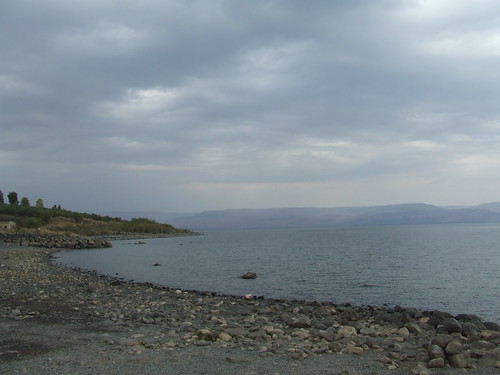
Recently governmental authorities in the Hashemite Kingdom of Jordan expressed grave concern that the country’s known water reserves would not be adequate enough to supply the populations’ needs. In neighboring Israel, which agreed to supply the Kingdom with part of the Jordan River’s annual flow in the peace agreement between countries, the level of Lake Kinneret and its coastal and mountain aquifers have now reached what is being called the “black level” in which irreparable damage, including pollution and salt water contamination will result if they are not replenished by more adequate rainfall.

Without tapping into ground aquifers, Jordan’s main sources for fresh water have been annual rainfall and water from the Jodan and Yarmuk rivers, both of which have been reduced significantly in recent years.

Both Jordan and Israel, as well as many other countries in the region, are considering desalination of seawater as a viable solution to a water problem that as gone from chronic to acute. Jordan’s water problem is much more serious that Israel’s, and even as far back as the late 1990’s the daily water allotment per family was only 22 gallons per day, as compared to 65 gallons per household in Saudi Arabia and 78 gallons per household in Israel.

And that was when the regional water problem was less acute than it is now!