Corals Get "Sexy" On The Sea Floor to Fight Global Warming

(A photograph of the female C. echinata coral, expelling its eggs into the water around it.)
Research from TAU unlocks the secret of coral survival during global warming
Trees do it. Bees do it. Even environmentally stressed fish do it. But Prof. Yossi Loya from Tel Aviv University’s Department of Zoology is the first in the world to discover that Japanese sea corals engage in “sex switching” too.
His research may provide the key to the survival of fragile sea corals — essential to all life in the ocean — currently threatened by global warming.
In times of stress like extreme hot spells, the female mushroom coral (known as a fungiid coral) switches its sex so that most of the population becomes male. The advantage of doing so, says the world-renowned coral reef researcher, is that male corals can more readily cope with stress when resources are limited. Apparently, when times get tough, nature sends in the boys.
Canarius' Tiny "Lab-on-a-Chip" and Glow Bacteria Can Detect Pollutants in Water
For centuries, animals have been our first line of defense against toxins. A canary in a coalmine served as a living monitor for poisonous gases. Scientists used fish to test for contaminants in our water. Even with modern advances, though, it can take days to detect a fatal chemical or organism.
Until now. Working in the miniaturized world of nanotechnology, Tel Aviv University researchers have made an enormous — and humane — leap forward in the detection of pollutants. This is good news for environmental health.
A team led by Prof. Yosi Shacham-Diamand, vice-dean of TAU’s Faculty of Engineering, has developed a nano-sized laboratory, complete with a microscopic workbench, to measure water quality in real time. Their “lab on a chip” is a breakthrough in the effort to keep water safe from pollution and bioterrorist threats, pairing biology with the cutting-edge capabilities of nanotechnology. The research is being commercialized into a company called Canarius.
“We’ve developed a platform — essentially a micro-sized, quarter-inch square ‘lab’ — employing genetically engineered bacteria that light up when presented with a stressor in water,” says Prof. Shacham-Diamand. Equipment on the little chip can work to help detect very tiny light levels produced by the bacteria.
Eco Rabbi: Parshat Terumah – Give of Yourself to Make Room for Our Home

Each week Orthodox Jews read one segment of the Five Books of Moses so that they can complete the entire Five Books within the course of a year. In last week’s Eco-Rabbi post I discussed free trade and the commandments, this week I write about how to create room for God to live within us.
God asks Moses to request from the Jewish People that each person give a donation. Each according to the generosity of his heart. From those donations God commands that they make a sanctified place, Mikdash, in their camp. God promises that if they do so, He will live inside them.
God, who created the heavens and the Earth, the One who took His people out of Egypt cannot just make a home in the midst of the camp Himself?
Why did God, the one who arranged for a cloud of protection for His people in the desert for the day and a pillar of fire for night, the one who made food rain down on the People of Israel every morning, need for the people to donate their recently acquired riches to Him so that they could make Him a home in their camp?
Greening Your Breakfast: A Recipe for Winter Muffins
This is about the time of year where we are all just about fed up. The weather is by turns glum, stormy, angry, and generally ill-tempered, there’s little of the new season‘s growth to enjoy yet, and reserves of patience are at their annual low.
A freshly baked batch of muffins may not dispel all these woes, but they can certainly take the edge off.
These, we are very happy to say, are a one-bowl, mixer-free, dead easy way to brighten up your weekday afternoons or weekend mornings. The batter comes together in ten minutes and the muffins bake up in twenty more. They are loaded with healthy ingredients like applesauce and whole wheat flour, and have warm brown-sugar-and-spice undertones for a bit of comfort on a cold day. The muffins call for mixing in, well, whatever strikes your fancy or you happen to have around: for this batch we used a handful of walnuts and chopped up the one lone pear aging un-gracefully on the counter. The point is to play a bit, and use whatever’s in sight, which is convenient when you didn’t feel like going out anyway.
Abandoned Building Becomes Urban Bat Habitat in Israel
Sometimes the urban environment is an ideal place for wild animals. Here’s an example: In 2006, Petach Tikva’s two hospitals merged to form the Rabin Medical Center. Since then, several new buildings have appeared at the Beilinson campus while the Hasharon campus, a few kilometers away, lies stagnating.
The health ministry originally planned to shut down Hasharon completely, but workers and residents protested and prevented the closure. Large departments in Hasharon, such as maternity, closed or moved to Beilinson but others, including orthopedics and internal medicine, exist in both places. Hasharon is viewed as a friendly, community-based hospital while Beilinson has become a large medical center with numerous specialties.
Leviathan Energy's Wind Lotus in Action At Eilat Energy Conference in Israel
[youtube]http://www.youtube.com/watch?v=CYaMRCpMJmc[/youtube]
As anyone can see from this video taken at the Eilat Energy conference in Israel last week, Leviathan Energy‘s Wind Lotus kicked in at extremely low winds of 1.6 meter/sec and at the high winds rotates competely quietly.
In Hebrew the word leviathan roughly translates to a “whale” – and describes the great sea creature that carried the prophet Jonas in its gut for three days before coughing him up on dry land near Nineveh. In English, a leviathan means a great force.
Impressions of the Eilat Energy Conference in Israel

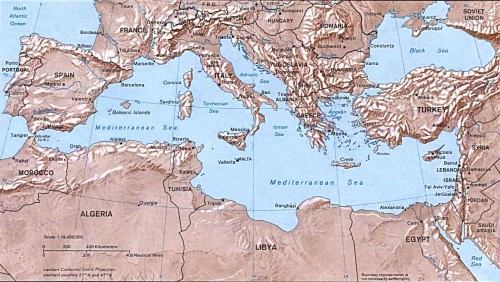
Two things were clear from attending the International Renewable Energy Conference that took place in Eilat this week. The first is that Israel is now a world leader in clean energy.
The second is that there is a small but growing group of players in the field who see this not just as a huge business opportunity, (though it certainly is that), but also as an ethical, or spiritual mission.
Israeli leadership in the field was manifested by a list of “firsts,” “biggest evers,” and breakthrough technologies that were heralded immediately before and during the conference. Brightsource announced that it had signed a contract with Southern California Edison to build the largest ever solar thermal generating field, which will produce 1.3 gigawatts in California.
The Arava Power Company went public on an agreement with the Israel Electricity Company that will enable it to build the world’s largest photovoltaic solar field on kibbutz-owned land in the Arava desert. The site will produce 80 MW of power, double the output of the current largest PV field in Germany.
High Radioactive Content Found in Jordanian Groundwater

The Middle East is pretty thirsty right now. Headlines from all over the region chronicle the increasingly serious drought conditions affecting agriculture, industry, and health.
Unfortunately, new research from the peer-reviewed journal Environmental Science & Technology adds reason for even more concern. In their study, “High Naturally Occurring Radioactivity in Fossil Groundwater from the Middle East,” Duke University’s Avner Vengosh and colleagues from Israel, Jordan, and the Palestinian Territories found that fossil groundwater in southern Jordan contains levels of radioactive radium isotopes up to 2000% higher than international drinking water standards!
Can the Cedars of Lebanon Survive Climate Change?

“So Hiram, King of Tyre, gave King Solomon timber of cedar and timber of cypress according to all his desire.”-Book of Kings vs. 24
A recent article by Ahmed Khatib in the Lebanese Daily Star emphasized the dangers of climate change and global warming to Lebanon‘s remaining cedar groves, which have been a historic national symbol in the country since its founding. According to the article, about 2,000 hectares of cedar trees remain there, with the largest grove located in the Al-Chouf Cedar Nature Reserve, located in the Chouf Mountain area southeast of Beirut.
Besides being the country’s national symbol and prominently situated on Lebanon’s national flag, the cedar trees of the country formerly known as the ancient Kingdom of Tyre, have been famous for their strong and durable wood which was prized by the Ancients for the construction of boats, stately buildings, and (in the case of the ancient Egyptians) for the preservation of the dead. Perhaps the most renowned use of these majestic trees was in the construction of the Israelite Temple in Jerusalem over 2,700 years ago.
The construction of the Temple, said to have been one of the grandest edifices of ancient times, included inner chambers made entirely of cedar and other woods that King Solomon received from King Hiram of Tyre who had the cedar logs “made into rafts to go by sea unto the place that thou shall appoint me, and will cause them to be broken up there.” What must have been a grand feat of engineering and construction for those times, involved bringing these large tree trunks overland to Jerusalem, cutting them into beams, and then constructing them “with neither hammer nor axe nor tool of iron heard in the House.”
Groundbreaking Wind Energy Project to Power Palestinian Hospital

As the resting place of the Abraham and (unfortunately) a hot spot for conflict, the West Bank city of Hebron (or Hevron or al-Khalil, depending on who you ask!) is pretty notorious.
Soon, this city will also become an important part of the Middle East’s ongoing clean energy revolution!
Last week the European Commission signed an agreement with the Patient’s Friend Society Al Ahli Hospital in Hebron to finance a wind-energy production system for over 40 percent of the hospital’s energy needs.
“This will be the first institution in Palestine to generate its electricity from wind power, and it is hoped that this project can serve as a model for others,” organizers said in a statement sent to Ma’an News Agency. “This landmark project will constitute a model for green energy systems in the region.”
Permaculture and Green Communal Living Through Eco-Israel

Last year’s Eco-Israel group on a trip to the North. Photo courtesy Naomi Katz.
Although winter has come to Israel belatedly in the season’s heaviest rainfalls this weekend, the ecological farm Hava Ve’Adam outside of Modi’in is now accepting applications for the fall term of its Eco-Israel program.
For the uninitiated, Eco-Israel is a chance to get deeply involved in producing “beyond organic” food. Farm staff Naomi Katz, Yigal Deutscher and Chaim Feldman have crafted a space where ducks peck at weeds, then provide fertilizer for the plants through their droppings. Woven into the small crop space in central Israel are several trees of varying heights; these help shade more delicate plants from the scorching Middle Eastern sun.
Using Black Gold to Build a Greener Future: A Visit to the UAE

Last month, I had the unexpected pleasure of visiting Abu Dhabi and Dubai, two of the seven tiny kingdoms that together make up the United Arab Emirates. I was there to cover the World Future Energy Summit, an international conference on renewable energy technologies.
This was my first visit to the Emirates, which have a reputation for being a nation of oil-drenched spendthrifts, building surreal fantasy projects unlike anything seen in the West and having a larger ecological footprint per capita than even the US and China. However, I knew that Abu Dhabi was also building Masdar City, an attempt to design a “carbon-neutral” city, while building a new sector of the economy from scratch based on renewable energies.
Building new industries from scratch is nothing new in the UAE – thirty or so years ago there was absolutely nothing there, and now the place is a regional economic powerhouse. But an oil state using its wealth to plan ahead for the post-petroleum world – there was a novel idea.
Below are some impressions from my visit to a land described by one colleague as “the greenest gas guzzler.”
Guy Lougashi’s Dumpster Diving Designs Inspired By Buttons, Baskets and Brakes
Israelis are no strangers to dumpster diving. Here’s a story on one of the country’s latest, who’s turning his finds into a design business:
When he’s not traveling around Holland or Germany, you’re likely to find Guy Lougashi creating art and crafts from other people’s junk. Or jumping inside a dumpster looking for new raw materials.
“There is nothing like creating in Israel. I know the garbage. I know the people,” the 32-year-old says.
While most of us see things we don’t need anymore as garbage, pure and simple, Lougashi looks at thrown-away objects as something valuable. “I don’t see garbage as garbage,” he tells Green Prophet.
“I see it as gold.”
The self-trained craftsman who’s been working in the area for eight years has recently created a sensation — weaving together baskets with mentally challenged people.
Going beyond pure environmentalism, Lougashi designed and crafted beautiful basketware from recycled paper. They were first showcased at a night flea market — Pish Pish Lila iLevan n Jaffa last year, where a local furniture design house bought a number of them, selling the baskets for hundreds of dollars a piece.
Weaving in life’s experiences
It got Lougashi thinking. “I know about people with disabilities because my brother is handicapped. And he’s working in a factory for the disabled,” says Lougashi, who with a friend, approached the craft-rehab organization Shekulo Tov (so that we will all be good) to see what could be done. He ended up spending five months training mentally disabled people in an Arab-Jewish factory in Baqa Al Garabia, Israel.

(Recycled paper baskets).
There, the people mastered Lougashi’s techniques of weaving baskets from paper — a process which requires special know-how, such as how to glue the paper, to achieve a desired aesthetic.
Normally baskets are woven with straw. To make sure the baskets made from recycled paper last, Lougashi dips paper strips in glue — like papier-mache — and lacquers them with a final coat of paint. Lougashi’s basket project, as a result, adds another dimension to his story. For the first time in many years, these people in Baqa Al Garabia are now able to make a decent living.
A recycled paper movement in Israel
Lougashi is not the first one to design goods from recycled paper in Israel. Green Lullaby is producing EcoCradles out of cardboard paper; Amit Brilliant takes used paper and creates trendy wallets, while Erez Mulai rolls up wasted paper and use it to create wastepaper baskets.
Putting the baskets behind him, Lougashi is now working with buttons and brakes, creating new lights out of the unlikely materials.

(Brake lights.)
But like other Israelis who work with recycled materials, Lougashi became a “green” designer as a matter of course, not through some sort of idealism. “I am green because I spent so many years collecting and repairing [garbage],” he tells ISRAEL21c.

(Lights from buttons.)
“It’s something you find in the materials — it pops into your eyes and you see something else,” he says. He is keen that his work with lighting and baskets and such, be seen as craftwork, and not art. “I prefer doing my art as installations and sculptures. I just get carried away once in a while to make beautiful things, because I have an attraction to these materials,” he says.
Update in 20025- Guy is in Berlin. The place where the last global nomads hide.
More on recycled design:
Dumpster Diving, Tel Aviv Style
Amit Brilliant’s Recycled Wallets
Erez Mullai’s Recycled Waste Bins