Home Blog Page 664

Israel Can Do More Than Cleantech to Reduce Regional Carbon Footprint

18

polluted water beach israelSign for polluted water at Israel’s beachfront: obvious in any language

Although much hype and attention is given to Israel’s contribution in the areas of clean technology, particularly solar energy and other forms of  renewable energy more attention needs to be made on the country’s growing “contribution” to global warming.

Despite this small country’s efforts made in the fields of  clean forms of energy, with 7.5 million people, it produces more than its share of air and water pollution, creating a growing carbon footprint problem.

In his blog Energy Inc David Levy explored Israel’s carbon footprint and what he thinks can be done to lessen it.

Sunday Energy Floats New Solar Idea to Boost Power Output on Water

kibbutz zeelim
Kibbutz Zeelim from Google Earth. “Solarized” water reservoir located top left hand corner.

Sunday Energy, a PV solar integrator from Israel, who we’ve covered here (Every Sunny Day Is Like Sunday), is about to install a 5 MW PV facility on a water reservoir in an Israeli kibbutz, the business newspaper Globes report. The company says it will be the largest solar project of its kind in the world, to be built at Kibbutz Zeelim in the Negev Desert, in the south of Israel.

Zeelim is to share financing, about NIS 100 million (about $30 million USD), and in exchange it will own half of the facility. Approvals from the state are in so the development is expected to happen fast.

Sunday Energy is developing the technology so that a PV array will float on the water. The water, likewise is expected to cool the panels and boost electricity generation. A plus for the reservoir is that the panels will reduce evaporation, which causes the loss of one cm of water per day in the scorching hot summer months.

::Globes

Read more on Sunday Energy:
Every Day is Like Sunday Solar Energy
Sunday And Ormat To Build Largest Solar Roof in Middle East
Sunday and Advat Winery Toast New Solar Project

Lebanese Food Blog "Taste of Beirut" Has Mouth-Watering Ideas

5

lebanese food blog
Taste of Beirut blog features authentic Lebanese cuisine and a great give-away.

I love this blog. I love Lebanese food, and author Joumana, a Lebanese ex-pat living in the States, presents recipe after delicious-looking recipe, Slow Food style.

Just a small example – the Toom garlic paste, a staple flavoring in Lebanese kitchens. Whirl garlic, lemon juice, salt and olive oil in the blender, thickening the paste if you want with a cooked potato or bread. Use it to flavor almost anything. That won me; I’m an unabashed garlic fan.

Then there are at least four recipes for kibbeh, recipes for flatbreads (the one featuring baby artichokes brought water to my mouth), and many more.

The last time Joumana visited Beirut, Lebanese chef and food project genius Kamal Mouzawak gave her several packages of za’atar spice, herb salt, khamouneh, a spice mix based on cumin, and freekah, wheat smoked in the fields while still green.

She is now running a raffle for them, including a recipe booklet. The raffle is on till Jan. 31st, so if you’re interested, leave a comment on her post about Kamal Mouzawak and the amazing work he’s done with small farmers and local ingredients, here.

Good luck!

More recipes to enjoy:

::Taste of Beirut blog

Siemens to Promote “Green” Solutions at World Future Energy Summit

world future energy summitThe World Future Energy Summit is about to take place in Abu Dhabi.

Siemens Corporation has announced that it will launch a number of new and “innovative” initiatives to help fight against climate change and carbon emissions at this year’s World Future Energy Summit. It says it will present “its prove, highest-efficiency industrial solutions” at the summit for a “future sustainable energy supply and smart consumption.”

The summit, which will be held from January 18-21, in Abu Dhabi, has become the flagship place for companies to present new concepts and solutions for energy and green technology for the future.

“Whereas the 20th century was distinguished by growing energy demand, and thus a growing consumption of fossil fuels, today at the beginning of the 21st century we face the question of how we can put our energy system on a sustainable foundation in the face of demographic change, declining fossil fuel resources and climate change,” said Wolfgang Dehen, CEO of the Energy Sector and member of the Managing Board of Siemens AG.

Arad and Actaris Win Massive Water Meter Tender in India

4

water delivery india mumbaiFor those without water pipes and meters in Mumbai, more traditional methods of water delivery are necessary.

Having good water meters is the first step to knowing where your water is going, and where the leaks are. Mumbai, India is taking steps to improving its municipal water use by ordering a massive stock of water meters from the Israeli company Arad Technologies (the same company developing the fly-by drone plane that reads meters), and the French water company Actaris Metering Systems. Based on the new tender, the companies are considering moving some of their production to India.

To start, the recent and immediate tender deal calls for a $32 million order of 300,000 meters, and web-based water meter reader Arad, and Actaris, will split the revenues. The Israeli Export Institute says that a total of 1.2 million meters are called for in Mumbai, totalling $128 million, tenders that both Arad and Actaris are expected to win, due to logistic difficulties in coordinating different systems in one city.

Arad Technologies president Dan Winter told Globes: “Winning this tender is a breakthrough for us, which opens a new market that is full of opportunities. Arad is in the final stages of two other tenders in India, and in view of the heavy demand, we are considering moving some production there.”

::Globes
Image via jonhurd

Haifa University Study Generates a Profile of the Israeli Cyclist

6

sexy israeli cyclist protest tel avivA new study profiles the average Israeli cyclist.

If you’ve read the title, looked at the picture, and are either excited or worried that Haifa University has discovered that most Israeli cyclists are physically fit exhibitionists… then no, that is not what their research has to report.  The study’s findings are nevertheless very interesting.

The study was a response to the growth of bicycle riding as a leisure activity in Israel.  Professor Nurit Kliot and Dr. Noga Collins-Kreiner conducted the survey together with Paz Rave, a student in the Geography and Environmental Studies Department.  539 mountain bicyclists were interviewed at six different sites throughout the country.

The most popular cycling is cross country – on flat terrain and only mild inclines.  The preferred routes are existing forest paths and single-track trails.  So basically, Israelis are slightly lazy cross country cyclists.  But at the same time, 50% of riders also said that they would be willing to help install signs and prepare additional bike trails.

Chicory, Traditional Middle-Eastern Greens

12

Will chicory become chic?

Chicory, or olesh in Arabic and Hebrew, is a tasty wild edible related to endive. Generations of  Middle Eastern peoples hand-gathered the lance-like, serrated leaves to cook, but you can buy it cultivated now. Unfortunately, this nutritious, inexpensive wild vegetable hasn’t acquired the prestige of, say, artichokes – which are really just big thistles. Like artichokes, chicory requires cleaning and care in cooking, and you have to have a taste for slightly bitter greens to appreciate it.

Bitter greens are a springtime tonic, supporting liver function and delivering easily-assimilated iron to the bloodstream. That’s why native peoples have always delighted to see the appearance of dandelions and chicory after the vegetable-poor winter – before modern agriculture brought fresh produce  to markets year ’round. But no matter how available and enticing mounds of fresh produce may be, the body still likes its jolt of calcium, Vitamin A and iron, which chicory provides in plenty.

We bought a big bunch of chicory in the Ramleh shuk last week. The vendor gave us the traditional recipe, and we cooked it as he said to.

Chicory Sautéed with Onions

Clean the leaves carefully, discarding any yellow or old-looking ones. They need a rinsing or two.

Chop the leaves coarsely. Have ready a medium-sized pot of boiling water with enough room to fit them in it.

Simmer the leaves in the boiling water for 5 minutes. Strain them out, squeezing them to extract the bitter juices.

Save the cooking water and juice to feed your houseplants – they like it.

Note: in early January chicory is still young enough not to taste very bitter. Taste a raw leaf – if the taste is acceptable as it is, don’t bother with the pre-cooking.

Slice a medium-sized onion. Sauté it gently in olive oil till golden.

Add the cooked, drained chicory leaves and stir them in. Add salt and pepper to taste. Cook a further 5 minutes.

That’s it. Now you can serve the chicory as it is. Or saute some thickly-sliced Portobello mushrooms along with onions; a delicious topping for bruschetta.

How chic is that?

Read more about traditional and wild foods here:

A Deadly Scorpion Provides a Safe Pesticide

8

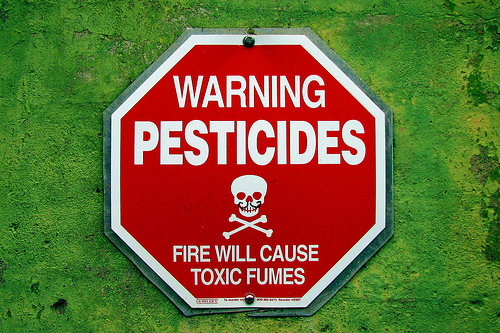
scorpion venom pesticideScorpions deliver a powerful, paralyzing venom — a complex cocktail of poisonous peptides — that immobilize animal prey on the spot. Some of the toxins in this cocktail damage only insects, which is why a Tel Aviv University researcher is harnessing them to create a safe and ecologically sound pesticide.

Prof. Michael Gurevitz of Tel Aviv University’s Department of Plant Sciences has isolated the genetic sequences for important neurotoxins in the scorpion venom. He’s also developed methods to produce and manipulate toxins to restrict their toxicity in certain insects or mammals.

“Two decades ago I realized that scorpion venom is a goldmine for possible insecticidal and therapeutic agents. This raised the question of how to use them as ecologically-safe agents against insects in a farmer’s fields, or in medicinal disorders,” he says.

"Leggy" New Spider Found in the Sands of Samar, the Largest in the Middle East

3

new middle east spiderA new Middle East spider species, Cerbalus genus, is discovered in Israel. Its future uncertain.

It’s like hearing about a wedding and a funeral from the same person: a new spider species has been discovered in Israel, but the bad news is that its habitat is seriously endangered, reports a new University of Haifa study.

The new species is the largest of its type in the Middle East: “It could be that there are other unknown species that will become extinct before we can discover them,” says Dr. Uri Shanas of the University of Haifa, who is heading the research in the area.

Discovered in the dune of the Sands of Samar in the southern Arava region by a team of scientists from the Department of Biology in the University of Haifa-Oranim, “The discovery of this new spider illustrates our obligation to preserve the dune,” says Dr. Shanas, who headed the team of scientists.

Lebanon's Lions, Tigers and Bears Take the Heat

25

lebanon lion cage circusLebanese animal rights’ activists report serious abuse of mistreated circus animals on ring circuit from Egypt, Jordan, Syria to Lebanon.

Abuse of circus animals comes to forefront of Lebanese politics: When the Monte Carlo Circus’ lions and tigers arrived in Lebanon two weeks ago they were meant to be welcomed by beaming children, adoring parents and cooing students on field trips. But after Lebanese animal rights activists received an emergency alert from THE Jordanian border about abused circus animals en route from Egypt to Lebanon, endearing scenes of charming animals entertaining humans is not at all what took place.

“We received a tipoff from someone at the Jordanian border about some six lions and three tigers coming from Egypt to Lebanon,” Maggie Shaarawi, co-founder of Animals Lebanon, told The Media Line. “They had asked the people transporting the circus animals how long it had been since they had been fed and they said three days. They asked how many days the animals had been in cages and they were told 10 days.”

Find edible weeds in your garden

18

edible weeds photoLast week Karin asked what weeds in her garden are edible. Today she finds out.

With winter in full bloom in the Middle East (this is when we get rain), urban gardens come alive, whether or not you want them to. The rains and cooler temperatures invite green leafy things to sprout up everywhere. And if you’re into urban foraging, or preserving some old traditions in the region, you might just want to go out and pick them. Take care to give your greens a good wash, because you don’t know who’s been peeing on them.

I’d been foraging for weeds in my backyard (read all about the experience here), and I asked an expert I know, Abbie Rosner from Culinary Tours of the Galilee to let me and readers know which weeds I can eat. Below, I include her answer, and pictures of the weeds which she says are edible. Enjoy!
herbs that heal in your backyardAbbie writes: Karin – Now that you’ve opened your eyes to the eating potential of all the wild greens around you, you’ll never look at the landscape in the same way again.

In your backyard alone you have three plants that are good for eating.

C is hubeisa (mallow in English, halamit in Hebrew) – gets its name from the Arabic word for bread (hubs) and it is indeed one of the most basic of all foraging foods.

E is ellet (olesh in Hebrew, chicory in English)- also a seasonal delicacy.

And F is stinging nettle which, if you pick carefully, can be used in soup – I’ve also heard of it being used as a medicinal tea.

If you go into your local Arab vegetable stand, you will probably find the ellet, and maybe hubeisa. Ellet has now been cultivated – hubeisa is so abundant that it is still gathered…

Below are the pictures for C, E and F from my previous post. Now, you can get out there and forage for yourselves. Know that you’ll have survival skills if the grim global warming prophecies come to light.

C: This is hubeisa or mallow, in English.
edible leaves

E: This is ellet or chicory.

F: This is stinging nettle. Watch out for the sting!

If you’re already cooking up some weeds, why not make a whole meal? We’ve got tons of Levant area and Middle East cuisine recipes.

More green recipes:
Learn to Make Baba Ghanoush – It’s Easier Than You Think
Cook Kibbeh, a Middle Eastern Classic
Muhammara – A Classic Syrian Red Pepper Dip

Israel and The Province of Manitoba Get Together on Water Cooperation This Week

7

canada israel water cooperationCanada and Israel seem like an unlikely couple, but the two are keen on sharing water resources and expertise.

We already know that Israel and the Province of Manitoba are collaborating on wetlands research. And last year Canada’s water experts from Manitoba were in Israel to learn about the very dry country’s techniques in water conservation.

Last week my friend from Reuters sent me a note that Israel is to host the second Manitoba-Israel Water Symposium, this January 10-15. The unique and intimate 5 day conference is aimed at boosting international co-operation on key water issues, uniting leading scientific voices, and policy-makers from both Manitoba and Israel to share their knowledge, experience, and expertise on issues related to protecting the health of their own national water systems. There will be lectures for business people, scientists and policy makers on board, as well as “fun” outings and tours that highlight Israel’s water hotspots.

"Cooperative for Renewable Energy" Invests in Clean Energy and Community in Israel

cooperative hands in the air black and white in the air

In Israel, kibbutzim (once-socialist agricultural collectives) have risen as a hotbed of environmental activity.  Green Prophet has covered Kibbutz Ein Shemer, which holds environmental education seminars in their state-of-the-art greenhouse, and Kibbutz Lotan, which hosts the Center for Creative Ecology, just as a few of many examples.

Although not physically based on a kibbutz, the newly formalized Cooperative for Renewable Energy is drawing on the kibbutz’s collectivist ethos to continue advancing sustainability in Israel.

Frustrated by what they perceive to be the Israeli government’s lack of investment in renewable energy and energy efficiency technologies, a few individuals began pooling their resources to start investing on their own. “The cooperative is not only to support its members,” said founding member and acting project manager Roni Segoly, “but also the society, by promoting projects in areas that the government does not.”

Hamish MacDonald's "Finitude" for Climate Activists to Ponder

1

Bradley Winterton, writing in the Taipei Times in Taiwan, recently gave big thumbs up to one of the first climate chaos novels to come out of Britain, Finitude, penned by a Canadian expat in Edinburgh named Hamish MacDonald.

While the novel takes place in an un-named country in the far distant future, it’s a book for climate activists and general readers in Israel and other parts of the Middle East to ponder, because the dystopian future MacDonald writes about could very well happen anywhere on Earth.

The book is a wake-up call about global warming, and Winterton’s review is the first time the book was
reviewed in a print newspaper anywhere in the world. Go take a look at the review and then if you’re still interested, get your hands on the book. On one level, it’s a fun read, and on another level, it’s what the future may very well look like.

Excerpt from the book review: “In Hamish MacDonald’s ‘Finitude,’ humankind teeters on the brink of extinction after failing to clean up its environmental act and save the planet….This is a coherent, lively and fast-moving attempt to put a widely feared future into imaginative, fictional form.”

::Taipei Times

Friedman’s "Hot, Flat and Crowded" – The Perfect "Green" Starter Book

17

friedman hot flat crowdedHot, Flat and Crowded shows people how to embrace clean energy and green technology industries.

The Genus of Genius: Someone once told me that there are three types of genius in the world. The first type of genius flows from those among us that birth brilliant and original ideas. The second type of genius belongs to those who can recognize the first type of genius. The third type of genius stems from those individuals who possess the ability to translate and transmit the first type.

Thomas L. Friedman’s book, Hot, Flat and Crowded (Why We Need A Green Revolution – And How It Can Renew America) indicates that the author likely falls into the third genus of genius. It isn’t the prose that impresses and the content isn’t that original either.

What Friedman does best is present disparate ideas from the worlds for business, science, homeland security and macro-economics into one coherent argument for the green revolution.