Yalla Parkour, directed by Areeb Zuaiter, captures this culture from within. The film follows Zuaiter’s long relationship with Ahmed Matar, a parkour athlete in Gaza, as she reflects on loss, memory, and belonging after the death of her mother. What begins as a personal search gradually opens into a portrait of how movement shapes young lives under constraint.
Yalla Parkour, directed by Areeb Zuaiter, captures this culture from within. The film follows Zuaiter’s long relationship with Ahmed Matar, a parkour athlete in Gaza, as she reflects on loss, memory, and belonging after the death of her mother. What begins as a personal search gradually opens into a portrait of how movement shapes young lives under constraint.
Yalla Parkour, directed by Areeb Zuaiter, captures this culture from within. The film follows Zuaiter’s long relationship with Ahmed Matar, a parkour athlete in Gaza, as she reflects on loss, memory, and belonging after the death of her mother. What begins as a personal search gradually opens into a portrait of how movement shapes young lives under constraint.
Yalla Parkour, directed by Areeb Zuaiter, captures this culture from within. The film follows Zuaiter’s long relationship with Ahmed Matar, a parkour athlete in Gaza, as she reflects on loss, memory, and belonging after the death of her mother. What begins as a personal search gradually opens into a portrait of how movement shapes young lives under constraint.
Yalla Parkour, directed by Areeb Zuaiter, captures this culture from within. The film follows Zuaiter’s long relationship with Ahmed Matar, a parkour athlete in Gaza, as she reflects on loss, memory, and belonging after the death of her mother. What begins as a personal search gradually opens into a portrait of how movement shapes young lives under constraint.
Yalla Parkour, directed by Areeb Zuaiter, captures this culture from within. The film follows Zuaiter’s long relationship with Ahmed Matar, a parkour athlete in Gaza, as she reflects on loss, memory, and belonging after the death of her mother. What begins as a personal search gradually opens into a portrait of how movement shapes young lives under constraint.
Yalla Parkour, directed by Areeb Zuaiter, captures this culture from within. The film follows Zuaiter’s long relationship with Ahmed Matar, a parkour athlete in Gaza, as she reflects on loss, memory, and belonging after the death of her mother. What begins as a personal search gradually opens into a portrait of how movement shapes young lives under constraint.
Yalla Parkour, directed by Areeb Zuaiter, captures this culture from within. The film follows Zuaiter’s long relationship with Ahmed Matar, a parkour athlete in Gaza, as she reflects on loss, memory, and belonging after the death of her mother. What begins as a personal search gradually opens into a portrait of how movement shapes young lives under constraint.
This has led to the launching of programs aimed by Queen Rania for improving the educational systems in the region, especially in the West Bank; an area administered by Jordan prior to the June 1967 War. The Queen attended a special charity luncheon in Abu Dhabi recently to help raise funds for schools in East Jerusalem and other parts of Palestine; and was also helped launch the “Madrasati Palestine Initiative” together with Palestinian Prime Minister Salam Fayyad to improve the deteriorating state of schools in East Jerusalem and elsewhere within the “Palestinian lands”.
She was the first woman to win the Pitzker Prize and she was the first Muslim too
Will Iraqi Architect Hadid Use Her Star Power to Demand More Environmental and Social Responsibility? [image via bighugelabs]
Much of the news coming from Iraq is fraught with environmental and human tragedy. Water is so scarce the country has to beg from its neighbors for help, and everywhere there is destruction and war. This makes it our pleasure to finally share good news: an Iraqi glitterati, the Donna Karan of architecture, rises above the headlines and dismal statistics. A former recipient of the Pritzker Architecture Prize and anointed one of TIME magazine’s top 100 most influential people in 2010, Zaha Hadid spread her wings and landed all over the world.
She was born in Bagdad in 1950. She tells Jonathan Glancey from The Guardian how memories of the beautiful landscape of Southern Iraq, “where sand, water, reeds, birds, buildings and people all somehow flowed together” influences her work.
She left Iraq to study at the American University of Beirut, where she received a degree in mathematics, and then studied at the Architectural Association School of Architecture before taking her first position at the Office for Metropolitan Architecture.
Now many years later, after holding guest positions at prestigious universities such as Columbia, Harvard, and Yale, and with a staff of 150, Hadid has designed fire stations, art museums, ski jumps, and opera houses from Germany to the United States and Dubai.
Donna Karan and Hadid are mutually enamored. The fashion designer says that Hadid’s buildings “are like a gust of wind – organic, forceful and utterly natural.”
But unless it is considered natural to spend £242 million on an aquatic center for the 2012 Olympic Games, for example, we can’t agree that it is natural. Even Hadid realizes this. She tells Glancey that she wishes that “it was possible to divert some of the effort we put into ambitious museums and galleries into the basic architectural building blocks of society,” that she could build “schools, hospitals, [and] social housing.”
Instead, she is “moving into towers,” according to her website.
Perhaps it is a generational issue. Hadid came into architecture in the seventies, at a time when, even though scientists knew better, the rest of us still believed that the mighty earth’s resources are inexhaustible.
Therefore, she has spent her entire career allowing her futuristic imagination free reign with little thought to the environmental consequences of her ambition.
It is only recently that her team has begun to explore more sustainable design methods.
In the meantime, what has she taught the hundreds of architecture students that have shuffled in and out of her classrooms?
What tools has she given them to re-think building priorities? If she can’t imagine a way to divert funds to more meaningful and life-sustaining causes, then what will her students do?
How do you like your fish? Pumped up with a strong chemical cleaner called STTP (sodium trippolyphosphate), or without?
Despite it being an important fish producing nation with active fish farms, on land and at sea, two-thirds of the frozen fish sold in Israel is imported from China.
Most Israelis complain that frozen fish is tasteless, but pick up a bagful of fillets for convenience all the same. We are resigned to paying for the 20 percent of water stated on the package – an ice covering to protect the fish, we’re told.
But until last January, the Israeli consumer didn’t know that they paying for much more water than that. Water that’s been forced into the flesh of the fish by a chemical process. That makes it heavier. And the importers richer.
The algae for biofuel company TransAlgae is developing a new superbreed of algae for biofuels that is more resistant to the pests and the diseases that plague algae producers today.
New varieties of wheat, oats and barley are constantly being produced to meet the world’s demands for grains that can grow faster, be hardier and withstand pests and drought. Apparently the world needs better-cultivated algae seed as well. And while algae may sound like an obscure plant to be cultivating, according to Nellya Litae, VP of business development at Israeli company TransAlgae, it makes perfect sense.
Harvesting algae at a bioreactor in Israel
TransAlgae, she says, has set its sights on becoming the Monsanto of algae seed, minus of course the somewhat negative environmental rap that the world’s leading producer of genetically engineered seeds has had in recent years. Based on the research of Prof. Jonathan Gressel from the Weizmann Institute of Science, TransAlgae has already produced a handful of genetically altered algae strains to meet the needs of food for fish, and biomass for biofuel.
Aerofarms’ stackable vertical farm uses mist to grow crops in areas where land is non-arable, like in the United Arab Emirates.
Vertical farming, where crops are raised in skyscrapers or on stacked layers may be the best way to feed water poor countries with non-arable land – like many of those in the Middle East. Today we talk with vertical farm innovator Dr. Edward D. Harwood the founder, CEO and director of AeroFarms. Founded in 2004, and based in the US, his GreatVeggies product, is based on Harwood’s own design of an aeroponic growing system (growing food without soil). Harwood has 20 years experience in corporate product management in the dairy industry, several years in sales and service of weather graphics systems and a number of consulting projects involving food market channel mapping. Today he tells us about the benefits of the AeroFarms’ solution.
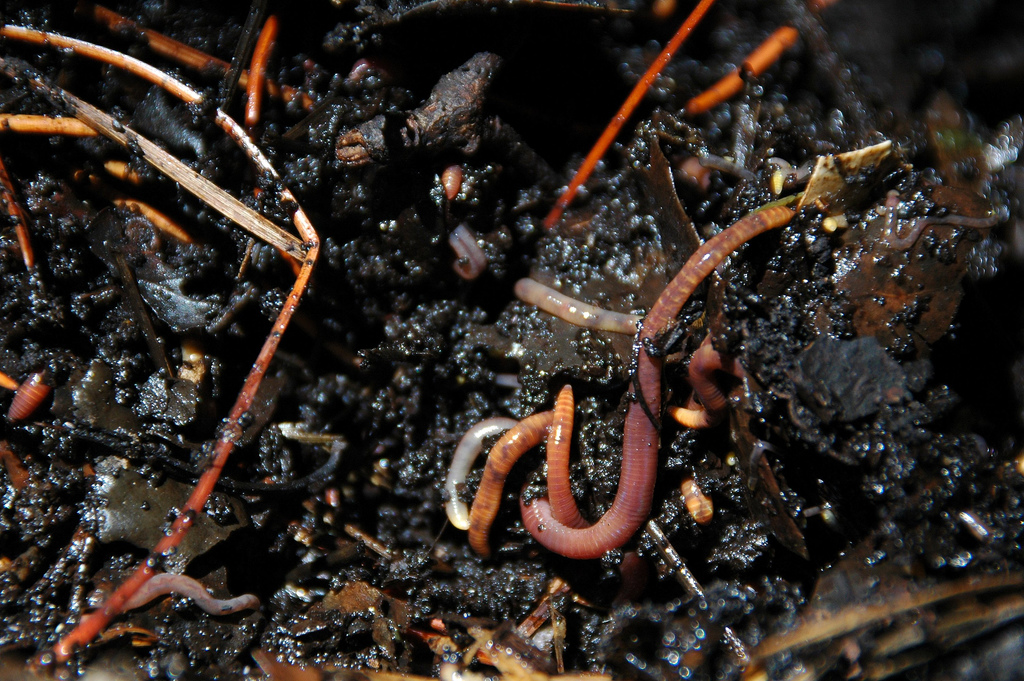
An ode to the earthworm: An earthworm farmer in Israel praises the beauty of the earthworm. Time to grow your own?
The earthworm is one of mankind’s best friends. Hard at work 24/7, this lowly creature makes it possible for human and plant life to exist. Without the earthworm over here in the Middle East, we would have little to eat, our world would be flooded by snow and rain, and environmental pollution would be greater than it is today.
The earthworm is a natural tiller and a prodigious earth mover. Making its way through the soil it churns the earth, loosening the subsoil and creating microscopic tunnels that allow water and oxygen to reach the root systems of plant life. As they burrow, the earthworm mixes and sifts the soil, breaking up clods of dirt and burying stones.
“Extinct” grey whale sighted off Israeli coast, 8,000 nautical miles from home. Lost or making a comeback thanks to global warming? (In the above video, Israelis taking the video are calling for Willie to show his/her tail.)
Sighting any kind of whale in the Mediterranean Sea is a novelty. But when a whale sighting turns out to be of a grey whale, said to be instinct in this part of the world, then this event is something that has many scientists excited as well as baffled.When this whale was seen off the Israeli coastal city of Herzliya, it really created a buzz since the species has been extinct in the North Atlantic since the 17th or 18th century.
The whale, said to be a mature adult measuring around 12 meters or 39 feet, is now mainly found in the North Pacific Ocean. It may have swam across the “Northwest-Passage” between the Atlantic and Pacific Oceans, due to the amount of ice there being less now due possibly to global warming.
How it got into the warmer waters of the Mediterranean is matter of speculation; but those studying the habits of such sea creatures say it may have been looking for warmer waters to calve in, like they normally do off the Baja California coast. And the Mediterranean, being warmer, may have confused this individual who was already a bit off course.
After all, Tel Aviv, Beirut or Gaza City are not exactly La Paz Mexico.
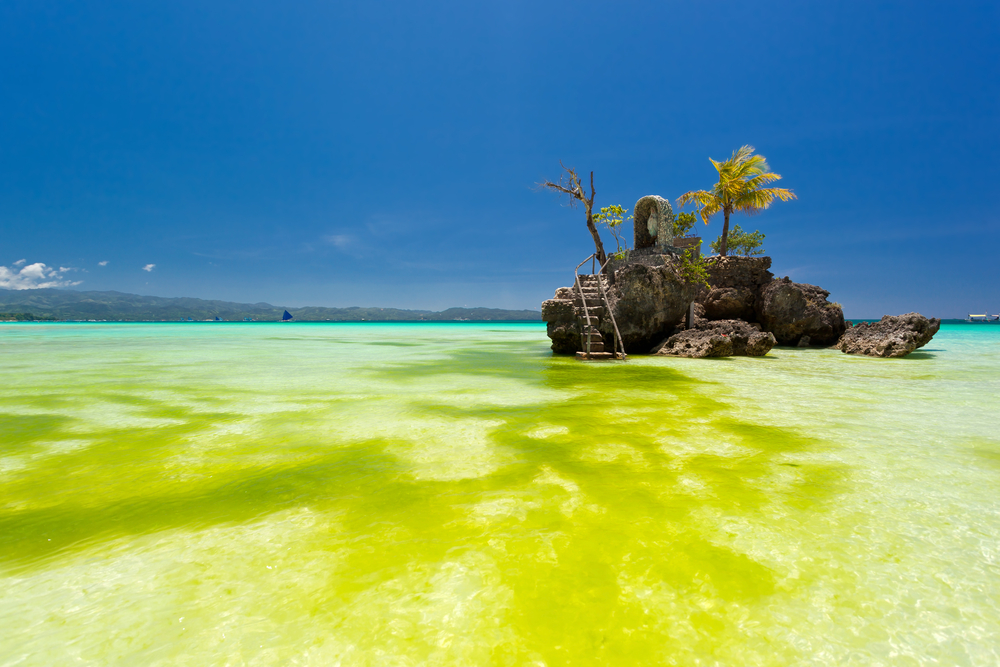
Quick, name the scarcest natural resources in Israel. I’m sure that “land” and “water” would feature prominently in most people’s answers.
Israel is, to all intents and purposes, a “desert island’, with finite – very finite – natural resources. Not your romantic desert island, and not an island geographically, but rather politically. Not a desert entirely, but dominated by arid lands, and with much of the rest what might be considered recovering or rehabilitated. Some of that is again under threat from various forces, mainly driven by economic and political factors, population growth and lifestyle.
So, while there have been few serious proposals for converting Israeli agricultural production to bio-fuel crop production, would it in theory make sense to ever do so?
Not if one applies the understandings shared by noted German economist Hans Werner Sinn in this Jerusalem Post article. The president of the Ifo Institute for Economic Research was visiting Israel last week to give the D.B. Doran Lecture on Population, Resources and Development at the Hebrew University of Jerusalem lecturing about the problems of land use for biofuel.
Is olive oil really the healthiest fat, and why? Is it true that red wine has healing properties? And – must we (groan) exercise every day, really?
These simple questions deserve good answers. We know that organic food from sustainable sources is best for you and the planet. Now you can also hear Dr. Zohar Kerem of the Hebrew University’s Robert H. Smith Faculty of Agriculture, Food and Environment questions about healthy eating, online.
The Abu Dhabi Marine Operating Company (ADMA-OPCO), an offshore division of the Abu Dhabi National Oil Company (ADNOC), aspires to become the first in the Gulf region to end the “flaring” of natural gas, the UAE-based daily The National reported this week.
The World Bank describes gas flaring as “the process of burning-off associated gas from oil wells and hydrocarbon processing plants either as a means of disposal or as a safety measure,” and notes that it is now recognized as a major environmental problem, contributing some 400 million tons of CO2 emissions worldwide.
An IDF jeep posted at the Jordan River, West Bank. Image credit Green Prophet
The Israel Air Force is doing it (with solar panels), and now the IDF, Israel Defence Forces will save carbon emissions as it looks to buy hybrid Jeeps. Haaretz newspaper reports that the IDF is now testing the hybrid Ford Escape to see how it performs, and that the force is not making the switch out of environment concerns. They want to save money on gas.
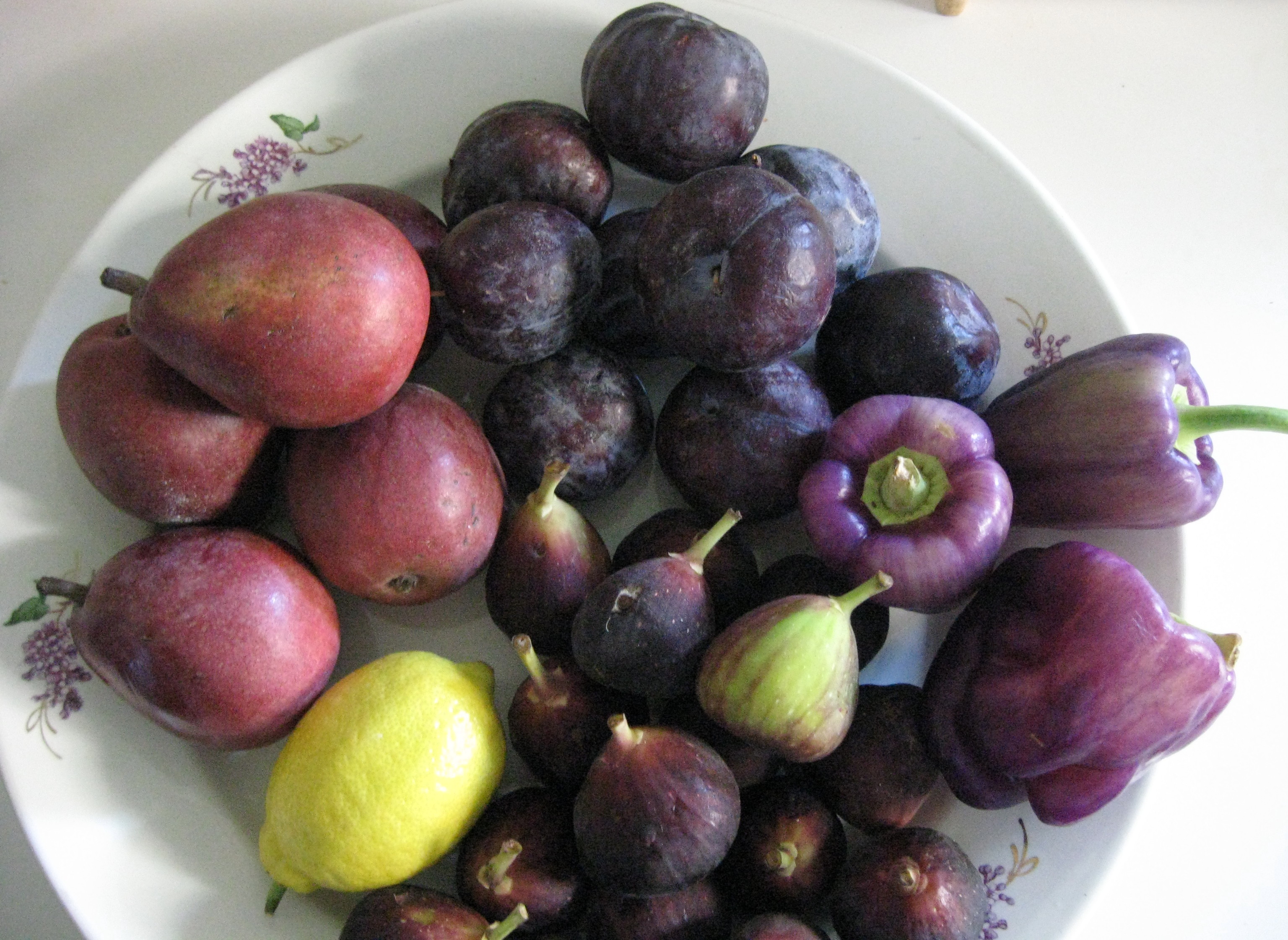
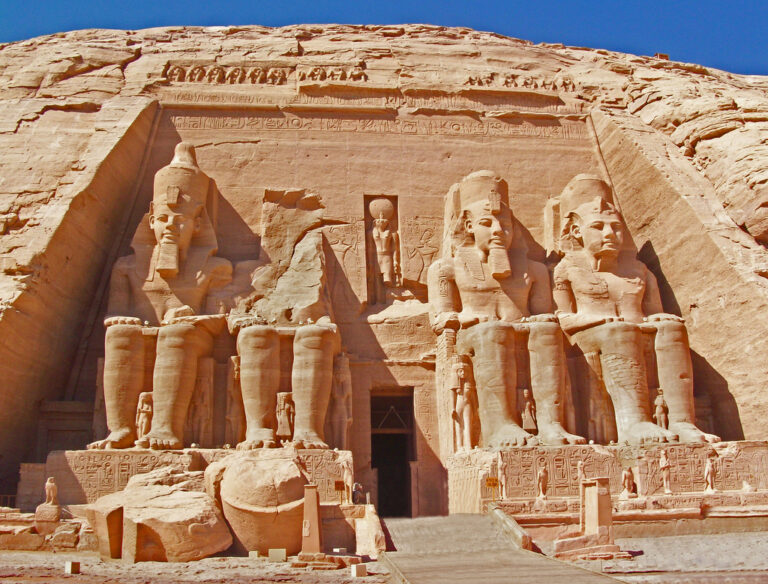
Ancient Egyptians built temples to the Sun God Ra. Time for this African nation to reclaim its glory and time in the sun, with solar energy deal? Image via mrs_logic
Maybe it’s the product of the recent MENASOL solar conference in Cairo that Green Prophet attended. Now, Bloomberg news is reporting that Spain’s largest solar-thermal power plant builder, Actividades de Construccion y Servicios (ACS) is looking to Egypt to meet the world’s carbon-free energy demands.
Coming for a 5 month internship, learn more about the students and people from the ecological and organic farm, Hava ve Adam (Adam and Eve) Ecological Farm outside Modi’in, Israel. They grow their own food, use compost toilets, sleep in geodesic domes. The whole nine yards.
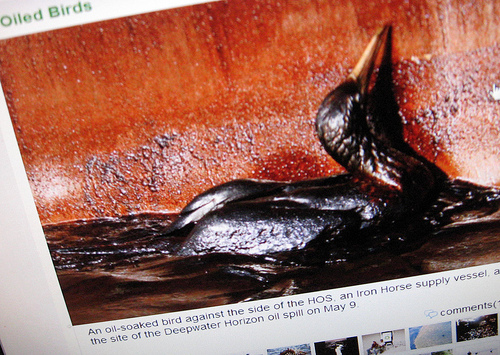
The tragedy of it all- whyshould they have to suffer? A Russian oil dump in Egypt raises more red flags in Middle East about oil spills and drilling practices.
The giant Gulf of Mexco oil spill is now more than two weeks old and although intensive efforts are being made to “cap” the well, it is still spewing 5,000 barrels of oil (950,000 liters) per day into the Gulf. The three companies being held responsible are British Petroleum BP (who drilled the well), Transocean (who own the equipment, including the drilling platform), and Halliburton (who serviced the well, including making safety inspections). The environmental damage already done is feared to even surpass the giant oil spill on Spain’s ‘Coast of Death’ in 2002, and the Exxon Valdez in Alaska.
Now the Xinhua News Agency reports that the Egyptian Environment Ministry decided to a Russian ship after it dumped its oil waste into the Red Sea, causing an oil slick that stretched over 1 km off the coastal city of Ras Ghareb in eastern Egypt. An Egyptian chopper spotted the vessel in April. It hoisted the flag of Russia while it was dumping oil waste into the sea water. An Egyptian court has decided to seize the vessel until the fine is paid, the report added.
Celebrate an alternative and dance-themed Shavuot at Vertigo Dance Company’s Eco-Arts Village. [image via: avinatan]
If you’re a vegetarian (or a vegawarian), Shavuot may be one of your favorite holidays. During Shavuot you traditionally eat dairy (and lots of it), so the main meal is a vegetarian.
But if you’re lactose intolerant, that’s no fun at all. Luckily, there’s more to Shavuot than eating a lot of cheese (and cheesecake). For the third year in a row, the Vertigo Eco-Arts Village will be hosting a special two-day Shavuot Hagiga event packed with yoga, dance performances, a Shavuot picnic, Tikkun Shavuot (the traditional study of excerpts from the beginning and end of the 24 books of the Jewish Tanakh), Tai Chi, and workshops.

 Can Queen Rania’s educational efforts spill over for regional environmental issues as well?




 How do you like your fish? Pumped up with a strong chemical cleaner called STTP (sodium trippolyphosphate), or without?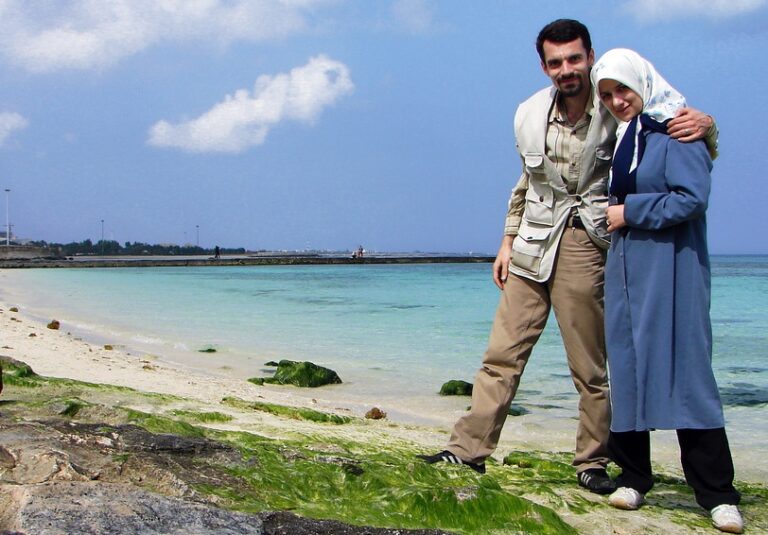


 Aerofarms’ stackable vertical farm uses mist to grow crops in areas where land is non-arable, like in the United Arab Emirates.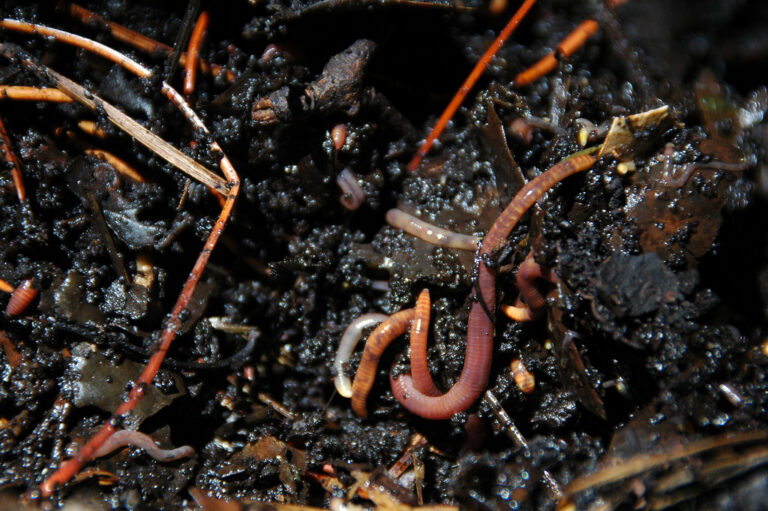
 An ode to the earthworm: An earthworm farmer in Israel praises the beauty of the earthworm. Time to grow your own?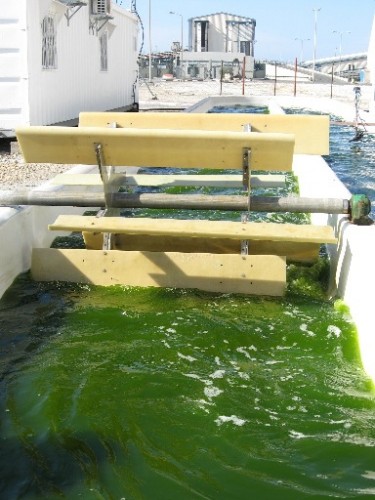
 Quick, name the scarcest natural resources in Israel. I’m sure that “land” and “water” would feature prominently in most people’s answers.