Home Blog Page 641

"Eat What You Want to Conserve" Says Arab-American Writer Gary Nabhan

boy mushroom forestPut your mouth where your morals are and eat the plants and vegetables you want to conserve. Image via ivanwalsh

Since the beginning of the green movement, there has been a rise in the number of organizations and businesses that are doing their part in the promotion of sustainability through conservation. This past Earth Day brought about the Earth Day Network, which has been playing its part to bring conservationist and green enthusiasts together, sharing ideas and discussing new ways to support the planet.

Other large organizations NGOS like Doug Band and the CGI (Clinton Global Initiative) have been working on successful emission reduction projects in the San Francisco Bay area. All the while, the climate is continuing to worsen, and individual, as well as collaborative acts, are important for any successful green campaign. As human beings, we’re constantly told to reduce our carbon footprint, consume less unhealthy foods, and spend less time in the shower!

But let’s take a minute to step back and look at this from a different perspective; one that the Arab-American writer and conservationist Gary Nabhan strongly suggests.

Oscar Diaz and Colombia’s sustainable cities

1

oscar-diaz-bogota

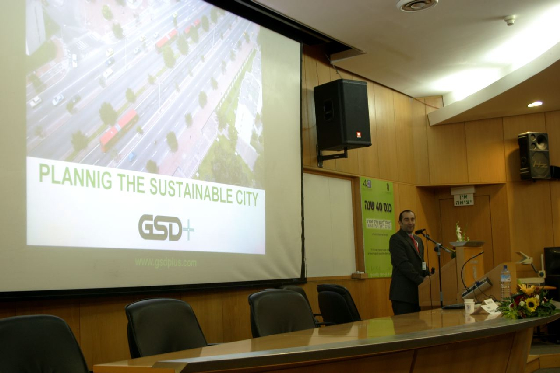
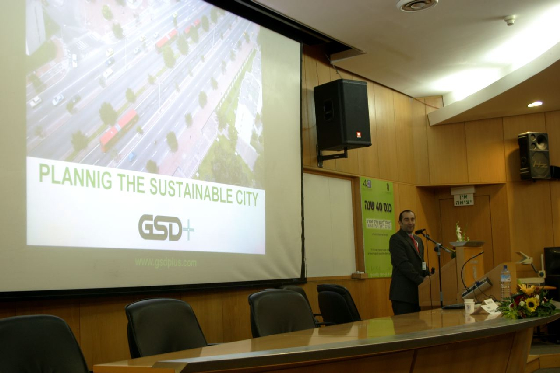
Mr. Oscar Diaz Inspires Israeli Planners to Build For People, Not Cars.

We promised to bring more news from the Technion-Israel’s Institute of Technology, where the Center for Urban and Regional Studies’ 40th anniversary conference was held yesterday, 3rd June 2010.  After brief greetings from representatives of The Center for Urban & Regional Studies, the Urban and Regional Planning Program, and the Municipality of Haifa.  And after the Technion’s President and the Dean of the Faculty of Architecture also gave brief introductions, the keynote lecturer Professor Dani Shefer introduced Oscar Edmundo Diaz.

Partner of the consulting firm GSD+ and formerly Senior Program Director at the Institute for Transportation and Development Policy and Senior Advisor to the City Mayor of Bogota, Diaz addressed the Israeli Planning audience about successful methods for planning a sustainable city.

SolarEdge Disrupts Solar Tech

0

SolarEdge-PV-Optimization

Disruptor: In the past week SolarEdge has announced partnerships to distribute its technology across Australia and Europe and has been named a Red Herring 100 Winner.

Known for its high costs and lagging efficiency, the solar energy field has been one to watch for many but one to take advantage of for very few. New innovations and incentives in the field however, reported on CNET, offer promise for many solar companies looking to establish themselves. One company that seems to have had little difficulty establishing itself is SolarEdge, a solar power harvesting solution provider based in Israel.

Going Against the Grain of Synthetic Fabrics

jerusalem silk fabric  Bilal Abu-Khalaf jerusalem silk fabric  Bilal Abu-KhalafIn a world of synthetics and polyesters, fabric merchant Bilal Abu-Khalaf sells hand-woven silks, cotton and gold-threaded cloths from his Jerusalem shop. Some cloths can wait 45 years before being sold.

In the hustle and bustle of Jerusalem’s famous Old City bazaar, shopkeepers are busy selling trinkets to tourists, synthetic t-shirts and plastic souvenirs made in far-off China. But there is one place where the appreciation for old-fashioned ways still exists. At Bilal Abu-Khalaf’s shop, he imports his hand-woven silk, cotton and gold-threaded cloths from Africa. His fabrics are used to make robes for Christian priests, Muslim imams and ultra-orthodox Jews.

Yael Uriely Shows Us That Good Things Come in Upcycled Shapes, Colors and Sizes

2

Yael Uriely’s Dvarim Tovim (or “Good Things”) fabric jewelry line is made of vintage and upcycled materials.

Good things don’t always come in shiny, new, plastic packages.  Sometimes, according to Yael Uriely, they come in upcycled, vintage packages that bring us back to previous eras revisited.  Yael’s line of fabric jewelry, Dvarim Tovim (Good Things) is assembled almost completely from upycled, recycled, reclaimed and vintage materials, teaching us to rethink our concept of the new good thing.  Good things can sometimes just be new to us.

The Center For Urban & Regional Studies 40th Anniversary Conference

1

technion-haifa-technology

Oscar Edmundo Diaz and Robert Upton Are Expected to Share Urban Planning Pearls With Israel [image via Technion-Israel Institute of Technology]

Before globalization,  ideas and technology ambled across the oceans and progress piddled along.  Now cooperation happens in seconds.  Microseconds even.  And though not all ideas are equally useful,  there’s no question that when great minds meet there ensues the following net result: opportunity.  Whether sharing technology with other nations or floating to draw awareness to environmental issues, sharing ideas allows us to circumvent mistakes made before us.  Tomorrow, when Oscar Edmundo Diaz and Robert Upton join some of Israel’s best Urban Planners at the Center for Urban and Regional Studies’ 40th anniversary conference, Israel will have the opportunity to incorporate lessons learned in Colombia and the United Kingdom.

Israel Camel Racing May Suffer for Lack of Humps

7

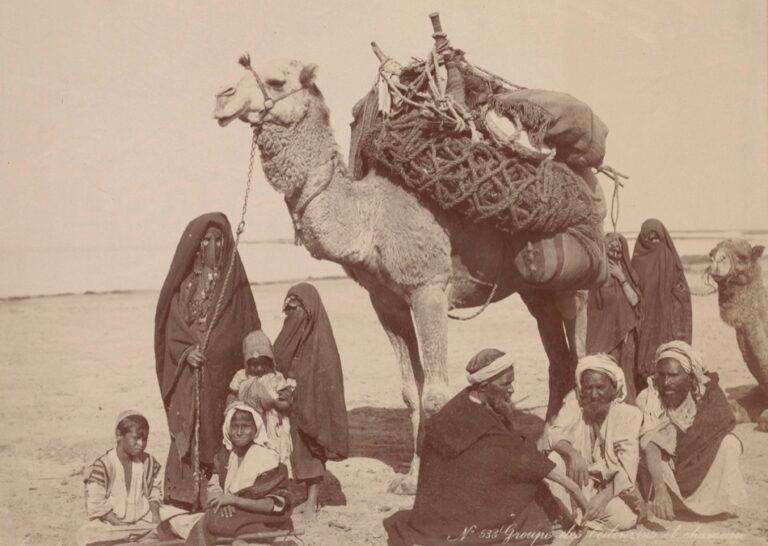
In Israel Bedouin still joke about the value of a woman “in the price of camels.” Now two Jewish Israelis have joined the tribe, and are looking to save the last of these Mohicans.

Camel racing is still a very popular sport in many parts of the Middle East, despite its reputation involved in child abuse and other non-green activities. Green Prophet covered this subject in February, noting that rich people in countries like Abu Dhabi, often pay thousands of dollars for racing camels and that small children are taught to race them at an early age.

Now this sport may soon be reality in Israel as well; according to an Los Angeles Times article about a couple of Israeli filmmakers, Ezry Keydar and Nadav Ben Israel who are making a documentary  movie about Bedouins who own Israel’s remaining camel herds. These two are entertaining the idea of racing these “ships of the desert” at an uncompleted airstrip outside the Negev city of Mitzpeh Ramon.

Most of the article deals with the plight of Israel’s camel population, now down to about 3,500 animals; as well as the Bedouins who still keep these animals and are now finding it harder to do so due to lack of natural grasslands in Israel arid regions and the high price of purchasing fodder.

The Bedouins themselves are a neglected element of Israeli society with the a severe lack of running water, sewage systems and other things that other segments of Israel’s population take for granted.

Since the Bedouin are the keepers of a camel herd population that once numbered into the tens of thousands, Keydar and Ben Israel will most likely enlist Bedouins to provide not only the racing stock but the riders or jockeys as well; which probably has resulted in the significance of the term “camel jockey” in reference to the romance place around the indigenous desert populations who in the past relied on these animals as beasts of burden, meat and dairy products, and even for the clothing they wear and tents they used (and sometimes still do) live in.

Referring back to our earlier article, in which wealthy people in UAE states pay large sums of money for pedigree breeding and racing camels, it’s not likely that the ones found in Israel’s Negev desert regions are of the same quality as those that wealthy camel fanciers in Abu Dhabi pay a small fortune for. The one comparison that might be made would be regarding who will ride these “splendid  beasts” as Lawrence of Arabia once noted them to be.

Nowadays oil trading rich people in the Middle East pay much for luxury cars, like gold plated Mercedes Benzes than they do for camels. And even in places like Abu Dhabi, the noble Dromedary racing camel may one day be only a nostalgic memory.

Over in Israel it’s debatable if Israel’s Bedouin population will do that much to restore their national pride as their nomadic way of life is quickly drifting into the sands of history, being replaced with more town life in large settlements like Rahat in the Northern Negev

who have also adopted many of the bad traits of living in towns such as piling up trash or disposing it in wadis (dry creek beds), as well as leaving their former occupations as herdsmen and farmers for  more lucrative ones like smuggling drugs and other illegal commodities into Israel.

As for camel racing, it may already be too late for this sport to catch on in modern Israel, but here’s what the Israeli filmmakers say:

Our choice of topic is not accidental. We see these people as the last of the Mohicans — they represent a vanishing culture.

Sadly, Israel is working systematically to push this culture and its symbols into extinction. It won’t recognize camels as an agricultural sector and won’t allocate grazing lands. Commercial feed is expensive, and many Bedouins are forced to give up camels. Israel is successfully eliminating a symbol of culture. And when you kill a symbol, the culture dies with it.

We see great value in preserving this culture — not in a museum, but as a way of life. We want to see Bedouins continuing to live as people of the desert, and this is increasingly less possible. We do not want them to vanish from our landscape.

::LA Times article

Read more about Bedouins and Camels:

Abu Dhabi Millionaires Pay Big Bucks for Camels

Meet Ahmed Amrani: the Green Bedouin

Ben Gurion University Makes Green Plan for Bedouin City of Rahat

Abu Dhabi Eco-Chicks Organize Green Drinks Event

abu dhabi eco chicks green drinksGet your green drinks on in Abu Dhabi tonight with the Eco-Chicks and other eco folks.

If you happen to be passing through the One to One Hotel in Abu Dhabi tomorrow night around 6:30pm, you may stumble across an Abu Dhabi Eco-Chick organized Green Drinks event.  Green Drinks is a loosely organized (yet widely successful) informal meeting group for greenies of all orientations, and has already become popular in Tel Aviv.  It is very exciting to see this movement spreading across the Middle East, and exciting to learn about the active, spunky Abu Dhabi Eco-Chicks.

Wind And 9 Israel-Related Cleantech Headlines, Week of May 23, 2010

0

Highway-In-Israel

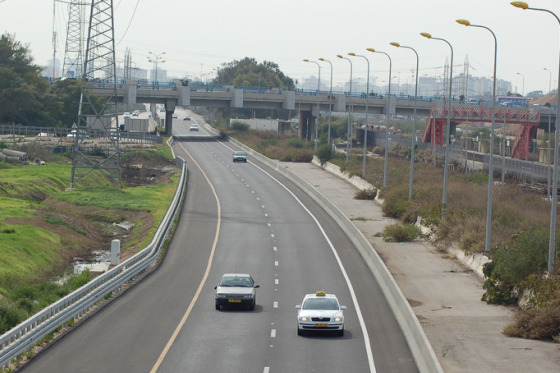
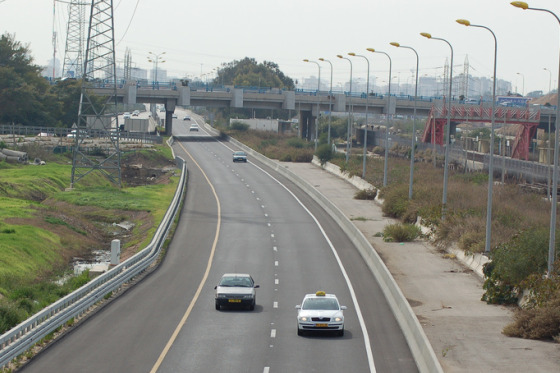
Israel’s plan to use renewable energy to power highway lighting, Italy’s plan to use Israeli technology for highway signs, the OECD and more headlines related to Israeli cleantech this past week. Image via david55king.

During the week of May 23, 2010, Israel announced that it will be converting the energy sources for its infrastructure, specifically highway lighting, to renewable ones, including wind. Israeli and Taiwanese water experts met in Taiwan to discuss water technology and cooperation and Solaredge was named a Red Herring 100 Europe Award winner for 2010. For these stories and more, see below.

Green Zionist Alliance (GZA) – Bold Resolutions for 36th World Zionist Congress

4

green-zionist-alliance-banner Can Zionism claim Green credentials? The jury is still out on this one.
On the one hand, Zionism was initially very much a “back to the land” movement, in the European Romantic tradition. Trees were being planted in Palestine as early as 1901, there was a strong emphasis on agriculture and “redemption of the land”, and communal settlements blossomed.

There is no doubt, however, that the growth of the Yishuv –– Jewish community in Palestine –– also put a huge strain on the country’s environment and natural resources, especially post-1948. The emphasis was on the huge challenges of defence and security, development, absorption of immigrants and building the state. Given this mixed record, it would probably be fair to say that the founding fathers mostly followed the best practices of their day, but those practices would not pass our Green scrutiny today.

Take Your Team To Lebanon's Ecovillage

1

lebanon-ecovillageGet Your Green On in The Dmit Valley

Ecovillages are slowly sprouting in the Middle East.  There’s Kramim in Israel’s Negev Desert, as well as the well-known Kibbutz Lotan, and now the first of its kind in Lebanon.  Called simply EcoVillage, this project was grown from the ground by Karim al Khatib and a group of green-minded fellows.

Welcome Home: Meet Theo Who's Running Jordan's Alternative Eco Aqaba House

theo the house aqabaDutch native Theo van de Laar exposes the eco secrets and paradise he entertains through The Aqaba House, an eco-friendly guest house he runs in Jordan.
A while back Tafline featured the eco-cool guest house The Aqaba House, near the Read Sea port of Aqaba, Jordan. Today we feature a short interview with Theo, the handsome Dutchman who is running the eco outpost in the middle of the desert.

Tell us a little more about you, and your interest in promoting the Aqaba House: I am a historian from the south of The Netherlands, and after my studies and working for a year and a half in marketing and communications, I decided that that was not what I liked. I applied for a job as a tourleader, got hired and was sent to Egypt for 3 months. The year was 1999, and I basically never came back.

The Deepwater Horizon Debacle: A Tough Lesson for Free Markets Like Israel?

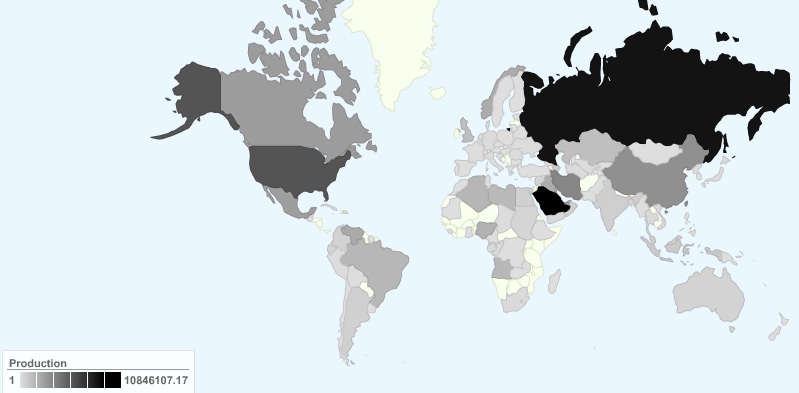
world oil production map

Dr. Gotlieb comments on the disastrous effects of the oil spill in the US Gulf of Mexico and the dangers it portends for Israel’s emerging oil industry.

In a New York Times article entitled Our Fix-It Faith and the Oil Spill published this week, Elisabeth Rosenthal writes that “Americans have long had an unswerving belief that technology will save us — it is the cavalry coming over the hill, just as we are about to lose the battle. And yet, as Americans watched scientists struggle to plug the undersea well over the past month, it became apparent that our great belief in technology was perhaps misplaced.”

Ms. Rosenthal’s comment concerning the hemorrhaging of crude oil from the Deepwater Horizon oil rig in the Gulf of Mexico cuts to the bone with respect to the harm entailed by the blind use of technology. For Israel, where tycoon Yitzhak Tshuva’s Delek Group is drilling in the Tamar oil fields off our coast and other entrepreneurs are racing for a piece of the action, there is a burning question: Can we afford the sort of catastrophe that is already wreaking untold environmental disaster on the Louisiana coast? Are our coastlines so long and robust that they can withstand the kind of onslaught that the southeast United States is facing?

In the context of the Deepwater Horizon debacle, the effects could be devastating.

The Times  reports on a “serious setback” in the attempts by British Petroleum (BP) to stanch the oil leak. The “top kill” technique which company officials said would stop the leakage did not succeed and other efforts are underway. This is the fourth technique to be applied by the company in tying to control what had already become the largest oil spill in US history, twenty years after the Exxon Valdez disaster in Alaska.

The leak began on April 20th when Deepwater Horizon exploded, killing eleven workers. According to the Times, 18-40 million gallons of oil has flowed into the Gulf of Mexico with an estimated 12-19,000 barrels leaking into the sea each day.

Despite attempts to keep the oil slick from reaching the fragile ecosystems of the Louisiana coast, oil has already washed ashore. The US National Oceanographic and Atmospheric Administration (NOAA) has already banned commercial fishing in the affected southeast coastal area.

The fishing communities of the Louisiana coast are reeling from the economic and social effects of the disaster, which threatens their way of life: They are mindful that the coastal communities of Alaska have still not recovered from the Valdez disaster. Marine animals and birds are also among the victims of the disaster. Ecosystems are endangered.

It is now believed that only the drilling of two relief wells, which will not be completed until August can provide effective relief. What the environmental toll of this human-made disaster will be by then is immeasurable at this time.

An example for the Middle East?

Recent reports show that Israel has among the lowest royalty rates of any country with respect to how much oil companies pay the state for extracting mineral stocks. The Netanyahu government, with its free market advocacy, has not taken steps to change this situation: The government has left the business environment very conducive for the extraction of fossil fuels off our coast, a gift for big business.

In terms of Middle East history, it is insightful to ask whose interests are truly served by such the petroleum industry and its associated adventures. Much of  the political discord in the region stems from the gerrymandering of the area in a  manner that postcolonial states and the elites that govern them would further the strategic affairs of the European powers and the corporate interests of the oil industry. The strategy has left a state system in the region based on economies that fuel climate change while filling the corporate coffers of the Seven Sisters (of which BP is one), the major oil conglomerates that have dominated the energy industry for nearly a century.  

The failure of  technology at Deepwater Horizon and its inability to remediate the consequences are indicative of the dangers inherent to blind faith in technological fixes for environmental problems.  The implications for Israelis and others  interested in preserving a future for our progeny should be clear: Placing the fate of the commons in the hands of private economic interests is ridden with risk. 

Read more on oil spills and the Middle East:
Method To Seal Kuwait Spill Could Work on Gulf Oil Spill
Will Gulf Of Mexico Oil Spill Open Pandora’s Box on Oil Sands Drilling?
Kuwait Still Cleaning up After Saddam’s Mess
Russian Vessel Fined for Dumping Oil Bilge into Red Sea

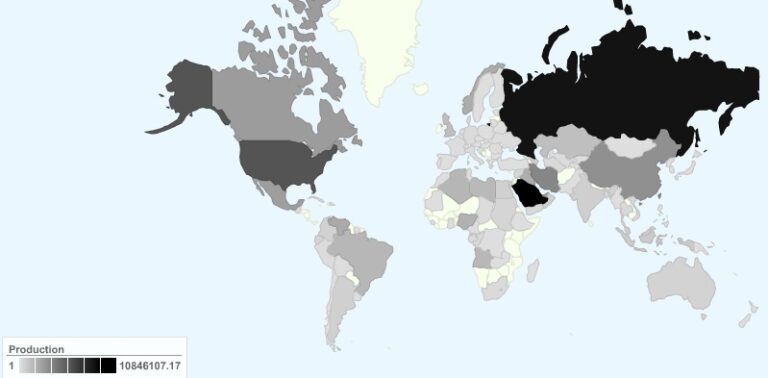
Above image: see what nations of the world are producing the most oil. Via Digital_Dreams

Israeli Designer Yinnon Lehrer Encourages Urban Biking with Vertical Bike Racks

2

Yinnon Lehrer’s urban long-term bike parking solution encourages more commuters to keep on pedaling.

If you’ve ever thought about commuting to work everyday on your bike and still haven’t done it yet, chances are there are a couple of reasons why you thought better of it.  A) You didn’t want your bike to get stolen and didn’t have a good place to park it all day and B) You didn’t want to get to work sweaty, smelly and wet.  These are legitimate reasons, and unless you are a major business executive with a private office with ample space to store a bike and a private shower… there isn’t much to be done.  Or is there?  Israeli designer Yinnon Lehrer has come up with a combination long-term bike rack and public shower, for ambivalent urban cycling commuters.

Green Zionism May Change Israel’s Pioneering Spirit

green zionist allianceGreen Zionism may be a way to integrate the old movement into new global village.

With the 36th World Zionism Congress about to get under way, a somewhat new movement known as the Green Zionist Alliance (GZA) – whose exec director we interviewed –  is hoping to inject environmental or ‘green’ concepts into the world Jewish settlement body that is celebrating the 150th anniversary of the birth of modern Zionism’s founder Theodore Herzl this year.

The Congress, which will meet June 15th in Jerusalem, will have a number of important issues to reslve; and members of GZA hope to introduce a number of environmental issues, that are vitally important for the future of the Jewish People in their national homeland.

Some of these “green” issues include the construction of wetlands to protect and sustain wildlife; the decentralization of ‘grey water’ reclamation facilities to conserve scarce water resources; the construction of  vertical farms, rooftop gardens; and the creation of the concept of “urban farming” to enable urban dwellers to have the opportunity to grow their own produce in gardens and balconies; and on lands not presently being used for other purposes.

The GZA also plans to introduce resolutions to save energy by encouraging the use of energy efficient lighting in homes and offices; the use of cars running on electricity and other energy saving fuels; and by projects to help reduce the effects of climate change to the Middle East.

Projects to help the environment also refers to the human environment, according to ideas originally espoused by Theodore Herzl himself at the first World Zionest Congress in Basel Switzerland, over a century ago. These ideas include improving education and absorption of various immigrant groups in to Israeli society, like absorption center projects run by the Jewish Agency.

These ideas are not only good for new immigrants, but for “vatikim” or “old timers” as well. The idea for introducing these various “green issues” into Israeli society is to generate interest in people, especially younger people between ages 18 and 30 years of age, of which around 25% of the total delegate makeup of the Congress will be composed of.

Since these younger delegates will be the future leaders of tomorrow, it is very important to get them “on board” for integrating these green concepts into the mindset of Israeli society. Those interested in getting involved with the concepts and goals of Green Zionism, can readily do so by visiting the GZA NGO’s website and becoming involved in their various programs.

::GZA

More articles on green projects in Israel:
New Concepts to Encourage Tel Aviv Urban Farming
Eco Jews Study Sustainable Farming Methods