Canada, unlike the United States, is made up of provinces.
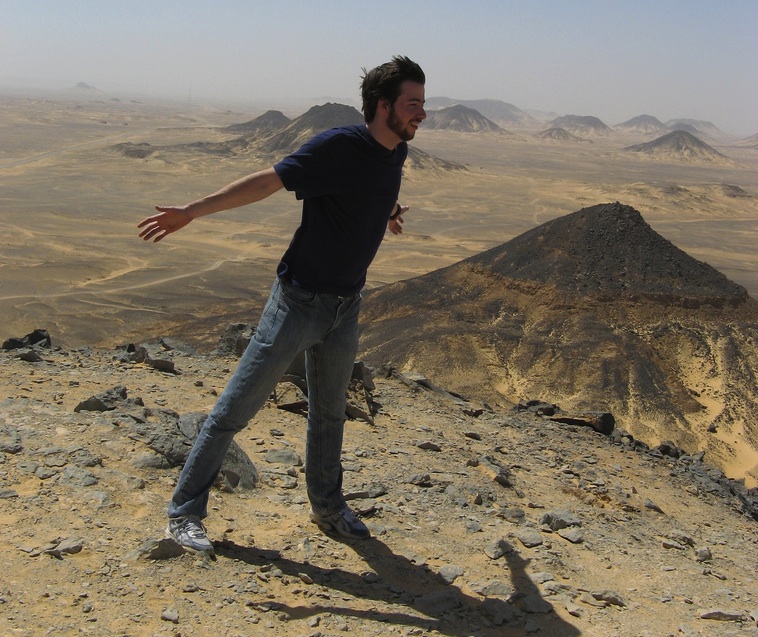
One of its richest, and home to Toronto is Ontario – a province whose leader wants it to “go green” (see fist pumping, left). It is also where I was born and raised.
Now, Ontario’s Premiere (leader) Daltan McGuinty is currently on a trade mission to Israel, and a focus will be on clean tech.
He and his entourage arrived in Tel Aviv on May 26, and have already visited some of Israel’s most exciting clean technology companies – those attracting worldwide interest and investment, as part of Ontario’a trade mission to Israel. Part of his journey was to see how the private and public sectors cooperate in clean tech innovation, according to News Ontario.
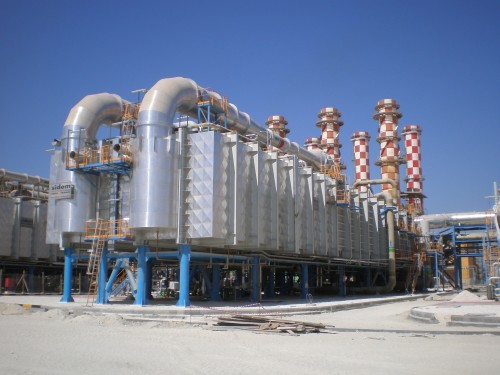
This desalination plant in Al-Hidd will be joined by additional facilities as Bahrain seeks to boost its water production. (Image via sidem-desalination.com)
Aiming to meet its growing water needs, Bahrain is pursuing an ambitious plan to increase its production of desalinated water. The kingdom currently produces 142 million gallons of water a day.
The first stage of the plan will cost some $400 million and has a particularly ambitious timetable: The aim is to already produce an additional 48 million gallons of water a day by mid-2011. The second stage will phase in production of another 52 million gallons per day over the next two decades, bringing total daily capacity to 242 million gallons.
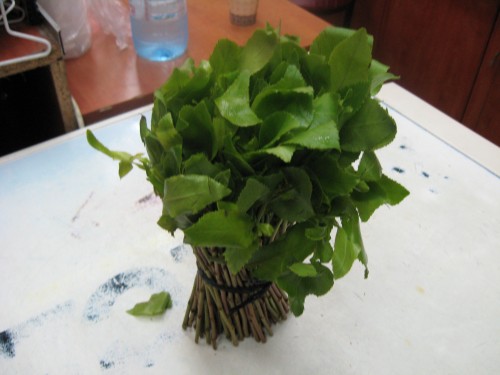
Miriam interviews store owners who sell legally addictive substances: soft drinks, cigarettes, junk snacks – and Gat.
Some folks chew gum. A lot of Israelis chew seeds: sunflower, pumpkin, watermelon seeds. Some people put a plug of tobacco into their cheek and chew away, only pausing to spit once in a while. But for maximum chewing pleasure, there’s Catha edulis, popularly known all over the Middle East as gat, qat, khat, or ghat. Chewing the fresh green leaves produces a mild euphoria, yet heightens awareness. The energy boost experienced is different from caffeine, in that one is more alert, yet relaxed.
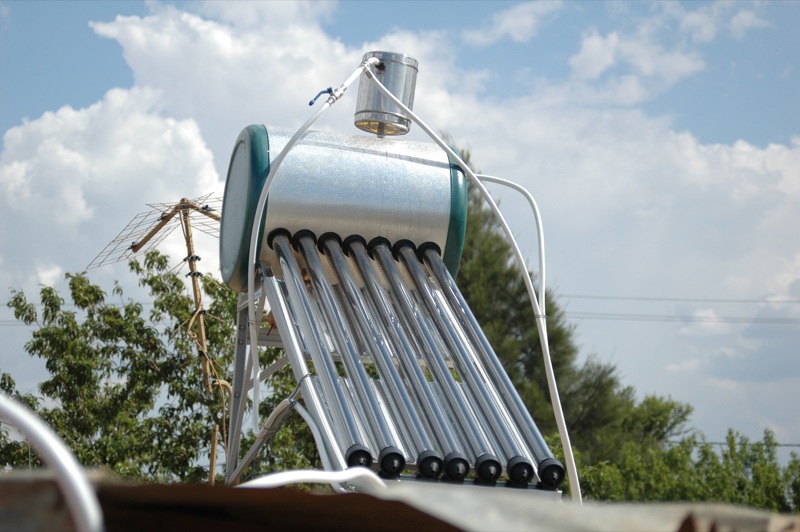
A solar hot water heater is a cheap way to collect endless hot water, from the sun. What are you waiting for? Image via Beluga.
They are relatively cheap units to install and can provide almost endless supplies of free hot water. Like Israel discovered decades ago, people in Cairo are now onto using energy from the sun to heat water, Bikya Masr reports. Why now? As electricity has become an extra financial burden for many Egyptian famileis, they are looking for ways to cut their electric bills. A good portion of the bill is spent on heating and water. Solar water heaters are a somewhat obvious solution but up until the last few years have often been underutilized as a technology that can be implemented to make both fiscal and environmental sense.
Gulf oil spill in early May. It’s much worse now but a solution used in Kuwait might be the key for containing the contaminated.
As the BP Deepwater Horizon oil spill continues to saturate the Gulf of Mexico with millions of barrels of crude oil and natural gas, company engineers have begun to turn to even more bizarre methods to plug the well that has now been creating ecological havoc for over a month now. The newest attempt to seal the well, according to articles in CNN is by using what is being called a “top kill” method, that involves pumping mud into the site of the oil leak to slow it’s flow, and then afterwards to plug the well with cement, making it a “dead well”.
Dosier’s fearlessness of the science of construction sets her apart from her peers [image courtesy of flickr]
We were so intrigued by Professor Ginger Dosier, the Architect at Sharjah University who grows bricks by combining sand, common bacteria, calcium chloride and urea, that we decided to dig deeper. Some architects, like those at Geotectura, develop mindbending concepts. But we wanted to understand how an architect could come to know so much about microbiology and chemistry, and then dare to leap from science to design?
The largest Muslim-led festival in the US, Takin’ It to the Streets, will feature arts, music, activities, and how to be green.
The Inner-City Muslim Action Network (IMAN) is currently putting together a free festival in Chicago that will take place on June 19th. Expected to be the largest Muslim-led festival in the US, Takin’ It to the Streets will bring together an estimated 20,000 people to take part in arts and music performances, forums, and a variety of activities. And while those 20,000 people are there, they’ll also learn a little about what it means to be a green Muslim.
It can get windy over there in Egypt. Now, Egypt plans on making renewable energy 20% of its national energy goals.
The Egyptian government has announced plans to generate 1,000 megawatts of wind power this year. Speaking at the energy forum for the Middle East and North Africa 2010, Egypt’s Electricity Minister Hassan Younis said that the country is ready to increase its capabilities in alternative energy projects by 2027. He said the planned projects are estimated to cost the government around $110 billion.
According to the minister, the government and electricity sector is adopting a “scientific approach to face the challenge of a growing power demand.” He added that his ministry is looking at diversifying the energy sector to promote renewable energy projects such as wind power and solar power.
More cities banning the sale of pets in stores, in effort to curb puppy mills and encourage adoption from shelters.
As city shelters are buckling under the pressure of countless unwanted pets, and with many US and Canadian pet stores selling pets originating in inhumane puppy mills, more and more cities are enacting laws to ban the sale of cats, dogs and other companion animals.
In 2006, Albuquerque, N.M banned the retail sale of dogs and cats. More recently, South Lake Tahoe and West Hollywood, have also banned pet sales. Other cities in Florida, Missouri, New Mexico and Richmond in Canada are considering similar bans. We hope this becomes a trend in the Middle East, where animal awareness is much lower (see our past post on the abuse of circus animals in Lebanon).
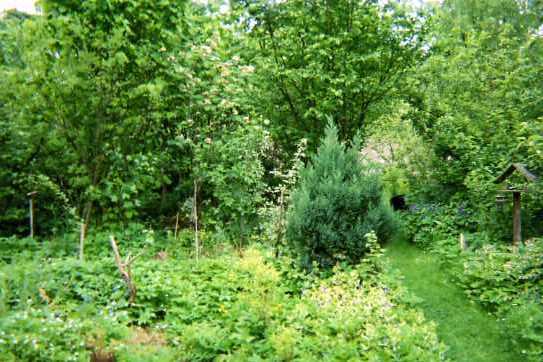
Food forests, a permaculture orchard, agroforestry, edible forests. Whatever you call them, these ancient systems for growing food are surging in popularity, can buffer us from extreme climate events and help “preppers” stay resilient against the end of days.
This book is unusual. Firstly, by virtue of covering the topic of forest gardening at all, but also unusual in another respect.
Many gardening books either concentrate on being packed with practical How-To information, or on offering glossy fantasies for gardeners. In Creating a Forest Garden Martin Crawford has expertly covered both bases. There are lots of mouth-watering pictures and great ideas to fire the inspiration as well as detailed, knowledgeable advice on how to achieve the reality.
He begins by describing what he means by the concept of a ‘forest garden’, namely “a garden modelled on the structure of young natural woodland, utilising plants of direct and indirect benefit to people – often edible plants. It may contain large trees, small trees, shrubs, herbaceous perennials, annuals and root crops, all planted in such a way as to maximise positive interactions and minimise negative interactions, with fertility maintained largely or wholly by the plants themselves.”
Hence, some of the principles underlying this book are allied to those of permaculture, although Crawford also includes annuals and biennials and short-lived climbers within his plantings.
He explains how a forest garden can be low maintenance, highly efficient for food production and even contribute to ‘food security’. If successfully planned, with the soil covered most of the time, there should be little weeding required. A forest garden can be diverse, sustainable, resilient to climate extremes and also beautiful, but it’s certainly not quick-fix makeover gardening.
This book is definitely about gardening and not simply food production agriculture, but it does concentrate on plants which are both useful and edible. Nor are the possibilities limited to those with large areas of land. A forest garden can be a small back garden and the book highlights which subset of plants would be most suitable for this.
Crawford established his own forest garden fifteen years ago in the South West of the United Kingdom. Due to the mild climate of that region of the country, and somewhat international approach of the author, he is by no means only writing about traditional English woodland plants. He discusses the aesthetics, philosophy and practicalities of native and non-native planting and comes down in favour of a distinctly pragmatic approach.
Many of the plants described within this book, such as mulberry, almond, myrtle, grape vine and strawberry tree would not be out of place in the Middle East.
The luscious plant directories contained within the book give information about hardiness of plants and their sun and shade preferences and tolerances, which is a useful distinction to make. He also writes about water requirements and irrigation, although perhaps not in the detail required by a reader in the Middle East wishing to establish a forest garden from scratch. (we’ve written recently about using forests as carbon sinks – that post is here.)
Somewhat counter-intuitively, Crawford explains that if you want a forest garden it is easier to start with a field rather than a forest. Converting existing woodland will require extensive thinning and replanting. He describes the processes and cycles required to plant your own trees and begin to establish the layers of planting beneath this, with an upper canopy of trees, a middle layer of shrubs and lower, perennial ground cover, to create something between a natural woodland and an orchard garden in character.
He also addresses how prevailing levels of light affect planting. For example, the depth of shade beneath tree cover in a Middle Eastern forest garden will be less than for the same density of planting in a UK garden.
This wealth of knowledge on how to create a forest garden from scratch leaves little space for describing gardening interventions in existing woodland.
This was one of the few aspects of the book which disappointed me, since forest gardening principles might offer exciting possibilities for gardeners wishing to productively cultivate tree-covered land without first clearing it. However, this is a small criticism, because there are many useful tips which could be adapted by someone gardening in established woodland. For instance, Crawford gives advice on the optimum design of clearings, and on which plants will require additional nutrients or inter-planting with nitrogen-fixing plants.
His calculations on the quantities of different substances which can be used to fertilize different plantings even include the use of human urine.
This book covers everything from mulching methods and grafting to wind protection and raising your own trees from seed.
Creating a Forest Garden is both an invaluable reference book and a fascinating coffee table volume. If you are seriously considering the creation or maintenance of a forest garden then you would do well to have this book on your shelves. Even if you are only looking for novel ground cover suggestions in shaded areas or approaches to inter-planting beneath trees, then this book offers bountiful food for thought.
—
Reviewer Pauline Masurel is a gardener and writer who lives in the United Kingdom, near Bristol. She is a regular reviewer of fiction for The Short Review website and has reviewed books for Amateur Gardening magazine. Her own short stories have been published in anthologies, broadcast on BBC radio and featured online.
She was a runner up in the 2010 Chapter One International Short Story competition and is a member of the storytelling group Heads & Tales. More about her own writing can be found on her website www.unfurling.net. Top image via Adventure.
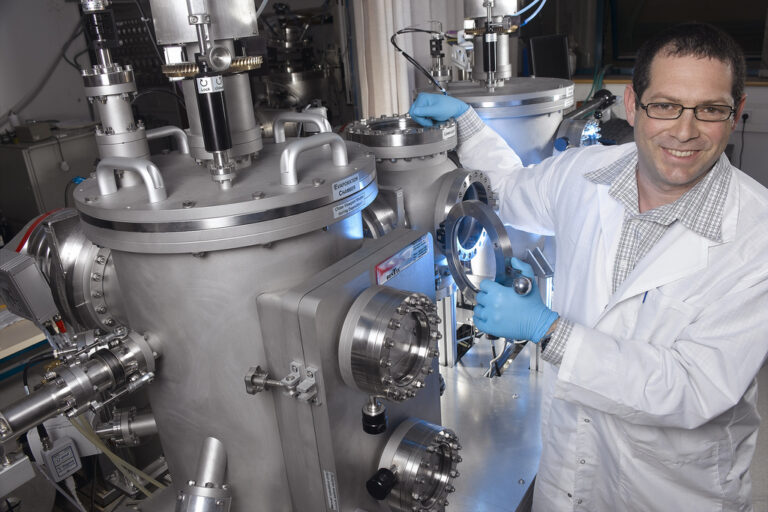
Today, laptop users are normally tethered to an electrical outlet as batteries only last a few hours. Dr. Amos Sharoni hopes to change the efficiency of processors so they last longer.
He works at Bar Ilan Univeristy, a school that’s established a name for itself in battery technology (meet Doron Auerbach), and the University’s young researcher Dr. Amos Sharoni is hoping to add to that body of work by extending the battery-life of everyday mobile devices. His research could lead to the development of energy-efficient computers and appliances where the same batteries could last 10 times longer, and the processors could run 10 times faster.
Think about it: The 21st century boasts state-of-the-art inventions like laptops and iPods that we can carry with us and use for business or pleasure wherever we roam, and yet when truly mobile and battery-operated, most can only last up to four hours before running out of juice. It’s so frustrating.
Driving to Venice from Trieste? Your car will power the electronic signs along the highway.(Image courtesy Lee Coursey via flickr)
Israel-based Innowattech, which develops technology to convert mechanical energy from vehicular or rail traffic into electricity, has landed its first commercial contract: Italian infrastructure and civil engineering contractor Impregilo SpA has selected Innowattech as its exclusive energy provider for lighting road signs on the Venice-Trieste highway in Italy.
Innowattech demonstrated its technology last year on a 10-kilometer stretch of road near Haifa, where its R&D center is located on the campus of the Technion Israel Institute of Technology.
The Better Brick?Although kinks need to be worked out, applying microbiological principles to design could revolutionize building materials. This researcher says she’s found a way to “grow” bricks from sand and urine.
Finally! Suzanne LaBarre of Metropolitanmag.com brings us a design worth writing home about. In the same tradition as Hassan Fathy and architects of this living building in Jerusalem, 32-year-old Ginger Dosier has grown her own bricks.
After 111 failed experiments, the Assistant Architecture Professor from the American University of Sharjah in the United Arab Emirates discovered that a winning combination of sand, common bacteria, calcium chloride and urea (which has putrefied for an optimum amount of time) creates a baby brick that is as strong as clay and marble.
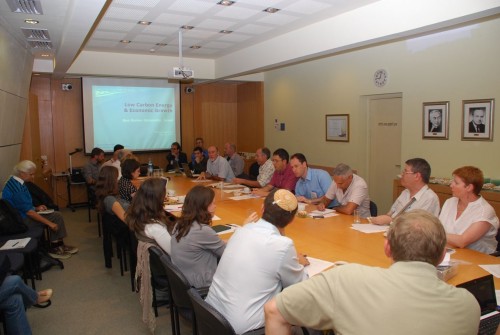
What will Israel do if the Nile Delta becomes submerged from climate change? Brainstorming at the Climate Change Mitigation Policy Workshop today at Ben-Gurion University.(Image courtesy of Ophir Shoham)
In his opening remarks at the Climate Change Mitigation Policy Workshop at Ben-Gurion University today, Prof. Alon Tal, one of Israel’s most revered environmentalists, referred to the 20 or so people seated around the conference table as a “dream team” for environmental policy in Israel. Indeed, the workshop featured an all-star lineup of Israeli experts from academia, government, NGOs and the private sector.
The initial reference point for the workshop was the McKinsey report commissioned by the Ministry of Environmental Protection last year, entitled “Greenhouse Gas Abatement Potential in Israel.” Tal said the idea of convening this workshop came to him after realizing that the Israeli environmental community had yet to formulate a concerted response to this report.
Does The First Arabian Construction Week Signal a Greener Middle Eastern Building Policy? [image via flickr]
We have brought disturbing news from Dubai this week: a smuggled baby crocodile died and hyenas and baboons were confiscated from a private home. So it gives us pleasure to be able to provide our readers with a tidbit of hope. The Emirates Green Building Council (EGBC) will host a “focus day” tomorrow, May 26th, at the Green Building Middle East Summit. Just one of several activities taking place during the Arabian Construction Week at the Abu Dhabi National Exhibition Center (ADNEC), EGBC’s focus day aims to dispel the notion that building green breaks the bank.

 Canada, unlike the United States, is made up of provinces.
 Miriam interviews store owners who sell legally addictive substances: soft drinks, cigarettes, junk snacks – and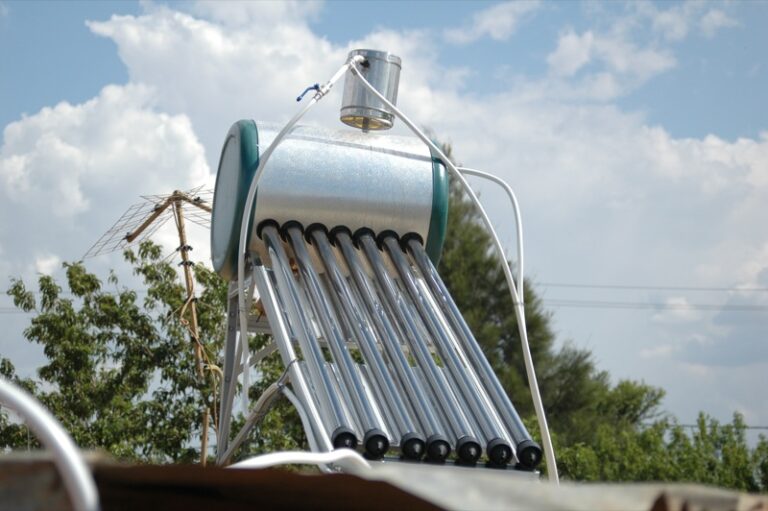
 A solar hot water heater is a cheap way to collect endless hot water, from the sun. What are you waiting for? Image via




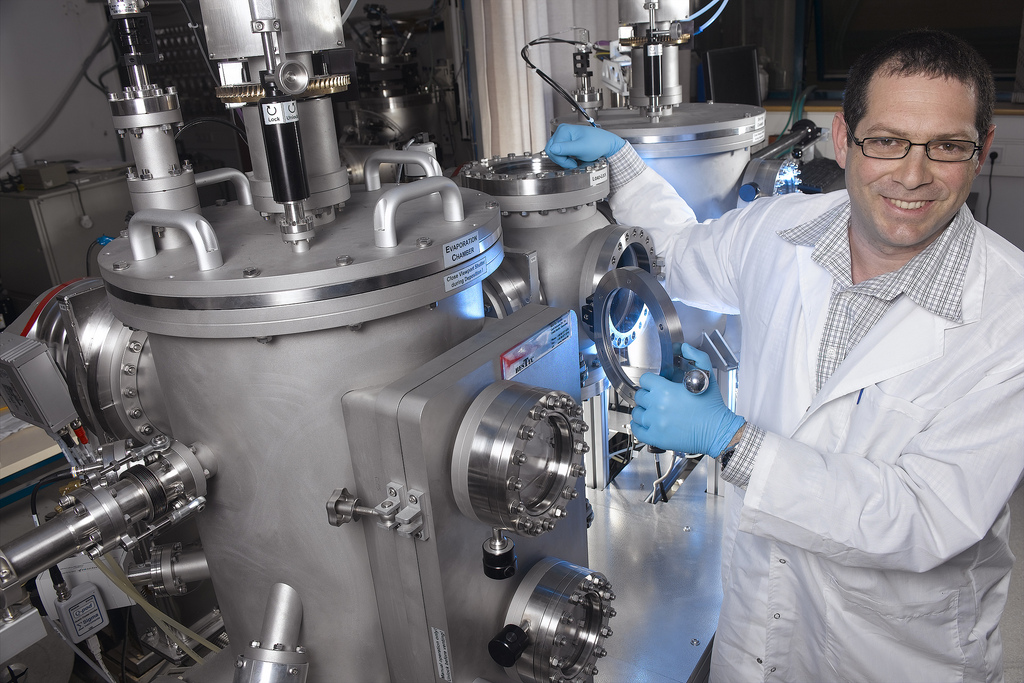 Today, laptop users are normally tethered to an electrical outlet as batteries only last a few hours. Dr. Amos Sharoni hopes to change the efficiency of processors so they last longer.
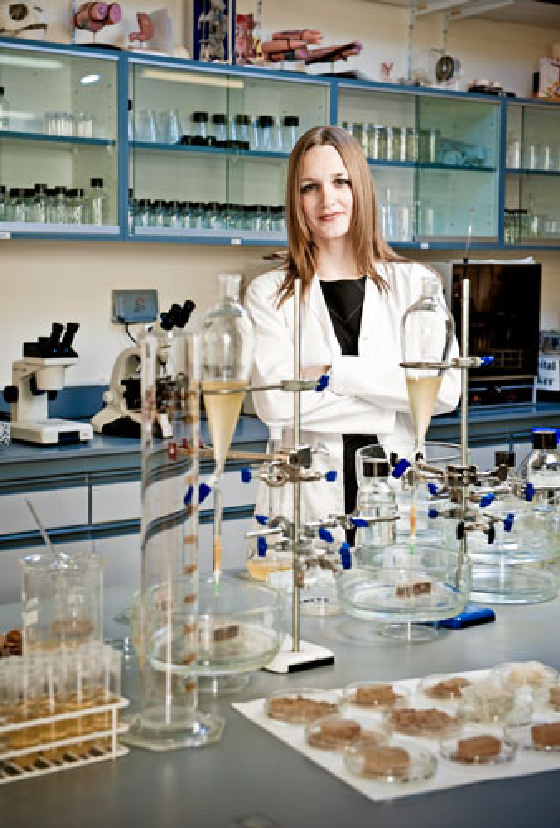
 The Better Brick? Although kinks need to be worked out, applying microbiological principles to design could revolutionize building materials. This researcher says she’s found a way to “grow” bricks from sand and urine.