
Shocking statistics and a love for the environment have inspired a new campaign which highlights Islam’s Eco message in order to break the link between Islam and extremism. Inspired by Muhammed is a new campaign which showcases Muslims who have been inspired by their faith to contribute positively to society and focuses on areas such as women’s rights, social justice as well as the environment. Its message can impact the Middle East and the world.
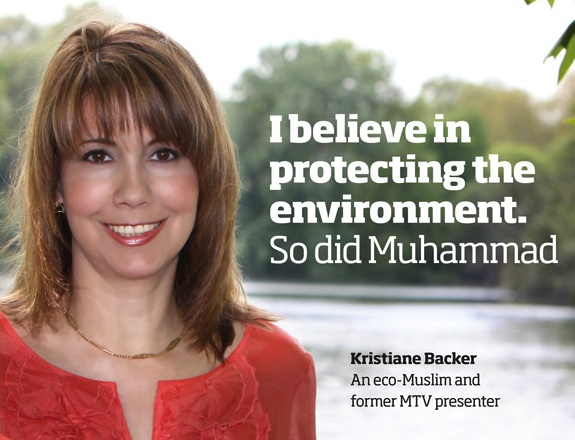
Launched by the Muslim convert Kristiane Backer (pictured above) on behalf of the Exploring Islam Foundation, the campaign hopes to improve public understanding of the more positive aspects of Islam.
The campaign was prompted by shocking finds from a May 2010 national poll in Britain which found that more than half the British population associated Islam with extremism (58%) and terrorism (50%). The opinion poll also discovered that just 6% of the British population believe that Islam promotes active measures to protect the environment.
 Kristiane, the former MTV presenter from Germany, is one of the campaign profiles and talks about her awareness of green issues and how she’s adopted an environmentally-friendly lifestyle to suit her Islamic beliefs.
She explains: “Green living and the preservation of our resources are essential principles of Islam. ‘Don’t be wasteful, for God does not like the wasters,’ the Qur’an tells us. Prophet Muhammad reminded his companions to respect nature and use its resources moderately, not to waste water even when next to a flowing river.”

Backer explains: “The environment is everyone’s concern. According to Islam, life is sacred, as is everything in the natural world. Many verses in the Quran are concerned with nature, the earth and its resources. The earth is a trust from God and we are its ‘stewards’, a role we need to fulfil with responsibility and respect towards all creation.
The Koran tells Muslims to not be wasteful
“I have always cared for the environment. In Germany, where I grew up before I moved to the UK, green conscience is part of the national psyche since the Green movement was founded there in the 1970s. Similarly, green living and the preservation of our resources are essential principles of Islam. “Don’t be wasteful, for God does not like the wasters,” the Quran tells us. Prophet Muhammad reminded his companions to respect nature and use its resources moderately, not to waste water even when next to a flowing river.
“Having done courses in Sustainable Environment at a London university, I know there are many small things each of us can do to care for the environment. They will have an immense impact in the end, it is the ripple effect. If every household replaced just three 60-watt incandescent bulbs with efficient bulbs, the pollution savings would be like taking 3.5 million cars off the road!
“I do what I can. I recycle, switch off the lights when not at home and ride my bicycle around the neighbourhood. I eat organic halal meat, feed the birds with leftover bread and boil the kettle half full and I try to use green, organic products whenever I can from fruits and vegetables, and skincare to cleaning materials.
“Today we can all draw inspiration from Muhammad and try a little harder to live green, to recycle and to conserve energy. And to re-establish harmony between us and the world around us.”
The high profile media campaign is really hoping to change people’s perceptions of Islam in the UK and includes adverts at bus stops, tube stations and even on London’s iconic black cabs. A fun and informative website www.inspiredbymuhammad.com has been launched to explain Islam’s ethical principles and includes short videos to explain Islam’s more environmentally-friendly aspects.
Following Muhammad’s “green” ethics
The prophet Muhammad’s ethic that the planet is sacred and should be cared for is highlighted as is his respect for the environment. Muhammad encouraged water conservation (see Waqf for Water), planting trees and turning forests into protected conservation areas called hima as well as limiting waste.
Other high-profile Muslims on the website also discuss how Islam has inspired animal welfare through the prophet’s example who taught that animals should be treated with the same respect as a person.
The campaign is a great way of getting the message of peace and understanding within Islam to the wider general public and also reminding Muslims of their duties towards the environment. Its affects could reverberate to the entire Middle East.
As Kristiane says, “Today we can all draw inspiration from Muhammad and try a little harder to live green, to recycle and to conserve energy. And to re-establish harmony between us and the world around us.”
::Inspired by Muhammed website
Read more on greening Islam:
Water Conservation Values in Islam
The Muslim World Wants to Green Hajj
Breast Feed Baby in Hijab

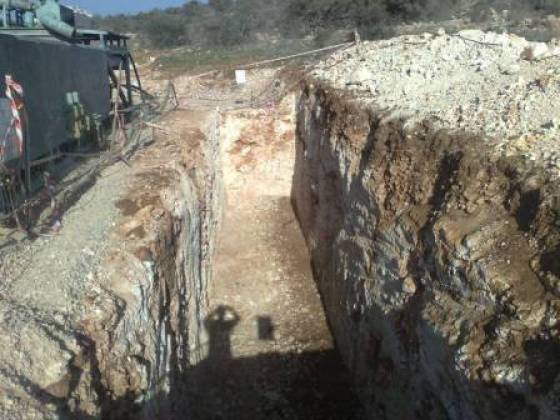 Israel’s Energy Initiatives’ (IEI) oil shale ambitions threaten the environment, and livelihood of Judean hills residents. [image courtesy of Moshe Moreno]
 Agrochemicals might be big business, but they are a bad deal for the environment and human health.

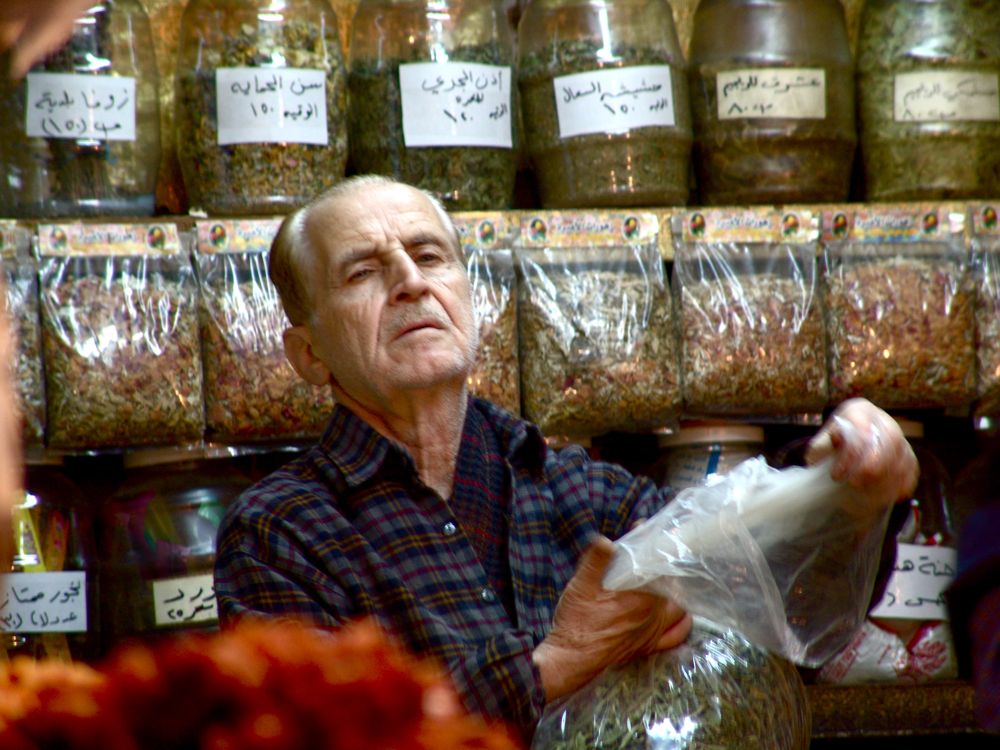 Estimates of 15 million bags per day consumed in Damascus alone! Moshe uncovers news in Arabic – that Syrians are launching a campaign to “say no to plastic bags.”
 New agriculture projects feed Libya, thanks to the Great Man Made River. The artificial irrigation project, the most expensive in history, is good while it lasts.
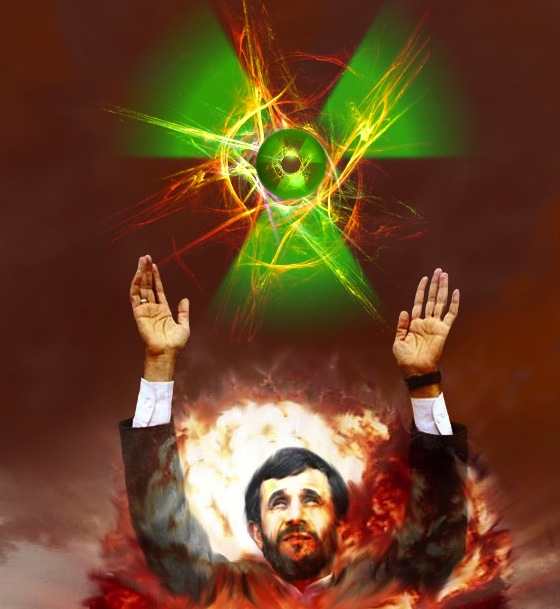 As major oil companies pull out of Iran, analysts differ over the import of new economic sanctions.
 Aerial view of the new desalination plant in Hadera.
 Inside the Hadera desalination facility in Israel.
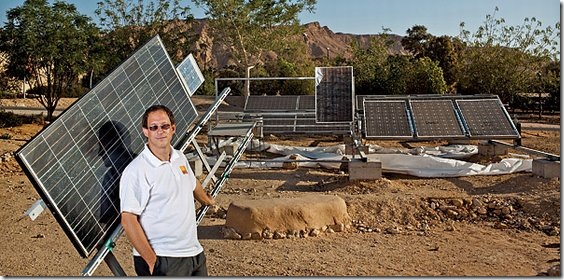
 Profitability + altruism + saving the planet? Yosef I. Abramowitz from Arava Power, Kibbutz Ketura Israel – one of the latest ventures in clean tech launched from an Israeli kibbutz.
 Israel’s solar, water and other cleantech companies showcased their products this week at an exhibition in Tel Aviv. (Image via Israel Export Institute)
 If you like to beguile the slow, hot summer hours with a good food book, you will love this one.
 I have quite a taste for post-apocalyptical fantasies myself (such as Cormac McCarthy’s chilling ‘The Road’, reviewed