Home Blog Page 629

UN To Mediate A Natural Gas "Standoff" Between Israel and Lebanon Gas Fields Dispute

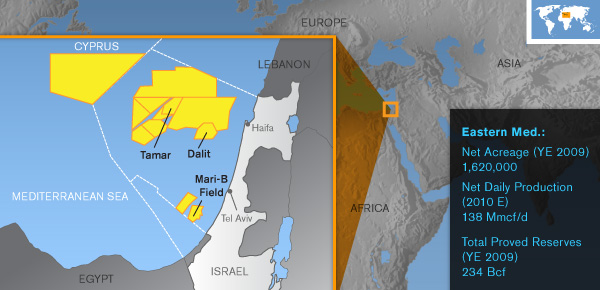
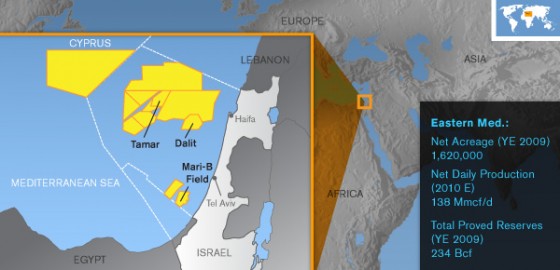
israel lebanon borderFights over rights to a natural gas field between Israel and the Hezbollah, has gone to the higher powers at the UN.

Israel has struck natural gas, and a new cause for conflict with its northern neighbour Lebanon which also lays claim to the massive gas field. The current Leviathan natural gas field dispute between Israel and Lebanon has now reached the United Nations since Hezbollah is laying claim to the gas fields as well.

Dust Swept Into Arabian Gulf Delivers Key Nutrients

0

nasa-arabian-gulfAlthough dust could fill up the Gulf in the next 20-40 years, according to scientists, at the moment it feeds the food chain. [image via treehugger]

Whether from nearby construction zones puffing up plumes of dust and contaminating homes, or a sweeping sand storm, dust permeates every crevice of Middle Eastern life. But recent research suggests that dust swept into the Persian Gulf provides crucial nutrients that are then converted to organic carbon – necessary to fuel the marine ecosystem.

5 Environment Stories To Weep Over (For Tisha B'Av)

crying is okay signThe Jewish holiday Tisha B’Av starts tonight. It gives one license to be sad over the state of the environment.

We know that it’s not productive to dwell on environmental doom and gloom. Green Prophet readers are modern and hip people; we are environmentally responsible, but hey, not totally perfect. Every so often, we just need to cry. We can put on a Tori Amos album, curl up in a ball in our beds and weep like there is no tomorrow. And it can feel good, because sometimes the world and what humans do to it is just plain sad.

Palestinian and Israeli Researchers Get Reverse Osmosis Water Grant

1

palestinian israel water grantAmerica gives more than half a million dollars to Israeli and Palestinian water researchers to clean water in the West Bank.

Ben Gurion University researcher Dr. Moshe Herzberg (above) and Prof. Mohammed Saleem Ali-Shtayeh of the Biodiversity & Environmental Research Center in Nablus, have received an American USAID-MERC grant of $659,410 to increase the clean water supply around Israel and the Middle East.

This study brings together Israelis and Palestinians to address clean water issues in the West Bank area of Nablus over a five-year period.  The team includes Dr. Moshe Herzberg (BGU), Dr. Osnat Gillor (BGU), Prof. Mohammed Saleem Ali-Shtayeh (BERC) and Dr. Helen Thanh Nguyen, a grant advisor and assistant professor at the University of Illinois Urbana-Champaign.

Green Prophet Flies To "The Iraqi Environmental Blog"

5

green prophet middle east blog reviewOur weekly series looking at the Middle East Arabic blogosphere. This week: Iraq. And a green blog that began after Saddam Hussein’s demise.

After looking at Mazen Abboud’s environmental blog from Lebanon and at SAWA for A Better Syrian Society, we are flying this week to Syria’s next-door neighbor, Iraq, and to a blog written in Arabic called The Iraqi Environmental Blog, active from September 2008. This comes in due time, as we learn about Iraqi bird conservationists risking life and “wing” to save birds in the face of Al Qaeda infidels.

This blog is a personal blog written in Arabic by Alaa Kamel Alwan (left), an Iraqi engineer. In his profile, Alaa writes about himself that he lives in Basra, Iraq, and that he is “an environmental activist and an informant as well as a member of the Arab Professional Informants League.”

In his first post  titled “the Iraqi Environmental Blog” Alaa Kamel Alwan writes that this is a “personal initiative,” which aims at supporting the realization of the 10th principle of the Rio Declaration from 1992 concerning the transparent distribution of environmental information among the civilians.

As such, this blog informs the readers about: the Iraqi government ministries, newspapers, societies, and universities which deal with environmental issues; the Iraqi environmental legislation; the activities of the Iraqi environmental societies; the Iraqi environmental publications; and reports on the environment in Basra and the Marshes.

ecoQ Conference in Qatar (2011) for Clean Technologies and Sustainable Energy

1

ecoQ qatar eco-q conferencePlanning is in full swing for ecoQ, an international environmental protection expo taking place in Qatar in September 2011. (From left to right: Haitham Shehab, Dr. Saif Al Hajari, and a member of the ecoQ team)

Next September, the Qatar International Environment Protection Expo (ecoQ for short) will be presenting an international showcase of eco-friendly technologies, products, and sustainable energy solutions.  Environmental standards will be enforced in preparing for the exhibition that will take place at the Doha Exhibitions Center from September 17th-19th, 2011 and occupy a 10,000 square meter space.

Record High Summer Temperatures are also Scorching the Middle East

0

sun beach middle east egyptA tourist soaks up the Egyptian sun. The Middle East is getting hotter, like the rest of the world, but when is too hot, too much?

It’s hot and getting hotter. But nowhere is the more evident than in Southern Asia and the Middle East. And while daytime temperatures are always hot this time of the year in areas like the Arabian Peninsula, and the Indian Sub-Continent, recording temperatures such as 53.7 degrees Celsius (136 degrees Fahrenheit) in places like Mohanjo-daro, Pakistan.

Even European locations like the Canary Islands and Malaga Spain are recording abnormally high temperatures of 38 degrees Celsius or more, reports an article in the UK-based Guardian. A sign of global warming?

Three "Natural" Masks and Cleaners For Soothing Summer Skin

2

crocodile-skinDoes your skin sometimes feel as cracked and scaly as this? Well there are some natural “mask” solutions, naturally. Image via Photos8.com

If you pay attention to the ingredients of your skin products, you will realize that you are buying something twice the ordinary price because it is especially designed for summer. Then there are those products out there, which claim to be 100% natural, but if you take a peek at the ingredients, you are in for a surprise. Well there are some other homemade completely natural options (like Karen pointed out earlier today with her homemade sunscreen recipe), which can save your skin.

Make Your Own Organic Sunscreen

9
Handmade sunblock
Feeling uneasy about commercial sunblock? Make your own.

If you live anywhere with beach days, and unless you plan on being a hermit in an air conditioned cave for the next few months you’re bound to get hit by some serious rays of sun.

Sooner or later, you’ve gotta go to work, buy groceries, buy ice cream, and socialize.  And when you do, you should be protected.  If you’re feeling ambitious and crafty, why not protect yourself with some homemade organic sunscreen?  It’s less complicated than you think to make.

To make your organic sunscreen you will need:

  • a water pot
  • empty tin can
  • 2 tablespoons coconut oil
  • a few drops of tea tree oil
  • 2 tablespoons bee’s oil
  • 2 tablespoons zinc oxide
  • sealed container to store the sunscreen in (like a glass jar)

Watch the video below to see what to do with those materials:

The next steps?  Coat your skin generously with your awesome homemade sunscreen, and show that sun sun who’s boss!

Read more about sunscreen and the beach:
Chemicals and Your Baby’s Skin
Recycling Beach Waste

PetroGulf Misr Denies Responsibility For Red Sea Oil Spill

0

[youtube]http://www.youtube.com/watch?v=zpcxn3PKlps[/youtube] The Egyptian Government has failed to provide concrete answers regarding the Red Sea oil spill that occurred last month.

One month after oil leaked on to Hurghada’s beaches along the Red Sea, popular among tourists for reef diving, the Government-run oil company Petroleum Misr denies responsibility for the spill despite footage that incriminates them. Oil in visible regions was quickly cleaned up by local groups, but there is concern that oil continues to threaten the out-of-sight but sensitive ecosystem North of Hurghada.

Egypt to Build Two 100 MW Solar Energy Plants

More news to make Ra, the Egyptian sun god proud: Egypt gets serious about building solar energy plants on top of its 500 MW plant, with bids open for 1,000 MW more.

The Egyptian government hopes two new projects will help push forward solar and wind energy in the country. According to the country’s Electricity Minister Hassan Younis, Egypt is planning to build a 100-megawatt solar power plant in order to meet the growing electricity needs facing the country.

Hassan Younis was quoted last weekend by the official Middle East News Agency as saying the project will cost about $700 million and will be financed by the World Bank and the African Development Fund.

Problems With Rehabilitating the Historical Grand Bazaar of Tehran

0

tehran bazaar sustainableGreen Prophet’s Merhdad, explores some of the “urban” issues in giving the ancient 500 year old Bazaar of Tehran, sustainable by design, a modern facelift. Plans in a new $20 million budget call for bike paths, trams, and a strengthened infrastructure for Tehran’s beating heart.

In July 2010, Nader Karami, the mayor of Zone 12 of Tehran announced that a budget of about $20 million USD has been allocated to the rehabilitation and regeneration plan of the Grand Bazaar of Tehran. This was discussed in a meeting with the city council of Tehran.

The necessity of executing such a plan has been felt by the people of the Bazaar, especially the businessmen there, over the last 50 years. This 500-year-old economic heart of Tehran and Iran has an old physical fabric and infrastructure. It’s considered the largest bazaar in the world. However, due to problems like accessing the inner cores of its infrastructure, strikes over taxes, permission from the retail shop owners, budget problems, and so on, successful execution of the similar rehab plans has not been possible.

How precious is the Bazaar of Tehran?

The bazaar, or shuk as it’s called in some places, is an important element of any traditional Islamic and Iranian city. The common form of any bazaar is sustainable by design: it includes pedestrian corridors whose main activity is trade and business. And there have also been residential neighborhoods built around the bazaars. For example the bazaar of Tehran has had a population of between 30,000 to 40,000 people in the early 1940s (this population is now about 7,000).

The more important bazaars of the cities of the Middle East are roofed, so that the shoppers are protected from the harsh climate, particularly during the hot summers.

terhan grand bazaar 1973The heart of Tehran then, and now: The Tehran Grand Bazaar, circa 1873. Via wikipedia

About 500 years ago, in the era of Shah Tahmasb, one of the kings of the Safavid dynasty, the bazaar of Tehran was built. It has not been as brilliant as the bazaars of major Iranian cities like Isfahan, Tabriz, Shiraz, and Yazd, but it gained importance when Tehran was selected as a capital city in the early nineteenth century by the Qajar kings. The oldest parts of the bazaar were built in this age.

In order to give prestige to the bazaar of the new capital city, it was roofed in mid-nineteenth century. At this time, the bazaar was extended to north and north-west. The European travelers, who visited Tehran in nineteenth century noted that it had economic, social, political, and religious importance.

The word “bazaar” itself is derived from Persian, which is pronounced in the same way and is used in some languages.

Traditional Values Versus Contemporary Problems

Today, the necessity of preservation and revitalization of the bazaar is recognized. It is still the center of economy of not only Tehran, but also Iran. It is also center of other activities: The Tehran Bazaar includes about 70 mosques.

Explore the Grand Bazaar in this great video:

And according to Nader Karami, this 110-hectare bazaar is the vastest pedestrian area of Iran. Every day more than one million urban travels with the destination of bazaar of Tehran are made.

However, in spite of the mentioned importance of this old element of Tehran, little attention has been paid to maintenance and repair of the infrastructure of the bazaar. The combination of old narrow pedestrian corridors with the non-standard infrastructure like electricity networks and sanitary and sewage systems has resulted in complicated problems for planners and authorities.

Every year some fire accidents occur just because of the old electricity cable network and the nearby flammable materials warehouses. In the last 10 years the number of such accidents has risen by 25 percent.

Although similar rehabilitation plans have been considered over the last 50 years, this time around the Municipality of Tehran has claimed it will provide a tramway around the bazaar, a new bicycling space, a rehabilitation of its crumbing infrastructure and an improvement of its electricity network.

Green urban planners, like myself, can only hope the plan will come to light.

More green stories on Iran:
Iran Looks to Create Biofuel
Iran Inaugurates Its First Solar CSP Plant
Celebrate Spring and Iranian New Year

Strategic Foresight Group’s Forecasts for Water in the Middle East

0

wana forum participants Jordan photoPolicy makers, water experts and peace lovers might be interested in the Strategic Foresight Group’s research on water as a means to resolve conflict in the Middle East. Read about their latest efforts in Jordan.

WANA, a North Africa and West Asia forum convened not long ago in Jordan to discuss the environment, a green economy, sustainable development and the revival of Hima, an Islamic environmental conservation practice. The West Asia – North Africa WANA Forum is a long-term initiative that brings together Middle East decision-makers to enact change, including environmental ones, in the Middle East region. Based in Jordan, the facilitator and guardian of the forum is Prince of Jordan El Hassan bin Talal.

At their latest gathering, Green Prophet’s friend the Strategic Foresight Group was there joining over 130 participants, representing over 50 nationalities. Strategic Foresight is focused on water. And it was thanks to their invitation, we were able to join a large delegation of water experts from the Middle East at the beginning of this year, in Switzerland.

Continuing its important mission to help alleviate Middle East conflict over water, the Strategic Foresight Group gives us its update on what it presented at the WANA forum, along with its vision for the future.

EcoMum’s 7 Focus Points for Green Parents

2

green stones walking child

Busy moms can lose their “green” focus. Green Prophet’s EcoMum goes over 7 focal point tips to keep over-stretched moms on their “eco” pointe.

It’s been a while since this EcoMum reported her tips on Green Prophet. I’ve been in my “mummy bubble” and from here I take it for granted that most people these days have a much greener outlook to life and are slowly but surely making positive changes to their environment.

But I seem to think my bubble maybe bursting as I find myself answering more and more questions about the basics of green parenting. This made me think of getting back to my core beliefs of eco-parenting. Read on about my thoughts on green food, education, toys, diapers, cleaning chemicals and transport. Of course you can start off with your child from birth by using organic baby clothes.

But in this short guide I’ve provided 7 focal tips to keep any green parent, or want-to-be green parent on track. 

Nature Iraq's Conservation in A Combat Zone

1

nature-iraq-conservationThese soldiers escort conservationists protecting the lapwing bird in active Al Qaeda territory.

The Middle East’s conservation warriors are diving to restore coral and boating to protect sharks in the Red Sea. But in the western Iraqi desert, where Al Qaeada operatives are active in a region called the “triangle of death”, Omar Fadhel and his team risk their life for birds.