Home Blog Page 610

Egypt To Re-Think Wastewater Treatment At Upcoming Conference

2

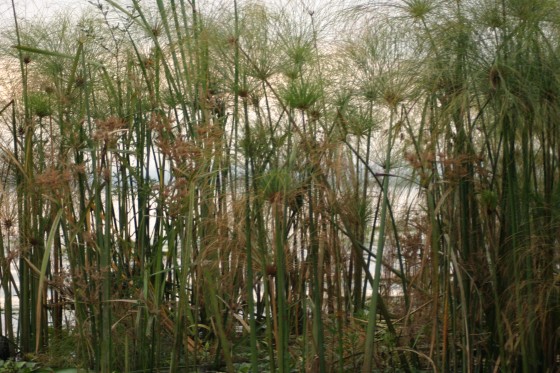
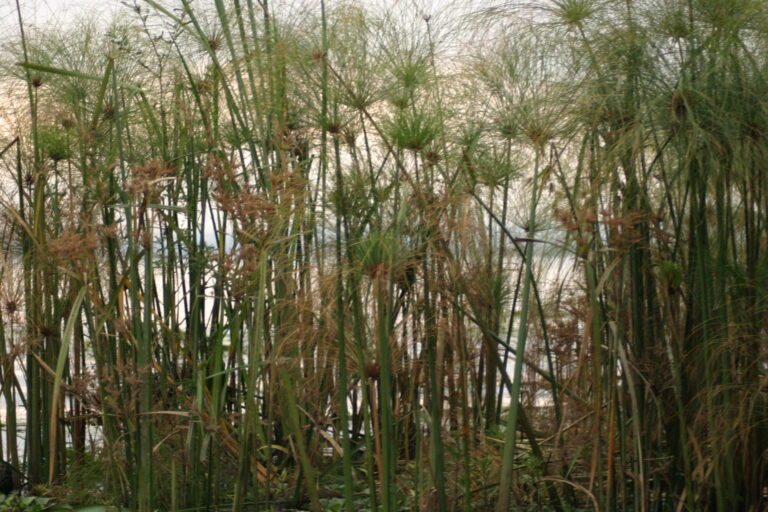
papyrus-plants-morningUsing constructed wetlands is one alternative to be addressed at the IQPC wastewater conference in Cairo this October.

As Egypt’s population increases, it puts pressure on the country’s main water source: the Nile River. In addition to general pollution from agricultural runoff and other pollutants, the recent diesel spill north of Aswan demonstrates the challenges of keeping the river fit for consumption. A pair of industrious young students are planning a kayaking trip from Aswan to Alexandria in order to generate better awareness among the populace. However, government action is absolutely critical in order to ensure the river’s long-term sustainability.  

Repair Your Eating Habits in Time for Yom Kippur

0

Fasting, while probably better for the environment, is unfortunately unsustainable for us humans.  What other ways can you make your eating eco-friendly?

Yom Kippur, the Jewish Day of Atonement, is one of the holiest days of the year for Jews and is a time of reflection, atonement, fasting and prayer.  It is a day when people look back upon the past year and think forward towards the future.  With the fasting that will be going on (and the resulting grumbling tummies), though, you may also want to think about how the ways you satisfy one of your most basic needs – eating – can be improved.  Our eating habits have a huge effect on the environment, and making a few alterations can make a big difference.

Living simpler & deeper with The Moneyless Man

the-moneyless-man One man goes on a mission to live a year without money; James  tells us how it’s done.

If we take green living seriously, we all must examine every aspect of life, from consumerism through to energy use and our personal economic and social attitude. This is what Mark Boyle has done, to an extreme level – he has forsaken our regular monetary exchange system, and has lived and looked outside its constraints (and luxuries) for a year (and more) and written it up in ‘The Moneyless Man – A Year of Freeconomic Living’.

“Money no longer works for us. We work for it. Money has taken over the world. As a society, we worship and venerate a commodity that has no intrinsic value, to the expense of all else. What’s more, our entire notion of money is built on a system which promotes inequality, environmental destruction and disrespect for humanity.”

moneyless-man-bookcover What you didn’t know about mushrooms

It is an illuminating tale of the practicalities and difficulties of managing life without the lubrication we all moan about, struggle to earn (or revel in its abundance), and the network of transactions we associate with money.

Here on GP we’ve written about making your own soaps and cleaning solutions; Mark goes much further and describes how he makes toothpaste from cuttlefish and fennel seeds, and ink and paper from foraged mushrooms. He forages for food, grows his own, barters his time and energy in exchange for sacks of wheat (and is living on a farmers land in exchange for time given to the farm growing food).

He shuns buses and public transport, relying instead on his legs, his trusty bike, and occasionally sticking his thumb out.  There is a wealth of practical ‘how to’ information interspersed throughout the book. He includes tips on low impact transport, hitchhiking, keeping clean without toiletries, a hay fever remedy, making booze for free, and even offers up advice on menstruation!

He writes memorably about getting from Bristol to his hometown of Ballyshannon in County Donegal in Ireland (a distance of some 500 miles) by hitching.

Celtic Tiger Economy

Ironically, I lived just outside Ballyshannon myself a few years back, and resonate with how Mark painfully describes how the traditional way of life in Ireland has changed, all due to a growing economy and society’s shift to being part of a market-led and pressure-driven system, where we have less time for anyone else’s well-being. Rural Ireland is not anymore the peaceful haven of stone cottages with turf smoke lingering in the air; it is now the land of a virulent Celtic Tiger economy and its depressed aftermath.

“Another major motivation is much simpler and more emotional – I’m tired. I’m tired of witnessing the environmental destruction that takes place every day, and playing a part, however small, in it. …. I’m tired of seeing families and lands destroyed in the Middle East so that we in the West can fuel our lives on cheap energy. And I want to do something about it. I want community not conflict…”

moneyless-man-hiking Here in Bristol, Mark is a local hero: as well as being a warm and genuinely compassionate guy, he has set up the freeconomy network,  ran freeskilling evenings in a local café, where anyone could learn or teach a new skill ranging from yoga through to beer-making and identifying trees, and organised the Freeconomy Feast in November 2008, which fed 1000 people a meal from foraged and found food (for free), and provided entertainment and inspiration for at least 4,000 in a single – entirely moneyless – day!

Freeconomic Community

This is all detailed in chapter 14, but take my word for it, it was a hell of an achievement. I know he has even bigger plans in the pipeline: all proceeds from this (already best-selling) book will go to the creation of a Freeconomic Community, living communally together, based on values of mutual co-operation and trust, out of the regular economic system.

“ Living the slow life is definitely more time-consuming but I’d rather have it consumed this way than in watching a reality television show in the room we call ‘living’…if I didn’t really believe this, I wouldn’t put myself to so much trouble.”

Despite all this frenetic activity promoting the freeconomic life, Mark lives simply and frugally in a small caravan. He is the living proof that we don’t need to dispense with all the trappings of modern life, such as a phone (incoming calls only!) and a laptop – just power them from renewable sources. He has carved out a media career writing and philosophising about his efforts, and has been much sought out by the media.

I was bemused recently when I saw him on a daytime TV show where the presenter wove her piece around the question of whether a ‘moneyless man’ could be a good catch! Mark played along, using even this rather inane opportunity to cheerfully get the message across with a grin and his wonderfully distinctive Irish brogue. Many of the media images of him show him shirtless, chopping wood or just loving being in the natural surroundings of his home.

Far and wide

He lives deep in the English countryside, between Bristol and Bath, but his message is spreading far and wide. ‘The Moneyless Man’ has just been published in Korean (surely it must be coming out in both Hebrew and Arabic soon?), which shows how this simpler, more thoughtful and more turned on lifestyle really touches a nerve.

Watch video on Mark’s life:

[youtube]http://www.youtube.com/watch?v=cyqavzuFZ3c[/youtube]

Read this book if you care about the human impact upon the earth, if you are similarly angry and frustrated about this corrupt, oil-based economic system we live under, and read Mark’s book if you too want to make a difference.

‘The Moneyless Man – A Year of Freeconomic Living’ by Mark Boyle Published by www.one-world-publications.com 2010

Turkey’s Solimpeks Wins Certification for Hybrid Solar Panels

0

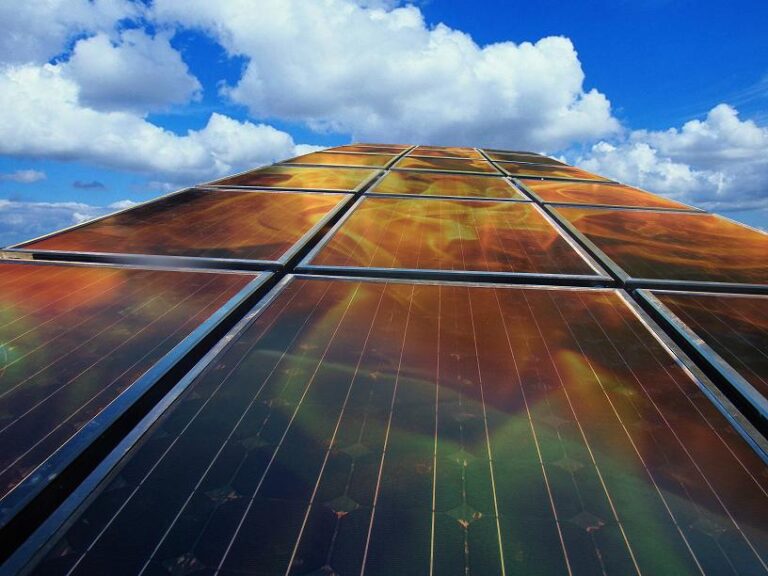
Hybrid-solar-panels The sky’s the limit: Solimpeks’ hybrid solar systems produce both electricity and hot water.

I recently installed a fan in my roof to pump out the hot air from the attic and help keep the house cooler during the summer. I also have a solar panel on the roof to produce hot water. It seems logical that the solar energy harnessed for the water heater should also be able to provide electricity to operate the fan, right? Well, it turns out it’s not that simple – so until I install a separate photovoltaic (PV) solar panel on the roof, the fan will be plugged into an electric socket instead.

It would be nice to have a single solar panel capable of producing both hot water and electricity. A Turkish company, Solimpeks Solar Energy Corp., is producing precisely this type of combined system,  and has now been awarded MCS (Microgeneration Certification Scheme) certification for its Volther hybrid system.

Another Name for Sugar – High Fructose Corn Syrup

6

corn-cobs-in-bowlWould you think that this healthy vegetable could be converted into something unhealthy?

When glancing at a list of ingredients, many of the words are not simply unfamiliar but completely unknown to the average consumer. This being the case, checking a list of ingredients seems an almost futile exercise as many of the foods listed are unheard of. When it comes to the various forms of sugar in food, the inability to recognise ingredients can be a huge concern for the health-conscious consumer.

Zonzoo Gives Old Phones New Life In The UAE

0

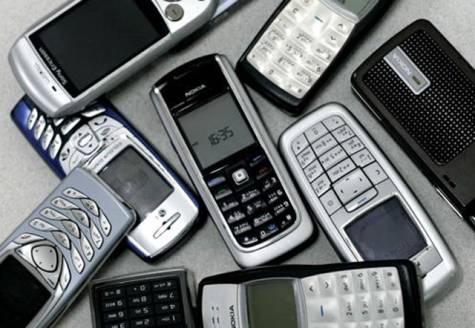
recycled cell phones Zonzoo and Enviroserve recycle cell phones, earning donors a bit of good, “green”  cash.
When old cell phone batteries peter out and new models are just too hard to resist, many people chuck leave their old phones languishing in a drawer or chuck them in the trash bin.

From there they are transported and dumped in the local landfill, such as Hariya, where it leaks harmful toxins. Another alternative is to recycle your old cell phone, to give it a new life. Unfortunately, it’s not always easy to recycle in the Middle East, where the facilities are not as advanced as they are in the West. Zonzoo is changing that.

Sinking Hotels! Salt Imbalance In Mined Dead Sea Threatens Tourism Industry

0

dead-seas-salt-problemThe tourism and minerals industry, as well as the Tamar Regional Council, argue over who must take responsibilities for what environmentalists call all “ecological disaster.”

Take the most beautiful blue blown-glass vase designed with divine providence, throw it against a wall, and watch it shatter into hundreds of pieces. Then, try to glue it back together again and enter it into a design competition. This is what is happening with the Dead Sea. The northern part is shrinking as a result of reduced inflow, while the southern end is expanding because of the Dead Sea Works’ alteration of its chemical balance.

As a result, Ein Boker’s tourism industry is in grave danger, but Tamar’s Regional Council Head is mostly concerned with having the Dead Sea listed as one of the World’s Seven Natural Wonders next year in order to draw increased tourism traffic to the Negev. Meanwhile, the Society for the Protection of Nature (SPNI) calls the lake an “ecological disaster;” how the Knesset (the Israeli parliament) rules in the coming month will determine which industry will endure the brunt of this disaster.

Activists Generate Awareness of Critical Issues Ahead of UN Summit

2

UN-activists-new-york Activists are pulling out all the stops ahead of a development summit at UN headquarters on 20-22 September.

Pro-aid and anti-poverty lobbyists are trying everything from giant letters to banging pans to raise awareness of the high-level event.

The Millennium Development Goals (MDGs) suffer from a lack of widespread public recognition, not least in the summit’s host country, the US.

Mobilizing popular support and influencing delegates will demand a range of online and offline techniques, according to advocacy specialists, some more quirky than others.

Lebanon’s Five Biggest Environmental Headaches

0

Lebanon faces a number of environmental threats, including air and water pollution, risks associated with climate change, and the impact of the 2006 war with Israel. IRIN, the United Nations environment news source, takes a look at the top five.

RECIPE: Kreplach For The Pre-Yom Kippur Meal

0

image-kreplach-in-soup

Did you know it’s a mitzvah to eat well before the Yom Kippur fast? Kreplach (Ashkenazic traditional stuffed noodle dumplings) are a delicious addition to the pre-fast meal.

This year, Yom Kippur starts on Friday evening the 17th of September, and lasts till Shabbat is over on Saturday night. Although the fast falls on Shabbat, folks must still cook in advance – not only the pot of something for the little ones, but a meal rich in carbs, light protein, and fluids, to eat before the fast.  Fruit and veg are important, like our butternut squash stuffed with quinoa. And the traditional pre-fast soup with kreplach supplies a good part of the nutrition a body needs to get through the next 25 hours.

This recipe calls for chicken-filled dumplings served in chicken broth. But vegetarians can enjoy kreplach soup by using any savory filling (such as sauteed tofu,  mashed potatoes, and mushrooms seasoned with fried onion) and a hearty vegetable-based soup. Vegetarians and carnivores both enjoy supplementing the soup with a light, yet high-protein dish like our Majadra recipe.

Israel Cleantech Intelligence: Green Towers and 7 More Headlines

0

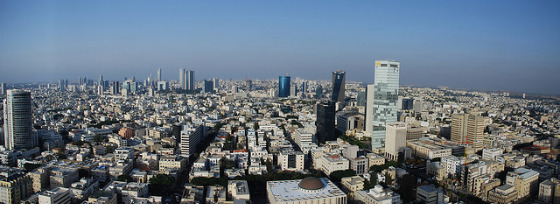
Tel-Aviv's-skyline-is-changing Israel-China deals, green synagogues, droughts and more headlines related to Israeli cleantech and the environment.

Solaer, a Spanish renewable energy company, is expecting to claim 10% of the the Israeli PV solar market within five years. Progress is being made on the construction of Tel Aviv’s first green office tower, as well as on Ormat and Solar Millennium AG’s attempt to win a contract to develop and run a solar thermal energy plant in Israel. For these stories and more, see this week’s headlines below.

Turkey’s New Step Towards Wind Energy in Balıkesir

1

turkey-wind-energyOn the heels of  Turkey’s  smart-grid connection to Europe, the country announces that it will host a new wind-turbine factory in the Western province.

News moves quickly in the blogosphere. Roughly two weeks ago we reported Turkey’s new “smart-grid” connection to Europe, which is expected to not only improve the country’s own renewable energy sector, but will allow it to boost its economy by exporting energy to Europe.

While Leviathan promotes miniature wind-turbines, and others are leasing their roof space for smaller-scale agricultural and renewable energy projects, Turkey will host a full-scale wind-turbine manufacturing plant in the western province of Balıkesir.

UAE Man Campaigns Against Reckless Driving That Killed His Sister. Part II.

suraya-campaignEvery day, 35 people are killed in the Gulf as a result of poor driving. Mohd Shahnawaz has launched a new campaign to change the attitude behind the Gulf’s reckless drivers.

This is the second in a two-part series about the Suraya Foundation. In the first (which you can read here) we described how Mr. Shahnawaz started the Suraya Foundation in the United Arab Emirates after the death of his sister in an undisputed and possibly reckless driving incident.

In this second part, Mr. Shahnawaz describes his methodology for changing the cultural attitudes that wreck havoc on the roads.

In the Arab world, though particularly in the Gulf region, reckless driving accounts for a devastating string of traffic accidents and attendant fatalities. We reported that Iran has the highest rate of traffic fatalities, though Saudi Arabia also has a very serious traffic problem. Mr. Shahnawaz believes that a campaign that combines both an emotional and logical appeal is the most effective way to sway the public.

Tel-Aviv’s $60 Million Eco-Office Tower A Go

1

Tel-Aviv's-first-office-eco-towerTel Aviv’s first ‘green’ office tower uses recycled, sustainable and domestic building materials and ecological maintenance procedures for a long-term low impact on nature.
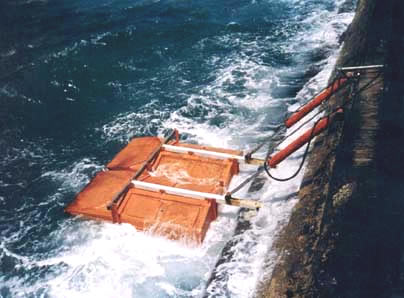
Israel’s scarce water and energy resources were foremost in the minds of constructors Ronen and Alon Azouri when they designed Tel Aviv’s first ‘green’ office tower. Using recycled sustainable and/or domestic building materials and ecological maintenance procedures, their goal was to create an office block with a long-term low impact on nature.

Can Shmuel Ovadia’s SDE Wave Energy Compete with World’s Largest Wave Power Hub?

2

israel-wave-energyWave energy may be Mankind’s future energy resource.

Generating electricity from ocean currents and waves is still far from being an accomplished reality, despite efforts being made by innovators like Shmuel Ovada and his SDE wave energy company. But now, the idea of using the tremendous power of the sea to create energy is much closer to practical reality with the completion of what is being hailed as the world’s largest wave power hub that is estimated to be able to produce as much as 187,000 MWh of electricity per year.