Home Blog Page 590

Will Iran Be Ready for the Next Tsunami?

4

Historical documents and a break down of a telegraph machine suggest tsunamis occurred in the recent past. Will Iran be ready for the next one?

A joint workshop in co-operation of the Iranian National Center for Oceanography (INCO) and UNESCO was held in south east of Iran.  The purpose of the workshop has been to define the probability of occurring tsunami and to estimate the results of a tsunami in the Gulf of Oman. According to the head of INCO, Vahid Chegini, such a disaster has previously occurred in the region. In 1945 high waves hit the Iranian coast, which were caused by Mokran Fault under the sea water. The experts have examined the big stones and rocks that can be brought to the coast only by tsunami or powerful hurricanes and also interviewed with some witnesses around Chabahar Port and Jask in south east Iran. So will Iran be prepared for the next tsunami?

Israel Reclaims Waste Water Using Nuclear Technology

0


Israel reclaims 75 percent of its wastewater.

Besides being a world leader in reverse osmosis desalination plants, this little country of 7.5 million people is the world leader in reclaiming sewage water for use in agriculture, especially in the country’s dry Negev region. What goes down the john can also water our crops: Israel now manages to reclaim 75% of its wastewater, by treating and filtering it in ultra modern filtration plants like the Shafdan Wastewater Treatment Plant located just outside Tel Aviv.

“Green Deen” Ibrahim Abdul-Matin Connects Environmentalism With Islam

feature_ibrahim_abdul-matin_0Ibrahim Abdul-Matin’s acclaimed book educates American believers, “Green Deen: What Islam Teaches About Protecting the Planet.”

For the past ten years, Ibrahim Abdul-Matin has been a passionate voice for transforming our pollution based way of life to one that prioritises our planet and its people. His book Green Deen: What Islam Teaches about Protecting the Planet is a voice for educating us on greening our lives and faith, and here, Ibrahim explains how we can do that.

Egyptian Activists Claim Eid Animal Slaughter Is Haram

0

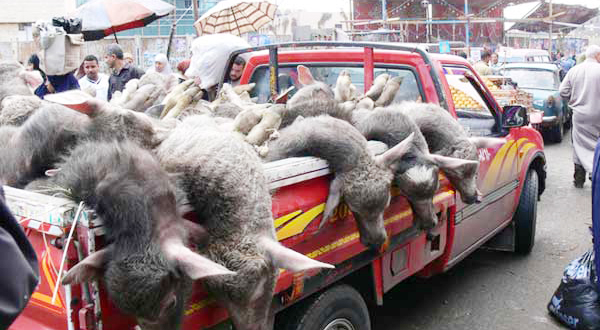
sheep-in-egypt-eidThese are just a few of hundreds of sheep that were inhumanely slaughtered in Egypt for Eid.

Similar to the anti-spirit of Christmas shoppers (but more sinister, perhaps) who start spending themselves into a frenzy as soon as the Halloween candy is put to rest, some Egyptians who celebrate Eid Al-Adha have turned the sharia practice of sacrificing an animal to Allah into a callous, thoughtless, bloodletting.

Not only are skilled and unskilled butchers using methods that are considered Haram, but the bloodbath is also a public health hazard; thousands of sheep, camel and other animals are butchered on the side of a road south of Cairo, their spilled blood running down the street.

RECIPE: Turkish Meatballs And Swiss Chard

1

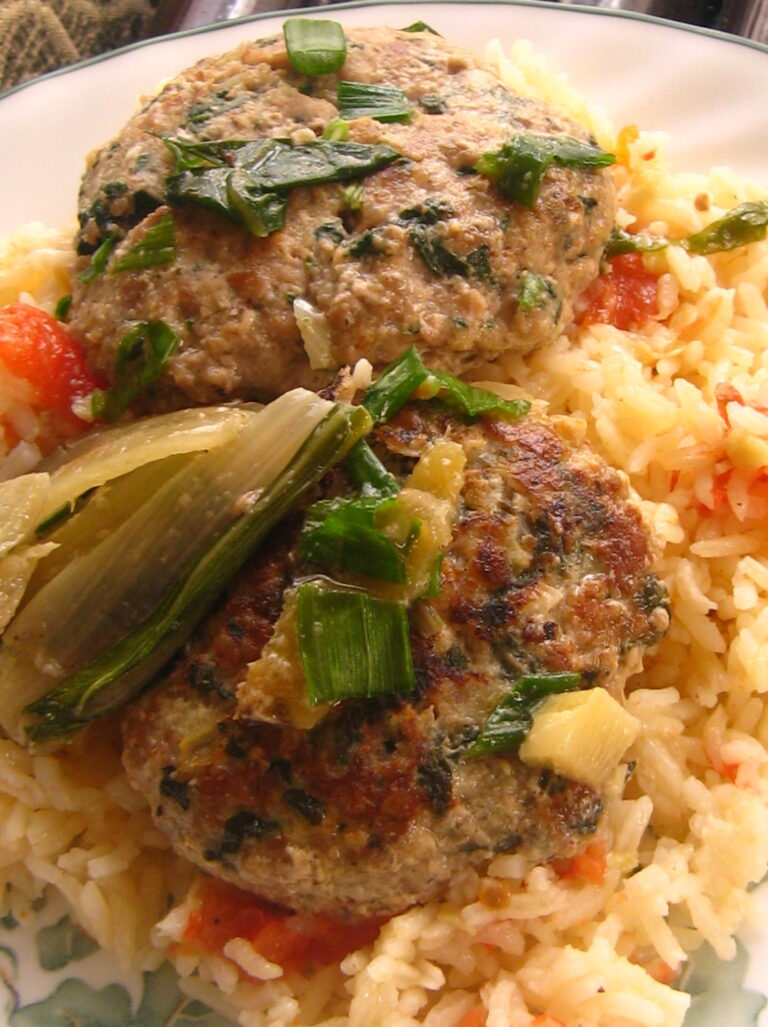
image-meatballs-swiss-chardA surprising, savory green twist that takes meatballs out of the ordinary.

Foodbridge, a blog featuring cross-cultural Middle Eastern recipes, was the source of this recipe. (See our review of Foodbridge here). It’s become a favorite dish in our house. Even the little ones will eat chard when it’s served with meatballs this way.

Include a piece of preserved lemon for even more flavor, if you have one. (And if you don’t, you can make preserved lemons now with our recipe – lemon season is on.)

Solar Energy From Sahara Desert Could Power Europe – But At What Cost?

2

Solar panels_Morocco
Solar panels station in Morocco. Ericsson has been supplying networks with solar power since 2000. The first was in Morocco, but since then there are more than 200 solar sites around the world.

Speaking as a weather-girl, the Sahara gets twice as much sunshine annually as most of Europe, even the winter months pack a dry heat no European country has faced. Speaking in PR terms for energy-saving, the European Union wants to get 20 percent of its electricity from renewable sources within a decade. Free Sahara sunshine in one continent and the EU’s desire for renewable sources in another continent…? There is a formula in this somewhere.

The Electric Idea: How about building several solar power plants across North Africa and shipping the electricity up north via power lines under the Mediterranean sea? This is exactly what the Desertec Industrial Initiative (DII) are doing.

Biodiversity Is In Peril: Thought Leaders Appeal for Change at Desert Conference

3

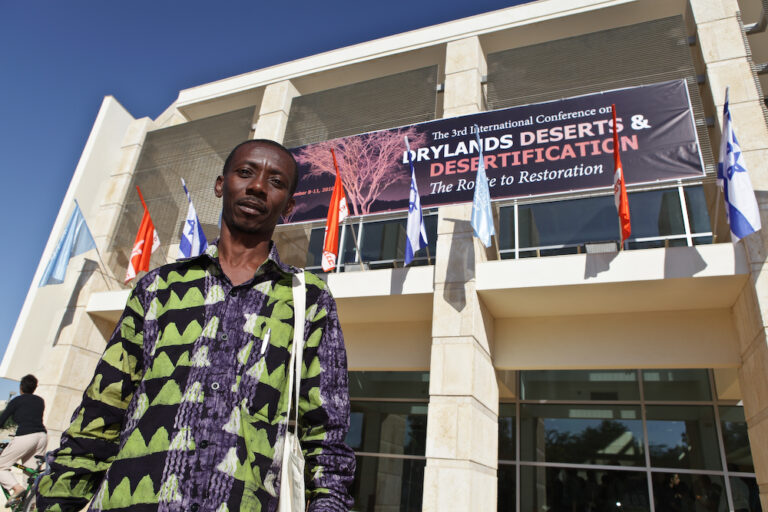
desert conference israelDr. Gotlieb reports from the the Drylands, Deserts and Desertification Conference in Israel – an event drawing hundreds from ten countries. With a species extinct every 20 minutes the problem is more severe than we might think.

Dire predictions, and new approaches, described the tenor of presentations made during the opening day of the Drylands, Deserts and Desertification Conference last week held at the Sde Boker campus of Ben-Gurion University in Israel.

The conclave, the third annual international conference organized by the University’s Jacob Blaustein Institutes for Desert Research in cooperation with UNESCO was devoted to the theme “The Route to Restoration.” Organized by BGU professor Alon Tal, a leading environmental figure in Israel, over five hundred participants from fifty countries were expected to have participated at the four-day conference. The theme of restoration was presented at the very start of the meeting where the plenary lecture was given by Professor Michael Rosenzweig of the University of Arizona (Tuscon).

Is The UAE Ready To Drink Recycled Cow Urine?

1

recycled-cow-urineScared of a little moo in your water? Don’t worry, you won’t have to drink it just yet.

With all the toxins (many of us) release into our bodies through processed foods, pharmaceuticals, skincare products and even pollutants that creep into our pores, our waste is a veritable witches brew. The same goes for livestock that are pumped with aggrandizing chemicals. That our byproduct creates a concoction too strong for most outdated wastewater treatment plants has been public knowledge for some time.

Several solutions have been implemented or at least entertained, such as in Egypt, where wetland treatment technology was posited as a potential alternative to conventional systems. And some treatment centers go on pushing out improperly treated water. As technology becomes more sophisticated, and water more scarce, is it possible we will return to an era where we drink our own waste water?

13 “Better Place” Cars Hit the Streets of Israel To Test “Charge”

Better Place cars imported to IsraelWith all the hype, 13 Better Place EV cars are finally being imported in Israel to test charge spots.

They are being tested as taxis in San Francisco and Tokyo, and in Israel you can even test drive the battery-switchable fully electric (EV) car developed by Better Place/Renault. Within the next couple of weeks, Globes is reporting, some 13 Better Place Renaught Fluence cars will be on the roads in Israel testing the battery recharging stations. The cars got a special permit to enter the country to test out the charge spots now located in strategic places throughout Israel: one is at the Better Place visitors’ center at Pi Glilot outside Tel Aviv; and another spot is at the Cinema City movie theatre across the street.

Seeing as the charge spots at the movie theatre are located in the best parking spots, I’d hazard to guess how in the world the cars will ever get access to them.

The 13 cars will be marketing prototypes for sale in 2011 after the car passes Israeli import standards. The tests need to pass safety and environmental standards. In comparison to a small European country like Finland which only had 3 electric cars on the road this past summer, Israel has more than 10,000 hybrid electric cars currently in use in Israel. And about 8,000 natural gas ones.

Read more about Better Place:
Will Better Place Partner With the Chinese to Make the Chery?
Better Place Technology and the New Nissan Leaf
Better Place Receives Investment Fuel from HBSC

::Globes

How To: Upcycle Eid Greeting Cards

8

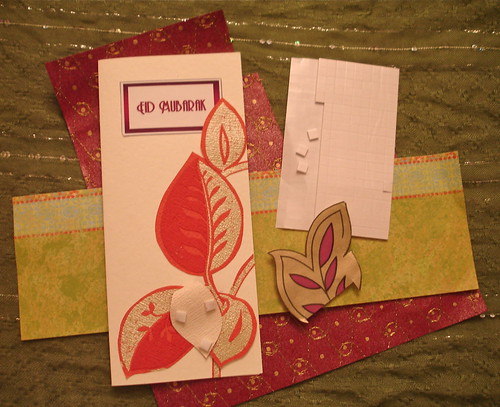
Use left over wallpaper for Eid cards.
Giving Eid cards is trendy in Muslim culture. Eco-designer Zaufishan demonstrates how she “upcycles” old spangles and scraps, into jazzy new handmade Eid cards for the Hajj season.

Right now, Muslims are performing Hajj, a pilgrimage to Makkah in Saudi Arabia. To mark the completion of this spiritual journey, Muslims will celebrate the second of their Eids (festivals): Eid-ul-Adha on the 16th-17th of November, by giving charity, sacrificing an animal, and giving presents or Eid cards.

And I have carried forward an annual tradition of upcycling my own Eid-ul-Adha cards. Check out how I made mine and begin upcycling your own environmental art!

Don’t throw away patterned wedding cards and party invitations – cut out square apertures from them, dab segments with coloured inks or markers and glue onto 5″x5″ folded cards for a whole new creation.

Method: Here I took apart old starry gift tags and layered them onto gold printed wrapping paper from last year’s Eid presents. Use a metallic marker for a hand written message. Mine reads ‘Blessed Eid Celebrations’ in Arabic (عيد مبارك).
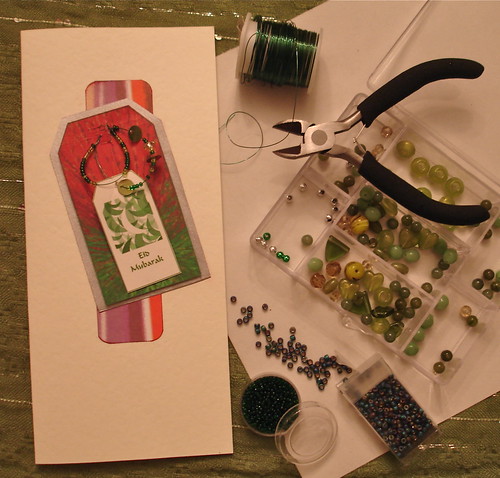
Eid greeting card, for Hajj

Find yourself with left over buttons and beads from dresses and your man’s unused construction wire?

Method: Thread loops of wire with sequins and beads, snip them with wire cutters and hoop through tag-shaped cards. This technique produces jangly “ear-rings” that are easy to shape and resize. Love them.
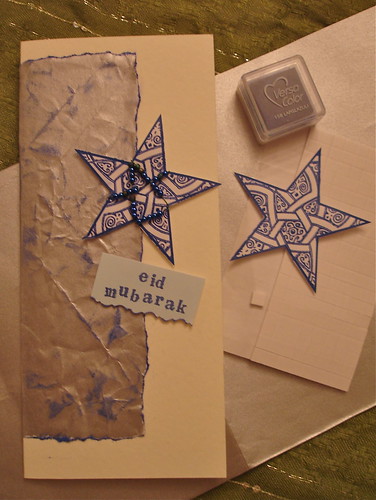
Eid greeting card, for Hajj

Method: Take a sheet of silver foil paper – anything silver will do – scrunch it up and carefully open up flat again. Run a blue ink pad lightly over these creases to highlight them with colour. Once this is dry, cut out a rectangle to fit the front of your card and rip the edges!

Drag the coloured ink pad over these new rips and glue on the left-hand side. Find any tags, motif shapes or as I’ve done, a star from a brochure (copied and printed onto plain card), and attach to the front. In my sample I wrapped wire with blue beads around the star.

Henna or ‘mehndi’ temporary tattoos are a norm in Muslim celebrations. We like to decorate everything to match our fashion and personality – even our skin. So I bought an Indian-Arabic inspired henna pattern book and have collected samples and downloads over the years to develop this drawing skill.

Step 1) Choose a chunk of henna patterns from your collection (or use mine) to work as a transfer.

Step 2) Using old misprinted card sheets, cut out a tag shape and dab with ink. Colour the edges in too to really make it pop. Next is the fun part.

Step 3) Take a look at your henna pattern and practise drawing it out with a fine-liner. Once you’re happy, completely fill in the coloured tag with swirls, paisleys and spirals. See mine below.

Step 4) Use a craft knife to make a small incision at the top of the tag – a slit, no more than 3-4mm. Take a length of construction wire, hoop on a row of beads and secure one end through the top incision, finally taping it to the back of the tag.

Step 5) To complete the Indian-Arabic look, hook a piece of unwanted jewellery to the end of the beaded wire and twist the end over (this is a health and safety risk). I’ve had that silver vintage ear-ring for years and finally put it to aesthetic pleasure. Be sure to sterilise ear-rings and rings first! Here’s one I made earlier:

Handmade Eid greeting card [upcycle earring]
Vintage jewellery fuses beautifully with ethnic henna patterns for Eid

Eid ul Adha greeting card [gift tags]

Above: You can upcycle any old jewellery, ear-rings, brooches, hijab pins or necklaces and chains. In this green card I combined wire-works, wallpaper scraps, beads and a butterfly ear-ring for an abstract-ethnic feel. To get the right look, all you have to follow is colour and pattern. Green works pretty well, I think.

There you have it, my upcycled collection of Eid cards for 2010. I will be sending the last batches out to friends, family and pilgrims coming home. Maybe next year, I’ll send you one too.

What’s that mean?
Eid-ul-Adha: the ‘Celebration of the sacrifice’, commemorating Prophet Abaham’s sacrifice of his son, Ishmael.
Upcycling: a green process of recycling old unwanted materials into new products of greater environmental value.

More upcycling stuff:
Going For the Green in Gold Jewelry
Interview with Egyptian Eco-Fashion Designer Nadia Nour
Ten Sustainable Israeli Designers who Reduce, Reuse and Recycle

Hot Solar Showers for Inmates and Tourists, From Amcortec

0

[youtube]http://www.youtube.com/watch?v=O07P-svjwro[/youtube]

Israeli solar hot water heaters are known the world over for reducing the country’s energy needs by about 3 percent. Green Prophet caught up with Reuven Noga from Amcortec, a supplier of Amcor hot water systems at the recent EnergyTech event in Tel Aviv to learn more. The company has started its business for large scale operations – in prisons, hotels, and factories based on the famous Israeli hot water heater (a core of copper pipes and panels painted black to pick up heat from the sun). With state of the art tech, Amcortec will make sure hot water for your shower lasts as long as the sun, and then some.

Forty thousand liters or so worth of hot water. Not bad.
::Amcor

7 Eco and Spiritual Wonders of the Middle East (SLIDESHOW)

0

dead sea rusty bike
We’ve only got one life, and one planet. Time to get off your armchair folks and learn a little more about your planet. Green Prophet challenges you to think over a trip to the Middle East for your next eco-holiday.

We’ve picked out 7 places worth seeing, and preserving.

1. The Dead Sea

See from the Israeli side, Jordan or the West Bank – the Dead Sea isn’t yet a Wonder of the World, but it should be.

Float in its super-salty ‘dead’ water. Stay in a spa. Get covered in mud.

Its healthy air and atmospheric pressure – 400 meters below sea level, is good for people with asthma, Crohn’s Disease, skin disorders, and more. It’s where Cleopatra went for her “beauty secrets.” Can you sink any lower at the lowest place on earth? Not really. And you wouldn’t want to.

Start here to learn more about the Dead Sea

MORE SLIDESHOW

Coal-Clad Celebrities Take Part in Greenpeace Israel Exhibition

0

"bar refaeli environment"Israeli celebrities pose for coal-clad glamor shots in order to protest the construction of a new coal-burning electric plant in Ashkelon.

Celebrities can often use their star power for good, such as drawing attention to a worthy cause.  About a year ago, Lebanese celebrities made a statement about transportation by biking down a green carpet to a movie premiere.  In Israel, Karnit Goldwasser (widow of abducted IDF soldier Ehud Goldwasser) turned her celebrity status into something green by hosting a segment on a television show about environmental issues.

Now a group of 15 Israeli celebrities and public figures have joined up with Greenpeace Israel and decided to use their stardust to help save the environment.

University in the UAE First to Offer “Bachelor’s” Degree in Motherhood

7

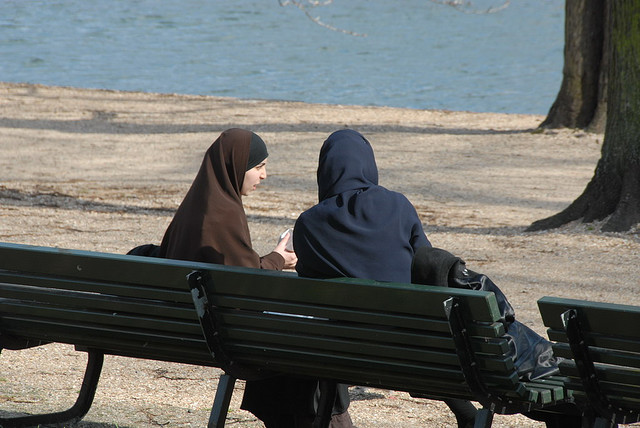
Two women in hijab sit on a bench, eating.Will society value motherhood more, when offered by universities as a degree subject?
A new university program in Ajman in the United Arab Emirates is claiming to be the first in the world to offer a bachelor’s degree in the “mothering profession.” Claiming that how to mother is no longer passed down from mother to daughter, Dr Nizar al Ani, the university director, said that the program aspires to improve mothering skills, lower dependence on maids, and decrease the divorce rate.

The Ministry of Higher Education has accredited the program, which divided into three sections: “The first deals with women’s civic and legal rights, including her Islamic rights as a woman and mother. The second teaches her how to run a household with courses in cooking, home decoration, personal fitness and grooming. The third focuses on raising children.”

Masdar Mothership To Get New Pool And Gym

2

masdar-city-constructionMasdar students will soon be able to take a break from their hot, clean energy studies for a workout and a swim.

Despite widespread criticism leveled at its organizers (which has simmered down since reaching its zenith with a New York Times article earlier this year), the Masdar City project plods on. Still in the midst of the first building phase of the Masdar Institute of Science and Technology (MIST), The National reports that phase two broke ground last Friday.

Designed in tandem with the world-renowned Massachusetts Institute of Technology (MIT – which has since distanced itself from Abu Dhabi), MIST is a research facility attended by bright students from around the world. One American student joked that she was living on a distant planet, understandable given the harsh terrain in which she found herself. But students will receive a reprieve from the heat when phase two of the building project is complete.