Before promoting sustainability progress, companies must ensure their initiatives are genuine and measurable. Today’s audiences are increasingly skeptical of vague environmental claims, particularly as awareness of “greenwashing” has grown.
Sydney is best known for the Opera House and the Harbour Bridge. If you’re looking to enjoy dinner with views of these landmarks, here are some great options.
It's sea turtles which may in the end save islands in the Seychelles. They may also better help us understand climate change. Like rings on a tree, scientists have found a way to read sea turtle shells and how they are impacted by climate change tells a story.
For centuries, the Sámi shaman drum was one of the most powerful sacred objects in northern Europe, and one of the most feared by church and state. If ISIS looks bad to us today for its religious fundamentalism, Christians were just as fervent.
Before promoting sustainability progress, companies must ensure their initiatives are genuine and measurable. Today’s audiences are increasingly skeptical of vague environmental claims, particularly as awareness of “greenwashing” has grown.
Sydney is best known for the Opera House and the Harbour Bridge. If you’re looking to enjoy dinner with views of these landmarks, here are some great options.
It's sea turtles which may in the end save islands in the Seychelles. They may also better help us understand climate change. Like rings on a tree, scientists have found a way to read sea turtle shells and how they are impacted by climate change tells a story.
For centuries, the Sámi shaman drum was one of the most powerful sacred objects in northern Europe, and one of the most feared by church and state. If ISIS looks bad to us today for its religious fundamentalism, Christians were just as fervent.
Before promoting sustainability progress, companies must ensure their initiatives are genuine and measurable. Today’s audiences are increasingly skeptical of vague environmental claims, particularly as awareness of “greenwashing” has grown.
Sydney is best known for the Opera House and the Harbour Bridge. If you’re looking to enjoy dinner with views of these landmarks, here are some great options.
It's sea turtles which may in the end save islands in the Seychelles. They may also better help us understand climate change. Like rings on a tree, scientists have found a way to read sea turtle shells and how they are impacted by climate change tells a story.
For centuries, the Sámi shaman drum was one of the most powerful sacred objects in northern Europe, and one of the most feared by church and state. If ISIS looks bad to us today for its religious fundamentalism, Christians were just as fervent.
Before promoting sustainability progress, companies must ensure their initiatives are genuine and measurable. Today’s audiences are increasingly skeptical of vague environmental claims, particularly as awareness of “greenwashing” has grown.
Sydney is best known for the Opera House and the Harbour Bridge. If you’re looking to enjoy dinner with views of these landmarks, here are some great options.
It's sea turtles which may in the end save islands in the Seychelles. They may also better help us understand climate change. Like rings on a tree, scientists have found a way to read sea turtle shells and how they are impacted by climate change tells a story.
For centuries, the Sámi shaman drum was one of the most powerful sacred objects in northern Europe, and one of the most feared by church and state. If ISIS looks bad to us today for its religious fundamentalism, Christians were just as fervent.
Before promoting sustainability progress, companies must ensure their initiatives are genuine and measurable. Today’s audiences are increasingly skeptical of vague environmental claims, particularly as awareness of “greenwashing” has grown.
Sydney is best known for the Opera House and the Harbour Bridge. If you’re looking to enjoy dinner with views of these landmarks, here are some great options.
It's sea turtles which may in the end save islands in the Seychelles. They may also better help us understand climate change. Like rings on a tree, scientists have found a way to read sea turtle shells and how they are impacted by climate change tells a story.
For centuries, the Sámi shaman drum was one of the most powerful sacred objects in northern Europe, and one of the most feared by church and state. If ISIS looks bad to us today for its religious fundamentalism, Christians were just as fervent.
Before promoting sustainability progress, companies must ensure their initiatives are genuine and measurable. Today’s audiences are increasingly skeptical of vague environmental claims, particularly as awareness of “greenwashing” has grown.
Sydney is best known for the Opera House and the Harbour Bridge. If you’re looking to enjoy dinner with views of these landmarks, here are some great options.
It's sea turtles which may in the end save islands in the Seychelles. They may also better help us understand climate change. Like rings on a tree, scientists have found a way to read sea turtle shells and how they are impacted by climate change tells a story.
For centuries, the Sámi shaman drum was one of the most powerful sacred objects in northern Europe, and one of the most feared by church and state. If ISIS looks bad to us today for its religious fundamentalism, Christians were just as fervent.
Before promoting sustainability progress, companies must ensure their initiatives are genuine and measurable. Today’s audiences are increasingly skeptical of vague environmental claims, particularly as awareness of “greenwashing” has grown.
Sydney is best known for the Opera House and the Harbour Bridge. If you’re looking to enjoy dinner with views of these landmarks, here are some great options.
It's sea turtles which may in the end save islands in the Seychelles. They may also better help us understand climate change. Like rings on a tree, scientists have found a way to read sea turtle shells and how they are impacted by climate change tells a story.
For centuries, the Sámi shaman drum was one of the most powerful sacred objects in northern Europe, and one of the most feared by church and state. If ISIS looks bad to us today for its religious fundamentalism, Christians were just as fervent.
Before promoting sustainability progress, companies must ensure their initiatives are genuine and measurable. Today’s audiences are increasingly skeptical of vague environmental claims, particularly as awareness of “greenwashing” has grown.
Sydney is best known for the Opera House and the Harbour Bridge. If you’re looking to enjoy dinner with views of these landmarks, here are some great options.
It's sea turtles which may in the end save islands in the Seychelles. They may also better help us understand climate change. Like rings on a tree, scientists have found a way to read sea turtle shells and how they are impacted by climate change tells a story.
For centuries, the Sámi shaman drum was one of the most powerful sacred objects in northern Europe, and one of the most feared by church and state. If ISIS looks bad to us today for its religious fundamentalism, Christians were just as fervent.
Studying how magma behaves underground could help harness powerful geothermal energy. Scientists from the Krafla Magma Testbed (KMT) in Iceland plan to drill into the magma beneath the Krafla volcano, starting in 2027.
Pressure and temperature sensors will be placed in the first of two boreholes to track changes to the magma, which could help predict volcanic eruptions.
The second will house a test run for a new type of geothermal power station. “[Magma] are the heat source that power the hydrothermal systems that lead to geothermal energy. Why not go to the source?” says Yan Lavallée, volcanologist and head of KMT’s science committee.
Krafla is one of the world’s most active volcanic areas, where temperatures approach 2,372°F (1,300°C). The greatest challenge to accessing this energy is not having the equipment melt.
Iceland has been harnessing the Earth’s geothermal energy for a while — where it drills into underground regions to produce steam from heated water. Ormat from Israel is a leader in this space. Water in a magma chamber inside a volcano isn’t steam, but rather it’s “supercritical” — it’s water water so hot and under pressure that it’s not liquid or steam, but that fourth state of matter close to a vapor.
In theory a magma geothermal plant has the potential to produce at least 10 times the power of a traditional geothermal plant.
According to researchers Iceland’s ongoing volcanic eruptions may continue on and off for years to decades, providing renewable energy but also threatening the country’s most densely populated region and vital infrastructure.
The eruptions on the Reykjanes Peninsula have forced authorities to declare a state of emergency, with a series of eight eruptions having occurred since 2021. This southwestern region is home to 70 percent of the country’s population, its only international airport, and several geothermal power plants that supply hot water and electricity.
The most recent eruption in May through June triggered the evacuation of residents and visitors of the Blue Lagoon geothermal spa, a popular tourist attraction, for the third time in more than two months.
Although Iceland sees regular eruptions because it sits above a volcanic hot spot, the Reykjanes Peninsula has been dormant for 800 years. Its last volcanic era continued over centuries however, prompting scientists to predict the renewed volcanism to be the start of a long episode.
Under an hour’s drive from the island’s capital city Reykjavík, the eruptions pose considerable risks for economic disruption, and they leave evacuated communities uncertain of a possible return.
An international team of scientists has been watching the volcanoes over the past three years. Analyzing seismic tomography imaging and the composition of lava samples, they’ve uncovered parts of the geological processes behind the new volcanic era. They predict the region may have to prepare for recurring eruptions lasting years to decades and possibly centuries.
The researchers report their findings in a paper published June 26 in the journal Terra Nova. The project included collaborations from the University of Oregon, Uppsala University in Sweden, University of Iceland, Czech Academy of Sciences and University of California, San Diego. The work follows an earlier Nature Communications study of the initial Reykjanes eruptions in 2021.
Some of the risks of tapping into magma for geothermal energy are the risks of creating earthquakes. Sudden changes in flow could endanger operations and there is currently no equipment that can safely handle the excessive heat. Also magma releases gases like sulfur dioxide (SO₂) and carbon dioxide (CO₂), which could pose local environmental hazards and contribute to atmospheric pollution if not managed properly.
Neuroscientist Carina Heller has joined a cadre of investigators who are filling in gaps in women’s health research by hopping into brain-imaging machines themselves. Credit: Ann-Christine Buck
Ask anyone in science and it’s known that areas that get the most funding are issues that affect more men than women, such as heart disease and prostate cancer. She had a question and got some of her own answers: A scientist in the US scanned her own brain over the period of a year to document how the brain is affected by the birth control pill. We know that some women report weight gain and other unwanted side-effects, and now we have a look into the brain.
For 75 days over the span of a year University of Minnesota neuroscientist Carina Heller’s morning ritual included climbing into her university’s brain scanner at 7:30 a.m. and lying perfectly still for an hour and a half — without falling asleep. She believes she is the most scanned woman in science.
She found a rhythmic pattern of change in brain volume and connectivity between brain regions over the course of her natural cycle, with volume and connectivity dipping slightly while she was taking the pill. Heller has joined a group of investigators filling gaps in women’s health research by scanning their own brains.
Her work builds on the work of Laura Pritschet who is now a cognitive neuroscientist at the University of Pennsylvania in Philadelphia. Pritschet scanned her brain for 30 consecutive days during her natural menstrual cycle and then for 30 more days while taking oral contraceptives in a project Pritschet calls 28andMe, after the genetics firm 23andMe in South San Francisco.
Heller’s goal was to catalogue how her brain changes during her menstrual cycle, with and without oral contraceptives and what that might mean for women’s health. Her research might inform women as to whether or not they want to take the birth control pill which alters a woman’s hormone cycle.
It’s just the beginning but her findings suggest that brain morphology and connectivity change daily throughout the natural cycle and are influenced by birth-control pills with preliminary results presented at the annual Society for Neuroscience conference.
Women in the Taliban-controlled country of Afghanistan are already banned from showing their bodies and faces in public. A new blow to dehumanizing women is the ban of the sound of women’s voices in public.
Like the regime in Iran that controls women singing in public and showing their hair, the restrictions in Afghanistan are more fierce and among them ban women from being friends with non-Muslims and from entering national parks. Women are not allowed to work at NGOs that support women. Women can’t work in any legal profession, they can’t work for the government, or go to the gym or drive.
The Taliban published a list of “vice and virtue” laws this past summer which were approved by their supreme leader Hibatullah Akhundzada. The vice and virtues edicts are exhaustive and oppressive: Afghan women must completely veil their bodies – including their faces – in heavy clothing at all times in the public setting so men will not be led to temptation and vice.
Woman and man in Afghanistan
Among religious Jews, women are not encouraged to sing in public so men refrain from attending women’s concerts if they so choose. But women are allowed to speak in public, even encouraged to do so. But in Afghanistan and in Iran women’s voices are considered an instrument of vice and will not be allowed to be heard talking in public under the new restrictions. They cannot sing or real aloud if it can be heard from outside their home.
“Whenever an adult woman leaves her home out of necessity, she is obliged to conceal her voice, face, and body,” the new laws state.
Two Afghan medicine students (Left & Center) listening to their Professor at the Faculty of Medicine in Kabul, as they examine a plaster showing a part of a human body – January 1962 (STAFF/AFP via Getty Images)
March 31, 2024: Taliban closed several female educational centers in Kabul for registering female students beyond 6th grade.
April 2024: The Taliban’s Education Department of Kabul Province issued a commitment letter to owners of private schools, outlining a series of ten points to which the owners/administrators are pledging adherence. One of these points declares, “I confirm my agreement to adhere to the decision to suspend schooling for female students from grades 7 to 12…” Source: copy of the letter
June 4, 2024: The Department of Education in Bamyan issued a letter, signed by Qari Enayatullh Sahaar, stating that in all schools where students follow both Hanafi and Jafari jurisprudence, but only use textbooks based on one of these jurisprudences, the textbooks will be replaced with books from both Hanafi and Jafari traditions. Source: copy of the letter
March 24, 2024: The Taliban leader stated that the public stoning of women shall be enforced, and the Taliban will not bend to the pressure of the West.
December 30, 2023: The Taliban’s Ministry of Economy issued a letter calling on local and international organizations to refrain from implementing projects focused on peace, conflict resolution, advocacy and public awareness as they are not considered a need. Source: copy of the letter
August 15, 2024: The Taliban’s department of economy instructed NGOs to remove the word “woman” from their organizational names. Source: contacts on the ground
February 28, 2024: The Taliban’s spokesperson for the Ministry of the Promotion of Virtue and Prevention of Vice, Abdul Ghaffar Farooq, announced that women appearing on television must wear black hijab and with their faces covered only leaving their eyes visible.
April 2024: The Taliban in Helmand verbally instructed media outlets to refrain from airing women’s voices. Source: field contacts
April 2024: Media outlets were verbally instructed to ban women from co-hosting shows with male journalists and refrain from reporting on women’s rights and violence against women. Source: media contacts
May 5, 2023: Banned young and unmarried women from going to health centers and shrines in Kandahar province.
January 2024: In Farah, the governor has issued a verbal order making wearing of black color hijab, face mask and gloves mandatory. Source: contacts on the ground
January 2024: In Logar, the religious police made announcements through loudspeakers in mosques and in public stating that women and girls should refrain from wearing white pants, and shoes when going out and that those ignoring the order have no right to complain about the consequences. Source: contacts on the ground
January 2024: In Paktia, the vice and virtue authorities announced through mosques that women are prohibited from wearing black Arabic hijabs, as they reveal the eyes. Instead, women are mandated to exclusively wear burqa. Source: contacts on the ground
February 14, 2024: Mullah Abdul Haq Waseeq, head of the Taliban’s General Directorate of Intelligence, has directed its units to stop organizations from taking inappropriate photos (mixed male/female) during aid distribution, and during meetings, particularly of women. Violators are instructed to be reported to the directorate for appropriate action. Source: copy of the letter
May 26, 2024: The Taliban required couples in Herat to present their “marriage certificate” to allow them to eat together in restaurants.
July 3, 2024: The religious police in Daikundi issued an announcement mandating that women must comply with the hijab requirement within five days. The specified hijab style must be Arabic. After the deadline, violators will face punishment and imprisonment, with responsibility falling on both the individual and her family. Source: copy of the announcement and sources on the ground
July 5, 2024: The religious police in Daikundi issued an announcement mandating that women must comply with the hijab requirement within five days. The specified hijab style must be Arabic. After the deadline, violators will face punishment and imprisonment, with responsibility falling on both the individual and her family. Source: copy of the announcement
July 17, 2024: The Vice and Virtue authorities in Faryab have re-issued a ban prohibiting women from visiting three parks (Khawja Ghaar, Dara Shaakh, and Dara Rang) in Gurziwaan District. The ban has been confirmed through an official letter and corroborated by contacts on the ground.
July 31, 2024: The Taliban issued a new edict under their ‘Propagation of Virtue and Prevention of Vice Law’, which was published in the Ministry of Justice gazette, listing previously imposed restrictions as well as additional ones, including women’s voice in public and prohibiting friendship with non-Muslims. Source: copy of the edict
August 26, 2023: Taliban Minister of Vice and Virtue during his visit to Bamiyan announced that women are henceforth not allowed to enter Band-e Amir national parkBand E Amir National Park: forbidden for women
March 27, 2022: Banned women from traveling abroad without a mahram (husband or guardian) and without a legitimate reason.
January 16, 2023: Instructed travel agencies not to sell tickets to women without a mahram.
Loads of vitamin supplements, including leading American supplement company SmartyPants founded by Courtney Nicols who we interviewed for Charity:Water uses sugar as a sweetener. A new invention from gummy supplement manufacturer TopGum Industries, has created HoneyGum, a line of all-natural, honey-based functional gummies. The new product joins the company’s rapidly expanding portfolio of advanced dietary supplement gummies.
What makes this gummy unique is TopGum’s utilization of pure, high-dose liquid honey as opposed to commonly used powdered honey. Harnessing the ancient wellness benefits of pure liquid honey, HoneyGum seamlessly blends one of nature’s finest ingredients into its advanced gummy formulation technology.
The company will introduce the new line, alongside its innovative Caffeine Gummicino, IronGum, and others at SupplySide West, Mandalay Bay, Las Vegas, on Oct 30 to 31.
Honey is enjoying a revival among consumers. According to CNBC Honey is a key trending flavor in multiple food and beverage products. People everywhere including me are raising honey bees at home to access pure, local honey. Much of the honey you find in supermarkets will be adulterated: the bees fed with sugar, pesticides and the honey boiled as a form of pasteurisation. Read here about the benefits of raw honey. And here to know if your honey is real or fake.
TopGum creates nutraceuticals in these health categories:
Honey Sleep Relaxation: Features honey (500mg) with chamomile extract, GABA, L-theanine, and valerian in a calming, lemon-chamomile flavor, designed to help promote restful sleep.
Honey Immune: This gummy is enhanced with 500mg honey, elderberry, vitamin D (1000IU) and other vitamins in a vibrant mixed-berry flavor.
Honey Immune Ginger: Combines ginger, propolis, and honey (500mg) in a refreshing apple flavor.
Honey Energy: Delivers 500mg honey-infused energy via B-vitamins and caffeine in a bright tangerine flavor.
High-Dose Honey: Offers the highest amount of honey in a single gummy, enriched with biotin for beauty-from-within, and comes in a natural, light brown hue.
You can theoretically skip the product and just make these honeys at home. Functional foods and neutraceuticals are also found in the CBD market in the US where Walmart is adding CBD to coffee products. As my old fashioned GP used to say: if you eat a healthy diet there is no need for vitamins.
Still people want promise and vitamins may be the way to help achieve mental and physical health on top of eating a balanced diet, preferably the Mediterranean Diet.
“Combining liquid honey into a stable gummy matrix in a way that hits the right texture and flavor notes is a complex process,” explains Jennifer Toomey, Head of New Product Development, US, for TopGum. “But it was important for us toshowcase the benefits of honey without the unnecessary additives that can come with a dry or powdered ingredient.
“The new line of honey-based functional gummies is designed to meet the diverse needs of consumers in their active lifestyles,” asserts Eyal Shohat, CEO of TopGum. “Each HoneyGum product is carefully crafted to deliver a holistic, wellness solution in a deliciously chewy and convenient format. This new gummy series is a prime example of how TopGum can innovate a full line of products responding to consumer demands for functional supplements that can deliver a flavorful and enjoyable experience.”
The HoneyGums were created using TopGum’s technology for combining pure liquid honey with the company’s fiber-based prebiotic gummy matrix. This process leverages the natural sweetness and prebiotic benefits of fructo-oligosaccharides (FOS) with the natural goodness, signature flavor and sweetness of honey. The gummies come in a unique, hexagonal shape, as inspired by natural honeycombs, for tactile and visual appeal.
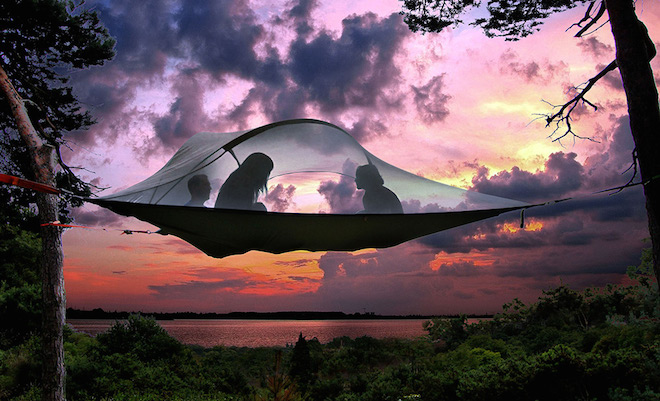
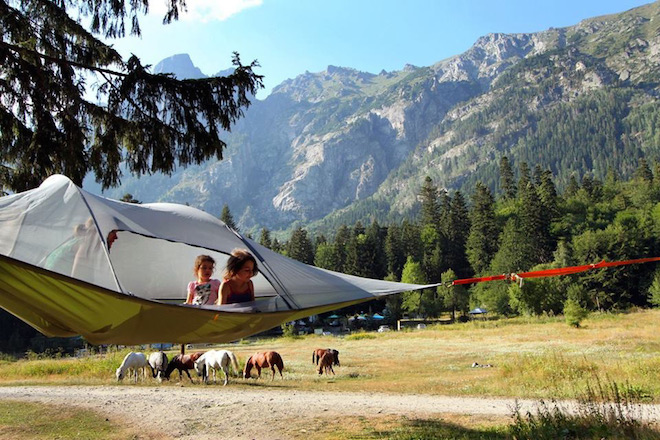
Want to take camping to a higher level? Tentsile, a UK-based tent company has developed a novel treehouse tent that is bound to attract attention. Slung between three trees, and hanging a yard or two off the ground, this two-person tent feels like something between a shelter, a hammock, and a fine solution for smuggling chocolate into your sleeping bag without worrying about prowling bears.
While wild animals may not be the biggest concern for campers in the Levante area (countries like Israel, Lebanon and Syria) wild bears are still endemic to Iran, and countries like Turkey.
The Tentsile tent for obvious reasons will not work well in desert locations, but is ideal for a novel camp in forests or jungles anywhere. It reminds me of my travelling days to Turkey. I spent two months there one fall, and about 5 days at a treehouse camp in the south.
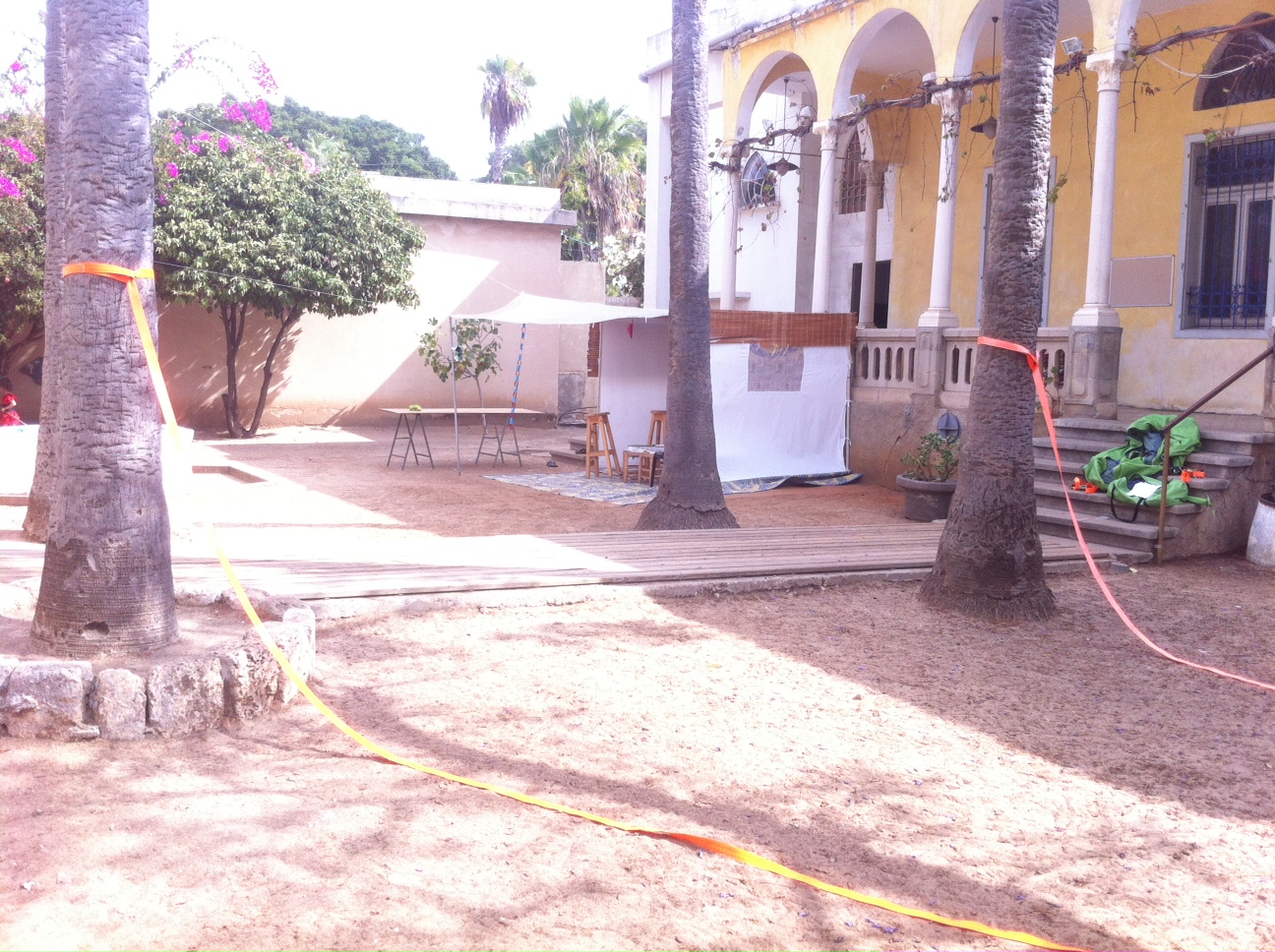
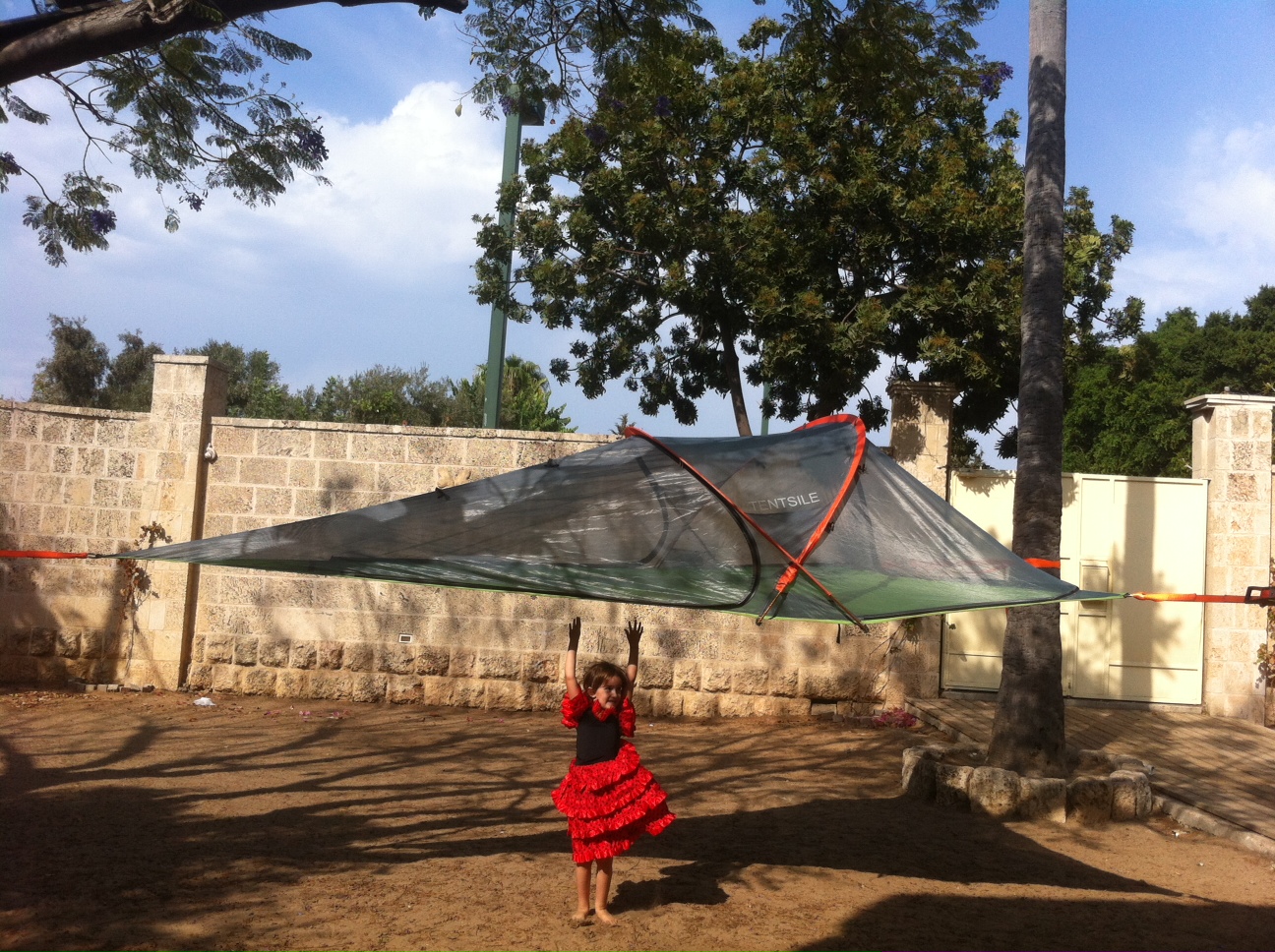
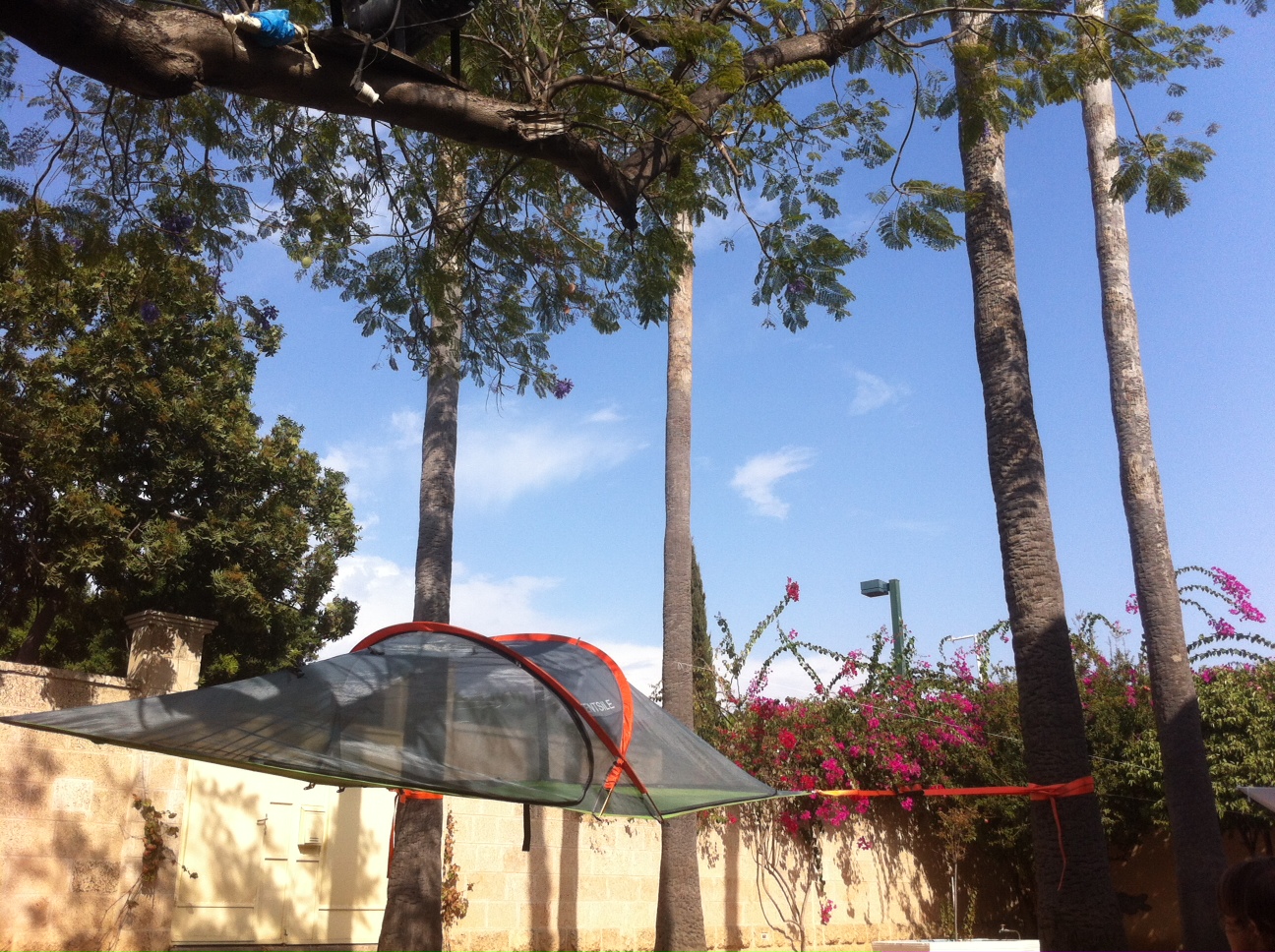
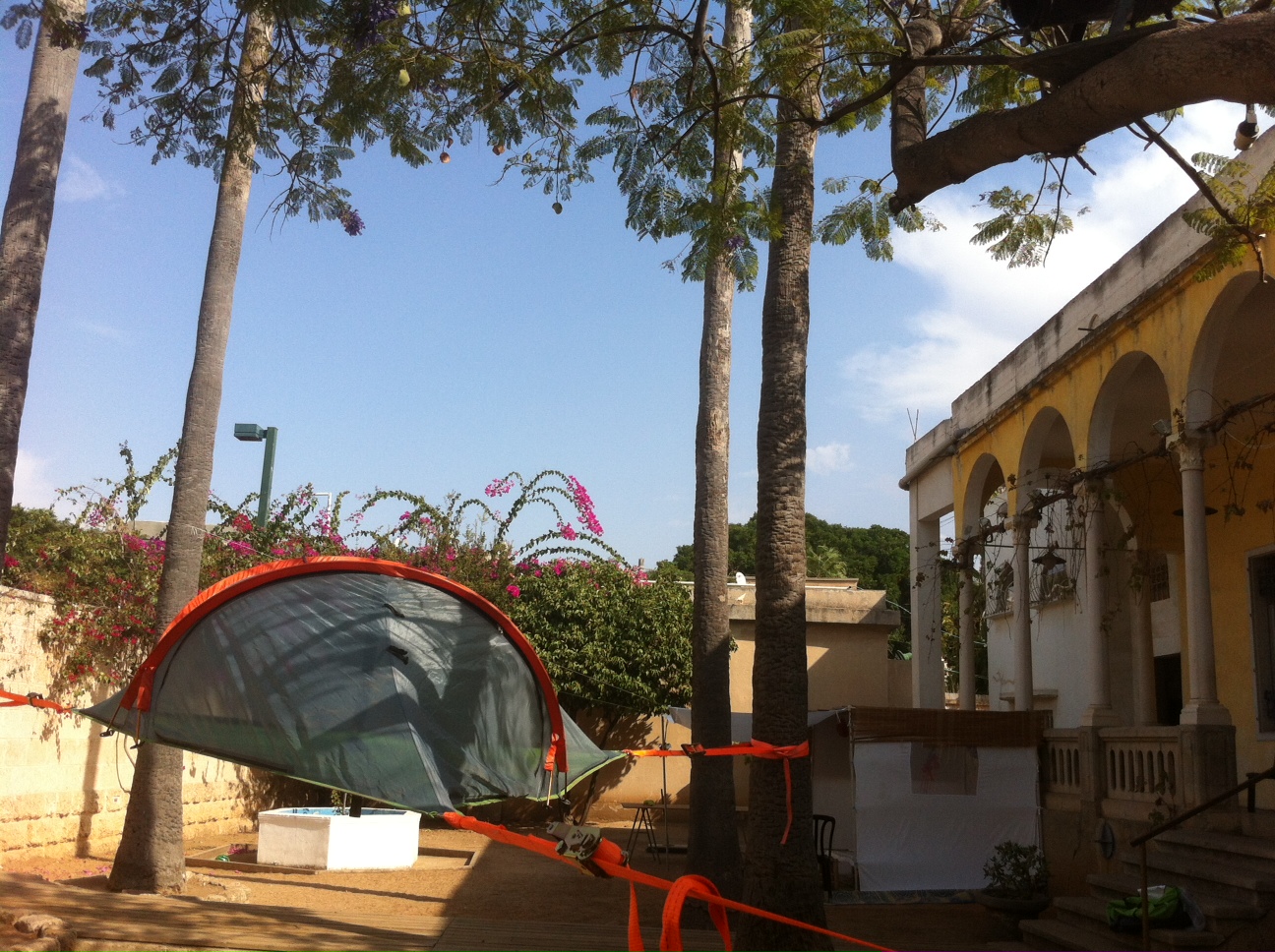
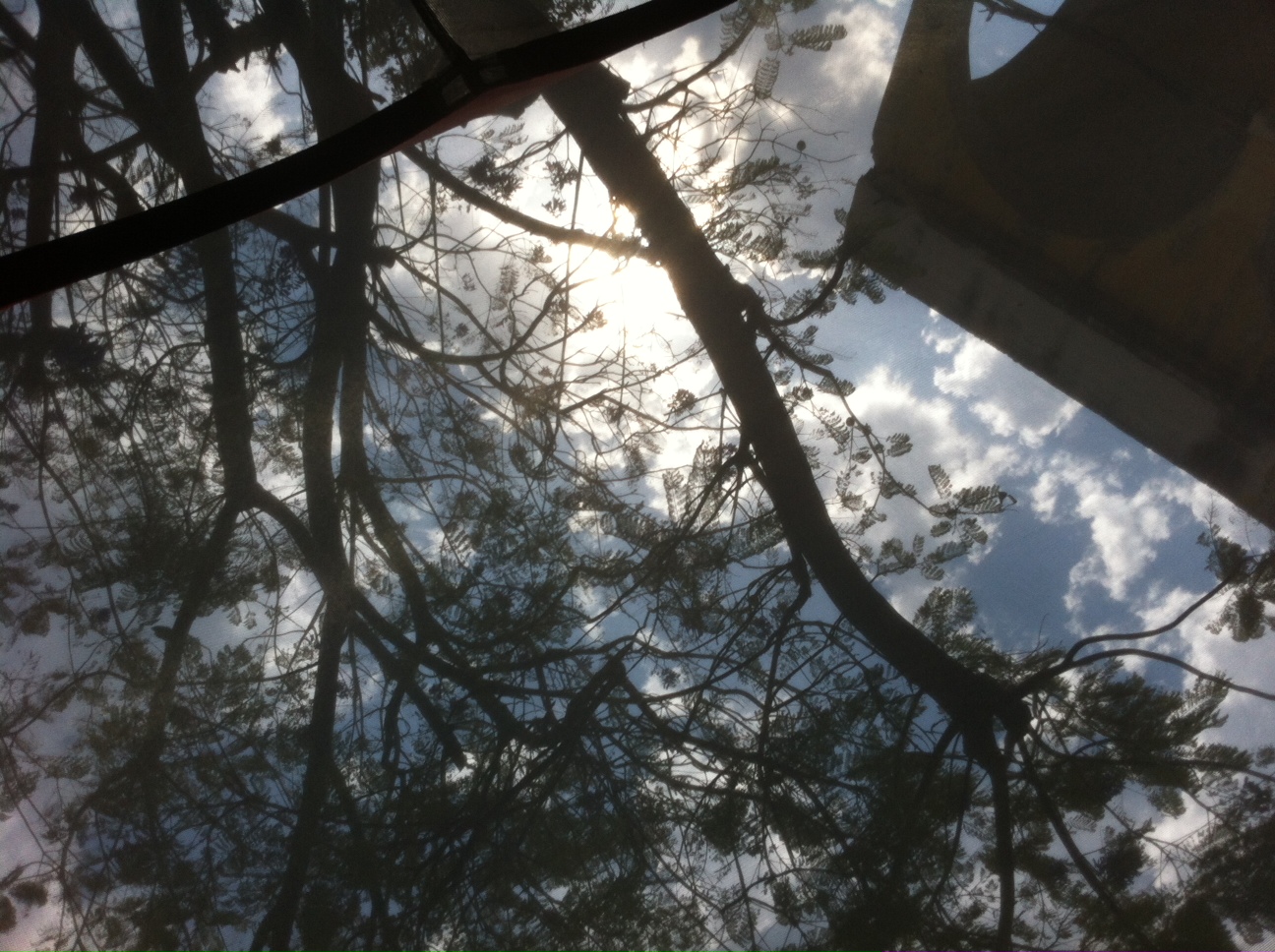
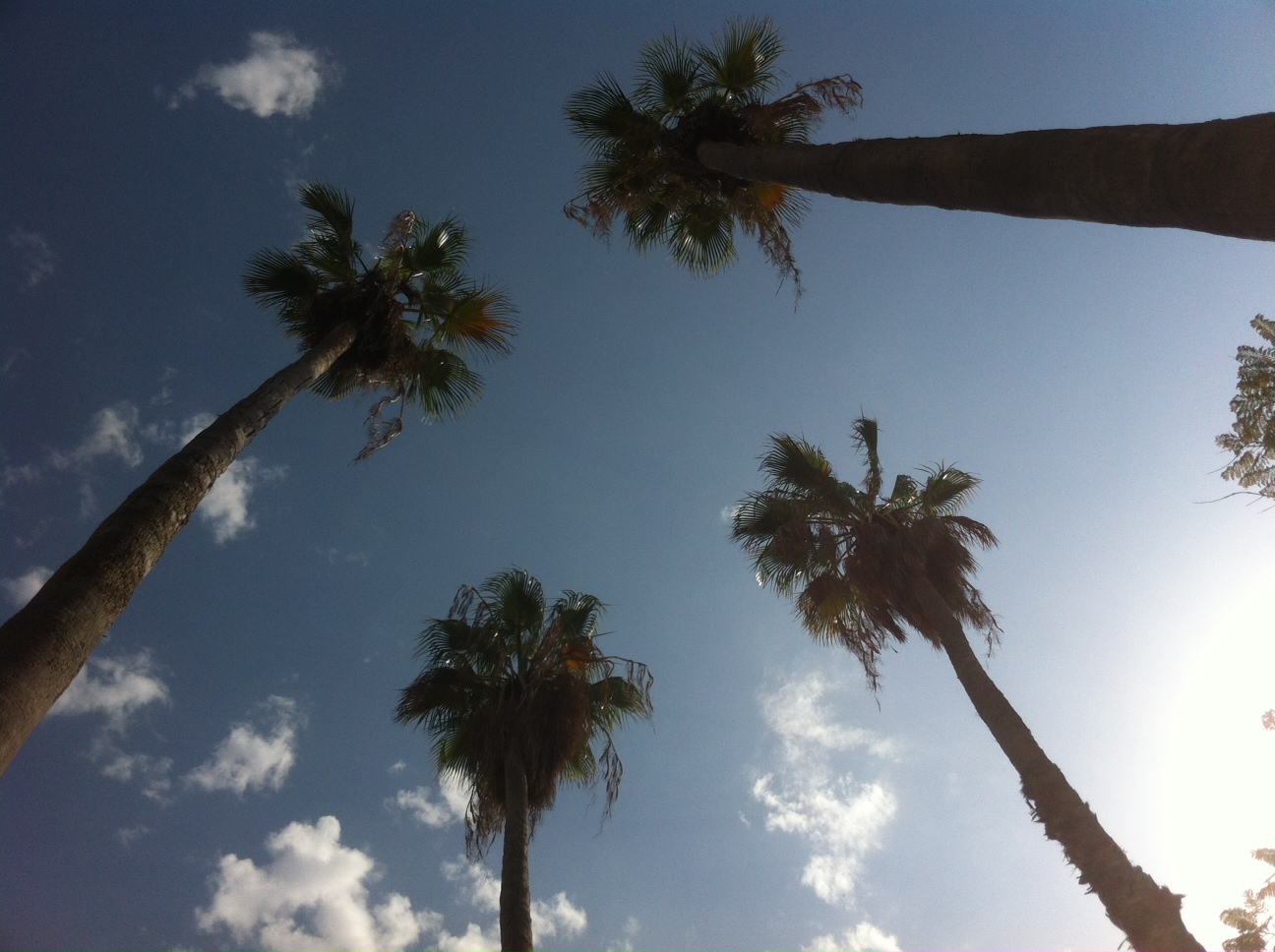
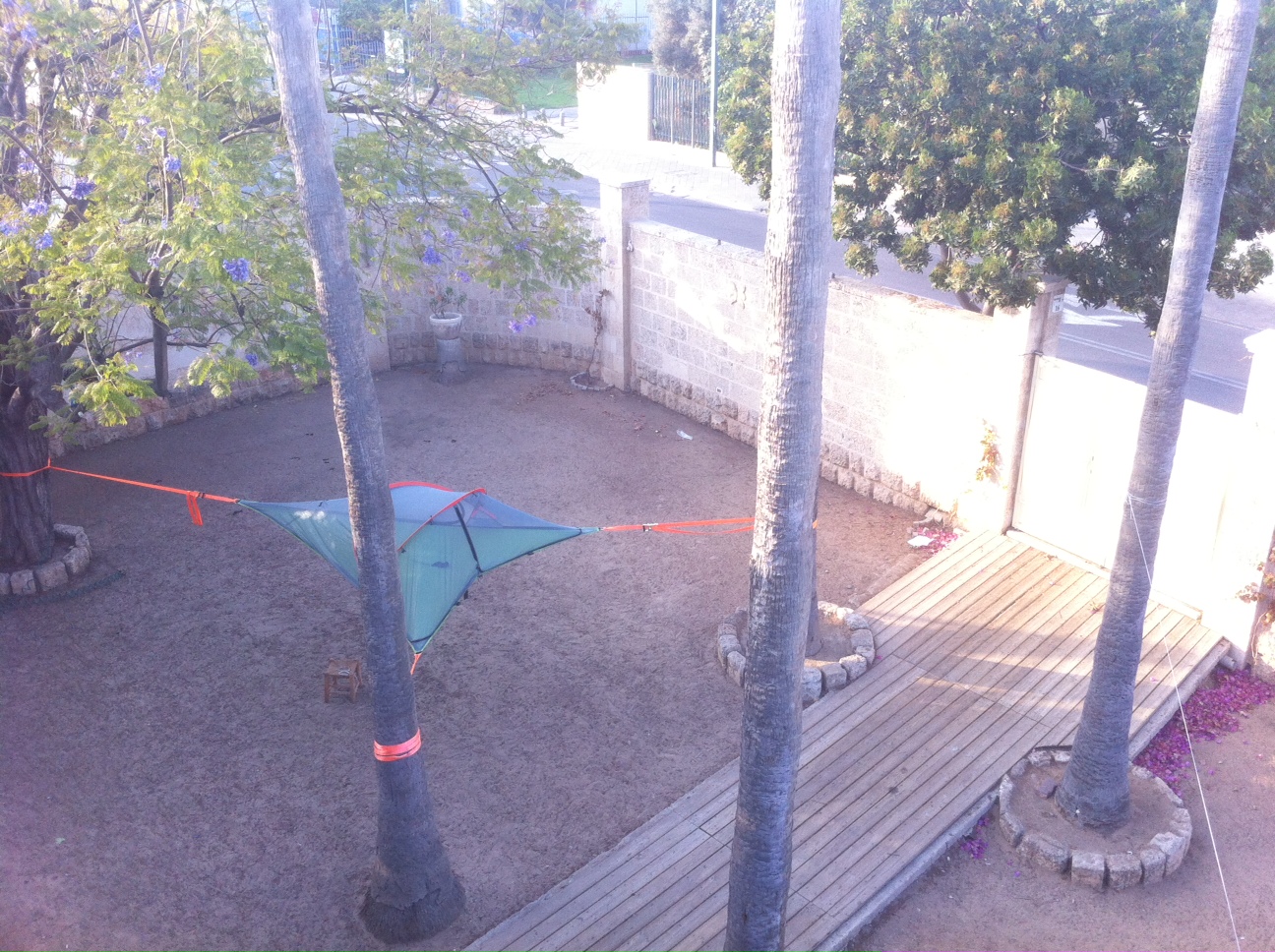
In the photos below, you can see how it works in Jaffa, Israel where I have installed it between two palm trees and a large jacaranda. My daughter is the model. The pictures show how the tent looks from delivery, all the way to set up. I’ve included an aerial photo as well from the roof of my house.
The Tentsile package arrives by courier:
This two-person tent by Tentsile, called Connect, does just what its name implies. If you and your two friends each buy one you can connect them in a triad forming a larger triangle.
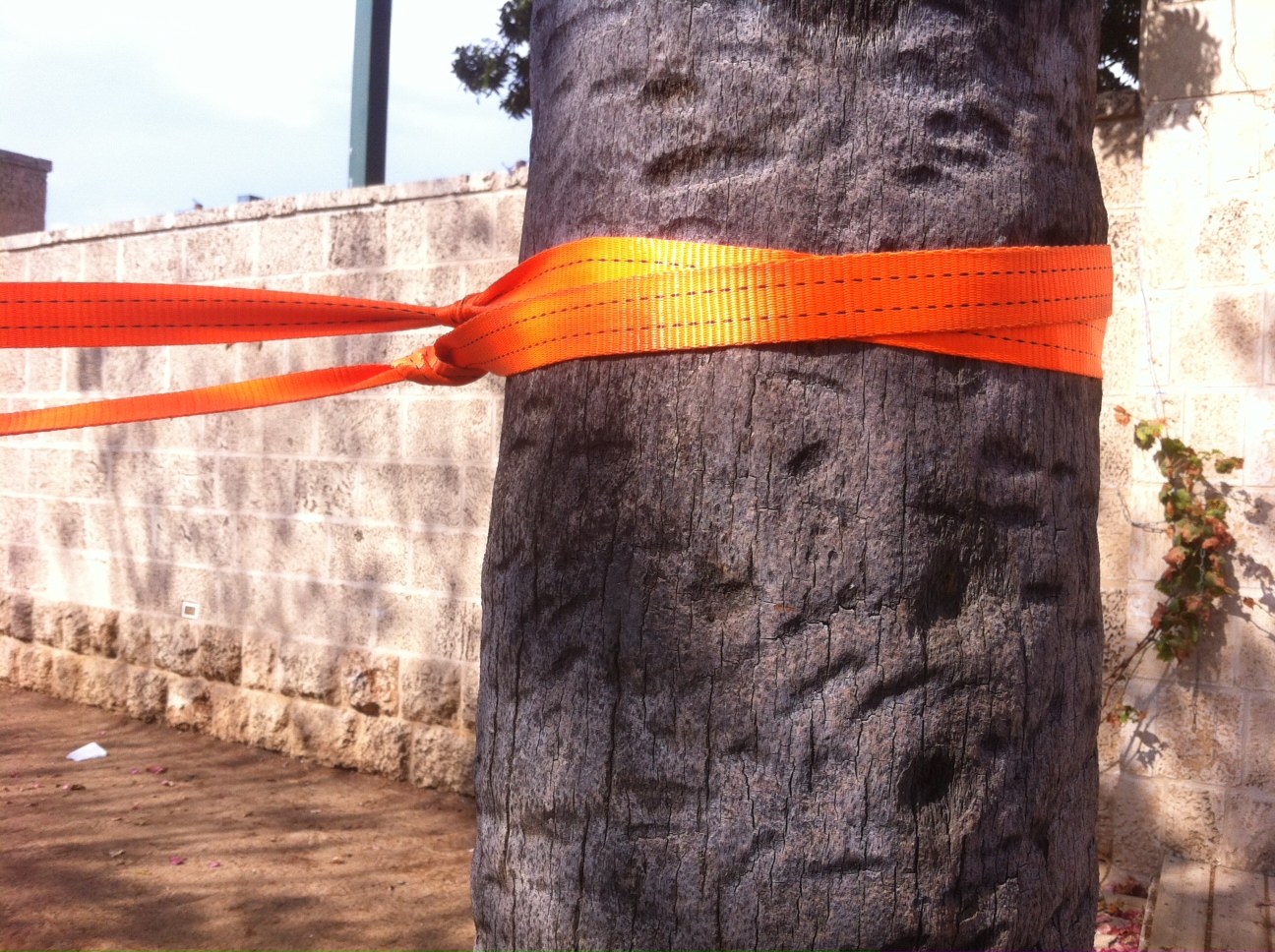
Setting up the Tentsile suspension system between the palms:
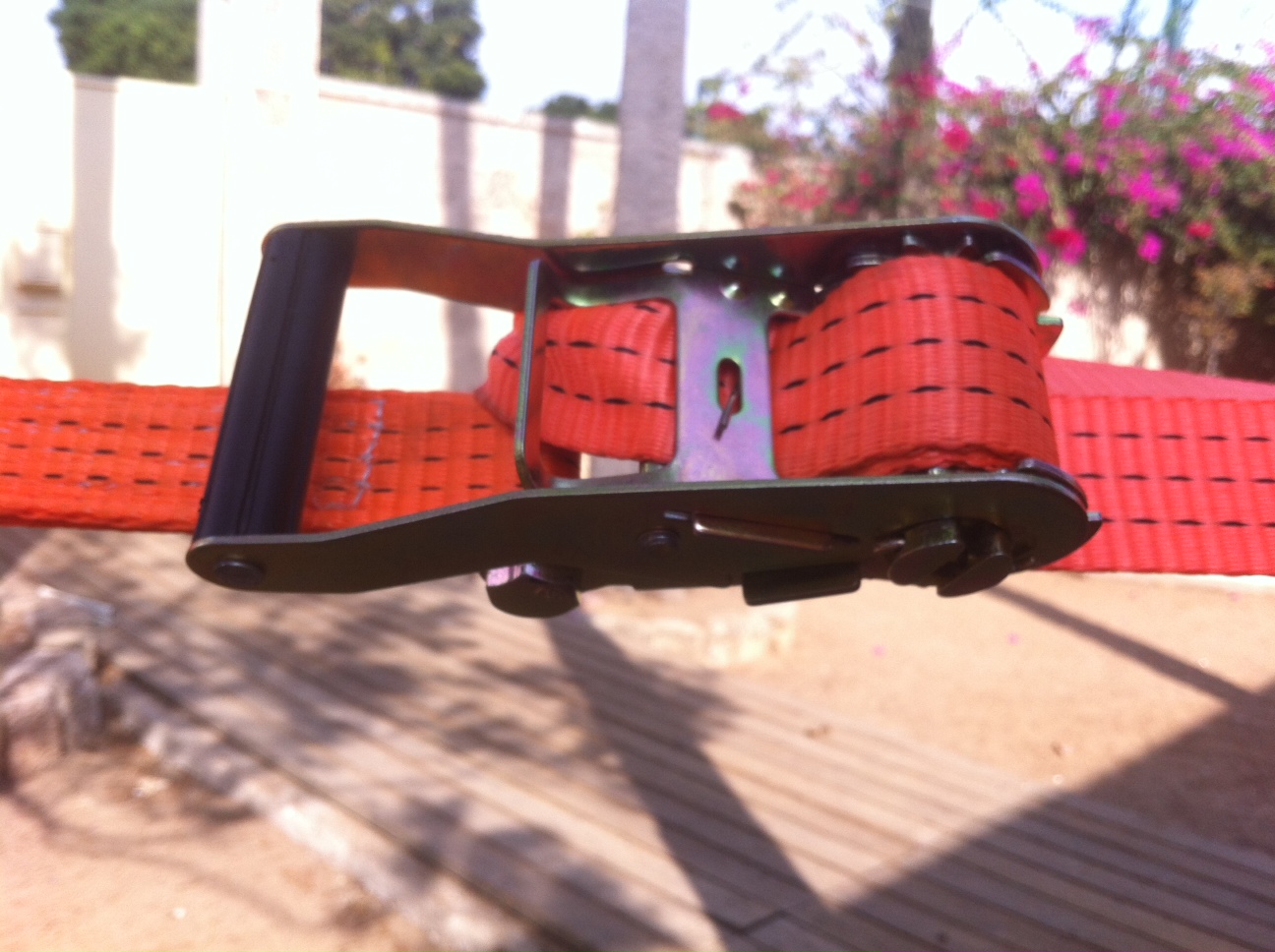
Setting up the tent is quite easy, and handily there is a sewn-in instructions page with pictures that are easy to follow. I was missing instructions on how to use the winches to secure the tent to the trees, but after some trial and error and hanging on to the tent with my test weight I figured it out. I had four palm trees I could have worked with, but there was a better triangulation made with a jacaranda tree in the front yard to the side of the house.
An additional fly, not pictured here, will also come in handy during the rainy winter season in the Middle East. It has just started to rain.
Without the fly, the tent looks very unique. It’s definitely a showstopper. With the fly it looks like a strange large spider strung inside the trees.
Here is the Tentsile tent set up at our house in Jaffa
As someone who has been camping since the age of zero, and buying and setting up tents in the wild forests of Canada, all the way to the jungles of south America and the deserts of the Middle East, this is what I can say about those interested in buying this tent after trying it out:
What I love about the Tentsile Connect
First thing, the egoist in me loves how it looks. You’ll definitely catch a lot of attention with this beauty. Wanted or unwanted. This could be a great solution for art and music festivals where you have to find your tent in a sea of other similar looking tents. The tent could provoke unwanted attention, so be prepared that people might be inclined to tickle your bottom while they walk by.
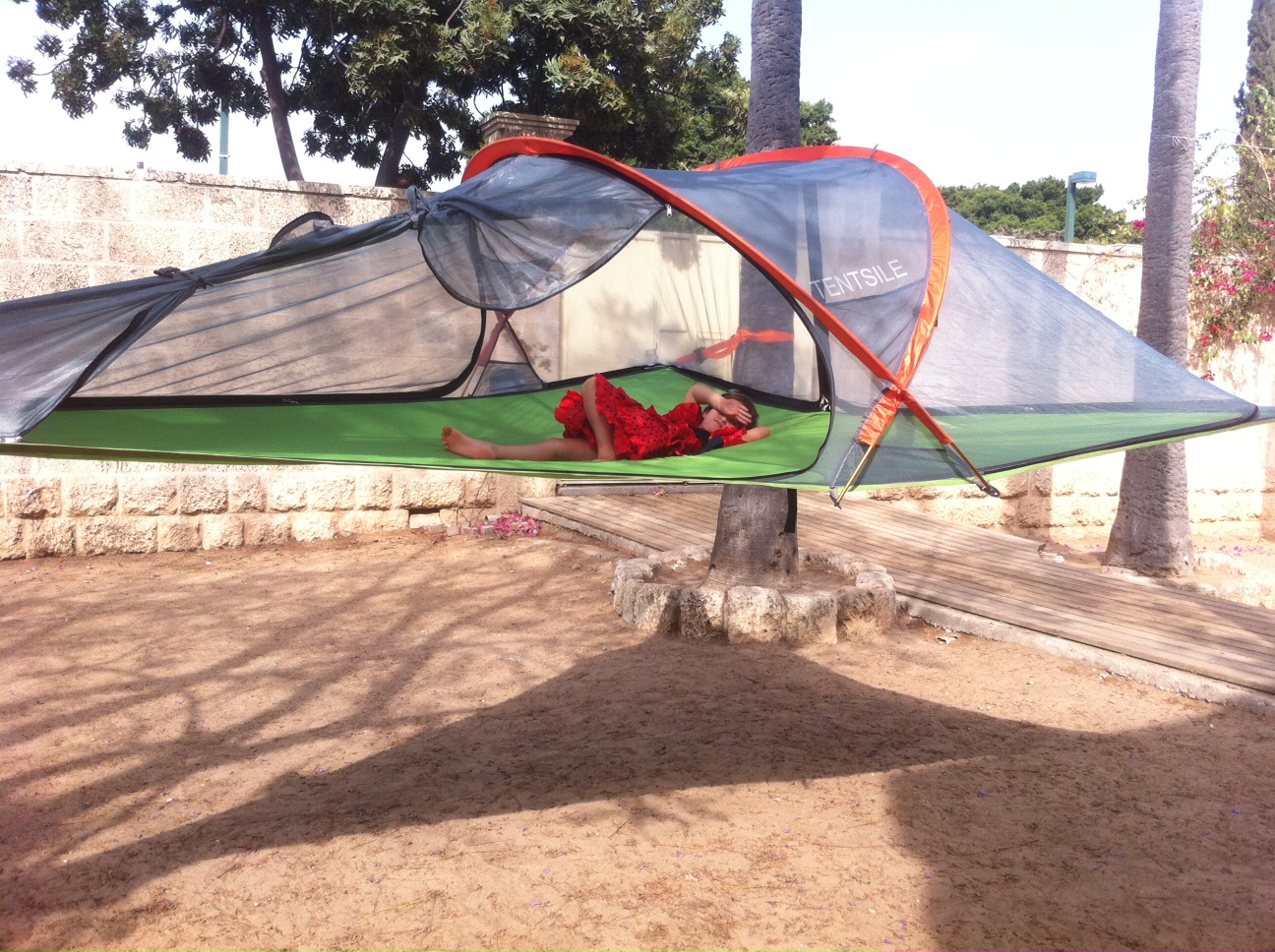
Hanging out with my daughter in the Tentsile tent:
Again, this is a plus or minus depending on the situation.
If I were a teen or in my early 20s, my inner attention seeker would love to have this in my backpacking tool kit. Coming in at 7.5 kilos, it’s not the lightest 2-man tent in the forest, but worth lugging around on canoe trips or backpacking when not a lot of hiking is involved. Or give it to your boyfriend to carry! He he.
Aerial view of Tentsile from my roof:
If you set it up high enough (you can buy a portable ladder for climbing in), and the space below it forms an instant covering against sun and rain.
In cold climates, using this tent may let you forego using a ground sheet or thermal insulating on the bottom. You’d have to try it out first in cold climates for conformation.
No bottom touching the ground means no leakage when it rains, and the tent preserves vegetation below it. You can quite literally set your tent up above flowerbeds or above a river. Imagine that?
Extra fly material can be draped to form extra canopy.
While I haven’t slept overnight in it yet, the tent cradled me as though I were sleeping in a hammock, a position supposedly good for blood circulation.
In countries where wild animals are a concern, this tent will definitely give you peace of mind, unless you are using it where monkeys, sloths and snakes are endemic. In this case the zippered flies should offer you enough protection.
The design is very sleek and sexy.
Shortcomings of the Tentsile
The tent is obviously very well designed and constructed, and the designers considered the mass issue of a hanging tent that can hold up to 600 kilos. The zippers however seem very delicate. I would consider using them sparingly, and only the ones on the side of the tent, and while one’s weight is centred just so. The zippers do look like they would be easy to replace, if needed.
If you like to toss and turn and zip two sleeping bags together for a snuggle on cold nights then this tent might not be for you. The Connect is made with two distinct sleeping cells, with a seam between them running in the middle.
The weight issue, mainly due to the winches that keep the tent secure to the trees, might be a misgiving for the campers in us who need to pack light for long-haul trips. And relying on trees to connect with may not be a luxury for everyone in every country all the time.
If you sleep lightly, sharing this tent my be a problem if your partner moves a lot at night. The feeling is much the same as sharing a waterbed.
The instructions say not to hang the tent above sharp objects and not higher than 1.5 meters off the ground for safety considerations. Or what would happen if lighting strikes?
The only other shortcoming I see would be privacy issues: if you are using this tent in a public or semi-public space like a camp ground and want to get romantic with your partner. If the tent’s a rocking, don’t come a knocking, we used to say back in the good old days. But this tent would be swinging. Again, it all depends on one’s outlook to these sorts of things.
I personally was very afraid of the so-called hermits that are thought to live throughout Canada’s wild and vast national parks. These are people who go into the park and never come out. Thinking a hermit might be underneath me while I sleep, however unlikely, might affect my peace of mind. A window on the bottom of the tent, like a glass bottom boat might solve the problem or make it even freakier. This fear is canceled out by the fact that no bears would be able to claw open the tent looking for my M&Ms.
Sum up: the Tentsile is a good #2 “alternative” tent for an Alpha male or female outdoorsy sort who wants a little attention, and another way to camp in a little unconventional way. It’s also a great day tent for outings with the family to the forest where you want a space to have a bug free, possibly toddler-free nap, high up in the trees with the wind blowing and the bugs out of your nose. It’s made well and if cared for could last a long time. It would be a great gift item due to its novelty and usefulness.
I love this tent and am looking forward to using it.
As the former CEO of NatWest Group, Dame Alison Rose often inspires entrepreneurs by speaking about leadership challenges and her experiences overcoming these in the banking sector.
Many have heard her speak on James Harding’s ThinkIn podcast, where she delves into several leadership topics, from opening opportunities for female founders to supporting small businesses through Entrepreneur Accelerators.
On this podcast, she also explains how, as NatWest’s CEO, she managed the activity happening throughout the UK’s biggest business and commercial bank and kept track of its emissions-related goals.
She goes on to discuss the UK’s entrepreneurial position in the wider global economy and shares how she stayed calm while holding such an influential position.
Here are some highlights from the episode.
Alison Rose on Staying Afloat of Activity Throughout NatWest
As NatWest’s CEO, it was essential for Alison to stay afloat of activity throughout the bank. She oversaw both technical and ethical measures, carving out regular time to communicate with customers, review complaints, and track all emissions activity.
Communicating with customers was a cornerstone of her leadership approach. She often hosted round tables with customers to hear their updates, considering it important to “spend time with customers and talk to them. To ask what’s really going on, so that you get a feel, rather than just looking at the data.”
She would also “get home every weekend with a pile of complaint letters” to personally read and review. On top of this, she monitored NatWest’s whistleblowing process, which encouraged colleagues to share information openly. “We set very high standards of conduct and culture,” she says.
Alison also monitored activity from a sustainability, climate, and emissions perspective. This was “much easier to track” because of NatWest’s “credit policies, appetite policies, and guidelines of lending.”
She gives an example of a balance sheet at the time, which showed that NatWest only lent 0.8% of their funds to oil and gas. She and her colleagues could track and monitor that percentage, “flexing it up and down” as they aligned credit risk policies.
Working Towards NatWest’s Net Positive Goal
In 2020, Alison launched “a very clear strategy on climate” that mapped a route to NatWest becoming net zero by the end of the year. The organisation achieved this goal and aims to be net positive by 2025.
To reach these goals, Dame Alison and her colleagues identified the exposure to oil, gas, and coal on their balance sheet. They decided to phase out coal by 2030, then move on to phasing out oil and gas. The approach was to get their own house in order and then provide the tools and support to guide customers through the transition. They achieved this by:
Partnering with leading carbon management solution companies like Cogo.
Providing consumers with information about emissions from their spend via the app.
Creating tools for small and medium enterprises (SMEs) and suppliers to measure their environmental impact and help come up with solutions to minimise this.
Sharing information and offering support was critical to this wholesale rewiring of the economy and management of risk.
Introducing The Transition
To introduce the transition, NatWest’s relationship managers told customers in these sectors about the new goals. They asked the customers to provide a credible transition plan by the end of the year to continue receiving funds. Alison and her colleagues also introduced incentives to reduce fees when customers hit sustainable goals.
Having analysed major sectors for emissions — “which was about 46% of our balance sheet” — Alison and her colleagues decided how to halve these emissions. They knew this would “need collaboration across the public and private sectors” and a focus on global targets.
Alison notes that it was crucial to “start by being very clear about what we were doing, and then, most importantly, funding the transition.” In 2020, she set a target to secure £20 billion of renewable financing by 2021. They were already at £12 billion by May 2021. Demand was so high that she and her colleagues extended the target to £100 billion and, at last results, had reached £78 billion.
Setting A Clear Culture and Policy Suite to Best Protect Customers
Alison believes a bank like NatWest must find the “balance between supporting the economy and not being the moral arbiter of the economy.” To achieve this, a bank needs a clear ethical policy, sustainability policy, and culture.
This means deciding what types of businesses to support and setting environmental, social, and ethical criteria that the bank is prepared to lend by. Having laid this groundwork at NatWest, Alison and her colleagues could ensure they provided “the right support for customers within an ethical and social background.”
Alison gives data protection as an example, noting that NatWest has “huge amounts of data on customers that [it] collects from being in their lives and seeing their payments.” As CEO, she considered NatWest’s “ethical responsibilities as important as [its] data protection responsibility.”
This meant not using or selling the data in any way. “We [didn’t] do any of that,” Alison says. “We [had] a very clear, ethical policy around our use of data for what we [thought was] appropriate in terms of protecting our customers. We almost [viewed] that in the same way as their money. Our job [was] to keep that safe for them as well.”
Alison and her colleagues also “put a lot of systems and controls in place” to prevent financial crime.” Alison managed 4,000 people who specifically managed crime prevention, and NatWest invested almost half a billion pounds in systems and controls to make this possible between 2019 and 2021 alone.
The UK’s “Resilient” Position in the Global Economy
Alison considers NatWest “a bellwether of the UK economy” due to its position as the third-largest retail bank and number-one business bank. This makes it “inherently linked to the success of [its] customers.”
She notes that “regional economies are very different.” NatWest has “regional boards around the country that tap into the local economies,” which “have different dynamics,” she says.
Overall, she considers the UK’s business community “amazingly resilient” and “incredibly entrepreneurial,” as proven by its response to Covid-19. Even with the economy “put into a hard stop for effectively six months,” Alison saw “entrepreneurs and small business owners cope and pivot their businesses” in a way that she considers “really positive” and with “incredible resilience and ambition.”
Today, “this country still attracts a huge amount of inward investment in terms of fintechs and startups and entrepreneurialism,” Alison says. With many SMEs creating jobs, these “are the lifeblood of the economy.”
Because of this, Alison believes “there’s a huge amount to be optimistic about in terms of a nation of SMEs and real strengths in our economy through biotech, bioscience, manufacturing, entrepreneurism, and the different sectors.”
She also believes “the ability to export and import talent is a really important one, and we need to make sure we continue to be a place that is vital for skills coming in and being exported.”
“I think that’s a critical part of a thriving global economy,” Alison says. “We’re still one of the global financial centres [that] services the economy more broadly and a big contributor to tax receipts, which drives that.”
How Alison Rose Carried the Weight of CEO Responsibilities
Serving as the CEO of a major bank comes with a huge level of responsibility. A purpose-led strategy, strong team, and customer communication all helped Alison carry the weight of this responsibility.
“When banks get it wrong, I can see the damage we do in people’s lives,” Alison says. This is “because we’re so embedded in people’s lives and providing capital to the economy.” As a result, “having a purpose-led strategy… and knowing that we should be a force for good rather than bad is really important.”
To stay calm running such a big organisation, Alison turned to her “great team,” remembering that running a bank “is a team sport.” She recognises that “sometimes we all make mistakes” and prioritised only focusing on controlling the things she could control.
She also spent “as much time as possible talking to customers and colleagues” so that she and her team could “react quickly and respond quickly like we did during the pandemic.”
“Working really closely and being honest about what we [were] doing” was crucial, as was “trying to make sure we [were] always doing the best job we possibly [could],” Alison says.
Lastly, recognising that she held a “privileged position” helped Alison manage her CEO responsibilities. She would remember, “I have a fantastic job, and I’m very privileged to do it, and I love my job.” This helped “ease the days when you’re lying awake at night wondering what you need to do,” Alison says. “That’s how I [did] it.”
About Alison Rose
The former CEO of NatWest, Alison Rose is the first woman to lead a major UK bank. Having joined the organisation in 1992 as a graduate trainee, she progressed her career within the bank and became CEO in 2019. That same year, she launched the Alison Rose Review of Female Entrepreneurship, which has supported hundreds of thousands of women with their entrepreneurial ventures.
The government commissioned this seminal report, which highlights the challenges that many women in business face and explores the opportunities they can leverage to overcome these barriers. Alison also served as chair of the Rose Review Board until 2023, when she became a Dame Commander of the Order of the British Empire (DBE) for services to the financial sector.
Today, Dame Alison is a senior adviser to the private equity firm Charterhouse and a member of the Board of Trustee Directors of Business in the Community (BITC). She also advocates for industry action on climate change and has served on the Net Zero Council and the government’s Energy Efficiency Taskforce.
NASA’s Europa Clipper yesterday began its voyage to investigate a vast ocean buried under the icy crust of Jupiter’s moon Europa. If Europa is found to have the ingredients for life, that discovery would drastically expand the chances of finding life on icy worlds in other solar systems, according to Nature.
The spacecraft will make crucial manoeuvres in space, such as deploying radar antennas, to prepare for its arrival in 2030. “We’re watching through our fingers with excitement,” says planetary scientist Kathleen Craft. “Everything needs to go right.”
A SpaceX Falcon Heavy rocket with the Europa Clipper spacecraft aboard is seen at Launch Complex 39A as preparations continue for the mission, Sunday, Oct. 13, at NASA’s Kennedy Space Center in Florida. Credit: NASA
With its massive solar arrays extended, Europa Clipper could span a basketball court (100 feet, or 30.5 meters, tip to tip). In fact, it’s the largest spacecraft NASA has ever built for a planetary mission. The journey to Jupiter is a long one — 1.8 billion miles (2.9 billion kilometers) — and rather than taking a straight path there, Europa Clipper will loop around Mars and then Earth, gaining speed as it swings past.
The spacecraft will begin orbiting Jupiter in April 2030, and in 2031 it will start making those 49 science-focused flybys of Europa while looping around the gas giant. The orbit is designed to maximize the science Europa Clipper can conduct and minimize exposure to Jupiter’s notoriously intense radiation.
Technicians encapsulated NASA’s Europa Clipper spacecraft inside payload fairings on Wednesday, Oct. 2, at NASA’s Kennedy Space Center in Florida. The fairings will protect the spacecraft during launch as it begins its journey to explore Jupiter’s icy moon Europa. Credit: NASA/Ben Smegelsky
But, of course, before any of that can happen, the spacecraft has to leave Earth behind. The orbiter’s solar arrays are folded and stowed for launch. Testing is complete on the spacecraft’s various systems and its payload of nine science instruments and a gravity science investigation. Loaded with over 6,060 pounds (2,750 kilograms) of the propellant that will get Europa Clipper to Jupiter, the spacecraft has been encapsulated in the protective nose cone, or payload fairing, atop a SpaceX Falcon Heavy rocket, which is poised for takeoff from historic Launch Complex 39A.
Launch Sequences
The Falcon Heavy has two stages and two side boosters. After the side boosters separate, the core stage will be expended into the Atlantic Ocean. Then the second stage of the rocket, which will help Europa Clipper escape Earth’s gravity, will fire its engine.
Once the rocket is out of Earth’s atmosphere, about 50 minutes after launch, the payload fairing will separate from its ride, split into two halves, and fall safely back to Earth, where it will be recovered and reused. The spacecraft will then separate from the upper stage about an hour after launch. Stable communication with the spacecraft is expected by about 19 minutes after separation from the rocket, but it could take somewhat longer.
About three hours after launch, Europa Clipper will deploy its pair of massive solar arrays, one at a time, and direct them at the Sun.
Mission controllers will then begin to reconfigure the spacecraft into its planned operating mode. The ensuing three months of initial checkout include a commissioning phase to confirm that all hardware and software is operating as expected.
While Europa Clipper is not a life-detection mission, it will tell us whether Europa is a promising place to pursue an answer to the fundamental question about our solar system and beyond: Are we alone?
This artist’s concept depicts NASA’s Europa Clipper spacecraft in orbit at Jupiter as it passes over the gas giant’s icy moon Europa (lower right). Scheduled to arrive at Jupiter in April 2030, the mission will be the first to specifically target Europa for detailed science investigation. Credit: NASA/JPL-Caltech
Scientists suspect that the ingredients for life — water, chemistry, and energy — could exist at the moon Europa right now. Previous missions have found strong evidence of an ocean beneath the moon’s thick icy crust, potentially with twice as much liquid water as all of Earth’s oceans combined. Europa may be home to organic compounds, which are essential chemical building blocks for life. Europa Clipper will help scientists confirm whether organics are there, and also help them look for evidence of energy sources under the moon’s surface.
Europa Clipper’s three main science objectives are to determine the thickness of the moon’s icy shell and its interactions with the ocean below, to investigate its composition, and to characterize its geology. The mission’s detailed exploration of Europa will help scientists better understand the astrobiological potential for habitable worlds beyond our planet.
Reaffirming its ongoing support for environmental initiatives, especially in Pennsylvania, Colcom Foundation has awarded a generous $50,000 grant to PennEnvironment.
The donation highlights the alignment between the two organizations’ missions and their shared dedication to preserving the natural world. The partnership reflects a joint effort to advance environmental stewardship and protect Pennsylvania’s diverse ecosystems for future generations.
Colcom Foundation, founded in 1996, is a philanthropic organization focusing on environmental conservation and sustainability. It was established by the late Cordelia Scaife May, a member of the prominent Mellon family and a passionate conservationist. May’s deep concern for the environment led her to create Colcom Foundation as a vehicle for supporting conservation causes.
PennEnvironment is a leading environmental advocacy organization dedicated to protecting Pennsylvania’s air, water, and natural habitats. Through research, public education, and policy initiatives, PennEnvironment works tirelessly to address pressing environmental issues such as climate change, pollution, and habitat loss.
Championing a Greener Future for Pennsylvania
Clean air and water, thriving wildlife, and healthy forests are essential components of a safe environment and a sustainable future. Driven by a mission to protect the natural world and ensure a greener Pennsylvania, PennEnvironment employs rigorous research, public education, and policy advocacy to address pressing environmental issues.
PennEnvironment envisions a Pennsylvania where natural spaces are preserved and restored, with habitats where all life forms can flourish. Its vision encompasses not only the state’s abundant natural beauty but also the well-being and health of its residents. By focusing on clean air, clean water, and renewable energy sources, PennEnvironment wants to leave a legacy of environmental stewardship for future generations.
Research and Education
At the heart of PennEnvironment’s strategy is a commitment to in-depth research. Understanding the complexities of environmental challenges requires meticulous study. Whether investigating the decline of bee populations or analyzing the impact of single-use plastics on local waterways, PennEnvironment’s research forms the backbone of its advocacy efforts.
By disseminating information through reports, multimedia content, and community outreach, the organization empowers individuals and communities to make informed decisions and take proactive steps toward environmental conservation.
Key Initiatives and Campaigns
Save the Bees
Bees for Peace teaches women how to become urban beekeepers
Bees play an indispensable role in pollinating crops and maintaining biodiversity. Recognizing the alarming decline in bee populations, PennEnvironment has launched comprehensive campaigns to protect these vital pollinators. The organization’s efforts include advocating for restrictions on harmful pesticides, promoting the planting of pollinator-friendly gardens, and urging major retailers to end the sale of bee-toxic products. Through resources like guides on creating pollinator habitats and multimedia content highlighting the plight of bees, PennEnvironment galvanizes public support for these tiny yet mighty creatures.
Beyond Plastic
Plastic pollution poses a major threat to wildlife and ecosystems. From marine animals ingesting microplastics to landscapes marred by discarded bags and containers, the repercussions are far-reaching. PennEnvironment’s “Beyond Plastic” initiative tackles this challenge head-on. By advocating for bans on single-use plastics, promoting sustainable alternatives, and highlighting businesses that lead by example, the organization strives to reduce the environmental footprint of plastic products.
Forests and Conservation
Pennsylvania’s forests are treasures that offer recreation, support biodiversity, and act as crucial carbon sinks in the battle against climate change. PennEnvironment works to protect these green expanses from threats like logging, development, and road construction. Through advocacy, public awareness campaigns, and partnerships with other conservation entities, the organization endeavors to keep forests healthy, intact, and wild.
Global Warming Solutions
Addressing the existential threat of global warming requires both local and global actions. PennEnvironment engages in campaigns that promote renewable energy adoption, energy efficiency, and policies aimed at reducing greenhouse gas emissions. By spotlighting milestones such as new limits on power plant emissions and pioneering actions on auto pollution, the organization showcases progress while emphasizing the work that remains.
Building a Sustainable Future with Colcom Foundation
As PennEnvironment continues its vital work across the state, support from organizations like Colcom Foundation plays a crucial role in amplifying these efforts. The recent $50,000 grant from Colcom Foundation to PennEnvironment is more than just a financial contribution; it’s the product of Cordelia Scaife May’s foresight and the groundwork she laid for environmental action. Through Colcom Foundation’s ongoing support of organizations like PennEnvironment, May’s legacy lives on, ensuring the ongoing fight for a balance between human needs and environmental preservation.
In supporting PennEnvironment‘s multifaceted approach to conservation Colcom Foundation is helping to realize Cordelia Scaife May’s vision of a world where human activities coexist sustainably with the natural environment. Their ongoing commitment ensures that the work of protecting Pennsylvania’s diverse ecosystems, clean air, and water resources will continue for generations to come, honoring May’s passion and foresight in environmental stewardship.
The power of Colcom Foundation’s mission and PennEnvironment’s on-the-ground work are writing a new chapter in Pennsylvania’s environmental history. — one that Cordelia Scaife May would undoubtedly be proud to see unfolding.
An AI generated image of Heracleion before it sank to the sea
In Egypt, there’s a fascinating underwater mystery that’s been captivating archaeologists and history lovers alike: the ancient city of Heracleion (also known by its Egyptian name, Thonis). Once a bustling port city located near the mouth of the Nile, Heracleion was a key hub for trade and religion. But, over time, it vanished beneath the Mediterranean Sea just off the coast of Alexandria. How this happened is still a mystery.
Heracleion was an important city as far back as the 12th century BCE and remained significant through the Ptolemaic period. The city got its name from the legendary Greek hero Heracles (Hercules), and the Egyptians called it Thonis. It played a crucial role as the entry point to Egypt for many foreign traders. However, sometime around the 2nd century CE, it disappeared under the waves, likely due to a combination of natural disasters like earthquakes, rising sea levels, and soil liquefaction (where the ground becomes unstable and sinks). Maybe it was an ancient tsunami?
Franck Goddio by CHRISTOPH GERIGK
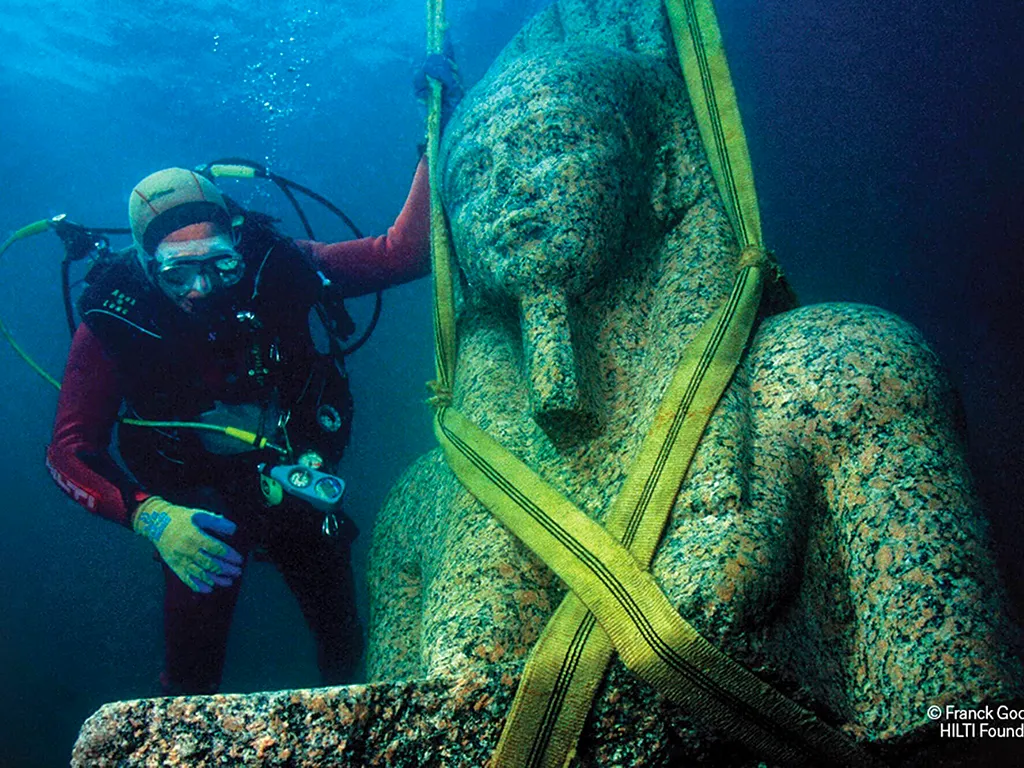
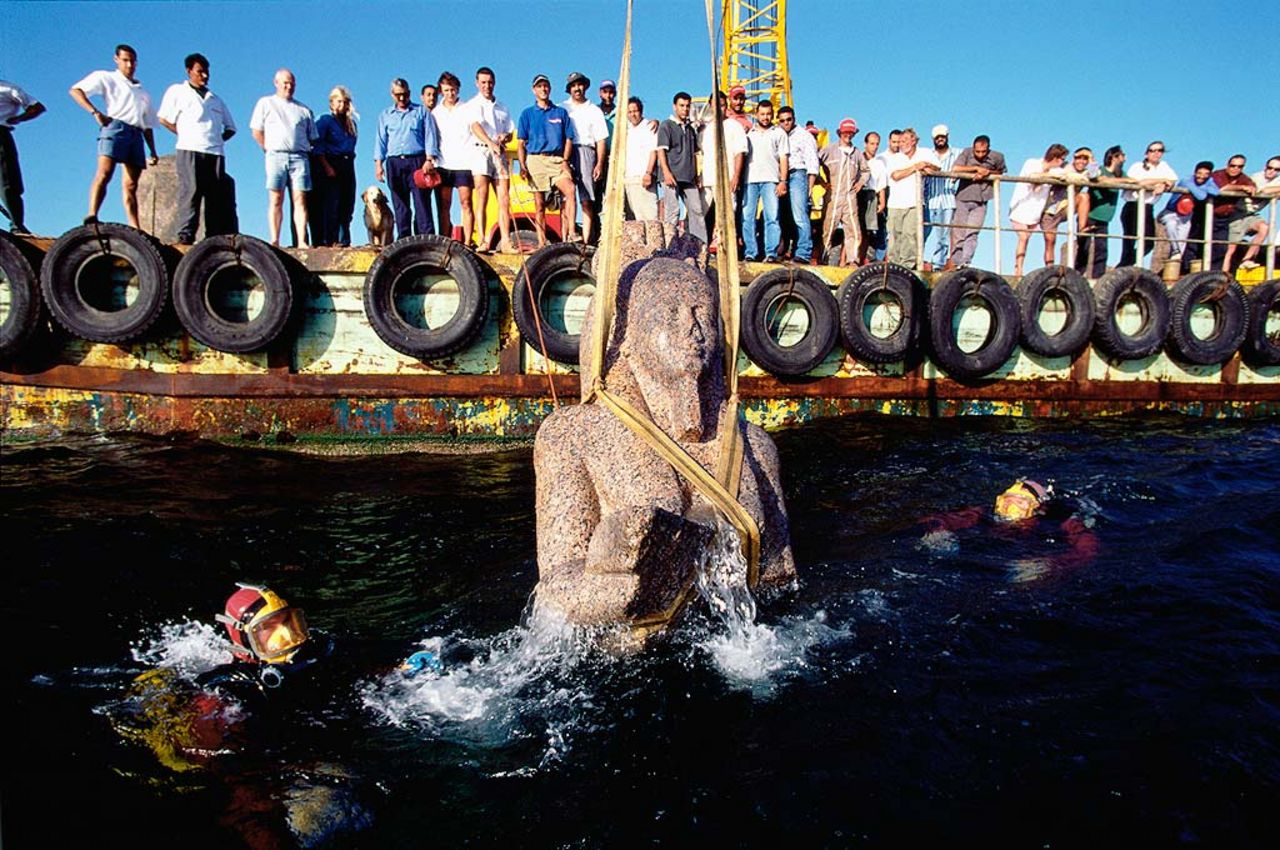
For centuries, Heracleion was thought to be nothing more than a legend. That all changed in the year 2000, when French underwater archaeologist Franck Goddio and his team stumbled upon its remains buried under layers of sand and silt in Abu Qir Bay, not far from Alexandria.
Statue of Amun-Ra – via Franck Goddio
What Divers Found
Since its rediscovery, Heracleion has given us an incredible look at the past. Divers have uncovered massive statues, the remains of grand temples, and treasures that hint at the city’s wealth and influence.
Monumental Statues and Temples: Some of the most remarkable finds include giant stone statues of pharaohs and Egyptian gods. One particularly impressive statue is of Hapi, the god of fertility and abundance. These figures once stood in front of temples dedicated to deities like Amun and Osiris, towering over those who came to worship.
Ancient Ships and Sphinxes: Archaeologists have found over 60 shipwrecks in the area, as well as sphinxes and other relics. The ships, some of which were loaded with goods, offer a glimpse into Egypt’s role as a major player in Mediterranean trade.
Religious Artifacts: Heracleion was also a spiritual center. It’s believed that one of the city’s major roles was hosting religious festivals, like the Mysteries of Osiris. Processions would sail from Heracleion to the nearby city of Canopus as part of a sacred ritual. Many religious artifacts and offerings left by worshippers have been discovered in the ruins of the city’s temples.
Jewels and Coins: Among the treasures recovered are golden coins, jewelry, and weights that show just how prosperous the city was. These artifacts reveal how tightly Egypt was connected to the Mediterranean world, especially Greece, in terms of both trade and culture.
The discovery of Heracleion fills in the gaps about Egypt’s ancient past, but it also highlights just how interconnected civilizations in the Mediterranean were. The city was more than just a local port—it was a thriving center where goods, ideas, and cultures mingled.
The city likely sank gradually due to natural disasters, including earthquakes, combined with a slow rise in water levels. But it seems a major flood might have been the final blow, covering it with silt and water, which ironically helped preserve many of its structures and artifacts for over a thousand years.
The underwater archaeological research in Thonis-Heracleion is ongoing until today. Franck Goddio estimates that only 5 percent of the city have yet been discovered.
Today, Heracleion is considered one of the greatest underwater archaeological finds ever made. New discoveries are being made with each dive, revealing more about this long-lost city and its people. The underwater ruins continue to fascinate historians, explorers, and anyone with a love for ancient history.
Who is Franck Goddio?
Franck Goddio is a pioneer of modern maritime archaeology. As the grandson of Eric de Bisschop (navigator, writer, inventor of the modern catamaran, and specialist of ancient navigational routes in the South Pacific), a passion for the sea and wanderlust runs in Franck Goddio’s veins.
After graduating from the École Nationale de la Statistique et de l’Administration Economique in Paris, Franck Goddio conducted economic and financial counselling missions in Laos, Vietnam and Cambodia for the United Nations, and later for the French Foreign Ministry. He was a financial advisor to the Kingdom of Saudi Arabia and various other governments.
In the early 1980’s he decided to dedicate himself entirely to his passion – underwater archaeology – and founded the Institut Européen d’Archéologie Sous-Marine (IEASM), of which he is currently president. Franck Goddio has initiated and directed a number of excavations on shipwrecks including seven junks from the 11th-16th century, two Spanish galleons and two trading vessels of the British East India Company.
Notable among these excavations are the San Diego (a Spanish galleon from the famous Manila-Acapulco-Sevilla trade route) and the Royal Captain (a British East India Company ship, where complex technical problems due to the great depth (350 m) had to be overcome during the mission), as well as the Orient, Napoleon Bonaparte’s Flagship during his campaign in Egypt.
According to dive experts on sites like Trip Advisor, it is not possible to dive at the protected site and doing so could lead to jail or fines.
One user writes: “There is no way you will be allowed to dive there as a tourist. Attempting it by using some sort of desperado “dive company” could result in VERY hefty fines or even in a prison sentence if the equipment or the circumstances suggest that you were attempting to plunder the site.
“If you have legit credentials as an underwater archeologist it’s a different matter and you should pursue the usual channels.”
One diver I spoke with on the Facebook Group Divers Uncensored said you can dive there: “Not much extant except for plenty of broken amphorae,” he says.
The country of Azerbaijan wants to be the center of Islamic architectural heritage. Does that justify knocking down heritage sites that are churches?
The symposium titled “Islamic Architectural Heritage of Shusha City,” organized by the Shusha City State Reserve Department and supported by ICESCO (Islamic World Educational, Scientific, and Cultural Organization), has concluded in Shusha, Azerbaijan.
Held over two days as part of the events marking Shusha’s designation as the “Cultural Capital of the Islamic World” for 2024, the event attracted over 80 architects from Türkiye, Egypt, the UAE, Tunisia, Kenya, Jordan, Italy, Morocco, Saudi Arabia, the UK, and Azerbaijan.
Aydin Karimov, Special Representative of the Azerbaijani President in Shusha district, Ilgar Isbatov, Deputy-Chairman of Azerbaijan’s State Committee of Urban Planning and Architecture, Pietro Laureano, a representative of UNESCO, and Bilal Çelebi, a representative of ICESCO, highlighted Shusha’s unique architectural significance.
They described the event as highly important in terms of the history and significance of Islamic architecture, adding that the symposium significantly contributed to the development of architecture.
The event featured panel discussions on topics such as “Urban regeneration of historical fabrics,” “Modern life of monuments,” and “Sustainable architecture: material, design, and implementation.”
Is Islamic heritage incompatible with Armenian Christian churches?
There was no mention of the past and ongoing Armenian genocide happening at warp speed in Azerbaijan or the complete eradication of Christian culture in Shusha City. Churches that were not destroyed are being dismantled. A sustainable city is one that welcomes all kinds of religions and its architecture, past and present. That’s what the West believes as it welcomes immigrants from all over the world who are free to practice their faith and build their homes of worship.
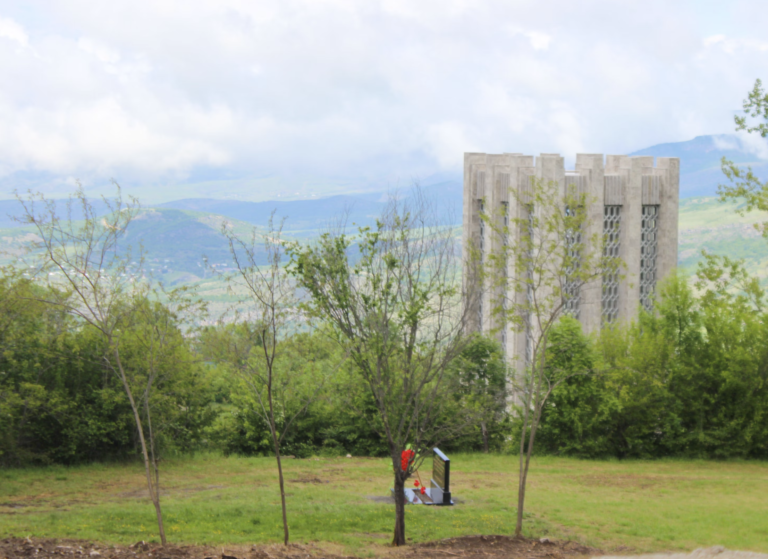
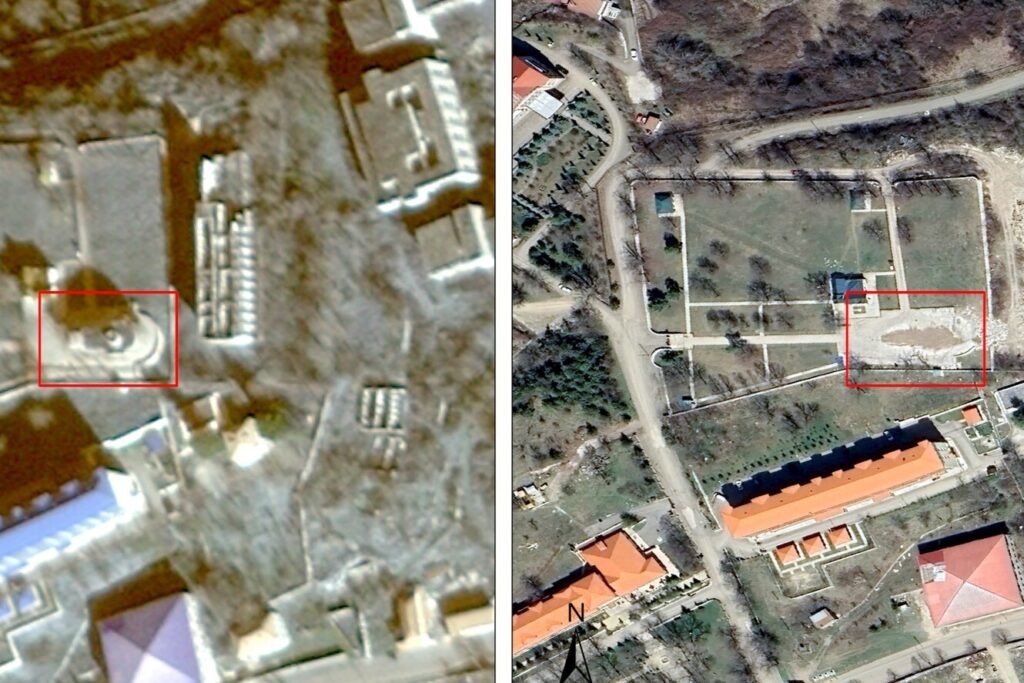
The Caucasus Heritage Watch has reported that Azerbaijan has destroyed a 177-year-old church in the city of Shusha (Shushi), in Nagorno-Karabakh in the last year. The open-source cultural sites watchdog, reported that the St Hovhannes Mkrtich church is gone. They analyzed satellite imagery appearing to show that the church was completely destroyed between 28 December 2023 and 4 April 2024.
If you are in Baku and can make it to Shusha this week give them an ask.
St. Hovhannes Mkrtich Church in Shusha. An Armenian Church. Image via Caucasus Heritage Watch.
What happened to Shusha Church? Satellite imagery showing the St Hovhannes Mkrtich church in December 2023 (left) and April 2024 (right). Image via Caucasus Heritage Watch.
Just because you’re moving into a dorm doesn’t mean you have to sacrifice your eco-friendly values for the sake of convenience. Instead, you can get all of your dorm essentials as sustainable options. Eco-friendly solutions for utensils, notebooks, cleaning supplies, and furniture are widely available online so that you can live a green-friendly four years at your university.
Before you move in for orientation, here are eight planet-friendly dorm essentials to help you become a lean, green college machine.
An organic mattress topper
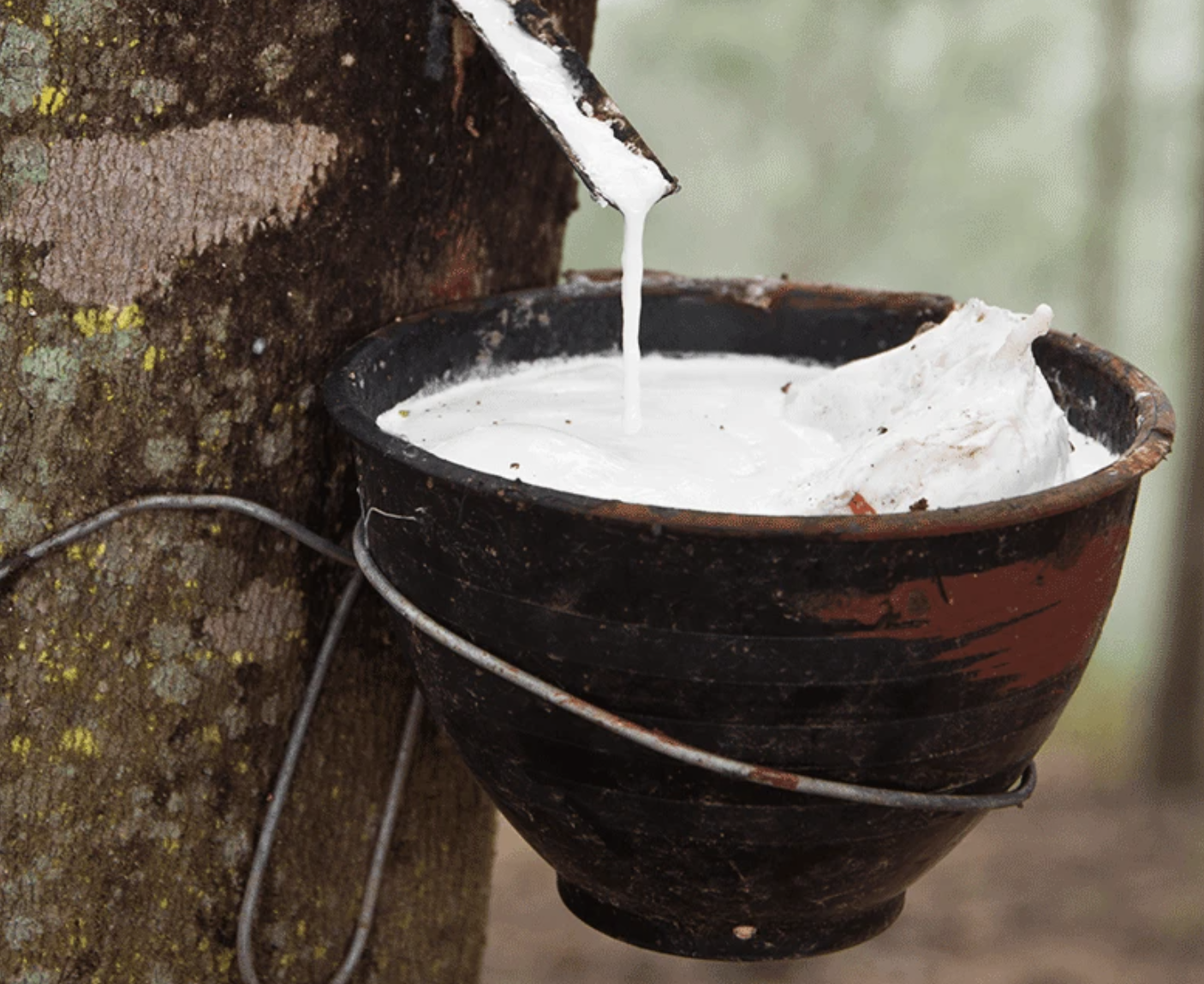
Tell your dorm mates you are “upcycling” an old mattress into a luxury organic mattress, one made with sustainably harvested hevea milk.
An organic memory foam mattress topper can help with sleep because the organic materials in the design keep your body cool at night. Organic mattress toppers also don’t harbor bacteria or other allergens, making them easier to clean and less harsh on your lungs.
Because they’re organic, these mattress toppers are also less stressful on the environment. Organic mattresses and toppers are a no-brainer for a sleep solution that heals the planet in a way that you don’t need to buy a completely new mattress, and thereby it melts away that finals week stress.
Plants
Plants spruce up your dorm and clean the air
Plants are a great way to add personality and color to your dorm room. Plus, they can act as natural air purifiers. Just make sure that you choose plants meant for indoors and that you can take care of within your schedule. A few excellent low-light options include pothos, peace lilies, and monsteras.
Bamboo utensils
A bamboo and basket serving tray looks nice, feels nice, and goes easy on our planet. Glow up your coffee in the dorm.
Bamboo utensils are a great way to reduce your day-to-day waste because they are reusable. These utensils are also made from eco-friendly bamboo rather than silver or metal, making them better for the environment. So, you can feel good about what you eat and how you eat.
Reusable coffee mugs
For students who can’t go without their daily coffee but want to stay on top of environmental duties, you can’t forget about reusable coffee mugs when picking out your dorm essentials. Reusable coffee mugs, especially those made by a local potter are cute, support your local, and can help cut down on your daily waste. You can take your environmental efforts further and choose a reusable thermos for those last-minute mornings. We love these ones by Kedma.
Biodegradable notebooks
Notebooks might not cross your mind as the place to reduce your carbon footprint, but biodegradable notebooks can be an excellent way to cut back on emissions. These notebooks come in different fun patterns and designs and offer a more sustainable option to the alternative, which often ends up in landfills.
All-natural cleaning supplies
Sustainable soaps. You can teach your dorm mates how to make your own.
Your dorm room is bound to accumulate dirt and what better way to clean it than with all-natural cleaning products. These products can whip your room into tip-top shape without the harmful chemicals that ordinary cleaning supplies use. Plus, all-natural cleaners often don’t have the same overpowering chemical smell, making for a relaxing afternoon in your freshly cleaned room.
Reusable paper towels
Reusable paper towels have begun gaining traction in more recent years. These towels act like a sponge but are made from thinner material to resemble a cloth napkin. Reusable towels can clean up spills and messes just as easily as a standard paper towel, minus the waste. If you are taking food from the cafeteria on the run, consider wrapping food in beeswax cloth that you can reuse time and time again.
Deodorant
Humble deodorant
Don’t wear this with your favorite eco-silk blouse because it stains from the coconut oil and it leaves a white residue, but for every day use, this Humble deodorant is a fine way to make it through the stress of exams and late night assignments. If you buy the product, all the ingredients inside it are listed. If you are entrepreneurial you can deconstruct it and make your own.
Ibex Protected Area, located 180 km south of Riyadh, joins IUCN Green List, which sets the global standard for protected and conserved areas management
Out of more than 300,000 protected areas worldwide, Ibex Protected Area becomes the 78th to have achieved the standards of the IUCN Green List.
The listing of Saudi Arabia’s first Protected Area represents a major milestone in the Kingdom’s commitment to ensure its protected areas are managed to the highest possible international standards.
The Ibex Protected Area, managed by NCW, is the first in Saudi Arabia to meet all the required criteria and achieve the highest standard, joining an exclusive list of less than 80 Protected Areas out of over 300,000 protected areas worldwide.
Situated in the Tuwaiq mountain range in central Saudi Arabia and covering 1,840.9 km², the Ibex Protected Area is a rugged plateau that supports a variety of flora and fauna. Established as a protected area in 1988 at the request of local communities to safeguard a small herd of ibex, a threatened species of Ibex. As a result of NCW’s dedicated efforts, the ibex population, which has existed in the area for milennia, has significantly rebounded.
The Ibex Protected Area also provides a habitat for other vulnerable species including mountain, rock hyraxes, foxes, birds, and reptiles. The area is home to diverse vegetation such as acacia trees, shrubs, herbs, and grasses.
The inclusion of the Ibex Protected Area in the Green List is a global endorsement of the effectiveness of its management and conservation efforts. It highlights the success in protecting its rich natural resources, enhancing habitats, and promoting biodiversity.
“The Ibex Protected Area’s Green List status not only elevates its international standing but also advances our broader conservation and sustainable development initiatives. We are actively working with our partners in the wildlife sector to bring all our national protected areas up to this l standard,” said Dr. Mohammed Qurban, CEO of the National Center for Wildlife.
The National Center for Wildlife currently manages 11 protected areas across Saudi Arabia. Since 2017, NCW has supported the expansion of Saudi Arabia’s marine protected areas from 3.6 percent to 6.5 percent and its terrestrial protected areas from 4.5 percent to 18.1 percent.
The listing of Saudi Arabia’s first Protected Area represents a major milestone in Saudi Arabia’s commitment to ensure its protected areas are managed to the highest possible international standards.
NCW collaborates closely with local communities, promoting sustainable development, ecotourism, scientific research opportunities, and preserving natural heritage, contributing to the prosperity of the surrounding region and the Kingdom as a whole.
This achievement also represents continued progress of Saudi Arabia’s journey to reach the 30×30 Global Biodiversity Goal, which aims to protect 30% of Earth’s lands and oceans by 2030. Since 2017, Saudi Arabia has increased its marine protected areas from 3.6% to 6.5% and its terrestrial protected areas from 4.5% to 18.1%, and is on pace to reach 30% of both by 2030.
Children as young as 8 years have fingerprints on 4,500 year-old pottery vessels found in an archeology site in Syria
Archaeologists analyzed 450 pottery vessels made in Tel Hama, a town at the edge of the Ebla Kingdom, one of the most important Syrian kingdoms in the Early Bronze Age (about 4,500 years ago), and found that two thirds of the pottery vessels were made by children – starting at the ages of seven and eight.
Along with the use of children for the needs of the kingdom, they also found evidence of the children’s’ independent creations outside the industrial framework, which illustrate the spark of childhood even in early urban societies. The research was led by Akiva Sanders from Tel Aviv University in cooperation with researchers from Copenhagen.
The findings were published in the journal Childhood in the Past.
“Our research allows us a rare glimpse into the lives of children who lived in the area of the Ebla Kingdom, one of the oldest kingdoms in the world,” says Sanders. “We discovered that at its peak, roughly from 2400 to 2000 BCE, the cities associated with the kingdom began to rely on child labor for the industrial production of pottery. The children worked in workshops starting at the age of seven, and were specially trained to create cups as uniformly as possible – which were used in the kingdom in everyday life and at royal banquets.”
As is well known, a person’s fingerprints do not change throughout their life. For this reason, the size of the palm can be roughly deduced from measuring the density of the margins of the fingerprint – and from the size of the palm, the age and sex of the person can estimated.
The pottery from Tel Hama, on the southern border of the Kingdom of Ebla, was excavated in the 1930s, and since then has been kept in the National Museum in Denmark. From the analysis of the fingerprints of the pottery it appears that most of them were made by children. In the city of Hama city two thirds of the pottery was made by children – the other third was created by older men.
Akiva Sanders from Tel Aviv University
“At the beginning of the Early Bronze Age, some of the world’s first city-kingdoms arose in the Levant and Mesopotamia,” says Sanders. “We wanted to use the fingerprints on the pottery to understand how processes such as urbanization and the centralization government functions affected the demographics of the ceramic industry. In the town of Hama, an ancient center for the production of ceramics, we initially see potters around the age of 12 and 13, with half the potters being under 18, and with boys and girls in equal proportions.
“This statistic changes with the formation of the Kingdom of Ebla, when we see that potters were starting to produce more goblets for banquets. And since more and more alcohol-fueled feasts were held, the cups were frequently broken – and therefore more cups needed to be made.
A palace in the ancient Syrian kingdom of Ebla
“Not only did the Kingdom begin to rely more and more on child labor, but the children were trained to make the cups as similar to each other as possible. This is a phenomenon we also see in the industrial revolution in Europe and America: it is very easy to control children and teach them specific movements to create standardization in handicrafts.”
Modern, handmade pottery vessels Bauhaus and brutal style by Kloosterman Clay. Today child labor is considered a crime.
However, there was one bright spot in the children’s lives: making tiny figurines and and miniature vessels for themselves. “These children taught each other to make miniature figurines and vessels, without the involvement of the adults,” says Dr. Sanders. “It is safe to say that they were created by children – and probably including those skilled children from the cup-making workshops. It seems that in these figurines the children expressed their creativity and their imagination.”
Some of the tools to help treat breast cancer and breast cancer re-occurance risk may be harming women as well. It’s known that radiation and chemotherapy take a toll on the body in the short term but in a new study, treatments against breast cancer can also cause significant long term affects that speed up the aging process in survivors.
In a new study led by investigators at the UCLA Health Jonsson Comprehensive Cancer Center doctors found that common breast cancer treatments, including chemotherapy, radiation, and surgery, may accelerate the biological aging process in breast cancer survivors.
The findings, published in the Journal of the National Cancer Institute, show that markers of cellular aging—such as DNA damage response, cellular senescence, and inflammatory pathways—significantly increased in all breast cancer survivors, regardless of the type of treatment received.
This suggests that the impact of breast cancer treatments on the body is more extensive than previously thought.
“For the first time, we’re showing that the signals we once thought were driven by chemotherapy are also present in women undergoing radiation and surgery,” said study lead author Judith Carroll, an associate professor of psychiatry and biobehavioral sciences at UCLA: “While we expected to see increased gene expression linked to biological aging in women who received chemotherapy, we were surprised to find similar changes in those who only underwent radiation or surgery.”
Advances in cancer therapies have greatly improved survival rates, with an estimated 4 million breast cancer survivors in the US today and over 6 million expected by 2040. However, breast cancer is linked to accelerated aging, impacting physical abilities, independence, and lifespan. Biological aging processes, which drive conditions like fatigue, cognitive decline, frailty, and cardiovascular disease, appear to be a major factor.
Evidence suggests that cancer treatments, like chemotherapy, can increase the risk of earlier onset of these aging-related conditions, making it crucial to understand the specific pathways involved to better target and manage them.
To examine how gene expression related to aging changes over time in women diagnosed with breast cancer, the team conducted a two-year longitudinal study that tracked women undergoing breast cancer treatment prior to receiving treatment and again following treatment to see how their biological aging markers evolved.
The team tracked the gene expression in their blood cells using RNA sequencing, focusing on markers that signal biological aging — including a process known as cellular senescence, which is when cells stop dividing but don’t die. These so-called “zombie cells” accumulate over time and can release harmful substances that damage nearby healthy cells, contributing to aging and inflammation.
The data was then analyzed using statistical models to help identify aging-related changes.
The team found that regardless of treatment type there was an increase in expression of genes that track cellular processes involved in biological aging. Specifically, genes that capture cellular senescence and the inflammatory signal from these cells, indicating that their immune cells were aging faster than normal.
They also saw increases in DNA damage response genes, which are genes that are expressed when there is DNA damage. Although chemotherapy did have a slightly different pattern, similar to what others have shown, they also noted changes in women who did not receive chemotherapy.
“The results suggest women who receive treatment for breast cancer have a pattern of gene expression that indicates increased DNA damage and inflammation, which could be important targets for recovering from cancer and having a better quality of life in survivorship,” said senior author of the study Julienne Bower, professor of psychology in the UCLA College and psychiatry and biobehavioral sciences and member of the UCLA Health Jonsson Comprehensive Cancer Center.
“We’ve only just begun to understand the long-term consequences of cancer therapy and these findings are a critical step toward understanding the biological pathways that drive many post-treatment symptoms in breast cancer survivors,” added Carroll. “Our goal is to find ways to improve survivorship, not just in terms of years lived, but also in quality of life and overall health.”
The team is now exploring a new biomarker that measures a woman’s biological age and the pace at which she is aging. This could help determine whether the aging signals detected during cancer treatment have a long-term effect on biological age. The team plans to investigate factors that may influence this, with a focus on protective behaviors such as exercise, stress management and healthy sleep patterns. Green Prophet previously covered the hunt for a breast cancer biomarker. You can read it here.
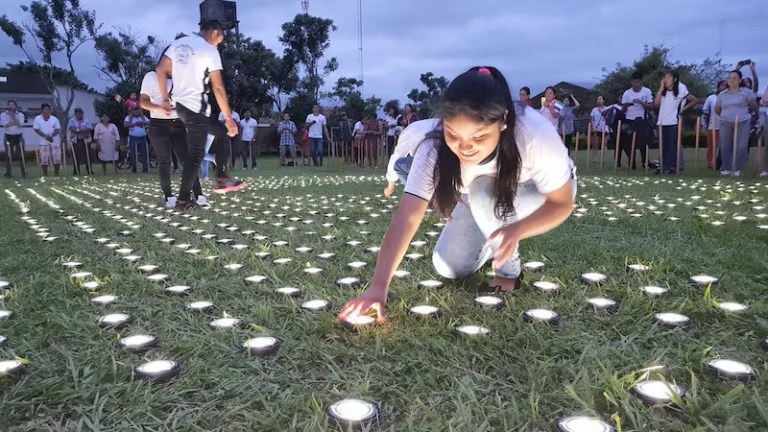
Light will be planted in Bolivia during Abu Dhabi Sustainability Week
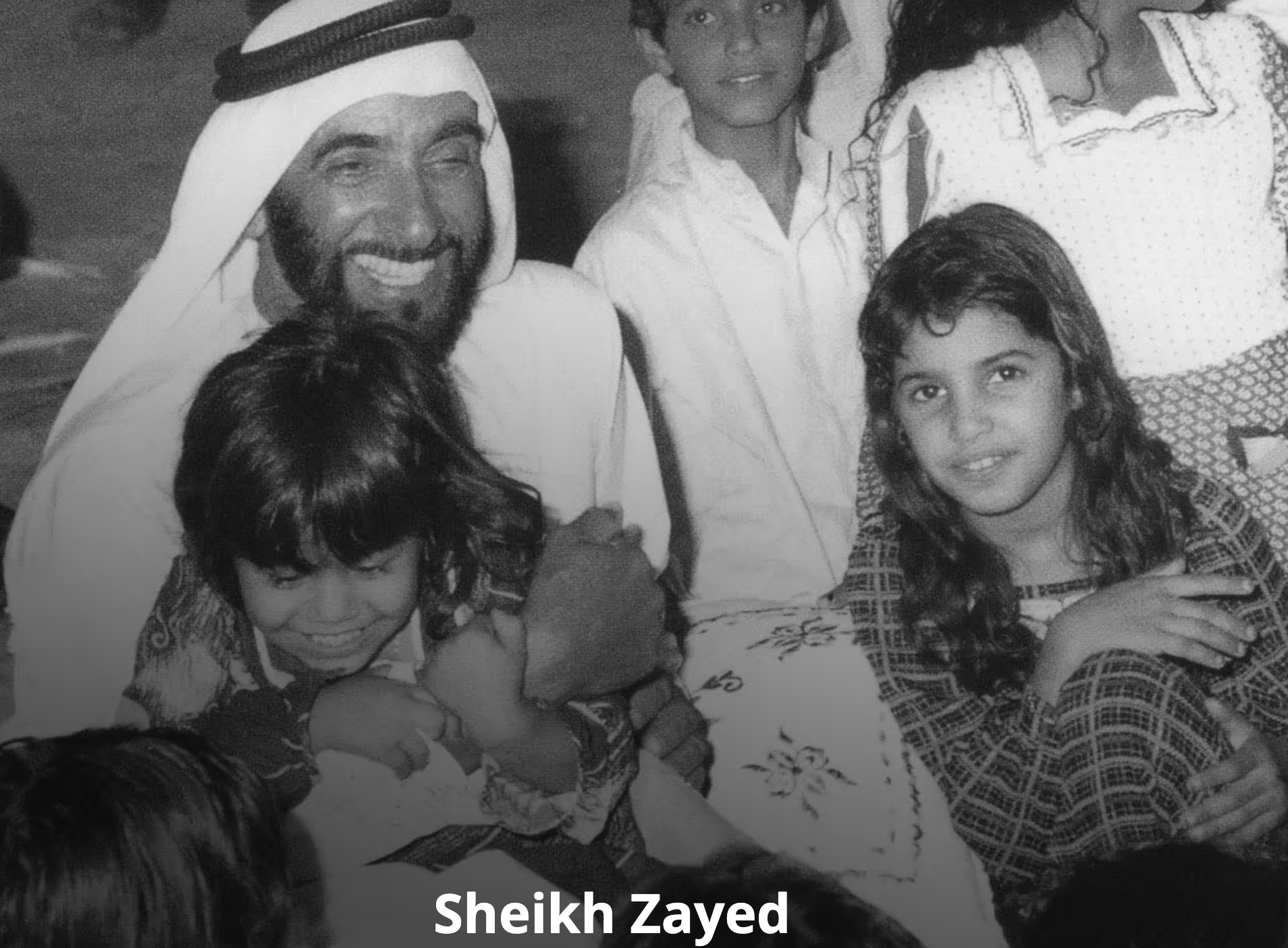
The United Arab Emirates is serious about supporting renewable energy, clean water and smart agriculture. Part of the way they support impact companies is through the Zayed Sustainability Prize. Named after Sheikh Zayed bin Sultan Al Nahyan, the founder of the United Arab Emirates, the Zayed Prize this year was selected for companies and research that harness AI and other technologies to reduce carbon emissions and ensure access to clean energy, water, food and health care.
The jury selected the 33 finalists from 5,980 entries, representing a 15 per cent increase in submissions over last year.
Each winner of the six categories, health, food, energy, water and climate action categories will receive $1 million in prize money, while the six winning Global High Schools will all take home $150,000. The winners will be announced at an awards ceremony on January 14 as part of Abu Dhabi Sustainability Week. Green Prophet has been invited to the Abu Dhabi Sustainability Week in the past and it offers a taste of future-thinking sustainability issues. At least in the dream world.
“The Zayed Sustainability Prize continues to honour the enduring legacy of Sheikh Zayed, whose visionary leadership in sustainability and humanitarianism guides the UAE’s mission to uplift livelihoods worldwide by fostering development in some of the most vulnerable regions,” said Dr Sultan Al Jaber, Minister of Industry and Advanced Technology, Cop28 President and director general of the Zayed Sustainability Prize.
Sheikh Zayed bin Sultan Al Nahyan
“By leveraging emerging technologies, such as AI, carbon capture and removal, tidal energy, precision agriculture, biomimicry and climate analytics, they are addressing the needs of the moment while inspiring the next generation to innovate and drive sustainability in impactful ways,” said Dr Al Jaber.
“This year’s prize finalists showcase the remarkable steps being taken around the world to address urgent needs with creativity and determination – offering a vision of a more sustainable future,” said Ólafur Ragnar Grímsson, chairman of the prize jury.
“From enhancing biodiversity and food security through innovative technology, to providing critical energy and healthcare solutions for underserved populations, these pioneers are reshaping our world.”
The jury for the Zayed Sustainability Prize with Dr Sultan Al Jaber, Minister of Industry and Advanced Technology, Cop28 President and director general of the Zayed Sustainability Prize (centre right). Photo: Zayed Sustainability Prize
Offering a better tomorrow
This year’s health category finalists focus on delivering quality healthcare services to underserved and remote communities. Those shortlisted include Periwinkle Technologies, an SME from India that deploys Smart Scope, an AI-enabled cervical cancer screening device that provides results in 30 seconds. The Israeli Femtech company MobileODT already offers such a solution and is already on the market.
In the area of Food and Agtech prizes were given for empowering small-scale producers, promoting sustainable food preservation, and transforming arid land into productive farms. One featured company is Nafarm Foods from Nigeria that has developed hybrid solar dryers that make tomato paste.
Energy category finalists include Palki Motors Limited, an electric car company from Bangladesh that manufactures local, low-cost electric cars with solar-powered battery swap stations.
The water finalists include the High Atlas Foundation, from Morocco, which provides a solar-powered pumping system to increase groundwater extraction.
High Atlas Foundation
Climate action finalists were chosen for focusing on advancing carbon capture, ecosystem restoration, and building climate resilience and include Distant Imagery from the UAE: which specialises in the development of AI-powered drones for environmental monitoring, seed planting and habitat restoration.
The high school finalists are divided into six regions, with candidates selected for offering project-based, student-led sustainability solutions.
Sustainability finalists
Health
Periwinkle Technologies – India
Rology – Egypt
Telemedan – Chile
Food
ABALOBI – South Africa
Nafarm Foods – Nigeria
Xinjiang Shawan Oasis Sustainable Development Institute – China
Energy
D-Olivette Global Enterprise – Nigeria
Palki Motors Limited – Bangladesh
Turbulent – Belgium
Water
Elman Teknoloji Ltd – Turkey
High Atlas Foundation – Morocco
SkyJuice Foundation Inc – Australia
Climate action
Distant Imagery – UAE
Hyera Inc – US
OpenMap Development Tanzania
Global High Schools
The Americas
Centro de Estudios Tecnológicos del Mar 07, Mexico;
Institución Educativa San Nicolás de Tolentino, Colombia
Mulgrave School, Canada
Sub-Saharan Africa
Mpesa Foundation Academy, Kenya
Sakafia Islamic Senior High School, Ghana
St Kizito High School Namugongo, Uganda
Middle East & North Africa
Benlahrech Said High School, Algeria
Merryland International School Abu Dhabi
Obour STEM School, Egypt
Europe & Central Asia
Baku Modern Educational Complex, Azerbaijan
Gebze Bahçeehr Science & Technology High School, Turkey








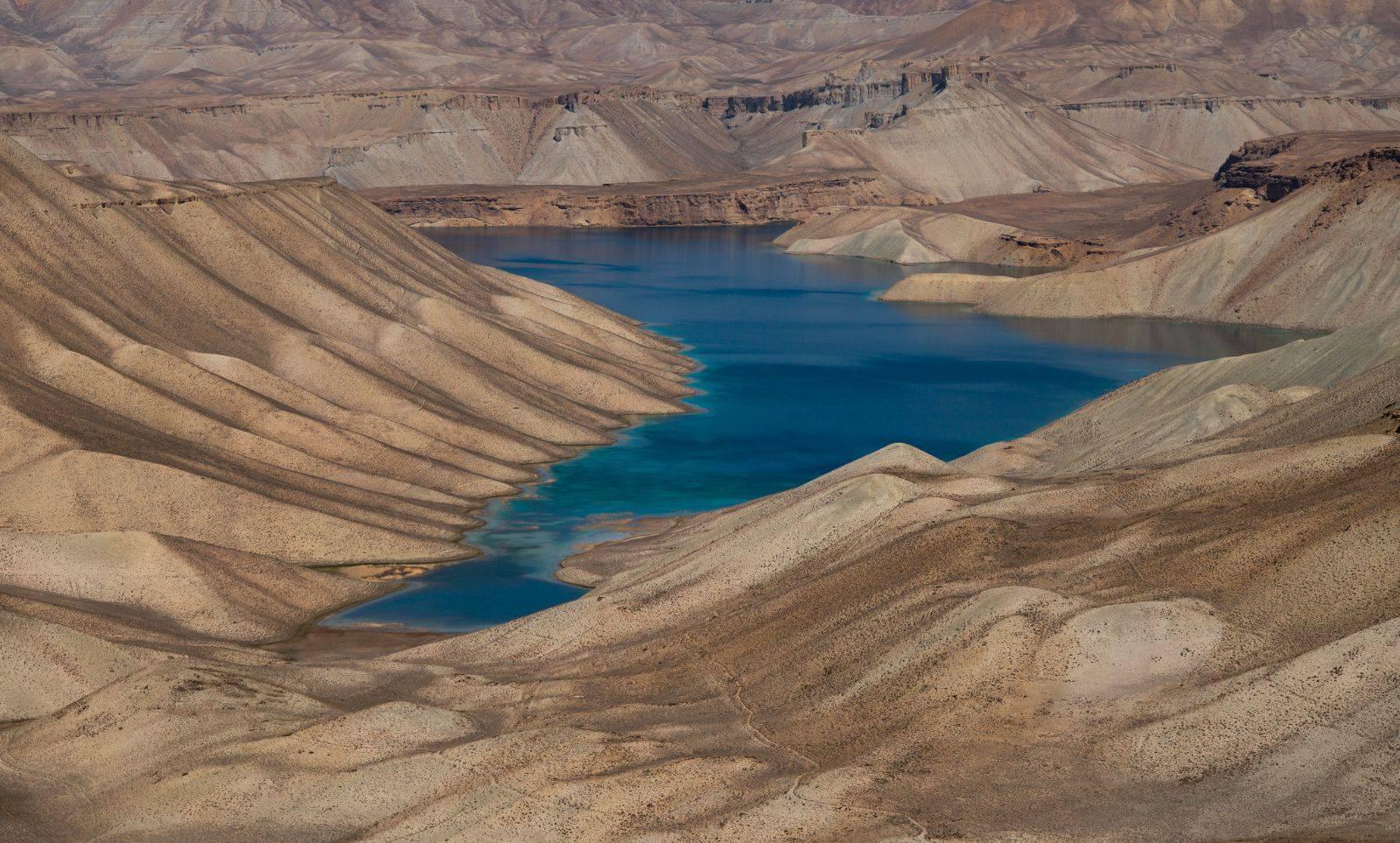 Band E Amir National Park: forbidden for women