Home Blog Page 576

Golan Fire May Have Been Caused by an Environmentalist

0

Sadly, the source of the recent Golan fire in Israel (before the Carmel fire) may have been an “eco-friendly” Rainbow Festival participant.

Environmentalists can get it so horribly wrong sometimes.  They may decide to buy certified organic out-of-season produce from thousands of miles away instead of buying local and seasonal.  Or they may ditch their small, second-hand, highly fuel efficient cars in favor of a brand spanking new Prius.  And a few weeks ago, sadly, a participant at a Rainbow Festival thought she was being more eco-friendly when she decided to burn her toilet paper instead of leaving it in nature… and caused the dry grasses in the area to catch on fire immediately.

This sparked a fire in Israel’s Golan region, spreading in four directions.  In light of the raging Carmel Fire that devastated 5000 hectares of forest land, destroying countless trees and habitats, the act has special significance.

Since History Can’t Be Bought, The UAE Will Pass A Law To Protect It

0

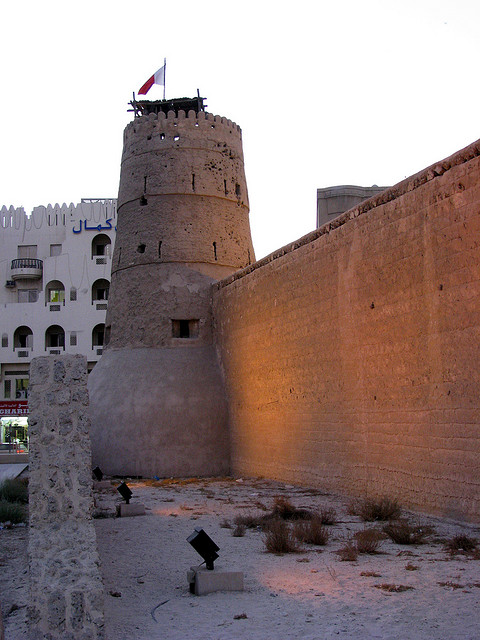
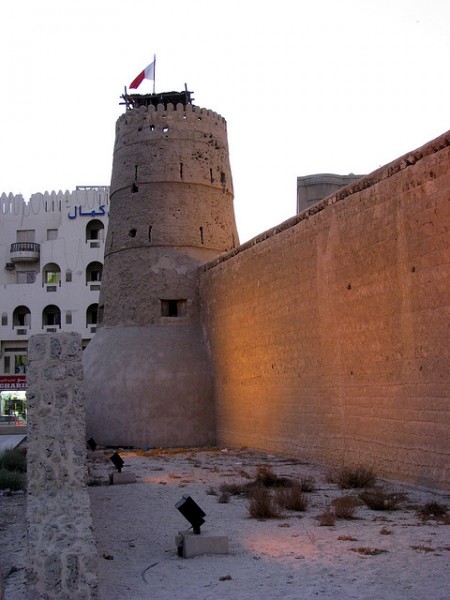
al-fahidi-fort-dubaiThe Al Fahidi Fort is just one historical building in the UAE that would be placed under federal protection if a new architectural law passes

Details of past events – notable battles and people – may be recorded in books or passed down through oratory.

But buildings such as this sextet of cave homes in Turkey, or Bahrain’s cherished heritage, are living monuments that provide a sense of belonging and place.

A sense that deserves to be protected, at least according to the UAE Architectural Heritage Society that has been pushing for a federal law to protect remaining Emirate buildings before they are swiped off the face of history. 

What Urban Rooftop Gardening Could Do For The Middle East

7

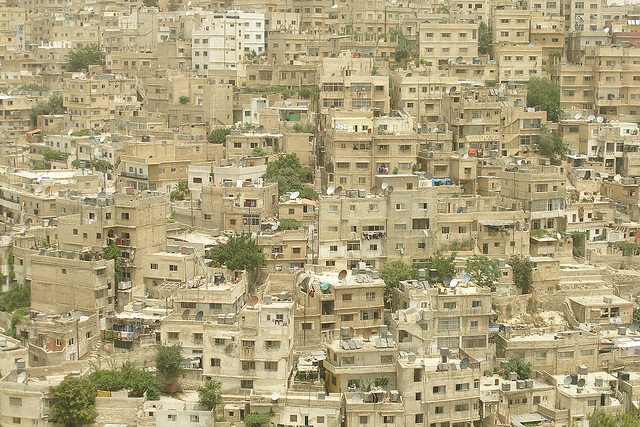
rooftop-garden-urban-middle-east-greenWith so many flat roofs across the Middle East, surely the region is ripe for a bit of rooftop gardening?

Recent reports that people in the Gaza Strip are embracing rooftop gardening has got us thinking about the urban gardening phenomena and it’s relevance to the Middle East. Whilst growing your own maybe something greenies love to do, there is a real incentive for those who have not bought into the green-agenda to take part too. That’s the beauty of urban gardening: it works on lots of levels and has multiple benefits. So as well as helping to reduce air pollution, keeping the city cool during hot summers and warmer during cold winters, the rooftop crops can help those living in poverty stave off starvation and even generate a decent income.

Saudi Arabian Spiced Eggs

0

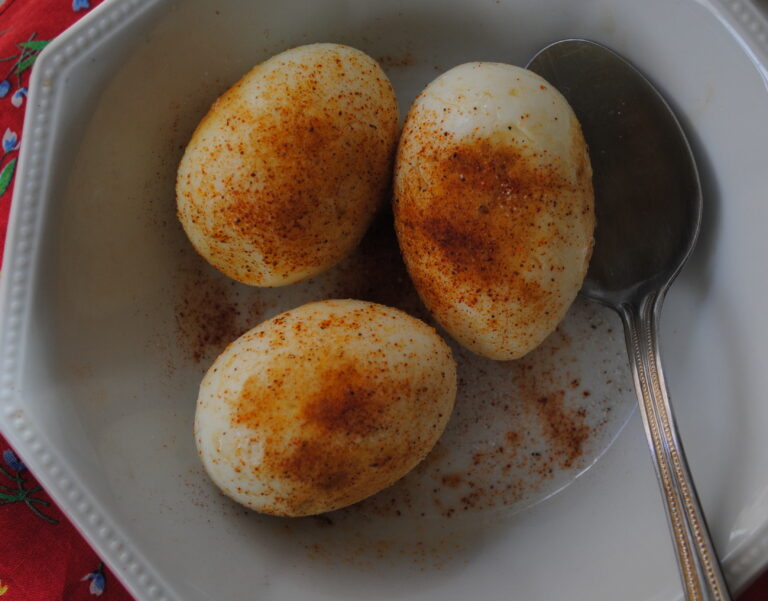
image-spiced-eggsSpice up your breakfast egg with this easy recipe from Saudi Arabia.

Eggs are back to being the heroes of the breakfast table. Today’s wisdom decrees that one large egg daily gives you healthy amounts of  protein, vitamins and minerals – all for about 72 calories. The cholesterol in the yolk, it’s said, doesn’t raise blood cholesterol significantly; in fact the nutrients in whole eggs may protect your heart. We’re among those who never gave up a daily local egg (see why buying local eggs is important here) and are happy to find science backing up our taste.

Eggs fit easily into any meal. Seasoned with the Middle-Eastern spice combination of  pepper, paprika, and cinnamon (see our post on Middle-Eastern spices here), they’re delicious in a mezze course or as a protein snack in the middle of the day. Try this unusual recipe next time you want to jazz up your daily egg.

Spiced, Hard-Boiled Eggs (Aijet Beytat)

4 servings

Ingredients:

4 eggs

1 tablespoon olive oil or butter

1/4 teaspoon salt

1/2 teaspoon paprika

1/2 teaspoon white pepper

1/4 teaspoon ground cinnamon

Place the eggs in a medium pan and cover with cold water. Cover, place over a medium flame and bring to a boil. Cook the eggs for one minute, then remove from the flame. Allow the eggs to sit in the hot water for 15 minutes.

Cool the eggs quickly by putting them in a large bowl of cold water (save the water later for washing dishes or for your house plants). Shell them. With a fork, prick them all over.

Heat the olive oil (or butter) over a medium  flame. Saute the eggs, turning them over frequently, till they’re a warm golden color with some brown spots – about 5 minutes. Remove to a serving dish.

Mix the spices and sprinkle them generously over the eggs. Serve.

Enjoy!

More egg recipes from Green Prophet:

Photo of spiced eggs by Miriam Kresh


Reponse To Treehugger’s Pablo: Don’t Forget Ski Dubai’s Water

2

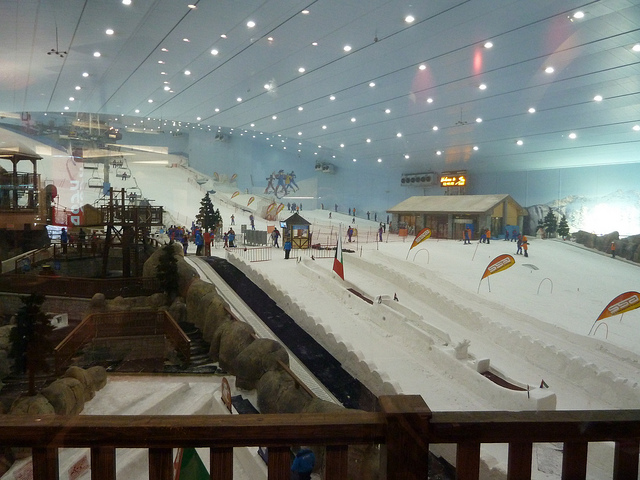
ski-dubai-water-shortageCan you guess where this winterland is located? In Dubai! In the middle of the desert.

In a recent post, Pablo from Treehugger (a site we deeply admire) concluded that Ski Dubai’s indoor ski slope is not that bad. He based this conclusion on a beautifully calculated analysis of the facility’s energy consumption compared to what people would spend to travel instead to the Alps.

The trouble is, Pablo forgot to address Dubai’s infamous water shortages. A lot of energy goes into desalinating Dubai’s saltwater to produce fresh water, which, according to Ski Dubai, is necessary to produce snow. Add to Pablo’s calculations the energy required to produce the water, and the irresponsibility of using so much water in a country as desperate for it as Dubai, and Ski Dubai looks less and less attractive.

A Lost Civilization Under the Persian Gulf?

4

Could the stories of a lost city of Atlantis, first noted by Herodotus and Plato, have some basis in fact?

A “Persian Gulf Oasis” may have been host to humans for over 100,000 years before it was swallowed up by the Indian Ocean around 8,000 years ago.

A once fertile landmass now submerged beneath the Persian Gulf may have been home to some of the earliest human populations outside Africa, according to an article published today in Current Anthropology, by Jeffrey Rose, an archaeologist and researcher with the University of Birmingham in the U.K.

Rose’s hypothesis introduces a “new and substantial cast of characters” to the human history of the Near East, and suggests that humans may have established permanent settlements in the region thousands of years before current migration models suppose.

Trim the Fat and Your Carbon Emissions with… Lipo-Diesel?

6

"liposuction obesity bio diesel"Is using human fat as lipo-diesel going too far in the name of environmentalism?

In general, most people look for ways to trim the fat.  Trim some fat out of your diet, or your budget, or, if you’re “green”, trim some fat out of your carbon emissions.  But how do you know if you’re going too far?  Some would claim that over-the-top ‘carborexic’ behaviors constitute going too far environmentally, and others would claim that if you want to get rid of your love handles you should just foot the bill for a gym subscription instead of paying for lipo?

And if you’re going way way too far if the fat trimming process, you may be a plastic surgeon using your patients’ fat to produce lipo-fuel for personal use.  Is that an ecological solution or guilt-free way to offset the procedure of lipo, or is it just an insane idea?

Sufi Poetry: Lessons In Nature & Leadership

3

Eco-spiritual inspiration in Sufi poetry.

Sufis, followers of the mystic sect of Sufism, have a deep reverence for nature and nowhere is this more obvious than in their world-famous poetry and literature. The renowned 13th century Sufi poet Rumi wrote sublime poetry highlighting the connection between spirituality and nature, and Sufi literature and poetry frequently refers to roses, trees, oceans, rivers, and birds in particular to symbolize the soul.

As well as teaching us about the importance of nature, Sufi poetry also has a profound message about finding leadership and strength within ourselves rather than looking to our ‘leaders’. As world leaders return from another failed climate meeting in Cancun, this message is an important one for the entire environmental movement to consider.

At One With Nature

Here at Green Prophet, we have already noted the important place of Sufis and Sufism in the environmental movement. Although they a small minority within the Muslim population, they have embraced the natural world and the need to protect it whilst pointing out that their faith emphasizes ‘eco-spirituality’.

As Shireen Qudosi explains: “the majority of Sufis use the ‘signs to the Signifier’ approach. The Signifier being a divine source, the analogy is similar to the process of understanding an artist through studying his creations. In this way, many Sufis embrace the natural world, and as such it’s no surprise that Sufis are great defenders of the environment.”

In other words, as nature is a sign of god’s creation it must be embraced to better understand the creator of all mankind. The need to reconnect ourselves with nature is at the heart of Sufi poetry and this message is even more relevant in this modern age of urban living that has taken us away from the natural world.

One of Rumi’s most famous poems echoes the interconnectedness of humans and nature:

I died as a mineral and became a plant,
I died as plant and rose to animal,
I died as animal and I was Man.
Why should I fear? When was I less by dying?

Rumi’s poetry remains influential in Muslim and non-Muslim countries alike and he is the best-selling poet in English today.

Finding Our Inner Strength

Another famous Sufi poem invoking nature is The Conference of the Birds (Mantiq al-tayr) by Farid al-din ‘Attar. The poem is nearly five thousand couplets long (so I won’t quote it here!) and tells the story of the world’s birds quest to find a king to lead them.

The hoopoe insists that they already have a king, the Simorgh, a magical bird from ancient Iranian mythology and sets about putting together a group to find him. Many birds refuse to help and of those that embark on the quest, only thirty (si) birds (morgh) remain- or Simorgh.

So, it turns out that they were the mythical king they were seeking all along.

At its core, this poem is about realizing that we are the answers and the solutions to our problems. We shouldn’t look to some mythical leaders for solutions because we won’t find any.

As world leaders return from the latest climate meeting at Cancun with meager progress, this message couldn’t be more profound. These leaders can’t come up with, never mind agree on, effective solutions to the problems of climate change.

Therefore, we shouldn’t put all our energies into making sure that they broker the right agreement at international level and ignore the power that we have- right now- to change things in our neighbourhoods and in our cities and towns.

:: Richard C. Foltz, Animals in Islamic Tradition and Muslim Culture, Oneworld Publication

:: Image via B@ni on flickr.

For more on Sufism and Cancun Climate Summit see:

Cancun Ends On Slightly Better Note Than Copenhagen

Sufis Are Islam’s Eco Guardians

From Rockstars to Recycling: Interview with Kristiane Backer – An Eco-Muslimah

 

Severe Winter Storm Proves Caesarea Predictions True

0

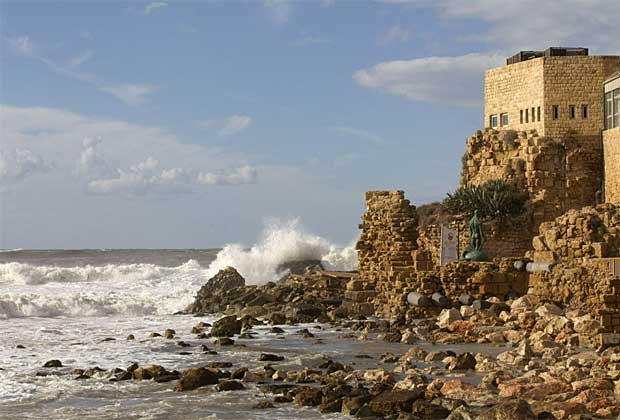
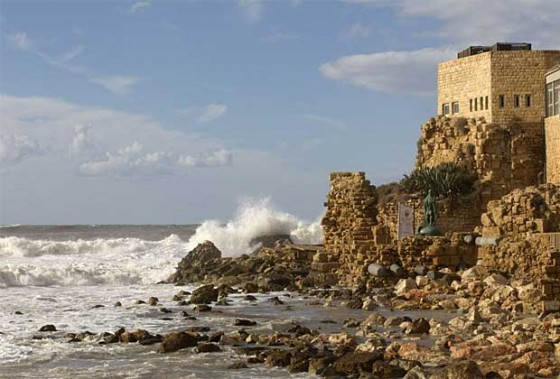
The cruel sea, with 10 meter high waves took its toll on the ancient port of Caesarea this weekend.

Sunday’s severe winter storm that raged all over Israel and other parts of the Eastern Mediterranean caused substantial damage to the sea wall and parts of the archeological sites of the ancient sea port of Caesarea. The site, which we wrote about last month on Green Prophet has been predicted to suffer severe damage by the relentless force of the sea, unless a significant amount of restoration work is done to protect one of the most popular archeological sites in Israel. Caesarea and other coastal archeological sites have been the subject of a planned restoration project to be carried out by the State under the supervision Architect Zeev Margalit, who personally warned that the deterioration of the ancient seaport is literally “happening in front of our eyes.”

David de Rothschild To Speak At NYC Green Drinks Tonight

4

david-de-rothschild-plastikiIn the running to become National Geographic’s 2010 Adventurer of the Year, David de Rothschild continues to spread awareness of the world’s oceans.

Towards the end of July this year, David de Rothschild and his crew finished an 8,500 mile journey in a boat made out of 12,500 plastic bottles, the Plastiki. This epic adventure was designed to draw attention to the 4 billion pounds of trash (most of it plastic) that are dumped in the world’s oceans each year.

As fearless as he is audacious, David is one of the world’s most visible environmental activists and a Green Prophet favorite. By attending events such as the Green Drinks taking place tonight in New York City, he demonstrates a tireless commitment to draw attention to the oceans as well as other important issues.

Leading Researcher Says Replanting Trees In The Scorched Carmel Forest Is A Mistake

0

carmel-forest-firePlants to restore the Carmel forest by planting new trees are misguided, according to a leading researcher.

Rushing to the scene of the recent Carmel fire to plant a pile of trees would be a mistake, according to a leading researcher from Israel’s University of Haifa. While Professor Ido Izhaki recognizes the unfortunate toll that the Carmel fire took on human life, and that human factors have contributed to making the forest more vulnerable, the Mediterranean forest on the Carmel Mountains depends on fire to maintain its ecological integrity and should be left alone to restore itself.  

Saudi Arabia Holds Out for Carbon Capture & Storage at Cancun

0

Saudi Arabia has called for the inclusion of CCS into the CDM mechanism at previous climate talks. This year, Norway made it happen.

At the recently concluded climate meeting in Cancun, some progress was made on a controversial topic. Norway, a country that has been a leader in the development of low carbon oil technologies, proposed that CCS (Carbon Capture & Storage) be an  allowable carbon offset in the CDM or Clean Development Mechanism. The CDM allows polluters, if unable to reduce their own carbon emissions, to invest money in projects like solar farms, lower carbon technologies, or reforestation in the developing world, that would reduce emissions elsewhere. The idea is that lowering CO2 anywhere helps.

Traditionally, less controversial technologies have been included in the CDM, like reforestation, or building solar and wind farms. But the delegate from Saudi Arabia argued that at present there is no real incentive for developing countries to deploy Carbon Capture & Storage: wasting an opportunity to reduce carbon emissions.

Humans Play God Big-time: Relocate Oceans To Deserts

Transplanting seas to inland ocean lakes? A good idea for the Middle East?

The two century-old and highly respected Japanese engineering giant Shimizu has hatched a wild and crazy proposal to rehabilitate the desert for human use.

Their idea is to move vast amounts of seawater along canals that would track deep into desert landmasses to create a series of connected huge inland seas measuring 30 km (18 miles) across. Small cities could then be created within the gigantic seawater “lakes,” on artificial islands.

RECIPE: Sambusak, Spicy Middle Eastern Turnovers

0

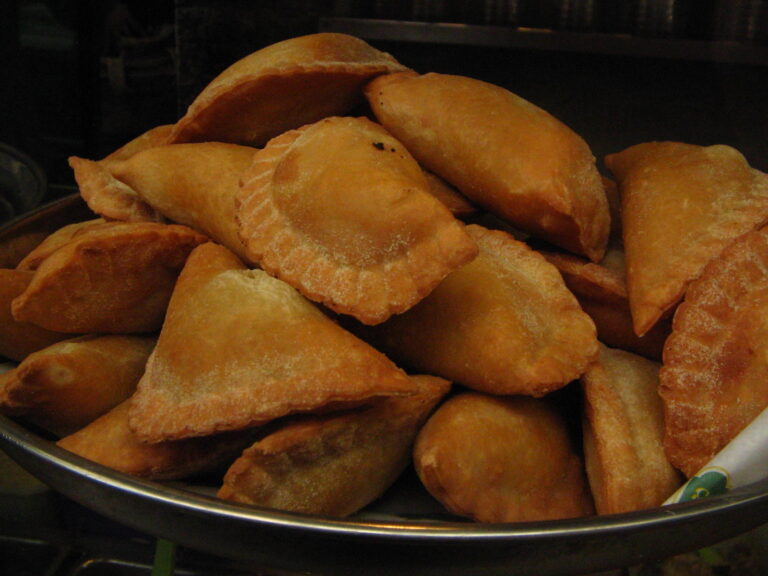
image-sambusak-turnoverFancy a hot snack? Try sambusak.

If you suddenly need a nosh while browsing an open-air market  (like one of these shouks), look around. You’re sure to find a sambusak stand where hungry shoppers are buying these hot, spicy pastries.  These popular turnovers also appear at wedding buffets and fancy hotel receptions.

Made at home, they freeze well and are excellent to have on hand  when guests are coming and you need something to offer in a hurry. Of course, a cup of Turkish coffee (recipe here) is the perfect drink to go with sambusak.

Sambusak

yield: about 20 pastries

Ingredients for Dough:

1/4 oz. dry yeast, or 1 cube fresh yeast

1 teaspoon salt

1 teaspoon baking powder

2 teaspoons sugar

1 cup water

3 cups all-purpose flour

METHOD

In a large bowl, dissolve the yeast in the water.

2. Add the salt, baking powder, and sugar. Stir.

3. Add the flour a cup at a time. Mix, then knead till the dough is firm.

4. Cover the bowl and allow the dough to rise for 2 hours.

Ingredients for the Chickpea Filling:

2 cans of chickpeas

2 tablespoons olive oil

2 medium onions, finely chopped

1 teaspoon salt

1 1/2 teaspoon ground cumin

1/4 teaspoon ground ginger

1/2 teaspoon black pepper

1/4 teaspoon ground nutmeg

1/2 teaspoon white pepper – or use 1 teaspoon of either white or black pepper

oil for shallow frying


Put the chickpeas in a strainer. Drain and rinse them.

Put them through a food processor till they’re a chunky paste, or blend them.

Fry the onions in the olive oil till translucent.

Add the dry spices to the onions; stir and cook about 3 minutes.

Add the spiced onions to the chickpeas and mix everything up well.

Form the pastries

Take pieces out of the dough till you have 20 equal-sized pieces. Pat each piece into a rough circle in the palm of your hand as you work.

Flour your work surface and roll each patty into a circle about 3 inches in diameter. Don’t be afraid to roll them out thin.

Place a tablespoon of stuffing in the middle of each circle. Fold the dough over to make a triangle, hiding the stuffing.

Pinch the edges of the sambusak together, or crimp them with a fork to seal them.

Fry the sambusak in shallow oil over medium heat. Turn them over when the first side is golden, and fry the other side. Drain on paper towels or crumbled newspaper and serve hot.

Another delicious filling is mashed potatoes seasoned with fried onions and spices as above.

Freeze un-fried sambusak in layer separated by baking paper. Put them straight into hot oil when you take them out of the freezer, and proceed as above.

Bon appetit!

More Middle-Eastern snack recipes from Green Prophet:

Photo of sambusak by Miriam Kresh.

Miriam also writes a food blog.

On Show: Camel-Killing Plastic Lump From The Valley Of Death

1

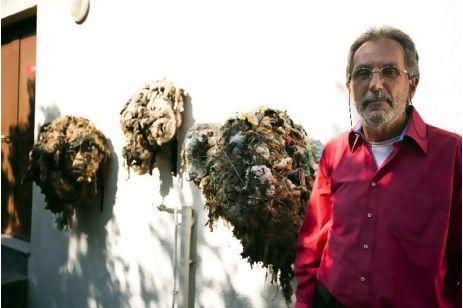
plastic-rock-art-showThese clumps of plastic debris killed the camels from whose bellies they were retrieved.

I’m not going to beat around the bush: I loathe plastic bags. There are many reasons, chief of which is the impact they have on our domestic and wildlife. Months ago we reported that camels were discovered to have been killed – slowly and painfully – by ingested plastic bags that eventually grew into giant rocks of plastic.

In addition to the UAE, Syria has attempted to curb the country’s plastic bag habit, but progress is slow to take root. Equally frustrated, one American designer intends to place a 30kg lump of plastic, taken from a camel’s stomach, in the center of an upcoming art exhibition designed to clamp down on the use of plastic.