For those unaware, SpaceX has already shifted focus to building a self-growing city on the Moon, as we can potentially achieve that in less than 10 years, whereas Mars would take 20+ years.
For those unaware, SpaceX has already shifted focus to building a self-growing city on the Moon, as we can potentially achieve that in less than 10 years, whereas Mars would take 20+ years.
For those unaware, SpaceX has already shifted focus to building a self-growing city on the Moon, as we can potentially achieve that in less than 10 years, whereas Mars would take 20+ years.
For those unaware, SpaceX has already shifted focus to building a self-growing city on the Moon, as we can potentially achieve that in less than 10 years, whereas Mars would take 20+ years.
For those unaware, SpaceX has already shifted focus to building a self-growing city on the Moon, as we can potentially achieve that in less than 10 years, whereas Mars would take 20+ years.
For those unaware, SpaceX has already shifted focus to building a self-growing city on the Moon, as we can potentially achieve that in less than 10 years, whereas Mars would take 20+ years.
For those unaware, SpaceX has already shifted focus to building a self-growing city on the Moon, as we can potentially achieve that in less than 10 years, whereas Mars would take 20+ years.
For those unaware, SpaceX has already shifted focus to building a self-growing city on the Moon, as we can potentially achieve that in less than 10 years, whereas Mars would take 20+ years.
Both the Society for the Protection of Nature (SPNI) and the Union for Environmental Defense support harvesting the excess salt built up by Dead Sea Works’ mining activities that have caused water levels to rise rather than creating an expensive and uninviting construction zone that will send potential tourists to Jordan, where no such drama exists.
Until this year, Chile’s renewable energy standard required only 3.5% of clean electricity by 2020. This year, they raised it to 20%. Now they are swamped with geothermal bids.
Ormat Technologies Inc ((NYSE: ORA) South American subsidiary Ormat Andina Energia Ltd was among the companies and subsidiaries of foreign-held companies that submitted bids to explore for geothermal potential throughout Chile, according to the Chilean Energy Ministry. As an indication of how much Chile’s new 20% by 2020 renewable energy standard has catapulted investment interest in developing the nation’s geothermal potential, the last time that the Chilean government put geothermal concessions out to bid, there were only 9 companies bidding on the same amount of land thought to have geothermal potential, and they submitted only 59 bids.
Increasingly, we humans are going to have to share our coasts with a new pest we have created.
Here’s a problem that will get worse in future centuries. The rise in jellyfish. Jellyfish populations are proliferating and evolving. They are moving to new regions. Scientists attribute the rise in jellyfish populations on our coasts to three factors: to the warmer seas of climate change, to increased salinity due to our increased reliance on desalination plants, and to our overfishing, which eliminates their natural predators.
The Arava Institue works with Palestinians and Israelis to cooperatively solve the region’s environmental challenges
As one the most conflict-ridden regions in the world, the Middle East has it’s fair share of political problems. In fact, whenever the issue of environmental dangers are highlight many people will shrug their shoulders and say ‘we have more important problems to worry about’. What this attitude fails to recognise is one thing: regional co-operation to tackle environmental issues could be the very thing the Middle East needs to help it see past petty differences. The Arava Institute, one of our all time favourite eco-Israeli organistion, knows this only too well.
Now, the Arava Institute has taken it’s co-existence message overseas in a bid to promote its mission of peace and justice amongst Arabs and Jews. Joining forces with the Centre for Arab American Philanthropy (CAAP), the Arava Institute hopes to create a link of solidarity between the two communities and allow Arab and Muslim donors to support the Arava Institute’s work.
That news was then overshadowed by the hideous jeweled Christmas tree standing in an Abu Dhabi hotel. Just when we want to give up completely on ever getting the wealthy Emirates on track with the real world, an encouraging new bus arrived in the UAE that promises to be carbon-neutral.
Conservative women who visit Jeddah swim wearing their Hijab and all, but still manage to enjoy what this lovely seaside city has to offer.
Diana Rayan, a Palestinian blogger and photographer living in Saudi Arabia contacted us with images of Jeddah, a city in Saudi Arabia along the Red Sea which is said to be less conservative than other parts of the country. One of the photographs was selected by Cambridge University to feature as the May photograph in their 2010 calendar.
Combined with the image of two people involved in intimate conversation, this small, Saudi-style travelogue depicts a tranquil scene complete with spirit-lifting sculpture and warm lighting. Ms. Rayan tells a lovely story about the meaning of the name Jeddah and how the people there enjoy the seaside city, Hijab and all.
This outlandish display of oil begotten wealth was inaugurated at the hotel to “accommodate” non-Muslim guests to the hotel, which in itself is a bit strange for a country whose permanent resident population (not including guest workers) is no less than 99.5% Muslim.
Built by Palestinian engineers, the toy-carrying Eco-Playbus is powered by solar and cycling power
Yesterday, 250 children from the Aida Camp in Bethlehem and various Camps across Jerusalem gathered to celebrate the launch the unique Eco-Playbus project. Aimed at Palestinians living in refugee camps, the Eco-Playbus is a traveling vehicle filled with games and toys which promotes the right to play amongst locals who often live in difficult circumstances. As well advocating the importance of play and fun for everyone from the age of 2 to 99, the project also had a distinctly green message.
Huge oil subsidies in the Middle Eastern oil-producing nations mean that residents pay very little for oil.
One big problem in getting everyone to reduce use of harmful fossil fuels is that gas is too cheap some places. The worst offenders pay the least for gas, and it has long encouraged grotesque over-consumption.
Most of Europe has long since adjusted to its high gas prices, with the UK now paying $6.60 for a full gallon, Norway and Denmark; $7.41 and $6.89 respectively. Even in Hong Kong, gas costs $6.87, according to a report published this year by US-based research firm AIRINC that collated global gas price data from around the world in US dollars.
But gas guzzling Americans, currently screeching at the prospect of topping $3, pay only $2.85. Middle Eastern drivers are even worse. UAE residents pay even less, currently just $1.57. Kuwaitis pay only 85 cents and at the very bottom of the Gulf state list, according to Arabian Business, are the Saudis who pay just 45 cents a gallon!
Responding to David de Rothschild’s concerns, IEI attempts to convince Lord Jacob Rothschild that oil shale is good for Israel. Read all about in a letter Green Prophet obtained.
AOL news also covered the story, bringing attention to David de Rothschild’s concern for the potential environmental impact. The eco-explorer wrote to his second cousin, Lord Jacob Rothschild, a new investor in the conglomerate that intends to test its in-situ oil shale technology. That message was then forwarded to Israel Energy Initiatives.
The hornet that captures the sun’s energy in its bright yellow abdomenteaches us that nature knows so much better than we do.
When we cover crazy schemes to manipulate nature – such as the plan to move mini oceans to the desert – I inevitably shake my head at our collective arrogance. These plans completely miss the beautiful truth that nature knows so much better than we do, if only we would stop and listen.
Nature is responsible for the thorny devil that can usurp water from one of the world’s most hostile natural environments; mother nature gave every wetland its own set of lungs (papyrus, for example) to filter out impurities. And it is nature that gave the Oriental hornet the remarkable ability to capture energy from the sun to fuel its daily activity.
In the absence of all the trees burnt during the recent Carmel fire in Israel, a Christmas tree made from 5,480 plastic bottles stands tall in Haifa.
The city of Haifa, in northern Israel, has Jewish, Christian, Baha’i and Muslim residents, and so many religious holidays are celebrated there. In honor of the upcoming Christmas holiday, the Haifa Municipality approached local artist Hadas Itzcovitch about creating a Christmas tree for the city. Unfortunately (and perhaps symbolically) the tree went up the day the catastrophic Carmel fires began in the region. And so as 5000 hectares of natural trees were burning in the area, Itzcovitch’s tree made of recycled plastic bottles stood tall – reminding onlookers to think a little bit more about their environmental impact.
Could the Ormat geothermal project at Sarulla in Sumatra, Indonesia have caused the recent volcano? Worries about Ormat’s geothermal and the volcano in Indonesia are unfounded
Despite the truly apocalyptic danger to the climate that fossil energy poses, it always seems to me that it is renewable energy that gets more than its fair share of worries about its safety. Will solar use water? Will wind kill birds? Does geothermal cause volcanoes? Could Ormat’s proposed 330 megawatt geothermal plant in Sarulla, North Sumatra be unsafe? Last year, our own Maurice Picow posed the query.
Ormat Technologies Inc. (ORA (NYSE)) is a provider of alternative and renewable energy technology based in Reno, Nevada. But the company was founded by Israelis who started solar thermal energy in Israel. The Bronickis. The company has built over 150 power plants and installed over 2,000 MW. As of February 2016 Ormat owns and operates 697 MW of geothermal and recovered energy based power plants.
“One small problem – there is a chance that Ormat’s technology might cause a volcano eruption”.
Now that there has been a volcano, a little over a year later, was it in fact due to geothermal drilling? Was Ormat’s Sarulla plant connected with the recent earthquake of Mt Merapi, in Indonesia? Could it be Ormat’s fault?
No, actually. Even if geothermal does provoke volcanic activity, the project has not been built, yet. Because of pricing disputes, only finally resolved in 2010, field development and power plant construction has yet to be started.
The price had doubled by this year from the original estimates when the project was initially proposed in 2005, to US$1 billion. PLN, the Indonesian electric company that was to buy the power had previously agreed to pay $0.0464 per KWh in a power purchase agreement, but with the cost rises since 2005, the consortium of developers that included Ormat was no longer able to offer power at that price. The new deal was finally signed in April 2010 for $0.0679 per kWh for 30 years, just under 7 cents.
So, a non existent (yet) geothermal project cannot cause a volcano.
But the second reason is just simple geography. Even if the geothermal project had been begun, it is a good 2,313 kilometers (1,437 miles) from where the volcano erupted.
That is about twice the distance from Jerusalem to Mecca.
The plant will use Ormat’s Geothermal Combined Cycle Units (GCCU) which are more efficient than conventional steam power plants. These will capture the steam from the wells and produce energy throughout the day without any interruptions, and geothermal fluids are to be re-injected in the underground wells to avoid depletion of the gases. In a highly sustainable design, the steam itself will also not be released into the atmosphere, but will be recycled back through the ground.
Indonesia, a developing nation, highly dependent on its oil for electricity, is to be commended for encouraging clean energy development.
Like other nations in the “ring of fire,” it has high volcanic risk. And yes, that usually goes together with greater geothermal potential. From California, Japan, New Zealand and Indonesia,where there is volcanic activity, there is geothermal potential. In Indonesia’s case, enough to produce 27,000 mgw of electricity for a nation sorely in need of new electricity sources.
In a gloomy forecast that predicts scanty – and more expensive – produce in the coming months, Ifrah says that raging winds ripped 900 dunams (99 acres) of tunnel greenhouses apart, exposing vegetables to freezing rain and wind in hilly regions, and to wind-driven sand in the Negev. Damage to crops will affect local prices and diminish exports to Europe.
The Volt is already “charging” towards customers, and hopefully success
Finally, after months of speculation, marketing hoopla, and just plain old media hype, the first GM Chevrolet Volt electric cars went out to waiting Chevy dealerships and the customers who ordered them months before. The Volts, containing an electric engine as the main power driver, with a small gasoline or biofuel “range extender” engine to charge the car’s lithium ion battery pack when it runs out of “steam”, can enable the vehicle to travel as much as 379 miles before recharging the batteries and refilling the car’s small fuel tank according to sources at GM.
When comparing this car with other electric models, including the Renault Fluence all electric car using Israel entrepreneur Shai Aggasi’s Better Place’s exchangeable battery pack system the new Chevy Volt is more like a hybrid car than one whose total power is based on electricity only.

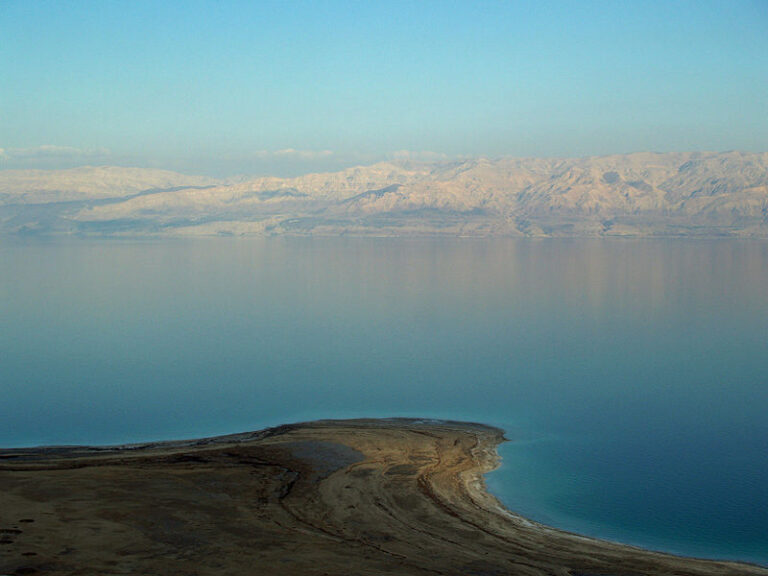
 View from Israel to Jordan; hotel owners fear that years of construction projects will send tourists to the other side.


 The Arava Institue works with Palestinians and Israelis to cooperatively solve the region’s environmental challenges


 Plastic bottles might not work in the Emirate Palace Hotel – but opulent jewelry decor isn’t fitting either. Image via AFP
 Built by Palestinian engineers, the toy-carrying Eco-Playbus is powered by solar and cycling power
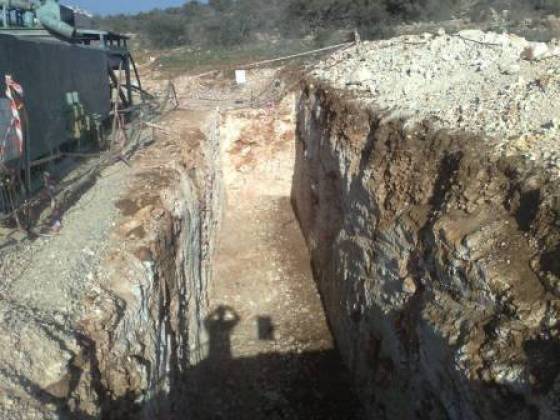







 Harsh winter storms have damaged crops in Israel to the tune of $5.5 million, according to Meir Ifrah, CEO of the Vegetable Growers Association.