Home Blog Page 568

Eco-Hijabs on the rise among Muslim fashionistas, interview with Mariam Sobh

15

eco hijab organic cottonSince global media coverage has tugged at the diverse Muslim image, eco-fashion hasn’t always been able to speak out as a mainstream trend of the Muslim lifestyle. But more eco-aware Muslims are creating businesses and blogs to promote ethical clothing as an integral part of the Islamic faith. In part one to this short series, Green Prophet reporter Zaufishan explores why and how Muslim women are digging the eco-living.

What is an Eco-Hijab?
An ‘eco-hijab’ is a contemporary coined term used to describe the relationship between ecologically driven Muslims, and the Arabic word for the Muslim dress sense: hijab, meaning ‘barrier, covering or veil’. This eco-hijab fuses Muslims’ ‘green’ values with with their visual identity of modest clothing, for example organic hijabs made from bamboo.
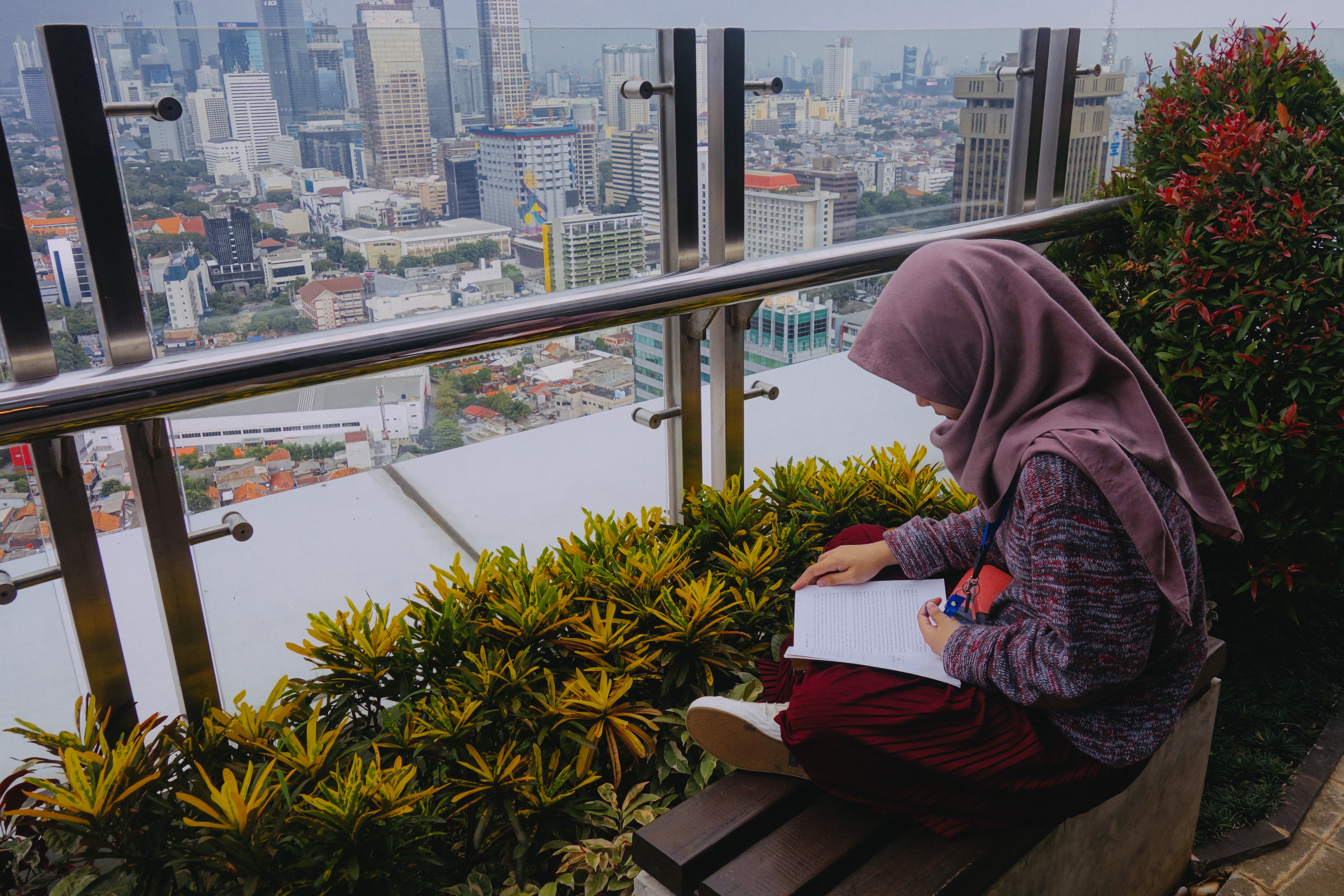
eco hijab, made from bamboo

As a lifelong eco-hijabi* I too advocate greener living by adopting the 3 R’s: Recycle, Reuse and Reduce, and upcyling my own headscarves (hijab/tichel) – more on that later! Another term I personally use is ‘eco-Muslimness’ whereby a person may not necessarily be a hardcore Muslim environmentalist, but tries to follows the Muslim principles of moderation, environmental welfare and waste-reduction.

mariam-eco-hijab

Eco hijabs on the rise
Muslim fashion trend setters began online through blogs, while ‘offline’ particularly in the Middle East, runways and design houses have expanded the niche for organic but chic fashion. In the fashion world, Muslim women are championing their entrepreneurial skills in self-run clothing businesses, which is proving a hit against top fashion industries.

Zaufishan interviewed Mariam Sobh (photo-ed above in red), American eco-Muslim and lifestyle guru who founded the Muslim fashion blog HijabTrendz, on what her eco-living views are.

Green Prophet:Tell us a bit about your website. When and how did it begin? Who’s on the team?
Mariam: Hijabrendz is the original fashion, beauty and entertainment blog for Muslim women, which started in early 2007. But it’s also for anyone interested in modest fashion, so it’s pretty much open to everyone.

When I was on maternity leave from my job as a political reporter in ’07, I was trying to figure out how to use my frustration, with the lack of available media and fashionable clothing for Muslim women, and turn it into something positive.

The team consists of myself and columnist Nadia Malik, a former newspaper reporter who writes about pop culture from the angle of a Muslim woman.

How long have you known about or practiced eco-fashion? What encouraged you to get into and promote the contemporary lifestyle choice of ‘eco-Muslimness’?

I actually grew up very aware of the environment and being healthy. My parents were really into greener living, so I have to say that for me it was just part of my life. It wasn’t some new fad that I joined or wanted to be a part of. And I like the idea of ‘eco-Muslimness’. I think it’s important for Muslims to promote these types of ideals because Islam is very in tune with nature and promoting good. What better way to show how we value God’s bounty he has bestowed upon us, than by making sure it continues for generations to come?

What have the reactions to the eco-section on your website been like from the community?

I made a YouTube video a while back asking readers if they were concerned about eco friendly hijab options. The response was interesting. Some folks say they never thought about it, and others do tend to make a conscious choice to purchase items that are fair trade, organic, locally made etc.

Do you see any connections between the western Muslim’s eco-fashion and the Middle East?

A lot of the garments are shipped around the world from the Middle East, but many of those items are mass produced in China, or Pakistan and so to get things to become eco friendly, designers really need to be right there where it’s made, making sure they are using the best possible fabrics as well as ensuring their products are made under humane conditions.

In places like the United Arab Emirates I think it’s imperative they try their best to find more sustainable materials for their designs. They have become quite the hub for abayas (long dresses) and shaylas (scarves) and many people look to them for the next “big” thing in the area of hijab fashion. But items from the UAE also tend to symbolize “excess” and wastefulness. So it’s important to showcase that Muslims can be rich and have luxury, but at the same time be conscientious enough to do so in a responsible way. Perhaps incorporating some recycled pieces of fabric/trim into their designs.

In your opinion, how can living an eco-lifestyle help reduce waste?
I think the main thing is to be conscious of everything you do. You have to live in the now and be aware of your surroundings. When you do that you’ll notice that you can seriously get by on very little. You can still cut corners and you’ll be OK. One green tip I love is when you use detergent to clean your clothes use 1/3 of what the instructions say and you’ll still clean the clothes the same. Basically when you are conscious about your lifestyle, you’ll automatically reduce your waste.

What 3 lifestyle tips would you give to people, and Muslim women in particular for living a productive ‘greener’ life?

  1. Buy organic produce whenever you can. Fresh fruits and veggies along with clean drinking water-best beauty product ever!
  2. When you buy makeup, make sure the labels state clearly that they are free of chemical products. You’ll be surprised how much better your skin is when using natural items. Also, the product will last longer, so even if it’s pricey, it’s worth it in the long run.
  3. If you are sick of your old hijabs, have a hijab-swap party with your friends. Trading scarves will make you feel like you just bought some new stuff. And it’s a form of recycling.

How can designers make mainstream fashion trendy and eco for everyday Muslims?

Designers should try their best to use fabrics from sustainable sources. I know it’s hard for folks who are just starting a fashion line as they may not have the financial means to buy organic material.

Another thing they can do is have their garments made in an area where jobs are needed and make sure the people working are paid living wages. When it comes to eco-friendly, it doesn’t just have to be about using materials, but it can also be about sustaining the local community and helping to bring up its economy.

Finally, what changes do you hope to see in the Muslim community with regards to eco-fashion and environmental awareness?
I think the Muslim community needs to get more involved with local efforts in the mainstream to promote environmental awareness.

Green Prophet would like to thank Mariam for taking part in our Eco-Hijab series.

——————-
What’s that mean?
*Hijabi: Contemporary word describing a Muslim woman in hijab.
Eco-hijab: Modest Muslim fashion with awesome environmentally friendly roots.
Eco-Muslimness: Contemporary coined term describing the efforts of ‘green’ Muslims.

For More Eco-Muslims And Green Fashion:
Are Muslim Women Ready For Bamboo Hijab and Chadors?
From Rockstars To Recycling: Interview With Kristiane Backer – An Eco-Muslimah
“Organic and Islamic” – Muslims Showcase Ethical and Fair-Trade Fashion
PopLove Designs Brings Upcycled Eco Chic Fashion to Tel Aviv (and the Whole Wide World)
H&M Israel Brings Sustainable Fashion to the (Overwhelming) Masses
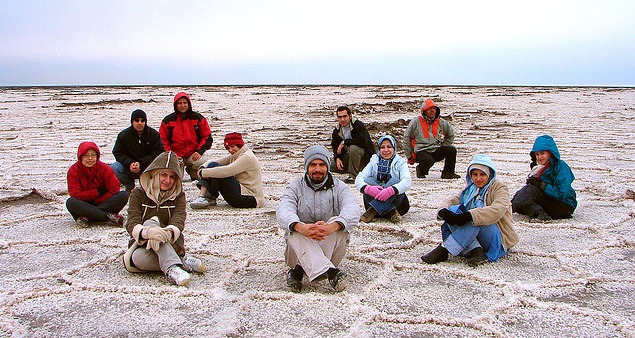
Going Against The Grain of Desertification In Iran

0


Iran is home to two of the world’s largest deserts. But the country needs better planning to block these deserts from growing.

Desertification threatens biodiversity and reduces productivity capacity of land. Most of the land of Iran is located in arid and semi-arid climates and most of Iranians live in the most livable places outside the arid lands. So this makes it hard to develop an adequate regional planning, national-wide land-use planning, and use the productivity of all of the parts of the country.

Israel Arbor Day Concentrates More on Green Development Projects

0

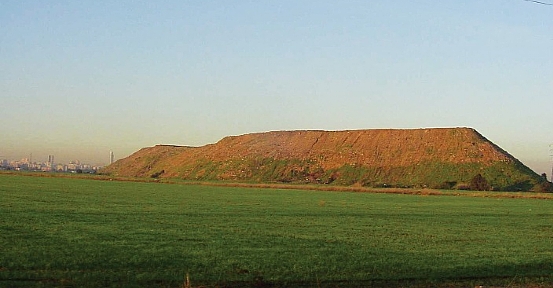
Is Hiriya Israel’s national eco-symbol? It looks more that way

Although the just completed Tu Bishvat celebration in Israel included many tree planting ceremonies, especially on the site of recent disastrous Carmel Forest wildfires, Israel’s annual Arbor Day for 2011 had more emphasis on “greening” former landfills, such as the Hiriya garbage mountain, east of  Tel Aviv. The former “mega dump”  is now being turned in one of the largest ecological parks in the world,  according to an article in the weekend edition of Haaretz.

Soaring Food Prices Hit Lebanon

1

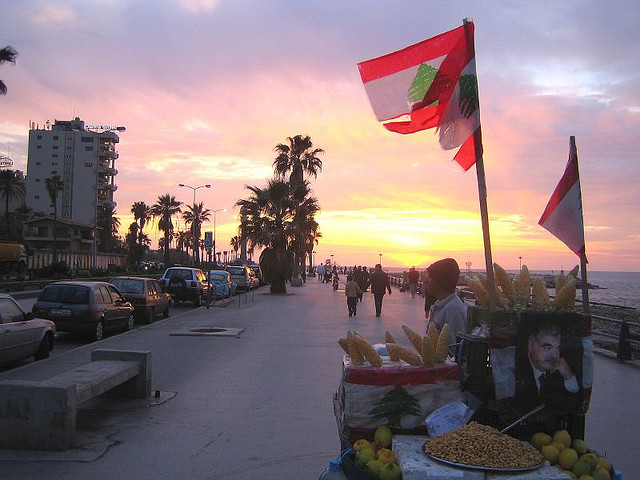
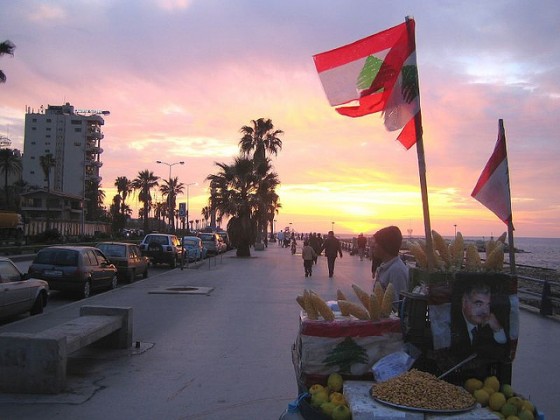
food-prices-arab-middle-east-beirut-lebanonAs the popular Tunisian revolt which ousted the President Ben Ali dies down, the continuing rise of food prices is becoming a real concern for the region’s governments

The reasons behind the downfall of the Tunisian president Ben Ali are complex but the high food prices, which brought the average person to the streets in protest, played an important part in the success of the revolt. Soaring food prices have unsettled the entire region with protesters in Algeria, Morocco, Egypt and Jordan all stating that the governments need to do more to reduce prices so that people can afford to eat. Now, Lebanon is facing that very food crisis in the midst of a political crisis which saw the collapse of its cabinet due to the withdrawal of support for the unity government.

Big Brother Technology Helps Customers Plan Meals

4

kraft-intel-meal-plannerNo need to think with Kraft and Intel’s “Meal Planning Solution?”

We have Miriam, the high queen of delicious, nutritious food, who constantly breaks the sound barrier with her inventive ideas. She makes carob balls look as delicious as the goopiest doughnut, while her soups could probably qualify for the highest Michelin award.

For those who don’t cook, ordering a meal from the neighborhood amateur chef might be an idea. But for busy moms on a budget, and with absolutely no imagination whatsoever, perhaps the Kraft/Intel “Meal Planning Solution” might help?

Turkish Monk Seal Pups Rescued From High Seas

1

monk-seal-pups-turkeyThese two babies Monk Seals were rescued after 48 hours of floating on a stormy Mediterranean Sea

Development is rampant all along the Mediterranean, whether in Egypt, Israel, or Lebanon, where scuba divers find no life. But building projects in Turkey put additional stress on Mediterranean Monk Seals (Monachus monachus) already listed by the International Union For the Conservation of Nature (IUCN) as being critically endangered.

Two pups that survived a heavy storm, during which they were separated from their mother, were discovered and relocated to a rehabilitation center in Foca, along the North Aegean coast.

The two pups separated from their mother would badly dehydrated when discovered. After 48 hours of crashing into rocks, their bellies, jaws and flippers were also badly injured. They were finally discovered in Bozyazı and Kaş and have since been nurtured back to good, sound health.

They are two of only 100 seals left in Turkey.

Previously, Turkish fishermen were blamed for dwindling seal populations, but according to the World Wildlife Fund (WWF), fishermen in the outer Gulf of Izmir and the Cilician Basin now protect monk seals. This has in turn led to improved fish stock and a stronger source of livelihood.

Elsewhere in Turkey, development and tourism pose the biggest threat to the peace and relative isolation that Monk seals require in order to breed and rear their young. Almost every inch of the coast is now accessible to human encroachment, which increasingly shrinks the seals’ habitat.

The Underwater Research Society claims that the only way to save the seals is to save the Mediterranean.

Between Marmaris and Datca, Treehugger reports that the tourism sector has petitioned for 200 bays previously closed to development to now open up. Critics worry that this is be shortsighted move – without significant financial gain – that would both destroy the region’ aesthetics, and further endanger the almost extinct seal.

IUCN estimates that there are fewer than 250 mature Mediterranean Monk seals left in the world.

More wildlife news from Turkey:

Turkey Helps Syria Revive “Thoth” – The Northern Bald Ibis

Seventy Percent of Turkey’s Birds Join Downhill Path To Extinction

8 Exquisite & Endangered Animals of the Middle East

“Desert Cube” Greens Urinals by Eliminating Flushing

0

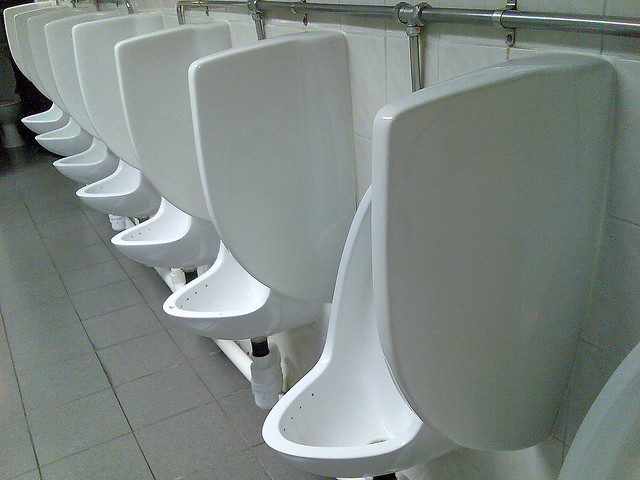
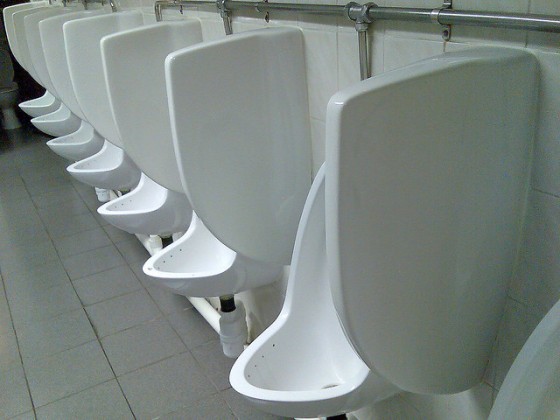
urinals in a row
New technology breaks down minerals in urine to keep urinals dry and clean.

Eliminating the use of clean water for flushing toilets is important everywhere, but especially in the water-parched Middle East. Ever wonder why urine needs so much water to flush it down? It’s liquid, after all. But ammonia and residue is smelly and the minerals in the urine build up on the urinal or toilet bowl. That’s why an Australian company distributing in Israel has invented the DesertCube and a novel way to eliminate up to 95% of the water needed for flushing urine.

Trees That Don’t Stand a Chance Against Climate Change

2

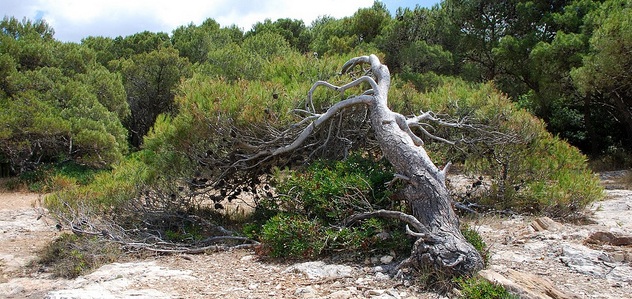
The answer to climate woes for pines and and maples may be blowing in the wind.

Sad news so soon after the Jewish New Year for the trees: Many tree species might become extinct due to climate change if no action is taken in time: This is the conclusion of a new research study from the Hebrew University.  According to the research, trees which disperse their seeds by wind, such as pines and maples, will be unable to spread at a pace that can cope with expected climate changes.

BrightSource Joins Last Minute Renewables Rush in Greece to Head Off EU Fines

0

brightsource greece Greece has been no Sweden, Germany, Finland, Denmark or Portugal, when it comes to the new cleantech economy. That is changing fast. Look who’s applying for deployment.

As an EU member, Greece has come up against its deadline to start to comply with the EU directive to get 20-30% renewable energy on the grid by 2020, so under the direction of  glamorous physicist Tina Birbili, the new and savvy Minister of Environment, Energy & Climate Change, the coal-dependent nation is now actively seeking renewable energy.

Indeed, Greece has now pledged to raise renewable electricity to 40% by 2020 (which is quite the proposition. To me in the US, it is as if one of the coal-dependent red states in the US were to pass a 40% renewables by 2020 plan!)

Sea Census Locates 1200 New Marine Species in World’s Oceans

2

sea cucumberNew species of sea cucumber, found in Atlantic Ocean at depth of 2,700 feet.
A newly concluded Census of Marine Life, covering most of the world’s seas and oceans, has discovered over 1,200 new species of sea creatures. The ten year study, completed in October, 2010, was composed of 3,000 scientists from 80 countries, including a few from Israel, and cost $370 million USD. The study was the first of its kind to make a thorough census and categorization of sea creatures, ranging from the smallest micro-biological specimens to the largest fish and mammals.

The scientific teams found a number of new marine species in the Mediterranean, including a multi-celled creature capable of living without oxygen (found on the sea bottom south of Crete) and a number of sea plants, fish and bacteria, unknown until now.

“Forgotten” Arab Israeli Town Gets Chance to Change Eco-Image

2

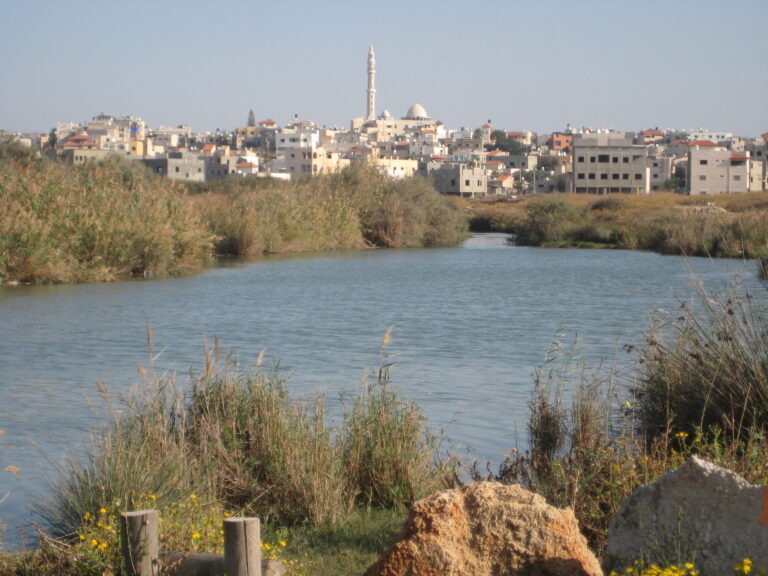
arab israel coastal townJisr al Zarka, as seen from Tenenim Stream estuary

Anyone visiting Israel’s remaining coastal Arab town, Jisr al Zarka may notice almost immediately how different  it is from its more affluent neighbors, Caesarea and Kibbutz Maagan Michael. For Jisr al Zarka, a town of almost 13,000 inhabitants, does not have a bank or ATM machine, a public transport line to it, and those who enter or leave it must do so by means of either a tunnel under the main coastal highway, or a small bridge leading to the adjoining Tenanim Stream nature reserve.

Masdar’s Futuristic Eco-Pod-Car Has Arrived – Fasten Your Seatbelts!

1

Personal Rapid Transit
The Personal Rapid Transit system – all-electric, driver-less pod cars that ferry denizens around Masdar along magnetically guided lines.

Back in 2008, Abu Dhabi proved to be a competitive ‘playground’ for futuristic but eco-friendly transport. In eager aims to test-drive their new inventions Masdar City is one of the hot locations chosen to host the Pod car. Masdar City itself is almost entirely powered by renewable energy and heralded by UAE’s sheikhs as the hope for greener living. The Pod car, or Personal Rapid Transit, is the most energy-efficient, urban mass transit system to date, which is also an economic and a fully-automated alternative to the current public transport systems.

Compost N’ Cycle – All In A Day’s Work

1

reCYCLISTS-Canada-CompostGood ideas deserve to be shared. The reCYCLISTS in Victoria, B.C., cycle organic waste to a central facility, where the compost is eventually sold.

There is nothing like the internet for sharing good ideas. Every so often a good one that originated outside of the Middle East is too good not to share. Like buying and selling meals cooked in your own neighborhood, or this brilliant chamber pot/watering can. The value of composting is beginning to be understood in the Middle East. Abu Dhabi even plans to compost oil waste. But sometimes lacking are good systems for collecting neighborhood compost. British Columbia has come up with a genius solution to that very problem.

Abu Dhabi to Compost its Oil Industry Wastes

0

abu dhabi waste compost oilAbu Dhabi is to green up desert oil fields using composting of waste products, including those from the oil industry itself.

The French start-up company Microhumus Analysis & Engineering made the announcement that this year it will begin field trials in Abu Dhabi of a novel technology  to compost oil-contaminated desert land, at this week’s World Future Energy Summit. The annual conference, held since 2008 in Masdar City, is becoming the international carbon-neutral innovation hub of the renewable energy and sustainable development industry. Microhumus Analysis & Engineering is among the most interesting of the many international cleantech innovators displaying their low-carbon wares at the summit.

Solar Desalination Tech Tested By Emiratis

1

solar desalination

Hopefully, the UAE’s new solar energy desalination process will help create more green water.

Abu Dhabi’s Environment Agency is testing a new solar energy desalination system that is much more environmentally friendly, as well as less costly, according to the English language Dubai News. The process is said to be a “zero-carbon process which helps reduce cost of water treatment, especially in desert areas where dust and high temperatures impair the efficiency of solar panels used in the existing desalination system.”

Desalination is now the major provider of fresh water in the UAE, and is still so costly that Abu Dhabi and other UAE locations are seriously looking into waste water recycling and treatment as a means to reduce the reliance on desalination to provide their fresh water needs.