“In the midst of uncertain time, renewable energy remains consistent and steadfast in its expansion,” said Francesco La Camera, IRENA’s Director-General. “A more decentralised energy system, with a growing share of renewables and more market players, is structurally more resilient.”
Health insurance is a regulated financial product. Insurers operate under binding contracts, overseen by state insurance commissioners, that legally obligate them to pay claims meeting policy terms. Policyholders who believe a covered claim was wrongfully denied have legal recourse through state regulatory channels.
The New Zealand Merino Company, now rebranded as Zentera, has quietly removed the phrase “world’s leading ethical wool brand” from its website, a notable change that comes after a disturbing investigation by PETA Asia-Pacific into the company’s ZQ-certified wool supply chain, PETA reports to Green Prophet.
Somehow vegetables with short seasons excite the imagination and appetite more sharply than produce that’s available all year around. Good Middle Eastern cooks have many recipes for delicate fava beans, and this turmeric-fragrant soup is one.
“In the midst of uncertain time, renewable energy remains consistent and steadfast in its expansion,” said Francesco La Camera, IRENA’s Director-General. “A more decentralised energy system, with a growing share of renewables and more market players, is structurally more resilient.”
Health insurance is a regulated financial product. Insurers operate under binding contracts, overseen by state insurance commissioners, that legally obligate them to pay claims meeting policy terms. Policyholders who believe a covered claim was wrongfully denied have legal recourse through state regulatory channels.
The New Zealand Merino Company, now rebranded as Zentera, has quietly removed the phrase “world’s leading ethical wool brand” from its website, a notable change that comes after a disturbing investigation by PETA Asia-Pacific into the company’s ZQ-certified wool supply chain, PETA reports to Green Prophet.
Somehow vegetables with short seasons excite the imagination and appetite more sharply than produce that’s available all year around. Good Middle Eastern cooks have many recipes for delicate fava beans, and this turmeric-fragrant soup is one.
“In the midst of uncertain time, renewable energy remains consistent and steadfast in its expansion,” said Francesco La Camera, IRENA’s Director-General. “A more decentralised energy system, with a growing share of renewables and more market players, is structurally more resilient.”
Health insurance is a regulated financial product. Insurers operate under binding contracts, overseen by state insurance commissioners, that legally obligate them to pay claims meeting policy terms. Policyholders who believe a covered claim was wrongfully denied have legal recourse through state regulatory channels.
The New Zealand Merino Company, now rebranded as Zentera, has quietly removed the phrase “world’s leading ethical wool brand” from its website, a notable change that comes after a disturbing investigation by PETA Asia-Pacific into the company’s ZQ-certified wool supply chain, PETA reports to Green Prophet.
Somehow vegetables with short seasons excite the imagination and appetite more sharply than produce that’s available all year around. Good Middle Eastern cooks have many recipes for delicate fava beans, and this turmeric-fragrant soup is one.
“In the midst of uncertain time, renewable energy remains consistent and steadfast in its expansion,” said Francesco La Camera, IRENA’s Director-General. “A more decentralised energy system, with a growing share of renewables and more market players, is structurally more resilient.”
Health insurance is a regulated financial product. Insurers operate under binding contracts, overseen by state insurance commissioners, that legally obligate them to pay claims meeting policy terms. Policyholders who believe a covered claim was wrongfully denied have legal recourse through state regulatory channels.
The New Zealand Merino Company, now rebranded as Zentera, has quietly removed the phrase “world’s leading ethical wool brand” from its website, a notable change that comes after a disturbing investigation by PETA Asia-Pacific into the company’s ZQ-certified wool supply chain, PETA reports to Green Prophet.
Somehow vegetables with short seasons excite the imagination and appetite more sharply than produce that’s available all year around. Good Middle Eastern cooks have many recipes for delicate fava beans, and this turmeric-fragrant soup is one.
“In the midst of uncertain time, renewable energy remains consistent and steadfast in its expansion,” said Francesco La Camera, IRENA’s Director-General. “A more decentralised energy system, with a growing share of renewables and more market players, is structurally more resilient.”
Health insurance is a regulated financial product. Insurers operate under binding contracts, overseen by state insurance commissioners, that legally obligate them to pay claims meeting policy terms. Policyholders who believe a covered claim was wrongfully denied have legal recourse through state regulatory channels.
The New Zealand Merino Company, now rebranded as Zentera, has quietly removed the phrase “world’s leading ethical wool brand” from its website, a notable change that comes after a disturbing investigation by PETA Asia-Pacific into the company’s ZQ-certified wool supply chain, PETA reports to Green Prophet.
Somehow vegetables with short seasons excite the imagination and appetite more sharply than produce that’s available all year around. Good Middle Eastern cooks have many recipes for delicate fava beans, and this turmeric-fragrant soup is one.
“In the midst of uncertain time, renewable energy remains consistent and steadfast in its expansion,” said Francesco La Camera, IRENA’s Director-General. “A more decentralised energy system, with a growing share of renewables and more market players, is structurally more resilient.”
Health insurance is a regulated financial product. Insurers operate under binding contracts, overseen by state insurance commissioners, that legally obligate them to pay claims meeting policy terms. Policyholders who believe a covered claim was wrongfully denied have legal recourse through state regulatory channels.
The New Zealand Merino Company, now rebranded as Zentera, has quietly removed the phrase “world’s leading ethical wool brand” from its website, a notable change that comes after a disturbing investigation by PETA Asia-Pacific into the company’s ZQ-certified wool supply chain, PETA reports to Green Prophet.
Somehow vegetables with short seasons excite the imagination and appetite more sharply than produce that’s available all year around. Good Middle Eastern cooks have many recipes for delicate fava beans, and this turmeric-fragrant soup is one.
“In the midst of uncertain time, renewable energy remains consistent and steadfast in its expansion,” said Francesco La Camera, IRENA’s Director-General. “A more decentralised energy system, with a growing share of renewables and more market players, is structurally more resilient.”
Health insurance is a regulated financial product. Insurers operate under binding contracts, overseen by state insurance commissioners, that legally obligate them to pay claims meeting policy terms. Policyholders who believe a covered claim was wrongfully denied have legal recourse through state regulatory channels.
The New Zealand Merino Company, now rebranded as Zentera, has quietly removed the phrase “world’s leading ethical wool brand” from its website, a notable change that comes after a disturbing investigation by PETA Asia-Pacific into the company’s ZQ-certified wool supply chain, PETA reports to Green Prophet.
Somehow vegetables with short seasons excite the imagination and appetite more sharply than produce that’s available all year around. Good Middle Eastern cooks have many recipes for delicate fava beans, and this turmeric-fragrant soup is one.
“In the midst of uncertain time, renewable energy remains consistent and steadfast in its expansion,” said Francesco La Camera, IRENA’s Director-General. “A more decentralised energy system, with a growing share of renewables and more market players, is structurally more resilient.”
Health insurance is a regulated financial product. Insurers operate under binding contracts, overseen by state insurance commissioners, that legally obligate them to pay claims meeting policy terms. Policyholders who believe a covered claim was wrongfully denied have legal recourse through state regulatory channels.
The New Zealand Merino Company, now rebranded as Zentera, has quietly removed the phrase “world’s leading ethical wool brand” from its website, a notable change that comes after a disturbing investigation by PETA Asia-Pacific into the company’s ZQ-certified wool supply chain, PETA reports to Green Prophet.
Somehow vegetables with short seasons excite the imagination and appetite more sharply than produce that’s available all year around. Good Middle Eastern cooks have many recipes for delicate fava beans, and this turmeric-fragrant soup is one.
Shai Agassi, the CEO of Better Place EV at a press conference.
Pioneers can make startling predictions, and that’s what Shai Agassi from Better Place has done in Davos, at a meeting of the World Economic Forum last week. He tells AP: Before 2020 more people everywhere will be buying electric cars than those powered by gasoline. “It doesn’t mean that oil is not necessary, but we’re starting the way out,” said Agassi, an Israeli who launched the switchable battery electric car concept a few years ago. And which we’ve reported on frequently over the last three years.
From a long line of egg farmers in Holland, Karin’s dad finally builds her a chicken coop
March, 2020 update. A lot has passed since I wrote this post. My dear father Harold died in 2018, my baby girl has grown into a kid, and she has a brother. We now face COVID-19 or the corona virus and are putting ourselves into self-isolation, with fresh eggs. We don’t know how long this pandemic will last. Start egg farming today. You will never be sorry about it.
Where bylaws allow, or can be bypassed, I highly recommend building your own chicken coop. Imagine getting fresh, free-range organic eggs every day? When my parents came to visit me in Jaffa a few months ago, Dad found himself bored.
Back in Holland, my family the Van Der Meers were one of the biggest egg producers in the country before the Depression. So you could say, eggs are in our genes. With Dad nothing to do for a few weeks, I brought up the idea of having him build me a chicken coop. That got him kind of excited. He foraged for wood in my backyard and came up with a coop that resembles a bus stop. The Chicken Express? Step right up and I’ll tell you how to build a coop in a few easy steps. And no you don’t have to invest much, unless you want to make your coop designer. My dad explains below!
In warm climates very little is needed to keep your hens happy – basically a roof over their heads, a lengthwise pole for curling their toes around when they sleep at night (you might want to raise it high where feral cats might stalk your chickens), and some fencing to keep them from, well, flying the coop.
Here are our chickens before we bought them.
As it turns out, Bedouin chickens which we bought in the Negev Desert, are very agile creatures and even sleep in our blackberry tree some nights. The fencing doesn’t help them that much, but it does keep them contained somewhat, and out of the mouth of our crazy dog.
Here’s what you’ll need to build the coop:
A corner on your roof, garden, or backyard for the chicken coop, a couple meters by a couple meters at least
An old door or piece of plywood for a roof
Some plywood for the sides
Chicken wire, if you want to contain the chickens outside the coop (they eat weeds so consider letting them run loose)
A wooden pole
Some boxes, or crates for roosting. Throw in something soft.
Feed
Find a corner to build against, saving yourself the need to build 2 extra walls. Be lazy. Make sure there’s a roof for the chickens to protect them against the sun, and rain, and in the winter if it gets cold, you can throw a carpet over the sides to keep the cold wind out. Make sure they have three walls.
We built a 2 meter or so pole, installed horizontally, down low about 50 cm off the ground but noticed some street cats were preying on our hens and raised the pole to about 1.5 meters off the ground. Most chickens can fly to this height but see what works for yours. It really doesn’t take much to make your chickens happy. But they do need a pole to sleep on at night.
What you feed your chickens:
A basic seed/corn meal
Compost – can include eggshells (ours really love labane cheese – could be because they are Bedouin hens)
Worms and bugs (they feed themselves while aerating the ground)
Endless supply of water
Chickens do need basic feed, that which can be bought at a feedlot. Unless of course they have wide pastures to roam and a lot of your kitchen waste to eat.
Some inquiring around on where to find chickens and feed might be in order. Animal markets for livestock might be your best bet. Ask around in places like that. We bought a huge drum of feed consisting of corn meal and other seeds, and feed our chickens a regular diet of all the vegetable-based compost that would otherwise be composted. But don’t worry.
Chicken poo makes an excellent compost too. One of my friends can’t eat eggs unless they are free-range and fed with organic oats. So it’s really up to you to decide how to feed your chickens, depending on your health needs and sensitivities.
We have five chickens and one rooster. The rooster is just for the fun of it. He does keep the girls in line – tells them when to eat, when to sleep. It’s funny that they follow. You don’t need one if you have neighbors nearby who will complain about the noise. And roosters DO make noise, waking us up as early as 1:30 am.
Bedouin women (crouching like crows) selling “bede” hens at the market
Unlike commercially-raised chickens, our hens don’t get “sunshine” 24 hours a day. Some parts of the year the chickens won’t lay. They will molt and take a break. And not every chicken will lay every day once she starts. We bought young chickens and it took them a couple of months to start laying. Now three of the five are laying, but like I said, not every day.
See a video interview with my dad about chickens
We bought our chickens at a Bedouin market (for about $10 each) because it was important for my husband that we have a “wild” variety – chickens that haven’t been genetically manipulated.
Our eggs are on the small to medium size, the yolks absolutely huge compared to the white. One hen is laying eggs with the most delightful little beige specks on them.
Dad (right), the closest link to my family of egg people is determined that next time he comes to visit me in the Middle East he’ll be smuggling in white hen eggs – “the real good layers” – from Canada. He keeps asking me about building an incubator for these eggs to become hatchlings. Hopefully it will happen and when it does, I’ll report it here on Green Prophet. (Update 2019: we hatched some chicks but the rooster killed them). So we won’t start that project for a while again.
Meanwhile, I am dreaming about how many eggs I will collect tomorrow. And how exciting it will be for my little baby daughter, when she gets bigger, to go out and collect them like I did when I was a little girl (that’s me in the top photo). My family had a coop in a suburban town outside Toronto until our evil neighbour complained and we had to get rid of it.
Before the complaints, I would go out and collect our eggs and sell them to our neighbors for a dollar a dozen, to cover the price of feed. Seriously, it was so much fun. If this blogger, and lazy environmentalist who is addicted to the computer can start a coop, you can too. Get cracking and join the new movement of urban farming.
Arwa argues that population control is not the silver bullet that will solve climate change, rather over-consumption is the real issue
According to the latest data coming from the UN, the world population will reach a staggering thirty billion people by 2300. Now, that’s a lot of people and a real sobering thought for those concerned with the impact of a growing population on the earth’s finite resources.
As the MENA (Middle East and North Africa) region has experienced some of the highest population growth since the 1950’s- second only to sub-Saharan Africa- you could argue that it’s time the region took population control seriously. If only to save the planet.
From an average B to a C cup in 50 years: Is our modern lives making our breasts bigger?
Britain’s Daily Mail reports that women in England have larger breasts than even a generation ago. Women (and men) are getting fatter, but obesity alone does not account for most of the increase: Women are exhibiting a greater cup size in relation to the rest of their bodies.One theory suggests that they have simply begun wearing a properly sized bra. Women tend to choose bras with a larger band, when they really need a larger cup. Bravissimo, a bra manufacturer, recently began producing their largest cup size ever, “L”. But the increase in size can’t be attributed to poor fit alone. In the 50’s, the average woman wore a size B cup. Now she’s gone up to a C.
Can commercial monstrosities like these in Mecca cause political upheaval in Saudi Arabia?
The Kingdom of Saudi Arabia has always had its share of enemies. This is especially true in these times, when both the Islamic Republic of Iran and the Al Qaeda terrorist organization have both expressed great interest in replacing the monarchy there with a government more receptive an “Islamic democracy” as is now the case in Iran. The Saudi royal family has had close relations with the United States and other Western countries ever since the 1930s, when it was concluded that American oil reserves would not last forever. The recent political upheavals in the Middle East, beginning with Tunisia, carrying on to Egypt, and now threatening Jordan and what’s left of non-Islamic elements in Lebanon is undoubtedly of great concern to the Saudi extended Royal Family.
Meet Yoav Banin, CEO of Solergy, a solar power company in California and Italy.
Reared in California by Israeli parents, and married to an Italian wife, Yoav Banin speaks to his two young sons in Hebrew while raising them in Rome. This 38-year-old trilingual Silicon Valley veteran is co-founder and chief executive officer of Solergy, founded in 2007 to create and manufacture advanced concentrated photovoltaic (CPV) technology. Using optics to focus sunlight over 500 times onto special photovoltaic cells, CPV increases solar energy conversion efficiency while reducing the amount of expensive materials that often hamper the practicality of this field.
This urban center may look normal, if having lunch on a roof of a mall is normal.
Sadly replacing the traditional Arab Souqs or markets that tourists flock to see, malls are becoming as much an urban Middle Eastern phenomenon as any American city. But if there must be malls, let them be more like the Meydan shopping complex in Istanbul designed by Foreign Office Architects. Urban centers generate significant heat – called the heat island effect – as well as greenhouse gases. And malls, which are usually large and well-lit, eat up a lot of energy. To mitigate these problems, passive design encourages plenty of natural lighting, and best of all, the first-of-its-kind green roof absorbs a lot of the excess heat while also creating a pleasant place for people to spend an afternoon.
Israeli Druize, Gamila Hiar, uses local herbs grown in the Galilee to produce her famous soaps.
When Israeli supermodel Bar Rafaeli comes to Israel for a visit (Rafaeli protests against coal and water misuse), she makes sure to stock up on Gamila’s soaps for her glamorous friends around the world. She and other celebrities like Justin Timberlake, Rihanna and Angelina Jolie swear by the stuff, according to Fuad Hiar, the eldest son of Israel’s most lucrative soap maker the 70-year-old Gamila Hiar. Gamila is adept at the role of traditional soap maker. She’s traditionally dressed, and as one would expect from an iconic grandmother figure, she has inherited her family’s ancient “soap wisdom” from prior generations, using recipes from her grandfathers, and herbs from their gardens around the Galilee village of Peki’in.
The Environmental Protection Ministry’s New Campaign Urges Israelis “To Start Thinking Green.”
It is certainly one of our pet peeves in Israel: Friday shoppers buying bag after plastic bag chock full of food. And on the market sidelines food waste piling up, rotting. Most of this then lands up in the landfill, instead of in a compost heap (learn how to make one here) where it can be used to create fertilizer. Apparently the Environmental Protection Ministry has had their fill too. Rather than beat citizens down with angry rhetoric though, they’ve opted for the funny approach. Their new “Starting to Think Green” PR campaign comprises a series of billboard, television, and radio advertisements featuring none other than Tal Friedman.
Yes, noise is a form of pollution from motorized vehicles that’s bad for your health.
Sound pollution in Iranian cities is hitting an all-time high. The large cities like Tehran are the worst. Sound pollution can be any unwanted or offensive sounds that unreasonably intrudes into our daily activities. When a person drives by open windows in a street, the sound is something like 70 decibels. A whisper is 35 decibels and a normal room has a sound intensity of 40 db. At 45 db a person cannot sleep. At 85, the ears are damaged, and at 120, it can hurt your ears.
Sea bream, a common fish farm species, can now be grown in cities and deserts, safely.
The seas and lakes of the world are rapidly losing their native fish populations, due to pollution, global warming, and over fishing. On top of this, fish farming, or aquaculture has also proven to be bad for bodies of water in which these fish are raised. But now, at least a partial solution has been found to the problems of over fishing and pollution of sea water from the feces of fish farms. A group of Israelis from Grow Fish Anywhere have devised a way to raise fish in shallow wading pool tanks, and to detoxify the water the fish are raised in as well. The unique fish farms, innovated by Yaron Gissin, formerly a Foreign Ministry official responsible for technology. It sounds remarkably like the technology Karin had written about 2 years ago, by Prof. Yonathan Zohar (urban fish farming) in the US, but let’s hear their story.
Everybody who is anybody in Israel’s renewable energy business ought to attend this event.
There has never been a more critical time in human history. The recent storms in America, and Australia’s cyclone – freak events which Bill McKibben says will now be a part of everyday life – are directly related to our unhealthy appetite for fossil fuels. Now is the time to detox, and to elevate the role of renewables. Since our oil dependence is so deeply entrenched, it is important to suss out the economics and politics behind energy. Despite the natural gas party and attempts to extract oil shale, Israel is fairly committed to alternative energy sources. Attend the Eilat-Eilot Conference to learn more about laws, subsidies, and more.
Israel Energy Initiatives has received serious opposition to its plan to extract oil from shale rock in the Adullam region.
While the riots in Egypt escalate, potentially compromising Israel’s natural gas supply and casting significant doubt on the region’s energy future, a quieter battle continues to take place in Israel. On January 31, 2011 the Science & Technology Commission held a public hearing to discuss Israel Energy Initiative’s (IEI) proposed oil shale plan in the Judean foothills. Earlier we published IEI’s response to David de Rothschild’s concerns and an interview with oil shale expert Jeremy Boak. The hearing revealed a serious discord between various ministries, and both Knesset members and the Chief Scientist of the Ministry of Infrastructure voiced their concerns.
A bad end to the Egyptian crises could mean an end to natural gas exports to Israel
As if the ongoing, and increasingly violent wave of anti-Egyptian President Husni Mubarak protests aren’t enough to cause worries about regional energy cooperation, a takeover by Muslim extremists in Egypt could spell an end to natural gas supplies to Israel. This fear, as reported in the Jerusalem Post involves Egypt’s exports of natural gas to Israel; which in 2010 alone amounted to 2.1 billion cubic meters, and worth more than $1 billion. Israel has its own natural gas stores, but it will take some years of development to exploit them.
The ancient art of glass-blowing and glass recycling is applied to make eco-friendly fixtures
Apart from very few workshops dotted across the region, most of the glass blowing that occurs in the Middle East is for tourists. In Hebron, people are brought in on buses to stare at glass-blowers and then wander around the workshop space filled with bright blue and green glass vases and trinkets to buy as souvenirs. Clearly, it is something of a novelty to see glass vases blown right in front of your eyes but what was good to note was that the glass they used was recycled glass.
Whilst glass can be a nightmare to sort at the recycling centre, glass is the ultimate recyclers dream as it’s one of those few substances that can be melted down and re-used time and time again. So why aren’t we encouraged to use more recycled glass? Considering that the Middle East is the birthplace of various glass making techniques dating back in the 3rd millennium BC, it is a bit of a mystery.
Recycled Glass As Art
One organisation championing recycled glass from the Middle East is the UK-based Artiquea Gallery. Setup in 2008, it sells everything from paintings to antique desks from Syria, Morocco, Egypt and Turkey and aims to “introduce Arab and Middle Eastern artists to the artistic mainstream in the UK.” What caught my eye, however, was their range of eco-friendly recycled glass lighting.
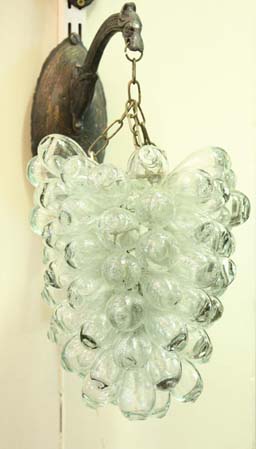
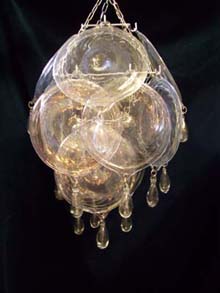
Beautiful Syrian blown recycled glass is used in a variety of vibrant shapes and colours to make some stunning traditional and more contemporary lighting designs. Everything from hand-made glass grape lampshades, iron cage lanterns to a zany octopus-inspired design is available. My favourite is the elegant hand-crafted recycled glass disc light which beautifully merges ancient techniques and patterns with a modern twist.
An Eco Revival of Glass-blowing?
Artiquea Gallery says that the glass-blowing tradition is dying in Syria as falling demand makes maintaining the workshops infeasible, especially as artisans are required to work around the clock as the furnace is never allowed to die down. There is now only one traditional glass-making workshop left in Damascus.
However, if these workshops are able to tap into more eco-conscious consumers they could be revived. According to some reports, for every tonne of glass recycled used 1.2 tonnes of raw materials is preserved. What’s more a net saving of 315kg of CO2 is saved per tonne of recycled glass and that includes logistics and processing of the old glass. Now that’s pretty impressive! Consider that deep sea mining for sand is the opposite of recycling glass and it leads to habitat destruction. More recycled glass please.
For more on recycled glass and glass in ME architecture see:

 Shai Agassi, the CEO of Better Place EV at a press conference.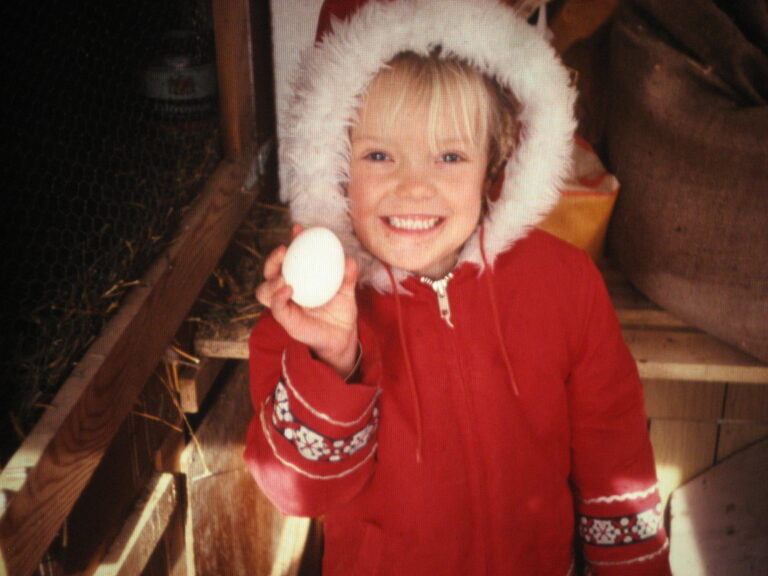

 Here are our chickens before we bought them.
  Bedouin women (crouching like crows) selling “bede” hens at the market
 Dad (right), the closest link to my family of egg people is determined that next time he comes to visit me in the Middle East he’ll be smuggling in white hen eggs – “the real good layers” – from Canada. He keeps asking me about building an incubator for these eggs to become hatchlings. Hopefully it will happen and when it does, I’ll report it here on Green Prophet. (Update 2019: we hatched some chicks but the rooster killed them). So we won’t start that project for a while again.

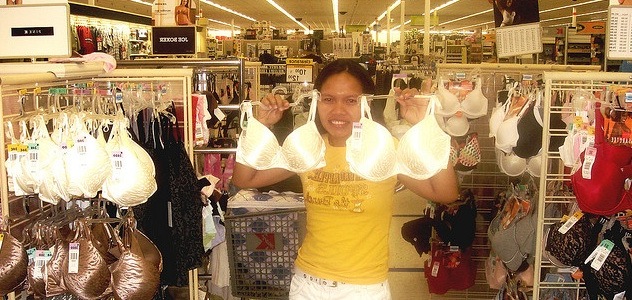
 From an average B to a C cup in 50 years: Is our modern lives making our breasts bigger?
 Can commercial monstrosities like these in Mecca cause political upheaval in Saudi Arabia?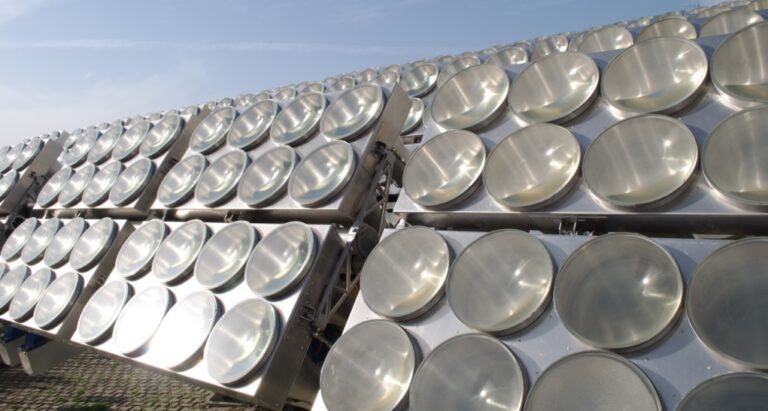
 Meet Yoav Banin, CEO of Solergy, a solar power company in California and Italy.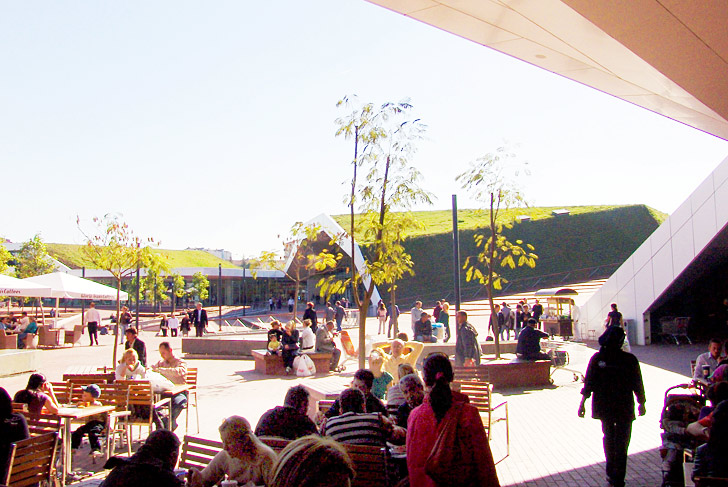
 This urban center may look normal, if having lunch on a roof of a mall is normal.